
Picking the right wall thermostat shapes how comfortable your home feels through every season. Whether you’re swapping an aging unit in a single-zone house, adding controls to a garage workshop, or stepping up to a learning model that tunes itself, the choices below cover a spread of budgets and HVAC setups. The list mixes straightforward non-programmable units with multi-stage and smart models, so you can match the thermostat to your system rather than the other way around. I’ve focused on real ownership concerns: system compatibility, screen legibility, wiring reality, and how each one behaves in everyday rooms.
The Choices Worth Comparing
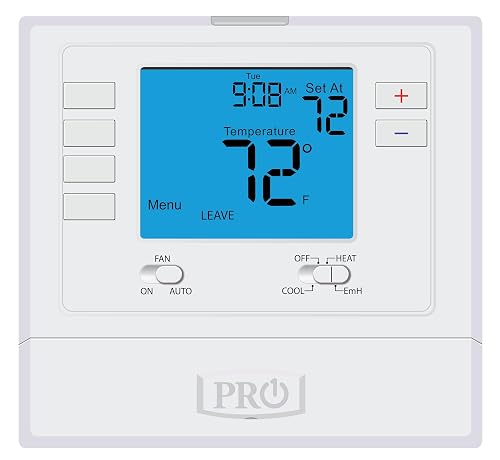
PRO1 T725 Heat Pump/Conventional Programmable Digital Wall Thermostat

PRO1 T771 Single Stage Non-Programmable Wall Thermostat
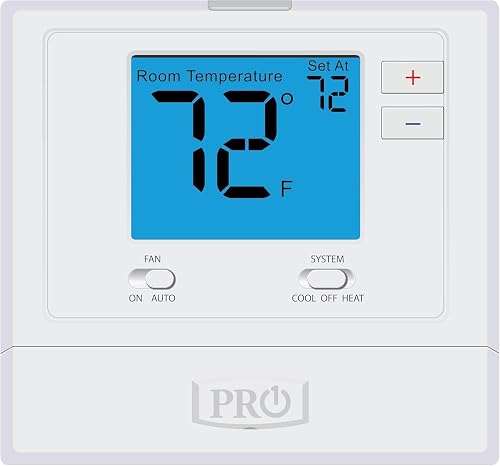
PRO1 T701 Single Stage Non-Programmable Wall Thermostat

PRO1 T715 Multi-Stage Programmable Gas Thermostat
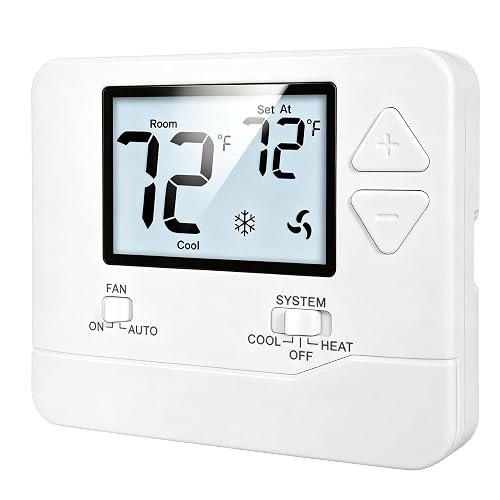
Heagstat Non-Programmable Thermostat 1 Heat/1 Cool
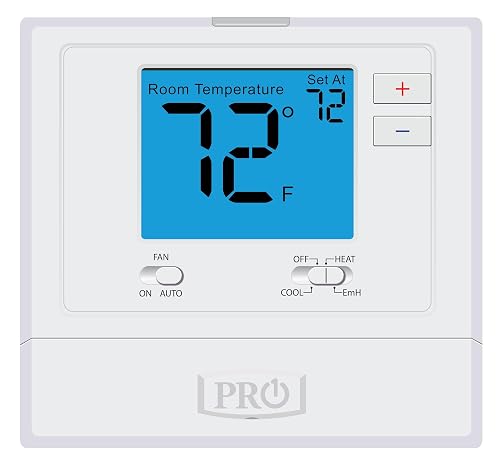
PRO1 T721 Non-Programmable Wall Thermostat
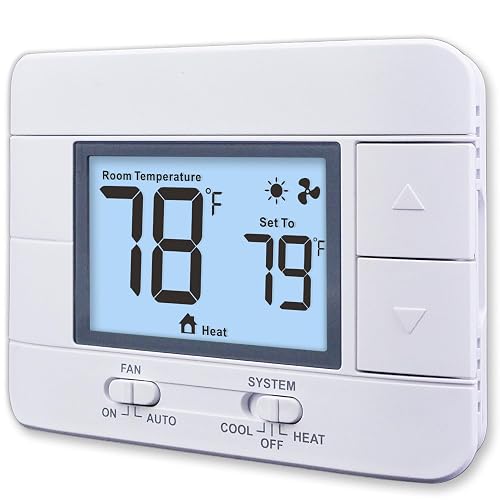
Aowel Non-Programmable Thermostat with Humidity Display

PRO1 T805 Single Stage Programmable Wall Thermostat
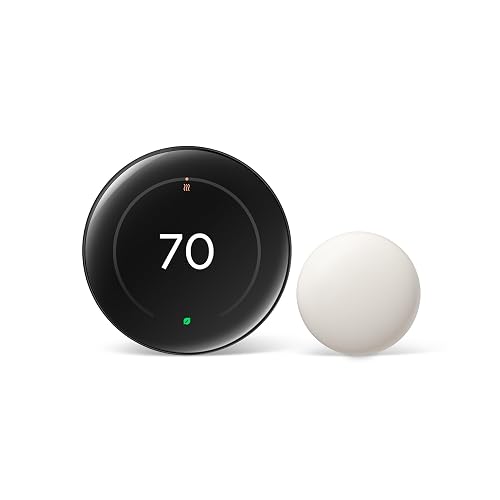
Google Nest Learning Thermostat (4th gen) with Sensor, Obsidian
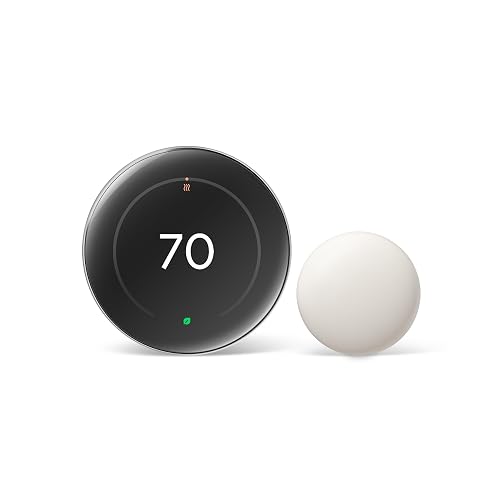
Google Nest Learning Thermostat (4th gen) with Sensor, Silver
Why These Options Stand Out
The PRO1 T725 sits in an interesting middle ground. It covers 2 heat/1 cool heat pump systems and 1 heat/1 cool conventional setups, so it flexes when your home uses a mix of equipment or you’re not sure which category your current wiring falls into. The 4 sq. in. blue backlit screen reads clearly from across a hallway, which matters in dim morning light.
For most homeowners dealing with a single outdoor unit and a basic indoor blower, this one handles the scheduling work without a learning curve. It runs on the T700 platform, so replacement parts and compatible accessories stay consistent if you ever expand the system later. Compared to the simpler T701 below, the T725 opens the door to programmable schedules for heat pump homes specifically.
Where It Helps
- Covers both heat pump (2H/1C) and conventional (1H/1C) wiring in one unit, reducing guesswork during installation.
- 7-day or 5/1/1 programming keeps weekdays, Saturday, and Sunday on separate routines for tighter comfort control.
- Backlit 4 sq. in. display stays readable in low light, a real plus in hallways and bedrooms.
- Shared T700 platform makes future replacements and matching accessories easier to source.
Worth Noting
- Programmed schedules take time to set up correctly the first week, and mistakes often hide in the weekend block.
- Not suited for multi-stage (2H/2C) gas systems, so larger homes with two-stage furnaces should look at the T715 instead.
Key Specs
Right Fit For
Owners of single-zone homes with a heat pump or basic conventional system who want scheduling without a learning curve.
Consider Something Else When
You run a two-stage gas furnace, in which case the PRO1 T715 Multi-Stage Programmable Gas Thermostat serves you better.
The PRO1 T771 is built for spaces where a normal thermostat’s range simply doesn’t go low enough. Its setpoint range stretches from 25°F up to 90°F, which makes it a sensible pick for unheated garages, workshops, sheds, and similar spaces where you want freeze protection without committing to a full smart system. The non-programmable layout keeps the wall simple.
For most homeowners, this unit is a second-thermostat play rather than a primary living-area control. Pair it with a basic forced-air or radiant system running on 1H/1C conventional wiring, and you get a no-fuss readout. The blue backlit display stays visible in low light, though the lack of scheduling means you’ll adjust the temperature manually as the seasons shift.
Features That Help
- 25°F to 90°F setpoint range handles freeze protection and specialty spaces other thermostats can’t reach.
- Non-programmable design means fewer settings to misconfigure in utility rooms or outbuildings.
- Backlit 4 sq. in. display holds up in dim garages and basements.
Honest Caveats
- Lacks scheduling, so you’ll need to nudge the setpoint manually when the weather changes.
- Limited to single-stage conventional systems, so heat pump or multi-stage homes should pick the T721 or T725 instead.
Made For
Garages, sheds, and workshop spaces that need reliable low-temperature control without a programmable schedule.
Look Elsewhere When
You want scheduling for a main living area, in which case the PRO1 T701 Single Stage Non-Programmable Wall Thermostat fits a similar simplicity level but in a more typical home setting.
The PRO1 T701 strips thermostat ownership down to its core. You get a single-stage, 1 heat/1 cool conventional unit that mounts on the wall, displays the temperature, and lets you nudge it up or down. For someone replacing a tired mechanical thermostat or moving into a rental, the simplicity removes the usual fear of misreading the manual.
For most first-time installers, the T701 lives up to its straightforward billing. The glow-in-the-dark light button is a thoughtful touch for night adjustments without flipping a room light. The T700 platform footprint means the same mounting pattern as several other PRO1 units, so swapping up to a programmable model later won’t usually mean repatching the wall.
Everyday Perks
- Non-programmable design means no schedule to set, no weekday/weekend blocks to misconfigure.
- Glow-in-the-dark light button makes midnight tweaks easier without lighting up the whole room.
- T700 platform footprint keeps wiring consistent with other PRO1 models for future upgrades.
Trade Offs
- No scheduling means manual adjustments as your routine changes across seasons.
- Limited to single-stage conventional systems, so it won’t support heat pump or multi-stage setups.
Key Specs
Best Suited To
Homeowners who want a no-schedule, no-fuss replacement for a basic 1H/1C conventional system.
Swap It Out When
You want to run a heat pump or a multi-stage furnace, in which case the PRO1 T725 is a smoother match for the wiring.
The PRO1 T715 is the choice when your home runs a more involved HVAC setup. It supports 2 heat/2 cool gas furnace systems, which is common in larger houses with two-stage heating and cooling. You can set it to 7-day, 5/1/1, or non-programmable modes depending on how much scheduling you actually want to manage.
For most owners of multi-stage equipment, the T715 helps the system run more efficiently by letting the furnace and air conditioner throttle through their stages rather than slamming on at full tilt. The 4 sq. in. backlit display uses the same family of glow-in-the-dark light buttons found on the T701, so the look and feel stay familiar across the lineup.
Well-Handled Touches
- Supports 2H/2C multi-stage gas systems for tighter modulation and quieter operation.
- Three schedule modes (7-day, 5/1/1, non-programmable) let you match the thermostat to your routine, not the other way around.
- Glow-in-the-dark light button for quick checks in the dark without lighting the whole hallway.
Softer Spots
- Multi-stage programming has a steeper learning curve than a basic single-stage thermostat.
- Hardwired systems need a common wire (C-wire) in many cases, so older homes may need a small wiring adapter.
Quick Facts
Whose Shelf It Belongs On
Owners of larger homes with a two-stage gas furnace and central air who want programmable comfort control.
Reach For A Different Pick When
You only have a basic single-stage system, in which case the simpler PRO1 T701 keeps things from feeling oversized.
The Heagstat non-programmable thermostat is the kind of unit you pick when you want a clean wall swap without the bulk of a learning curve. It runs on 24VAC conventional single-stage 1H/1C systems, including gas, oil, and electric furnaces paired with an independent outdoor air conditioning condenser. The base accepts 2 to 5 wires, which covers most simple setups.
For most small homes and apartments, the white backlight keeps the readout visible at night without flooding the room. You may find the lack of a scheduling feature limiting if you want weekday-versus-weekend routines, but the trade-off is a stripped-down interface that rarely needs more than a glance. Compared to the PRO1 T701, the Heagstat skips the glow-in-the-dark button but covers the same single-stage territory.
The Upside
- 24VAC compatibility covers common gas, oil, and electric forced-air systems in older homes.
- 2 to 5 wire base adapts to the typical low-wire-count installs that often block modern smart thermostats.
- White backlit screen reads clearly in dim hallways.
Potential Drawbacks
- Not compatible with 6 to 8 wire systems, so homes with extra conductors may need a different base.
- Excludes heat pump and multi-stage setups, so it’s a poor fit for newer high-efficiency systems.
Feature Snapshot
Who It Suits Best
Owners of older homes with a simple forced-air system and minimal thermostat wiring who want a no-frills wall control.
Not Your Match When
Your home runs a heat pump, in which case the PRO1 T721 handles either heat pump or conventional wiring on one base.
The PRO1 T721 covers a useful middle path. It runs on 2 heat/1 cool heat pump systems or 1 heat/1 cool conventional setups, so it works for a heat pump home today and would still be a sensible replacement if you ever converted to a conventional gas furnace. The non-programmable design keeps the wall simple.
For most homeowners, the T721 is the kind of unit you grab when you want a digital upgrade without a learning curve. The 4 sq. in. blue backlit screen sits in the same family as the rest of the T700 lineup, and the glow-in-the-dark light button shows up for those quick middle-of-the-night adjustments. Power can come from AA batteries or a hardwired connection, so you can match it to the wiring already in the wall.
What It Does Well
- Supports both 2H/1C heat pump and 1H/1C conventional systems, useful when future equipment swaps are possible.
- Glow-in-the-dark light button aids visibility without flooding the bedroom with light.
- Battery or hardwired power adapts to existing wiring setups.
Less Ideal Details
- No scheduling, so you’ll nudge the setpoint manually when routines change.
- Limited to single-stage cooling on the conventional side, which won’t serve homes with two-stage air conditioning.
Who Should Grab It
Homeowners with a heat pump or basic conventional system who want a simple, non-programmable wall control without giving up future flexibility.
Skip It When
You want programming on a heat pump system, in which case the PRO1 T725 adds scheduling without changing the wiring expectations.
The Aowel non-programmable thermostat adds a humidity readout to the usual temperature display, which makes it a thoughtful choice in regions where muggy summers make indoor moisture feel oppressive. It runs on conventional single-stage 1H/1C systems, so it suits gas, oil, and electric furnace homes paired with a basic air conditioning condenser.
For most homes, the LCD white backlit screen sits comfortably alongside furniture and walls. The interface stays simple by skipping schedules entirely, which keeps the learning curve to a single afternoon of mounting. You may find the humidity display turns into something you check more often than expected, especially in coastal or summer-heavy climates.
The Value In It
- Built-in humidity readout adds useful context for moisture-heavy climates without a separate sensor.
- White LCD backlit display is easy to read in dim hallways.
- Compatible with conventional 1H/1C gas, oil, and electric systems, covering the most common home setups.
Points To Note
- Not compatible with multi-stage (2H/2C, 3H/2C) systems, so larger homes with two-stage cooling should look elsewhere.
- No scheduling, so adjustments happen manually as weather shifts.
Feature Rundown
Perfect Match For
Homeowners in humid climates who want to track indoor moisture without buying a separate hygrometer.
Where Another Pick Suits Better
You need a heat pump thermostat, in which case the PRO1 T721 keeps a similar non-programmable feel on heat pump wiring.
The PRO1 T805 is the bigger sibling of the T701, and the difference shows up the moment you stand in front of the wall. It uses the T800 platform with a 7 sq. in. blue backlit display, almost double the viewing area of the smaller T700 models. For anyone squinting at a thermostat across a long hallway, that real estate is genuinely useful.
For most homeowners with a 1H/1C conventional system, the T805 offers 7-day, 5/1/1, or non-programmable modes. The glow-in-the-dark light button matches the rest of the PRO1 family, so the operating feel stays familiar. You may find the larger display comes with more menu items than a basic non-programmable unit, but the layout still keeps adjustments within a few button presses.
Standout Benefits
- Extra-large 7 sq. in. blue backlit display is easier to read from a distance or in dim rooms.
- Three operating modes (7-day, 5/1/1, non-programmable) let the thermostat grow with your routine.
- Glow-in-the-dark light button helps in midnight adjustments without turning on the lights.
Some Limits To Know
- Larger footprint may not fit cleanly on a small thermostat mounting plate from a previous unit.
- Limited to 1H/1C conventional systems, so heat pump or multi-stage homes need a different model.
Built With In Mind
Homeowners with conventional 1H/1C systems who want a more readable screen and the option of scheduling down the road.
Another Choice May Suit
You prefer the smallest possible wall footprint, in which case the PRO1 T701 keeps the readout tighter while staying in the same product family.
The Google Nest Learning Thermostat (4th gen) takes a different approach from every other unit on this list. Rather than asking you to program a schedule, it observes the temperatures you set and the times you set them, then builds a routine of its own. The included 2nd-generation Nest Temperature Sensor adds the ability to factor a different room into the reading, which is useful in homes with hot upper floors or cool basements.
For most connected-home households, the Obsidian finish keeps the thermostat looking like a piece of hardware rather than a beige wall plate. Setup relies on a smartphone app, so the experience is closer to onboarding a new device than swapping a switch on the wall. The learning behavior is convenient once it stabilizes, though the first couple of weeks can feel a bit unpredictable while it figures out your patterns.
Notable Upsides
- Learning behavior builds a temperature schedule on your behalf, reducing manual programming.
- Included 2nd-generation Nest Temperature Sensor lets you prioritize a specific room’s reading.
- Obsidian finish gives the wall a darker, more modern look compared to traditional white thermostats.
Practical Considerations
- Setup depends on a smartphone app, which adds friction in homes with limited Wi-Fi or older phones.
- Learning behavior takes a couple of weeks to stabilize, and unusual weeks can throw the schedule off until it relearns.
Who Will Love This
Connected-home households that prefer a thermostat to manage its own schedule and want app-based controls.
Skip It When
You’d rather set a schedule once and leave it alone, in which case the PRO1 T805 keeps a familiar wall-mounted feel without an app dependency.
The Silver edition of the Google Nest Learning Thermostat (4th gen) shares every functional feature of the Obsidian version, from the learning schedule to the included Nest Temperature Sensor. The difference is purely the finish, and that matters more than it sounds in rooms where the thermostat sits at eye level against stainless appliances or cooler-toned walls.
For most style-conscious interiors, the silver face reads as a neutral piece of hardware rather than a tech gadget. The learning behavior, sensor pairing, and app-based setup are identical to the Obsidian model above, so the choice between the two really comes down to aesthetic preference. You may find the silver finish blends better in kitchens and hallways with brushed metal accents.
Everyday Advantages
- Silver finish complements stainless and cooler-toned interiors better than darker thermostat faces.
- Learning schedule and 2nd-generation sensor carry over from the Obsidian edition.
- Same app-based controls let you adjust the temperature from a phone once it’s set up.
Some Limits To Know
- Wi-Fi and smartphone setup is required, so it isn’t a clean fit for households without a reliable network.
- The learning behavior can feel imprecise during the first couple of weeks of use.
Right Fit For
Style-conscious homes that want a learning thermostat with a finish that blends into cooler-toned interiors.
Look Elsewhere When
You’d rather avoid app-based setup entirely, in which case the PRO1 T725 gives you programmable scheduling with a traditional wall interface.
What Matters Most Before Choosing bacnet thermostats
Start With Your System, Not the Brand
The most common reason a thermostat purchase goes sideways is a mismatch with the HVAC equipment already in the wall. Heat pump systems, multi-stage gas furnaces, and basic conventional setups each expect a different number of wires and a different control board configuration. Confirm whether your home runs 1H/1C, 2H/1C, or 2H/2C before browsing features, because the system type narrows the field faster than any other single decision.
Decide How Much Scheduling You Actually Want
Programmable schedules are useful, but they only earn their keep when you keep the same routine most weeks. A homeowner who works a stable weekday schedule benefits from a 7-day or 5/1/1 programmable thermostat. Someone with a shifting rotation, frequent travel, or a vacation home may find a non-programmable unit simpler to live with, since there’s no schedule to keep updating.
Match the Display and Controls to the Room
The thermostat you pick lives on a wall you walk past dozens of times a day, so screen size and button feel matter. A 4 sq. in. display is plenty for a small bedroom, but a long living room with a tall ceiling may call for a 7 sq. in. screen like the one on the PRO1 T805. Glow-in-the-dark light buttons help in night-time adjustments, while backlit displays keep readings legible during dim mornings.
Consider Whether You Want App Connectivity
Smart thermostats like the Google Nest Learning Thermostat add app controls, learning schedules, and remote sensors. Those features come with a Wi-Fi and smartphone setup step, and the thermostat relies on your home network staying reliable. A traditional wall thermostat avoids all of that, which is a real plus for households that prefer the controls to stay on the wall.
Key Considerations Across These Picks
Where Shoppers Go Wrong
A frequent slip-up is choosing a thermostat based on features alone, then discovering the existing wiring doesn’t support it. Count the conductors in the wall plate before adding a smart model to cart, and confirm whether a C-wire is present for hardwired models. Another common mistake is buying a multi-stage thermostat for a single-stage system, which adds cost without unlocking any real benefit.
When Paying More Pays Off
The jump to a learning thermostat makes sense in households with predictable routines that change week to week, where the thermostat can absorb the pattern and run it for you. The extra spend also pays off when the included room sensor solves a real problem, like a bedroom that runs hot in summer or a nursery that needs a different target temperature than the hallway. For simpler homes, a non-programmable or basic programmable unit typically covers the same comfort at a lower entry point.
Frequently Asked Questions
Do all of these thermostats work with a standard 24VAC system?
Most of the units on this list run on 24VAC low-voltage power, which is what typical residential HVAC control boards supply. Battery-powered options also exist for homes without a C-wire, though a hardwired connection usually gives a more stable display.
Can I install a thermostat myself?
Many homeowners handle the swap with a screwdriver, a voltage checker, and the included wiring diagram. The job gets more complex when a new thermostat needs a C-wire that the previous unit didn’t use, in which case a professional installer can save time and avoid crossed wires.
What’s the difference between programmable and learning thermostats?
A programmable thermostat follows a schedule you set, while a learning thermostat observes your adjustments and builds a schedule on your behalf. Programmable units are predictable; learning units can save effort once they’ve had time to figure out your routine.
How do I know whether I need a heat pump thermostat?
Look at the outdoor unit. If there’s a heat pump condenser outside (rather than a standard air conditioner), the indoor thermostat should be rated for heat pump systems like the PRO1 T725 or T721. A heat pump thermostat typically handles the reversing valve signal that a conventional thermostat does not.
Will a new thermostat work with my old furnace?
In many cases, yes, as long as the wiring matches. Older furnaces sometimes lack a C-wire, which a hardwired smart thermostat may require. Battery-powered or non-programmable models often run on the existing wires alone.
Wrap Up
The right thermostat comes down to matching the equipment in your walls and the routine in your week. Simple homes with conventional heating and cooling will do well with a non-programmable or basic programmable unit, while heat pump households and multi-stage systems benefit from models designed for those wiring configurations. Smart thermostats earn their place when you want the device to manage the schedule for you. Whatever you choose, confirm the system type and wire count first, and the rest of the decision tends to fall into place.