

Picking a new thermostat feels simple until you start scrolling through wall switches, smart sensors, and floor-heating controls that all look like they do the same thing. The right choice really depends on your system, your home layout, and how much control you actually want day to day. This lineup walks through nine solid options, from basic contractor-grade wall units to learning thermostats that handle a whole house on their own.
A Closer Look At The Lineup
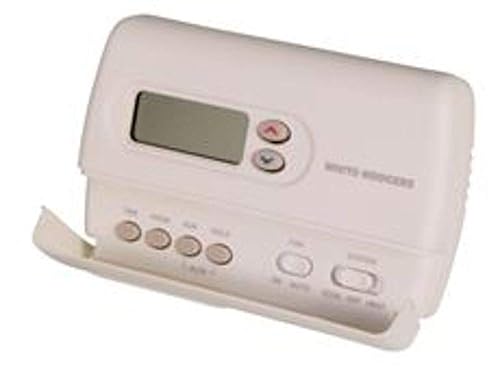
White-Rodgers 1F80-361 Emerson 80 Series Programmable Thermostat
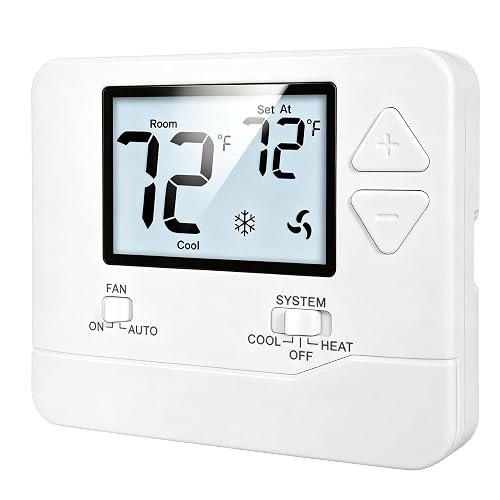
Heagstat Non-Programmable Thermostat 1 Heat/1 Cool
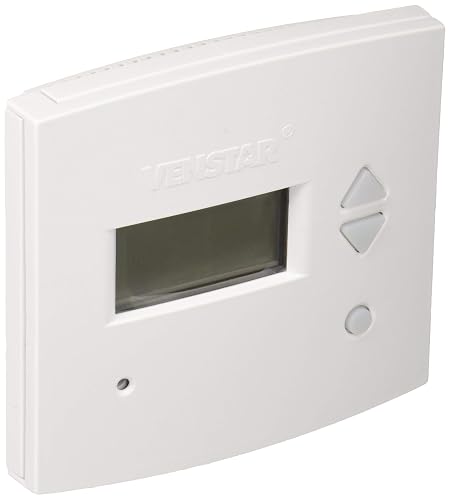
Venstar T2800 Platinum Slimline Thermostat
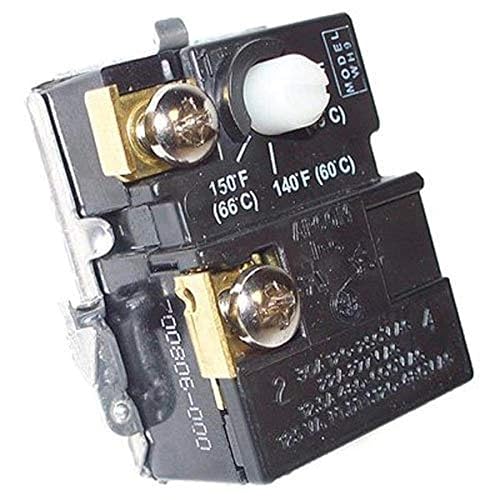
Reliance 9000507-045 Lower Electric Thermostat

Google Nest Temperature Sensor 3-Pack
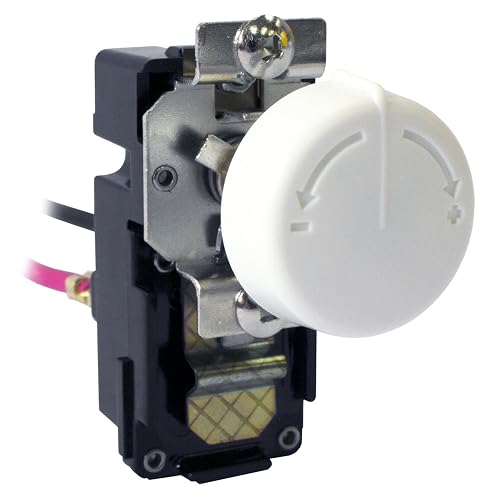
King Electric TKIT-1BW Built-In Thermostat Kit

OJ Microline UTN4 Radiant Floor Thermostat
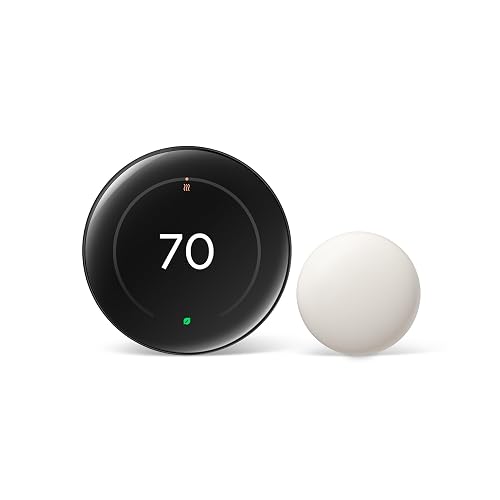
Google Nest Learning Thermostat 4th Gen + Sensor (Obsidian)
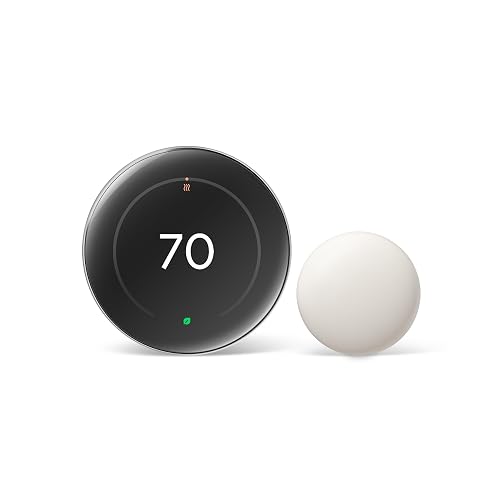
Google Nest Learning Thermostat 4th Gen + Sensor (Silver)
A Breakdown Of The Leading Choices
Pulled straight from contractor bulk packaging, the 1F80-361 is the kind of thermostat an HVAC installer grabs without thinking twice. It runs 24-volt control wiring and works with millivolt (very low voltage) systems too, so it covers most gas, oil, and electric single-stage setups you’d find in a typical home.
Compared to the simpler units lower on this list, this one adds real scheduling flexibility without piling on app clutter. It’s the sensible middle ground for someone who wants set-it-and-forget-it behavior but doesn’t need Wi-Fi or learning tricks.
Bright Spots
- 5+1+1 programming (separate weekday, Saturday, and Sunday schedules) with up to four daily periods keeps comfort dialed in around a real routine.
- Compatible with millivolt systems, so it works with some fireplace inserts and older baseboard setups other programmable units reject.
- Contractor packaging means it’s often a lower entry point per unit than retail-boxed alternatives.
Things To Consider
- Single-stage only, so it cannot run multi-stage heating or cooling equipment found in larger homes.
- No Wi-Fi, which means no app, no voice control, and no remote adjustment from work or vacation.
- Owners commonly report a learning curve on the menu button layout the first time they program schedules.
Who It Suits Best
Homeowners with a single-stage furnace and air conditioner who want scheduling without a learning curve or smart-home setup.
Consider Something Else When
You want a learning thermostat, in which case the Google Nest Learning Thermostat 4th Gen handles adapting routines automatically.
Heagstat’s no-frills wall unit covers one heat stage and one cool stage, nothing more. It runs on 24VAC (the low-voltage standard for most forced-air systems) and accepts a maximum of two to five wires, so you need to check your existing wiring before ordering.
While the White-Rodgers above leans into scheduling, this one skips programs entirely. Set the temperature and walk away. For a guest room, rental, or workshop that doesn’t need routine changes, that simplicity becomes the whole point.
Points In Its Favor
- White backlight on the display makes the current setting easy to read at a glance, even in dim hallways.
- Manual controls mean no menu diving, which works well for anyone who doesn’t want to program a schedule.
- Lower entry point than programmable or smart models, useful for replacements on a tight budget.
Worth Noting
- Limited to 2-5 wire setups, so homes with 6-8 wire configurations are not compatible.
- No scheduling means more manual adjustment across seasonal changes.
At A Glance
Made For
Renters, landlords, and homeowners with a simple 1H/1C system who just want manual control without app setup.
Look Elsewhere When
You want any scheduling or remote control, which the Reliance 9000507-045 doesn’t offer either, but the White-Rodgers 1F80-361 adds full 5+1+1 programming at a similar tier.
The T2800 lives in a different category than the two wall units above. It’s built for light commercial spaces but works in larger homes with multi-stage equipment, handling 3 heat/2 cool systems with configurable outputs. A small office, storefront, or in-law suite with zoning needs fits this profile well.
Service techs tend to gravitate here because the backlit color-coded keys and large display are genuinely easy to navigate during a service call. Heat pump compatibility (a system that runs heating and cooling from a single outdoor unit) broadens the install options, and the non-volatile memory (settings stored on the device that survive a power loss) preserves schedules if the power ever drops.
The Value In It
- 3 heat/2 cool staging and heat pump support give it flexibility most residential programmable units don’t match.
- Service and UV light reminders reduce the chance of forgetting routine HVAC maintenance, which most thermostats skip.
- Configurable outputs let installers adapt the wiring to a wider range of equipment layouts.
Honest Caveats
- More complex to program than a simple 1H/1C wall unit, and not a casual DIY install for most homeowners.
- The commercial feature set may be overkill for a small single-stage home system.
Best Suited To
Property managers and homeowners with light commercial systems, zoned setups, or multi-stage heat pumps who want robust scheduling.
Swap It Out When
You just need a single-stage programmable option, in which case the White-Rodgers 1F80-361 handles that simpler job with less wiring complexity.
This Reliance part is in a different league from the wall thermostats above. It mounts to the lower position of an electric water heater, not to a wall, and controls the lower heating element inside the tank. It’s a direct replacement part for AO Smith, Reliance, and compatible electric water heater brands.
For most people this is a “the hot water went cold at 7am” emergency part, not a planned upgrade. Plumbers keep it on the truck, and handy homeowners keep a spare in the garage.
Noteworthy Benefits
- Drop-in replacement for a wide range of electric water heater brands, which cuts downtime when a lower element thermostat fails.
- Specialized part means you get a component designed specifically for hot water tank use rather than a generic stand-in.
Points To Keep In Mind
- Only works on electric water heaters, not gas, tankless, or wall-hung boilers.
- Replacement requires shutting off power at the breaker and pulling the access panel, which may not suit every homeowner’s comfort level.
The Right Fit
Anyone maintaining a standard residential electric water heater who needs a lower-element thermostat for a repair or a spare on hand.
Another Choice May Suit
You need ambient air temperature control, because the OJ Microline UTN4 below is built for radiant floor heating instead of water heater elements.
These little puck-shaped sensors only work alongside a compatible Nest thermostat, so they aren’t a standalone solution. Place one in the baby’s room, another in the home office, and a third upstairs, and the main thermostat averages the readings to balance comfort across the house.
For homes where one thermostat at the end of the hallway never quite captures the upstairs nursery, this three-pack is a clean way to fix the problem. Each sensor communicates over Bluetooth Low Energy (a wireless protocol designed to use very little battery power) at ranges up to about 50 feet from the base.
The Practical Payoff
- Three sensors in one pack covers most typical multi-room setups in a single purchase.
- Solves the “thermostat is downstairs, bedroom is freezing” problem that single-point thermostats can’t address.
- Small, low-profile design that doesn’t interrupt wall decor in visible rooms.
Some Limits To Know
- Requires a compatible Nest thermostat already installed, otherwise these sensors have no function.
- Bluetooth range of about 50 feet means very large or multi-floor homes may need additional routing considerations.
Key Product Details
Who Will Love This
Existing Nest thermostat owners whose homes have hot and cold spots that a single wall reading can’t solve.
Skip It When
You don’t yet own a Nest thermostat, because the Google Nest Learning Thermostat 4th Gen below includes one sensor in the box.
King Electric’s TKIT-1BW is a snap-action thermostat kit designed to drop into specific King wall heater models, namely the PAW and W series. It’s a single-pole, single-throw design (a basic switch setup that opens or closes a single circuit) with a bi-metal sensor (a temperature-sensing element made of two bonded metals that bend with heat) and a 48 to 80 degree Fahrenheit operating range.
Where the Venstar above is a control board for central HVAC, this is a replacement part for a single room wall unit. In a finished basement or converted garage, that distinction matters: a whole-home learning thermostat can’t fix a wall heater whose dial has lost calibration.
Everyday Advantages
- Fully protected bi-metal sensor reduces wear on the temperature-sensing element over time.
- Direct fit for King PAW and W series wall heaters, avoiding the need to modify the heater cabinet during install.
- Positive response snap-action gives a firm, decisive click as the room temperature crosses the setpoint.
Room For Improvement
- Limited compatibility means it only fits specific King heater models rather than acting as a universal wall heater thermostat.
- 48 to 80 degree F range is narrower than whole-home thermostats, which often span 40 to 90 degrees or more.
Whose Shelf It Belongs On
Anyone with a King PAW or W series wall heater who needs a replacement thermostat kit or a spare for the parts bin.
Reach For A Different Pick When
You need floor heating control, because the OJ Microline UTN4 below is purpose-built for in-floor radiant systems instead.
The UTN4 targets a very specific job: controlling electric radiant floor heating, which is heating systems that warm a room via cables or mats installed beneath tile, stone, laminate, or engineered wood. It accepts both 120V and 240V setups, includes a built-in Class A GFCI (a high-sensitivity safety device that cuts power fast if it detects a ground fault, required by code for floor heating), and uses dual sensing to read both floor and air temperature.
Unlike the King Electric kit above, which is a mechanical replacement part, this is a digital wall control with a proper screen and button layout. It also ships with a floor sensor included, which saves a separate trip to the supply house.
A Favorable Mix
- Built-in Class A GFCI meets the safety code requirement for underfloor heating, eliminating a separate breaker step in many installs.
- Dual sensing reads both ambient air and floor temperature, which protects wood and laminate from overheating.
- Works with 120V and 240V systems, covering most North American residential floor heating circuits.
Factors To Consider
- Non-programmable, so anyone wanting a seven-day schedule would need a different control.
- Specifically designed for radiant floor systems and not interchangeable with central HVAC wall thermostats.
Feature Snapshot
Built With In Mind
Homeowners with electric radiant floor heating in a bathroom, kitchen, or basement who want a code-compliant, dual-sensing wall control.
Where A Sibling Pick Shines
You want whole-home control with smart features, in which case the Google Nest Learning Thermostat 4th Gen below covers central air systems with adaptive learning.
The 4th generation Nest Learning Thermostat picks up where its predecessors left off, learning your temperature preferences and adjusting as routines change. This bundle pairs the thermostat in an Obsidian finish with a second-generation Nest Temperature Sensor, so you get a multi-room starting point out of the box.
Compared to the wall thermostats earlier in this list, this is a different category of experience. App control, scheduling automation, and integration with broader smart-home platforms are the main draws, with the included sensor helping address the hot and cold spot problem discussed in the Nest sensor review above.
Everyday Perks
- Learning behavior builds a schedule automatically, removing the manual programming step of units like the White-Rodgers 1F80-361.
- Included 2nd gen sensor adds multi-room capability without a separate purchase.
- Obsidian finish gives a darker, more modern look compared to traditional white wall units.
Things To Weigh
- Setup requires a compatible HVAC system and may involve a C-wire (a continuous power wire, common in newer systems but sometimes absent in older homes) or the included power adapter in older homes.
- Higher entry point than basic programmable thermostats, and you pay for smart features you may not use.
Quick Facts
Who Should Grab It
Smart-home households already invested in the Google ecosystem who want a learning thermostat with multi-room flexibility from day one.
Skip It When
You’d rather buy the thermostat alone, because the Heagstat Non-Programmable Thermostat 2 above handles a basic 1H/1C system at a much lower cost.
The Silver version of the 4th generation Nest Learning Thermostat matches its Obsidian sibling feature for feature, with the only meaningful difference being the lighter finish. For homes with white or neutral wall colors, the silver option tends to blend in better without the dark contrast.
The same learning behavior, the same 2nd generation Nest Temperature Sensor in the box, and the same smart-home integration. It’s the same product philosophy as the Obsidian version above, just a different aesthetic call for your living space.
The Upside
- Same learning engine and sensor as the Obsidian version, so multi-room comfort and routine automation carry over directly.
- Silver finish pairs well with light or neutral wall colors common in contemporary homes.
- Bundle pricing typically offers better value than buying the thermostat and sensor separately.
Worth Bearing In Mind
- Install complexity mirrors the Obsidian version, including the C-wire consideration in older homes.
- Premium positioning means a meaningful price jump over programmable units like the White-Rodgers 1F80-361.
Perfect Match For
Smart-home households who want the 4th generation Nest experience in a finish that matches lighter wall colors and modern interiors.
Consider Something Else When
You’d prefer the darker finish, because the Google Nest Learning Thermostat 4th Gen in Obsidian above offers identical specs in a darker color.
Picking a Thermostat That Actually Fits Your System
The first step is matching the thermostat to what your home already runs. Look at the wiring at the wall and count the conductors (the individual low-voltage wires running from the HVAC system to the thermostat): 2 to 5 wires covers a basic single-stage system, while 6 to 8 wires suggests multi-stage equipment that needs a smarter control. A 24VAC label means low-voltage, standard for most forced-air furnaces, while millivolt (very low voltage) systems run older baseboard or fireplace inserts.
Next, think about how you actually live. People with predictable weekday schedules benefit most from 5+1+1 programming, while those with shifting routines often prefer a learning thermostat that adapts on its own. Multi-story homes with hot and cold spots almost always need remote sensors to balance comfort across rooms, and that means choosing a system that supports them out of the box.
Consider the install too. A mechanical wall heater replacement like the King Electric TKIT-1BW is a different project from swapping a central air wall unit, and a radiant floor control like the OJ Microline UTN4 needs a floor sensor loop already in place. GFCI requirements (Ground Fault Circuit Interrupter, a device that quickly cuts power if electricity strays outside its intended path) apply to floor heating by code, so picking a thermostat with that built in saves an extra breaker step.
Finally, weigh whether smart features actually fit your routine. App control, voice assistants, and learning algorithms are genuinely useful for connected households, but they’re unnecessary overhead for a guest room or workshop. Match the feature set to the room and the user, and the choice usually becomes clear.
Common Slip Ups and Smart Spending
Pitfalls Shoppers Hit
The most common mistake is buying a thermostat before checking the existing wiring. A 6-wire setup cannot drop into a thermostat built for 2 to 5 wires, and an electric radiant floor system needs a dedicated floor control, not a forced-air wall unit. The second frequent miss is ignoring the C-wire requirement on smart thermostats, which leaves installers with a powered but non-functional unit on the wall. The third is choosing a learning thermostat for a guest room or seasonal cabin where the routine never stabilizes, so the device never really learns anything useful.
Where The Extra Money Goes
Higher tier models in this category earn their premium through better sensing, scheduling, and build quality. A 4th generation Nest pairs a learning algorithm with a 2nd generation remote sensor, which is a fundamentally different control experience than a manual 1H/1C wall unit. Commercial-grade units like the Venstar T2800 add multi-stage output, heat pump compatibility, and service reminders that protect the HVAC equipment long term. Floor heating thermostats earn the jump by including the required Class A GFCI (a high-sensitivity safety switch that detects tiny current leaks and shuts off power fast, mandated for floor heating circuits) and dual sensing, which prevents damage to sensitive floor finishes.
Frequently Asked Questions
How do I know what kind of thermostat my system needs?
Look at the wiring behind your current thermostat and count the conductors. Two to five wires usually means a basic single-stage system, while six to eight wires points to multi-stage or heat pump equipment that needs more advanced controls.
Can a smart thermostat work in a home without a C-wire?
Many modern smart thermostats include a power adapter or compatible workaround for older homes without a C-wire (a continuous power wire that delivers steady low-voltage current to the thermostat), but it adds a step to the install compared to a home that already has one in the wall.
Do I need a separate sensor for a multi-story home?
Single-point thermostats read the temperature at one wall, which often misses the upstairs nursery or finished basement. A remote sensor bundle, like the 3-pack in this list, balances the reading across rooms and helps the system target the right space.
What is a GFCI and why does my floor heating need one?
A GFCI (Ground Fault Circuit Interrupter) is a safety device that cuts power fast when it detects electricity leaking outside its intended path. Floor heating systems run in or near wet areas, so building codes require a Class A GFCI, the most sensitive tier, to protect against shock.
Are learning thermostats actually better for savings?
Learning thermostats help most in homes where routines genuinely change week to week, since they adapt on their own. For a stable weekday routine, a well-programmed 5+1+1 unit like the White-Rodgers 1F80-361 can deliver similar scheduling without the smart-home overhead.
Final Verdict
The right thermostat is the one that matches your system, your wiring, and the way you actually live day to day. Wall units like the Heagstat and White-Rodgers cover straightforward setups, while learning thermostats and remote sensors add a layer of automation for connected homes. Specialty controls for water heaters, wall heaters, and floor heating round out the list, so the best choice really comes down to where it’s going and what it’s controlling.