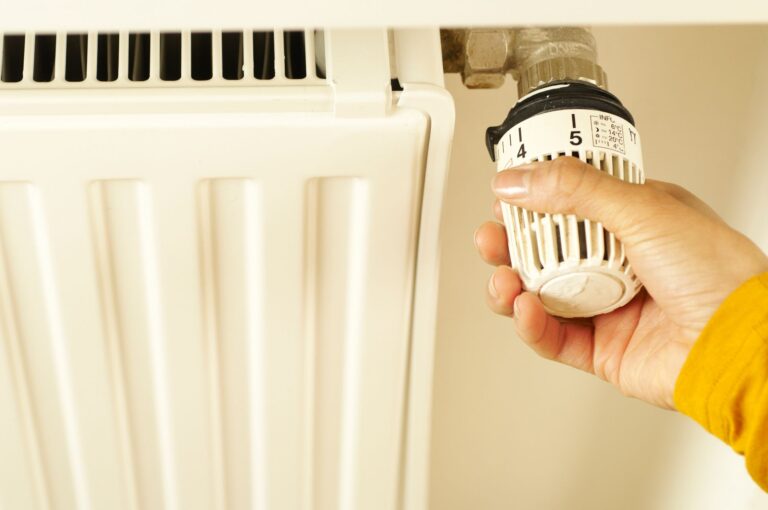

Heating and cooling a home with rooms at wildly different temperatures is frustrating. Drafty upstairs bedrooms, chilly basements, and toasty attics all compete for attention from a single wall control. Zoning thermostats solve that by letting each area of your home run at its own setpoint, and the picks below cover the wall-mounted controllers and single-stage options that pair well with zoning setups, ducted dampers, and add-on relays. Whether you are retrofitting an older house or finishing a new addition, this list focuses on practical, hardwired units you can actually wire in and use.
A Closer Look At The Lineup
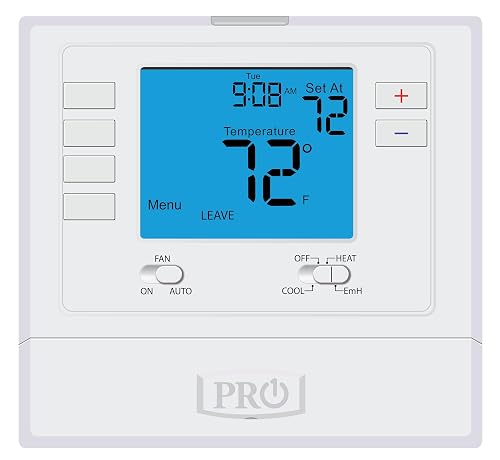
PRO1 T725 Programmable Heat Pump Thermostat

PRO1 T771 Single Stage Non-Programmable Thermostat
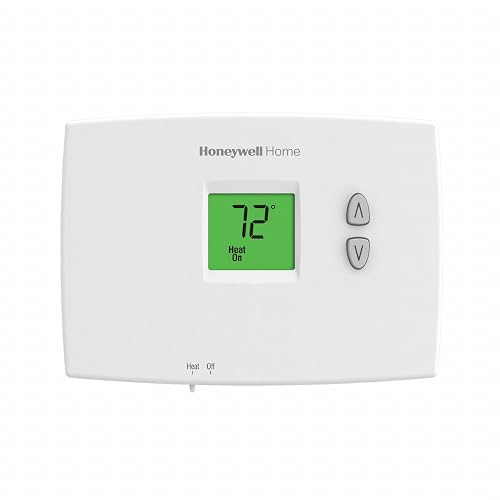
Honeywell TH1100DH1004 PRO 1000 Heat Only Thermostat
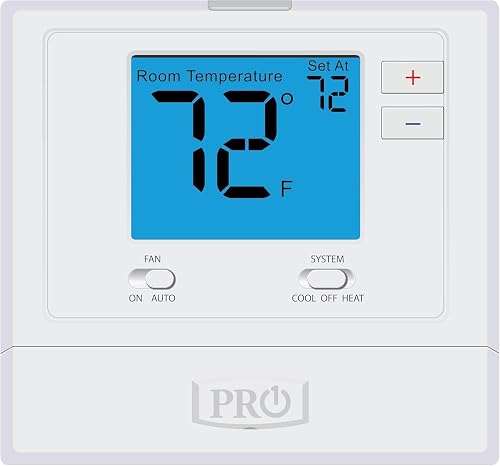
PRO1 T701 Single Stage Non-Programmable Thermostat

PRO1 T715 Multi-Stage Programmable Gas Thermostat
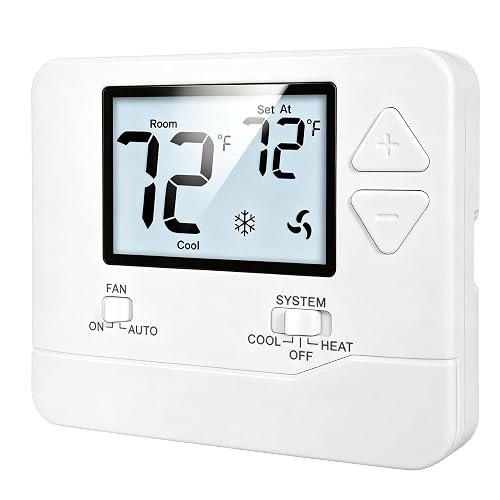
Heagstat Non-Programmable 1 Heat/1 Cool Thermostat
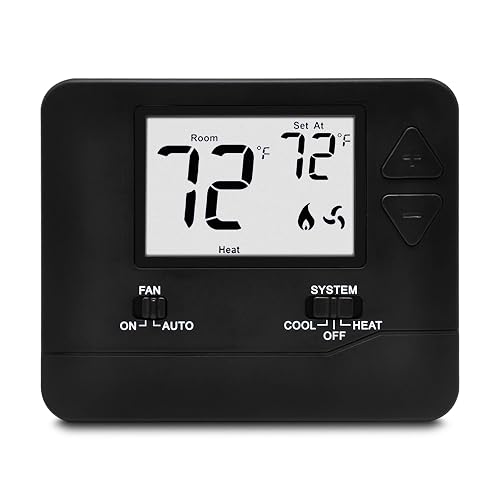
ELECTECK Digital Non-Programmable Thermostat, Black
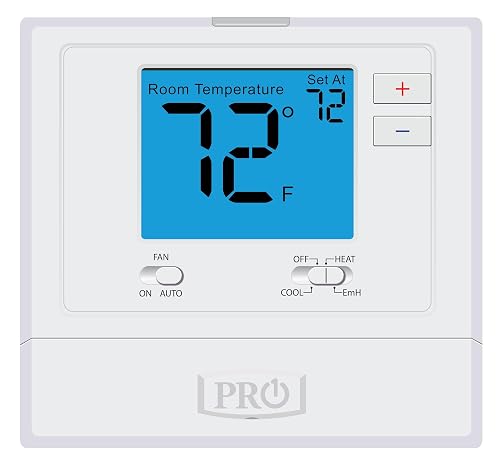
PRO1 T721 Non-Programmable Heat Pump Thermostat
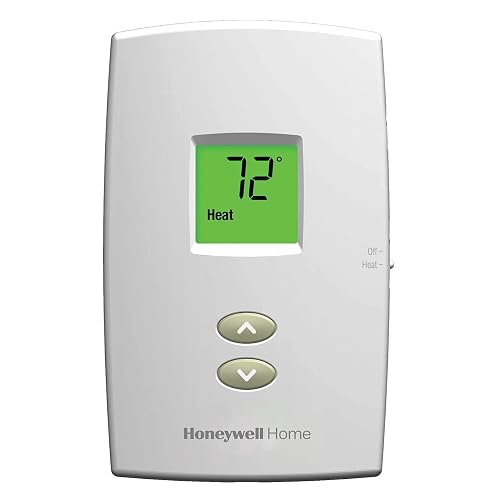
Honeywell TH1100DV1000 Pro 2-Wire Heat Only Thermostat

PRO1 T805 Programmable Wall Thermostat
A Breakdown Of The Leading Choices
The PRO1 T725 sits at the top of the list because it covers two of the most common zoning scenarios in one box: a 2 heat/1 cool heat pump and a 1 heat/1 cool conventional system. For a finished basement with a minisplit feeding a bedroom zone, that dual compatibility removes the guesswork at install time. The 4 sq. in. blue backlit screen is easy to read from across a hallway, and the 7-day or 5/1/1 schedule lets each zone drift up at night and back down in the morning without manual nudging.
Programmable scheduling is the quiet win here. You can set four daily periods (wake, leave, return, sleep) so a guest suite stays cooler during the day while the main living area keeps its usual 72°F comfort band. Compared with the simpler PRO1 T701 below, the T725 trades some set-it-and-forget-it ease for genuine weekday/weekend flexibility.
Reasons It Performs
- Dual heat pump and conventional compatibility, which suits most retrofit zones without rewiring the air handler
- Four daily schedule periods (wake, leave, return, sleep) translate into real overnight energy savings on quiet zones
- 4 sq. in. blue backlit display stays readable in a dim hallway at 2 a.m.
- Larger T700 platform with battery or hardwire power options for flexible mounting locations
- 7-day programming matches how a real household uses different rooms on weekdays versus weekends
Worth Noting
- Programming takes a careful read of the manual, and most owners spend a solid evening setting up the first schedule
- Lacks smart-home or app control, so you cannot tweak a zone from the office
Key Specs
Made For
Homeowners running a heat pump with a zoning panel who want weekday and weekend schedules on at least one zone.
Reach For A Different Pick When
You only need a basic non-programmable controller for a simple 1 heat/1 cool system, in which case the PRO1 T701 covers the same job with fewer settings to manage.
The PRO1 T771 is the model you reach for when the zone in question is not a finished living space. A detached garage, a workshop over the garage, or a pole barn with a single gas wall heater all live in the 35 to 65°F range, and this thermostat’s wide setpoint range from 25°F to 90°F handles that without complaint. There is no programming, no app, no scheduling nonsense, just a dial and a backlit screen.
For zoning work, that stripped-down approach has real appeal. Pair the T771 with a damper actuator on a seldom-used bonus room and you get a setpoint that the homeowner can bump up before walking in, then ignore. Compared with the more programmable PRO1 T725, this one trades schedules for simplicity and a low-temp mode that most residential units refuse to offer.
Positive Takeaways
- Setpoint range from 25°F to 90°F covers unconditioned spaces where pipes can freeze in winter
- Single-stage 1 heat/1 cool design keeps wiring and setup painless for new zoning zones
- 4 sq. in. blue backlit display is readable through safety glasses in a dim shop
- Swing adjustment and calibration help tighten comfort in spaces with drafty duct runs
Trade Offs
- No scheduling, so unoccupied zones still need manual setpoint changes
- Not suited to multi-stage systems or heat pumps, which rules out most whole-home installs
Best Suited To
Homeowners splitting off a garage, shed, or workshop into its own heating zone who do not want to learn a programming menu.
Swap It Out When
You need a programmable controller for a 2 heat/1 cool heat pump system, in which case the PRO1 T725 is a better fit.
The Honeywell TH1100DH1004 has been a workhorse in mechanical rooms for years, and that pedigree matters when you are adding a heat-only zone to a hydronic or forced-air system. The horizontal layout makes it easier to mount in tight boiler-room enclosures where a tall vertical stat would crowd the wiring. Dual power, hardwire or battery, means you can drop it in wherever a 24VAC common is already waiting.
For zoning, the appeal is its quiet mechanical feel. Precise comfort control in 1°F (0.5°C) increments keeps a rarely used guest wing from swinging ten degrees between calls. Compared with the PRO1 T771 above, this Honeywell is locked to a heat-only signal and the 40 to 90°F range, which is fine for indoor living zones but rules out a cold garage.
Key Advantages
- Dual power (hardwire or battery) suits both new and retrofit heat-only zones
- Horizontal housing fits shallow low-voltage boxes and crowded mechanical rooms
- Backlit display makes nighttime tweaks in a basement zone easier
- Adjustable temperature scale from 40 to 90°F for standard rooms
Honest Caveats
- Heat-only, so it cannot drive a cooling zone on its own
- No programmability beyond a single setpoint, so efficiency gains are modest
- Older Honeywell design with fewer mounting options than newer PRO1 models
Who It Suits Best
Owners adding a heat-only zone to an older boiler system who want a wall thermostat that just runs.
Not Your Match When
You need cooling control on the same zone, in which case the Honeywell TH1100DV1000 or a 1 heat/1 cool model is the right tool.
The PRO1 T701 is a comfortable middle-of-the-road controller. It runs 1 heat/1 cool conventional systems, which covers most gas furnace plus central air pairings in suburban homes. The 4 sq. in. blue backlit display is paired with a glow-in-the-dark light button, so a sleepy homeowner can find the right key at 5:30 a.m. without flipping the room light on.
Where this one shines in a zoning setup is the choice between battery or hardwire power. Some older homes have no common wire run to the original thermostat location, and the battery option lets you reuse that location. Compared with the Honeywell TH1100DH1004 above, the T701 adds cooling control and the glow-in-the-dark button, which is a small thing that pays off every winter morning.
Everyday Wins
- Glow-in-the-dark light button makes mid-winter adjustments easy in a dark hallway
- Gas or electric configurable setup, so the same stat works on a furnace or an electric air handler
- 4 sq. in. blue backlit display is easy on aging eyes in low light
- Battery or hardwire power keeps the install flexible in older homes without a common wire
Points To Note
- No scheduling, so weekend setpoint changes still happen by hand
- Single-stage only, so multi-stage equipment will need a different model
Right Fit For
Bedroom or hallway zones where a simple setpoint and a backlit screen are all the family ever uses.
Consider Something Else When
You want to drop the setpoint automatically during work hours, in which case the PRO1 T805 programmable model is a smarter move.
The PRO1 T715 is the multi-stage sibling of the T725, and that distinction matters in a zoning retrofit. A two-stage furnace plus a two-stage air conditioner gives a system finer control at part load, and pairing that with zoning panels keeps temperature swings short. The T715 runs 2 heat/2 cool conventional systems with a 7-day, 5/1/1, or fully non-programmable mode, which is unusual flexibility at this level.
For larger homes with a basement zone and an upstairs zone, the programmable schedule can quietly back the upstairs zone off ten degrees at bedtime while keeping the main level comfortable. Compared with the simpler PRO1 T701, you trade the glow-in-the-dark button for genuinely useful scheduling on a multi-stage HVAC system.
The Value In It
- 2 heat/2 cool compatibility for two-stage furnaces and condensing units
- Three schedule modes (7-day, 5/1/1, or non-programmable) for households that like options
- 4 sq. in. blue backlit display and glow-in-the-dark light button for low-light operation
- Battery or hardwire power options for retrofit or new construction installs
Some Limits To Know
- Program setup still takes patience, especially for households with rotating shifts
- No Wi-Fi, so any setpoint change means walking to the wall
Feature Snapshot
Who Will Love This
Owners of larger two-stage homes who want per-zone programming without learning a smartphone app.
Look Elsewhere When
Your HVAC is single-stage, in which case the PRO1 T805 saves the second stage for future equipment.
The Heagstat is a simple, no-fuss wall thermostat built around 24VAC conventional single-stage systems. It accepts two to five wires, which means it can land in older homes where the original wiring never reached six or more conductors. The white backlight is gentle enough for a guest room but bright enough to read in a dark hallway.
For a zoning job, this is the stat you grab when the customer wants a low-cost replacement on a rental unit or a seldom-used in-law suite. Compared with the PRO1 T701, the Heagstat gives up the glow-in-the-dark button and the larger T700 platform, but it still drives a single-stage 1H/1C system cleanly with no scheduling menus to fight.
Useful Strengths
- Accepts 2 to 5 wires, so it works in older homes with limited thermostat cable
- Single-stage 1H/1C compatibility suits most gas, oil, and electric furnace pairings
- White backlight is easy on the eyes in a dim guest room
- Simple controls that anyone can hand off to a tenant or houseguest
Practical Considerations
- No programmability, so efficiency comes from manual setpoint changes
- Not compatible with heat pumps or multi-stage equipment, ruling out modern whole-home installs
Built With In Mind
Landlords and homeowners adding a small bedroom or in-law suite zone on a tight renovation budget.
A Better Fit Elsewhere
You need a programmable schedule, in which case the PRO1 T805 handles the same single-stage equipment with a much larger display.
The ELECTECK thermostat is the same internal 1 heat/1 cool non-programmable design as several other entries in this list, but it is finished in a black housing that disappears into a dark accent wall or a modernized media room. That matters more than it sounds: most builders hand you a beige or white plastic rectangle, and swapping to black on a single accent wall can make a finished basement feel intentional.
Functionally, it covers single-stage heating, cooling, and basic heat pump (without auxiliary heat) systems, with electric or gas/oil configuration via internal jumpers. Compared with the white-bodied Heagstat above, you give up a slightly brighter backlight in exchange for a finish that suits a renovated zone.
Bright Spots
- Black housing blends with dark accent walls and modernized media rooms
- Configurable for gas, oil, or electric systems with internal jumpers
- Works with single-stage cooling and basic heat pump (no aux) systems
Where It May Fall Short
- Not for multi-stage HVAC or 120/240V electric baseboard, so whole-home retrofits are limited
- Some owners report the display can be a touch dim at default brightness in bright daylight
Quick Facts
Perfect Match For
Style-minded renovators who want a thermostat that visually disappears into a dark accent wall in a finished basement.
Skip It When
You need a programmable controller, in which case the PRO1 T805 is a stronger pick for the same single-stage system.
The PRO1 T721 is the no-schedule version of the T725. It accepts 2 heat/1 cool heat pump or 1 heat/1 cool conventional systems, which is the same dual compatibility as its programmable sibling. The 4 sq. in. blue backlit display and glow-in-the-dark light button make it a sensible pick for older family members who want a familiar-looking wall stat with no menus to learn.
For a zoning retrofit, the T721 shines when one zone is a heat pump and another is a conventional gas furnace. You can use the same wall stat on either without buying two different models. Compared with the PRO1 T701 above, you trade gas/electric-only configuration for genuine heat pump support.
Good Reasons To Consider
- Dual heat pump and conventional compatibility in one model
- Glow-in-the-dark light button for low-light operation in hallways and bedrooms
- Choice of AA battery or hardwire power for retrofit-friendly installs
Factors To Consider
- No scheduling, so an empty upstairs zone still wastes energy until you remember to bump it
- Heat pump only goes to 2H/1C, so three-stage systems need a different model
The Right Fit
Homeowners mixing heat pump zones with conventional zones in the same home who want a single, simple wall stat for each.
Where Another Pick Suits Better
You want 7-day scheduling, in which case the PRO1 T725 is the same compatibility with a programming menu attached.
The Honeywell TH1100DV1000 is built for the oldest of installs: a two-wire heat-only system. That describes a lot of baseboard heater zones added to finished basements and additions in the 1980s and 1990s, where pulling a third wire back to the panel was never done. The unit runs on a backlit display, shows ambient temperature continuously, and offers one-touch access to the active setpoint.
For a zoning retrofit, that two-wire compatibility is a quiet superpower. You can add a heat-only zone without an electrician pulling new cable, which keeps the project budget reasonable. Compared with the PRO1 T771 above, you lose the wide setpoint range and gain a tighter Honeywell build aimed squarely at residential living spaces.
What It Does Well
- Two-wire install drops into older baseboard zones with no new cabling
- Continuous ambient temperature display at all times, even when not in setpoint mode
- Built-in compressor protection on units configured for cooling, helpful for retrofits
- Backlit display remains readable in a dim bedroom at night
Points To Keep In Mind
- Heat-only, so cooling zones need a separate stat elsewhere in the home
- Older Honeywell housing, with a less modern look than the PRO1 T700 platform
Whose Shelf It Belongs On
Homeowners with older 120/240V electric baseboard zones who want a Honeywell stat that wires in cleanly to the existing two conductors.
Another Choice May Suit When
You need a heat pump or a cooling zone on the same stat, in which case the PRO1 T721 covers that without rewiring.
The PRO1 T805 closes the list with the biggest screen in the family: a 7 sq. in. blue backlit display that is genuinely easy to read across a long living room. It runs single-stage 1 heat/1 cool conventional systems and offers 7-day, 5/1/1, or non-programmable modes, so the same stat works whether the household uses a complex schedule or just a single setpoint.
For aging-in-place households or homes where a family member needs a large, clear readout, the T805 is a comfortable upgrade. The glow-in-the-dark light button handles the same low-light tweaks as the smaller T701 and T721. Compared with the PRO1 T715 above, you trade two-stage support for that much friendlier display and the same flexible scheduling.
Why It Works Well
- 7 sq. in. blue backlit display is the largest in this lineup, and a real asset for older eyes
- 7-day, 5/1/1, or non-programmable schedule flexibility on a single-stage system
- Glow-in-the-dark light button makes late-night setpoint changes less of a hunt
- T800 platform with battery or hardwire power for retrofit-friendly installs
Room For Improvement
- Single-stage only, so two-stage equipment will need a different model
- Larger face can look oversized in a small hallway or compact bedroom
Feature Card
Who Should Grab It
Households that want a clear, oversized display and a programmable schedule on a basic single-stage HVAC system.
Reach For A Different Pick When
Your HVAC is two-stage, in which case the PRO1 T715 supports the equipment the T805 cannot drive.
What To Weigh Before Picking A Zoning Thermostat
Match The Stat To The Equipment Stage
Zoning thermostats fall into two camps: single-stage and multi-stage. Single-stage stats like the PRO1 T701, T805, and Honeywell TH1100DH1004 fire the furnace or air handler on a single ramp. Multi-stage stats like the PRO1 T715 modulate a two-stage furnace for finer control and longer runtimes, which can help a zoning panel avoid the short-cycling that happens when a small zone only needs a sliver of heat. The wrong match will still heat the home, but the equipment will not run as efficiently as it could.
Decide Programmable Versus Set-And-Forget
Programmable scheduling pays off in zones that go unused for long stretches. A bonus room over the garage or a finished basement office that sits empty from 9 to 5 benefits from a setback of several degrees during work hours. The PRO1 T725, T715, and T805 all offer 7-day or 5/1/1 scheduling. If the zone is always occupied, like a master bedroom, a non-programmable stat like the PRO1 T771 or Honeywell TH1100DV1000 removes the menu-clicking entirely.
Check Your Wiring Before You Buy
The most common install surprise is the number of conductors behind the wall. A two-wire heat-only line rules out any stat that needs a common, while a six or seven-wire cable opens the door to multi-stage and heat pump options. The Honeywell TH1100DV1000 is built for the lean two-wire case, while the Heagstat accepts two to five wires, which is the most flexible middle ground for older homes with limited cabling.
Consider The Space And The Reader
Garages, workshops, and outbuildings with freeze risk need a wide setpoint range that can drop into the 30s, which the PRO1 T771 covers from 25°F to 90°F. Living spaces with aging eyes or large rooms benefit from oversized displays like the 7 sq. in. screen on the PRO1 T805. Style-minded renovations can lean on a black-housing stat like the ELECTECK to keep the wall visually clean.
Key Considerations Across These Picks
Mistakes Worth Dodging
The most common slip-up is choosing a thermostat by feature list instead of by system compatibility. A 2 heat/2 cool stat on a 1 heat/1 cool furnace will technically work but wastes capability, while a single-stage stat on a multi-stage system will short-cycle the equipment in smaller zones. Always confirm the stat’s heat/cool stages match the air handler before purchase.
The other trap is ignoring the wire count at the mounting location. Zoning panels are often added in spots where the original cable was only two or three conductors, and a stat that needs a common wire simply will not power up without a workaround. Read the install manual or pull the cover plate before ordering.
Where The Extra Money Goes
Higher-tier stats in this category add real comfort features, not just branding. The PRO1 T805 and T725 layer in 7-day scheduling, larger backlit displays, and glow-in-the-dark buttons that make the thermostat usable at 2 a.m. without fumbling. Multi-stage models like the PRO1 T715 add equipment-matching ability for two-stage HVAC, which keeps runtime smoother in zones that do not need full output.
The upgrade is worth it for any zone that gets used daily or where someone in the home has vision differences. For a guest room that sees a few weekends a year, a non-programmable single-stage stat is more than enough.
Frequently Asked Questions
What is a zoning thermostat, in plain terms?
A zoning thermostat is a wall controller that runs one section of a home independently from the rest, usually by signaling a damper actuator or a zoning panel that opens and closes ducts. The home is divided into zones, and each zone has its own setpoint.
Do I need a smart thermostat for zoning?
No, zoning works with hardwired non-programmable and programmable stats too, as long as each stat can communicate with the zoning panel or damper relays. The picks in this list are wall-mounted, low-voltage units that work without Wi-Fi.
Can a single-stage thermostat work on a multi-stage HVAC system?
It will run, but the HVAC equipment will only use the first stage, which removes the efficiency benefit of having a two-stage furnace. For multi-stage equipment, a multi-stage stat like the PRO1 T715 is a better match.
How do I know if my system is heat pump or conventional?
A heat pump typically has an outdoor unit that runs year-round, and the indoor coil sits above a smaller air handler. A conventional system pairs a gas furnace or electric air handler with a separate outdoor condensing unit. The thermostat model description will list heat pump or conventional compatibility.
Is a bigger display actually useful?
In long living rooms, finished basements, or homes where someone in the household has aging eyes, a 7 sq. in. display like the PRO1 T805 is genuinely easier to read from across the room. In tight hallways, a smaller face can look less intrusive.
The Takeaway
Zoning thermostats are less about flashy features and more about matching the wall stat to the equipment behind it. Start with system compatibility, then decide whether scheduling or a wider setpoint range solves the comfort problem you are actually trying to fix. The right stat in the right zone pays you back quietly every month, in rooms that finally feel the way you wanted them to.