
Picking the right wall thermostat for a light commercial or mixed-use space is rarely as simple as grabbing whatever’s on the shelf at the local supply house. The unit has to match the HVAC system already on the wall, support the right voltage, and survive years of tenant or staff use without becoming a service call. This roundup focuses on eight Trane-compatible and Trane-adjacent wall thermostats that work well in offices, retail back rooms, workshops, and similar settings where reliability matters more than flashy touchscreens.
A Snapshot Of The Selections
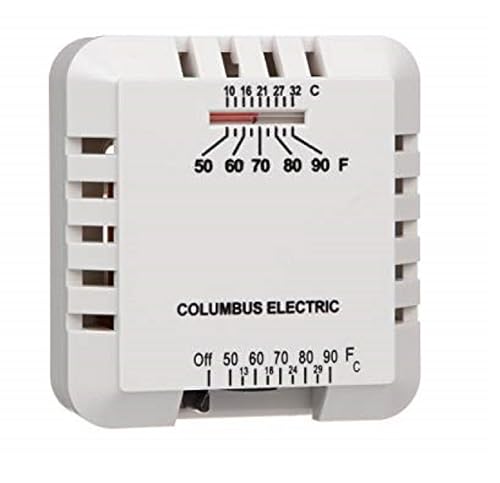
TPI Corporation RK120EAA Low Voltage Wall Mount Thermostat
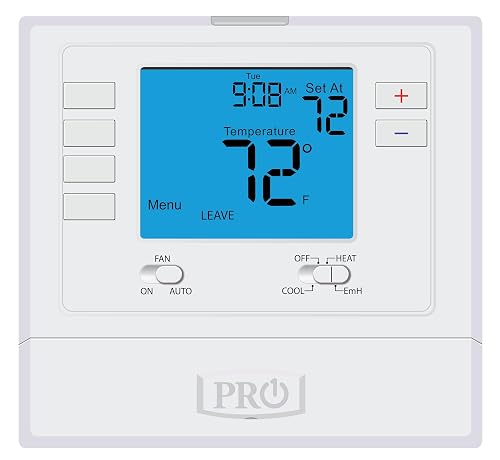
PRO1 T725 Heat Pump/Conventional Programmable Thermostat

PRO1 T771 Single Stage Non-Programmable Wall Thermostat

Trane MerchantShippingGroupName Update Component
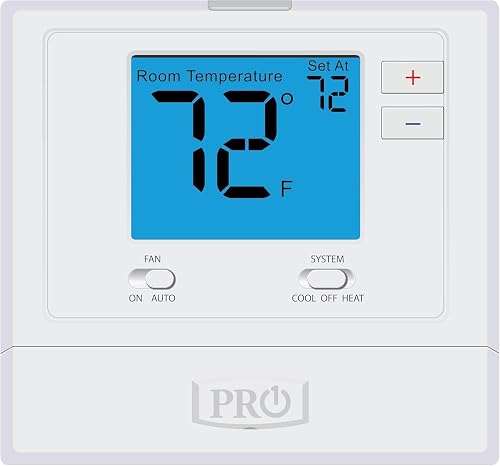
PRO1 T701 Single Stage Non-Programmable Wall Thermostat

PRO1 T715 Multi-Stage Programmable Gas Thermostat
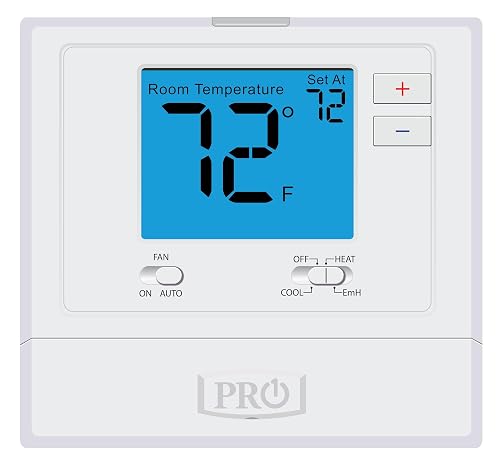
PRO1 T721 Non-Programmable Wall Thermostat

PRO1 T805 Single Stage Programmable Wall Thermostat
The Picks, Examined More Closely
Mechanical rooms, repair bays, and similar utility spaces don’t need a touchscreen. They need a thermostat that shrugs off dust, vibration, and the occasional bump from a toolbox. The TPI Corporation RK120EAA fills that role with a heating-only, low-voltage design rated for 24 VAC or millivolt systems, the kind of wiring you’d find on legacy unit heaters and gas-fired equipment.
For crews running a parts counter or a maintenance shop, the lack of a programming menu is honestly a feature. You set the temperature and walk away. The 50 to 90 degree Fahrenheit range covers the comfort band most indoor work environments sit in, and a mercury-free bimetal sensor keeps service techs from worrying about bulb disposal during replacement.
Points In Its Favor
- Works with both 24 VAC and millivolt heating systems, giving you flexibility on older equipment.
- Bimetal, mercury-free design suits shops and utility areas where simple is better.
- 50 to 90 F range with both Fahrenheit and Celsius scales reads clearly at a glance.
- Wall-mount housing stands up to repeated contact in busy back-of-house spaces.
Things To Consider
- Heating-only design means you’ll need a separate solution for cooling control.
- No scheduling or automation, so occupied/unoccupied setbacks are managed at the equipment.
Who It Suits Best
Facilities teams and contractors looking for a no-nonsense heating thermostat for utility spaces, warehouses, or repair shops where cooling isn’t part of the load.
Consider Something Else When
The PRO1 T701 is a more sensible match for office areas, since it adds cooling control and a digital readout without introducing programming complexity.
Properties that straddle the line between residential comfort and light commercial use often run heat pump systems. The PRO1 T725 supports 2 heat/1 cool heat pump configurations and 1 heat/1 cool conventional systems, which means it can swap from one type of HVAC equipment to another without a controller change. For property managers juggling mixed equipment, that flexibility is hard to overstate.
Built on the T700 platform, the T725 pairs a 4 square inch blue backlit screen with 7-day or 5/1/1 scheduling. You can dial in a separate routine for weekdays and weekends, or step out of programming entirely when the building is being reconfigured. The wake, leave, return, and sleep mode labels follow the same convention most facility staff already know from residential units.
Well-Handled Touches
- Dual heat pump and conventional compatibility in a single wall unit.
- 7-day or 5/1/1 scheduling handles rotating office and weekend patterns.
- Blue backlit display stays readable in dim mechanical rooms.
- Common mode labels (wake, leave, return, sleep) make the schedule intuitive for new occupants.
Honest Caveats
- 2 heat/1 cool heat pump support won’t cover three-stage commercial heat pump equipment.
- Common-wire requirements should be confirmed before install in older buildings.
Made For
Small offices, professional suites, and converted spaces where the system behind the wall could be either a heat pump or a conventional unit, and the schedule varies through the week.
Look Elsewhere When
Buildings with 2 heat/2 cool conventional gas systems will get more headroom from the PRO1 T715, which is built around that exact configuration.
Uninsulated garages, hobby shops, and storage rooms operate at very different comfort expectations than office space. You may want to keep a garage at 50 degrees in winter so stored paint and solvents don’t freeze, and that’s where the PRO1 T771’s wide setpoint range earns its place. The non-programmable design also means a tenant or employee can’t accidentally walk the temperature up to 78 in July.
Under the hood, the T771 is a single stage, 1 heat/1 cool conventional unit with swing adjustment and calibration controls. The 4 square inch blue backlit display is large enough to read across a workshop, and the controls stay simple enough that no one needs a manual. Swing adjustment is a small but useful setting that controls how far the room temperature has to drift before the system kicks back on, which matters a lot in spaces with oversized equipment.
The Upside
- Setpoint range from 25 to 90 F handles freeze-protection and cooling in uninsulated spaces.
- Swing adjustment and calibration help fine-tune short-cycling on workshop equipment.
- Non-programmable interface keeps operation simple for rotating occupants.
Points To Note
- Single-stage only, so multi-speed fan systems won’t be fully utilized.
- Conventional systems only; heat pump properties will need the PRO1 T721 instead.
Right Fit For
Garages, detached workshops, sheds, and storage facilities where freeze protection or basic cooling is the main concern and programmability isn’t needed.
Not Your Match When
Properties running heat pump systems in the same category will be better served by the PRO1 T721, which covers 2 heat/1 cool heat pump setups without adding a programming layer.
Not every Trane-related purchase is a full wall thermostat. Sometimes a service call comes down to a small electrical component that needs to match the original equipment spec, and the MerchantShippingGroupName update part is positioned for exactly that kind of replacement work. At roughly one inch in each dimension, it’s the kind of piece that travels in a tech’s van without taking up shelf space.
The honest read is that the listing leaves a lot to the imagination. The category fields point to musical instrument parts rather than HVAC, and the visible description emphasizes electrical reliability over any thermostat-specific feature. Anyone ordering this should match the part number against the original equipment documentation before install, since the listing won’t confirm fitment for you.
Positive Takeaways
- Compact 1-inch form factor slips into existing assemblies without modification.
- Marketed toward reliability in demanding electrical environments.
- Useful as a stock part for service techs working on legacy Trane equipment.
Worth Bearing In Mind
- Listing details are sparse, so cross-referencing the part number is essential before ordering.
- Category tagging on the listing is inconsistent, which can make the search experience awkward.
Who Should Grab It
Service technicians and facility teams who already know the part number they need and want a Trane-branded replacement for a specific equipment repair.
Swap It Out When
Anyone looking for a complete wall thermostat for a working HVAC system will be better served by the PRO1 T805 or another model with a clearly documented feature set.
Some spaces don’t need scheduling, they need a thermostat that does the obvious thing every time. The PRO1 T701 is a single stage, 1 heat/1 cool conventional controller aimed squarely at that job. The 4 square inch blue backlit display is paired with a glow-in-the-dark light button, so occupants don’t have to fumble around the wall at the start of a shift.
You can run it on either battery or hardwired power, which keeps installation flexible for both retrofit and new-build scenarios. The T701 supports gas or electric conventional systems, so it covers the two equipment types you’d most likely find in a small commercial suite. Compared with the TPI RK120EAA, the T701 adds cooling control in a digital package, but it skips the programming menus the T725 brings to the table.
A Few Strong Suits
- Glow-in-the-dark light button helps occupants find controls in low light.
- Gas or electric conventional compatibility covers most small commercial systems.
- Battery or hardwired power gives installers wiring flexibility.
- Non-programmable layout means tenants can’t accidentally override the schedule.
Trade Offs
- No scheduling, so occupied/unoccupied setbacks need to be handled by other equipment.
- Single-stage only, which limits the value of the controller in multi-stage installations.
Best Suited To
Rental units, small professional offices, and shared spaces where reliable day-to-day control matters more than scheduling flexibility.
A Better Fit Elsewhere
Spaces with predictable weekly routines will get more value from the PRO1 T725, which adds 7-day programming to a similar feature set.
Multi-stage gas HVAC systems need a controller that can talk to the equipment properly, and undersized thermostats in this category cause short cycling, comfort complaints, and premature wear. The PRO1 T715 handles 2 heat/2 cool gas systems, which puts it in the sweet spot for many small commercial buildings, mixed-use properties, and larger homes with two-stage equipment.
Built on the T700 platform, the T715 keeps the same 4 square inch blue backlit display and glow-in-the-dark light button found across the line. You can run it in 7-day, 5/1/1, or non-programmable mode, depending on how much scheduling complexity your building actually needs. Power can come from batteries or a hardwired connection, so retrofits in older walls stay manageable.
Where It Helps
- 2 heat/2 cool staging matches the equipment profile of many light commercial buildings.
- 7-day, 5/1/1, or non-programmable modes adapt to different occupant patterns.
- Battery or hardwired power gives installers wiring flexibility.
- Common T700 platform simplifies part swaps and accessory compatibility.
Honest Caveats
- Gas-focused, so it isn’t the right controller for heat pump properties.
- Multi-stage installs can be more involved, especially when existing wiring doesn’t include a common wire.
The Right Fit
Larger offices, mixed-use buildings, and small commercial properties with two-stage gas heating and cooling equipment that needs scheduling support.
Where A Sibling Pick Shines
Buildings running heat pumps will be a cleaner match for the PRO1 T725, since it pairs 2 heat/1 cool heat pump support with similar scheduling features.
Few things are more frustrating than a controller that locks you into one equipment type. The PRO1 T721 supports 2 heat/1 cool heat pump systems and 1 heat/1 cool conventional systems in a single non-programmable unit. That makes it an easy recommendation for property managers who inherit buildings with mixed equipment or who want a single SKU on the service truck.
The T700 platform DNA is visible in the 4 square inch blue backlit display and the glow-in-the-dark light button, which both help with low-light operation. You can run it on AA batteries or hardwire it, so the controller fits into retrofit jobs where pulling a common wire is a hassle. The non-programmable interface keeps occupants focused on setpoint adjustments, not on schedule overrides.
What Helps Most
- Heat pump or conventional compatibility in one controller.
- Glow-in-the-dark light button simplifies operation in dim rooms.
- Battery or hardwired power suits a wide range of install scenarios.
- Non-programmable layout prevents accidental schedule changes.
Worth Noting
- No scheduling, so energy savings depend on occupants and equipment setbacks.
- 2 heat/1 cool heat pump support won’t extend to larger three-stage heat pump equipment.
Whose Shelf It Belongs On
Maintenance teams and property managers who want one controller to keep on the truck for mixed equipment across small commercial properties.
Reach For A Different Pick When
Buildings with predictable weekly routines will benefit more from the PRO1 T725, which layers in 7-day scheduling on top of the same heat pump and conventional support.
When a thermostat sits across from a receptionist’s desk, the display size starts to matter. The PRO1 T805 is part of the T800 platform, and the extra-large 7 square inch blue backlit screen is the headline feature. Setpoint, mode, and schedule state are all readable from a few feet away, which is a small but real quality-of-life improvement in a busy lobby.
Beyond the display, the T805 supports 1 heat/1 cool conventional systems in 7-day, 5/1/1, or non-programmable modes. The glow-in-the-dark light button carries over from the T700 line, so the controller stays approachable in low light. Compared to the T701, the T805 adds scheduling and a much larger screen without forcing you into multi-stage equipment you may not have.
Notable Gains
- 7 square inch display is significantly larger than the 4 square inch panels on most T700 models.
- 7-day, 5/1/1, or non-programmable scheduling covers a wide range of building routines.
- Glow-in-the-dark light button keeps controls findable in low light.
- Conventional 1 heat/1 cool compatibility matches many office HVAC systems.
Some Limits To Know
- Single stage only, so multi-stage HVAC equipment will leave capability unused.
- Larger display means a slightly bigger wall footprint, which matters on tight wall sections.
Perfect Match For
Property managers, office administrators, and front-desk environments where display readability and clean scheduling are both priorities.
Another Choice May Suit
Buildings with two-stage gas systems will see more headroom from the PRO1 T715, which adds multi-stage support to a similar scheduling feature set.
Choosing the Right Wall Thermostat for Your Building
A commercial thermostat has to do three things well: match the equipment on the wall, support the schedule the building actually runs on, and stay readable for whoever walks up to it. Start with the equipment side, since picking a controller that doesn’t speak the same staging language as the HVAC unit is the most common reason for callbacks. Single stage, multi stage, heat pump, and conventional systems each have different wiring and configuration expectations, and the listings above map cleanly to those categories.
The next thing to weigh is the schedule. Programmable units with 7-day or 5/1/1 modes pay off in buildings with predictable weekly patterns, while non programmable controllers make more sense in tenant spaces, garages, and short-term-use areas where occupants come and go. Finally, think about the readout. A larger display is genuinely useful in lobbies, while a smaller backlit screen is fine for back-of-house walls where the thermostat only gets glanced at once a shift.
For property managers with mixed equipment, controllers that handle both heat pump and conventional systems in a single unit cut down on inventory and training time. For workshops and storage areas, a wide setpoint range matters more than scheduling, and the swing adjustment on a non programmable controller can help prevent short cycling on oversized equipment. Match the unit to the room, and the rest tends to take care of itself.
What to Watch for in the Buying Process
Common Shopping Slip Ups
The most frequent mistake is picking a thermostat based on the wall space rather than the equipment behind it. Staging matters more than screen size, and a beautiful controller that doesn’t support the right number of heat and cool stages will underperform from day one. Confirm the equipment model and number of stages before adding a thermostat to the cart.
A second trap is ignoring the common wire. Many modern digital thermostats draw a small amount of continuous power, and older buildings without a C-wire may need a pull or a power-stealing workaround. Skipping that step leads to flickering displays, random resets, and a controller that mysteriously loses its schedule overnight. Verify the existing wiring before installation, not after.
When Paying More Pays Off
Stepping up from a non programmable controller to a programmable one makes sense the moment a building has a predictable weekly pattern. Office tenants, retail hours, and similar routines benefit from automatic setbacks, and the energy savings over a year easily cover the modest cost difference between the two tiers.
Going further, larger displays and glow-in-the-dark controls pay off in environments where the thermostat gets touched often or read from a distance. Reception areas, shared lobbies, and similar high-traffic spots are the right places to spend on the upgrade. In mechanical rooms and back-of-house walls, the smaller, simpler T700-series screens are usually more than enough.
Frequently Asked Questions
Do Trane-branded wall thermostats require specific wiring?
Most Trane-compatible wall thermostats follow the same low-voltage wiring conventions as other major brands, with terminals labeled for R, C, W, Y, and G in common configurations. Multi-stage and heat pump systems may need additional conductors. Always confirm the equipment terminal layout before connecting.
Can a residential-style programmable thermostat work in a light commercial setting?
Programmable residential thermostats often work in offices, small retail spaces, and similar settings, provided the equipment matches the staging profile. They tend to lack features like keypad locks and service reminders that some larger commercial properties expect, so the choice depends on how the building is used.
What’s the difference between single-stage and multi-stage thermostats?
Single-stage thermostats signal the HVAC system to run at one level, while multi-stage units can call for low and high stages of heating or cooling. Multi-stage systems offer tighter comfort control and better dehumidification, but only when paired with compatible equipment.
Are non-programmable thermostats a good fit for rental properties?
Non-programmable controllers are often a smart fit for rentals because tenants can’t override a schedule that doesn’t exist. They reduce complaints about confusing programming while still giving occupants straightforward setpoint control.
How wide should the setpoint range be for a garage or storage space?
Garages, sheds, and storage areas often need a setpoint range that extends below 50 degrees for freeze protection. Controllers like the PRO1 T771, which reach down to 25 F, are well matched to those spaces.
Closing Remarks
The right wall thermostat for a Trane commercial system is the one that matches your equipment, fits the way your building is actually used, and stays readable for the people who walk up to it every day. Match staging to the HVAC unit, decide whether scheduling is worth the extra cost, and lean on the glow-in-the-dark buttons and large displays when the controller lives in a high-traffic area. A little extra time on the front end saves a lot of service calls down the road.