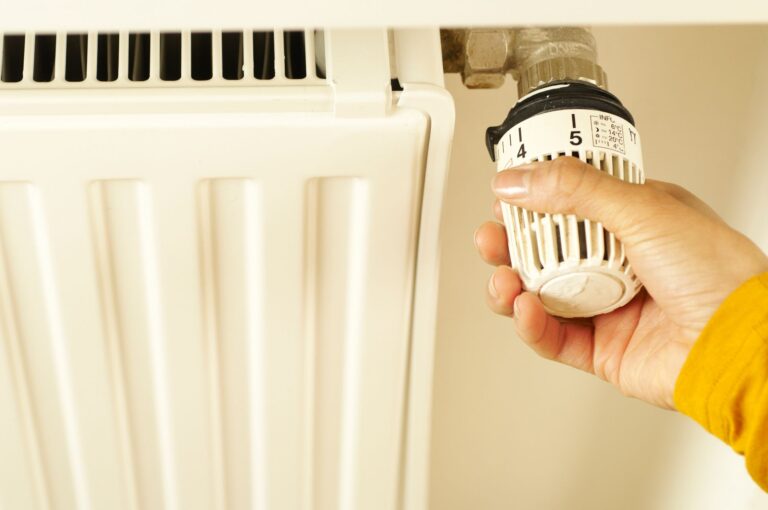

Picking a new thermostat feels simple until you open the wall plate and see seven colored wires staring back. The right wall unit depends on your system type, your daily routine, and whether you actually want to program a schedule or just turn the heat up when you walk in. This lineup mixes basic 1H/1C controls, dual-fuel heat pump boards, smart learning units, and two water-heater replacement thermostats for electric tank owners. Browse by the HVAC setup you already have, and you’ll land on a wall unit that fits without an electrician on speed dial.
The Essentials At A Glance
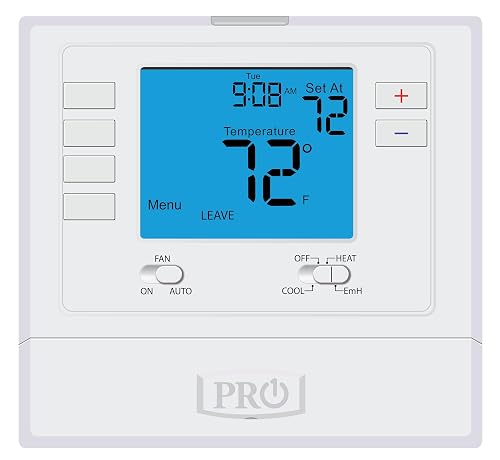
PRO1 T725 Heat Pump/Conventional Programmable Thermostat
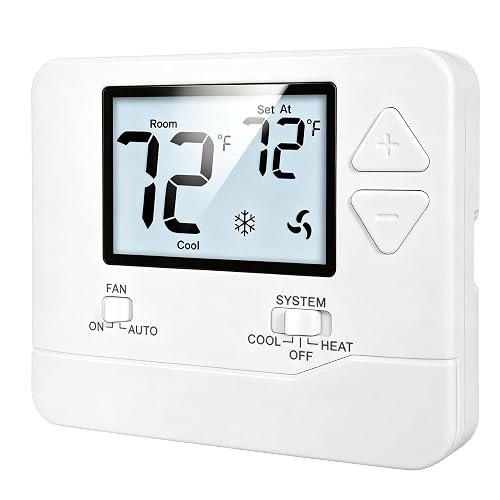
Heagstat NonProgrammable Thermostat 1H/1C Single-Stage
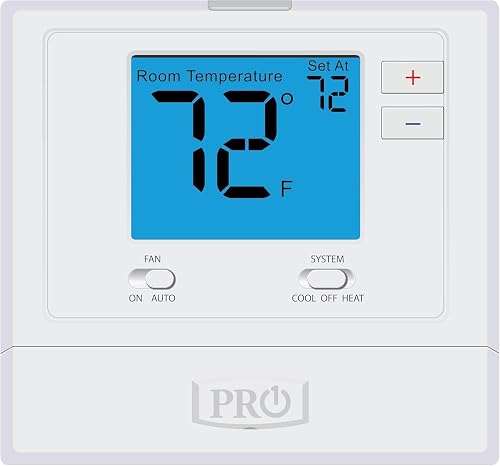
PRO1 T701 Non-Programmable Conventional Thermostat

PRO1 T715 Multi-Stage Programmable Gas Thermostat
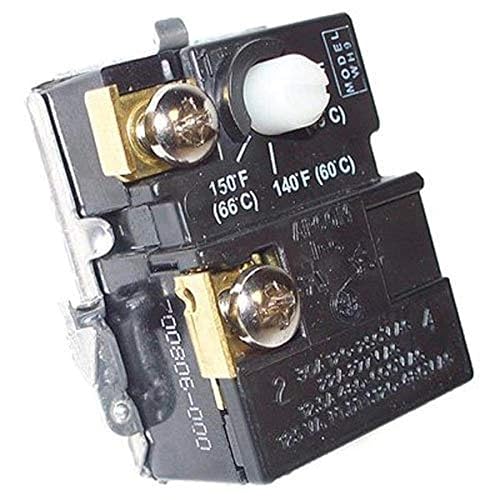
Reliance 9000507-045 Lower Electric Thermostat
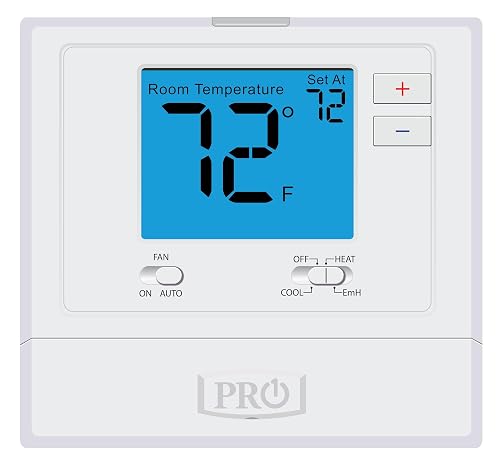
PRO1 T721 Non-Programmable Heat Pump Thermostat

Zero KST203 Water Heater Upper Thermostat
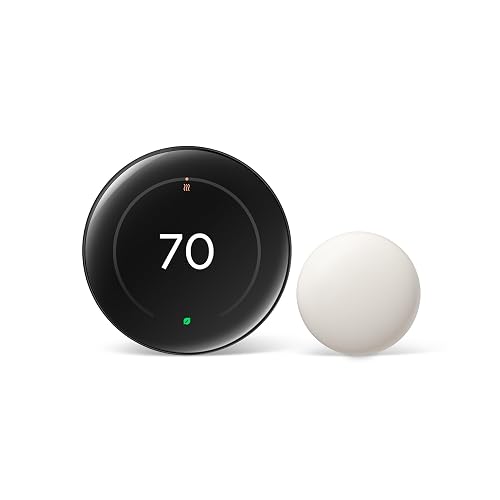
Google Nest Learning Thermostat 4th Gen (Obsidian)
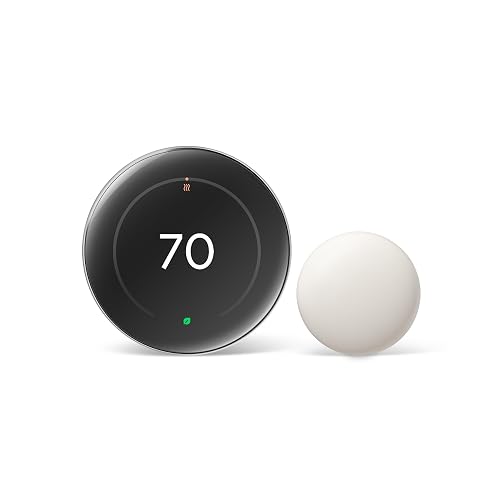
Google Nest Learning Thermostat 4th Gen (Silver)
The Strengths Of Each Pick
The PRO1 T725 sits on the T700 platform and pulls double duty as a heat pump and conventional wall thermostat. It covers 2 heat/1 cool heat pump systems alongside 1 heat/1 cool conventional setups, which makes it a sensible pick for a home that might switch heating sources during a renovation or furnace swap.
Compared to the simpler Heagstat in this lineup, the T725 adds 7-day or 5/1/1 scheduling and a generous 4 sq. in. blue backlit screen. The schedule format “5/1/1” means five weekday slots plus a separate Saturday and Sunday, which suits anyone who works weekdays but lives differently on the weekend.
Well-Handled Touches
- Dual-mode flexibility for heat pump and conventional systems in one unit
- 7-day or 5/1/1 programming for tailored weekday and weekend routines
- Large 4 sq. in. blue backlit display stays readable in dim hallways
- Part of the proven T700 platform used across other PRO1 IAQ boards
- Glow-in-the-dark light button for nighttime adjustments without flipping a switch
Trade-Offs To Consider
- Wiring complexity can intimidate first-time installers, especially with heat pump systems
- Lacks Wi-Fi, so remote adjustment requires being near the wall plate
Key Product Details
Who It Suits Best
Homeowners with a 2H/1C heat pump who want a programmable schedule without paying smart-home prices.
Consider Something Else When
You want learning routines and remote app control, in which case the Google Nest Learning Thermostat 4th Gen is a stronger fit.
The Heagstat 1H/1C sticks to the basics: a non-programmable wall unit for 24VAC conventional single-stage forced-air systems, including gas, oil, and electric furnaces matched with an outdoor AC condenser. It runs on 2 to 5 wires, which covers most older homes that never had a C-wire run for a smart upgrade.
It is the kind of thermostat you buy for a rental unit, a garage conversion, or a parent who refuses to learn another app. The white backlight pops on when you press a button and shuts off soon after, so it doesn’t glow all night like a digital clock radio.
What Earns Its Place
- Simple up-and-down temperature control with no schedule to set
- Works with 24VAC single-stage gas, oil, or electric furnaces
- 2 to 5 wire compatibility suits older homes without a common wire
- White backlight improves readability during late-night adjustments
Worth Noting
- Not compatible with heat pump systems or multi-stage equipment
- Systems using 6 to 8 wires are not supported, so verify the wall plate before ordering
- No scheduling, so temperature changes happen manually
Right Fit For
Owners of a simple single-stage furnace who want manual control and a clean, illuminated display.
Look Elsewhere When
You run a heat pump or two-stage gas furnace, in which case the PRO1 T725 or PRO1 T715 belongs on the wall instead.
The PRO1 T701 brings the T700 platform down to a 1H/1C conventional thermostat, skipping the schedule layer entirely. It is essentially the simpler sibling of the T725, designed for households that want the same PRO1 display feel without programming a week of temperature changes.
The 4 sq. in. blue backlit screen and glow-in-the-dark light button mirror the rest of the line, so the swap from an old mercury switch to a digital PRO1 unit feels familiar. Most owners of single-stage gas or electric systems land here when they want reliability without a learning curve.
What Helps Most
- 4 sq. in. blue backlit display reads clearly at a distance
- Glow-in-the-dark light button helps in power-outage situations
- T700 platform consistency if you upgrade to a T725 or T715 later
- Designed for straightforward 1 heat/1 cool conventional systems
Some Limits To Know
- Lacks programmability, so any energy-saving scheduling has to happen at the furnace or breaker
- Not designed for heat pump or multi-stage setups, so system upgrades may force another swap
Best Suited To
Homeowners with a single-stage furnace who want a clean digital upgrade without scheduling or app features.
Reach For A Different Pick When
You want to schedule temperatures around a routine, in which case the PRO1 T725 offers the same look with programming added.
The PRO1 T715 targets 2 heat/2 cool gas furnace systems, the kind of two-stage setup you find in larger homes with zoning or high-efficiency variable-speed equipment. It runs on the T700 platform and supports 7-day, 5/1/1, or fully non-programmable modes, which is unusual flexibility for a wall unit at this level.
Battery or hardwire power gives you installation options in older homes that lack a C-wire. It is the right pick when your furnace cycles in low and high stages, since a single-stage thermostat like the T701 would short-cycle the equipment and waste the upgrade you paid for.
What Stands Out
- Supports 2 heat/2 cool multi-stage systems for high-efficiency furnaces
- Three programming modes: 7-day, 5/1/1, or non-programmable
- Battery or hardwire power for older homes without a C-wire
- Same 4 sq. in. backlit screen and glow button as the rest of the PRO1 T700 family
Less Ideal Details
- Wiring gets dense with 2H/2C equipment, so a careful label photo before pulling the old thermostat saves time
- No Wi-Fi, so remote adjustment requires physical presence at the wall plate
Feature Snapshot
Who Should Grab It
Owners of two-stage gas furnaces who want precise multi-stage control without stepping up to a smart thermostat.
A Better Fit Elsewhere
You want app-based remote control and learning routines, in which case the Google Nest Learning Thermostat 4th Gen fits the bill.
The Reliance 9000507-045 is a replacement lower thermostat for electric water heaters, the kind of part you reach for when the hot water runs lukewarm and the upper thermostat gets all the credit. Electric tanks use two thermostats in series, and a tired lower unit is a common reason your showers turn cold halfway through.
It mounts in the lower position of a standard residential electric tank and pairs with a matching upper thermostat. Anyone comfortable shutting off a breaker, pulling an access panel, and matching wire connections can swap this in without calling a plumber.
What It Does Well
- Direct replacement for the lower thermostat on many electric water heaters
- Standard residential form factor that fits common dual-element tanks
- Pair with a matching upper thermostat for full tank control
Worth Bearing In Mind
- Requires electrical comfort, including safe breaker shutoff and wire handling
- Not a wall thermostat and won’t control heating or cooling systems
Quick Facts
Whose Shelf It Belongs On
DIYers restoring hot water on a dual-element electric tank who already own basic electrical tools.
Swap It Out When
You need the upper thermostat instead, in which case the Zero KST203 covers dual-element tanks from the top down.
The PRO1 T721 is the no-schedule version of the T725, aimed at 2H/1C heat pump systems or 1H/1C conventional systems. It runs on the same T700 platform with the same 4 sq. in. blue backlit display, so swapping between PRO1 IAQ wall units in a multi-zone home looks consistent.
Power comes from AA batteries, which sidesteps the C-wire issue that often blocks smart thermostat upgrades. The glow-in-the-dark light button is a small but appreciated touch in dark laundry rooms and basement rec rooms.
Why It Works Well
- 2H/1C heat pump or 1H/1C conventional compatibility in one unit
- AA battery power avoids the C-wire problem common in older homes
- 4 sq. in. blue backlit display and glow button for low-light use
- T700 platform consistency across the PRO1 IAQ line
Trade-Offs To Consider
- Heat pump wiring can confuse first-timers, so a wire-label photo during removal helps
- No scheduling, so any overnight setback has to be done by hand
Who Will Love This
Heat pump homeowners who prefer simple manual control over a 7-day schedule or app integration.
Where A Sibling Pick Shines
You want weekly programming on a heat pump, in which case the PRO1 T725 offers the same compatibility plus a full schedule.
The Zero KST203 is an upper water heater thermostat rated for 120/480 VAC on dual-element tanks. The “double throw” rating means the internal switch can route power in two directions, which matches the way electric tanks alternate between elements during a heat cycle.
A built-in safety switch helps prevent overheating, and the unit is adjustable so you can dial the temperature down a few degrees if your tank runs hotter than you like. It is the natural counterpart to the Reliance 9000507-045 lower unit covered earlier.
Everyday Perks
- 120/480 VAC double throw rating for dual-element tanks
- Built-in safety switch to limit overheating
- Adjustable temperature setting for energy-conscious homes
- Cross-reference compatibility with common 59T SPDT and 66T style thermostats
Honest Caveats
- Replacement still requires shutting off the breaker and verifying wire layout
- Not a wall thermostat and only fits electric water heater applications
Perfect Match For
DIYers replacing the upper thermostat on a dual-element electric water heater who want an adjustable, safety-equipped unit.
Skip It When
You need the lower thermostat instead, in which case the Reliance 9000507-045 covers the bottom element.
The Nest Learning Thermostat 4th Gen, bundled with a 2nd Gen Nest Temperature Sensor, sits at the smart end of this list. It learns your preferred temperatures over time and adjusts the schedule as your routine shifts, so the wall unit quietly does the programming that the PRO1 T725 and T715 require you to enter by hand.
The included 2nd Gen Temperature Sensor is the practical hook, since it lets the system read temperatures in another room and balance heating or cooling based on where you actually spend time. The Obsidian finish is a deep, mirror-like black that stands out against light walls.
Positive Points
- Learning routines remove the need to program a weekly schedule
- Bundled Temperature Sensor helps balance multi-room comfort
- Obsidian finish offers a dark, reflective look on light walls
- Remote adjustment through the companion app from anywhere
Practical Considerations
- Installation may need a C-wire or power accessory in older homes
- Learning routines can take a couple of weeks to settle into a pattern
Feature Rundown
Built With In Mind
Smart-home households that want learning routines, remote access, and a polished wall display in one unit.
Not Your Match When
You prefer simple manual control with no Wi-Fi dependency, in which case the PRO1 T701 keeps things offline and basic.
The Silver version of the Nest Learning Thermostat 4th Gen shares every feature of the Obsidian model, including the bundled 2nd Gen Temperature Sensor. The finish is the only difference, making it the better pick for kitchens, hallways, or living rooms with cooler wall colors.
It runs on the same learning platform, so the schedule adapts as your routine changes and the included sensor helps with hot and cold spots. You can swap finishes later and keep the same install, which is a quiet plus for anyone redecorating on a slow timeline.
The Practical Payoff
- Silver finish pairs naturally with light or neutral walls
- Same learning platform and bundled sensor as the Obsidian model
- App and voice control for remote adjustments
- Helpful for homes with uneven room temperatures
Where It May Fall Short
- May require a C-wire or power accessory for older wiring setups
- Smart features carry a learning curve for anyone new to connected thermostats
Made For
Design-conscious smart-home households that prefer a lighter finish on the wall.
Another Choice May Suit
You want a darker statement finish, in which case the Obsidian version of the same Nest 4th Gen fits the same feature set.
What To Match On The Wall Before You Buy
Start with the system label on your existing thermostat or inside the furnace panel, since compatibility determines more than any feature list. A 1H/1C conventional setup like the Heagstat or PRO1 T701 covers gas, oil, or electric forced-air systems, while a 2H/1C heat pump home needs the PRO1 T721 or T725. Two-stage gas furnaces require the PRO1 T715 to keep the equipment cycling correctly.
Wire count comes next. A 2 to 5 wire setup without a common “C-wire” rules out many smart thermostats unless you add a power accessory, which is why the battery-powered PRO1 T701 and T721 stay practical for older homes. Smart thermostats such as the Nest 4th Gen typically need a C-wire or a compatible power kit to run the Wi-Fi radios and color display.
Decide whether you actually want scheduling. Manual control suits short-term rentals, weekend homes, and households where someone is always around to nudge the temperature. Programmable 5/1/1 or 7-day schedules on the T725 and T715 fit predictable weekday routines. Learning smart thermostats sit in between, building a schedule from your adjustments over the first couple of weeks.
Match the wall thermostat category to the job. The Reliance 9000507-045 and Zero KST203 are water-heater parts, not wall controls for your HVAC system. Mixing them up is a common mistake, since both carry the word “thermostat” on the box.
Key Considerations Across These Picks
Pitfalls Shoppers Hit
A frequent mistake is choosing a thermostat by brand familiarity without checking system voltage and stage count, which can leave a heat pump wired to a single-stage wall unit. Another slip is underestimating wire count, since older homes without a C-wire often block smart thermostat installs unless a power kit is added.
Where The Extra Money Goes
Higher-tier models like the Nest 4th Gen bundle Wi-Fi, learning algorithms, and remote sensors that manual thermostats simply cannot match, and that added convenience is where the price difference lives. The PRO1 T715 earns its step up by handling multi-stage equipment, which protects a high-efficiency furnace from short cycling. For most households, the upgrade pays off when the system is complex or the routine is irregular, not on every install.
Frequently Asked Questions
How do I know which system type I have?
Pop the existing thermostat off the wall and count the wires, then check whether the outdoor unit is a heat pump or a standard AC condenser. A 1H/1C label means one stage of heating and cooling, while 2H/2C indicates a two-stage system.
Do I need a C-wire for these thermostats?
The PRO1 T701, T721, and the water-heater replacements run on batteries or direct wiring without a common wire. The Nest 4th Gen typically expects a C-wire or an installed power accessory for steady Wi-Fi operation.
Can I install a thermostat myself?
Most wall swaps take a screwdriver, a wire-label sheet, and a photo of the original wiring before removal. Heat pump and multi-stage wiring is denser, so a careful label pass helps avoid crossed connections.
Are the water heater thermostats compatible with all tanks?
The Reliance 9000507-045 and Zero KST203 fit standard residential electric tanks, but you should match voltage ratings and element layout to your specific model. Gas water heaters use a different control entirely.
How long do digital wall thermostats typically last?
A wired digital wall unit often runs for many years with stable indoor conditions, though display fading and button wear can show up in high-traffic hallways. Smart thermostats tend to get replaced when platforms change rather than when the hardware fails.
Closing Remarks
Match the wall unit to your system first, then layer on scheduling and smart features only if you will actually use them. The right thermostat is the one your household will interact with comfortably, whether that is a no-frills PRO1 T701, a learning Nest 4th Gen, or a quiet water-heater replacement. Pick the level of control that fits your routine, and the rest of the install tends to fall into place.