

You know the problem. The hallway stays warm while the bedroom turns into an icebox. The thermostat sits in the living room and guesses the whole house from that one spot, so the nursery ends up too cold and the upstairs office runs warm. Remote sensors fix that by reporting temperatures from the rooms that actually matter, and a smart thermostat can weigh those readings and balance the home automatically.
The lineup below covers full smart thermostats that ship with or support remote sensors, plus a few standalone sensor packs and one specialty floor-heat controller. Each one solves the uneven-temperature problem in a different way, so think about which rooms bother you most before choosing.
The Lineup, Simplified
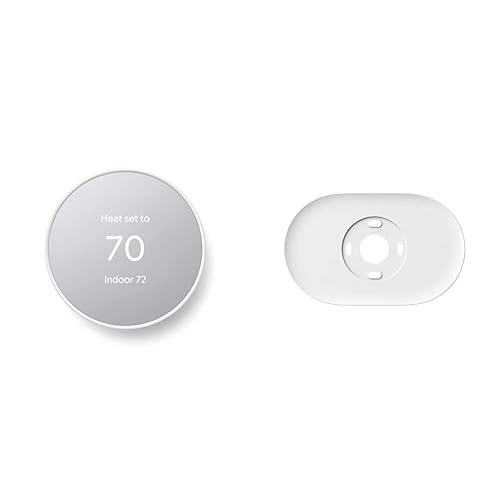
Google Nest Thermostat (Snow) with Trim Kit
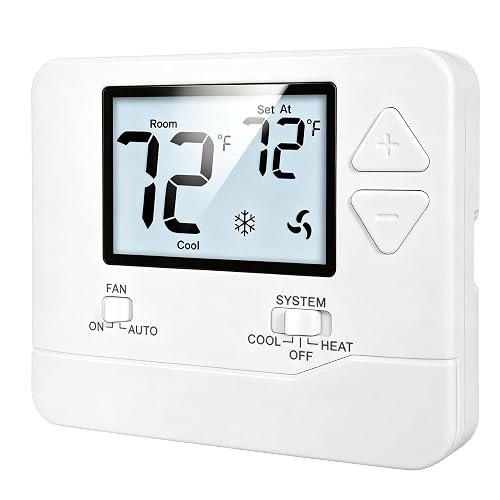
Heagstat 1 Heat/1 Cool Non-Programmable Thermostat
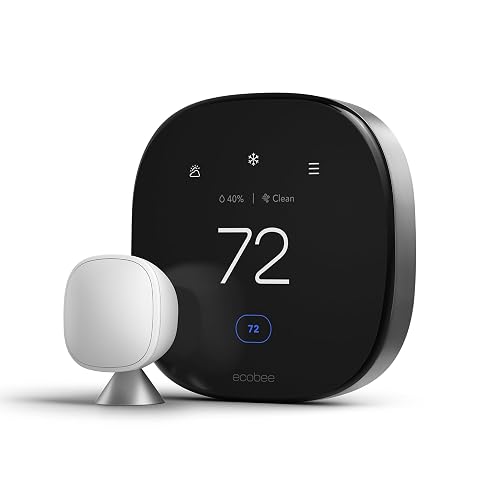
ecobee Smart Thermostat Premium with Sensor
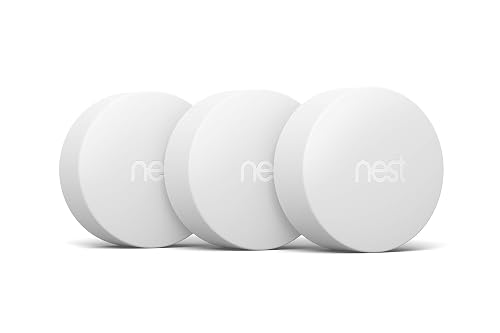
Google Nest Temperature Sensor 3-Pack

ecobee SmartSensor 2-Pack
ecobee Smart Thermostat Enhanced

OJ Microline UTN4 Radiant Floor Heat Thermostat
Google Nest Learning Thermostat 4th Gen + Sensor (Obsidian)
Google Nest Learning Thermostat 4th Gen + Sensor (Silver)
A Closer Look At Each Pick
The Snow edition of the Google Nest Thermostat arrives with both a trim plate for clean wall mounting and a steel plate for covering a standard electrical box, which solves the most common install headache on retrofits. Compared to the bare-bones Heagstat unit below, this one is fully programmable through the Google Home app, so you can set a weekday and weekend schedule from your phone without ever touching the wall dial.
It works well in apartments and starter homes where the heating system is simple but you still want the thermostat to ease off when nobody’s around. For households that want room-by-room control, you’ll need to add Nest Temperature Sensors separately, since this bundle ships with the trim kit only.
Useful Strengths
- ENERGY STAR certified for documented efficiency gains
- Trim plate and steel cover plate included in the box
- App-based scheduling on Android or iPhone
- Auto-away behavior trims heating and cooling in empty rooms
- Snow finish blends into light-colored walls
Trade Offs To Consider
- No remote sensors included, so whole-home balancing requires extras
- Most setup steps live in the Google Home app, which adds a small learning curve for first-time smart-home users
Key Specs
Made For
First-time smart thermostat shoppers who want a tidy install and easy app control without learning a new ecosystem.
Consider Something Else When
Households with stubborn hot and cold spots should pair this with the Nest Temperature Sensor 3-Pack, or jump straight to the ecobee Smart Thermostat Premium, which ships with a sensor in the box.
The Heagstat is the simplest item on this list, and that is exactly its appeal. It runs on 24VAC conventional single-stage systems with one stage of heat and one stage of cool, meaning the typical gas furnace plus a separate AC condenser found in many older homes. The face is backlit for nighttime tweaks, but the controls stay deliberately basic, so you set a temperature and walk away.
This is a no-nonsense swap for a broken builder-grade thermostat in a rental property, garage conversion, or workshop. It has no smart features, no app, and no remote sensors, so think of it as a dependable baseline rather than a whole-home comfort upgrade.
A Favorable Mix
- Compatible with standard 24VAC single-stage forced-air systems
- White backlight stays readable in dim hallways
- No app account or Wi-Fi connection required
Less Ideal Details
- Limited to 2 to 5 wire setups, so 6 to 8 wire systems need a different model
- No remote sensors, scheduling, or smart-home integration
- Not compatible with heat pump or multi-stage equipment
Right Fit For
Renters or homeowners on a strict budget who just need a reliable wall thermostat for a simple 24VAC single-stage system.
Look Elsewhere When
Anyone with a smart home, a multi-stage system, or uneven temperatures across rooms should skip ahead to the ecobee Smart Thermostat Enhanced or the Google Nest Learning Thermostat 4th Gen.
The ecobee Premium is the most fully loaded thermostat in this lineup, and the inclusion of a SmartSensor in the box means you can start solving room-level hot spots on day one. Unlike the Google Nest Thermostat reviewed first, which is designed as a single-room decision-maker, the Premium weighs readings from multiple sensors and prioritizes the room you actually spend time in.
For households that want a thermostat to do more than call for heat, the built-in far-field voice control and Wi-Fi connectivity cover the heavy lifting. It works in busy family homes where a tablet-style touchscreen and voice commands feel more natural than reaching for a wall dial.
Positive Takeaways
- SmartSensor included in the box for immediate room-by-room balancing
- Built-in voice assistant for hands-free temperature changes
- Touchscreen display makes manual changes quick
- Integrates with major smart-home platforms and routines
Honest Caveats
- Premium positioning means a higher entry tier than the ecobee Enhanced
- Full feature set leans on a stable Wi-Fi connection, so rural homes with weak signal may see delayed responses
Best Suited To
Tech-forward households that want a single thermostat to anchor the smart home and solve uneven temperatures across multiple rooms.
Where Another Pick Suits Better
Shoppers who don’t need voice control or a built-in air quality monitor should save with the ecobee Smart Thermostat Enhanced and add SmartSensors only where the home needs them.
This three-pack of Google Nest Temperature Sensors is the upgrade path for anyone already running a compatible Nest thermostat who wants to stop guessing what the back bedroom feels like. Place one in the nursery, one in the living room, and one in the home office, and the thermostat weighs all three readings before deciding to fire the furnace.
It pairs cleanly with the Google Nest Thermostat reviewed at position 1, the Nest Thermostat E, and the Nest Learning Thermostat, so the sensors can move with you if you swap thermostats later. The catch is that you need a compatible Nest thermostat to actually use them, so this is an expansion product, not a standalone fix.
Strengths Worth Knowing
- Three sensors cover most mid-size homes from one purchase
- Wireless connection to a Nest thermostat up to roughly 50 feet away
- Small footprint fits on shelves and side tables without dominating the room
- Helps the thermostat prioritize the room you care about at a given time
Where It Is Less Suited
- Requires a compatible Nest thermostat to deliver any benefit
- Reports temperature only, so it doesn’t sense occupancy the way the ecobee SmartSensor does
Whose Shelf It Belongs On
Existing Nest households that want to balance a multi-room home without ripping out a working thermostat.
Another Choice May Suit
Ecobee households should pick the ecobee SmartSensor 2-Pack instead, since Nest and ecobee sensors aren’t cross-compatible.
The ecobee SmartSensor 2-Pack adds a layer of intelligence that the Nest Temperature Sensor reviewed above doesn’t quite match: occupancy detection. Each sensor uses infrared sensing to tell whether someone is actually in the room, and the thermostat can then dial the system toward occupied spaces and ease off in empty ones.
It works with compatible ecobee thermostats, including the Enhanced and Premium models in this roundup, over a wireless range of roughly 60 feet. For households with a home office that runs cold at noon and a guest room that never sees a person, the difference shows up fast on the monthly bill.
The Helpful Details
- Detects room occupancy, not just temperature
- Wireless range around 60 feet from the paired thermostat
- Two sensors cover a typical living area and bedroom pair
- Helps the thermostat avoid conditioning empty rooms
Practical Considerations
- Only works with ecobee thermostats, not Nest or third-party systems
- Placement matters: tucked behind a couch or in direct sun, the readings can drift
Perfect Match For
ecobee households that want the system to react to where people actually are, not just to where the warmest room happens to be.
Swap It Out When
Nest users will get more mileage from the Google Nest Temperature Sensor 3-Pack covered earlier, since the two ecosystems don’t talk to each other.
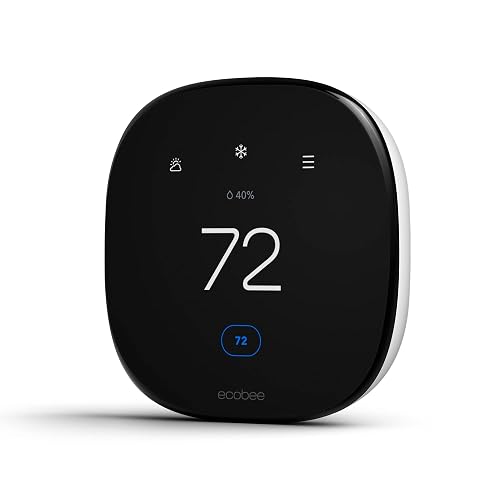
The ecobee Smart Thermostat Enhanced sits one tier below the Premium covered earlier and shares much of the same intelligence, minus the built-in voice and air quality monitor. It still learns your schedule, still nudges temperatures down when the house is empty, and still plays nicely with the ecobee SmartSensor 2-Pack for true room-by-room control.
It is the practical sweet spot for households that want ecobee’s sensor ecosystem without paying for voice control they may never use. For most two- and three-bedroom homes, the Enhanced delivers the meaningful upgrade over a basic programmable thermostat without the Premium’s higher-tier price.
Notable Gains
- Compatible with ecobee SmartSensors for room-level balancing
- Learns routines and suggests schedule tweaks through the app
- Works with smart home platforms and Apple Watch
- Lower entry tier than the Premium while keeping core automation
Worth Bearing In Mind
- No SmartSensor in the box, so remote sensing requires a separate purchase
- Lacks the built-in voice control that defines the Premium model
Feature Snapshot
Who Should Grab It
Mid-range shoppers who want ecobee’s sensor-driven comfort without paying for voice control and air quality features they won’t use.
Where A Sibling Pick Shines
Voice-first households should consider the ecobee Smart Thermostat Premium instead, since it includes the SmartSensor and adds built-in voice.
The OJ Microline UTN4 lives in a different world from the smart thermostats earlier in this list. It is purpose-built for electric radiant floor heating, which means tile, stone, laminate, and engineered wood floors warmed by heating elements under the surface. A built-in Class A GFCI (a ground fault safety device that cuts power in milliseconds if it senses a current leak) is integrated into the unit, which is a meaningful safety feature for any wet-area install like a bathroom.
It works on both 120V and 240V systems and uses dual sensing, meaning the floor probe keeps the slab at a comfortable surface temperature while the air sensor prevents the room from overheating. The honest read is that this is a specialty tool, not a whole-home thermostat, and it earns its spot here because the included floor sensor and dual sensing deliver exactly the kind of balanced comfort the other picks aim for.
Notable Upsides
- Class A GFCI built in for required safety on radiant floor systems
- Dual sensing balances floor and air temperatures automatically
- Supports both 120V and 240V electric radiant systems
- Floor sensor included in the box
Trade-Offs To Consider
- Non-programmable, so daily schedule tweaks happen on the unit itself
- Specialty install, not a drop-in swap for a forced-air thermostat
Who It Suits Best
Homeowners with electric radiant floor heating in a bathroom, kitchen, or basement who want safe, balanced floor and air temperatures.
Reach For A Different Pick When
Standard forced-air homes should ignore this unit entirely and choose the ecobee Smart Thermostat Enhanced or the Google Nest Learning Thermostat 4th Gen instead.
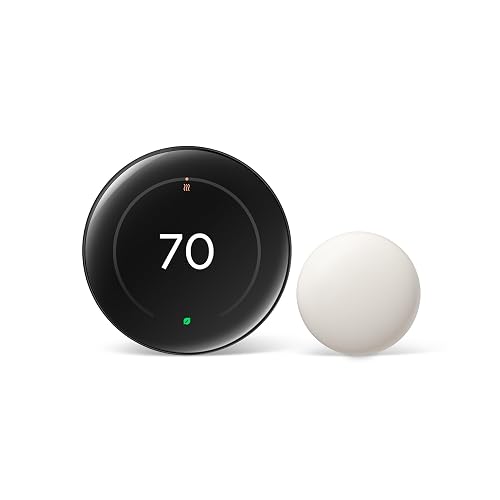
The Obsidian edition of the Nest Learning Thermostat 4th generation pairs Google’s most advanced learning thermostat with a second-generation temperature sensor in a single bundle. Unlike the entry-level Google Nest Thermostat covered at position 1, this model actively learns your preferences over time, adjusting itself as your routine changes rather than waiting for a fixed schedule.
It suits households already invested in the Google Home ecosystem, where the thermostat slots into existing routines, voice commands, and presence detection. The deep black finish works well against darker walls and modern interiors.
Standout Benefits
- Learning algorithm adapts to your routine over time
- Temperature sensor included in the box for room-level targeting
- Obsidian finish suits modern and dark-themed interiors
- Integrates with Google Home routines and presence detection
Points To Note
- Higher tier than the entry-level Google Nest Thermostat
- Single included sensor covers one room, so larger homes may need the 3-Pack add-on
Who Will Love This
Google Home households that want a learning thermostat with a sensor in the box and prefer a dark, modern aesthetic.
Skip It When
Anyone who doesn’t want to commit to the Google ecosystem will get a more platform-agnostic experience from the ecobee Smart Thermostat Enhanced.
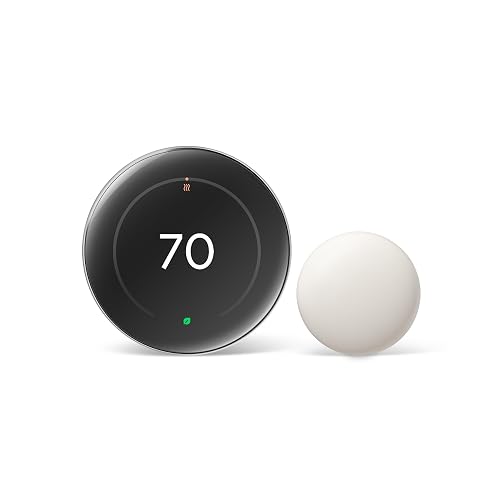
The Silver version of the Nest Learning Thermostat 4th generation delivers the same learning intelligence and bundled sensor as the Obsidian unit covered just above, finished in a lighter tone that disappears into traditional white or off-white walls. The choice between the two comes down to interior palette and nothing else.
It is the right pick for homes with classic trim and bright walls where a black thermostat would feel heavy. You still get the second-generation sensor, the same learning algorithm, and the same Google Home integration as the darker finish.
A Few Highlights
- Learning algorithm adjusts to your routine automatically
- Second-generation temperature sensor included
- Silver finish suits traditional and light-toned walls
- Full Google Home integration for routines and presence
Factors To Consider
- Single sensor covers one room, so larger homes need extras
- Feature set is identical to the Obsidian version, so the choice is purely cosmetic
Built With In Mind
Google Home households with light walls who want the learning thermostat experience in a finish that blends with traditional decor.
Not Your Match When
Anyone drawn to the darker aesthetic should pick the Obsidian version covered just above, or skip both in favor of the ecobee Premium for a more platform-neutral setup.
Picking The Right Thermostat And Sensor Combination
A smart thermostat only solves the uneven-temperature problem when it can actually sense more than one room. Start by counting the rooms where temperature swings bother you most, since that number drives both the thermostat choice and how many sensors you need to add.
Match The Thermostat To Your HVAC System
The single most common install mistake is buying a thermostat that doesn’t match the wiring. Conventional 24VAC systems with separate heating and cooling stages are the easiest, and almost every smart thermostat on this list handles them. Heat pumps, multi-stage furnaces, and electric radiant floors each need a thermostat designed for that specific system, which is why the OJ Microline UTN4 exists as a specialty pick rather than a generalist. Before adding sensors, confirm the thermostat you want actually supports your equipment.
Decide Between Learning And Programmable
Learning thermostats like the Nest 4th generation observe your patterns and adjust on their own, which suits households with predictable routines. Programmable thermostats like the Heagstat, the entry-level Google Nest, and the ecobee Enhanced stick to schedules you set yourself, which works better for irregular schedules or rentals where you want predictable behavior above all else. The honest read is that the learning tier is genuinely helpful for most owner-occupants, but only if you’re comfortable letting the system make decisions.
Choose The Right Sensor Count
A single sensor helps a little, two sensors help a lot, and three or more solve most multi-story homes. The Nest 3-Pack covered earlier and the ecobee 2-Pack represent the two most common expansion patterns, and you can always add more later as the home’s needs change. Place sensors in the rooms you actually use during peak heating and cooling hours, not in hallways or unused guest rooms, since the thermostat will weight readings toward what you’ve labeled as priority.
Plan For Connectivity And App Habits
Every smart thermostat on this list depends on a stable Wi-Fi connection and a phone you’ll actually open. In a household where the app gets opened weekly, the scheduling features deliver real value. In a household where the app gets ignored, the learning algorithm on the Nest 4th generation or ecobee’s eco+ automation does the work for you.
Key Considerations Across These Picks
Common Shopping Slip Ups
The most frequent mistake is buying a thermostat without first checking the C-wire, or common wire, a dedicated low-voltage wire that delivers continuous power to a smart thermostat. Many older homes lack one, and several smart thermostats need it for steady Wi-Fi performance. The second mistake is buying a sensor pack for the wrong ecosystem, since Nest sensors only talk to Nest thermostats and ecobee sensors only talk to ecobee thermostats. A quick photo of the current thermostat’s wiring and a check of the brand ecosystem save a return trip.
Where The Extra Money Goes
Higher-tier thermostats like the ecobee Premium and the Nest Learning Thermostat 4th generation pay for a learning algorithm, a bundled sensor, and a more refined display. For a one-bedroom apartment, that premium rarely pays back. For a three-bedroom house with one or two stubborn rooms, the bundled sensor alone often justifies the upgrade, because buying a smart thermostat and sensors separately adds up fast. Spend up when the home has more than two priority rooms, and stay at the entry tier when a single living area covers most of your time at home.
Frequently Asked Questions
How many remote sensors do most homes need?
For a typical two-bedroom home, two sensors cover the main living area and the primary bedroom, which handles most temperature complaints. Larger homes with a finished basement or a bonus room usually need three or more to balance the whole space.
Do these thermostats work without a C-wire?
Some handle power-stealing arrangements where the thermostat draws small amounts of current from the heating and cooling circuits, but most owners find a dedicated C-wire delivers more reliable Wi-Fi performance. A C-wire adapter kit is often a sensible add-on for older homes.
Can I mix Nest and ecobee sensors?
No, the two ecosystems use different wireless protocols and don’t recognize each other’s sensors. Stick with the brand that matches your thermostat, or expect to replace one ecosystem entirely if you switch.
Will a smart thermostat actually lower energy bills?
Owners commonly report measurable savings, especially with learning schedules and auto-away behavior that trim conditioning in empty rooms. The actual savings depend on your local climate, utility rates, and how often someone forgot to turn the heat down before the upgrade.
What is the difference between a temperature sensor and an occupancy sensor?
A temperature sensor reports how warm or cool a room is. An occupancy sensor, like the ecobee SmartSensor, also detects whether someone is in the room, so the thermostat can prioritize conditioned space where people actually are rather than empty guest rooms.
Closing Thoughts
The right home thermostat with remote sensors comes down to how many rooms bother you, which ecosystem already lives in your home, and how hands-on you want to be with scheduling. Start with the rooms that swing the most, match the thermostat to your HVAC system, and only spend up on a learning tier when the extra sensor and automation will actually get used. The picks above cover everything from a single-room fix to a whole-home setup, so trust the room count over the feature list when choosing.