

Most people want a thermostat they can set up in an afternoon, read without squinting, and forget about until the seasons change. The picks below span plain non-programmable dials, mid-tier programmable units, and a learning model for those who want the system to think for them. Each entry fits a different comfort profile, so match your HVAC setup, your patience for menus, and your appetite for smart features before you commit.
The Choices Worth Comparing
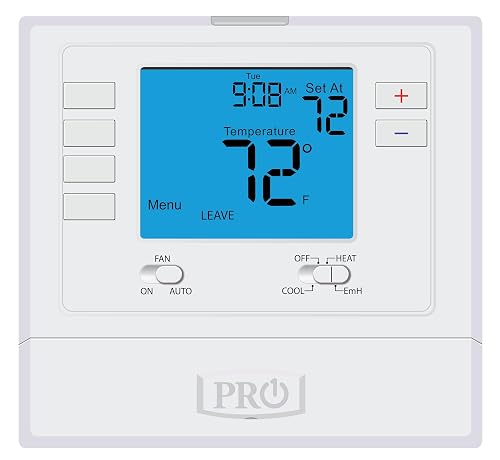
PRO1 T725 Heat Pump/Conventional Programmable Wall Thermostat

PRO1 T771 Single Stage Non-Programmable Wall Thermostat
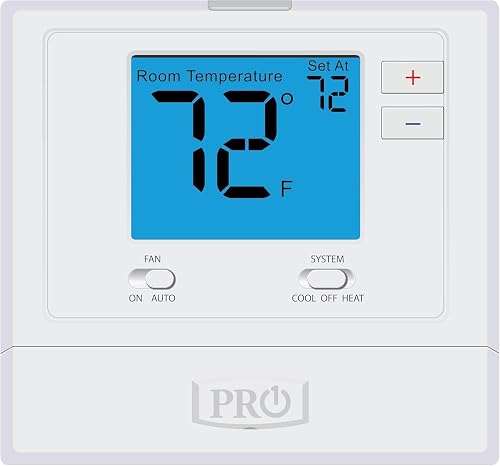
PRO1 T701 Single Stage Non-Programmable Wall Thermostat

PRO1 T715 Multi-Stage Programmable Gas Thermostat
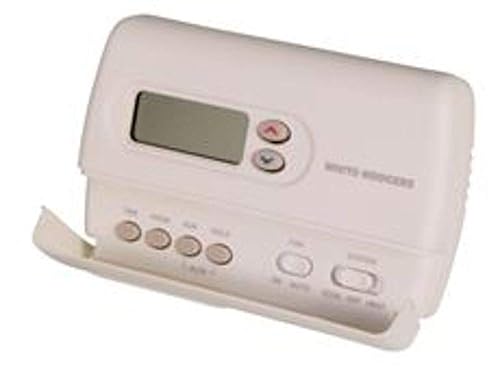
White-Rodgers 1F80-361 Emerson 80 Series Programmable Thermostat
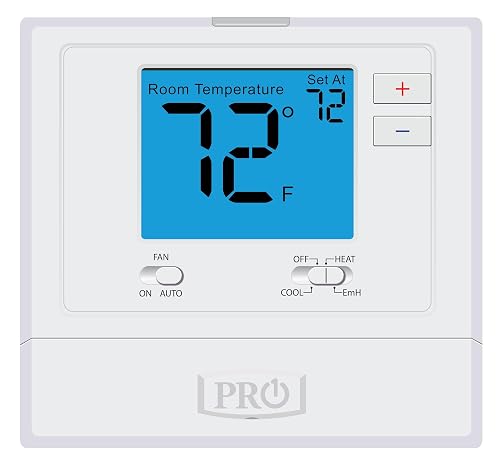
PRO1 T721 Non-Programmable Wall Thermostat (2H/1C)
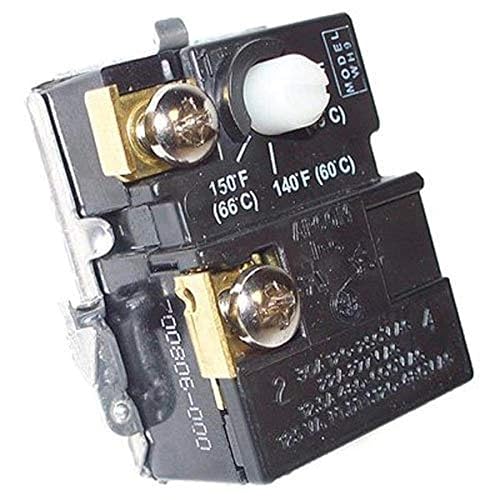
Reliance 9000507-045 Lower Electric Thermostat

PRO1 T805 Single Stage Programmable Wall Thermostat
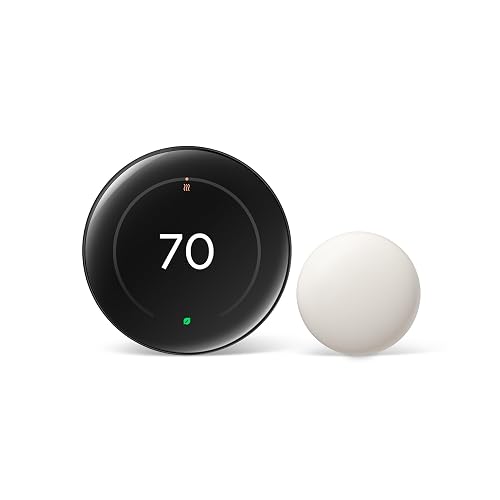
Google Nest Learning Thermostat (4th gen) with Sensor (Obsidian)
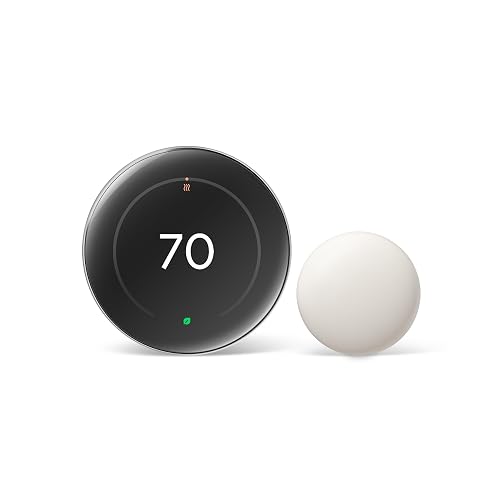
Google Nest Learning Thermostat (4th gen) with Sensor (Silver)
A Breakdown Of The Leading Choices
The T725 sits in a useful middle ground: it speaks both heat pump and conventional wiring, so swapping an aging thermostat for a programmable upgrade rarely requires rewiring. In homes where the furnace handles a backup heat stage and the heat pump carries most winter loads, that dual-vocabulary approach saves a return trip to the hardware store.
The blue backlit display runs about 4 square inches, which is enough to read the schedule at a glance from across a hallway. A 7-day or 5/1/1 program (where weekdays share a schedule, Saturday gets its own, and Sunday gets its own) gives working households room to dial in weekday mornings without overcomplicating weekend mornings. Compared to the T701 reviewed below, this one adds scheduling and dual-fuel awareness without jumping to a touchscreen.
What Works In Its Favor
- Compatible with both 2H/1C heat pump and 1H/1C conventional setups, covering most single-family homes
- 7-day and 5/1/1 programming fits around a workweek without forcing weekend compromises
- 4 sq. in. backlit screen reads clearly from a few feet away, helpful in dim hallways
- Gas/electric configurable for mixed-system households
- Part of the established T700 platform, so replacement parts and documentation are easy to source
Things To Consider
- Programming takes a few evenings of tinkering before it feels intuitive, especially the four daily periods (wake, leave, return, sleep)
- No touch screen, so menu navigation relies on physical buttons that can feel stiff at first
Key Specs
Made For
Owners of heat pump homes who want programmable scheduling without stepping up to a smart thermostat.
Skip It When
The PRO1 T701 is a better match if you only need single-stage conventional control and want the simplest possible interface.
Where the other entries on this list focus on living-room comfort, the T771 leans into the awkward spaces: garages, workshops, sunrooms, basements, and sheds that need heat without the markup of a smart thermostat. The wide setpoint range, stretching down to about 25°F, lets you set a low “freeze protection” target that keeps pipes safe on cold nights.
Without scheduling, the experience is closer to a classic dial thermostat than a digital one. You turn the temperature up when you walk in, down when you leave, and the unit quietly handles the rest. For spaces where you only adjust the thermostat on the way in and out, that stripped-down feel is the whole point.
What Pays Off
- 25°F to 90°F setpoint range supports freeze protection for unoccupied spaces
- Swing adjustment (the temperature gap between cycle-on and cycle-off) helps with sensitive equipment
- 4 sq. in. backlit display remains readable in low-light workshops
- Non-programmable design removes any learning curve for occasional users
Trade Offs
- Limited to single-stage conventional systems, so it won’t drive a multi-stage furnace
- Calibration mode is a feature you’ll likely set once and forget, but it does add a step during initial install
Right Fit For
Garage and workshop owners who need a wide-range, no-fuss thermostat for low-temperature spaces.
Look Elsewhere When
You want a similar non-programmable feel for a living area, where the PRO1 T701’s glow-in-the-dark light button is a more practical fit.
For homeowners who replace a thermostat once a decade and never want to think about it again, the T701 strips out every feature that doesn’t earn its keep. You get a big, lit screen, two physical buttons, and a temperature dial. That simplicity is the appeal: no apps, no accounts, no firmware updates.
The glow-in-the-dark light button is a small touch that earns a real-world win for anyone fumbling in a dark hallway at 2 a.m. with a feverish kid. Gas or electric configurability keeps the T701 compatible with the most common residential setups, and the 4-square-inch display echoes the larger T725 above in a body designed for everyday living spaces rather than specialty zones.
What Makes Sense
- Non-programmable design means almost no setup beyond setting the temperature
- Glow-in-the-dark light button makes nighttime adjustments painless
- Gas/electric configurable for typical single-stage systems
- Shared T700 platform with the T725, so installation feels familiar for pros
Worth Noting
- No scheduling, so you’ll need to adjust it manually when routines change
- Limited to 1H/1C conventional, which rules out heat pump homes
Best Suited To
First-time installers and anyone replacing a worn-out manual thermostat who wants minimal menu-diving.
Swap It Out When
The PRO1 T721 is a smarter replacement if your system is a heat pump, since it handles 2H/1C heat pump setups without reprogramming.
The T715 is the first entry on this list built for serious multi-stage equipment: 2 heat stages and 2 cool stages means the thermostat can ramp a two-stage gas furnace gently on mild days and push the second stage on the coldest ones. For homes with zoned comfort or variable-speed blowers, that fine control keeps temperature swings from waking you at night.
You can run it in 7-day, 5/1/1, or fully non-programmable mode, so the T715 grows with you. Start with manual mode after install, then turn scheduling on once the system is dialed in. Compared to the single-stage T701, the T715 is overkill for a one-stage furnace but a natural fit for the increasingly common high-efficiency gas setups.
Practical Advantages
- 2H/2C support pairs with modern high-efficiency gas systems
- Three operating modes (7-day, 5/1/1, non-programmable) suit different comfort levels
- Glow-in-the-dark light button helps during nighttime adjustments
- 4 sq. in. backlit display matches other T700-platform siblings
Honest Caveats
- More installer settings than the T701, so first-time DIYers may want to budget extra time
- Diminishing returns on homes with single-stage equipment
Key Specs
Who It Suits Best
Households running multi-stage gas furnaces who want scheduling and precise temperature staging.
A Better Fit Elsewhere
The Emerson 80 Series 1F80-361 is a more proven fit for traditional single-stage homes where 2H/2C capability is wasted.
The Emerson 1F80-361 has earned a long reputation among HVAC contractors as a sensible, get-the-job-done programmable thermostat. It’s a single-stage unit that covers the basics: 5+1+1 programming (five weekdays share one schedule, Saturday its own, Sunday its own), up to four periods per day, and 24-volt plus millivolt compatibility for older gas, oil, or electric systems.
Often sold as a single thermostat from a contractor bulk pack, the 1F80-361 lands in the hands of technicians who already know its quirks. For homeowners, the appeal is straightforward: it’s compatible with the kinds of equipment that predate app-controlled climate, which is a meaningful share of older U.S. homes. The manual is hosted on the product listing rather than printed, so keep a phone handy during install.
Positive Takeaways
- 5+1+1 programming covers weekday, Saturday, and Sunday schedules independently
- Up to four daily periods (wake, leave, return, sleep) for tighter control
- 24V and millivolt compatible, fitting gas, oil, or electric systems
- Contractor-trusted brand with widely available documentation
Points To Keep In Mind
- Single-stage only, so it cannot coordinate a two-stage furnace
- Manual is hosted online rather than included in the box
Who Will Love This
Owners of older gas, oil, or electric single-stage systems who want proven, contractor-grade hardware.
Consider Something Else When
The PRO1 T715 is a stronger match for multi-stage high-efficiency systems, where the extra heat and cool stages actually get used.
The T721 quietly solves a common headache: you’re not sure whether your old thermostat was wired for a heat pump or a conventional furnace. By covering both 2H/1C heat pump and 1H/1C conventional, this unit takes the guesswork out of the swap, which is why it’s a common pick for replacement projects where the previous installer’s notes are missing.
Like other T700-platform siblings, it carries a 4-square-inch backlit display and a glow-in-the-dark light button. Power can come from AA batteries or a hardwired connection, depending on what’s already in the wall. Compared to the T701, the T721 trades some conventional simplicity for heat pump compatibility, useful for coastal and southern homes.
Useful Strengths
- Dual compatibility with 2H/1C heat pumps and 1H/1C conventional systems
- Battery or hardwired power matches a variety of existing installations
- Glow-in-the-dark light button helps in dim hallways
- Non-programmable design means minimal setup for the average user
Small Caveats
- No scheduling, so manual adjustments are part of the routine
- Selecting the right system mode during install takes one careful pass through the manual
Perfect Match For
Replacing an aging thermostat in a heat pump or conventional system when you want a fast, no-fuss install.
Reach For A Different Pick When
The PRO1 T725 is the right upgrade if you want to add 7-day or 5/1/1 scheduling to the same dual-system support.
This Reliance entry breaks the wall-thermostat pattern: it lives inside an electric water heater, not on a living room wall. The “lower” designation refers to the lower-element thermostat, one of two sensors that decide when to heat the bottom of the tank. When a water heater stops delivering hot water and the upper element checks out, the lower thermostat is often the next part to inspect.
It’s a small, functional component that does one job. For homeowners comfortable opening the heater’s panel covers, swapping in a new lower thermostat is a thirty-minute repair that can stretch the life of an otherwise working tank. That’s the real value: a low-cost part that delays a full water heater replacement.
Advantages To Know
- Direct-fit replacement for the lower element in many Reliance-style electric water heaters
- Compact form factor slots into standard residential tanks
- Affordable part that can postpone a full water heater replacement
Things To Consider
- Working with water heater wiring means turning off a dedicated breaker and verifying power is dead
- Limited to compatible electric water heater models, so cross-check the part number before ordering
Whose Shelf It Belongs On
Homeowners and maintenance-minded renters who want a backup lower-element thermostat for an electric water heater.
Another Choice May Suit
None of the wall thermostats on this list cover water heater work, so a dedicated water heater part is the right tool here.
The T805 is the T800 platform’s answer to “I want a bigger screen.” At roughly 7 square inches, the display is large enough that the current temperature, schedule, and mode all read clearly without leaning in. For households where someone leaves their reading glasses in another room, that extra real estate is more than cosmetic.
It runs 7-day, 5/1/1, or non-programmable modes for conventional 1H/1C systems. The glow-in-the-dark light button carries over from the T700 series, and a quick setup process means most installers finish in under twenty minutes. Compared to the T701, the T805 is the natural pick when scheduling matters and reading the screen at a distance matters more.
Useful Highlights
- 7 sq. in. display is the largest in this roundup, ideal for low-vision households
- 7-day, 5/1/1, and non-programmable modes offer a real progression path
- Glow-in-the-dark light button for late-night adjustments
- Conventional 1H/1C compatibility covers the most common residential systems
Where It May Fall Short
- Single-stage only, so it won’t drive a two-stage furnace
- Larger footprint than the T701, so double-check the wall plate dimensions if you’re covering old paint
Quick Facts
Who Should Grab It
Schedulers with aging eyes or anyone mounting a thermostat high on a wall where small text is hard to read.
Where Another Pick Suits Better
The PRO1 T715 makes more sense for multi-stage gas systems, where the larger T805 display alone doesn’t add capability.
The fourth-generation Nest Learning Thermostat is the most “set it and forget it” model on this list, in the truest sense. It observes which temperatures you set at which times of day, then builds a schedule around your habits. After a couple of weeks of nudges, you may find yourself rarely touching the dial at all.
Bundled with a second-generation Nest Temperature Sensor, the package helps solve a problem most thermostats ignore: the hallway thermostat doesn’t reflect the nursery or the basement office. The sensor lets you prioritize a specific room’s comfort. Compared to the wall-mounted PRO1 units reviewed above, the Obsidian Nest leans into a polished interface and app control, with a higher entry cost in return.
Well-Handled Touches
- Self-learning schedule removes most manual programming
- Included second-gen temperature sensor supports room-specific priorities
- Obsidian finish fits modern, minimal interiors
- App control adds remote adjustments for travelers and shift workers
Less-Strong Areas
- Relies on a consistent Wi-Fi connection for full functionality
- Learning mode can feel presumptuous before it tunes to your household’s quirks
- Higher upfront cost than the wall-mount PRO1 models
Feature Snapshot
Built With In Mind
Smart-home enthusiasts who want the thermostat to learn their routines and accept room-priority sensors.
Not Your Match When
The PRO1 T701 is a calmer, lower-cost fit for a household that just wants a temperature dial and no connectivity.
The Silver variant of the 4th-gen Nest is functionally identical to the Obsidian model reviewed above, with the same learning engine, the same bundled temperature sensor, and the same app-based controls. The difference is purely cosmetic: a brushed silver finish that fades into bright walls rather than anchoring a dark wall.
For homes with lighter trim, white walls, or a Scandinavian-leaning palette, the Silver finish reads less like a tech gadget and more like a quiet accessory. You give up nothing in performance and gain a thermostat that disappears into the room. Compare it to the Obsidian version when the room palette, not the feature list, makes the call.
Noteworthy Benefits
- Silver finish pairs well with light walls and modern-minimal decor
- Self-learning schedule reduces manual programming over time
- Second-generation temperature sensor included for room-level priorities
- App and voice integration for remote and hands-free adjustments
Potential Drawbacks
- Same Wi-Fi dependency as the Obsidian model
- Learning period can feel intrusive in the first two weeks
- Higher cost than any non-programmable wall thermostat on this list
Feature Rundown
Made For
Style-first households who want the smart features of the Nest in a finish that matches bright walls.
Skip It When
The PRO1 T805 is a better match if you’d rather skip Wi-Fi and app control for a larger wall-mounted display.
What To Weigh Before Picking a Thermostat
The single biggest decision is your system type. Conventional gas, oil, or electric furnaces use a different wiring vocabulary than heat pumps, and the wrong thermostat won’t just underperform, it can confuse the equipment. Count your thermostat wires, check whether you have an “O” or “B” terminal (the reversing valve wire that heat pumps need), and match the new unit to that layout before you fall in love with a screen size.
Scheduling depth is the second decision. Non-programmable models like the PRO1 T701 work for households that adjust the temperature manually and don’t want a learning curve. Programmable models add a 7-day or 5/1/1 schedule, which most working families find pays for itself within a season. Learning thermostats like the 4th-gen Nest take the scheduling task off your plate entirely, at the cost of a higher entry price and a Wi-Fi dependency.
For specialty spaces, reach for a thermostat designed for them. The PRO1 T771’s wide setpoint range is a better match for a garage workshop than any living-room model, and the Reliance 9000507-045 is a water heater part rather than a wall thermostat. Putting a smart home model in a shed is wasted money; putting a manual one in a master suite often leads to hand-wringing over setbacks.
If you live in a home with a multi-stage high-efficiency furnace, 2H/2C thermostats like the PRO1 T715 unlock the equipment’s full range. On a single-stage system, those extra stages sit unused. Match the thermostat to the equipment, not to a wish list.
Key Considerations Across These Picks
Where Shoppers Go Wrong
The most common mistake is buying a thermostat that supports more system types than the home actually has. A heat pump thermostat on a conventional furnace often needs a jumper wire or adapter to behave correctly, and that workaround can confuse HVAC technicians during future service. A second common pitfall is ignoring the C-wire, a common wire that delivers continuous 24-volt power from the HVAC system; smart thermostats that need constant power will struggle on older two- or four-wire installs without a C-wire adapter or a fresh pull of wire through the wall. Confirm the existing wiring before you order.
Where The Extra Money Goes
Spending more on a thermostat usually buys one of three things: a learning engine, room-level sensors, or a polished design. The 4th-gen Nest models pay for software that builds a schedule from your habits, plus a temperature sensor that lets the system prioritize a specific room. Mid-tier units like the PRO1 T805 spend the extra budget on a larger display and more flexible programming modes. The cheapest units on this list put the dollars into basic function and a backlit screen, which is often exactly enough. If you rarely touch the thermostat after the first week, a basic non-programmable model will likely feel just as comfortable as a learning one.