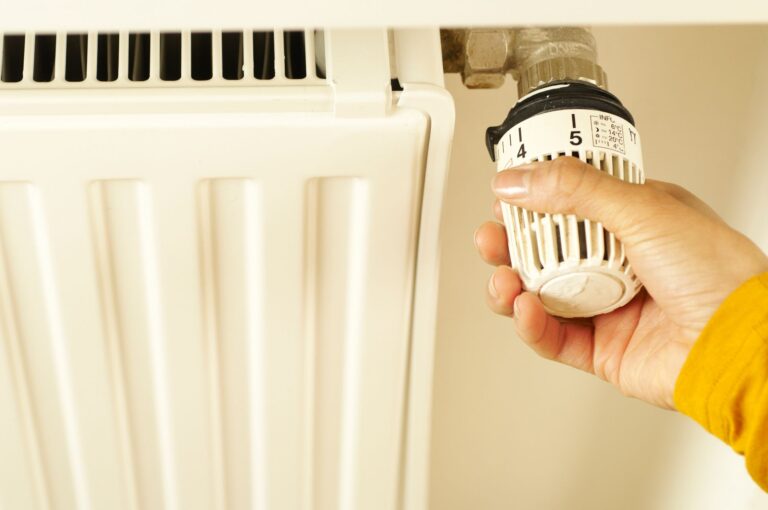

You know that moment when a frozen pipe bursts, a sous vide bag drifts off temperature, or a livestock trough turns to ice? The right immersion thermostat turns those headaches into background noise. This lineup covers hydronic heating controls, submersible water heaters, sous vide circulators, and lab-grade glass thermometers, so you can zero in on the pick that actually matches your job.
The Lineup, Simplified
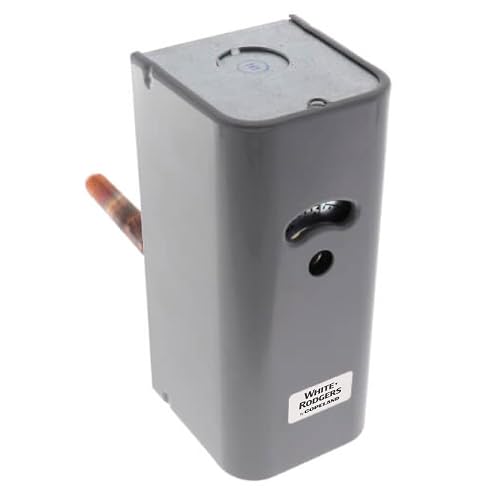
White-Rodgers Well Immersion Control 11B18 101
White-Rodgers Well Immersion Control 11D18-1
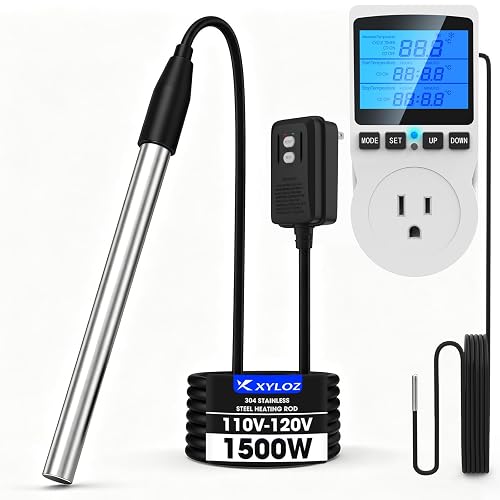
Xyloz 1500W Submersible Immersion Water Heater
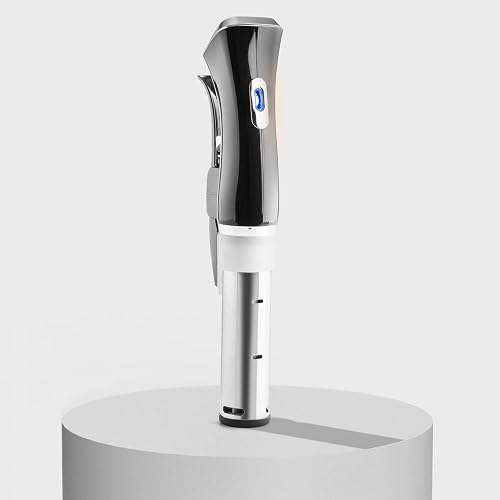
Klarstein QuickStick Sous Vide Circulator

Eyiseiy Immersion Livestock and Pond De-Icer
Fextaoty 1500W Digital Immersion Bathtub Heater
Saysurey 8-Pack Glass Total Immersion Thermometers

Saysurey 16-Pack Glass Total Immersion Thermometers
Saysurey 4-Pack Glass Total Immersion Thermometers
A Closer Look At Each Pick
The 11B18 101 is a classic hydronic well control, the kind you find bolted to a boiler header in older homes. It reads water temperature through a tapered bulb seated inside a well, then opens the circuit on temperature rise to fire the burner.
Because the well ships in the box, you can install it without a second trip to the plumbing supply. Extra capillary length gives the sensing bulb more reach into deeper or extended shank wells, which matters when retrofitting non-standard tanks. In our view, the 100 to 240 degree F range covers the bulk of residential hot water needs.
Useful Touches
- Standard half-inch shank well included, saving a parts run
- Adjustable differential from 5 to 45 degrees for tighter or looser cycling
- Open-on-rise switching matches most residential boiler logic
- Fast hydraulic element reacts quickly to temperature swings
Things To Consider
- Wiring requires comfort with line-voltage controls
- Capillary routing must avoid kinks during install
Quick Facts
Made For
Homeowners and HVAC techs retrofitting a residential boiler with a proven single-stage well control.
Consider Something Else When
You need a flexible mount in a cramped mechanical room, in which case the White-Rodgers 11D18-1 fits better.
The 11D18-1 takes the same open-on-rise logic as the 11B18 101 and adds the freedom to mount it horizontally or vertically. That detail sounds minor until you are crouching over a tankless coil trying to find a clear run for the capillary.
This control ships without a well, so it slots into existing installations that already have the right shank drilled. You may find the wider mounting flexibility makes it a better swap-in than a fixed-orientation unit when the original bracket is gone.
Strong Points
- Horizontal or vertical mounting adapts to cramped mechanical rooms
- 100 to 240 °F range matches common hydronic supply targets
- Extra capillary length reaches extended shank wells
- Fast-acting hydraulic element keeps response time tight
Trade Offs
- Well sold separately, so plan ahead for the right shank
- No included mounting hardware for non-standard brackets
- Calibration drifts slightly over many heating seasons, common in this control class
Best Suited To
Service techs and experienced DIYers replacing an existing well control where a flexible mount saves real time.
Look Elsewhere When
You need a turnkey kit with a well included, which the White-Rodgers 11B18 101 covers in one box.
The Xyloz is a 120-volt, 1500-watt submersible heater designed to drop straight into a container of water and bring it up to soak-ready temperature. A GFCI plug gives you a ground-fault cutoff, which matters whenever electricity and water share a tub.
It works across sinks, washbasins, small pools, hot tubs, and storage tanks, which makes it a flexible backup when a dedicated water heater is offline. The built-in thermostat cycles the element so the water holds at your target, though a standard 15-amp household circuit is the realistic ceiling for sustained draw.
Where It Excels
- 1500 W output heats smaller volumes quickly
- GFCI protection adds a real layer of safety in wet areas
- Built-in thermostat holds target temperature without babysitting
- Portable form factor moves from sink to tub to tank
Practical Considerations
- Limited to outlets on a standard 15-amp household branch
- Not designed for permanent hardwired installation
- Must be fully submerged during operation to avoid element damage
Key Specs
Right Fit For
Renters, hobbyists, and small-pool owners who need portable hot water without a permanent install.
Skip It When
You want a digital readout on the heater itself, in which case the Fextaoty 1500W Digital model is a better match.
The QuickStick is an immersion circulator, a stick-shaped heater that clamps onto a pot and keeps water at a precise temperature for sous vide cooking. The integrated circulation pump moves water past the sensor, which removes the hot and cold pockets that ruin long cooks.
Its adjustable range from 50 to 95 °C covers everything from slow-cooked egg yolks to steakhouse-style sear-ready finishes. The 20-liter capacity means you can drop it into a large stockpot for a dinner-party batch, though deeper vessels above 18 cm give the pump room to work.
Real Benefits
- Precise temperature control for repeatable results
- Integrated pump eliminates hot and cold zones
- Dry-run protection shuts the unit off when water is too low
- Timer on the display lets you set-and-forget long cooks
Honest Caveats
- Owners commonly report the screen response feels slow when adjusting mid-cook
- Needs a heat-resistant container taller than 18 cm to seat properly
Feature Snapshot
Who Will Love This
Home chefs who want consistent, repeatable doneness without hovering over a pot.
Reach For A Different Pick When
You need to keep a backyard water source from freezing, which is what the Eyiseiy Immersion De-Icer handles.
The Eyiseiy is a de-icer, a small immersion heater that keeps outdoor water from freezing solid through the coldest nights. The automatic thermostat reads water temperature and only draws power when the water actually drops near freezing, which keeps your electric bill in check.
It pulls double duty across chicken waterers, livestock troughs, bird baths, and small koi or turtle ponds, so one device can cover several spots on a small property. Depending on your pond size, you may find a single unit is enough to maintain a hole in the ice all winter.
The Value In It
- Automatic thermostat only heats when needed
- Immersion design reaches the coldest water at the bottom
- Works across coops, troughs, bird baths, and small ponds
- Compact enough to move between stations as the season shifts
Points To Note
- Not sized for large ponds or full-size livestock tanks
- Cord management matters in muddy coop environments
Who Should Grab It
Backyard chicken keepers and small-pond owners who need a set-and-forget freeze guard through winter.
A Better Fit Elsewhere
If your job is heating a soaking tub instead of a coop, the Fextaoty 1500W Digital Immersion Heater fits the bill.
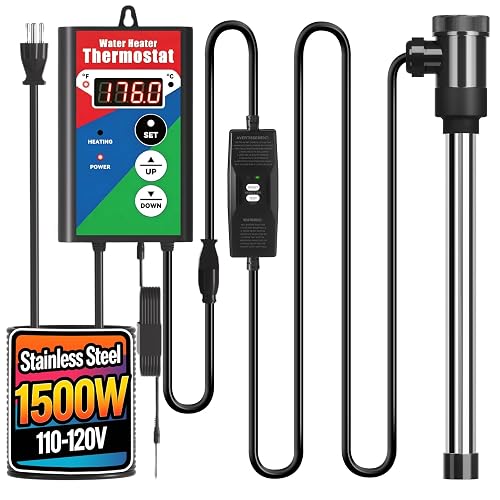
The Fextaoty takes the basic submersible heater formula and adds a digital thermostat and a longer 118-inch cord, so you can read the temperature at a glance and reach distant outlets. The 304 stainless steel body holds up to repeated submersion without corroding.
It lands squarely in comfort territory, think long soaks, inflatable spas, and small livestock tanks where the cord needs to reach a GFCI outlet across the room. The auto-hold feature helps the water stay in your target range without manual cycling.
A Few Strong Suits
- Digital readout shows current water temperature at a glance
- 118-inch cord reaches distant GFCI outlets in larger rooms
- 304 stainless steel resists corrosion across many uses
- GFCI protection adds a safety margin in wet environments
Less Ideal Details
- Still bound to a standard 15-amp household circuit
- Heating time scales with water volume
At A Glance
Whose Shelf It Belongs On
Soak enthusiasts, spa renters, and small-property owners who want a digital readout and longer reach than basic submersibles offer.
Where A Sibling Pick Shines
For a cheaper submersible option without the digital display, the Xyloz 1500W Heater does the same core job.
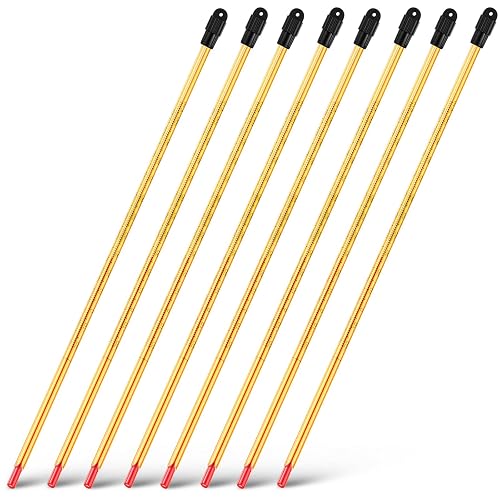
These are 12-inch glass thermometers designed for total immersion, meaning the entire sensing portion goes into the liquid for the most accurate reading. The red fill replaces mercury, which simplifies disposal and classroom handling.
An eight-pack covers a typical classroom set or a multi-station lab without leaving anyone short. Glass does need careful storage to avoid breakage, which is the trade-off for that level of accuracy.
What Earns Its Place
- Total immersion design delivers precise lab readings
- Red fill avoids the hazards of mercury
- Eight units cover a standard classroom station layout
- Glass construction cleans easily between experiments
A Few Limitations
- Glass requires careful storage and handling
- Less convenient than digital probes for quick field checks
Perfect Match For
Science teachers and lab coordinators stocking a classroom or multi-station lab with general-purpose glass thermometers.
Swap It Out When
You need a single thermometer for a hobbyist setup, in which case the Saysurey 4-Pack is a tighter fit.
The 16-pack is the same 12-inch total-immersion thermometer in a larger quantity, aimed at departments and shared benches. Buying in bulk cuts down on per-unit cost and keeps spare units on hand for breakage.
This size makes sense for a full teaching lab, a multi-section classroom rotation, or a research group running several experiments at once. In most schools, the redundancy pays for itself the first time a student drops one.
What Works In Its Favor
- Sixteen units stock an entire teaching lab in one order
- Lower per-unit cost than smaller packs
- Total immersion design holds accuracy across long sessions
- Red liquid fill simplifies classroom safety protocols
Some Limits To Know
- Glass storage becomes a bigger logistics question at this volume
- More spares means more calibration checks to manage
Built With In Mind
Lab managers and department coordinators outfitting a full bench or multiple stations with shared glass thermometers.
Not Your Match When
You only need a handful of units for a small classroom, where the Saysurey 8-Pack is a more measured buy.
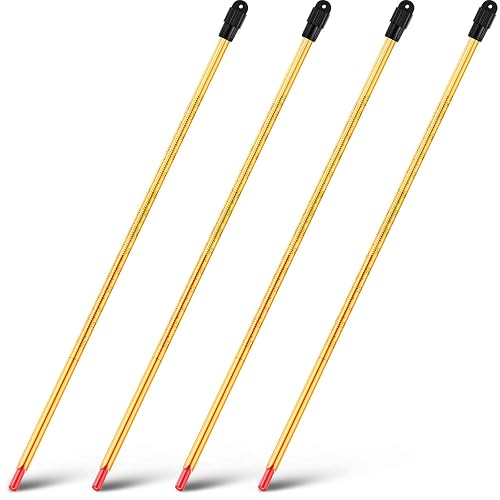
The 4-pack brings the same 12-inch total-immersion glass design down to a hobbyist-friendly count. It is a sensible starter set for a garage lab, a home brewing corner, or a small classroom rotation.
You get the same red-fill safety and the same total-immersion accuracy as the larger packs, just with fewer units to store. The trade-off is thinner redundancy if one breaks mid-experiment, so a backup plan helps.
A Few Highlights
- Small pack fits a home or hobbyist lab without excess inventory
- Total immersion design reads accurately across full submersion
- Red liquid fill avoids mercury handling concerns
- Glass body wipes clean between uses
Worth Bearing In Mind
- Only one spare if one breaks mid-session
- Glass needs a safe storage spot away from busy bench edges
The Right Fit
Home experimenters, hobby brewers, and small science setups that want lab-grade glass thermometers without bulk-buying.
Where Another Pick Suits Better
For a full classroom with many students sharing stations, the Saysurey 16-Pack covers the bench better.
What Matters Most Before Choosing Immersion Thermostats
The first decision is the application. Hydronic well controls like the White-Rodgers 11B18 101 and 11D18-1 are boiler-mounted switches, while submersible heaters like the Xyloz and Fextaoty are portable plugs that drop into a container. A sous vide circulator such as the Klarstein QuickStick is a precision cooking tool, and the Eyiseiy de-icer is built for outdoor freeze prevention. Glass immersion thermometers serve lab measurement, not heating.
The second decision is the power and circuit reality. A 1500 W portable heater pulls the full capacity of a standard 15-amp household branch, so sharing that outlet with anything else will trip the breaker. Hardwired controls operate at line voltage and require comfort with terminal wiring.
The third decision is fit and form. A well control needs the right shank size and a clear run for the capillary. A circulator needs a container tall enough for the pump. Lab thermometers need a safe, stable storage spot, since glass is unforgiving in a busy classroom.
Key Considerations Across These Picks
Common Shopping Slip Ups
The most frequent mistake is buying a submersible heater for a hardwired boiler job, or a hydronic well control for a portable tub. The form factors look similar, but the electrical requirements, mounting, and safety profiles are completely different. Match the product category to your actual setup before comparing brands.
A related slip is ignoring container height for circulators. A vessel shallower than the unit’s minimum height can leave the pump starving and trigger the dry-run cutoff mid-cook.
Where The Extra Money Goes
Higher-tier submersible heaters tend to add a digital display, a longer cord, and food-grade stainless steel rather than raw heating power. For sous vide, the upgrade usually buys tighter temperature tolerance and a stronger pump. In lab thermometers, the premium buys better glass stability and calibration consistency, which matter most in shared or research settings.
Frequently Asked Questions
What is an immersion thermostat? An immersion thermostat is a temperature-sensing device that sits directly in the fluid it monitors, whether that fluid is boiler water, a sous vide bath, a livestock trough, or a lab beaker.
Are immersion thermostats safe to use in drinking water lines? Only models specifically rated for potable water should be used in drinking water applications, since heating elements and housing materials vary in their food-safety certifications.
How accurate are immersion circulators compared to lab thermometers? A good immersion circulator holds within a fraction of a degree, while a total-immersion glass thermometer can be equally precise when read correctly, though it requires more careful handling.
Can a submersible heater run unattended? Many include thermostats or auto-shutoff features, but you should always follow the manufacturer’s guidance on unattended operation and avoid running heaters dry.
What size well do I need for a hydronic immersion control? The standard residential shank is half an inch, but longer or extended wells require matching capillary length on the control, so verify the shank size before ordering.
Closing Remarks
Start with the job: boiler, bath, sous vide, freeze prevention, or lab measurement. Each pick on this list maps to one of those lanes, and the right choice is the one that fits your container, your circuit, and your tolerance for fiddling. Once those basics line up, the rest is just matching features to your routine.