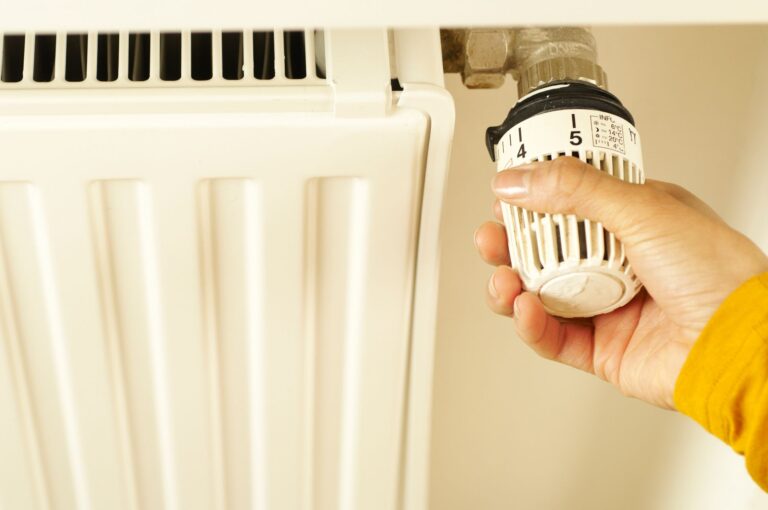

A wall thermostat is one of those quietly important pieces of hardware in your home, and the right one can make daily comfort feel effortless. Gas systems, in particular, need a control that’s wired correctly and easy to live with, and a smart swap can fix uneven rooms, sticky old dials, and confusing schedules. This lineup covers gas-ready wall units and one water-heater gas control valve that fits common Columbia setups, so you can match the control to the system, not the other way around.
A Quick View Of The Lineup

Reliance Natural Gas Control Valve 100112336 (A.O. Smith Compatible)
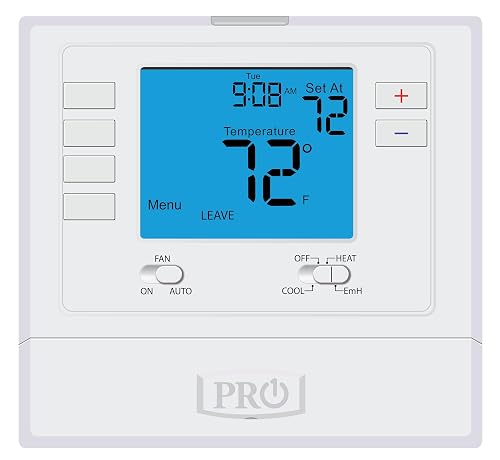
PRO1 T725 Heat Pump/Conventional Programmable Wall Thermostat (2H/1C)

PRO1 T771 Single Stage Non-Programmable Wall Thermostat (1H/1C)
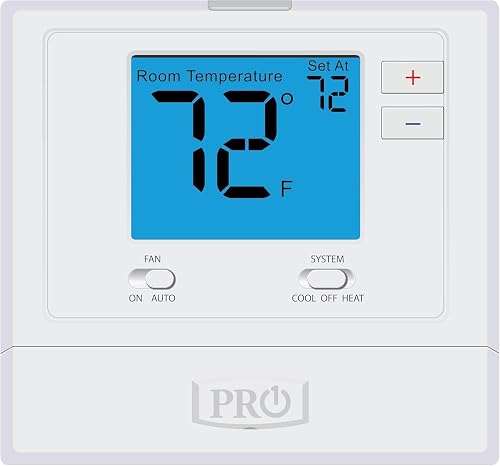
PRO1 T701 Single Stage Non-Programmable Wall Thermostat (1H/1C)

PRO1 T715 Multi-Stage Programmable Gas Thermostat (2H/2C)
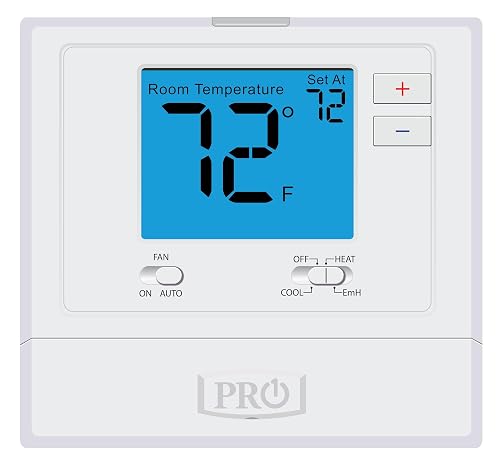
PRO1 T721 Non-Programmable Wall Thermostat (2H/1C Heat Pump or 1H/1C)
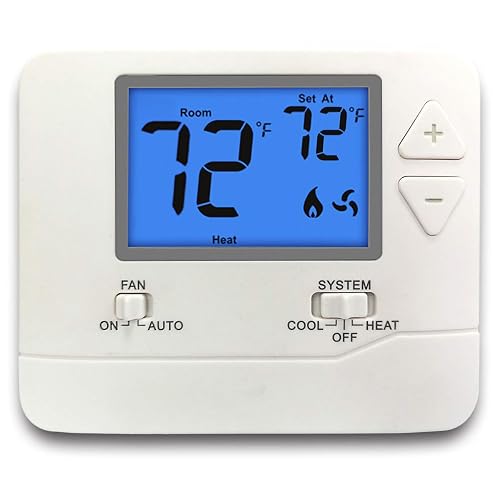
ELECTECK Non-Programmable Digital Thermostat, 1 Heat/1 Cool, Big LCD

White-Rodgers 1E30N-910 Low-V Mechanical Thermostat

PRO1 T805 Single Stage Programmable Wall Thermostat (1H/1C, 7-Day)
Inside Each Recommended Option
The Reliance 100112336 sits in a different corner of the gas-control world from the wall thermostats elsewhere on this list, since it mounts directly on a natural gas water heater rather than the furnace or air handler. The valve is built to match A.O. Smith, Reliance, State, and American-branded water heaters, so it slots in when the original gas control has failed and the tank itself is still serviceable.
You won’t be programming schedules on this one, because it isn’t a wall unit. Instead, you get a mechanical gas valve with a built-in thermostat dial that regulates water temperature inside the tank. For homeowners dealing with lukewarm showers, pilot-light trouble, or a water heater that won’t fire at all, the part is often the actual fix. Installation is genuinely a job for a licensed technician, and the manufacturer notes professional installation helps preserve the unit’s coverage.
Features That Help
- Cross-brand fit for common A.O. Smith family water heaters, which simplifies finding the right replacement part.
- Integrated thermostat dial removes the need to source a separate control for basic tank management.
- Repair-friendly path: swap the valve and you can keep the existing tank instead of replacing the whole water heater.
Worth Noting
- Not a DIY install, since gas control work carries real safety risk and often requires a licensed tech.
- Sourcing is limited to compatible water-heater brands, so verify the model number before ordering.
Who It Suits Best
Homeowners with a mid-life natural gas water heater whose gas control has failed but whose tank still has years left in it.
Where Another Pick Suits Better
The White-Rodgers 1E30N-910 is the better fit when the project is a wall-mounted heat-only or millivolt system rather than a water heater tank.
The PRO1 T725 earns the Editor’s Choice nod because it handles both a 2-heat, 1-cool heat pump setup and a 1-heat, 1-cool conventional system, which covers the two configurations most Columbia Gas customers are likely to own. The programmable side of things uses either a full 7-day or 5/1/1 day schedule (a common pattern that splits weekdays and weekends independently), with separate wake, leave, return, and sleep blocks. The 4 sq. in. blue backlit screen stays readable in dim hallways and night-time check-ins.
For anyone juggling a heat pump upstairs and a gas furnace downstairs, the T725 picks up where simpler single-stage units like the PRO1 T701 and PRO1 T771 leave off. The wider system compatibility is the real value: a single replacement often does the job for two different households’ HVAC configurations. Programming takes a few minutes the first time, and once set, the schedule quietly runs in the background.
A Strong Showing
- Dual system support means one thermostat covers both a heat pump with aux heat and a standard gas furnace system.
- 7-day and 5/1/1 programming let you match real weekly routines, which trims wasted heating and cooling hours.
- Blue backlit 4 sq. in. display is large enough to read across the room without squinting.
Trade Offs
- Programming depth is overkill for someone who just wants a single setpoint and nothing else.
- Requires correct terminal wiring, so a quick photo of the old thermostat’s wire labels is worth taking before swapping.
Key Specs
Made For
Households running a heat pump with a gas furnace backup who want one programmable wall unit instead of a separate stat for each system.
Look Elsewhere When
Reach for the PRO1 T701 instead when a basic non-programmable single-stage control is all the wall really needs.
The PRO1 T771 is the coldest-rated stat on this list, since its setpoint range runs from 25°F to 90°F, and that extra reach below freezing is what makes it work in spaces where living-room thermostats give up. Garages, sheds, workshops, and converted outbuildings all benefit from a wider setpoint range, especially in regions where unheated spaces can dip well into the 20s overnight. The unit runs a simple 1-heat, 1-cool conventional setup with no scheduling to fuss over.
There’s a clear contrast with the home-focused T701, which targets indoor living areas and skips the deep cold-end range. The T771 trades away programmability and home-friendly cosmetics in exchange for a wider temperature band and a robust build, which is exactly the trade-off most garage workshops want. A 4 sq. in. blue backlit display rounds out the package for dimly lit work areas.
Real-World Strengths
- Setpoint range down to 25°F keeps unheated garage spaces from locking out the thermostat in deep winter.
- Single-stage 1H/1C conventional design suits straightforward gas furnace plus AC combos.
- Backlit display is readable in low-light shop and basement environments.
Things To Consider
- Non-programmable, so any overnight setback has to be set by hand each time.
- Specialty focus means it isn’t the prettiest pick for a primary living-room wall.
Right Fit For
Workshop and garage owners with a gas unit heater or furnace who need a control that handles sub-freezing setpoints without complaint.
Swap It Out When
The PRO1 T701 is the better match for an indoor living space where the wider cold-end range is wasted.
The PRO1 T701 is the easy, no-nonsense wall control that does the job without dragging you into menus. It’s built for the most common setup in Columbia Gas homes: a single-stage 1-heat, 1-cool conventional system, which means a standard gas furnace paired with a single-stage air conditioner. The T700 platform gives it a 4 sq. in. blue backlit display and a glow-in-the-dark light button that helps on late-night adjustments without flipping the room lights on.
Set it to your preferred temperature and walk away, since there is no schedule to program. Owners commonly appreciate the simple up/down operation, and the non-programmable format avoids the learning curve that scares off anyone who just wants the house to feel right. Power is flexible, with battery or common-wire (a wire that provides continuous 24V power from the HVAC system) options, so it adapts to most existing wiring. Compared with the wider-feature PRO1 T725, this one trades scheduling and system flexibility for straightforward reliability.
Everyday Advantages
- Up/down temperature control with no menus, which makes it a comfortable fit for first-time stat users.
- 4 sq. in. blue backlit display keeps numbers readable from across the room.
- Glow-in-the-dark light button makes midnight adjustments easier without fumbling.
Less Ideal Details
- No scheduling, so weekday and weekend routines need manual adjustment.
- Single-stage only, so it can’t drive multi-stage gas systems like the T715.
Who Should Grab It
Homeowners with a standard single-stage gas furnace and AC who want a clear, fuss-free wall control.
Not Your Match When
The PRO1 T715 fits better for a two-stage gas furnace where you actually want both stages to run independently.
The PRO1 T715 is the right wall unit for a home that actually has a two-stage gas furnace plus a two-stage cooling system, which is a setup that simpler single-stage stats cannot drive correctly. A two-stage furnace runs a low fire most of the time and a high fire only on the coldest mornings, so a proper multi-stage thermostat keeps the system from short-cycling (rapidly turning on and off, which wastes fuel and wears parts) and from slamming into high fire when it doesn’t need to.
Programming goes deeper than the T701, since the T715 supports 7-day, 5/1/1, or non-programmable operation, so you can pick the level of scheduling that fits your household. The 4 sq. in. blue backlit screen matches the T701’s footprint, but the glow-in-the-dark light button carries over for the same late-night convenience. Battery or hardwired power gives the installer flexibility on older homes that may not have a common wire pulled to the wall. Compared with the heat-pump-friendly T725, this one is squarely aimed at multi-stage gas systems.
Well-Handled Touches
- True 2H/2C support lets a two-stage gas furnace breathe properly, which usually means quieter operation and steadier room temperatures.
- Three scheduling modes give you the choice between full custom, weekday/weekend split, or simple hold operation.
- Glow-in-the-dark light button is a small but real help for late-night tweaks.
Possible Compromises
- Overkill for single-stage systems, where the second heat stage is never used.
- Wiring takes a little more care because multi-stage terminals need to land on the right screws.
Feature Snapshot
Best Suited To
Homeowners with a confirmed two-stage gas furnace and AC who want the thermostat to use both stages instead of locking the system to high fire.
Reach For A Different Pick When
The PRO1 T701 is the cleaner choice for a single-stage system where multi-stage terminals are unused and a simpler wall control is enough.
The PRO1 T721 is the non-programmable cousin of the T725, and it covers a very similar pair of systems: a 2-heat, 1-cool heat pump or a 1-heat, 1-cool conventional setup. The trade-off is a swap of programming flexibility for a simpler wall experience, which is exactly the right move in homes where nobody wants to fuss with a 7-day schedule. The 4 sq. in. blue backlit display and glow-in-the-dark light button keep things easy to read and adjust at any hour.
Power comes from either AA batteries or a hardwired common, which is genuinely helpful in older homes where the original installer never ran a C-wire. Owners commonly find the wiring process straightforward when the existing labels are followed, and the dual-mode setup means a single stat survives both a heat-pump retrofit and a conventional system swap. Compared with the deeper-programmable T725, the T721 is the cleaner pick when scheduling is more friction than benefit.
Where It Helps
- Heat pump and conventional compatibility in one unit, so the same part covers two different HVAC system types.
- Battery or hardwired power accommodates older homes without a common wire.
- Non-programmable format keeps the wall control simple for anyone who finds menus annoying.
Some Limits To Know
- Lacks the 7-day scheduling that the T725 offers, so any setback has to be set by hand.
- Not intended for true multi-stage systems like the 2H/2C T715.
Who Will Love This
Homeowners with a heat pump or conventional system who want flexibility on system type without ever touching a schedule.
A Better Fit Elsewhere
The PRO1 T725 makes more sense when you actually want 7-day or 5/1/1 programming on top of the same system support.
The ELECTECK non-programmable thermostat leans hard into the “big number” experience, with a large LCD that stays readable from the couch, the bed, or the far end of a hallway. It’s a single-stage 1-heat, 1-cool unit that supports gas, oil, or electric conventional systems, so the install is simple in most standard Columbia Gas homes. The white housing keeps the look neutral against most wall paint colors.
One important compatibility note: ELECTECK explicitly states this stat is not for 110-240V electric heat systems like electric baseboard or line-voltage convectors, so it isn’t a universal replacement. For typical forced-air gas furnace homes, the unit handles the wiring without trouble and the basic up/down control is the entire interface. Compared with the PRO1 T701, the ELECTECK is a simpler wall unit with a focus on display size rather than system flexibility.
A Few Strong Suits
- Large LCD digits are a real plus for low-vision users or anyone tired of squinting across the room.
- Single-stage 1H/1C support covers most standard gas furnace plus AC pairings.
- Non-programmable format means no menu hunting, just temperature up and down.
Details To Watch
- Not compatible with 110-240V line-voltage electric heat, which rules out some older all-electric homes.
- Single-stage only, so it can’t coordinate multi-stage gas equipment like the T715.
Quick Facts
Perfect Match For
Households with a standard single-stage gas furnace who care more about a big, readable display than scheduling or multi-stage support.
Skip It When
The PRO1 T805 is a stronger fit when you want scheduling plus a larger display, and you can live with the slightly more involved setup.
The White-Rodgers 1E30N-910 is a low-voltage mechanical thermostat, which means it uses a simple bimetal coil and mercury or snap-action switch rather than digital electronics. For heat-only, millivolt (a low-voltage signal produced by standing pilot flames, used in some older gas systems), or conventional oil, electric, or gas systems, the 1E30N-910 is the kind of part that has quietly done its job for decades. The 50-90°F operating range covers the temperatures most living spaces actually use.
There’s no programming and no screen, just a manual temperature dial that you turn to a setpoint. The vibration resistance makes it tolerant of installations near a furnace closet or utility room where solid-state electronics can sometimes be touchy. Mounting works on either a wall box or junction box, which gives installers flexibility on retrofits. Among the picks on this list, it’s the one with the fewest features and the longest track record.
Where It Excels
- Compatible with heat-only, millivolt, and conventional oil, electric, or gas systems, which covers a wide swath of older homes.
- Vibration resistance helps in utility-room-adjacent installations.
- Simple dial operation means no menus, no batteries, and no learning curve.
Soft Spots
- No scheduling or setback, so any overnight temperature drop has to be dialed by hand.
- 50-90°F range excludes deep-cold applications where the PRO1 T771’s wider setpoint band is needed.
Whose Shelf It Belongs On
Owners of older heat-only or millivolt systems who want a straightforward, repair-friendly mechanical stat without any digital frills.
Where Another Pick Suits Better
The PRO1 T771 makes more sense for a garage or shed where the wider 25-90°F setpoint range actually matters day to day.
The PRO1 T805 sits on the larger T800 platform, which means a 7 sq. in. blue backlit display rather than the 4 sq. in. screen on the T700-series units. For anyone who’s ever leaned toward the wall to read the room temperature, the difference is genuinely noticeable. The T805 is a single-stage 1-heat, 1-cool conventional thermostat with 7-day, 5/1/1, or non-programmable modes, so scheduling is flexible without being overwhelming.
Glow-in-the-dark light button carries over from the T700 series, which makes late-night tweaks easy. Power comes from battery or hardwired common, similar to the rest of the PRO1 lineup. Compared with the T701, the T805 is the right pick when you want a noticeably bigger screen plus real scheduling, without stepping up to multi-stage hardware. Compared with the T725, it’s a step down in system support, but a step up in display real estate.
What Makes Sense
- 7 sq. in. blue backlit display is meaningfully larger than the 4 sq. in. screens on the T700-series stats.
- Three scheduling modes cover anything from full custom to simple hold, depending on how hands-on you want to be.
- Glow-in-the-dark light button helps in hallways and bedrooms during night-time adjustments.
Honest Caveats
- Single-stage only, so it can’t drive multi-stage gas systems like the T715.
- Larger housing means it stands out more on the wall than the smaller T700-series units.
Feature Rundown
Built With In Mind
Homeowners with a single-stage gas system who want a noticeably bigger display and real scheduling without moving to multi-stage hardware.
Consider Something Else When
The ELECTECK big-LCD unit is a friendlier fit when you want a large read-out but no scheduling at all, and you prefer a simpler wall.
What Matters Most Before Choosing Columbia Gas Thermostats
Match The Thermostat To The System, Not The Other Way Around
The single biggest decision is whether the wall unit is rated for your HVAC system. A 1-heat, 1-cool conventional stat is the most common fit for a standard gas furnace plus single-stage AC, while a 2-heat, 1-cool heat-pump stat is needed if the home runs a heat pump with a gas backup. Trying to use a single-stage stat on a multi-stage gas furnace usually wastes the second stage, since the furnace will jump to high fire instead of running in low fire for longer stretches. Pull the cover off the old stat and note the wire labels before ordering, since R, W, Y, G, and C mean different things on different models.
Decide How Much Scheduling You Actually Want
Programmable thermostats are useful only if the schedule gets set and updated. A household with a stable weekday routine benefits from a 7-day or 5/1/1 program, while a home with constantly shifting plans may prefer a non-programmable unit that just holds one setpoint. Over-programming a stat you never touch is wasted money, and under-buying a stat you wish had schedules is daily annoyance. Match the level of automation to your actual routine, not to the spec sheet.
Pay Attention To Wiring And Power
Older homes often lack a common wire, which provides continuous 24V power from the HVAC system to the thermostat. Units that run on batteries or offer both battery and hardwired power give installers more flexibility on retrofits. If the wall cavity has only two or three conductors, a battery-powered or low-voltage mechanical stat is the realistic choice. A quick photo of the existing wiring before ordering saves a return trip.
Look Beyond The Features At Build And Display
The 4 sq. in. screens on most T700-series stats are fine in normal hallways, while the 7 sq. in. screen on the T805 helps in larger rooms or low-vision households. Glow-in-the-dark light buttons make late-night adjustments easier without turning on the room lights. These touches don’t change how the system heats and cools, but they shape how often you’ll actually use the thermostat well.
Key Considerations Across These Picks
Where Shoppers Go Wrong
The most common slip-up in this category is matching by price tag instead of by system type, which usually ends with a thermostat that won’t drive the second stage of a gas furnace or that lacks the terminals a heat pump needs. Another pitfall is ignoring the existing wire count, since ordering a Wi-Fi or common-wire-hungry stat for a two-wire wall is a guaranteed return. Skipping the photo of the old wiring before clicking order is the third mistake that costs the most time. Take ten minutes to confirm system type, wire count, and the setpoint range your space actually needs.
The Case For Spending Up
The jump from a non-programmable single-stage stat to a programmable multi-stage unit usually buys quieter furnace operation, finer temperature swings, and energy savings from running the system on low fire most of the time. The added cost pays off in homes where the heating system runs for several hours a day, since the second stage is doing real work. In mild climates or small homes where the furnace barely idles, the simpler stat is often the smarter spend. Match the upgrade to the runtime, not the brochure.
Frequently Asked Questions
Do these thermostats work with a standard Columbia Gas furnace?
Most single-stage and multi-stage gas furnaces use the same low-voltage control wiring (R, W, Y, G, and sometimes C), so a properly matched thermostat from this list will drive a typical gas furnace without trouble. Confirm the system’s stage count and that the new stat supports it before wiring up.
Can I install one of these thermostats myself?
Many wall thermostats are rated for homeowner installation, but the Reliance 100112336 gas control valve is explicitly a professional-install part because it works on a live gas line. For wall units, always kill power at the breaker, photograph the existing wiring, and follow the new stat’s terminal map.
What is a common wire and do I need one?
A common wire, usually labeled C, provides continuous 24V power from the HVAC system to the thermostat so the stat doesn’t have to run on batteries alone. Several picks on this list support battery-only operation, which is helpful in older homes without a C-wire already pulled.
Will a programmable thermostat actually save on my gas bill?
A programmable thermostat can save energy by trimming the setpoint overnight or while the house is empty, but the savings depend on whether the schedule gets used. In homes where nobody bothers to program the unit, a non-programmable stat performs about the same for daily comfort.
Are any of these compatible with heat pump systems?
The PRO1 T725 and PRO1 T721 both support a 2-heat, 1-cool heat pump setup, which covers most heat-pump-with-gas-backup configurations in the Columbia Gas service area. Pair either with a multi-stage indoor unit if the system has one, and confirm the wiring terminals before installation.
Closing Thoughts
The right thermostat comes down to your system type, your wire count, and how much scheduling you actually want to live with. Pick a unit that matches the furnace or heat pump honestly, and the rest of the decision gets easier. For most homes, a properly matched wall control is one of the quieter upgrades that pays back in everyday comfort.