Picking the right wall thermostat used to mean choosing between two beige boxes at the hardware store. Today’s options span everything from bare-bones manual dials to Wi-Fi-connected learning units that map your routine and trim your energy bill on their own. The hard part isn’t finding a thermostat that works; it’s matching the unit to your HVAC setup, your schedule, and the level of automation you actually want.
This guide breaks down ten wall-mounted and learning models worth a look, with a focus on how each handles real household setups, from single-stage gas furnaces in older homes to multi-stage heat pumps in newer builds.
The Leading Options At A Glance
PickWhy We Picked ItBest ForAction
Editor’s Choice
PRO1 T725 Heat Pump/Conventional Programmable Thermostat
Heat pump and conventional combo
Mixed-system homes

Workshop Pick
PRO1 T771 Single Stage Non-Programmable Thermostat
Wide low-temp setpoint range
Garages and sheds
Simple Standout
PRO1 T701 Single Stage Non-Programmable Thermostat
Backlit display with glow button
Basic single-stage homes

Performance Leader
PRO1 T715 Multi-Stage Programmable Gas Thermostat
Two-stage heating and cooling
Multi-stage gas systems
Dependable Option
White-Rodgers 1F80-361 Emerson 80 Series Thermostat
Millivolt and 24V compatibility
Older furnace retrofits
Easygoing Choice
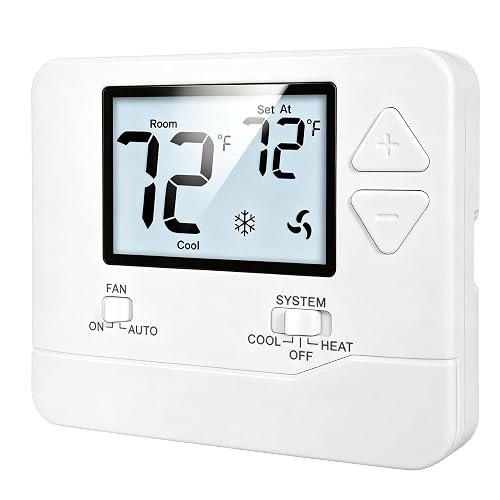
Heagstat Non-Programmable Thermostat 1 Heat/1 Cool
White backlight, no frills
Rental properties
Flexible Favorite
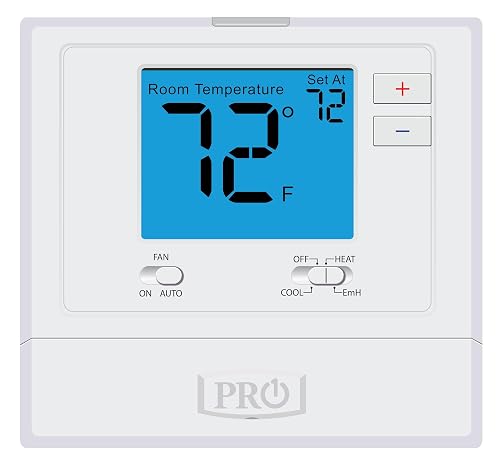
PRO1 T721 Non-Programmable Wall Thermostat
Dual heat pump and conventional
Transitional HVAC setups

Daily Driver
PRO1 T805 Single Stage Programmable Thermostat
Daily Driver
PRO1 T805 Single Stage Programmable Thermostat
Larger 7-inch backlit screen
Everyday programmable use
Premium Pick
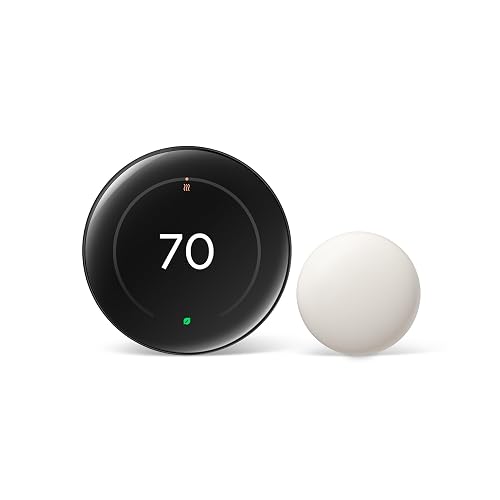
Google Nest Learning Thermostat (4th Gen) Obsidian
Self-learning schedule automation
Smart home enthusiasts
Design Standout
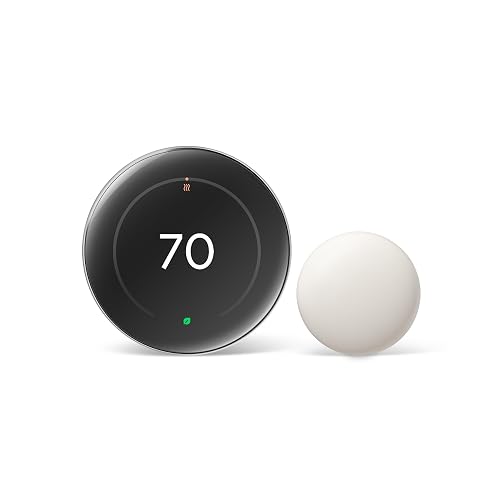
Google Nest Learning Thermostat (4th Gen) Silver
Polished silver finish
Style-forward installations
The Details Behind The Selections
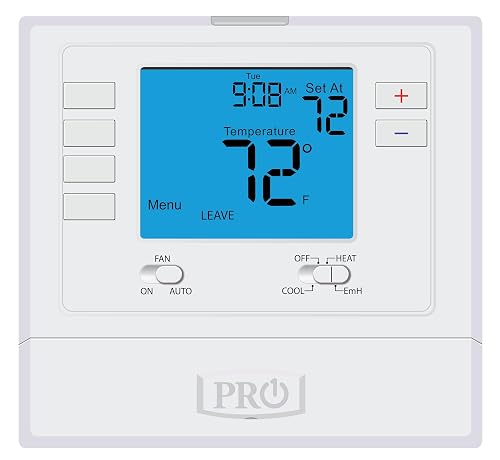
The PRO1 T725 sits in an interesting middle ground. It speaks the language of a heat pump (a system that moves heat rather than generates it) while also working in homes running a conventional furnace-and-air setup, which is helpful if you live in a property with mixed equipment or you’re mid-renovation. Compared with the single-stage T701 that follows later on this list, this unit steps up to two heating stages and one cooling stage, giving the system finer control over temperature swings.
For most households with a standard 2H/1C heat pump, the T725’s 7-day or 5/1/1 scheduling covers the realistic rhythms of a work week without overcomplicating things. You get a 4 sq. in. blue backlit screen that’s readable from across a living room, and programming follows the familiar wake/leave/return/sleep blocks. In our view, this is the most flexible PRO1 model for someone who wants programmability but doesn’t need app control.
Useful Strengths
- ✓Compatible with both 2H/1C heat pump and 1H/1C conventional systems, so it adapts if your home’s equipment changes.
- ✓7-day and 5/1/1 programming covers weekday, weekend, and split-week households.
- ✓4 sq. in. blue backlit screen stays readable in low light without being harsh at night.
- ✓Part of the T700 platform, which means access to common wiring diagrams and installer familiarity.
Things To Consider
- •No Wi-Fi connectivity, so remote adjustments require a manual walk to the wall.
- •Programming setup takes patience on first install, especially for households new to multi-stage thermostats.
Key Specs
| | Feature | Specification | Why It Matters |
|---|
| System Compatibility |
2H/1C heat pump or 1H/1C conventional |
Works across the most common residential HVAC configurations without a jumper switch. |
| Programming |
7-day or 5/1/1 schedule |
Adjusts around work, school, and weekend shifts without manual override. |
| Display |
4 sq. in. blue backlit |
Readable from across a standard living room, even at night. |
Built With In Mind
Homeowners with a 2H/1C heat pump who want scheduling automation but no app dependency will get the most from this unit.
Where Another Pick Suits Better
Smart-home households chasing app control and learning behavior should look at the Google Nest Learning Thermostat (4th Gen) Obsidian instead.
Check on Amazon
The T771 isn’t trying to be a daily living-room thermostat. Its wide setpoint range, from 25°F up to 90°F, makes it genuinely useful in unheated garages, pole barns, sheds, and workshops where winter temperatures dip well below what a standard residential unit will display. Unlike the T701, which targets basic home use, this model leans into specialty climate control.
A 4 sq. in. blue backlit display, swing adjustment, and calibration controls give you the kind of fine-tuning a workshop or storage space often needs. There’s no scheduling here, which is actually a feature in a space you walk into, set, and leave. For most hobby spaces, the honest read is that simpler is better.
Strengths Worth Knowing
- ✓Setpoint range extends to 25°F, so it works in unheated outbuildings where typical thermostats won’t budge.
- ✓Swing adjustment and calibration help match the thermostat’s reading to a remote sensor or thermometer.
- ✓4 sq. in. backlit screen is large enough to read from the workbench.
- ✓Non-programmable design removes the complexity of a schedule you don’t actually need in a garage.
Worth Noting
- •Single-stage only, so it’s not appropriate for multi-stage systems or heat pumps.
- •No battery indicator on the display, so low-battery replacements can come as a surprise during the first cold snap.
Who Will Love This
Owners of detached garages, sheds, workshops, or any space where a wide temperature range matters more than scheduling.
A Better Fit Elsewhere
Single-family homes with a conventional furnace should consider the PRO1 T701, which targets the same 1H/1C configuration in a more residential package.
View Latest Price
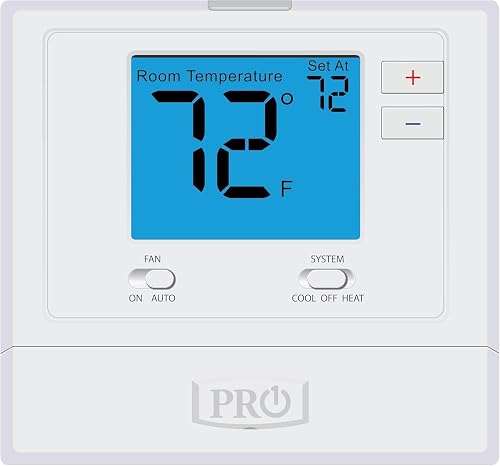
The T701 strips the wall thermostat back to its essentials. It’s built for 1H/1C conventional systems, which covers the majority of gas furnace plus central air homes in North America, and it doesn’t ask you to program anything. The 4 sq. in. blue backlit screen is generous for a non-programmable unit, and a glow-in-the-dark light button helps you find the controls in a dark hallway.
For households that have grown tired of a schedule they never quite use, this is a relief. Set it, forget it, and adjust the temperature when the room feels off. The trade-off is that you give up automation entirely, but for many homes, that automation was never really used in the first place.
Practical Advantages
- ✓Large, clear 4 sq. in. blue backlit display is easy to read without glasses.
- ✓Glow-in-the-dark light button helps you find the unit in a dark hallway at night.
- ✓Compatible with both gas and electric conventional systems, covering most residential setups.
- ✓No programming learning curve, so it’s a fit for guests, older family members, or renters.
Trade Offs
- •No scheduling at all, so energy-saving set-backs require manual adjustment.
- •Single-stage only, which means wider temperature swings in homes with a multi-stage furnace.
Quick Facts
| | Feature | Specification | Why It Matters |
|---|
| System Compatibility |
1H/1C conventional |
Fits most single-stage furnaces and central air pairings. |
| Display |
4 sq. in. blue backlit |
Easy to read in low light, including middle-of-night adjustments. |
| Power |
Battery or hardwired |
Works in homes without a common wire, which simplifies retrofit installs. |
Right Fit For
Households with a basic single-stage furnace who want clear temperature control without the hassle of programming a weekly schedule.
Look Elsewhere When
Anyone wanting automatic set-backs and learning behavior should step up to the Google Nest Learning Thermostat (4th Gen) instead.
Check Latest Price
Two-stage heating and cooling gives a system the ability to run on a low stage for most of the day and a high stage only when outdoor conditions demand it. The T715 is built for that equipment. Compared with the single-stage T701 earlier in this list, it has the headroom to coordinate a 2H/2C gas furnace plus central air pairing without short-cycling.
Programming is genuinely flexible here. You get 7-day, 5/1/1, or non-programmable modes, so the same thermostat can run a strict weekday/weekend schedule, a custom week, or simply act as a manual unit if your routine is irregular. The 4 sq. in. blue backlit display is the same proven screen used across the T700 line.
What Stands Out
- ✓2H/2C staging lets the furnace modulate rather than blast, which is easier on the equipment over time.
- ✓Three operating modes (7-day, 5/1/1, or non-programmable) cover rigid schedules and irregular routines alike.
- ✓Compatible with both battery and hardwired (C-wire) installs, depending on what your existing wiring supports.
- ✓Glow-in-the-dark light button is a small touch that helps during night adjustments.
Points To Note
- •Multi-stage programming has more menus to learn, which can frustrate first-time installers.
- •No wireless connectivity, so remote control requires a manual adjustment at the wall.
Who Should Grab It
Owners of a 2H/2C gas furnace system who want true staging without jumping to a learning thermostat.
Skip It When
Single-stage homes would be overequipped for this unit; the PRO1 T701 handles 1H/1C more efficiently.
View on Amazon
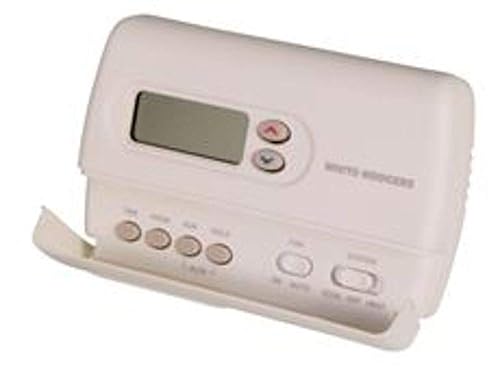
The Emerson 1F80-361 is the kind of thermostat a contractor pulls out of a truck after replacing ten others that month. It’s a single-stage programmable unit with 5+1+1 day programming and up to four periods per day, which gives a typical household enough granularity to cut energy use while everyone sleeps or is away. Where it really stands out is compatibility: 24V systems and millivolt (the low-voltage signal used by some standing-pilot furnaces and fireplaces) are both supported.
That millivolt support matters in older homes with floor furnaces, wall heaters, or gas fireplaces that don’t have a 24V transformer. Most modern wall thermostats simply won’t fire on those systems, so this unit quietly fills a niche that newer PRO1 models in this roundup don’t address.
Everyday Advantages
- ✓Millivolt compatibility opens up installs in older homes with floor furnaces or gas fireplaces.
- ✓5+1+1 programming with four periods per day handles separate weekday, Saturday, and Sunday routines.
- ✓Works with gas, oil, or electric systems, so it travels well between different properties.
- ✓Manual is included in the listing for easy reference during setup.
Honest Caveats
- •Contractor bulk-pack packaging, so the presentation is utilitarian rather than retail.
- •Display and button layout feel dated next to the T805 or the Nest models on this list.
Feature Snapshot
| | Feature | Specification | Why It Matters |
|---|
| System Compatibility |
24V and millivolt, single stage |
Bridges older millivolt systems and modern 24V thermostats in one unit. |
| Programming |
5+1+1, up to 4 periods |
Lets weekdays, Saturday, and Sunday each run their own temperature curve. |
| Power |
Battery |
No C-wire required, which simplifies retrofit installs in older homes. |
Made For
Owners of older homes with millivolt heaters or anyone who wants a familiar, contractor-grade unit without Wi-Fi bells and whistles.
Another Choice May Suit
Households wanting a brighter screen and modern UI should consider the PRO1 T805, which runs on the larger T800 platform.
Check on Amazon
Heagstat’s 1H/1C thermostat is a no-nonsense wall unit aimed at a single-stage conventional system, which covers most gas, oil, or electric furnace homes with central air. The white backlit display gives it a clean, residential look, and the non-programmable design keeps the interface friendly for renters or guests.
Where you need to be careful is at the wiring stage. The base accommodates two to five wires, which is fine for most older single-stage installs, but systems with six to eight wires won’t physically connect. The PRO1 T701 handles a similar configuration with a glow-in-the-dark button, while this Heagstat keeps things simpler at a generally lower price point.
What Earns Its Place
- ✓White backlit display keeps the wall looking clean in hallways and living spaces.
- ✓Compatible with gas, oil, and electric forced-air systems matched with an outdoor condenser.
- ✓Non-programmable layout reduces tenant tampering in rental properties.
- ✓Independent outdoor air-conditioning control lets the cooling run on its own schedule.
Some Limits To Know
- •Only supports two to five wires, so homes with more complex six-to-eight-wire systems are out of luck.
- •Not compatible with heat pump setups, which the PRO1 T721 handles more cleanly.
Best Suited To
Landlords, property managers, and homeowners with a straightforward 1H/1C forced-air setup who want a simple, durable wall control.
Reach For A Different Pick When
Anyone with a heat pump should look at the PRO1 T721, which accepts both 2H/1C heat pump and 1H/1C conventional systems.
View Latest Price
The T721 lives in a useful middle spot. It can run a 2H/1C heat pump or a 1H/1C conventional system, which means it works in homes that have switched from a furnace to a heat pump or that have one zone of each. Compared with the T725, this unit ditches programmability, but it keeps the same dual-system flexibility and the T700 platform footprint.
The 4 sq. in. blue backlit display is paired with a glow-in-the-dark light button, so the controls stay visible in low light. Power can come from AA batteries or a hardwired connection, depending on what your existing wall setup allows. For homes transitioning equipment, the dual compatibility is genuinely valuable.
Features That Help
- ✓Dual compatibility with 2H/1C heat pump and 1H/1C conventional systems, so it survives equipment swaps.
- ✓Battery or hardwired power, which adapts to whether your wall has a C-wire.
- ✓Glow-in-the-dark light button for finding the controls at night without turning on a hallway light.
- ✓4 sq. in. blue backlit display, matching the T700 family for consistent readability.
Small Caveats
- •Non-programmable operation means set-backs require manual adjustment at the wall.
- •Heat pump mode requires correct wiring setup, which is worth confirming before final install.
Feature Card
| | Feature | Specification | Why It Matters |
|---|
| System Compatibility |
2H/1C heat pump or 1H/1C conventional |
Covers the two most common residential HVAC types in one unit. |
| Display |
4 sq. in. blue backlit |
Consistent readability in dim hallways and at night. |
| Power |
AA battery or hardwired |
Adapts to older walls without a C-wire and to newer ones with one. |
Perfect Match For
Homeowners running a heat pump who want non-programmable control, or transitional homes with mixed HVAC equipment.
Where A Sibling Pick Shines
Households wanting scheduled set-backs on a heat pump should consider the programmable PRO1 T725, which accepts the same 2H/1C heat pump setup.
Check Latest Price
The T805 is the T701’s bigger sibling. Same 1H/1C conventional compatibility, same familiar controls, but with an extra-large 7 sq. in. blue backlit display that nearly doubles the readable area. For anyone who squints at the wall thermostat from across a long living room, the larger screen is the kind of upgrade you notice the first day.
Programming follows the same T800 family flexibility, with 7-day, 5/1/1, or fully non-programmable modes, so the same unit works for a rigid weekday schedule or a hand-adjusted home. A glow-in-the-dark light button keeps the controls findable at night, and the unit ships with the same battery or hardwired power options as the rest of the PRO1 line.
Noteworthy Benefits
- ✓7 sq. in. display is roughly 75% larger than the 4 sq. in. T701 screen, helpful for aging eyes or long sightlines.
- ✓Three operating modes (7-day, 5/1/1, non-programmable) cover the full range of scheduling needs.
- ✓Compatible with gas, oil, and electric systems, which keeps it flexible across housing types.
- ✓Glow-in-the-dark light button helps with nighttime adjustments in dark hallways.
Factors To Consider
- •Single-stage only, so 2H/2C homes will need to step up to the PRO1 T715.
- •Larger footprint may not align with a smaller existing wall cutout, so check the back plate dimensions before install.
Right Fit For
Single-stage households that want a bigger, easier-to-read display and flexible weekly programming in one package.
Swap It Out When
Smart-home households wanting app-based scheduling and learning should move to the Google Nest Learning Thermostat (4th Gen) Silver.
View on Amazon
The fourth-generation Nest is a different category of thermostat entirely. Rather than asking you to set a weekly schedule, it observes your adjustments over the first week or two and builds a temperature program around your real behavior. The included Nest Temperature Sensor (2nd gen) extends that awareness into other rooms, so the thermostat can prioritize where it actually matters.
The Obsidian finish is a deep, mirror-like black that looks more like a piece of consumer electronics than a wall control. Wi-Fi connectivity ties it into a wider smart-home ecosystem, and remote control from a phone is part of the package. Compared with the T715 earlier on this list, the Nest trades multi-stage gas furnace control for app-based learning and remote sensors, which most homeowners will see as a meaningful leap in daily use.
A Strong Showing
- ✓Learning behavior builds a schedule from your actual adjustments, which removes the programming step entirely.
- ✓Included Nest Temperature Sensor (2nd gen) helps the system focus on occupied rooms rather than a single hallway wall.
- ✓Wi-Fi connectivity enables app control, voice assistant integration, and remote adjustments from anywhere.
- ✓Obsidian finish reads as premium and pairs well with dark interior design schemes.
Worth Bearing In Mind
- •Requires a C-wire (common wire) in most installs, so older homes may need a wiring adapter or professional help.
- •Learning behavior takes a week or two to settle, so the first days may feel less accurate than a programmed schedule.
Who It Suits Best
Smart-home households and busy families who want temperature control to fade into the background once installed.
Consider Something Else When
Landlords renting out a basic single-stage home may find the PRO1 T701 easier to manage without Wi-Fi setup.
Check on Amazon
The Silver variant of the fourth-generation Nest offers the same learning engine, Wi-Fi connectivity, and bundled Temperature Sensor as the Obsidian model, with a brighter metallic finish that suits kitchens, hallways, and lighter-walled rooms. For households that found the Obsidian too dark or too dramatic, Silver is the calmer alternative.
Functionally, there is no difference between this and the Obsidian model above. The decision comes down to finish and how the thermostat reads against the wall you plan to mount it on. As with the Obsidian, expect a learning curve of about a week before the system settles into a routine that matches your household.
The Value In It
- ✓Polished silver finish fits kitchens, bathrooms, and lighter interior palettes more naturally than dark finishes.
- ✓Same learning engine and remote sensor as the Obsidian, so you don’t lose any features when choosing the lighter colorway.
- ✓Wi-Fi app control and voice assistant compatibility make remote adjustments straightforward.
- ✓Bundled Nest Temperature Sensor helps the system respond to the room you actually use.
Trade-Offs To Consider
- •C-wire requirement applies here too, so older homes may need a power adapter or professional install.
- •Learning phase can feel inconsistent for the first week as the thermostat gathers data.
Whose Shelf It Belongs On
Style-conscious smart-home households who want the learning experience but prefer a lighter finish than the Obsidian option.
Not Your Match When
Rental properties and homes without a reliable Wi-Fi signal are better served by a non-connected unit like the PRO1 T805.
View Latest Price
What Matters Most Before Choosing Advanced Thermostats
System Compatibility Is Non-Negotiable
Every thermostat on this list supports a specific combination of heating and cooling stages, and matching that to your HVAC equipment is the first filter. A 1H/1C conventional system (one stage of heating, one stage of cooling, paired with a standard furnace) covers most homes, while a 2H/2C gas system (two stages of heating, two stages of cooling) gives the furnace more flexibility to modulate output. Heat pumps (systems that move heat between indoors and outdoors rather than burning fuel) need thermostats that speak the heat-pump language, like the PRO1 T721 and T725. Choosing wrong can mean a thermostat that powers up but never quite fires the system correctly.
Programmable vs. Non-Programmable
Programmable thermostats reward households with a predictable routine, because set-backs during work hours and sleep hours cut energy use without anyone thinking about it. Non-programmable units are friendlier for irregular schedules, rental properties, and anyone who finds the programming interface frustrating. The PRO1 T701 and T771 take the simpler path, while the T715, T725, T805, and the two Nest models add automation.
Display, Wiring, and Power
A 4 sq. in. backlit screen is the standard for the PRO1 T700 series, while the T805 stretches to 7 sq. in. for clearer long-distance readability. Wiring is just as important. Most modern thermostats expect a C-wire (a dedicated common wire that delivers continuous 24V power) for steady current, but several PRO1 units accept AA batteries when a C-wire isn’t available. The Nest models generally require that C-wire, so older homes may need a power adapter or professional installation.
Connectivity and Smart Features
Wi-Fi connectivity unlocks app control, voice assistant integration, and remote sensors. The two Nest thermostats in this roundup are the only models here with that capability, and they include a Temperature Sensor for room-by-room awareness. The PRO1 lineup is intentionally app-free, which keeps the price lower and the setup simpler but removes remote adjustments entirely.
Key Considerations Across These Picks
Common Shopping Slip Ups
The most frequent mistake is buying a thermostat that doesn’t match the HVAC equipment. A 2H/2C system paired with a single-stage thermostat will technically power on but will short-cycle (turn on and off too frequently, straining the equipment) or fail to use the second stage. The other common slip is ignoring wiring. Homes without a C-wire will need a battery-operated unit or a power adapter, and a Wi-Fi model that expects constant power will refuse to behave on batteries alone.
Where The Extra Money Goes
Premium models like the Nest Learning Thermostat (4th Gen) charge more for the learning engine, the bundled temperature sensor, and the polished industrial design. You also pay for app-based control, voice integration, and continuous over-the-air updates. The trade-off is that mid-range programmable units, like the PRO1 T715, deliver scheduling and multi-stage control without the recurring cloud dependency. Spending up makes sense if you genuinely use the automation. It pays less if you find yourself ignoring the app after a few months.
Frequently Asked Questions
QWhat is a multi-stage thermostat and do you need one?
A multi-stage thermostat coordinates HVAC equipment that has more than one heating or cooling output level, which lets the system run on a lower stage for most of the day. You need one if your furnace or heat pump is rated 2H/2C; a single-stage thermostat would leave those extra stages unused.
QCan you install a smart thermostat without a C-wire?
Some smart thermostats require a C-wire, while others ship with power adapters that draw from existing wires. The Nest Learning Thermostat (4th Gen) generally expects a C-wire, so older homes may need an adapter or professional help. Battery-operated units like the PRO1 T701 and T771 avoid the issue entirely.
QIs a learning thermostat actually worth it over a programmable one?
A learning thermostat earns its keep in households that want the temperature to manage itself once the system is installed. A programmable unit is a better match for people who prefer to set their own schedule and adjust it deliberately rather than letting the thermostat observe and adapt.
QWill any of these work with a heat pump system?
The PRO1 T721 and T725 both support 2H/1C heat pump configurations in addition to conventional systems. The Nest models also support most common heat pump setups, though confirming compatibility with your specific equipment is always worthwhile.
QHow long does a wall thermostat typically last?
Most wall thermostats run reliably for 10 years or more, especially models without Wi-Fi radios or touchscreens. The Nest models rely more on electronic components and may show wear sooner if firmware updates slow down, but the underlying hardware is still built for long-term wall mounting.
The Takeaway
The right thermostat depends less on which model is the flashiest and more on what your HVAC equipment actually needs. A 1H/1C conventional home gets plenty from a PRO1 T701 or T805, while a 2H/1C heat pump household is better served by the T721 or T725. The Nest Learning Thermostat earns its place in homes that want temperature control to fade into the background. Match the equipment first, then pick the level of automation that fits your daily routine.