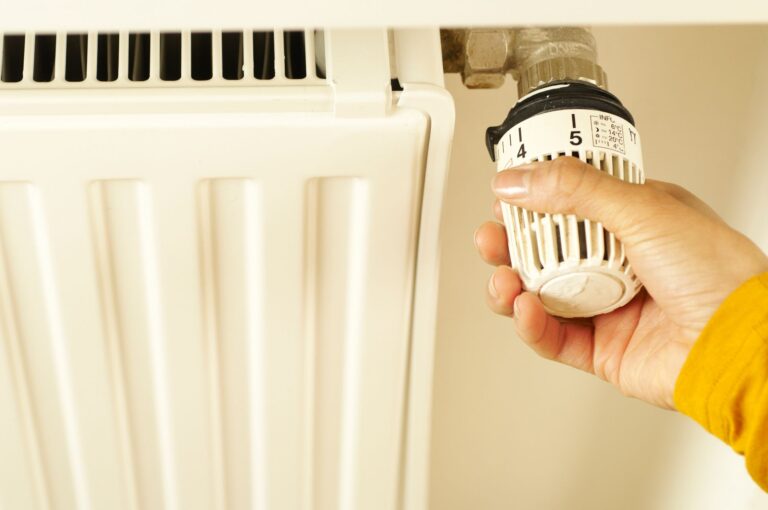

A thermostat that responds to your routine changes how a home feels. Whether you want a basic wall dial, a programmable schedule, or radiant floor warmth you can adjust from your phone, the right thermostat fits both your system and your comfort preferences.
A Quick View Of The Lineup
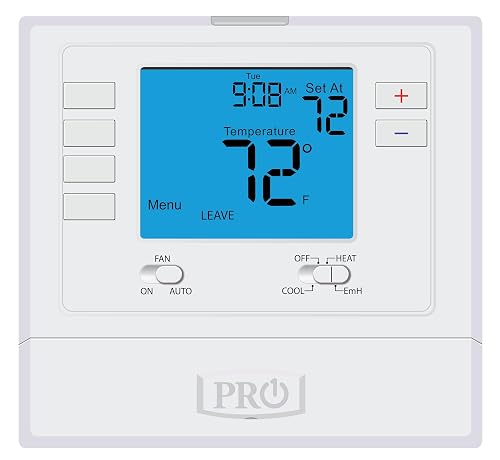
PRO1 T725 Heat Pump/Conventional Programmable Thermostat

PRO1 T771 Single Stage Non-Programmable Thermostat
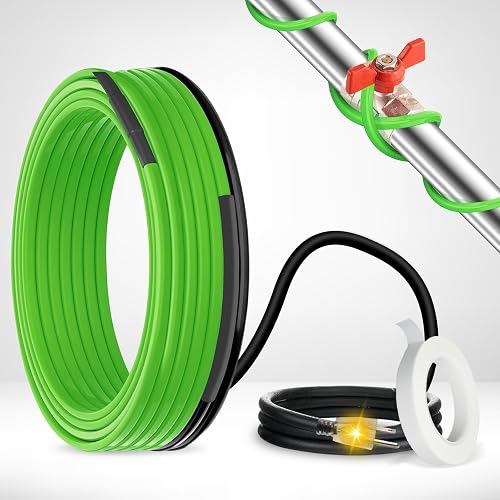
MAXKOSKO 60ft Heat Tape for Water Pipes

SunTouch SunStat ConnectPlus Smart Wi-Fi Floor Thermostat
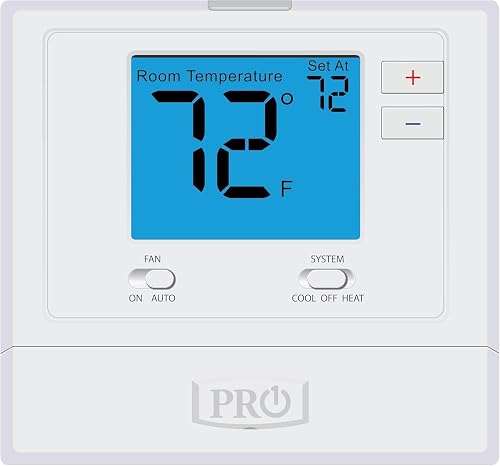
PRO1 T701 Single Stage Non-Programmable Thermostat

PRO1 T715 Multi-Stage Programmable Gas Thermostat
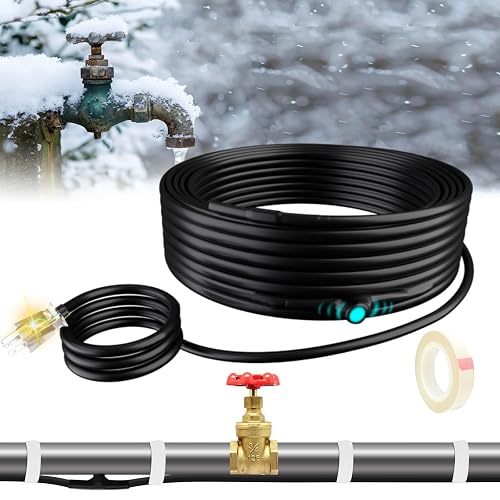
TOPDURE 9ft Constant Wattage Pipe Heat Cable
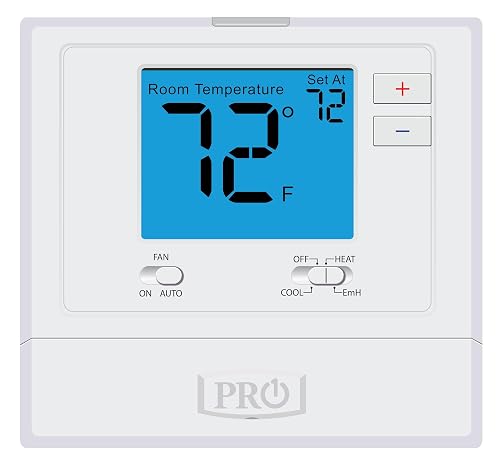
PRO1 T721 Non-Programmable Heat Pump Thermostat

PRO1 T805 Single Stage Programmable Thermostat
The Details Behind The Selections
Households running a heat pump on one side and a conventional furnace on another need one thermostat that handles both, and the PRO1 T725 fills that role. Built on the T700 platform, it covers 2 heat/1 cool heat pump setups along with 1 heat/1 cool conventional systems, making it a flexible choice when you are not sure which wiring lives behind the wall.
The 4 sq. in. blue backlit screen shows schedule modes like wake, leave, return, and sleep at a glance, and 7-day or 5/1/1 programmability lets you match comfort to a shifting routine. Compared with the simpler PRO1 T701 below, this model adds multi-mode scheduling and broader system compatibility without a learning curve.
Noteworthy Benefits
- Dual-platform support means one unit can serve either a heat pump or a conventional system, useful when a home mixes equipment or you plan a future switch.
- Flexible 7-day and 5/1/1 scheduling adapts to weekdays, weekends, and split-family routines without daily babysitting.
- Schedule-mode indicators on the display make it easy to confirm at a glance whether the home is in an energy-saving or comfort phase.
- The blue backlit display improves readability in dim hallways and entryways.
Things To Consider
- Programming takes a few minutes of setup the first week, so households wanting truly hands-off operation may find the feature list heavier than needed.
- You should confirm your existing wiring supports multi-stage operation before installation, since heat-pump compatibility depends on the right terminal layout.
Made For
Homeowners with heat pump or mixed HVAC systems who want programmable scheduling and a familiar blue backlit interface.
Skip It When
You have a basic single‑stage furnace with no plans to upgrade, in which case the PRO1 T701 keeps things simpler and less expensive.
The PRO1 T771 handles the spaces most programmable thermostats forget: garages, workshops, sheds, and detached additions. A wide setpoint range from 25°F to 90°F means it can protect a workshop from freezing just as easily as it keeps an indoor room comfortable, and the non-programmable layout keeps adjustments to a single temperature dial.
Its 4 sq. in. blue backlit display stays readable in low light, while swing adjustment and calibration controls help match the reading to the actual room conditions. Where the PRO1 T725 above leans into scheduling, this unit leans into simplicity.
Benefits That Matter
- The wide 25°F to 90°F range covers everything from winter pipe protection in an unheated garage to summer cooling in a finished office.
- No programming required, so anyone from a renter to a weekend hobbyist can install and use it without a learning curve.
- Swing adjustment and calibration help dial in accuracy, which matters in spaces that heat up fast in summer sun.
- The blue backlit screen helps in dimly lit basements and outbuildings.
Worth Noting
- Lack of scheduling means the thermostat does not automatically shift temperatures when the space is unoccupied, so energy savings depend on manual adjustments.
- Single-stage compatibility is the limit, so homes with multi-stage furnaces should look at the PRO1 T715 instead.
Right Fit For
Anyone heating or cooling a garage, shed, or workshop who values a low-fuss dial over a weekly schedule.
Look Elsewhere When
You want automatic setback temperatures and the convenience of a weekly program, in which case the PRO1 T805 is a closer match.
Heat tape sits in a different category than wall thermostats, but it shares the same goal: keeping temperatures where they belong. The MAXKOSKO 60ft self-regulating cable wraps vulnerable plumbing and runs at 5 W/ft, defending pipes against freezing down to -40°F.
A built-in thermostat lets the cable react to actual pipe temperature, and the 6-foot power cord plus 60 feet of heating length covers long runs from the house to a well pump or detached garage. Unlike the PRO1 T771 above, this is about protecting pipes, not living spaces.
Where It Helps
- 5 W/ft output keeps water flowing during deep cold snaps, which matters in northern climates where -40°F is not unusual.
- The self-regulating design with built-in thermostat cuts energy use since the cable only warms when temperatures drop.
- Available lengths from 2 to 150 feet let you match the cable to short, medium, or extensive pipe runs.
- The 6-foot power cord adds flexibility for reaching outlets without an extra extension.
Trade Offs
- Proper installation along straight pipe runs and at every valve matters, since cold spots develop where insulation is missing.
- Outdoor exposure means occasional inspection of the outer jacket is wise, particularly after rough winters.
Best Suited To
Homeowners in cold climates with long exterior pipe runs, well houses, or plumbing that runs through unheated crawl spaces.
Consider Something Else When
You only need a short freeze-prone section of pipe, since the TOPDURE 9ft cable below covers small jobs at a more modest scale.
Radiant floor heating turns comfort up a notch, and the SunStat ConnectPlus is built to manage it from anywhere. The 4.3-inch color touchscreen and built-in Wi-Fi let you adjust tile warmth from a phone, a tablet, or a wall-mounted panel.
It also pulls in outdoor temperature, automatic clock setting, and weather compensation, which together keep floors from overheating on a sunny day. Compared with the PRO1 T715 below, this thermostat trades HVAC compatibility for smart-home polish, including compatibility with voice assistants.
What Earns Its Place
- Remote access through Wi-Fi means a bathroom floor can warm up during your commute or hold steady while you travel.
- Weather compensation and warm-weather shut-down protect floors from overheating during unexpected warm spells.
- The 4.3-inch touchscreen gives more visual room for floor temperature graphs than smaller wall units.
- Voice assistant compatibility adds hands-free temperature changes when your hands are full.
Points To Keep In Mind
- Floor-sensor installation requires embedding a probe in the thin-set during a tile or underlayment project, which is more involved than swapping a wall thermostat.
- Wi-Fi reliability matters for full feature use, so a stable home network is part of the experience.
Key Specs
Whose Shelf It Belongs On
Homeowners with heated tile, laminate, or engineered wood floors who want app and voice control alongside automatic climate adjustments.
A Better Fit Elsewhere
Anyone focused on whole-home air temperature without radiant floors will find more relevant scheduling in the PRO1 T725 instead.
Sometimes the right thermostat is the one that does the basics and nothing extra. The PRO1 T701 fits that brief for homes with a 1 heat/1 cool conventional system, offering manual control on a familiar T700 platform.
The 4 sq. in. blue backlit screen and glow-in-the-dark light button keep it visible at night, and gas or electric configuration options handle most furnace setups. For shoppers comparing the PRO1 T721 below, the difference comes down to system type, since the T701 is built specifically for conventional single-stage equipment.
Where It Excels
- Manual-only operation means no programming setup, which suits renters, second homes, or anyone who prefers adjusting on the fly.
- Gas or electric compatibility covers the majority of single-stage furnace installations without extra wiring.
- Glow-in-the-dark light button helps locate the display during overnight hallway trips.
- T700 platform reliability means parts and trim plates are widely available for retrofits.
Honest Caveats
- No scheduling means setback temperatures require manual changes, so energy savings depend on occupant habits.
- Single-stage only, so homes with multi-stage heating or cooling should look at the PRO1 T715.
Who It Suits Best
Owners of single-stage conventional HVAC systems who want an affordable, no-frills wall thermostat with a familiar blue backlit display.
Reach For A Different Pick When
You run a heat pump system, where the PRO1 T721 handles 2 heat/1 cool heat pump configurations more cleanly.
Multi-stage gas furnaces need a thermostat that understands staging, and the PRO1 T715 speaks that language fluently. It runs 2 heat/2 cool systems with 7-day, 5/1/1, or non-programmable modes, giving homeowners the choice of full scheduling or simple manual control from the same wall plate.
The T700 platform foundation, the 4 sq. in. blue backlit display, and the glow-in-the-dark light button echo the design language of the PRO1 T701 above, while adding the muscle for two-stage comfort. Battery or hard-wire power options give flexibility during installation.
The Helpful Details
- Two-stage heating and cooling support keeps temperatures more stable, especially in homes with zoned living areas.
- Three scheduling modes let you start with manual and grow into programming at your own pace.
- Glow-in-the-dark light button preserves visibility during nighttime checks.
- Battery or hard-wire power accommodates installations where a common wire is not present.
Potential Drawbacks
- Multi-stage systems cost more overall, so the thermostat itself is only one piece of the upgrade puzzle.
- Wiring complexity can be higher than single-stage units, and a professional checkup helps avoid short cycling.
Feature Snapshot
Who Should Grab It
Households with two-stage gas furnaces who want flexible scheduling and a thermostat that grows with their routine.
Another Choice May Suit
You have a heat pump rather than a gas furnace, where the PRO1 T725 brings comparable scheduling to a heat pump platform.
Not every cold-pipe problem needs a 60-foot run. The TOPDURE 9ft heat cable covers short exposed sections under a kitchen sink, behind a washing machine, or along a basement pipe that runs near an exterior wall. At 7 W/ft of constant wattage, it delivers steady warmth along the full length.
The cable includes a built-in thermostat that triggers the heat when pipe temperatures approach freezing, so energy use stays modest during shoulder seasons. Compared with the MAXKOSKO cable above, this one trades raw length for compact, targeted coverage.
Key Advantages
- The 9-foot length fits the short pipe runs most homeowners actually face, including under-sink traps and laundry rooms.
- Built-in thermostat automatically activates only when needed, which keeps electricity use low on milder nights.
- Constant wattage design gives even heat along the entire cable length, with no cold spots.
- Lower draw than long-run cables, so it works on a standard 15-amp household circuit without overloading.
Small Limitations
- The fixed 9-foot length cannot be extended, so longer pipe runs call for a longer cable like the MAXKOSKO option above.
- Insulation over the cable is recommended for maximum efficiency, which adds a small step to installation.
Built With In Mind
Renters and homeowners with one or two vulnerable pipe sections who want targeted freeze protection without rewiring the whole crawl space.
Swap It Out When
Your plumbing runs a long span between the house and a detached well house or garage, where the MAXKOSKO 60ft cable is the better scale.
Heat pump owners who want manual control without giving up system-specific tuning will appreciate the PRO1 T721. It covers 2 heat/1 cool heat pump or 1 heat/1 cool conventional systems, and the non-programmable layout keeps the wall unit simple.
The 4 sq. in. blue backlit screen, glow-in-the-dark light button, and AA battery or hard-wire power options all carry over from the wider T700 family. Where the PRO1 T725 adds full scheduling, this unit trades that feature for a friendlier button count.
Useful Strengths
- Heat pump and conventional compatibility in one unit covers more retrofit situations than single-purpose thermostats.
- Non-programmable operation suits households that prefer setting the temperature once and leaving it.
- Glow-in-the-dark light button improves visibility during night checks.
- AA battery or hard-wire power accommodates homes where a common wire is unavailable.
Factors To Consider
- Lack of scheduling means no automatic setbacks, so savings depend on consistent manual adjustments.
- Single-stage or basic two-stage heat pump support, so larger multi-stage heat pump systems should look at the PRO1 T715.
Perfect Match For
Heat pump homeowners who prefer a no-schedule wall thermostat with heat-pump-specific wiring labels and a familiar blue backlit display.
Not Your Match When
You want full programming or Wi-Fi connectivity, in which case the PRO1 T725 or the SunTouch SunStat ConnectPlus will suit you better.
The PRO1 T805 closes out the list with one of the largest displays in the PRO1 lineup, and that extra screen real estate makes a difference at arm’s length. Built on the T800 platform for 1 heat/1 cool conventional systems, it offers 7-day, 5/1/1, or non-programmable modes to suit any comfort style.
An extra-large 7 sq. in. blue backlit display paired with a glow-in-the-dark light button keeps things readable day or night. Compared with the PRO1 T701 above, this unit trades simplicity for a bigger screen and more schedule flexibility.
Real-World Strengths
- The 7 sq. in. display is significantly easier to read from across the room than the 4 sq. in. screens found on many competitors.
- Three scheduling modes let you start simple and grow into weekly programming at your own pace.
- Glow-in-the-dark light button helps locate the display during overnight trips down the stairs.
- T800 platform design keeps the controls intuitive even with the larger display.
Things To Weigh
- The larger display also means a larger wall footprint, so a bigger trim plate may be visible against smaller existing openings.
- Conventional single-stage compatibility is the limit, so heat pump households should look at the PRO1 T721 instead.
Who Will Love This
Anyone who wants a bigger, easier-to-read display without giving up the option to program weekly schedules or simply run the unit manually.
Where A Sibling Pick Shines
You prefer a more compact screen and a lower price, in which case the PRO1 T701 handles the same conventional systems with a smaller footprint.
Choosing A Thermostat That Fits Your Home
The right thermostat depends less on feature count and more on the system already living in your walls. Start by identifying whether you run a conventional furnace, a heat pump, a multi-stage system, or radiant floor heating, since each option above targets a different configuration.
Match The System First
A thermostat only works if it speaks the same language as your HVAC equipment. Single-stage conventional systems pair with units like the PRO1 T701 and PRO1 T805, while heat pump homes should look at the PRO1 T725 or T721. Multi-stage gas furnaces need the staging logic of the PRO1 T715, and radiant floors call for a dedicated controller like the SunTouch ConnectPlus.
Decide Between Manual And Programmed
Manual thermostats cost less and stay simple, which suits second homes, rentals, and households that prefer adjusting on the fly. Programmable thermostats reward consistent schedules with automatic setbacks during work or sleep hours. If your routine shifts weekly, a programmable unit with 7-day flexibility typically outperforms a 5/1/1 model.
Consider Wiring And Power
Battery-only thermostats install almost anywhere but require periodic battery swaps. Hard-wire or common-wire units draw continuous power from the HVAC system, which suits Wi-Fi models and large displays. Always turn off the breaker and photograph the existing wiring before swapping thermostats.
Think Beyond The Wall
Heat tape falls outside the wall-thermostat category, but cold-climate households often need both. The MAXKOSKO 60ft cable handles long exterior runs, while the TOPDURE 9ft cable protects short vulnerable sections under sinks and in laundry rooms.
Smart Choices And Spending Sense
Common Shopping Slip Ups
The biggest mistake is buying a thermostat before confirming system type, since staging and heat pump compatibility vary widely. Another misstep is choosing a Wi-Fi model without a stable home network, which can leave smart features stranded. Always confirm the wiring terminals behind your current thermostat before ordering, since a missing common wire can complicate installation.
What The Higher Tier Buys
Stepping up from a manual thermostat to a programmable unit typically pays back through automatic setbacks during work and sleep hours. Wi-Fi models add remote access and weather compensation, which matter most in climates with big temperature swings. Premium floor-heating thermostats like the SunTouch ConnectPlus bring scheduling, app control, and outdoor temperature awareness that simpler wall units cannot match.
Frequently Asked Questions
How do I know whether I have a heat pump or a conventional system?
Heat pump systems usually have an outdoor unit that runs year-round, while conventional furnaces rely on a gas or electric indoor unit paired with air conditioning. Your current thermostat’s wiring and staging labels can also hint at the type, since heat pump terminals typically include an “O” wire for reversing valve operation.
Can I install a thermostat myself?
Many homeowners handle thermostat swaps with basic tools, but the wiring must match the new unit’s terminals exactly. Turn off the breaker, photograph the existing wires, and confirm the new thermostat’s wiring diagram before powering anything back on.
Do programmable thermostats really save energy?
Programmable thermostats help most when schedules are consistent, automatically raising or lowering temperatures when the home is empty. Savings vary with climate, setback size, and adherence to the programmed routine, so results depend as much on usage as on the hardware.
What’s the difference between 5/1/1 and 7-day programming?
5/1/1 programming treats weekdays as one block, Saturday as a second block, and Sunday as a third block. 7-day programming lets every day stand alone, offering more flexibility for rotating work schedules or split-family routines.
Is Wi-Fi necessary for a modern thermostat?
Wi-Fi adds remote control, voice integration, and weather-based adjustments, but a non-connected programmable thermostat still handles scheduling effectively. Wi-Fi matters most when you travel often or want hands-free adjustments through voice assistants.
The Takeaway
The right thermostat comes down to the system behind your walls and the routine you actually keep. Pick a model that matches your HVAC type first, then layer on scheduling or smart features only if your day benefits from them. Cold-climate homes should pair any wall thermostat with appropriate pipe protection to keep winter comfortable from the basement up.