

Smart thermostats have reshaped how a home manages comfort, and Google Assistant compatibility sits at the center of that shift. Whether you want voice control for a single zone or a learning system that anticipates your routine, the right thermostat makes daily living easier and helps trim energy bills without thinking about it.
This roundup covers ten solid options, from full-featured Google Nest learning thermostats to dependable non-programmable wall units for simpler HVAC setups. Each pick below fits a different kind of household, system type, and budget, so you can match the thermostat to your actual needs rather than chasing features you will never use.
The Essentials At A Glance
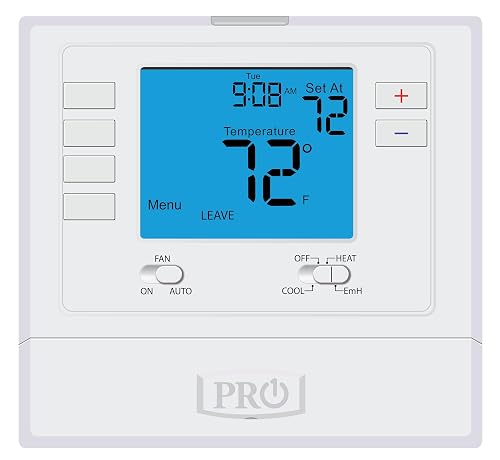
PRO1 T725 Heat Pump/Conventional Programmable Thermostat

PRO1 T771 Single Stage Non-Programmable Thermostat
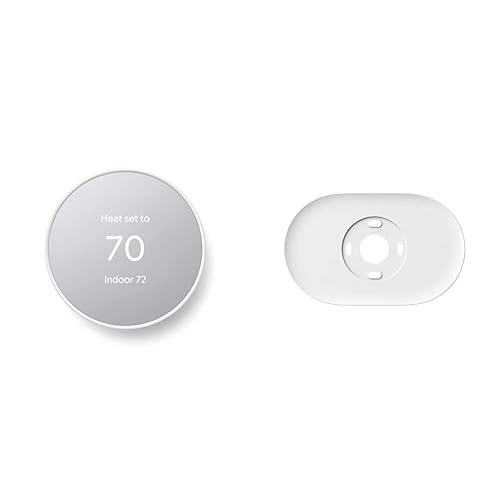
Google Nest Thermostat (Snow) with Trim Kit
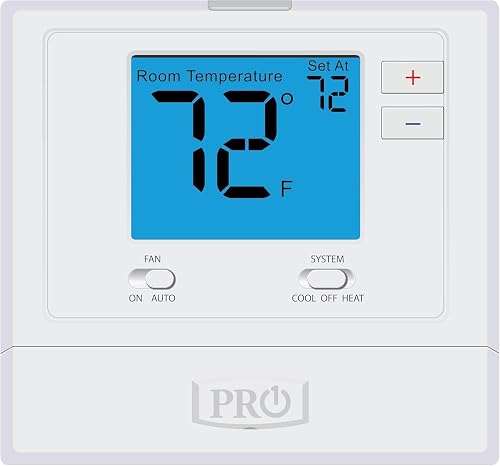
PRO1 T701 Single Stage Non-Programmable Thermostat

PRO1 T715 Multi-Stage Programmable Gas Thermostat

Google Nest Thermostat (Fog) with Trim Kit
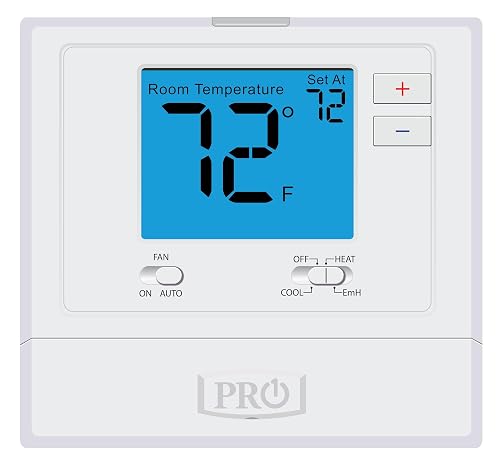
PRO1 T721 Non-Programmable Heat Pump Thermostat
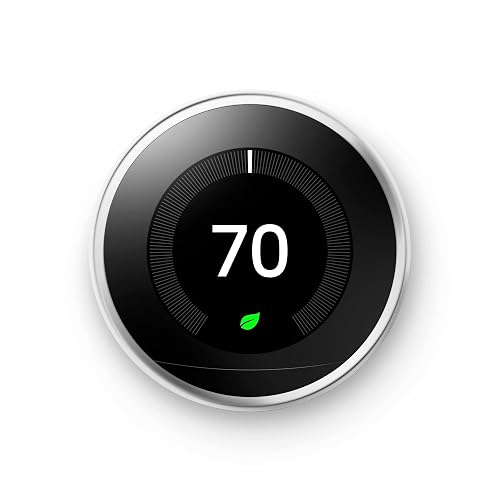
Google Nest Learning Thermostat (Polished Steel)
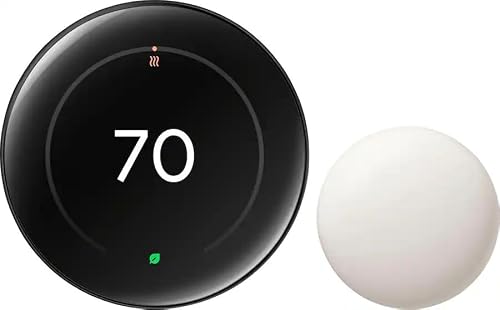
Google Nest Learning Thermostat 4th Gen (Obsidian)

PRO1 T805 Single Stage Programmable Thermostat
The Strengths Of Each Pick
If your home runs on a 2 heat/1 cool heat pump system or a standard 1 heat/1 cool conventional furnace, the PRO1 T725 keeps scheduling flexible without overcomplicating daily use. Built on the T700 platform, it offers 7-day or 5/1/1 programming so weekdays, weekends, and stay-at-home days can each follow their own temperature pattern. The 4 sq. in. blue backlit screen presents schedule modes like wake, leave, return, and sleep in a layout that reads quickly from across a hallway.
For households that have already chosen Google Assistant as their smart home hub, this unit stays in a different lane, namely traditional wall control, yet it pairs well in homes where the living area thermostat handles comfort and a separate smart unit manages the main zone. Owners commonly appreciate the larger display compared with older analog thermostats, especially in low-light hallways where the blue backlight makes mode selection easier.
The Upside
- Supports both heat pump and conventional systems in one thermostat body.
- Flexible 7-day or 5/1/1 programming fits irregular work schedules.
- 4 sq. in. blue backlit screen reads clearly from several feet away.
- Sits on the proven T700 platform for stable performance over time.
- Useful for homes that want manual zone-by-zone control without smart dependencies.
Things To Consider
- No native Wi-Fi or Google Assistant voice control built in.
- Programming setup takes patience on first install.
Who It Suits Best
Homeowners with a 2 heat/1 cool heat pump who want dependable, programmable control without moving to a fully connected thermostat.
Where Another Pick Suits Better
The Google Nest Thermostat (Snow) with Trim Kit is a better match if voice control and remote app adjustment matter more than dual-system compatibility.
Garages, sheds, basements, and workshop rooms have very different temperature needs than a finished living space, and the PRO1 T771 leans into that niche with a wide 25°F to 90°F setpoint range. That low end is the real headline, since most residential thermostats bottom out around 40°F or 45°F. If you heat a workspace only when you are inside, the ability to set a colder baseline during off-hours prevents the system from cycling pointlessly.
The display is a 4 sq. in. blue backlit panel that holds up under dim workshop lighting. Compared with the programmable T725 above, this model skips scheduling entirely. You may find that tradeoff refreshing if a schedule only adds complexity to a single-room space, since the swing adjustment and calibration controls are accessible directly on the wall unit.
Noteworthy Benefits
- 25°F to 90°F setpoint range covers unheated garage and shed use cases.
- Blue backlit screen stays legible in low-light workshops.
- Non-programmable layout simplifies use for guests or renters.
Worth Noting
- Limited to single stage 1 heat/1 cool conventional systems.
- Lacks any wireless or smart connectivity.
- No programmable schedule for automatic daytime setbacks.
Made For
Workshop, garage, and shed owners who need a wall thermostat that can drop well below typical residential minimums without special wiring.
Consider Something Else When
The PRO1 T701 Single Stage Non-Programmable Thermostat is a better everyday living-area choice if you do not need the extended low setpoint range.
The Snow-colored Google Nest Thermostat is the entry point into the Google Assistant climate ecosystem, and it bundles a trim plate plus a steel plate for installations over an electrical box. The trim plate is a small but appreciated detail, since paint and wall textures rarely line up with a previous thermostat footprint, and the steel plate handles metal gang boxes cleanly. Setup happens through the Google Home app on Android or iPhone.
Voice commands through Google Assistant let you nudge the temperature a few degrees without leaving the couch, and the thermostat turns itself down when it senses nobody is home. Compared with the PRO1 units above, this model trades traditional wall control for app-driven scheduling and remote adjustment, so it fits households that prefer a phone-first experience. ENERGY STAR certification backs the energy-saving claims, and in most small to mid-sized homes that translates to meaningful seasonal savings.
Bright Spots
- ENERGY STAR certified for documented energy-conscious performance.
- Includes trim plate and steel plate for cleaner installations.
- Voice control through Google Assistant fits hands-busy routines.
- Auto-adjusts when the house is empty to cut wasted heating and cooling.
Trade Offs
- Requires a C wire or compatible power accessory for some HVAC systems.
- Learning curve for households new to the Google Home app.
- Snow finish shows fingerprints more than darker finishes.
Best Suited To
Apartments and small homes where Google Assistant already runs the lights, locks, and speakers, and the thermostat becomes the natural next addition.
Look Elsewhere When
The Google Nest Learning Thermostat (Polished Steel) is a stronger pick if you want a thermostat that programs itself based on your actual routine.
Sometimes the right answer is the most straightforward one, and the PRO1 T701 leans fully into that. Designed for 1 heat/1 cool conventional systems, it gives residents a clear target temperature and little else to fiddle with. The 4 sq. in. blue backlit display sits on the larger T700 platform body, and a glow-in-the-dark light button means a midnight adjustment does not require turning on a hallway light.
This thermostat fits rental properties well, since guests can adjust the room temperature without stumbling into a menu structure. Compared with the programmable T725 earlier in this roundup, the T701 trades 7-day scheduling for a simpler wall experience. Owners commonly appreciate the gas or electric configuration flexibility, and the calibration controls allow installers to align the on-screen reading with an external thermometer for better accuracy.
Where It Helps
- Clear, uncluttered interface suits less tech-focused residents.
- Glow-in-the-dark light button is convenient after bedtime.
- Calibration controls let installers fine-tune accuracy.
- Works with gas or electric conventional systems.
Minor Gripes
- No scheduling means manual adjustment for temperature swings.
- Single stage only, so not suited for multi-stage HVAC equipment.
Perfect Match For
Landlords and rental property owners who want a reliable wall thermostat that tenants can operate without a learning curve.
Not Your Match When
The PRO1 T805 Single Stage Programmable Thermostat is a better fit if you want a larger display and flexible scheduling.
Larger homes with two-stage heating and cooling equipment need a thermostat that understands staged systems, and the PRO1 T715 is built around a 2 heat/2 cool architecture. Where single stage units simply toggle the system fully on or off, this model can call for first-stage output on mild days and bring in second-stage support only when outdoor conditions demand it. That staging logic is what helps two-stage furnaces feel smoother and quieter in real homes.
Programming flexibility is generous, with 7-day, 5/1/1, or non-programmable modes so the same thermostat can run a busy household’s weekday pattern, a more relaxed weekend pattern, and a fully manual mode for someone testing settings. The 4 sq. in. blue backlit display is easy to read in dim hallways. Battery or hardwired power options give installers flexibility during swap-out jobs, which matters when replacing older mercury-switch thermostats.
Strengths Worth Knowing
- Native 2 heat/2 cool support matches common two-stage gas furnaces.
- 7-day, 5/1/1, or non-programmable modes suit different households.
- Blue backlit display with glow-in-the-dark light button.
- Battery or hardwired power options simplify installation.
Points To Note
- No Wi-Fi connectivity, so remote adjustments require a separate smart device.
- More configuration steps than single stage units.
Who Should Grab It
Owners of mid-to-large homes with two-stage gas furnaces who want programmable scheduling without committing to a smart thermostat.
A Better Fit Elsewhere
The Google Nest Learning Thermostat 4th Gen (Obsidian) is the stronger choice if you want the smart features layered on top of multi-stage HVAC equipment.
The Fog finish on this Google Nest Thermostat shifts the visual tone away from the bright Snow model and toward a softer gray that blends into living rooms where the thermostat sits in plain sight. Functionally identical to the Snow variant, this unit carries the same trim plate and steel plate for clean installation, the same ENERGY STAR certification, and the same Google Home app pairing for energy-efficient scheduling.
You may find the Fog tone disappears into a neutral paint palette better than brighter finishes, especially in modern open-concept spaces where the thermostat sits in a visible hallway. The auto-away feature drops the temperature when nobody is home, and voice commands through Google Assistant handle quick adjustments during cooking, workouts, or late-night reading. Compared with the Polished Steel Nest Learning Thermostat below, this unit is more of a set-and-forget model that you schedule once through the app.
A Favorable Mix
- Fog finish blends into neutral wall palettes.
- Includes trim plate and steel plate for tidy installations.
- ENERGY STAR certified energy-saving performance.
- Auto-away function cuts heating and cooling for empty homes.
Honest Caveats
- Same C wire or power accessory considerations as the Snow model.
- No self-learning; you set the schedule manually in the app.
Right Fit For
Modern open interiors where thermostat appearance matters as much as function, and households already running Google Assistant in other rooms.
Swap It Out When
The Google Nest Learning Thermostat (Polished Steel) suits households that prefer the thermostat to build its own schedule over time without manual tweaking.
Some homes straddle both worlds, with a heat pump in part of the structure and a conventional system in another, or an HVAC swap in progress. The PRO1 T721 handles either 2 heat/1 cool heat pump systems or 1 heat/1 cool conventional systems on the same wall unit. That flexibility saves homeowners from buying two different thermostats while renovation or replacement work continues.
The 4 sq. in. blue backlit display and glow-in-the-dark light button keep nighttime operation simple. AA battery or hardwired power options give installers flexibility depending on the existing wire bundle. Compared with the simpler T701 reviewed earlier, this unit adds heat pump compatibility at the cost of nothing else, so for homes that may transition between equipment types, the T721 covers more ground in a single body.
Advantages To Know
- Handles heat pump and conventional systems in one body.
- AA battery or hardwired power accommodates different wiring situations.
- Glow-in-the-dark light button supports nighttime adjustments.
- Non-programmable layout reduces user error.
Possible Compromises
- No scheduling capability for automatic setbacks.
- No Wi-Fi or smart home integration.
Built With In Mind
Homeowners in the middle of HVAC renovation or with mixed heat pump and conventional zones who want a flexible wall thermostat.
Reach For A Different Pick When
The PRO1 T725 Heat Pump/Conventional Programmable Thermostat is the better match if your household wants 7-day scheduling layered on the same dual-system support.
The Polished Steel Google Nest Learning Thermostat takes the workload off your shoulders by building its own schedule based on the temperatures you choose throughout the day. After a week of observing manual adjustments, the system programs itself around your patterns. The Home/Away Assist feature then nudges the system toward an Eco Temperature when nobody is home, so you are not heating or cooling an empty house.
Remote control from a phone, laptop, or tablet handles adjustments from the office, school pickup line, or vacation rental. Energy History in the app breaks down how much energy you used and why, which helps you understand whether a particular week was driven by weather or by your schedule. HVAC monitoring sends an alert if something looks off with the heating or cooling system, along with reminders that help with seasonal maintenance. Compared with the entry-level Snow model above, this unit is the upgrade that pays off for households with variable routines.
Where It Delivers
- Learns your schedule and programs itself within roughly a week.
- Home/Away Assist adjusts automatically for empty homes.
- Energy History breaks down usage by cause.
- HVAC monitoring sends alerts when systems look off.
Factors To Consider
- Polished Steel finish shows smudges more than matte finishes.
- Higher price tier than the standard Nest Thermostat.
- Some HVAC systems need a C wire or Nest Power Connector.
Whose Shelf It Belongs On
Busy households with shifting daily routines who would rather skip manual scheduling and let the thermostat learn their patterns.
Another Choice May Suit
The Google Nest Thermostat (Snow) with Trim Kit is a friendlier entry point if you want Google Assistant voice control but do not need the self-learning schedule.
The 4th generation Nest Learning Thermostat in Obsidian is the most advanced option in this roundup, and the bundled Nest Temperature Sensor adds the kind of multi-room awareness that larger homes need. The system reads temperature where the sensor sits, so a nursery or upstairs bedroom can pull more cooling or heating than a hallway thermostat would otherwise allow. That capability matters in homes with significant temperature differences between floors.
Compatibility spans most 24V systems including gas, electric, oil, forced air, heat pump, and radiant, and no C wire is required for installation in many homes, which simplifies retrofits. Voice control works through Google Assistant, Alexa, and Apple HomeKit, which is unusual among thermostats in this category. Compared with the Polished Steel model above, the 4th generation adds the temperature sensor bundle and broader smart home compatibility right out of the box.
Notable Gains
- Bundled Nest Temperature Sensor enables multi-room balancing.
- Works with Google Assistant, Alexa, and Apple HomeKit.
- Compatible with most 24V systems including heat pump and radiant.
- No C wire required in many installations.
Less-Strong Areas
- Premium price tier above most picks in this roundup.
- Obsidian finish shows dust on the display surface.
Who Will Love This
Owners of larger or multi-story homes that struggle with temperature variation between rooms and want the smartest thermostat in the Nest family.
Skip It When
The Google Nest Thermostat (Fog) with Trim Kit is the more sensible choice for smaller homes where multi-room sensing adds unnecessary cost.
The PRO1 T805 rounds out this list with one feature that gets overlooked until you live with a small thermostat: an extra-large 7 sq. in. blue backlit display on the T800 platform. Reading the current temperature from across a large living room becomes easier, and the wider screen gives programming instructions more room to breathe. For households with older eyes or for thermostats mounted across a wide hallway, that screen size makes a real daily difference.
Programming covers 7-day, 5/1/1, or non-programmable modes, so the same thermostat handles a working parent, a retiree with weekly routines, and a guest who prefers manual control. The glow-in-the-dark light button supports midnight adjustments. Compared with the T701 reviewed earlier, this unit adds scheduling and a noticeably larger display without moving into multi-stage territory, which suits most single stage conventional homes.
What Works In Its Favor
- Extra-large 7 sq. in. blue backlit display.
- 7-day, 5/1/1, or non-programmable modes cover varied routines.
- Glow-in-the-dark light button aids late-night use.
- Suitable for 1 heat/1 cool conventional systems.
Details To Watch
- Larger body may not fit tight wall cavities from older homes.
- No Wi-Fi or smart home integration.
The Right Fit
Households that want a programmable wall thermostat with a notably larger screen, especially in rooms where reading a small display is a daily frustration.
Where A Sibling Pick Shines
The PRO1 T715 Multi-Stage Programmable Gas Thermostat suits homes with two-stage HVAC equipment where single stage control is not enough.
What To Weigh Before Choosing A Google Assistant Thermostat
System Type And Wiring Compatibility
The single most important decision is matching the thermostat to your existing HVAC equipment, since the wrong choice either will not power on or will not control every stage properly. Heat pump systems (which move heat rather than generate it) and conventional furnaces need different wiring configurations, and multi-stage equipment needs a thermostat that understands staged operation. Before anything else, remove your current thermostat faceplate and count the wires behind it, or check the model number on your indoor unit. C wire (the common wire that delivers continuous 24V power) presence matters too, because most smart thermostats need steady power rather than relying solely on battery or “power stealing” from the heating circuit. For older homes without a C wire, models like the Google Nest Learning Thermostat 4th Gen advertise installation without one in many setups, while older PRO1 units can run on AA batteries alone.
Smart Features Versus Simple Control
Smart thermostats earn their keep through features that match your routine, not through a long feature list. If you commute on a fixed schedule, basic 7-day programming on a unit like the PRO1 T725 may handle every setback you need without app dependence. Households with shifting work hours or frequent travel benefit more from learning thermostats, since the system builds its own pattern from your adjustments. Voice control through Google Assistant adds convenience during hands-busy moments like cooking or carrying laundry, but it only matters if you already use Assistant in other rooms. Auto-away features, which drop the temperature when no one is home, are the single most useful smart feature for households with consistent empty periods during the day.
Multi-Room Comfort And Sensor Support
Single-zone thermostats read the temperature near their wall location, which works for open floor plans but falls short in multi-story homes or homes with a sun-trapped addition. Temperature sensors, like the one bundled with the Google Nest Learning Thermostat 4th Gen, let the system balance heating and cooling based on the rooms that actually need it. For households where one bedroom runs hot and another runs cold, this is the feature that justifies the upgrade.
Display, Finish, And Installation Practicalities
The right thermostat also has to live comfortably on your wall. Larger displays help in wide hallways or for anyone who reads temperature from across the room. Finish choice affects how the thermostat blends into the wall, with Snow and Fog tones disappearing into different palettes than Polished Steel or Obsidian. Trim plates cover up paint gaps from older, larger thermostats, while steel plates simplify installation over electrical boxes. None of these details change how the thermostat heats and cools, but they shape how pleasant it is to live with day to day.
Key Considerations Across These Picks
Pitfalls Shoppers Hit
The most common mistake is choosing a thermostat that does not match the HVAC equipment, and the result is a thermostat that either will not install or that controls only part of the system. The next common slip is buying a smart thermostat for a home without reliable Wi-Fi at the mounting location, since a flaky connection turns scheduling features into guesswork. Another trap is overbuying for a small space, where a learning thermostat’s value barely registers compared with a simple programmable wall unit. Finally, some shoppers underestimate the C wire issue and find themselves stuck mid-install without a path to continuous power, so check before you click.
When Paying More Pays Off
Higher-tier models earn their price through features that pay back over time in real homes. Self-learning thermostats eliminate the chore of programming, which matters for households that never quite settle into a stable schedule. Bundled temperature sensors solve the multi-room imbalance problem that single-point thermostats simply cannot address. Broader compatibility with Alexa, Apple HomeKit, and Google Assistant keeps a smart home flexible if you decide to switch ecosystems. For larger homes or households that already lean on voice control daily, those upgrades tend to be worth the difference. For small, single-zone homes with predictable routines, the simpler picks deliver the comfort you need without the extra cost.