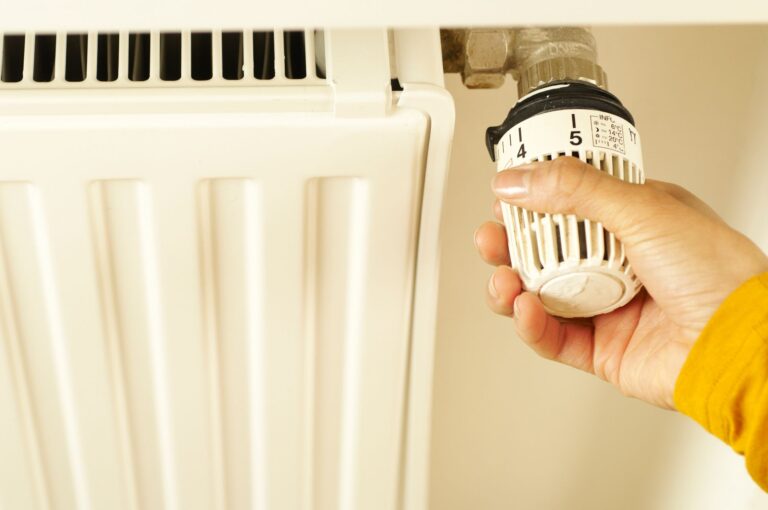

Picking a new thermostat feels straightforward until you start comparing wires, stages, and screen sizes. Your heating and cooling system dictates what’s compatible, and your daily routine decides whether a simple dial-style unit or a learning model earns its keep. This roundup covers ten wall-mounted and specialty thermostats suited to a range of homes, from single-stage conventional setups to multi-stage heat pumps and line-voltage baseboard heaters, so you can match the right control to the right wall.
A Side-By-Side Look
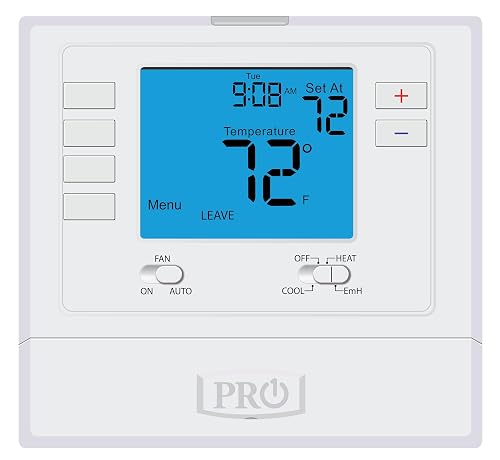
PRO1 T725 Heat Pump/Conventional Programmable Thermostat

PRO1 T771 Single Stage Non-Programmable Wall Thermostat
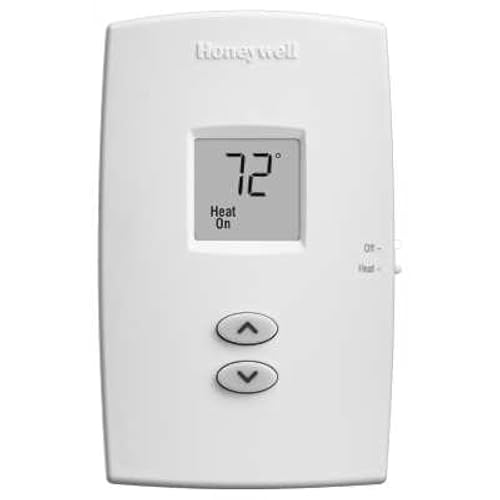
Honeywell TH1100DV1000 PRO 1000 Vertical Thermostat
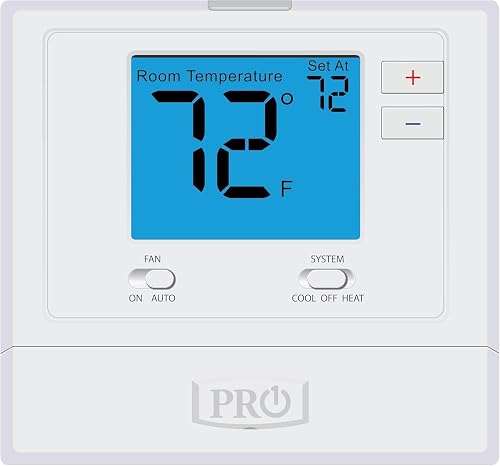
PRO1 T701 Single Stage Non-Programmable Wall Thermostat

PRO1 T715 Multi-Stage Programmable Gas Thermostat
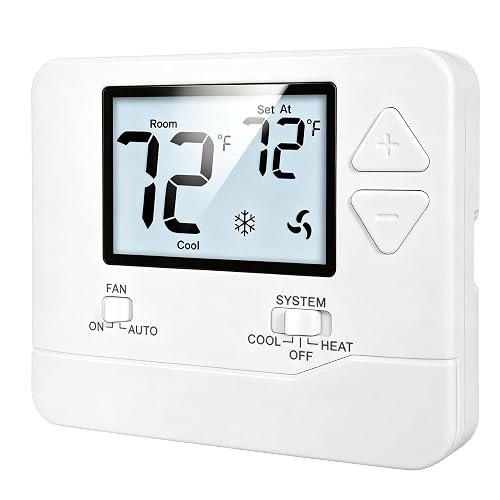
Heagstat NonProgrammable Thermostat 1 Heat/1 Cool
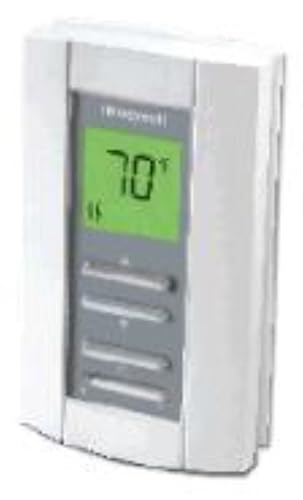
Honeywell TL7235A1003 Line Volt Pro 240V Thermostat
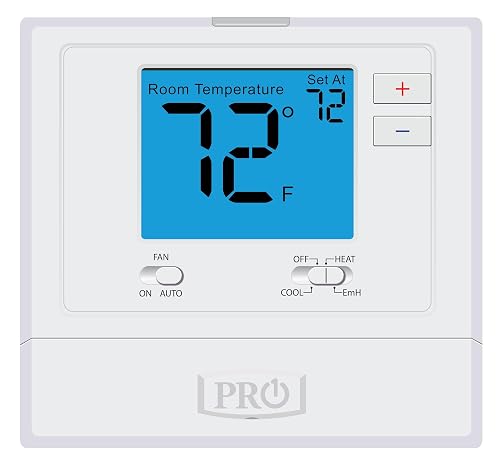
PRO1 T721 Non-Programmable Heat Pump/Conventional Thermostat

PRO1 T805 Single Stage Programmable Wall Thermostat
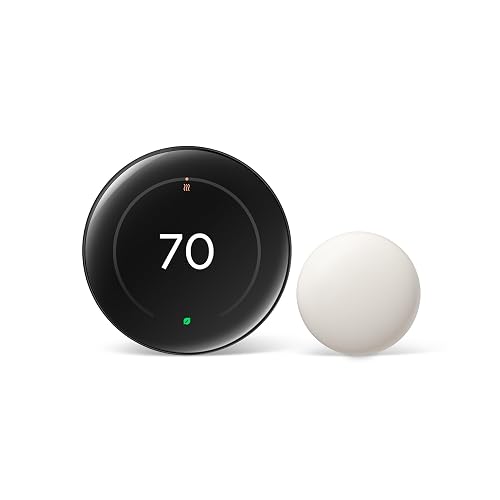
Google Nest Learning Thermostat (4th gen) with Temperature Sensor
A Deeper Look At The Lineup
The PRO1 T725 sits at the intersection of two system types, covering 2 heat/1 cool heat pump setups and 1 heat/1 cool conventional setups in a single wall unit. That dual capability matters if your home uses a heat pump for part of the year and a furnace backup for the rest, so you don’t need two separate controls. Compared with the simpler single-stage non-programmable options later in this list, this model adds a real weekly schedule with 7-day or 5/1/1 programming options.
The 4 sq. in. blue backlit screen is large enough to read across the room, and the T700 platform it’s built on tends to install cleanly into a standard wall plate. In homes where winter mornings mean a different temperature than weekend afternoons, that programmability earns its keep.
A Few Strong Suits
- Dual compatibility covers both heat pump and conventional HVAC wiring without a separate device
- Weekly scheduling options let you tailor temperatures for weekdays, weekends, or each day individually
- Blue backlit display stays readable in dim hallways and during nighttime adjustments
- Wide setpoint control suits both energy-saving setbacks and warmer daytime comfort settings
Things To Consider
- Requires a common wire (C-wire) in many installations, which older homes sometimes lack
- Programming setup takes longer than a basic non-programmable dial, so less tech-confident owners may want help during first-time setup
Quick Facts
Who Should Grab It
Homeowners with a heat pump system backed by conventional heating who want weekly scheduling without stepping up to a smart learning model.
Skip It When
The PRO1 T701 Single Stage Non-Programmable Wall Thermostat is a simpler fit for basic 1H/1C conventional setups with no scheduling needs.
Not every wall needs a learning thermostat. The PRO1 T771 is a non-programmable single-stage unit built for straightforward 1 heat/1 cool conventional systems, with a wide setpoint range that dips down to 25°F on the low end. That low-temperature reach makes it a natural match for garages, sheds, basements, and other spaces where freeze protection matters more than fine-tuned scheduling.
The 4 sq. in. blue backlit display keeps the readings clear, and swing adjustment plus calibration settings give installers room to fine-tune the reading against a separate thermometer. In workshop settings where dust and temperature swings are normal, that straightforward design tends to hold up well.
Everyday Advantages
- Wide setpoint range down to 25°F supports freeze protection in unheated spaces
- Calibration and swing adjustment let installers dial in accuracy against a reference thermometer
- No programming menus mean fewer accidental setting changes
- Glow-in-the-dark light button aids nighttime visibility in detached buildings
Points To Keep In Mind
- Single-stage only, so it won’t control multi-stage gas or heat pump systems
- Lacks weekly scheduling, which may frustrate homeowners used to set-and-forget programming
Right Fit For
Owners of garages, sheds, or workshops with single-stage conventional HVAC who want simple dial-style control with a wide temperature range.
Look Elsewhere When
The Honeywell TH1100DV1000 PRO 1000 Vertical Thermostat is a more vertical-layout alternative for heat-only spaces without cooling.
The Honeywell TH1100DV1000 keeps things stripped down to the essentials: a vertical non-programmable thermostat for single-stage heat-only systems. The 4 11/16 in. tall by 2 7/8 in. wide footprint slots into narrow wall cavities where wider units feel cramped, and the premier white finish blends into most interior trim.
There’s no scheduling layer and no smart connectivity, which is the point. For homes with simple forced-air furnaces and no central air, this unit covers the daily setpoint without inviting accidental programming changes. The PRO 1000 line has been around long enough that replacement parts and installer familiarity tend to be widespread.
Where It Helps
- Compact vertical layout fits where horizontal thermostats feel oversized
- Non-programmable design keeps operation simple for guests or older family members
- PRO 1000 line is widely recognized by HVAC technicians for straightforward replacement
Some Limits To Know
- Heat-only configuration means a separate thermostat is needed if cooling is added later
- No backlight is mentioned in the source details, which may make low-light adjustments harder
Best Suited To
Homeowners with single-stage heat-only forced-air systems who want a fuss-free Honeywell unit at a familiar form factor.
Consider Something Else When
The PRO1 T701 Single Stage Non-Programmable Wall Thermostat offers a backlit display for homeowners adding cooling on the same wall.
The PRO1 T701 sits in the same T700 platform family as the T725 reviewed above, but dials things back to single-stage non-programmable operation. That’s a deliberate trade: you keep the 4 sq. in. blue backlit screen and glow-in-the-dark light button without weekly scheduling complexity.
It supports gas or electric conventional systems running 1 heat/1 cool, which covers most central HVAC configurations in single-family homes. For households where one consistent setpoint is plenty, this unit removes the programming layer that often confuses occasional guests or visiting relatives. Compared with the Honeywell TH1100DV1000 above, it adds a backlit display while keeping the same simple operation.
What Pays Off
- Backlit screen and glow-in-the-dark button improve visibility in dim hallways and at night
- Single-stage simplicity means fewer buttons and a lower learning curve
- Gas or electric compatibility covers common residential HVAC configurations
- T700 platform tends to use a common wall plate pattern that simplifies replacement
Honest Caveats
- No scheduling means setback temperatures require manual daily adjustment
- Single-stage only, so multi-stage furnaces and heat pumps are out of reach
Whose Shelf It Belongs On
Set-and-forget households with single-stage conventional HVAC who want a clear, backlit display without programming menus.
A Better Fit Elsewhere
The PRO1 T725 Heat Pump/Conventional Programmable Thermostat is the natural upgrade for the same home if weekly scheduling later becomes a priority.
The PRO1 T715 steps up to 2 heat/2 cool gas systems, meaning it can manage a two-stage furnace paired with a two-stage air conditioner. That added staging translates to longer low-fire runtimes in mild weather and stronger output on the coldest mornings, which most homeowners notice as quieter operation and fewer temperature swings.
The T715 runs on the same T700 platform as the T725 reviewed above, sharing that 4 sq. in. blue backlit screen and glow-in-the-dark button. It also accepts 7-day, 5/1/1, or non-programmable modes, so installers can hand it over as a basic unit and let the homeowner unlock scheduling later. Power comes from batteries or a hardwired common wire.
Positive Points
- Two-stage heating and cooling support for variable-output furnaces and AC condensers
- Three operating modes let owners start simple and add scheduling later
- Battery or hardwired power accommodates older homes without a C-wire
- Backlit display and glow button match the rest of the T700 family for consistent readability
Less-Strong Areas
- Multi-stage systems require compatible HVAC equipment, otherwise the extra stages go unused
- Slightly more configuration involved at install than the T701 single-stage model
Feature Snapshot
Made For
Homeowners with two-stage gas furnace and AC systems who want programmable scheduling without crossing into smart-thermostat territory.
Reach For A Different Pick When
The PRO1 T805 Single Stage Programmable Wall Thermostat is a better match for 1H/1C conventional systems where multi-stage staging is unnecessary.
The Heagstat non-programmable thermostat targets 24VAC conventional single-stage 1H/1C systems, including gas, oil, and electric furnaces paired with a separate air-conditioning condenser. That broad conventional compatibility keeps it flexible across most older homes without exotic wiring.
The white backlight illumination aids nighttime readability, and the wiring base accepts 2 to 5 wires. Homeowners with 6 to 8 wire systems, including a common wire for continuous power, will need to look elsewhere. Unlike the PRO1 T701 above, this unit is built for straightforward dial-style control without a glow button or scheduling layer.
Real-World Strengths
- Compatible with gas, oil, and electric furnace systems for wider installation options
- White backlight keeps the screen readable in dim hallways
- Single-stage simplicity avoids programming menus entirely
Practical Considerations
- Wiring base is limited to 2 to 5 wires, so 6 to 8 wire configurations are not compatible
- Not designed for heat pump or multi-stage systems
The Right Fit
Owners of single-stage conventional homes with 2 to 5 wire installations who want basic backlit control without extras.
Swap It Out When
The PRO1 T701 Single Stage Non-Programmable Wall Thermostat offers a glow-in-the-dark button for households that prefer that visibility feature.
The Honeywell TL7235A1003 operates in a different category from the rest of this list: it’s a line-voltage thermostat for 240V electric heating, including baseboard heaters and similar direct-wired appliances. Most wall thermostats in this roundup run on low-voltage 24VAC control circuits, so this unit fills a specific niche for homes without a central low-voltage system.
The on-demand backlight, soundproof operation that reduces the audible clicking of mechanical relays, and at-a-glance heating indicator are practical touches. In a bedroom or quiet study, the soundproofing difference is noticeable compared with older mechanical thermostats that click on every cycle.
Noteworthy Benefits
- 240V line-voltage compatibility suits electric baseboard and convection heaters
- Soundproof operation reduces the audible clicking of mechanical relays
- Heating indicator offers quick visual confirmation that the system is calling for heat
Worth Bearing In Mind
- Not compatible with low-voltage 24VAC central HVAC systems in this list
- Higher-voltage wiring requires careful installation, which homeowners commonly leave to a licensed electrician
Key Attributes
Who It Suits Best
Homeowners with 240V electric baseboard or convection heaters in older homes without low-voltage central HVAC.
Not Your Match When
The PRO1 T701 Single Stage Non-Programmable Wall Thermostat is the right pick for low-voltage central air and furnace setups.
The PRO1 T721 carries the dual-mode capability of the T725 reviewed earlier but strips away the weekly scheduling. It supports 2H/1C heat pump or 1H/1C conventional systems, giving installers flexibility when wiring decisions change on the job. The same T700 platform foundation shows up here, including the 4 sq. in. blue backlit display and glow-in-the-dark button.
Power comes from AA batteries or a hardwired connection, so it works in older homes without a common wire. Compared with the T725 above, this unit is the better choice for homeowners who want heat pump compatibility without committing to programming.
The Good Stuff
- Dual-mode compatibility covers heat pump and conventional wiring in a single device
- Battery or hardwired power accommodates homes without a C-wire
- Glow-in-the-dark button aids nighttime adjustments in dim hallways
- Non-programmable operation keeps controls approachable for less tech-confident users
Where It Is Less Suited
- Lacks weekly scheduling, which limits automatic setback and wake routines
- Single-stage cooling, so two-stage AC compressors won’t see full staging benefit
Perfect Match For
Hybrid-system homeowners who want heat pump compatibility without weekly scheduling and prefer battery-powered flexibility.
Another Choice May Suit
The PRO1 T725 Heat Pump/Conventional Programmable Thermostat adds 7-day and 5/1/1 scheduling for owners who want automatic routines.
The PRO1 T805 brings the readability of an oversized display to single-stage conventional systems. Its 7 sq. in. blue backlit screen is significantly larger than the 4 sq. in. screens on the T700 models reviewed above, which makes a real difference for anyone who reads the thermostat from across a large room or wants bigger temperature numerals.
The T805 runs on the T800 platform and supports 7-day, 5/1/1, or non-programmable modes, mirroring the flexibility of the T715 reviewed earlier. That scheduling range lets a homeowner start with manual operation and grow into automated routines over time. For a single-stage 1H/1C conventional home, this model is a strong fit when readability matters.
What Makes Sense
- 7 sq. in. display is nearly double the screen area of T700 platform units
- Three programming modes offer a stepwise path from manual to fully scheduled
- Glow-in-the-dark light button helps locate controls at night
- T800 platform tends to install on a standard wall plate pattern
Things To Weigh Up
- Single-stage only, so multi-stage furnace and heat pump owners should look at the T715 instead
- Larger footprint may not match existing wall openings without a trim plate
Built With In Mind
Single-stage homeowners who prioritize an extra-readable display and want scheduling flexibility without stepping into smart-thermostat apps.
Where A Sibling Pick Shines
The PRO1 T715 Multi-Stage Programmable Gas Thermostat supports two-stage systems for homeowners who actually have variable-output HVAC equipment.
The Google Nest Learning Thermostat (4th gen) represents a different tier from every other pick in this roundup. Rather than relying on a fixed schedule, it learns the temperatures you prefer and the times you tend to be home, then adjusts itself over the first few weeks. The bundled Nest Temperature Sensor (2nd gen) lets the system read conditions in a second room, which is useful in homes where the hallway thermostat doesn’t reflect the nursery or home office.
Compatibility covers most common 24V heating and cooling systems, including heat pumps and conventional setups. The Obsidian finish offers a darker alternative to traditional white thermostats. In homes where the goal is hands-off comfort with smartphone control, this unit stands apart from the manual and programmable models reviewed above.
What It Does Well
- Adaptive learning reduces manual schedule programming over the first weeks of use
- Bundled remote temperature sensor addresses hot and cold spots in distant rooms
- Smartphone control supports adjustments from outside the home
- Obsidian finish offers a modern look compared with traditional white units
Room For Improvement
- Higher learning curve during initial setup compared with non-programmable thermostats
- Often requires a C-wire, which older homes may not have without an adapter
- Smart features depend on Wi-Fi, so connectivity outages can limit remote control
Feature Card
Who Will Love This
Connected-home enthusiasts who want learning automation, smartphone control, and a bundled remote sensor for multi-room comfort.
Where Another Pick Suits Better
The PRO1 T725 Heat Pump/Conventional Programmable Thermostat is a better fit for homeowners who prefer fixed schedules without smart connectivity.
What Matters Most When Picking A Wall Thermostat
System compatibility is the first filter, and it has to come before features. A thermostat advertised with the right programming and screen size still won’t work if your HVAC is single-stage and the unit is multi-stage only, or vice versa. “Conventional” generally means standard furnace-and-air setups, while “heat pump” systems use a refrigerant cycle that reverses for winter heating, so confirming your equipment type up front prevents a return trip to the retailer.
Wiring configuration is the next practical hurdle. Many newer programmable and smart thermostats expect a common wire (C-wire) for continuous 24VAC power, and older homes often lack that conductor. Battery-powered units like the PRO1 T721 sidestep this by running on AA cells, while hardwired-only models require that C-wire or a power adapter kit.
The third decision is whether you want manual control, programmable scheduling, or learning automation. Set-and-forget households often thrive on a non-programmable unit with a backlit display, while owners with predictable weekly routines benefit from 7-day or 5/1/1 scheduling. Smart learning thermostats like the Nest add another layer by adapting to your behavior over time, which is convenient but adds a Wi-Fi dependency.
Finally, think about the physical environment. Larger rooms benefit from bigger displays like the 7 sq. in. PRO1 T805, while narrow wall cavities may favor the vertical Honeywell TH1100DV1000. Garages and sheds with freeze-protection needs call for units with wide setpoint ranges, and line-voltage baseboard heaters need an entirely different class of thermostat than low-voltage central systems.
Common Slip Ups And Where The Extra Money Goes
Wrong Turns To Avoid
A common mistake is matching on looks alone. A thermostat can have a beautiful screen and still be the wrong unit for a heat pump system, which is why system-type labels matter more than screen size. Another frequent slip is assuming any thermostat works with any wiring: 6 to 8 wire configurations can rule out base-model units, and a missing C-wire can block many programmable and smart models.
It’s also tempting to overbuy learning automation for a home where the daily routine rarely changes, in which case a programmable unit often performs the same job with less setup. For workshops, garages, and sheds, overspending on smart features rarely pays off, since simple dial-style control with a wide setpoint range covers freeze protection just fine.
The Upgrade Payoff
Higher-tier thermostats tend to earn their cost through three paths: scheduling flexibility, display readability, and HVAC staging support. A 7-day programmable unit pays off when weekday and weekend routines differ enough to justify automatic setbacks. A larger display like the 7 sq. in. PRO1 T805 adds genuine value in homes where occupants read the thermostat from across a large room.
Multi-stage support, like that in the PRO1 T715, matters most when your furnace and AC actually have two stages. In that case, the thermostat coordinates longer low-fire runtimes for quieter operation and steadier temperatures. The smart tier adds learning automation and remote sensor support, which is worth the step up in homes with hot or cold spots that a single wall thermostat can’t address alone.
Frequently Asked Questions
What Does A C-Wire Do On A Thermostat?
A common wire, often labeled “C,” delivers continuous 24VAC power from the HVAC system to the thermostat so it can run a backlit display, Wi-Fi radio, or scheduling clock without draining batteries. Many newer programmable and smart thermostats require it, while battery-powered models like the PRO1 T721 avoid the dependency.
Can One Thermostat Handle Both A Heat Pump And A Furnace?
Yes, dual-mode thermostats like the PRO1 T725 and PRO1 T721 support 2H/1C heat pump systems and 1H/1C conventional systems in a single unit. The thermostat signals the heat pump first and switches to the conventional backup when outdoor temperatures drop below the heat pump’s efficient range, depending on installer setup.
How Many Wires Do Most Thermostats Need?
Conventional low-voltage thermostats in this roundup typically expect 2 to 5 wires for basic single-stage systems, while multi-stage and smart models often require a common wire among 6 to 8 conductors. Counting and labeling existing wires at the wall plate before ordering helps prevent compatibility surprises.
Is A Non-Programmable Thermostat Enough For Most Homes?
Set-and-forget households often run just fine on a non-programmable unit, especially when comfort expectations stay constant and family schedules rarely shift. Weekly routines with different wake, leave, and sleep temperatures are where programmable or learning thermostats start to add value.
Do Line-Voltage Thermostats Work With Central HVAC?
No, line-voltage thermostats like the Honeywell TL7235A1003 control 240V electric baseboard or convection heaters directly and are not designed for low-voltage 24VAC central systems. Central HVAC homes should pair a low-voltage wall thermostat with their furnace and air conditioning equipment.
Wrap Up
The right thermostat depends first on what your HVAC system expects, then on how much scheduling flexibility your routine actually uses. Match the unit to your equipment type and wiring, decide between manual, programmable, or learning control, and pick a display size and finish that fit the wall. Browse the picks above, confirm compatibility with your system, and the right control should become obvious.