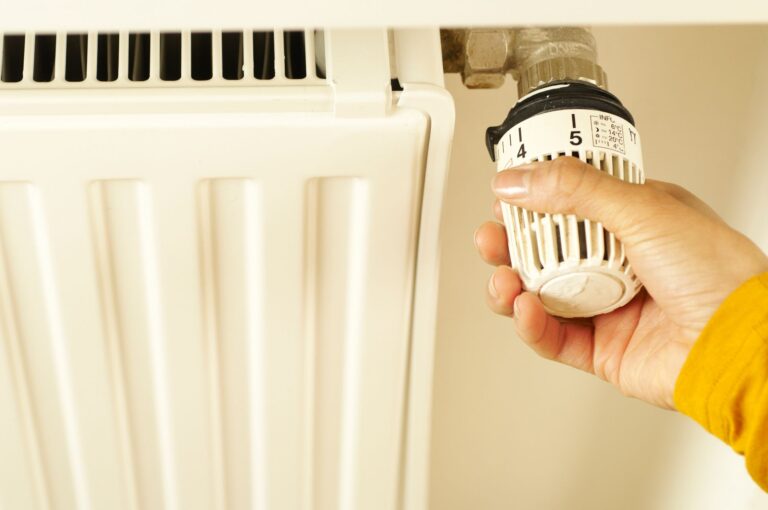

Upgrading the wall control on a heat pump system is one of those small jobs that pays you back every single day, in steadier temperatures, quieter run cycles, and noticeably lower energy use. The catch is that “thermostat” covers a wide spread of products, from a $15 non-programmable box for a garage workshop to a multi-stage programmable unit designed for a two-stage gas furnace. This list focuses on wall-mounted controls that are actually compatible with heat pump systems, while also including a few close cousins (single-stage conventional and a commercial-grade unit) that show up on most shortlists. Each pick below was chosen for clear, specific reasons, and the trade-offs are called out honestly so you can match a model to your home, not the other way around.
A Closer Look At The Lineup
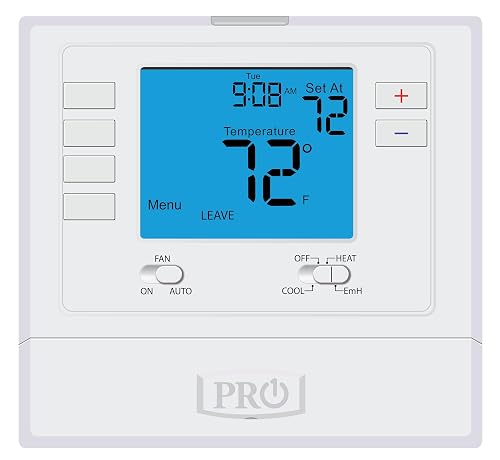
PRO1 T725 Programmable Heat Pump Thermostat 2H/1C

PRO1 T771 Non-Programmable Single-Stage Thermostat

Aowel AW721 2H/1C Heat Pump Thermostat with Humidity
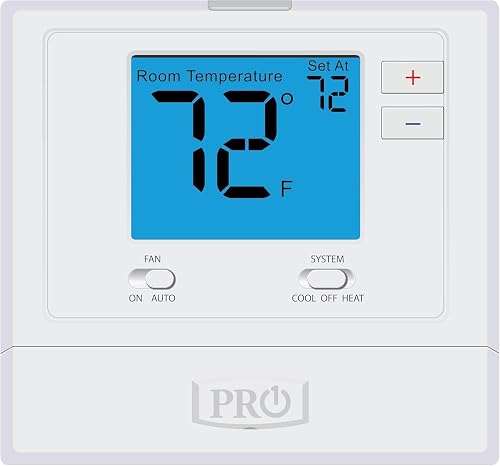
PRO1 T701 Single-Stage Non-Programmable Thermostat

PRO1 T715 2H/2C Multi-Stage Programmable Thermostat
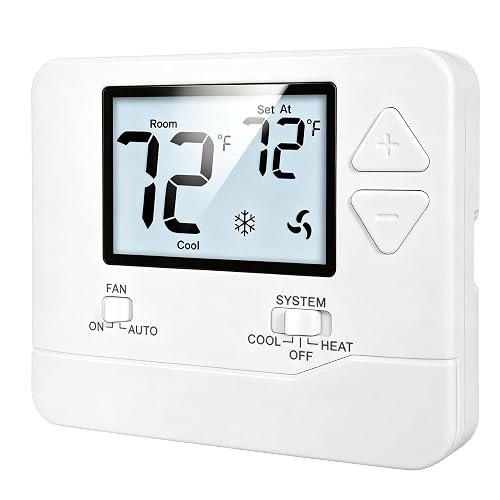
Heagstat 1H/1C Non-Programmable Conventional Thermostat
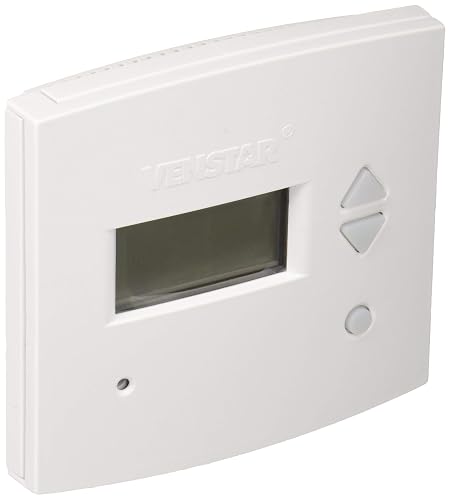
Venstar T2800 Platinum Slimline 3H/2C Thermostat
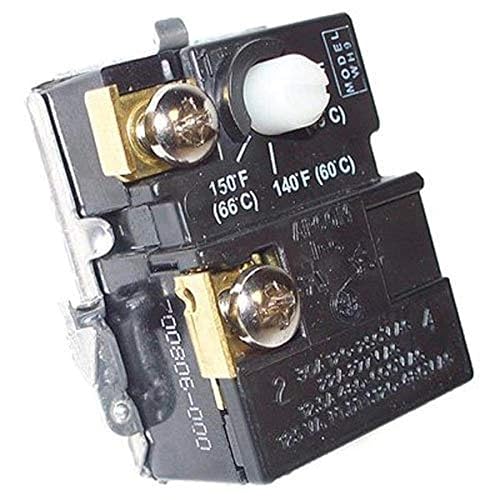
Reliance 9000507-045 Lower Electric Water Heater Thermostat
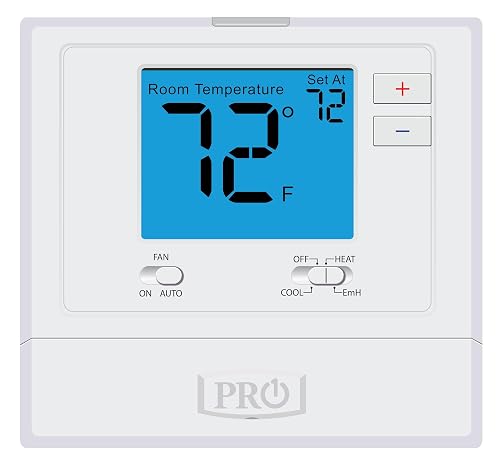
PRO1 T721 2H/1C Heat Pump or 1H/1C Thermostat

PRO1 T805 1H/1C Programmable Conventional Thermostat
Inside Each Recommended Option
The PRO1 T725 is the closest thing to a “default” thermostat for a typical residential heat pump, and for most homeowners that is exactly what makes it worth a look. It targets 2 heat and 1 cool heat pump setups and also steps down gracefully to 1 heat and 1 cool conventional systems, so it works whether your home is pure heat pump or a hybrid with a backup furnace.
Compared with the simple non-programmable Aowel covered later, this one offers a real 7-day or 5/1/1 schedule, which means a different program for weekdays and weekends. For a working family with predictable routines, that single feature is often what separates “fine” from “actually comfortable.”
Why It Works Well
- 7-day and 5/1/1 programming give you weekday-versus-weekend flexibility without babysitting the wall control.
- Compatible with both 2H/1C heat pumps and 1H/1C conventional systems, useful if you have backup electric or gas heat.
- 4 sq. in. blue backlit display is easy to read in a dim hallway at night.
- Sits on the proven PRO1 T700 platform, so the menu structure tends to feel familiar if you have ever used a PRO1 before.
- Schedule modes (wake, leave, return, sleep) line up well with how a heat pump actually cycles in shoulder seasons.
Things To Consider
- You will need a C-wire (common wire) or a power-stealing setup in many installs; older homes sometimes require a small adapter.
- No built-in humidity display, so dry winter air stays invisible without a separate sensor.
Who It Suits Best
Heat pump owners with predictable weekday routines who want a schedule that adjusts itself without fiddling.
Where Another Pick Suits Better
The Aowel AW721 is a stronger match if humidity tracking matters more to you than a weekly schedule, since it adds an onboard humidity monitor.
The PRO1 T771 is one of those rare controls that explicitly covers a 25°F to 90°F setpoint range, which makes it a real candidate for spaces that drop well below “normal” living temperatures. Think detached garage with a wall-mounted gas heater, a workshop you only visit on weekends, or a pole building that needs freeze protection.
It is non-programmable, which is a feature in this context. In a shed you do not need a learning curve, a mobile app, or a weekly schedule, you just need a reliable box that turns the heat on at 38°F and off at 42°F. That is what this one does, and the wide setpoint window is the headline.
A Few Strong Suits
- 25°F to 90°F setpoint range covers low-temperature freeze-protection and high-temperature comfort settings in one unit.
- Single-stage simplicity means fewer wiring mistakes for a do-it-yourself swap in an outbuilding.
- 4 sq. in. blue backlit display remains legible in low light, which matters in a garage with one bulb.
- Swing adjustment and calibration controls help compensate for placement near drafts or heat sources.
Worth Noting
- It is not designed to control a heat pump directly, so it is the wrong tool for the main living space.
- No scheduling, which is fine in a workshop but limiting in a primary residence.
Right Fit For
Garages, sheds, and workshops with single-stage conventional heat where a normal residential thermostat simply does not reach low enough.
Skip It When
You actually need a heat pump control for your main home; the PRO1 T725 is the more appropriate pick in that scenario.
The Aowel AW721 is a non-programmable heat pump thermostat, but the headline detail is the built-in humidity monitor on the front of the unit. Heat pumps are famously dry in winter and sticky in summer, and a thermostat that shows you the actual relative humidity reading turns “it feels stuffy in here” into a number you can react to.
It supports 2 heat and 1 cool heat pump systems with or without auxiliary or emergency heat, which is the more common residential heat pump layout. The white backlit screen is easy on the eyes in a bedroom hallway, and the non-programmable design keeps the menu tree short for anyone who has been intimidated by feature-heavy controls.
Real-World Strengths
- Onboard humidity readout gives you a real number, not a vague feeling, when you tweak the setpoint.
- Heat pump compatibility covers systems with and without auxiliary/emergency heat.
- Backlit screen improves nighttime visibility in a hallway or nursery.
- Simplified button layout is approachable for first-time installers.
Room For Improvement
- No 7-day scheduling, so the unit will not automatically step the temperature back during work hours.
- Wall footprint can be wider than the opening left by a previous thermostat, so you may need a trim plate.
Best Suited To
Heat pump homeowners who care about indoor humidity and want a glanceable number on the wall without a smart-home hub.
Consider Something Else When
You need a full weekly schedule; the PRO1 T725 covers the same heat pump wiring with a real 7-day program.
The PRO1 T701 is a single-stage, non-programmable conventional thermostat, and that is the entire pitch in the best possible way. You turn the dial (or press the up arrow), the system responds, and the wall control never asks you to log into an app or learn a menu tree.
For renters, parents installing a control for an aging family member, or anyone whose home runs a simple 1 heat and 1 cool gas or electric system, this is the kind of part that gets installed and then ignored for a decade. The glow-in-the-dark light button is a small but real upgrade over a flat black panel at 2 a.m.
Reasons It Performs
- Single-stage simplicity is a perfect match for straightforward forced-air systems.
- Glow-in-the-dark light button is helpful in a dark hallway during a power flicker.
- Spacious 4 sq. in. blue backlit display is readable from across the room.
- Often chosen for rentals because tenants cannot accidentally reconfigure a complex program.
Points To Keep In Mind
- Conventional 1H/1C only, so this is not the right box for a heat pump system.
- No scheduling means you have to remember to turn the temperature down before bed.
Made For
First-time thermostat swappers and rental property owners who value reliability and tenant-proof operation over features.
A Better Fit Elsewhere
The PRO1 T805 is the better call in the same home if you want a weekly schedule on a single-stage conventional system.
The PRO1 T715 steps up to a 2 heat and 2 cool configuration, aimed at two-stage gas furnace systems rather than single-stage heat pumps. Multi-stage means your furnace can run on a low burner for most of the day and a high burner only on the coldest mornings, which tends to translate into more even temperatures and quieter operation.
You can run it as 7-day, 5/1/1, or non-programmable, which is unusual flexibility at this tier. The 4 sq. in. blue backlit display and glow-in-the-dark light button are shared with the rest of the T700 family, so the look and feel are familiar if you have ever lived with a PRO1.
Strong Points
- 2H/2C multi-stage support matches two-stage gas furnace installations without losing efficiency to short cycling.
- Three operating modes (7-day, 5/1/1, non-programmable) let you tune complexity to the household.
- You can power it from batteries or hardwire it, which helps in older homes without a common wire.
Trade Offs
- Overkill for a single-stage system; the deeper menu will frustrate a user who only needs up and down arrows.
- Multi-stage wiring has more connection points, so a swap can take longer than a simple two-wire install.
Who Should Grab It
Owners of two-stage gas furnace systems who want a real schedule and tighter temperature staging through shoulder seasons.
Not Your Match When
Your home runs a single-stage conventional system; the PRO1 T701 or T805 will get you there with less menu diving.
The Heagstat 1H/1C is a textbook no-nonsense conventional thermostat for a 24VAC forced-air system with two to five wires. Gas, oil, or electric furnace paired with a separate air-conditioning condenser is exactly the install it was designed for, and the white backlight is a quiet upgrade over older beige boxes with no illumination at all.
Compatibility is the main thing to check before ordering, because it works on conventional systems only and explicitly excludes heat pump wiring. Once that is confirmed, the install is short and the day-to-day operation is essentially just temperature up and down.
Key Advantages
- Honest, low-cost control for renters and budget-conscious homeowners on a simple 1H/1C system.
- White backlight helps you read the setpoint in a dark bedroom without a phone flashlight.
- Compact body fits within the opening left by many older thermostats, so no trim plate is usually needed.
Honest Caveats
- Hard no-go for heat pumps; the wiring layout is conventional-only.
- Two-to-five-wire installs only, so if your existing bundle has six to eight conductors, the base will not accept it.
The Right Fit
Renters and homeowners on a basic 1H/1C conventional system who want a working thermostat without paying for features they will never use.
Reach For A Different Pick When
You have a heat pump; in that case the PRO1 T725 or PRO1 T721 belongs on your shortlist instead.
The Venstar T2800 Platinum Slimline is the only unit in this lineup that is genuinely comfortable being installed in a small office, a mixed-use property, or a larger home with a more elaborate HVAC setup. It supports 3 heat and 2 cool stages, and three of the outputs are configurable, which means the installer can decide which terminals drive which equipment.
It is also heat pump compatible, with a 7-day programmable schedule, configurable auto or manual changeover, and non-volatile memory that keeps your settings through a power outage. The slim white faceplate is unassuming on a commercial wall, which is part of the point.
Where It Delivers
- 3H/2C support with configurable outputs covers commercial rooftop units and larger residential zoning layouts.
- 7-day programming with smart fan operation and service reminders for filters and UV lamps.
- Color-coded backlit keys and a large backlit display remain easy to navigate in low light.
- Non-volatile memory preserves your schedule through power loss, which is a quiet but useful detail.
Small Caveats
- More installer-friendly than homeowner-friendly; casual users may bounce off the deeper menu options.
- Commercial feature set means the price is higher than a basic residential unit.
Perfect Match For
Light commercial spaces and larger homes where 3H/2C capability and configurable outputs solve a real wiring problem.
Another Choice May Suit
The PRO1 T725 is the right call for a typical residential 2H/1C heat pump where you do not need the extra stages or the commercial feature set.
The Reliance 9000507-045 is a lower-element replacement thermostat for a standard residential electric water heater, not a wall control for a heat pump. It earned a spot here because a lot of the same shoppers reading about thermostats are also maintaining an electric water heater, and a failed lower-element thermostat often shows up as “we ran out of hot water after one shower.”
It is a direct-fit part for compatible Reliance-style water heater stacks and is intended to mount in the lower position of the thermostat panel. If your old part is visibly damaged or no longer clicks on with a multimeter test, this is the kind of replacement that pays for itself in one weekend.
What It Does Well
- Direct-fit lower-element replacement restores reliable hot water without replacing the whole water heater.
- Standard mounting footprint fits common residential electric water heater configurations.
- Small, mechanical design is straightforward to swap with basic tools and a careful approach to the breakers.
Some Limits To Know
- This is a water heater part, not a wall thermostat for an HVAC system, so it will not control heating or cooling.
- Always confirm the part number and position (lower vs upper) before installing; a mismatched install can leave the tank unprotected.
Whose Shelf It Belongs On
Anyone who maintains a residential electric water heater and wants a low-cost replacement for a failed lower-element thermostat.
Look Elsewhere When
You need to control a heat pump; this part belongs in the water heater closet, not on the living room wall.
The PRO1 T721 is a useful middle child in the PRO1 lineup. It works on either a 2 heat and 1 cool heat pump system or a 1 heat and 1 cool conventional system, which makes it a sensible choice for homes that may switch fuels in the future, or for landlords who want a single SKU that covers a few different properties.
It is non-programmable, so the menu is short, and the 4 sq. in. blue backlit display with a glow-in-the-dark light button carries over from the T700 platform. You can power it from AA batteries or hardwire it, which is a quiet but real benefit in older homes where pulling a new common wire through the wall is not on the weekend to-do list.
The Helpful Details
- Switchable between heat pump (2H/1C) and conventional (1H/1C) operation from the setup menu.
- Battery or hardwire power options reduce the need to pull a new common wire.
- Glow-in-the-dark light button makes the unit easy to find in a dark hallway during a power blip.
Things To Weigh
- Non-programmable only, so there is no automatic setback for work or sleep hours.
- Wiring mistakes during system-type selection can lead to short cycling; the installer should confirm the system type during setup.
Built With In Mind
Homeowners with a mixed system or a planned fuel switch who want a single control that can follow the equipment change.
Where A Sibling Pick Shines
The PRO1 T725 is the better fit if you want a 7-day schedule on a heat pump system in the same household.
The PRO1 T805 closes the list on a high note for anyone who wants a real schedule on a single-stage conventional system. The headline spec is the extra-large 7 sq. in. blue backlit display, which is nearly double the screen area of the T700-series units and a real comfort upgrade for anyone who wears bifocals or just likes to see the temperature from across the room.
It runs 7-day, 5/1/1, or non-programmable modes, sits on the newer T800 platform, and shares the glow-in-the-dark light button with the rest of the family. For a homeowner on a 1H/1C conventional system who wants a schedule without stepping up to a multi-stage control, this is a quietly strong pick.
Notable Gains
- 7 sq. in. display is one of the larger screens in this category, helpful for low-vision users and big-print fans.
- Three operating modes (7-day, 5/1/1, non-programmable) cover the most common household routines.
- Part of the T800 platform, which is a slightly newer generation than the T700 family on the rest of the list.
Potential Drawbacks
- Conventional 1H/1C only, so heat pump homes should keep scrolling up to the T725 or T721.
- Larger faceplate may not cover the paint outline left by a smaller previous thermostat, so a trim plate may be needed.
Who Will Love This
Conventional-system homeowners who want a real weekly schedule and a screen they can read from across the room.
Swap It Out When
You have a heat pump; in that scenario the PRO1 T725 is the more compatible fit.
What To Weigh Before Choosing a Heat Pump Thermostat
Heat pump systems differ from conventional furnaces in one important way: the reversing valve. That is the internal part of the heat pump that flips the refrigerant flow to switch between cooling and heating, and your thermostat has to know how to call for it. If a control is labeled “conventional only,” it will not run a heat pump correctly no matter how nice the screen looks, so always match the thermostat to the system type first and the feature list second.
Programmable versus non-programmable is the next fork in the road. Programmable units (like the PRO1 T725 and T805) earn back the price difference quickly for households with predictable weekday routines, because the system can automatically drift a few degrees while everyone is at work or school. Non-programmable units are friendlier for rentals, workshops, and any home where the same person walks past the wall control all day, and they are usually cheaper upfront.
Wiring is the practical detail that decides whether an install takes fifteen minutes or an afternoon. Most modern thermostats expect a C-wire (the common wire that provides continuous 24VAC power), and older homes sometimes lack one. Battery-powered or power-stealing models (such as the PRO1 T701 and T721) can side-step that issue, but a loose C-wire connection is the most common cause of flickering displays and short-cycling equipment, so it is worth checking the existing bundle before ordering.
Finally, think about the rest of the room. A larger display (the PRO1 T805 is 7 sq. in.) is a quiet quality-of-life upgrade for low-vision users. A built-in humidity readout (the Aowel AW721) gives you a real number instead of a guess. And a commercial feature set (the Venstar T2800) only matters if your equipment actually uses 3H/2C staging, which most residential heat pumps do not.
Quick Points To Keep In Mind Across These Picks
Wrong Turns To Avoid
The most common mistake is buying a conventional-only thermostat for a heat pump system because the price looked attractive. The Heagstat and the PRO1 T701 are excellent 1H/1C conventional controls, but neither will run a heat pump correctly, and forcing the wiring will usually produce a system that just blows room-temperature air. Always check the system type on the equipment nameplate before ordering.
The other misstep is overbuying. A 3H/2C commercial unit like the Venstar T2800 has real value in the right property, but it is wasted complexity in a 2H/1C residential heat pump, where the extra stages will never be called. Match the control to the equipment you actually have, not the equipment you might upgrade to in five years.
Where The Extra Money Goes
Higher-tier thermostats tend to spend your money on three things: a larger display, deeper scheduling, and compatibility with more HVAC stages. The PRO1 T805 spends it on a 7 sq. in. screen and a flexible program, while the Venstar T2800 spends it on 3H/2C staging and configurable outputs for commercial rooftops. The Aowel AW721 spends it on a humidity sensor, which is the kind of detail that quietly improves comfort through a dry winter.
Whether the upgrade is worth it depends on how much time you spend looking at the wall and how much you would value a more granular schedule. In a one-bedroom condo with a single heat pump, the extra money often goes unnoticed. In a larger home with a heat pump, a programmable schedule and humidity awareness are the upgrades that pay you back every season.
Frequently Asked Questions
Do I need a special thermostat for a heat pump?
Yes, your thermostat must specifically list heat pump compatibility. Conventional-only units lack the wiring terminals and software to control the reversing valve that switches between heating and cooling mode.
Will any of these work without a C-wire?
A few of the models listed support battery power or power-stealing operation, which can help in older homes without a common wire, but a proper C-wire is the most reliable long-term solution.
What is multi-stage heating?
Multi-stage means the system can run on a low stage for most of the day and a high stage only on the coldest mornings, which tends to deliver more even temperatures and quieter operation than a single-stage system that blasts at full power.
Can I install one of these myself?
Many homeowners handle a straightforward thermostat swap with basic tools and a voltage tester, but heat pump wiring can be confusing. If you are not certain of the existing wire functions, a quick call to an HVAC technician is worth the visit.
How often should a thermostat be replaced?
There is no fixed schedule, but most wall thermostats last roughly a decade before the buttons, sensors, or display start to drift. If your current control is older than that and acting flaky, a replacement is often a low-cost improvement in comfort and reliability.
Closing Remarks
The right heat pump thermostat is the one that matches your system type, your household routine, and the wiring already in your wall. Start there, then decide whether a weekly schedule, a humidity readout, or a larger screen is the feature that will make a real difference in your day. For most residential heat pump homes, the PRO1 T725 is the most comfortable default. For everyone else, the rest of this list is built to cover the specific reasons that default might not be the right fit.