
A wall thermostat is one of those things you stop noticing once it’s working, and a great one quietly shapes how comfortable your home feels every day. The right pick can shave real money off utility bills, eliminate those weird hot and cold zones, and stop you from fighting a clunky dial at 6 a.m. This roundup walks through nine solid hvac thermostats covering everything from simple single-stage heat-only units to learning smart thermostats, so you can find the one that fits your system, your routine, and your tolerance for tech.
The Picks In Brief
Honeywell TH1100DV1000 PRO 1000 Vertical Thermostat

AIRXCEL 8330-3862 T-Stat Wall Digital Heat/Cool
Cadet F Series Double Pole Baseboard Thermostat
Honeywell TH2110DV1008 PRO 2000 Programmable
White-Rodgers 1F80-361 Emerson 80 Series

Honeywell TH3210D1004 Non-Programmable Digital
White-Rodgers 1F78-151 70 Series Classic
Google Nest Learning Thermostat 4th Gen Obsidian
Google Nest Learning Thermostat 4th Gen Silver
A Breakdown Of The Leading Choices
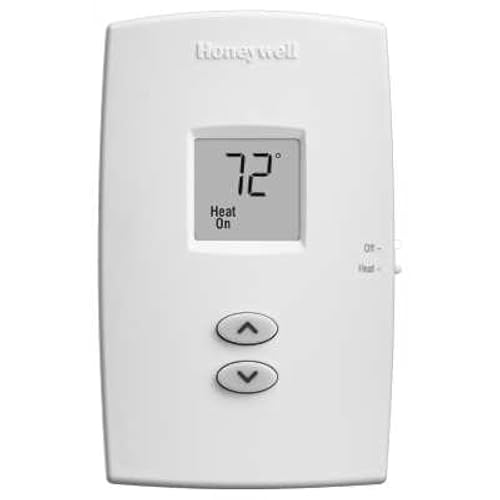
The Honeywell TH1100DV1000 is a no-nonsense wall unit that does exactly one job, and that restraint is the point. It’s a vertical, non-programmable, heat-only thermostat in a clean white finish, sized at roughly 4 11/16 inches tall by 2 7/8 inches wide, so it tucks into narrow wall sections without looking oversized. For older homes with a straightforward single-stage heating system, swapping in a basic dial like this is often the simplest way to replace a failing or yellowed unit.
Where the PRO 1000 earns its place is in garages, workshops, basements, and additions that only need heat, and where a homeowner doesn’t want to program schedules or learn a new interface. It runs without a common wire on most systems, which is a relief if the existing wiring is minimal. Owners of radiant or baseboard-free single-stage forced-air setups who just want reliable up-and-down temperature control tend to find this thermostat refreshingly easy to live with.
Good Reasons To Consider
- Pure single-stage heat operation keeps the controls and wiring simple for older or minimal systems
- Vertical, slim body fits tight wall spaces better than wider horizontal units
- No programming means no batteries to babysit, no schedule to maintain, and fewer buttons to confuse guests
- Premier white finish blends into most interior walls without standing out
- Often a quick DIY swap for anyone replacing a failed mechanical thermostat
Points To Keep In Mind
- Heat-only design means it won’t work on cooling or heat pump systems
- No scheduling or smart features, so all savings come from manual adjustment
Best Suited To
Homeowners with a basic single-stage heating system who want a cheap, reliable dial-style wall thermostat and no extras.
Look Elsewhere When
Pick the Honeywell TH2110DV1008 PRO 2000 instead when the home has both heating and cooling and you want a programmable weekly schedule.
The AIRXCEL 8330-3862 is built for the road, not the residential living room. It’s a wall-mount digital thermostat designed for RV heating and cooling, with a single-stage control head that handles either function on a 12V RV system. The black housing is intentionally low-glare so it doesn’t fight with the compact interior of a coach or travel trailer. Compared to the Honeywell TH1100DV1000 that opened this list, this unit is aimed at a very different environment.
Inside an RV, the thermostat has to deal with vibration, smaller wire gauges, and 12V DC power rather than the 24V AC found in homes. This is where the AIRXCEL earns its keep. Full-time RVers and weekend travelers who want a direct replacement for a failed factory thermostat will find the install process pretty painless, since the footprint and terminals are designed for the RV wall cavity. For a stick-built house, it’s the wrong tool, but on the road it’s a sensible pick.
Practical Advantages
- Digital readout gives clearer setpoint feedback than a mechanical RV dial
- Wall-mount form factor matches common RV interior cutouts
- Single-stage heat and cool covers the typical rooftop AC plus furnace combo
Honest Caveats
- Designed specifically for RV systems, so it isn’t a fit for standard residential 24V HVAC wiring
- Black finish may look out of place in a light-toned residential interior, though in most coaches it’s a non-issue
Right Fit For
RV owners and mobile-home residents who need a digital single-stage heat/cool thermostat that mounts on the wall without complicated wiring.
Consider Something Else When
Choose the Honeywell TH3210D1004 instead for a residential 2H/1C system where you want precise digital control on a 24V circuit.
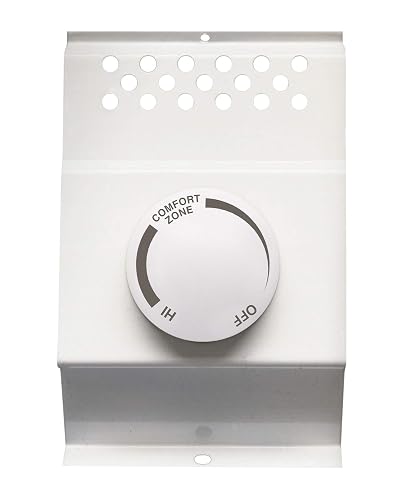
The Cadet BTF2W isn’t a wall thermostat in the usual sense, it lives inside the end of a baseboard heater. This is a double-pole built-in thermostat rated for 22 amps across 120, 208, and 240 volt circuits, made specifically for the Cadet F series electric baseboard line. The white finish and low-profile knob are designed to blend with the heater cabinet, not the wall.
Where this one shines is in rooms heated by a dedicated electric baseboard, like a converted bedroom, an in-law addition, or a workshop where a 240V circuit runs straight to the heater. The twist dial has a usable range from about 45 to 80 degrees Fahrenheit, and the double-pole design fully disconnects power at the off position, which is a real safety plus when servicing. For a homeowner with a mixed system, this only makes sense in rooms served by Cadet F series baseboards, so it’s a specialized tool rather than a whole-home upgrade.
A Few Highlights
- Double-pole switch fully breaks both legs of the circuit, simplifying safe heater maintenance
- 22 amp rating covers most residential baseboard loads on a standard 240V circuit
- Mounts to the end of the baseboard itself, eliminating extra wall wiring
- Large twist dial is easy to read and adjust in dim hallways or bedrooms
Trade Offs
- Only works with Cadet F series baseboard heaters, not a generic replacement
- Single-room control, so a whole home would need one per heater, which adds up fast
Feature Snapshot
Made For
Homeowners with Cadet F series electric baseboard heaters who want a clean, built-in dial control on each room.
Skip It When
Pick the Honeywell TH2110DV1008 PRO 2000 when the home runs on a central forced-air system that needs a wall-mounted programmable thermostat.
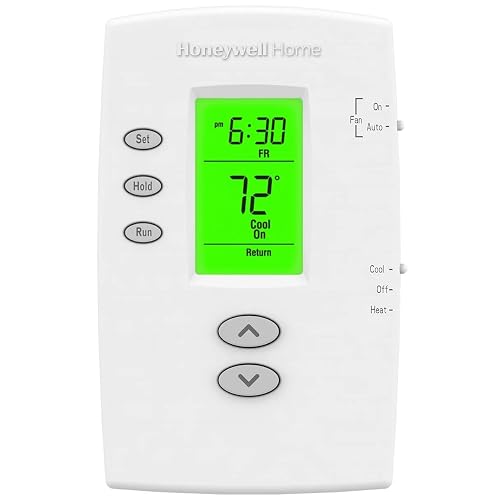
The Honeywell TH2110DV1008 PRO 2000 is the next step up from the heat-only PRO 1000 that opened this list, adding programmability and dual heating and cooling control. The vertical layout and clean face keep it visually familiar, while the backlit display brings the setpoint and ambient temperature into view at the same time. It’s a workhorse unit for homeowners who want a weekly schedule without paying for app connectivity.
For families with predictable weekday routines, the 5-2 day programming (separate schedules for weekdays and weekends) tends to be enough to capture meaningful savings without overcomplicating life. Early start is a quiet feature worth flagging: it pre-stages the system so the home hits the target temperature right at the scheduled time, rather than catching up slowly. The PRO 2000 fits heat/cool and heat-pump-without-auxiliary-heat systems, which covers a lot of typical single-stage central HVAC setups.
Noteworthy Benefits
- 5-2 programming captures the two schedule patterns most households actually live by
- Backlit display improves legibility in hallways and bedrooms at night
- One-touch setpoint access skips through menus to the most-used function
- Early start logic keeps rooms on time without manual override
Some Limits To Know
- No smart or app control, so adjustments away from home require planning
- Not designed for heat pump systems with auxiliary or emergency heat strips
Perfect Match For
Homeowners with a conventional single-stage heat/cool or basic heat pump system who want straightforward weekly programming on a familiar interface.
Reach For A Different Pick When
Choose the Google Nest Learning Thermostat 4th Gen instead for an app-connected, learning experience that adapts on its own.
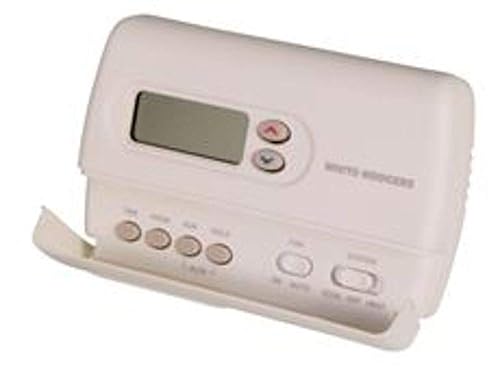
The Emerson 1F80-361 from the 80 Series sits in a comfortable middle ground: programmable, single-stage, and broadly compatible with gas, oil, and electric systems. The 5-1-1 day schedule pattern allows separate programs for weekdays, Saturday, and Sunday, which fits households where the weekend routine genuinely differs from the work week. Compared to the Honeywell TH2110DV1008, this one adds Saturday and Sunday as independent days, which can matter for shift workers or families with variable weekends.
The unit ships in a contractor bulk pack with a White-Rodgers factory anti-static bag, which suggests it’s positioned for pros but works just as well for careful DIYers. Compatibility with 24V and millivolt systems opens it up to older heating equipment that doesn’t carry a full 24-volt signal. Up to four periods per day give plenty of granularity for early-morning, daytime setback, evening, and overnight temperatures.
Everyday Wins
- 5-1-1 day scheduling allows a separate weekend program from weekdays
- Up to four daily periods let you fine-tune morning, day, evening, and night temperatures
- Works on 24V and millivolt systems, including many older gas and oil setups
- Single-stage design simplifies install on most residential forced-air systems
Where It May Fall Short
- Single-stage only, so multi-stage heating and cooling setups lose efficiency on mild days
- Manual lives on the listing rather than in the box, which is a small inconvenience at install time
Feature Snapshot
Who Should Grab It
Homeowners with a single-stage gas, oil, or electric system who want a flexible 5-1-1 schedule and broad voltage compatibility.
A Better Fit Elsewhere
Pick the White-Rodgers 1F78-151 instead when a classic 5-2 day program is plenty and you’d prefer a simpler interface.
The Honeywell TH3210D1004 from the PRO 3000 line is a digital non-programmable thermostat with a backlit display that shows both the current ambient temperature and the setpoint at the same time. It supports 2 heating stages and 1 cooling stage (2H/1C), which opens it up to many common residential setups without crossing into full multi-stage territory. The face is more modern than the PRO 1000 dial, but the operating philosophy stays the same: set it and walk away.
Comfort control precision is rated to about plus or minus 1 degree Fahrenheit, which sounds technical but really means fewer swings between “a bit chilly” and “too warm” through the day. Owners who want tighter temperature consistency without programming schedules tend to find this is a meaningful step up from a basic mechanical thermostat. It’s a sensible middle ground for someone upgrading from an old mercury switch unit who isn’t ready for a learning thermostat.
What Stands Out
- Backlit display shows current and setpoint temperature simultaneously, which is handy at a glance
- 2H/1C support covers most residential heat/cool systems with multi-stage heating
- Plus or minus 1 degree precision keeps room temperature more consistent than typical mechanical units
- No programming means a low learning curve for anyone in the household
Practical Considerations
- Lacks any weekly schedule, so savings depend on manual adjustment
- Requires batteries for the display, which owners commonly need to replace every year or so
Whose Shelf It Belongs On
Homeowners with a 2H/1C conventional system who want accurate digital control without weekly programming or app connectivity.
Where A Sibling Pick Shines
Choose the Honeywell TH2110DV1008 PRO 2000 when a 5-2 day schedule is worth having to automate weekday and weekend comfort.
The White-Rodgers 1F78-151 is the kind of thermostat that has been on contractor trucks for years, and for good reason. The 70 Series Classic pairs a backlit digital display with a 5-2 day programmable schedule, which gives one program for weekdays and another for the weekend without overcomplicating the interface. Compared to the more flexible Emerson 1F80-361, this one treats Saturday and Sunday as a single block, which is usually fine but doesn’t fit every household.
It works on most single-stage systems, including 24-volt and millivolt equipment, so it slots into many older gas, oil, or electric installations without rewiring. The display is easy to read at a distance, and the buttons are laid out simply enough that guests and family members can adjust the temperature without a learning curve. For a basic replacement that still earns its keep with a weekly schedule, this is a quietly capable unit.
Advantages To Know
- 5-2 day programming handles the common weekday plus weekend pattern cleanly
- Compatible with 24V and millivolt systems, including older millivolt gas setups
- Backlit display improves nighttime readability in bedrooms and hallways
- Single-stage focus keeps operation simple for most central HVAC systems
Worth Bearing In Mind
- Not compatible with electric baseboard heat, so the Cadet BTF2W or similar is needed in those rooms
- Saturday and Sunday share one program, which can feel limiting for shift workers
Who It Suits Best
Homeowners with a single-stage 24V or millivolt system who want a simple programmable thermostat without smart features or app clutter.
Swap It Out When
Pick the Emerson 1F80-361 instead when you need a separate Saturday program from Sunday and want up to four daily periods.
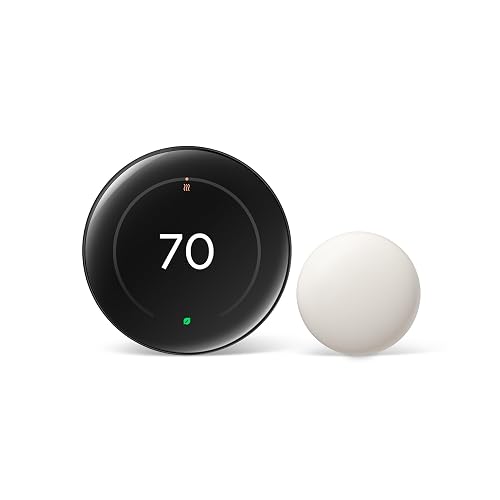
The Google Nest Learning Thermostat (4th gen) is the most connected pick on this list, and the Obsidian finish gives it a darker, more architectural look on the wall. The 4th generation brings a brighter display and Google’s most advanced learning logic, which builds a schedule around the temperatures you actually set rather than forcing you to program one upfront. It comes bundled with a 2nd generation Nest Temperature Sensor, useful for monitoring a specific room, like a nursery or a bonus room above the garage, that runs hot or cold relative to the rest of the house.
For homeowners with stable Wi-Fi, a compatible HVAC system, and a willingness to interact with an app, the value proposition is comfort that adjusts itself. Compared to every traditional unit earlier in this list, the Nest adds remote control, energy history, and integration with broader smart home platforms. The trade-off is a C-wire (common wire) requirement on many systems, so older homes may need a small wiring update before installation.
Points In Its Favor
- Learning algorithm builds a schedule from your manual adjustments over the first week or two
- Included 2nd gen Nest Temperature Sensor helps balance hot and cold spots in specific rooms
- Brighter 4th gen display improves readability from across a room or hallway
- Obsidian finish offers a darker, modern look that pairs well with contemporary interiors
What To Weigh
- Many systems require a C-wire, and older homes may need a power adapter or rewiring
- Smart features depend on a stable Wi-Fi connection, which is a non-issue for most households but worth noting
Quick Facts
Built With In Mind
Connected homeowners with a compatible HVAC system, stable Wi-Fi, and a C-wire ready to go who want a thermostat that learns the routine.
Not Your Match When
Pick the Honeywell TH2110DV1008 PRO 2000 instead when the home lacks a C-wire and you’d rather not touch the HVAC wiring.
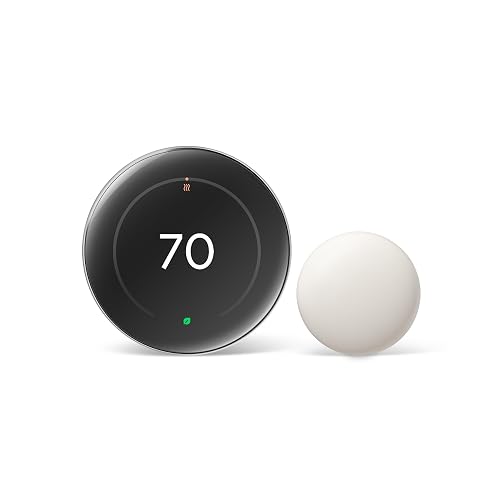
The Silver version of the Google Nest Learning Thermostat (4th gen) is functionally identical to the Obsidian model that came just before it, with the same 4th-generation display, learning logic, and bundled 2nd gen Nest Temperature Sensor. The only real difference is finish, and Silver is the safer choice for rooms with light-colored walls, white trim, or a brighter Scandinavian or coastal palette. It’s the same smart thermostat wearing a different coat.
For shoppers who like everything about the 4th gen Nest but prefer a lighter look on the wall, this is the cleaner option. Functionally, the learning behavior, app control, and energy history match the Obsidian unit, so the decision is really about aesthetics and how the thermostat reads against the surrounding wall color. In a hallway painted in soft gray or warm white, the Silver finish tends to disappear into the wall rather than become a focal point.
What Makes Sense
- Silver finish suits light-colored walls and traditional or modern interiors
- Bundled 2nd gen Nest Temperature Sensor balances hot and cold rooms without extra equipment
- Learning schedule builds itself from your manual adjustments over the first week or so
- 4th gen display delivers clear, bright feedback from across a room
Less Ideal Details
- Same C-wire requirement as the Obsidian, so older homes may need a wiring update
- Functionally similar to the Obsidian, so the premium is essentially the finish
Who Will Love This
Homeowners who want a learning smart thermostat but prefer a Silver finish that blends into a lighter wall palette.
Where Another Pick Suits Better
Choose the Honeywell TH3210D1004 instead for a non-programmable digital option that runs on a 2H/1C system without Wi-Fi.
What To Know Before Choosing Your Next Thermostat
Picking the right hvac thermostat starts with your system, not the feature list. A heat-only single-stage furnace needs a different control than a multi-stage heat pump, and a 240V electric baseboard needs a thermostat rated for that voltage. Before anything else, confirm whether the system is single-stage or multi-stage, whether it runs on 24V AC or millivolt, and whether it includes a common wire for smart units.
Programmable vs non-programmable comes down to how predictable your week is. Households with a regular 9-to-5 routine usually see real savings from a 5-2 day schedule, while folks with rotating shifts often get more value from a non-programmable unit that lets them tweak on the fly. Smart thermostats like the Google Nest 4th gen work best when the home has reliable Wi-Fi and a C-wire, otherwise a quality programmable like the Honeywell PRO 2000 is usually enough.
Compatibility and installation deserve a careful look. The Cadet BTF2W only works with Cadet F series baseboards, the White-Rodgers 1F78-151 isn’t compatible with electric baseboard heat, and the AIRXCEL 8330-3862 is designed for RV 12V systems rather than residential 24V. Matching the thermostat to the system avoids return trips and wiring surprises.
Comfort precision and display readability are small details that add up over years of daily use. A backlit display that shows both ambient and setpoint temperature, like the Honeywell TH3210D1004 or the White-Rodgers 1F78-151, makes midnight adjustments painless. For homes with stubborn hot or cold rooms, the Nest Temperature Sensor bundled with the 4th gen Nest lets the system respond to conditions in a specific space, not just the hallway.
Things Worth Watching Before You Buy
Pitfalls Shoppers Hit
The most common mistake is buying a thermostat before checking the system voltage and stage count. A 240V baseboard needs a thermostat rated for that load, and a multi-stage heat pump needs a control that understands auxiliary heat. The other trap is overlooking the C-wire: many smart thermostats require continuous power, and older homes without one may need a power adapter or a small wiring job.
Where The Extra Money Goes
Higher-tier models like the Google Nest 4th gen add learning schedules, app control, and remote sensors that balance room-by-room comfort. The premium covers the display quality, the smarter algorithms, and the bundled temperature sensor that flags a hot upstairs bedroom. For homeowners with stable Wi-Fi and a compatible system, the upgrade pays off in comfort, while for a basic single-stage setup, a solid programmable like the Honeywell PRO 2000 or White-Rodgers 1F78-151 usually delivers most of the benefit at a much lower cost.
Frequently Asked Questions
Do I need a C-wire for a smart thermostat?
Most smart thermostats, including the Google Nest 4th gen, need a C-wire (common wire) to deliver continuous power. Homes built in the last 15 to 20 years often have one at the wall, but older homes may need a power adapter or a small wiring update before installation.
Can one thermostat control both heating and cooling?
Yes, dual fuel and heat/cool thermostats like the Honeywell TH2110DV1008 PRO 2000, the Emerson 1F80-361, and the Honeywell TH3210D1004 all support both functions. The key is matching the thermostat’s stage count to the system’s actual stages, otherwise the system will run less efficiently.
Are programmable thermostats still worth it without smart features?
For most households, yes. A simple 5-2 day programmable unit like the White-Rodgers 1F78-151 can capture most of the savings a smart thermostat delivers, since the heavy lifting comes from running a setback schedule rather than from app control. Smart features add remote access and learning, not the core energy savings.
Will any of these work with electric baseboard heaters?
Only thermostats rated for line voltage, like the Cadet BTF2W, are appropriate for 120V or 240V electric baseboards. Standard 24V wall thermostats such as the Honeywell PRO 1000, PRO 2000, and the White-Rodgers 1F78-151 are not designed for direct baseboard use and can be a safety hazard on those circuits.
How hard is it to install a new thermostat myself?
Swapping a like-for-like 24V thermostat is often a 20 to 30 minute job with a screwdriver and a phone photo of the old wiring. Moving to a smart thermostat is similar, but adds a C-wire check and a short app setup. Line-voltage baseboard thermostats like the Cadet BTF2W involve working inside the heater itself, which is more involved and may be worth handing to a licensed electrician if the breaker panel feels intimidating.
Closing Remarks
The right thermostat quietly fades into the background and just makes the home feel right. For a basic single-stage heat system, the Honeywell TH1100DV1000 PRO 1000 keeps things simple. For a central heat/cool system with a weekly routine, the Honeywell TH2110DV1008 PRO 2000 or the White-Rodgers 1F78-151 offers real savings without app clutter. For connected homes ready to lean into learning and remote sensors, the Google Nest 4th gen in Obsidian or Silver ties comfort to your actual routine. Match the thermostat to the system, decide how much scheduling you really want, and the rest tends to take care of itself.