

The right thermostat does more than set temperature; it shapes how a home feels hour by hour. Whether you’re swapping out a wall plate to clean up a DIY install, dialing in a 5+1+1 weekly schedule, or splitting comfort across a multi-level house, the choices below cover very different jobs. The lineup stretches from a simple Nest wall trim plate to a commercial-grade platinum thermostat, a water-heater replacement, an attic fan control, and a floor-heat thermostat, so you can match the device to the system you actually own.
A Snapshot Of The Selections
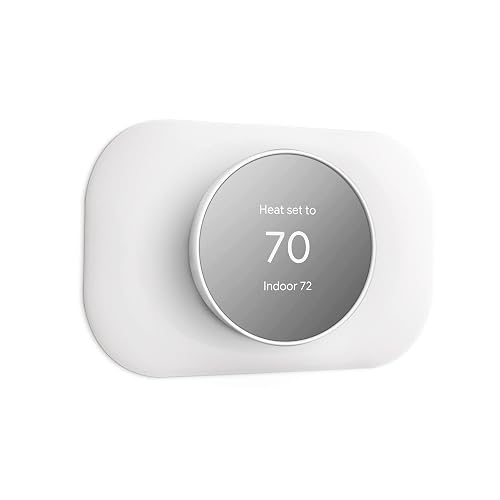
Petrichor Nest Thermostat Wall Plate (Snow)
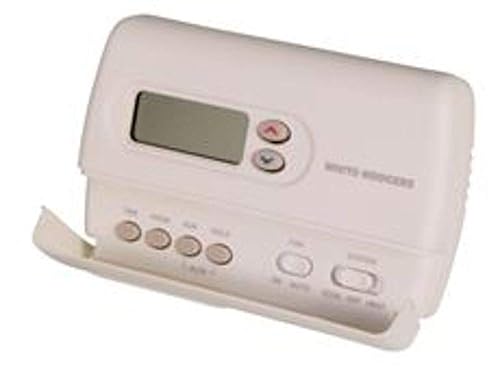
White-Rodgers 1F80-361 Emerson 80 Series Thermostat
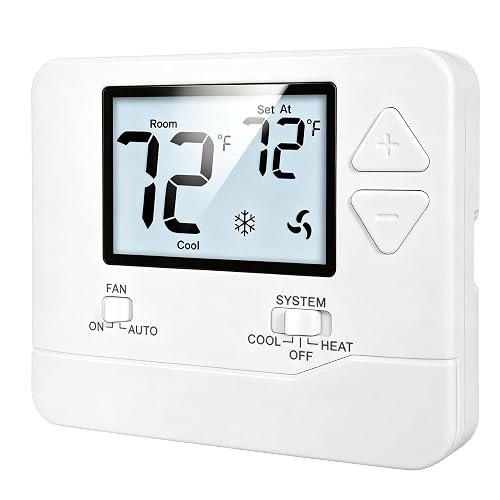
Heagstat Non-Programmable Thermostat 1H/1C
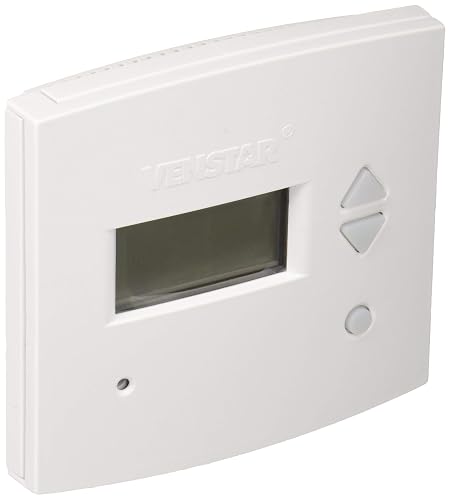
Venstar T2800 Commercial Platinum Slimline Thermostat
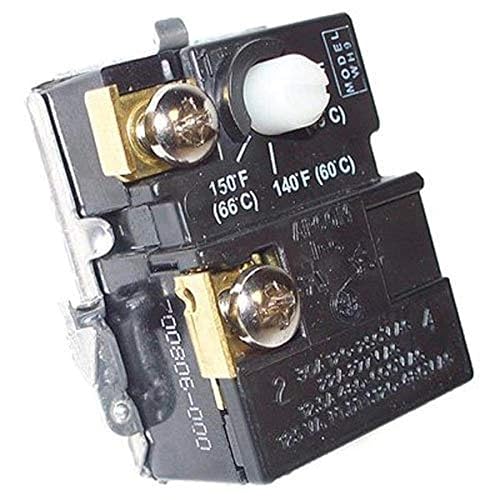
Reliance 9000507-045 Lower Electric Thermostat

Google Nest Temperature Sensor 3-Pack

Zero KST203 Upper Water Heater Thermostat

Ventamatic XXFIRESTAT Adjustable Thermostat
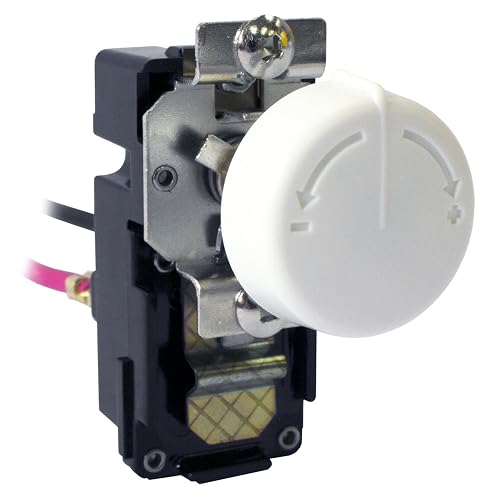
King Electric TKIT-1BW Single-Pole Thermostat Kit

OJ Microline UTN4 Radiant Floor Heat Thermostat
The Picks, Examined More Closely
Swapping an old thermostat for a 2020 Nest usually exposes paint gaps, drywall patches, or the ghost outline of a previous, larger base. The Petrichor wall plate solves the cosmetic side of that swap by sitting flush against the wall and covering the scars behind it, so you skip the spackle-and-paint detour.
It targets only the 2020 Nest Thermostat (model numbers GA01334-US, GA02082-US, GA02081-US, GA02083-US), so anyone with an older Nest Learning or third-party stat will need to keep looking. The Snow finish blends with most trim, and the fingerprint-resistant surface keeps the install looking tidy weeks after you mount it.
Notable Upsides
- Covers the holes and paint rings left by older thermostats
- Snaps behind the Nest base for a flush look against drywall
- Fingerprint-resistant finish holds up to daily handling
- Sized specifically for the 2020 Nest footprint, no trimming
Things To Consider
- Will not fit the older Nest Learning Thermostat or the Thermostat E
- Color matching is limited to the Snow finish, no other shades listed
Whose Wall It Belongs On
Anyone upgrading to the 2020 Nest and trying to avoid repainting a patchwork of old screw holes.
Look Elsewhere When
Skip it if you own an older Nest, where the Heagstat or White-Rodgers 1F80-361 will fit a wider range of older bases instead.
The Emerson 80 Series 1F80-361 is a no-frills wall thermostat that does one job well: running a 5+1+1 schedule on a single-stage heating and cooling system. The manual walks you through programming on the unit itself, which feels old-school compared to a smartphone app but stays reliable even when the Wi-Fi router drops.
It supports 24-volt and millivolt (a low-voltage signal used by some gas fireplaces and older furnaces) systems, and works with gas, oil, or electric setups, which is wider than most DIY shoppers expect at this level. Owners tend to appreciate the simplicity, though a few note the learning curve is real the first time you program four daily periods.
The Good Stuff
- 5+1+1 scheduling with up to four daily periods for tailored comfort
- Compatible with 24V and millivolt systems for older furnaces
- Program runs on the unit, no internet or phone needed
- Backed by White-Rodgers factory packaging and contractor-grade build
Points To Keep In Mind
- Single-stage only; will not drive a two-stage furnace or heat pump
- No app control, scheduling has to happen at the wall
Key Product Details
Who Will Love This
Homeowners with a single-stage furnace who want a set-and-forget weekly schedule without any smart-home fuss.
A Better Fit Elsewhere
Anyone running a multi-stage system should jump to the Venstar T2800, which handles 3 heat and 2 cool stages.
Not every home needs seven-day scheduling. The Heagstat is a manual thermostat built for the basic 1H/1C (one heat stage, one cool stage) forced-air system, with a backlit display that stays readable in a dim hallway at night.
It strictly supports 24VAC conventional systems with two to five wires, which covers most older single-stage furnaces paired with a separate AC condenser. Compared to the 1F80-361 reviewed above, you give up the weekly program, but you also skip the learning curve entirely. Set the temperature, walk away, done.
Useful Strengths
- Simple up-and-down temperature control with no menus to learn
- Backlit display improves nighttime readability
- Works with gas, oil, and electric forced-air systems
Trade Offs
- Will not accept six-to-eight wire systems, including most heat pumps
- No scheduling means manual setback every time you leave the house
Best Suited To
Older homes with a basic 24V single-stage furnace and someone who just wants to turn the dial.
Where Another Pick Suits Better
Anyone wanting a weekly schedule should move up to the White-Rodgers 1F80-361, which keeps the same simple install but adds 5+1+1 programming.
The Venstar T2800 sits in a different weight class. It’s a commercial-grade slimline thermostat with a backlit color display, configurable outputs, and support for 3 heat and 2 cool stages, which makes it a strong fit for heat pumps and zoned commercial rooftops rather than a simple bungalow system.
Seven-day programming with a smart-fan mode gives contractors a lot to configure, and the LED glows green or red to show whether the system is currently cooling or heating. Compared to the White-Rodgers 1F80-361, this is genuinely a step up in capability, though for many homes it may be more thermostat than you need.
Everyday Perks
- 7-day schedule with smart-fan logic for better air circulation
- 3 heat / 2 cool stage control handles multi-stage equipment
- Color-coded backlit keys with large, easy-read display
- Filter and UV service reminders help with maintenance
Worth Noting
- Setup depth can overwhelm homeowners with a basic single-stage furnace
- Wider feature set raises the install learning curve
Feature Snapshot
Right Fit For
Property managers and homeowners with multi-stage heat pumps who want commercial-grade control on the wall.
Skip It When
A single-stage system will run fine on the White-Rodgers 1F80-361, and you’ll spend less time wrestling with configuration menus.
The Reliance 9000507-045 is not a wall thermostat for the living room. It’s a replacement lower thermostat for an electric water heater, designed to clip into the lower element bracket of a dual-element tank.
Water-heater thermostats sit in a different category entirely, so don’t try to cross-shop this with the Heagstat or Venstar above. For homeowners with a cold-water complaint traced to a failed lower element, this is the part that actually restores hot showers without replacing the whole tank.
Advantages To Know
- Direct replacement for the lower thermostat on standard electric tanks
- Pairs with a matching upper thermostat for full-element control
- Simple two-wire design speeds up a DIY swap
Honest Caveats
- Requires shutting off power at the breaker before servicing
- Only fits the lower bracket; the upper element needs its own matching part
Whose Job This Solves
Anyone troubleshooting lukewarm water on an electric tank where the lower element thermostat has failed.
Where A Sibling Pick Shines
Tankless or gas-heater owners will find no use here, and should look at the Zero KST203 if their electric tank uses a different style of stat.
Many homes have one room that runs hot while another stays cold, and a single thermostat on the wall can’t fix that by itself. The Google Nest Temperature Sensor 3-Pack extends a compatible Nest thermostat’s reach by reporting the temperature from up to 50 feet away using low-energy Bluetooth.
You place sensors in different rooms, and the thermostat prioritizes the one you tell it to, which is genuinely useful for a nursery, a home office, or a basement bonus room. The catch is that the sensors don’t work without an existing Nest Learning Thermostat or Nest Thermostat E, so they’re an add-on, not a standalone upgrade.
Positive Takeaways
- Three sensors cover a typical home’s hot and cold zones
- Communicates up to 50 feet via low-energy Bluetooth
- Lets the thermostat weight one room at a time, ideal for sleeping kids
Some Limits To Know
- Requires a compatible Nest Learning or Thermostat E to function
- No display on the sensor itself, so you read the room temp in the app
Quick Facts
Who Should Grab It
Existing Nest owners fighting room-to-room temperature swings, especially parents wanting a stable nursery temp overnight.
Not Your Match When
Shoppers without a Nest thermostat should pivot to the Heagstat or White-Rodgers 1F80-361, since the sensors need a Nest hub.
The Zero KST203 is an upper-element water heater thermostat rated for 120/240 VAC in dual-element tanks, with a UL listing and a built-in safety switch that cuts heat if the element runs too hot. It’s a genuine appliance part, so think of it as the upper sibling to the Reliance 9000507-045 covered above.
The cross-reference codes 59T SPDT and 66T help match it to common AO Smith, Rheem, and similar residential tanks. For anyone comfortable working a screwdriver, swapping a faulty upper thermostat can restore full hot-water capacity in under an hour.
Real-World Strengths
- Works in 120V and 240V dual-element tanks, broad compatibility
- Built-in high-limit safety switch protects against overheating
- Energy-saving range setting lets you fine-tune water temperature
Practical Considerations
- Only fits the upper bracket, you may want to replace both at once
- Working around a 240V circuit requires the breaker off and a voltage check
Who This Is For
DIY homeowners with a dual-element electric water heater troubleshooting lukewarm or scalding water on the upper element.
Consider Something Else When
Single-element tank owners should grab the Reliance 9000507-045 lower stat instead, since this model is designed for the upper bracket.
Power attic ventilators are easy to forget until the summer heat starts baking the upstairs. The Ventamatic XXFIRESTAT is a 10-amp replacement thermostat purpose-built to control those fans, with an adjustable bi-metallic switch you can tune with a flathead screwdriver.
The Firestat feature cuts the fan at 183°F, which protects the motor if the attic temperature spikes past safe limits. Compared to the wall thermostats reviewed earlier, this one is genuinely specialized, and most general households have no need for it at all.
A Favorable Mix
- Built-in Firestat cut-off at 183°F protects the fan motor
- Adjustable range from 50°F to 120°F for seasonal tuning
- 10-amp capacity controls up to three attic ventilator units
Factors To Consider
- Only useful with a power attic ventilator, not a standard wall stat
- Adjustment is screwdriver-based, not digital, so precision is limited
Feature Rundown
Built With In Mind
Homeowners with an existing power attic ventilator whose original control stat has failed or drifted out of calibration.
Reach For A Different Pick When
Anyone needing a living-area wall thermostat should skip this and look at the Heagstat or the Venstar T2800 for climate control instead.
The King Electric TKIT-1BW is a built-in thermostat kit designed to slide into the back of King PAW and W series wall heaters, replacing a snapped or worn dial. It’s a single-pole, single-throw design, so the heater only cycles on the temperature drop, not at both ends of the swing.
You set the operating range between 48°F and 80°F using a fully protected bi-metal sensor, which is the right ballpark for a basement workshop or a bonus-room addition. This is an internal heater component, not a stand-alone wall stat, so it pairs with the King heater it was designed for and won’t fit other brands.
Bright Spots
- Snap-action design snaps on cleanly at the set temperature
- 48°F to 80°F range covers workshop and bedroom comfort
- Direct fit for King PAW and W series wall heaters
Trade-Offs To Consider
- Single-pole design means the heater always has voltage to ground
- Only fits King PAW and W heaters, no cross-brand support
Made For
Owners of a King PAW or W wall heater with a dead or unreliable built-in thermostat dial.
Swap It Out When
Anyone running a central HVAC system should pick the White-Rodgers 1F80-361 or the Venstar T2800 instead, since this kit only serves electric wall heaters.
The OJ Microline UTN4 is built for a job most wall thermostats can’t touch: controlling an electric radiant floor heating system. It carries a built-in Class A GFCI, which is the ground-fault protection required for any underfloor heating circuit, and it supports 120V or 240V installations.
Dual sensing reads both the floor probe and the ambient air, which keeps tile and laminate surfaces from overshooting. It’s non-programmable, so you set a temperature and walk away, which is often all a bathroom or kitchen floor actually needs.
What Helps Most
- Built-in Class A GFCI meets code for underfloor heating
- Dual sensors monitor floor and air temperature together
- Works with tile, stone, laminate, and engineered wood
Possible Compromises
- No scheduling, so a consistent floor temperature is the only option
- Specialty install, not a drop-in replacement for a wall stat
Perfect Match For
Homeowners finishing a bathroom or kitchen remodel with electric radiant heat under tile or stone.
Not Your Match When
Central-air households will get more value from the Heagstat or the White-Rodgers 1F80-361, which control living-area climate instead.
Matching Your System To The Right Thermostat
The single biggest decision is what kind of system you actually have. A 24V single-stage furnace pairs naturally with the Heagstat or the White-Rodgers 1F80-361, while a multi-stage heat pump benefits from the Venstar T2800’s 3 heat and 2 cool support. Match the voltage, the stage count, and the wire count before anything else, since “compatible” means very different things across this list.
Water heaters, attic fans, and floor heating circuits are their own world, and the Reliance, Zero, Ventamatic, King, and OJ Microline picks are essentially appliance parts rather than living-area stats. Keep that distinction clear, since the wiring and safety requirements don’t overlap with central HVAC at all.
If you already own a Nest thermostat and want finer room-by-room control, the Google Nest Temperature Sensor 3-Pack extends what your wall unit can do. The Petrichor wall plate, by contrast, is purely cosmetic; it sits behind a 2020 Nest and hides old paint scars, but it doesn’t add any control features on its own.
Smart features like weekly scheduling, app control, and learning algorithms are nice to have, but they only earn their keep when the rest of the system supports them. A weekly program on a basic 1H/1C furnace still saves real money; the same program on a multi-stage system only helps if the thermostat can talk to all those stages.
Common Slip-Ups And Worth-It Upgrades
Mistakes Worth Dodging
Picking a thermostat before counting your wires is the most common regret. Open the existing stat, count the labels, and match that count against the new model’s supported range, since mismatched wiring is the leading cause of “doesn’t turn on” complaints on install day. Another trap is choosing a 7-day programmable stat for a system that can’t act on those stages, which just gives you a more confusing interface without any comfort gain.
When Paying More Pays Off
A higher-tier thermostat earns its keep when your system actually has more stages, zones, or sensors to manage. The Venstar T2800 justifies its complexity on a 3H/2C heat pump, and the OJ Microline UTN4 earns its price on a bathroom floor where ground-fault protection is required anyway. For a basic single-stage system, a 5+1+1 weekly program on the White-Rodgers 1F80-361 is genuinely enough.
Frequently Asked Questions
What does “single stage” mean on a thermostat?
A single-stage system has just one heating and one cooling output, so the thermostat only signals on or off. Multi-stage systems like the Venstar T2800’s 3H/2C support can throttle output in steps for tighter temperature control.
Can a non-programmable thermostat save energy?
Yes, but only if you remember to set the temperature back manually before leaving. A weekly program automates that setback, which is why a programmable unit like the White-Rodgers 1F80-361 often pays for itself in comfort and runtime over a year.
Do I need a C-wire for these thermostats?
Most 24V thermostats expect a common wire for continuous power, and the White-Rodgers 1F80-361 and Heagstat both fall into that group. Older 2-wire heating-only systems may not provide one, so check your existing wire count before ordering.
What is a Class A GFCI on a floor-heat thermostat?
A Class A GFCI is the highest-sensitivity ground-fault protection, required by code for any underfloor heating circuit. The OJ Microline UTN4 includes it built in, which simplifies install compared to adding an external protection device.
Are these thermostats interchangeable between systems?
No, the wall thermostats, water-heater stats, attic fan stat, and floor-heat stat each serve a different system. Cross-wiring them can damage equipment, so always match the part to the appliance it was designed for.
Wrap Up
The best thermostat is the one that matches the system behind your wall, the wires in the back box, and the schedule you actually keep. A simple dial like the Heagstat suits a small apartment, a 5+1+1 weekly program like the White-Rodgers 1F80-361 fits most family homes, and a commercial-grade stat like the Venstar T2800 belongs with multi-stage equipment. For everything from hot water to attic fans to radiant tile floors, the appliance-specific parts on this list do the job their central-HVAC cousins simply can’t. Pick by system first, and the rest of the decision tends to fall into place.