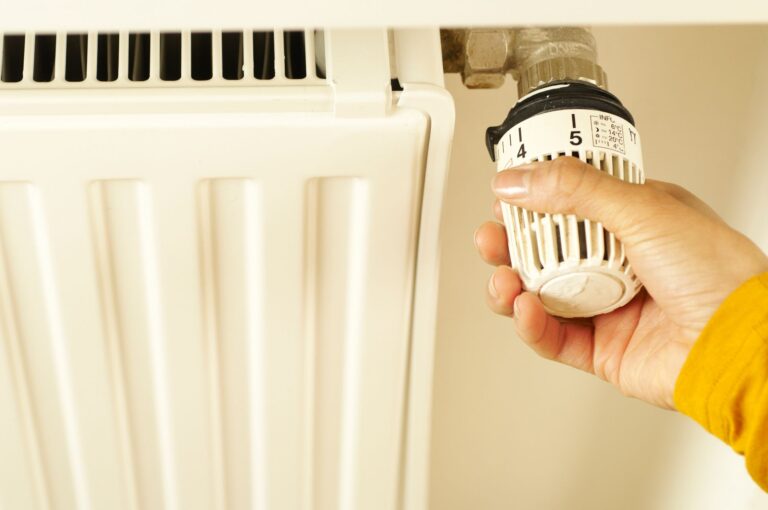

Swapping out a wall thermostat is one of those small home upgrades that punches above its weight. The right model can steady your comfort, cut wasted run-time, and make daily temperature tweaks feel effortless rather than annoying. This list rounds up ten wall-mounted options, from no-frills single-stage units to a touchscreen smart model, so you can match the thermostat to your system and habits.
A Snapshot Of The Selections
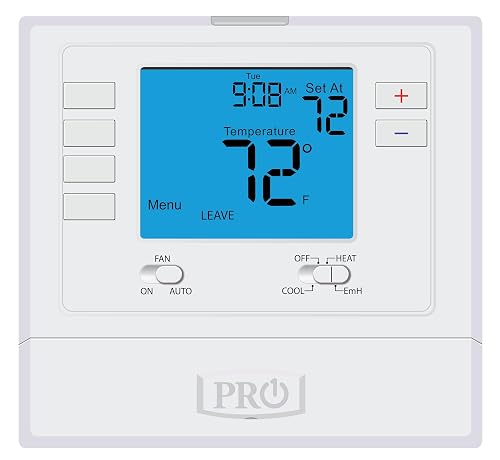
PRO1 T725 Heat Pump/Conventional Programmable Wall Thermostat

PRO1 T771 Single Stage Non-Programmable Wall Thermostat
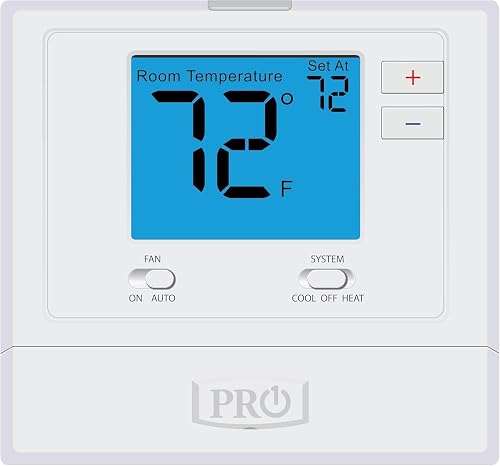
PRO1 T701 Single Stage Non-Programmable Wall Thermostat

PRO1 T715 Multi-Stage Programmable Gas Thermostat
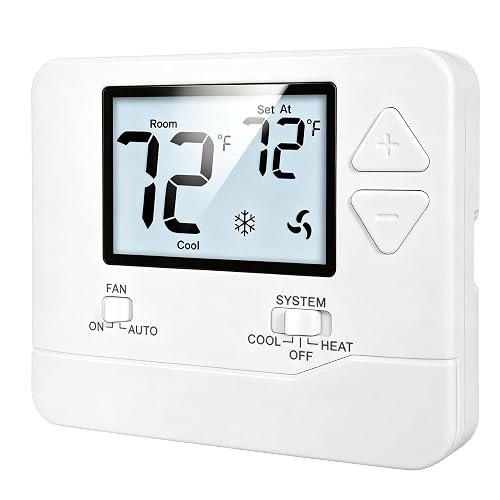
Heagstat Non-Programmable Thermostat 1H/1C White Backlight
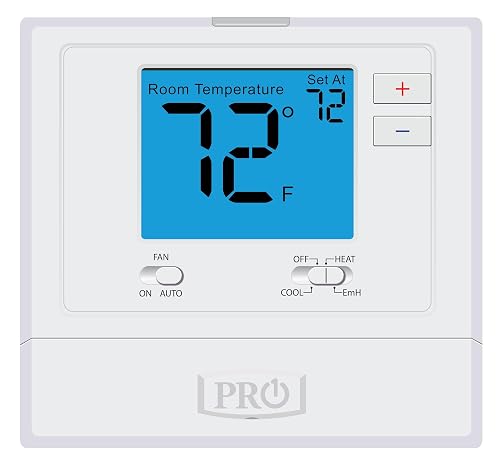
PRO1 T721 Non-Programmable Heat Pump/Conventional Thermostat
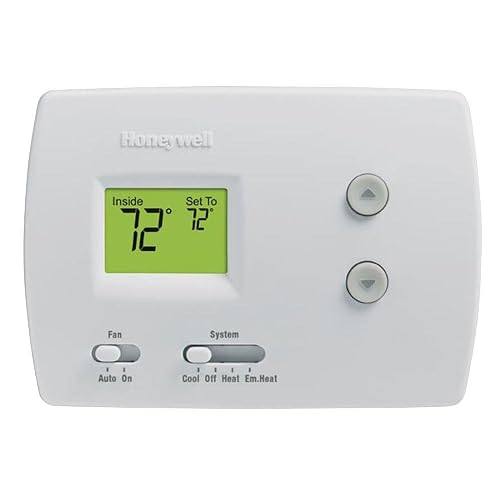
Honeywell RTH3100C1002/E1 Digital Heat Pump Thermostat

Honeywell TH3210D1004 Pro 3000 Non-Programmable Thermostat
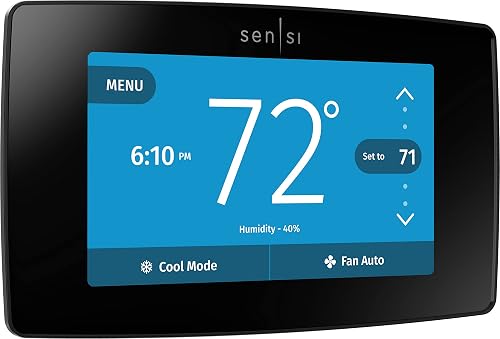
Sensi Touch ST75 Smart Thermostat (Black)

PRO1 T805 Programmable Conventional Wall Thermostat
The Picks, Examined More Closely
The PRO1 T725 sits in a useful middle ground. It handles 2 heat/1 cool heat pump systems plus 1 heat/1 cool conventional setups, so swapping between a heat pump home and a furnace-only house stays straightforward. The 4-square-inch blue backlit screen reads cleanly from across a hallway, which matters more than spec sheets suggest during those half-asleep nighttime adjustments.
Schedules drive a lot of a thermostat’s daily value, and this one offers 7-day or 5/1/1 programming, where 5/1/1 means five weekdays plus separate Saturday and Sunday blocks. That’s enough flexibility for shift workers, school runs, and weekend sleep-ins alike. Compared with the simpler PRO1 T701 below, the T725 trades away zero clutter for genuine schedule depth.
The Practical Payoff
- Works with both heat pump and conventional HVAC, so you may not need to swap it if the system changes
- 7-day and 5/1/1 schedules handle mixed weekly routines without manual daily tweaks
- Glow-in-the-dark light button helps in dark hallways during power blips
- Blue backlit 4 sq. in. screen stays readable for older eyes
Worth Noting
- Programming takes a careful read of the manual, and first-timers report a slow setup
- Wiring must match a 2 heat/1 cool heat pump layout; mismatched wires are a common install snag
Quick Facts
Made For
Heat pump households that want weekly scheduling and a clear, easy-to-read display.
Where Another Pick Suits Better
For a no-schedule heat pump-only install, the Honeywell RTH3100C1002/E1 keeps the interface simpler and the price lower.
The T771 leans into a job most thermostats ignore: cold spaces. A wide setpoint range from 25°F to 90°F means you can dial a detached garage or workshop down well past what a normal living-room stat allows. That range comes in handy for uninsulated outbuildings, server closets, or anywhere you want frost protection without cooking the room.
Because it’s non-programmable, the controls stay minimal. Swing adjustment (the gap between when heat kicks on and when it stops) and calibration are tucked behind the faceplate, so casual users can’t accidentally wander into them. Versus the T701 covered below, the T771 trades household refinement for that wider operating range.
A Favorable Mix
- Low-temperature setpoint covers garages, sheds, and specialty rooms where most stats cap out
- Non-programmable layout keeps the surface controls intentionally simple
- Backlit display remains readable in low-light utility spaces
- Swing and calibration adjustments sit behind the cover for fewer accidental changes
Honest Caveats
- Limited to single-stage 1H/1C conventional systems, so heat pump homes should look elsewhere
- No scheduling means you set and forget the temperature by hand
Right Fit For
Workshop, garage, or shed owners who need a thermostat that can safely drop well below normal living-room setpoints.
Swap It Out When
For a primary living space with a single-stage conventional system and no need for sub-50°F setpoints, the PRO1 T701 is a more everyday fit.
Some homes don’t want a learning curve, and the PRO1 T701 owns that lane. It targets straightforward 1 heat/1 cool conventional systems, the kind most older houses still run, and the larger 4-square-inch blue backlit screen gives the temperature plenty of visual weight on the wall. The glow-in-the-dark light button is a small touch that pays off in hallways at night.
Setup stays limited on purpose. There’s no schedule to build and no app to pair. That keeps the stat approachable for renters, parents of older relatives, or anyone replacing a unit that finally gave up. Compared with the T771 above, the T701 trades the wider setpoint range for a more living-room-friendly feel.
Strengths Worth Knowing
- Plain-language controls mean there’s nothing to program or remember
- 4 sq. in. backlit display is comfortable to read from the couch
- Glow-in-the-dark light button helps during nighttime adjustments
- Compact faceplate fits common decorator-style wall openings
Points To Note
- Limited to single-stage 1H/1C conventional systems only
- No scheduling means temperature control depends on manual adjustments
At A Glance
Whose Shelf It Belongs On
Homeowners with a basic 1H/1C conventional system who want a no-fuss wall thermostat that just shows the temperature.
Look Elsewhere When
You want weekly scheduling on a similar 1H/1C conventional setup, in which case the PRO1 T805 adds 7-day programmability to the same simple form factor.
The PRO1 T715 targets systems with more going on behind the wall. A 2 heat/2 cool gas layout means two-stage heating and cooling, so the furnace and AC can ramp up gradually instead of blasting at full speed. That kind of staging shows up as steadier temperatures and quieter equipment, especially in larger homes with zoned supply runs.
Scheduling here is generous: 7-day, 5/1/1, or fully non-programmable, all from the same unit. The same 4-square-inch backlit screen carries over from the T701 and T725, so you’re not learning a brand-new interface. For households that actually want to use schedules, the T715 makes the most of the platform’s flexibility.
The Good Stuff
- Two-stage heating and cooling control keeps temperatures steadier and the equipment quieter
- 7-day, 5/1/1, or non-programmable modes in a single unit
- Battery or hardwire power options simplify retrofits
- Backlit display and glow-in-the-dark light button handle dim hallways
Trade Offs
- More configuration steps during setup, so plan extra time
- Overkill for single-stage homes, where the PRO1 T701 is a better match
Feature Snapshot
Best Suited To
Homeowners with a two-stage gas furnace and central AC who want scheduling and quieter staging under the same roof.
Reach For A Different Pick When
Your system is a heat pump rather than a gas furnace, in which case the PRO1 T725 is a closer match for the equipment type.
The Heagstat enters as the list’s no-muss option. It runs on 24VAC and handles a single-stage 1 heat/1 cool conventional forced-air system, the kind with a gas, oil, or electric furnace paired with an independent outdoor AC condenser. That covers a healthy slice of the U.S. housing stock, especially in homes built before multi-stage equipment took over.
The wiring requirement is the catch worth flagging. The base supports 2 to 5 wires comfortably, and connections with 6 to 8 wires are not a fit. In a newer home with a common wire already run for a smart thermostat, this stat will adapt. In an older home with a chunky bundle of legacy wires, you’ll want to confirm the count before ordering.
Everyday Advantages
- Lower entry cost for a conventional-system swap-in
- White backlight keeps the screen readable in dim rooms
- Non-programmable layout avoids the schedule setup learning curve
- 24VAC power means compatibility with most older furnace control boards
Things To Weigh
- Not compatible with heat pump systems or multi-stage equipment
- 6-8 wire installations are not supported, so verify existing wiring first
- Does NOT work with electric baseboard heat (120-240V)
Who Should Grab It
Renters and homeowners with a basic single-stage conventional furnace-and-AC setup who want a simple, affordable wall stat.
Consider Something Else When
You have a heat pump rather than a conventional furnace, in which case the PRO1 T721 is a more compatible non-programmable pick.
The T721 sits in a useful nook: it can run a 2 heat/1 cool heat pump OR a 1 heat/1 cool conventional system from the same stat. That dual-mode approach removes a guess from installs where the equipment type isn’t always obvious from the thermostat end, especially in homes that have been partially upgraded over the years.
Like the rest of the T700 family, it carries the 4-square-inch blue backlit display and glow-in-the-dark light button, so the visual language stays familiar. Power comes from either AA batteries or a hardwire connection, which makes the swap-in easier in junction boxes without a common wire. Compared with the T725, you give up the weekly scheduling in exchange for simpler daily use.
Notable Upsides
- Heat pump and conventional compatibility in one unit simplifies tricky retrofits
- AA battery or hardwire power options fit more wall boxes
- Glow-in-the-dark light button helps in dark hallways
- Backlit display matches the rest of the T700 line for consistent looks
Soft Spots
- No scheduling means temperature is set manually day to day
- Limited to 2H/1C heat pump or 1H/1C conventional configurations
Perfect Match For
Mixed-equipment homes where the thermostat needs to handle either a heat pump or a conventional system without reconfiguration.
Skip It When
You want weekly programming on a heat pump system, in which case the PRO1 T725 adds that schedule layer with similar compatibility.
The Honeywell RTH3100C1002/E1 narrows its focus on purpose: heat pump systems only, with auxiliary heat support. The backlit display pairs with a soft-touch button interface, which feels nicer than the clicky membrane pads on some older stats. Mercury-free construction also matters for anyone replacing a pre-2000 unit that may still contain mercury switches.
Because this is a heat-pump-only stat, it’s a poor match for a gas furnace household. The trade-off is precision where it does fit. If your home is a pure heat pump install with no gas backup and no multi-stage equipment, the controls stay simple and the readings stay consistent. The Honeywell TH3210D1004 below covers the conventional-system path with similar simplicity.
Where It Helps
- Dedicated heat pump control with auxiliary heat support
- Soft-touch button interface feels more responsive than older membrane pads
- Mercury-free construction suits replacement of older thermostats
- Backlit display stays readable in dim hallways
Points To Keep In Mind
- Does NOT work with electric baseboard heat (120-240V) or heat pumps with gas backup
- Not compatible with multi-stage heating or cooling systems
Technical Highlights
Who Will Love This
Owners of a dedicated heat pump system who want a non-programmable, soft-touch stat for the living space.
Not Your Match When
Your home runs a gas furnace rather than a heat pump, in which case the Honeywell TH3210D1004 Pro 3000 is a more compatible non-programmable stat.
The Pro 3000 TH3210D1004 is a long-running Honeywell stat that earned its reputation in light-commercial and prosumer settings. The 2H/1C layout (two stages of heating, one stage of cooling) handles many residential split systems comfortably, and the backlit digital display shows both current and set temperatures at the same time, so the up-vs-now comparison happens in a single glance.
Precise comfort control keeps the setpoint within roughly plus or minus 1°F, which sounds modest but matters in homes where a 2°F swing shows up as a noticeable temperature wave. For most rooms, that’s plenty accurate. Compared with the heat-pump-focused RTH3100C1002/E1 above, the Pro 3000 trades heat pump support for stronger conventional-system coverage.
The Value In It
- 2H/1C conventional coverage fits a wide range of residential systems
- Simultaneous display of current and set temperatures speeds up adjustments
- Precise comfort control to within roughly 1°F for steadier rooms
- Backlit display works in low lighting without flooding the wall
Honest Caveats
- Conventional-system focus means it is not a heat pump match
- Non-programmable, so scheduling needs another solution or manual changes
Who It Suits Best
Homeowners with a 2H/1C conventional furnace and AC who want a pro-grade non-programmable stat with precise temperature control.
A Better Fit Elsewhere
For weekly scheduling on a similar 2H/1C conventional system, the PRO1 T715 brings programmability to a comparable two-stage layout.
The Sensi Touch ST75 is the only smart pick on this list, and it shows. A full-color touchscreen takes the place of the dot-matrix displays on every other option, and Wi-Fi brings app control to your phone. For households that already live in the smartphone ecosystem, that means adjusting the temperature from the couch, the office, or anywhere with a signal.
Data privacy is a real talking point here, since the stat collects usage patterns to support scheduling features. Emerson positions the platform around keeping that data controlled on the user side rather than resold, which matters if your thermostat sits on a wall in a private home. Compared with the wall-mount-only stats above, the Sensi gives up some simplicity for connectivity and a richer interface.
Practical Advantages
- Color touchscreen gives the wall a more modern visual than monochrome displays
- Wi-Fi and mobile app control let you adjust temperatures away from home
- Programmable scheduling through the app reduces manual changes
- DIY-friendly install with clear wire labels for common residential systems
Points To Note
- A C-wire (common wire, providing continuous 24VAC power) is required for stable operation
- Smart features depend on a working home Wi-Fi network and app setup
Feature Card
Built With In Mind
Connected-home households that want app and touchscreen control, with a C-wire already in place at the thermostat location.
Where Another Pick Suits Better
For a simple wall swap with no Wi-Fi, no app, and no C-wire dependency, the PRO1 T701 is a more straightforward non-programmable alternative.
The T805 rounds out the T800 platform with the largest screen on this list: 7 square inches of blue backlit display. That real estate matters when you’re reading temperatures from across a long living room or programming schedules at the wall. The glow-in-the-dark light button is again part of the package, rounding out visibility at night.
Programming here is the same flexible trio as the T715: 7-day, 5/1/1, or non-programmable. The bigger draw is the conventional-system focus with 1 heat/1 cool support, which keeps the unit approachable for everyday households that don’t need two-stage control. Compared with the simpler PRO1 T701, you trade wall space for weekly scheduling and a much larger readout.
The Upside
- 7 sq. in. blue backlit display is the largest on this list
- 7-day, 5/1/1, or non-programmable modes adapt to any schedule style
- Glow-in-the-dark light button supports nighttime use
- Conventional 1H/1C focus suits most single-stage homes
Small Limitations
- Larger faceplate means it covers a wider section of the wall
- Conventional-only support leaves heat pump homes needing a different stat
The Right Fit
Family homes with a conventional 1H/1C system that want the readability of a bigger screen and the savings of weekly scheduling.
Not Your Match When
Your equipment is a heat pump, in which case the PRO1 T725 offers weekly scheduling with heat pump compatibility in a smaller package.
What To Weigh Before Choosing bryant thermostats
Match The Stat To The Equipment Type
A heat pump system needs a thermostat that explicitly supports heat pump operation, including auxiliary or emergency heat handling, while a gas furnace with central AC needs a conventional-system stat. Mismatched equipment support is the most common reason a new thermostat under-delivers, so check the wiring labels at the wall before anything else. For heat pump homes, the PRO1 T725 or the Honeywell RTH3100C1002/E1 are strong starting points, while conventional homes should start with the PRO1 T701 or the Honeywell TH3210D1004.
Decide Whether Schedules Actually Matter
Weekly programming adds real value for households with shifting daytime routines, such as office workers, students, or anyone with a weekday/weekend split. It also adds setup time, and a non-programmable stat can be friendlier in homes where the temperature simply stays put. If scheduling is a priority, look for 7-day or 5/1/1 programmability, both of which appear on the PRO1 T725, T715, and T805.
Think About The Wiring In The Wall
Conventional thermostat wiring ranges from 2 to 8 conductors, and not every stat supports the upper end. The Heagstat, for example, is built for 2 to 5 wires and will not adapt to a 6 to 8 wire bundle. Smart thermostats like the Sensi Touch ST75 typically require a C-wire for continuous 24VAC power. Older homes may need a C-wire adapter or a fresh wire pulled through the wall.
Consider Readability And Nighttime Use
A backlit display and a glow-in-the-dark light button sound minor until you’re squinting at a hallway stat at 2 a.m. Larger screens, like the 7-square-inch panel on the PRO1 T805, help in open-plan living areas. For utility rooms, garages, or workshops, the wide 25°F to 90°F setpoint range on the PRO1 T771 is the more meaningful spec.
Key Considerations Across These Picks
Common Shopping Slip Ups
A frequent mistake is choosing a thermostat based on looks alone and discovering too late that the system type doesn’t match. A heat pump home paired with a conventional-only stat will misread temperatures or refuse to fire the auxiliary heat. Another slip is ignoring the wiring count, especially in older homes where 6 to 8 wires are common. Always confirm the equipment type and wire count at the wall before settling on a model.
What The Higher Tier Buys
Moving up the line from a non-programmable single-stage stat to a programmable multi-stage model adds scheduling flexibility, more precise temperature staging, and a larger or more informative display. The PRO1 T805, for example, gives you a 7 sq. in. screen and 7-day programmability, while the PRO1 T715 adds two-stage heating and cooling support. For households that genuinely shift schedules through the week, that upgrade pays off in fewer manual tweaks and steadier comfort.
Frequently Asked Questions
Do all of these thermostats work with a heat pump system?
No. Heat pump compatibility is specific to each model. The PRO1 T725, PRO1 T721, and Honeywell RTH3100C1002/E1 explicitly support heat pump setups, while the conventional-only options like the PRO1 T701, PRO1 T805, Honeywell TH3210D1004, and Heagstat do not.
What is a C-wire and why does the Sensi Touch need one?
A C-wire, or common wire, provides a continuous 24VAC power feed from the HVAC system to the thermostat. Smart thermostats with Wi-Fi and color touchscreens, like the Sensi Touch ST75, draw more current than a battery can comfortably supply, so they need that constant feed to stay online and lit.
Can I install any of these thermostats myself?
Most wall-mount swaps are within reach for a homeowner comfortable with a screwdriver and a voltage check, but the specifics depend on the wiring and the system. Battery-powered stats are the easiest to install, while hardwired multi-stage and smart thermostats may need extra setup time and a C-wire check.
Will a programmable thermostat actually lower my energy bill?
For households with a fixed weekday/weekend pattern, a programmable stat can reduce run-time by trimming heating and cooling when nobody is home. The savings depend on how much you currently leave the system running at full setpoint during unoccupied hours and how disciplined you are with the schedule.
What happens if I pick the wrong system type for my thermostat?
At best, the thermostat will not recognize the second stage of heating or cooling. At worst, it will misread temperatures or fail to call for heat or cool at all. Verifying the equipment type at the wall, whether it is a heat pump or a conventional furnace and AC, prevents most of these headaches.
The Takeaway
The right thermostat is the one that matches your system, fits your wiring, and only adds complexity you’ll actually use. Single-stage conventional homes will be well served by the PRO1 T701 or the Honeywell TH3210D1004, while heat pump households get the most from the PRO1 T725 or the Honeywell RTH3100C1002/E1. For weekly schedules on a larger screen, the PRO1 T805 earns its place, and the Sensi Touch ST75 brings app and touchscreen control for connected-home setups. Pick the one that fits the equipment you already have, and the rest of the decision tends to take care of itself.