
A missing C-wire is one of the most common roadblocks when a homeowner finally wants to swap that beige wall rectangle for something smarter. Many newer thermostats demand a constant 24-volt power source that older four-wire systems just don’t provide, which is why the products in this guide exist. You’ll find options that pull power directly from the HVAC control board, run on long-lasting batteries, or ship with a power adapter that mounts at the furnace. Each pick below is matched to a real household situation, from rentals where you can’t open the air handler to multi-stage systems that need a more capable wall unit.
The Choices Worth Comparing
Google Nest Thermostat with Trim Kit (Snow)
PRO1 T725 Programmable Digital Wall Thermostat
PRO1 T701 Non-Programmable Wall Thermostat

PRO1 T715 Multi-Stage Programmable Gas Thermostat
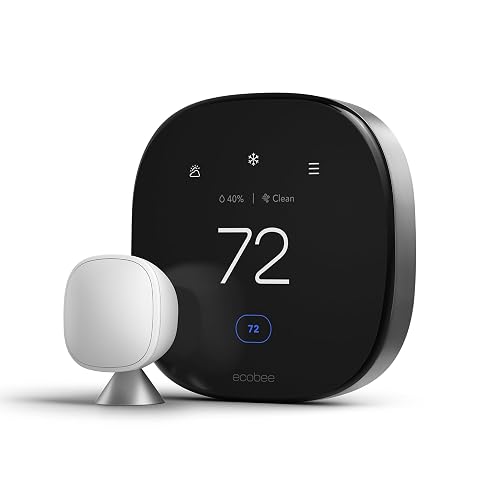
ecobee Smart Thermostat Premium with Smart Sensor
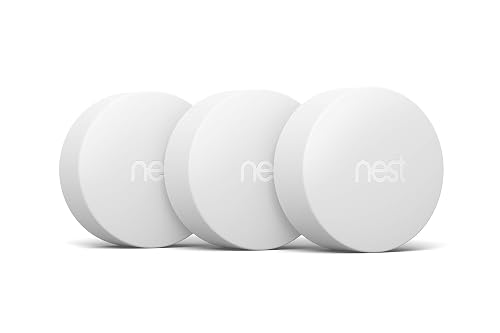
Google Nest Temperature Sensor 3-Pack
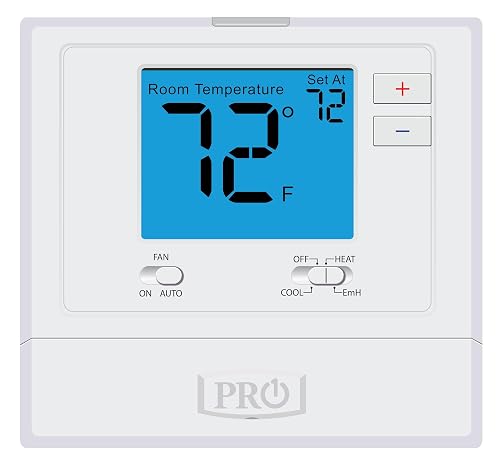
PRO1 T721 Non-Programmable Wall Thermostat
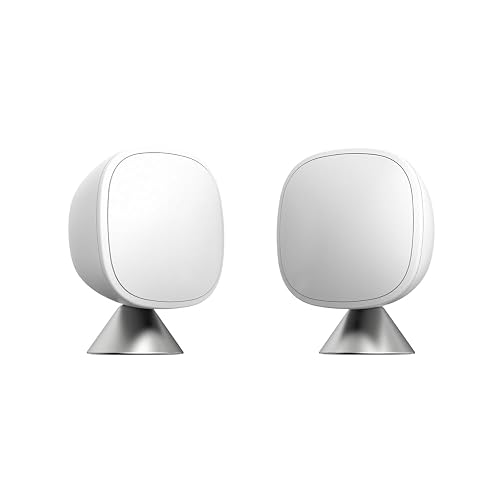
ecobee SmartSensor 2-Pack
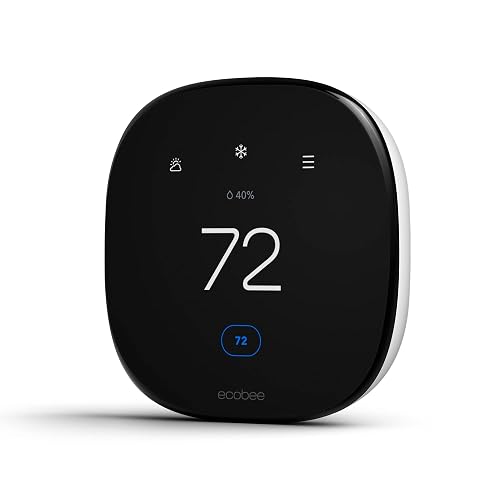
ecobee Smart Thermostat Enhanced

PRO1 T805 Programmable Wall Thermostat
Meet The Standout Selections
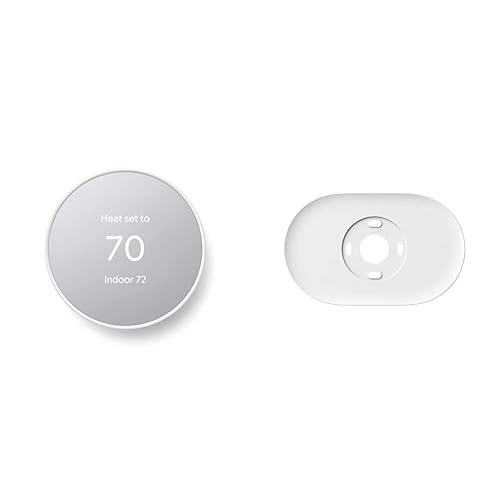
The Google Nest Thermostat is a familiar sight on this kind of list, and for good reason. It’s ENERGY STAR certified, runs on a slim snow-colored housing, and ships with both a decorative trim plate and a steel plate for older electrical box installations, which solves one of the messier parts of a retrofit in a home built before the 2000s.
Where this unit earns its reputation is the auto-schedule learning, the ability to nudge the temperature down when it senses the house is empty, and a clean Google Home app experience on Android or iPhone. The trade-off is that it really does want that C-wire for steady power; in older homes without one, owners commonly add the optional Nest Power Connector at the furnace.
Positive Points
- ENERGY STAR certification helps reduce runtime waste over a heating season
- Included trim plate covers paint gaps from the old thermostat footprint
- Steel mounting plate adapts the unit over an existing electrical box
- Google Home app scheduling and presence-based eco modes run reliably
- Voice pairing with Google Assistant speakers feels seamless in mixed smart homes
Worth Noting
- Without a C-wire, the included power adapter has to be wired at the furnace, which means opening the air handler
- No dedicated remote room sensors in the box; the unit reads only where it’s mounted
Who It Suits Best
Renters and owners in apartments with a working C-wire who want a polished app experience without a learning curve.
Consider Something Else When
The ecobee Smart Thermostat Premium is a stronger match when you need whole-home occupancy sensing and voice control built in.
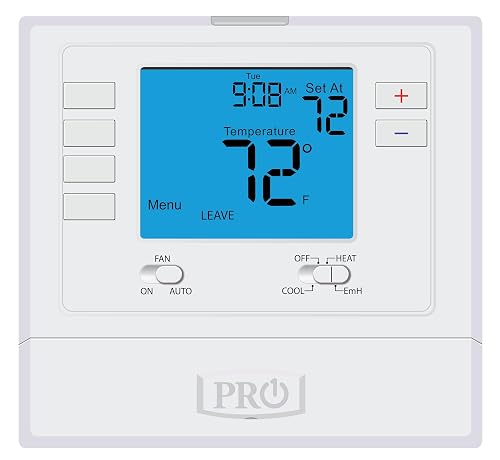
Heat pump homes are a different animal from standard gas setups, and the PRO1 T725 is built for that wiring. It supports 2 heat/1 cool heat pump systems as well as 1 heat/1 cool conventional configurations, which is the exact mix you find in most southern and mid-Atlantic homes. Compared with the Nest, this is a deliberately old-school wall unit, and that is the point.
The 4 square-inch blue backlit display stays readable in a dim hallway, and the seven-day plus 5/1/1 scheduling gives plenty of headroom for working-from-home routines. Owners who like programming on the wall rather than reaching for a phone will appreciate the tactile layout, and the unit runs on battery or hardwired power, sidestepping the C-wire question entirely for most installations.
Good Reasons To Consider
- Dual heat pump and conventional compatibility covers more retrofit jobs
- Battery or hardwire power avoids the C-wire headache on most installs
- Large backlit screen is easy to read from across the room
- 7-day and 5/1/1 programming handles complex weekday-weekend patterns
Trade Offs
- No Wi-Fi or app control, so remote adjustments require a separate smart home hub
- Interface feels dated next to the Nest and ecobee options earlier in this list
Built With In Mind
Heat pump owners who want reliable scheduling and don’t need cloud connectivity or voice control.
Look Elsewhere When
The PRO1 T701 is a better fit for someone in a single-stage conventional system who wants a smaller, simpler wall unit.
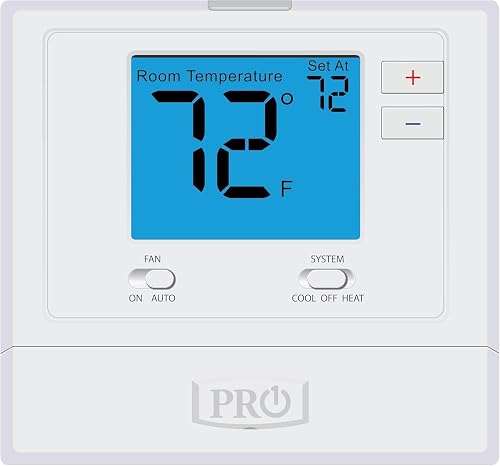
Sometimes the smartest thermostat in the house is the one that does exactly one job well. The PRO1 T701 is a single-stage, non-programmable wall unit aimed at 1 heat/1 cool conventional systems, which covers the bulk of older U.S. homes with a standard gas furnace and central AC. The T700 platform that underpins it shows up in the readable 4 square-inch blue backlit display and the glow-in-the-dark light button, a small detail that helps in a dark hallway at 2 a.m.
Where the T701 separates itself from the T725 above is in the omission of programmability. That sounds like a downgrade, yet for many older homeowners, the schedule feature is more complexity than they want. Set the temperature, leave it alone, and let the unit do its job.
Practical Advantages
- Straightforward up-and-down temperature control with no menu maze
- Large 4 sq. in. display is easy on aging eyes
- Glow-in-the-dark light button helps during nighttime adjustments
- AA battery or hardwire power options suit older wiring
Small Caveats
- No scheduling means manual seasonal changes
- Single-stage only; not suitable for multi-stage furnaces or heat pumps
Perfect Match For
Owners of basic 1 heat/1 cool homes who want a reliable, no-app wall thermostat and minimal setup.
Skip It When
The PRO1 T715 makes more sense in a two-stage gas system where precise temperature staging actually matters.
Two-stage gas furnaces burn fuel more efficiently when the thermostat actually understands staging, and the PRO1 T715 is built for that conversation. It supports 2 heat/2 cool systems, which is the right fit for many newer mid-efficiency gas setups, and runs on the same T700 platform that gives the T701 and T725 their readable blue backlit display. The glow-in-the-dark light button is a small touch that helps in a hallway at night.
Compared to the simpler T701, this one adds 7-day, 5/1/1, and non-programmable modes so a household can use the scheduling features or ignore them. Battery or hardwire power means installation rarely requires fishing a new C-wire through the wall, which is a real win on a retrofit.
The Case For It
- Two-stage gas compatibility matches a wide range of mid-efficiency furnaces
- Flexible scheduling modes suit both tech-friendly and set-and-forget households
- Backlit display plus glow-in-the-dark button improve visibility in dim spaces
Points To Keep In Mind
- No Wi-Fi connectivity; remote adjustment requires a separate ecosystem
- Programming is done on the wall, which feels less convenient than app-based scheduling
Best Suited To
Two-stage gas furnace owners who want professional-grade staging control without monthly app fees.
Where Another Pick Suits Better
The Google Nest Thermostat is a stronger fit if you’d rather let an app handle the schedule and energy savings in the background.
ecobee’s flagship leans into the “thermostat as smart home hub” angle. The Smart Thermostat Premium ships with a SmartSensor in the box, supports Siri and Alexa voice control natively, and acts as a Spotify or Bluetooth speaker on the side. Geofencing lets the system know when the last person has left for the day, which trims runtime without you ever opening the app.
Where the Premium separates itself from the Nest earlier in this list is the included room sensor. Instead of treating the hallway thermostat as the single source of truth, ecobee weighs the temperature in the room where the sensor sits, which solves the classic “thermostat is in a cold room, so the rest of the house is freezing” problem. Without a C-wire, the included Power Extender Kit wires in at the furnace.
Useful Strengths
- Built-in voice assistants remove the need for a separate smart speaker
- SmartSensor addresses hot and cold spots in distant rooms
- Geofencing adjusts temperature automatically when everyone leaves
- Premium build with a metal-ringed touch interface
Honest Caveats
- Higher-tier price may feel steep for a one-bedroom apartment
- Power Extender Kit installation requires opening the air handler, which can be intimidating for first-timers
Made For
Smart home households that want voice control, room-level comfort data, and a polished metal-and-glass wall unit.
Not Your Match When
The ecobee Smart Thermostat Enhanced is a better fit if you want the same core experience at a friendlier price.
Here’s a different angle on the no-C-wire problem: instead of buying a new wall thermostat, you keep your existing one and add room sensors around the house. The Google Nest Temperature Sensor 3-Pack reports readings back to a compatible Nest thermostat up to about 50 feet away over Bluetooth Low Energy, which lets the system prioritize a baby’s room, a drafty living room, or a sun-soaked upstairs bedroom.
Three sensors in one box gives you genuine whole-home coverage, and each unit is small enough to sit on a shelf without looking like a piece of test equipment. They pair with the Nest Thermostat and the older Nest Thermostat E, though the experience is richest on a current-generation Nest.
Well-Handled Touches
- Three sensors cover most living spaces in a typical home
- Small footprint blends into most shelves and tables
- Bluetooth Low Energy connectivity avoids Wi-Fi network congestion
Practical Considerations
- Requires a compatible Nest thermostat to function, so it isn’t a standalone purchase
- Some owners report needing to pair sensors through the Google Home app rather than the legacy Nest app, depending on firmware
Right Fit For
Existing Nest thermostat owners whose homes run unevenly, with warm upstairs rooms and chilly basements.
Reach For A Different Pick When
The ecobee SmartSensor 2-Pack is a better fit if you already run an ecobee system, since sensors don’t cross brands.
The T721 sits in an interesting spot on this list because it covers both 2 heat/1 cool heat pump systems and 1 heat/1 cool conventional configurations, all on a non-programmable interface. That dual compatibility is uncommon in this price tier, and it makes the unit a strong candidate if you don’t know exactly what your system is or you’re prepping a home for sale.
Like the other T700-series PRO1 units, the 4 square-inch blue backlit screen and glow-in-the-dark light button are easy to read at night. Power comes from AA batteries or a hardwire connection, which is genuinely useful in older homes where pulling a new C-wire would mean opening drywall.
A Favorable Mix
- Supports both heat pump and conventional systems in one wall unit
- No scheduling needed, which keeps the interface friendly for guests or older users
- Battery or hardwire installation sidesteps the C-wire issue
Areas To Watch
- No Wi-Fi or app integration limits remote control options
- 2H/1C heat pump support is generous, yet complex multi-stage systems will need the T715
Who Should Grab It
Owners of older heat pump or conventional homes who want a no-app wall thermostat with a generous backlit display.
A Better Fit Elsewhere
The PRO1 T725 is the right choice if you want scheduling features on top of similar heat pump support.
Where the Nest sensors above report temperature alone, ecobee’s SmartSensors bring occupancy into the conversation. Each unit uses infrared technology to detect when a room is actually in use and reports back to the thermostat from up to 60 feet away, which lets the system ignore empty bedrooms and focus on the rooms people are actually sitting in.
Two sensors in the box is enough for most apartments or a living room and primary bedroom. Pairing is handled through the ecobee app, and the sensors run on coin-cell batteries that owners commonly report lasting well over a year before they need attention.
What Helps Most
- Infrared occupancy detection goes beyond simple temperature reporting
- Up to 60-foot wireless range handles larger homes
- Two-year-plus battery life keeps maintenance low
Less Ideal Details
- Requires a compatible ecobee thermostat, so it isn’t a standalone upgrade
- Two-pack may be short for whole-home coverage in larger layouts
Whose Shelf It Belongs On
Ecobee thermostat owners who want automatic energy savings tied to whether rooms are actually occupied.
Where A Sibling Pick Shines
The Google Nest Temperature Sensor 3-Pack covers more rooms if you already run a Nest thermostat and don’t need occupancy data.
The Enhanced sits below the Premium in ecobee’s lineup, and that’s exactly the point. You get the same occupancy-aware scheduling, the same eco+ features that automatically turn temperatures down when you’re away or asleep, and the same smart home compatibility with Apple HomeKit, Google Assistant, and Alexa. The main trade-off versus the Premium is the lack of a built-in speaker and a more modest air quality monitor.
For a homeowner who wants the core ecobee experience without paying for the kitchen-counter-grade extras, this is the sweet spot. The included Power Extender Kit handles the no-C-wire scenario on most installs, and owners commonly report a 20-minute setup.
Key Advantages
- eco+ auto-savings features adjust temperatures based on real occupancy
- Works with Apple Watch, smartphones, and major voice assistants
- Power Extender Kit included for older four-wire systems
- More approachable price than the Premium model
Things To Weigh
- No built-in voice assistant; you still need a separate smart speaker or display
- Plastic bezel feels less premium than the metal-ringed Premium
Who Will Love This
Mid-budget smart home owners who want serious scheduling intelligence and don’t need voice control baked into the wall.
Swap It Out When
The ecobee Smart Thermostat Premium is the better match if a built-in voice assistant and a metal-ringed finish matter to you.
The T805 closes this list with a feature that doesn’t always show up on spec sheets: a 7 square-inch display, the largest in the PRO1 lineup. That’s nearly twice the readable area of the T701, which makes the T805 a friendlier choice for anyone who reads the temperature from across a long living room or who simply wants larger digits.
Underneath the bigger screen, the T805 is a programmable single-stage unit for 1 heat/1 cool conventional systems, with 7-day, 5/1/1, or non-programmable modes. Battery or hardwire power keeps the install friendly on older wiring, and the glow-in-the-dark light button is a small but useful touch in a hallway at night.
Standout Benefits
- 7 sq. in. display is the largest in this lineup
- Programmable and non-programmable modes fit a range of preferences
- AA battery or hardwire options suit older four-wire homes
Where It Is Less Suited
- Larger footprint may not cover all existing wall marks or paint lines
- Single-stage only; multi-stage gas systems will outgrow it
The Right Fit
Households that want a roomy, easy-to-read wall thermostat with flexible scheduling and no app required.
Another Choice May Suit
The PRO1 T715 is the better fit if your home runs a two-stage gas furnace that needs real staging support.
What To Weigh Before Choosing a No-C-Wire Thermostat
A “C-wire” is the common wire that returns 24-volt power from the HVAC transformer back to the thermostat, creating a complete circuit. Without it, many smart thermostats can’t draw steady power and will drain batteries quickly or fail to keep Wi-Fi running. The first decision is whether your wall wiring already includes that fifth wire, because the answer changes the install path entirely.
System type matters as much as wiring. A 1 heat/1 cool conventional system is the simplest match, and almost every wall unit on this list covers it. Heat pump households need thermostats that explicitly support staging and reversing valve controls, which is where the PRO1 T725 and T721 stand out. Two-stage gas systems require thermostats that can call for low and high fire independently, like the PRO1 T715.
Decide how much scheduling control you actually want. App-based units like the Nest and ecobee lines do the thinking for you but require Wi-Fi and a smartphone. Wall-programmable units like the T725 and T805 work without a phone but ask more from the person pressing buttons. Pick the level of involvement that matches how your household already operates, and the rest of the decision gets easier.
Finally, consider whether room-level data matters. Single-sensor thermostats can only read the hallway they’re mounted in, which is often the least useful room in the house. If the bedrooms always run hot or the basement always feels cold, a sensor-based system (ecobee SmartSensor, Nest Temperature Sensor) will pay for itself quickly in comfort and runtime.
Common Ground Before You Click
Wrong Turns To Avoid
The most common mistake is buying a smart thermostat before checking the existing wire count. Pull the faceplate off the current thermostat, count the wires, and check whether one is labeled “C.” Skipping that step sends people back to the retailer within a week, because the install hits a wall the moment the new unit asks for power. Equally common is choosing a heat pump thermostat for a conventional system, or vice versa. The wiring terminals look similar but the staging logic is different, and the system will behave oddly or refuse to run. Finally, don’t ignore Wi-Fi range. A thermostat mounted at the far end of a long house on a weak router will lose connection often enough to make scheduling unreliable.
When Paying More Pays Off
Premium thermostats cost more for reasons that show up in daily use, not just on the spec sheet. The ecobee Premium’s included SmartSensor addresses comfort in actual living spaces, not just the hallway, and its built-in voice control removes the need to buy a separate smart speaker. Higher-end PRO1 units gain larger displays, glow-in-the-dark buttons, and broader system compatibility, which extends the useful life of the thermostat across HVAC upgrades. In households where the system runs year-round, the energy savings and avoided service calls from a smarter unit typically outpace the price difference within a couple of heating seasons.
Frequently Asked Questions
Do all smart thermostats need a C-wire?
No. Battery-powered wall units like several PRO1 models on this list run on AA batteries or hardwire power and skip the C-wire entirely. Smart thermostats from Nest and ecobee usually do require steady 24-volt power, which is why most ship with a Power Extender Kit that wires in at the furnace.
How do I know if my system is heat pump or conventional?
Heat pump systems typically have an outdoor unit and a wire labeled “O” or “B” at the indoor thermostat. Conventional systems use a gas furnace or electric air handler and run on the standard R, W, Y, and G terminals. The thermostat model name in the source product data will list which system types it supports.
Can I install one of these without an electrician?
Most wall thermostats in this list are designed for DIY installation with a screwdriver and a voltage checker. Hardwired power extender kits do require you to work near the furnace control board, which some homeowners prefer to leave to a technician.
Will a smart thermostat actually lower my bill?
A programmable or learning thermostat can trim heating and cooling runtime by adjusting temperatures during sleep, work, and away hours. Actual savings depend on your climate, your schedule, and how disciplined the previous thermostat was.
Do room sensors work without a compatible thermostat?
No. The Nest Temperature Sensor 3-Pack requires a Nest thermostat, and the ecobee SmartSensor 2-Pack requires an ecobee thermostat to function. They are add-ons, not standalone products.
The Takeaway
The right pick depends on the wires already in your wall, the system sitting in your basement, and how much you want a phone involved. Match those three things to the profiles in this guide, and the rest of the upgrade is just an afternoon project.