
Radiant floors, heat pumps, multi-stage gas systems, and quirky garage spaces all need different kinds of control. Picking the right thermostat, or the right sensor to feed one, makes a quiet but real difference in comfort and energy use day to day. This roundup walks through ten solid options covering tekmar’s own slab sensor, setpoint control, and Wi-Fi thermostat alongside a stack of PRO1 wall thermostats and one tamper-resistant model for rentals. Each pick is matched to a specific job so you spend less time scrolling and more time dialing in the room.
The Leading Options At A Glance
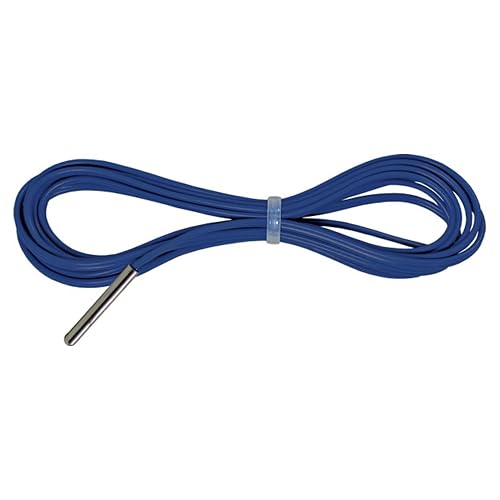
tekmar 079 Slab Sensor 10 ft Wire
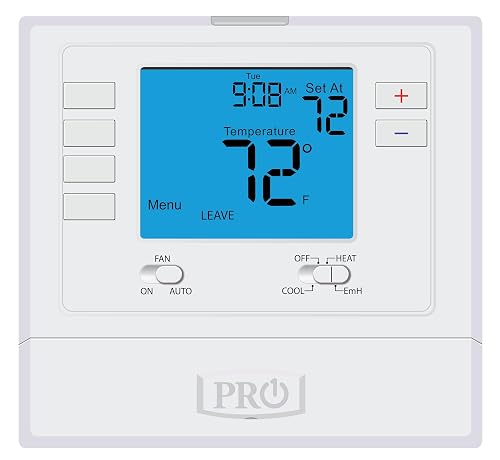
PRO1 T725 Heat Pump/Conventional Programmable Thermostat

PRO1 T771 Non-Programmable Wall Thermostat
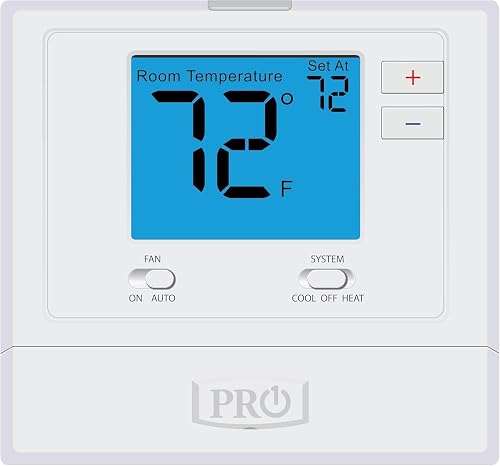
PRO1 T701 Non-Programmable Wall Thermostat

PRO1 T715 Multi-Stage Programmable Gas Thermostat
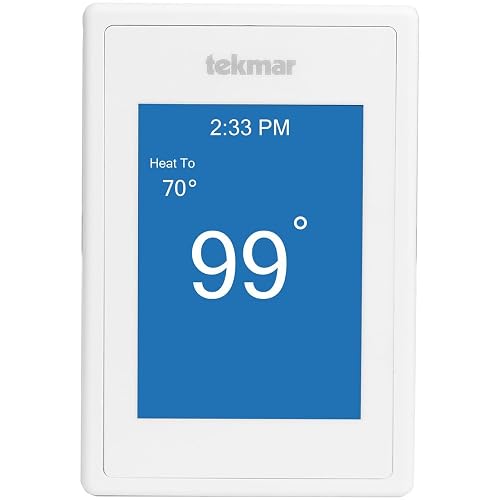
tekmar 170 Setpoint Control
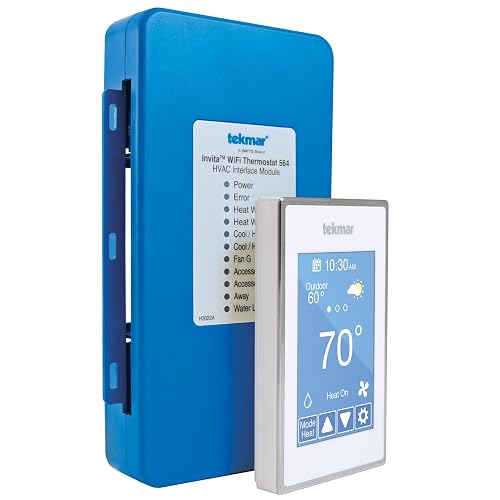
tekmar Invita 564 Wi-Fi Thermostat 2-Wire
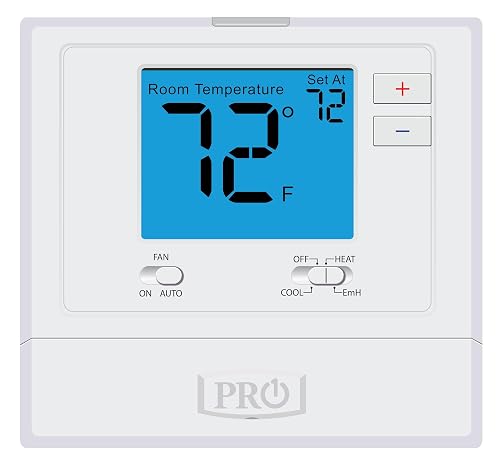
PRO1 T721 Non-Programmable Wall Thermostat

CT72 Basic Tamper Proof Thermostat

PRO1 T805 Single Stage Programmable Thermostat
The Details Behind The Selections
Radiant floor systems live or die by the accuracy of the sensor tucked into the slab. The tekmar 079 is a thin, dedicated slab probe that feeds real floor temperature back to a compatible tekmar control, helping the system hold a minimum slab temperature without overshooting. You bury the tip in the concrete and route the 10-foot lead back to the control box, so placement flexibility depends on how far the wire can cleanly travel.
For homeowners with a hydronic slab and a tekmar controller, this is a sensible replacement or spare. It plays a narrow role, and it doesn’t help at all if you don’t already own a compatible tekmar stat.
A Favorable Mix
- Reports actual slab temperature, not just ambient air, so the floor stays comfortably warm without constant cycling.
- The 10-foot lead reaches across most basements without needing splices or extensions.
- Compact probe tip is easy to embed in fresh pours or retrofit into existing slabs.
Points To Note
- Useful only when paired with a compatible tekmar thermostat, so it isn’t a universal add-on.
- Sensor wire routed through finished spaces may need conduit or careful trimming for a clean look.
Made For
Anyone with a tekmar-controlled hydronic slab who needs a fresh or spare sensor.
Consider Something Else When
The tekmar Invita 564 is a smarter match when you want whole-home control rather than just floor feedback.
Households that run a heat pump today and might swap to a conventional furnace later want flexibility without buying a new wall unit. The PRO1 T725 covers a 2-heat/1-cool heat pump setup or a 1-heat/1-cool conventional system, so it travels with the equipment. Seven-day or 5/1/1 scheduling covers work, school, and weekend routines without much fuss.
The 4-square-inch backlit screen is readable from across a room, and the wake/leave/return/sleep labels make a schedule easier to set up than blank time blocks. For most mixed-system homes, this is a comfortable middle-ground option compared to the simpler non-programmable T701 that follows.
Notable Upsides
- Dual compatibility means you can reconfigure it when the equipment changes, reducing future swap-out cost.
- Scheduling options match how real families actually live, with different weekend patterns than weekdays.
- The display remains readable at night, helpful in hallways and bedrooms.
Honest Caveats
- Programming takes a few minutes the first time, so plan on a coffee break during setup.
- It’s a wall unit, not a smart home device, so remote access requires a separate hub.
Who It Suits Best
Homeowners who want a programmable wall thermostat for a heat pump or standard furnace, without paying for Wi-Fi features.
Look Elsewhere When
The tekmar Invita 564 makes more sense when you specifically want app-based remote control and a two-wire retrofit.
Most living-room thermostats bottom out around 50°F, which is fine for a house but not for a detached garage or workshop. The PRO1 T771 drops to a 25°F setpoint, with swing adjustment and calibration built in so a hobby shop or storage shed can run as cold as needed. The 4-square-inch blue backlit display keeps things readable in low light, important when the room doubles as a project space.
For specialty spaces, this is a quieter, simpler alternative to a fully programmable stat. Compared with the T701, the T771 leans hard into its low-temp angle rather than chasing daily scheduling.
The Case For It
- Reaches a 25°F setpoint, useful for unheated outbuildings and freeze-sensitive storage.
- Calibration and swing adjustment give you a tighter handle on when the equipment actually fires.
- Non-programmable design means fewer buttons to bump by accident in a busy garage.
Things To Consider
- Single-stage only, so it won’t suit multi-stage systems that need the T715 instead.
Key Product Details
Best Suited To
Garage workshops, sheds, and other unheated spaces where a standard stat would bottom out too early.
A Better Fit Elsewhere
The PRO1 T701 is a friendlier fit for a primary living area where a low setpoint isn’t needed.
Some homes just need a thermostat that turns the furnace on and off without a learning curve. The PRO1 T701 covers a 1-heat/1-cool conventional system with a clean 4-square-inch blue backlit display and a glow-in-the-dark light button for late-night adjustments. It supports gas or electric configurations, and you can power it by battery or hardwire, which keeps the install flexible in older homes.
It’s the kind of wall unit you set and forget. Compared with the T725 reviewed earlier, the T701 skips the scheduling layer in exchange for a friendlier button layout.
Positive Takeaways
- Straightforward up/down control is approachable for guests, kids, or anyone who rarely touches the stat.
- Glow-in-the-dark light button helps in hallways during a midnight check.
- Battery or hardwire power gives older homes a clean retrofit path.
Room For Improvement
- No scheduling, so daily setbacks require manual morning and night adjustments.
- Single-stage only, so it won’t run a multi-stage system that the T715 can handle.
Perfect Match For
Primary living spaces with a standard furnace and air conditioner where simple temperature control is the goal.
Swap It Out When
The PRO1 T805 is the right call when you want a larger 7-square-inch screen and 7-day scheduling in a similar non-smart package.
Larger homes with two-stage gas furnaces and central AC benefit from a stat that knows how to call for low and high fire. The PRO1 T715 manages 2-heat/2-cool gas systems, and you can set it as 7-day, 5/1/1, or non-programmable depending on how hands-on you want to be. The 4-square-inch blue backlit display with a glow-in-the-dark light button keeps the readouts visible across the room.
For multi-stage equipment, this is the sensible upgrade path over the single-stage T701 and T771. It handles complexity that simpler stats leave on the table, including the kind of two-stage furnace a lot of newer homes actually ship with.
Practical Advantages
- Drives two-stage heating and cooling, so equipment can run more efficiently on milder days.
- Three scheduling modes give you room to grow into the stat over time.
- Battery or hardwire power simplifies install in different wall-box conditions.
Trade-Offs
- Worth buying only if your system is actually 2-stage; single-stage homes don’t gain much from it.
- Programming more heating and cooling stages means a slightly longer setup than the T701.
Who Will Love This
Households with a multi-stage gas furnace who want programmable control without going to a smart thermostat.
Reach For A Different Pick When
The tekmar Invita 564 fits better when Wi-Fi remote access matters as much as multi-stage comfort.
The tekmar 170 trades buttons for an app, which is a real shift for homeowners who want to tweak the system from the couch, the office, or the road. It’s designed to give precise, wide-range temperature control for a one-stage heating or cooling system, with remote access through the Watts Home mobile app. For connected homes, that’s the headline feature: you can check in on a vacation property or a server room without driving across town.
Compared with the standalone PRO1 units on this list, the 170 leans into remote monitoring and tight setpoint accuracy. The trade is that it lives in a different ecosystem, so the experience only feels complete once the app is part of the routine.
A Few Highlights
- App control means you can adjust the system from anywhere with cell service, useful for second homes.
- Tight setpoint accuracy suits spaces where a half-degree swing matters, like a wine closet or plant room.
- Wide-range flexibility works across heating or cooling applications without a hardware swap.
Small Caveats
- App-dependent, so a flaky home network will limit how useful the remote features feel day to day.
- One-stage focus only, so it won’t run a multi-stage system the way the PRO1 T715 does.
The Right Fit
Connected-home owners with a one-stage system who prioritize remote access and precise setpoint control.
Where A Sibling Pick Shines
The tekmar Invita 564 is the smarter option for whole-home HVAC control with two-wire retrofits in mind.
Old homes with only two thermostat wires running to the wall often get told a smart upgrade means opening the drywall. The tekmar Invita 564 sidesteps that by connecting to an HVAC Interface Module using just the existing 2 wires, then talks to the rest of the system wirelessly. It’s rated to work with conventional, heat pump, and dual fuel setups, and it’s also set up to coordinate an ERV or HRV (energy or heat recovery ventilator), which is rare at this price tier.
Compared to the PRO1 wall units, the Invita 564 is a more involved install but opens up a smart-home workflow. For most retrofits, the two-wire story is the real selling point.
What Helps Most
- Two-wire connection means most retrofits don’t require new wire runs or wall repair.
- ERV/HRV coordination handles fresh-air equipment alongside heating and cooling.
- Conventional, heat pump, and dual fuel compatibility covers a wide range of household systems.
Things To Consider
- Requires the compatible HVAC Interface Module, sold as part of a broader ecosystem.
- Setup leans on a mobile app, so a steady home Wi-Fi signal is part of the deal.
Feature Snapshot
Built With In Mind
Homeowners upgrading an older thermostat to a smart, app-driven control without rewiring the walls.
Skip It When
The tekmar 170 is a cleaner fit when you only need a one-stage setpoint control with app access.
Single-stage heat pumps and conventional systems share a lot of overlap, and the PRO1 T721 sits in that middle ground. It handles a 2-heat/1-cool heat pump or a 1-heat/1-cool conventional system, with a 4-square-inch blue backlit display and a glow-in-the-dark light button. Power comes from AA batteries or a hardwire connection, which helps in retrofit situations where a C-wire isn’t already in place.
It splits the difference between the multi-stage T715 and the simpler T701. For most heat-pump homes that don’t need scheduling, the T721 lands as a tidy middle pick.
Where It Excels
- Heat pump and conventional support in one unit, helpful if equipment changes during a remodel.
- Battery or hardwire power makes for a flexible install, especially in homes without a C-wire.
- Glow-in-the-dark light button helps during late-night adjustments without flipping a switch.
Possible Compromises
- No scheduling layer, so daily setbacks happen by hand.
- Single-stage heat-pump focus only, so it won’t run a multi-stage system the way the T715 does.
Whose Shelf It Belongs On
Single-stage heat pump homes that want simple wall control without a learning curve.
Not Your Match When
The PRO1 T725 is a better fit if you want 7-day or 5/1/1 scheduling in a similar feature set.
Landlords and property managers don’t want a tenant cranking the heat to 78 in January. The ControlTemp CT72 is a non-programmable, tamper-resistant unit that caps heating at 72 and cooling at 72, so the building owner sets the limits and the unit prevents overrides. It works with single-stage conventional, heat pump, heat-only, or cool-only systems, which covers most rental setups.
Compared to the rest of this list, the CT72 is the odd one out on purpose. It’s built to enforce rules rather than to give the household more freedom, and it leans into that role.
The Upside
- Locked temperature limits stop runaway heating and cooling costs in rental units.
- Broad system support covers most single-stage equipment in apartments and small homes.
- Non-programmable design means fewer settings for a tenant to accidentally change.
Less Ideal Details
- Not designed for multi-stage equipment, so it can’t drive a 2-stage furnace like the T715.
- Hard temperature cap is a poor fit for owner-occupied homes where comfort preferences run higher or lower.
Right Fit For
Landlords and property managers outfitting a single-stage rental unit who want to keep utility bills predictable.
Where Another Pick Suits Better
The PRO1 T701 is a friendlier match for an owner-occupied home that needs more flexibility than locked limits allow.
Schedules only help if you can actually read the screen. The PRO1 T805 is built on the T800 platform with a 7-square-inch blue backlit display, the largest in this roundup, and a glow-in-the-dark light button for low-light moments. It runs a 1-heat/1-cool conventional system with 7-day, 5/1/1, or non-programmable modes, so you can scale the schedule to match the household.
It’s a natural upgrade path from the T701 covered earlier, trading the smaller 4-square-inch display for a roomier readout and full programming. For most primary living spaces, the T805 is the friendliest unit on the list to live with day to day.
Real Benefits
- 7-square-inch display is readable from across a large room, helpful in open-plan layouts.
- Three scheduling modes let the stat grow with the household’s routine.
- Single-stage focus keeps the controls approachable without sacrificing programmable flexibility.
Small Limitations
- Single-stage only, so multi-stage homes should look at the T715 instead.
- No Wi-Fi, so remote access requires a separate smart-home device.
Who Should Grab It
Primary living spaces with a conventional system where a large, readable screen and full scheduling are the priority.
Another Choice May Suit
The PRO1 T805 is the right call for primary spaces, while the tekmar Invita 564 fits better when Wi-Fi is the headline feature.
What To Weigh Before Choosing A tekmar Thermostat
System type is the first fork in the road. A 1-heat/1-cool conventional setup fits most of the PRO1 wall units on this list, while a 2-stage gas furnace wants the T715 and a single-stage heat pump leans toward the T721. Matching the stat to the equipment matters more than chasing the flashiest screen.
Use case shapes the second decision. Outbuildings, garages, and rental units have very different needs: a 25°F setpoint range, locked tenant limits, or a wide 7-square-inch display for daily scheduling each solve a different problem. A stat that fits a workshop is rarely the right stat for a primary bedroom.
Power and wiring round out the picture. Battery-only installs work in older walls without a C-wire (the “common” wire that delivers continuous power to a smart thermostat), while hardwire or app-driven units assume the home network is reliable. Two-wire retrofits like the Invita 564 exist specifically to avoid opening the walls, which is a real bonus in legacy homes.
Key Considerations Across These Picks
Traps First Timers Fall Into
Picking a thermostat before confirming the equipment stage is the most common misstep. A single-stage stat on a two-stage furnace will only call for high fire, which both wastes fuel and shortens equipment life. Read the furnace data plate first, then match the stat to the stages listed there.
Another miss is assuming a smart thermostat will solve wiring problems on its own. Many older homes run only two wires, and most app-driven stats need continuous power. Two-wire retrofits like the Invita 564 exist, but most Wi-Fi units still need a C-wire or a power adapter to play nicely with the wall box.
When Paying More Pays Off
Spending more usually buys two things in this category: a larger, easier-to-read display and a wider scheduling layer. The T805’s 7-square-inch screen and 7-day programming show up after long days when a smaller screen and a single program get old. App-driven units like the tekmar 170 and Invita 564 also cost more, but they pay off when remote access and ventilation coordination genuinely matter to the household. For a simple one-stage home, the lower-tier PRO1 T701 or T721 covers the basics without the extra spend.