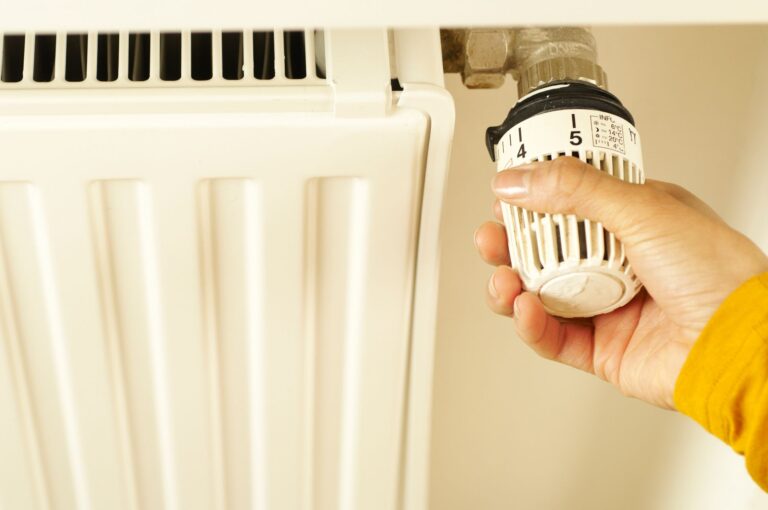

Replacing a thermostat in an older home can feel like guesswork, especially when your baseboard or wall heater runs on line voltage rather than the low-voltage systems smart-home articles keep describing. The right Cadet model restores steady, room-by-room control without forcing a full heater replacement. This shortlist covers built-in kits, mechanical wall units, and programmable electronics so you can match the control to the heater you already own.
How The Shortlist Stacks Up
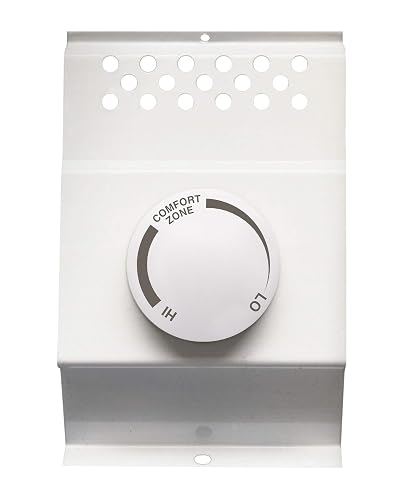
Cadet BTF1W Single Pole Built-In Thermostat Kit (22 Amp, 240/208/120 Volt, White)
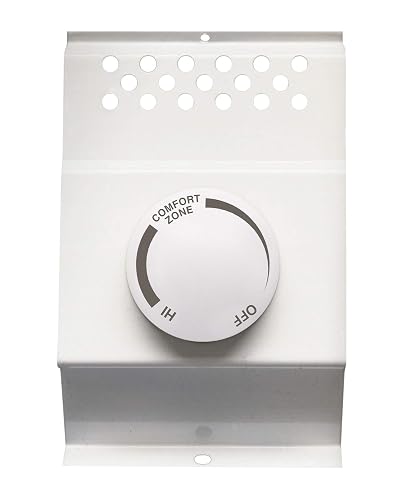
Cadet BTF2W Double Pole Built-In Baseboard Thermostat (22 Amp, 120/208/240 Volt, White)
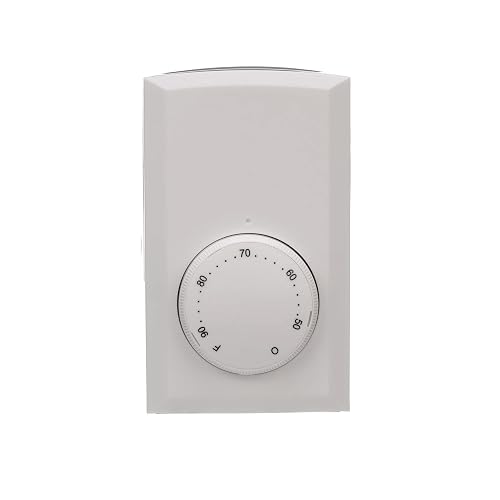
Cadet T522-W T5 Series Double Pole Mechanical Wall Thermostat (22 Amp, White)

Cadet Double Pole Line Voltage Thermostat for Baseboard and Wall Heaters
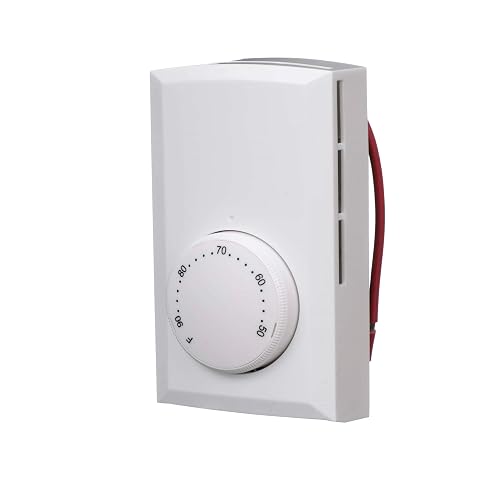
Cadet T521-W T Series Single Pole Mechanical Wall Thermostat (22 Amp, White)
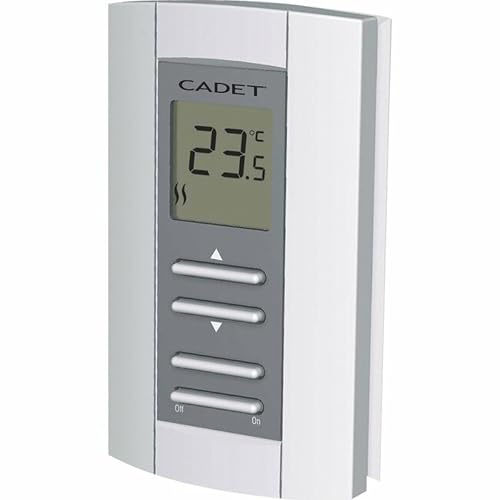
Cadet TH114A-240D-B Electronic Non-Programmable Double Pole Thermostat (15 Amp, White)
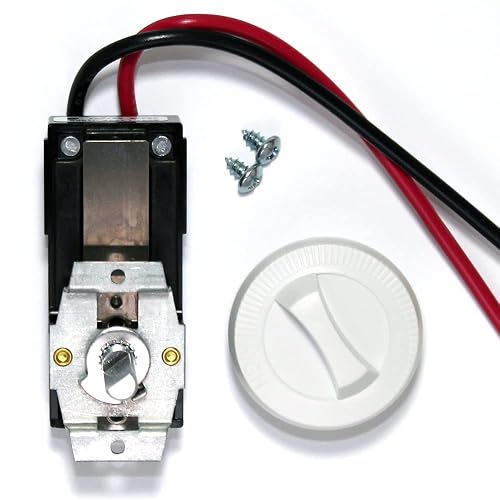
Cadet Com-Pak Double Pole Built-in Thermostat Kit for Wall Heaters (White)
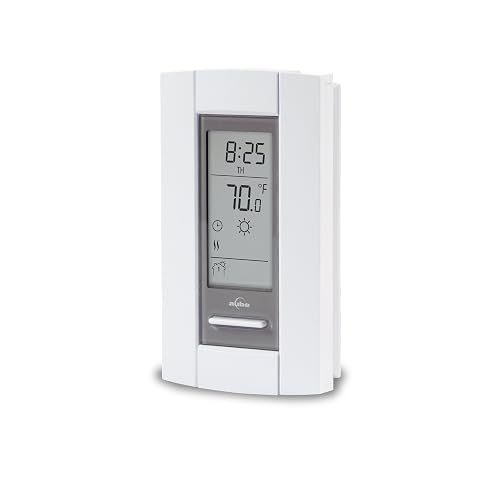
Cadet TH115-A-240D-B Electronic Programmable Double Pole Thermostat (15 Amp, White)
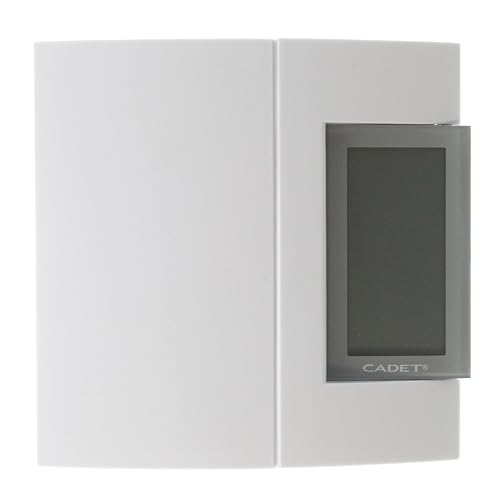
Cadet TH106 Electronic Programmable Single Pole Wall Thermostat (White)

Cadet 08121 White Single Pole Wall Mount Thermostat (22 Amp)
A Closer Look At Each Pick
If your home already runs on Cadet F-series baseboards, the BTF1W is the control designed to live inside that heater rather than on the wall. It mounts directly to either end of the cabinet, which removes the need to run extra low-voltage wire through finished walls. In older rooms where pulling a new line would mean opening drywall, that direct-mount approach quietly saves an afternoon of patching and paint.
You get a 22-amp capacity, compatibility with 120, 208, and 240 volt circuits, and a twist dial that runs from about 45 to 80 degrees Fahrenheit. The white housing blends against most factory baseboard finishes, so the unit doesn’t draw attention to itself once installed. Compared with the wall-mount T521-W covered later, this one trades wall-box convenience for a cleaner overall look.
Where It Excels
- Mounts to either end of a Cadet F-series baseboard, removing the need for extra wiring through walls
- Multi-voltage support at 120, 208, and 240 volts simplifies matching to existing circuits
- 22-amp rating covers most residential baseboard loads up to about 5,280 watts at 240 volts
- Twist-dial setpoint is simple enough for guests or older family members to operate
- Compact white housing visually disappears against the baseboard finish
Trade Offs
- Limited exclusively to Cadet F-series baseboard heaters, not a general line-voltage wall option
- Single pole design lacks a true positive off, so service work requires tripping the breaker
Who It Suits Best
Homeowners retrofitting an existing Cadet F-series baseboard room who want a clean, no-wall-box look and only need simple on-demand temperature control.
Skip It When
You service the heater frequently or want a positive-off switch, in which case the BTF2W double pole model in the next slot gives that hardwired shutoff.
The BTF2W is essentially the BTF1W with one important addition: a double pole switch that disconnects both legs of the line-voltage circuit when the dial reaches its lowest position. For a basement workshop or a rental unit where someone occasionally services the heater, that positive-off behavior adds a layer of safety the single pole version cannot match.
Like its sibling, the BTF2W clamps directly to either end of a Cadet F-series baseboard, so you avoid running new wire. The same 45 to 80 degree Fahrenheit setpoint range and 22-amp rating carry over. The trade-off shows up in cost and in a slightly more involved wire landing, but for code-conscious installs the difference is meaningful.
A Strong Showing
- Double pole switching provides true positive-off for safer service on the heater
- Direct-mount design preserves the wall-free appearance of the F-series baseboard
- 22-amp capacity and tri-voltage support cover most residential baseboard loads
- Same twist-dial setpoint as the BTF1W, so operation feels familiar across rooms
Honest Caveats
- Priced higher than the single pole BTF1W even though the basic function is similar
- Wiring the extra leg takes slightly more care during installation than a single pole swap
- Still only fits Cadet F-series baseboards, not universal wall-mount use
Made For
Homeowners and landlords who want a built-in baseboard control with proper service isolation, especially in workshops, garages, and rental properties.
Consider Something Else When
You need a control on the wall rather than the heater end, in which case the T522-W wall-mount double pole thermostat offers similar safety in a familiar wall-box format.
When a thermostat in a standard outlet box fails, the T522-W is the kind of part that gets a tired heating system back in service the same afternoon. The mechanical bimetal sensor and snap-action switch have been in the Cadet catalog for years, and they keep doing their job with very little fuss. Color-coded wires simplify the swap for anyone comfortable with a screwdriver and a voltage tester.
You get a 40 to 80 degree Fahrenheit setpoint range and a positive-off position, which is genuinely useful for any room where you want a hard shutoff during the off-season. The 22-amp rating handles up to about 5,280 watts at 240 volts, so it covers most residential baseboard circuits. Compared with the BTF2W in the previous slot, the T522-W trades heater-end mounting for a familiar wall-box format.
Features That Help
- Double pole, 4-wire design with positive-off for hardwired seasonal shutoff
- Color-coded wires reduce wiring mistakes during replacement jobs
- 40 to 80 degree Fahrenheit setpoint range with a 3 to 6 degree comfort swing
- 22-amp capacity covers most baseboard and wall heater loads
Points To Note
- Mechanical action produces faint clicks when the room reaches setpoint, audible in very quiet bedrooms
- Setpoint comfort swing is fixed at the factory and not user-adjustable
Best Suited To
Shed and addition owners replacing a worn line-voltage wall thermostat who want proven mechanical reliability without programming complications.
Not Your Match When
You want silent operation in a bedroom, in which case the Cadet TH106 in a later slot uses electronic triac switching to eliminate click noise.
Some homes run a mix of electric baseboards in the living areas and fan-forced wall heaters in the bathrooms and hallways. Finding a single thermostat that works across both is the whole point of this Cadet line-voltage wall unit. It handles 120, 208, and 240 volt circuits on the same hardware, and its 22-amp capacity supports the kind of wattage most residential rooms actually pull.
The double pole design provides a positive-off position, so summer storage or off-season rooms can be fully de-energized at the wall. Setpoint range and comfort swing line up with the T522-W reviewed earlier, and the same color-coded wire scheme carries over. For homeowners juggling different heater vintages, this acts as a single SKU that fits nearly every wall box.
The Upside
- Works with baseboard, convector, and fan-forced wall heaters across common residential voltages
- Positive-off double pole switching is useful for seasonal rooms and renovations
- 22-amp rating handles up to 5,280 watts at 240 volts
- Standard wall-box format fits existing electrical openings without drywall repair
Things To Consider
- Mechanical operation produces audible clicks that some users find noticeable in sleeping areas
- Lacks the heater-end mounting offered by the BTF1W and BTF2W models
Who Should Grab It
Homeowners with a mix of baseboard and wall heaters who want one replacement thermostat SKU on the shelf for any future swap.
Look Elsewhere When
Your heaters are exclusively Cadet F-series baseboards and you prefer the built-in look, in which case the BTF2W gives you a positive-off without a wall box.
For a guest bedroom or a finished basement where the heater only runs a few months a year, the T521-W delivers exactly the function you need without forcing a programming routine on anyone. The twist dial is the same one found across the T-series, and it has the satisfying weight of a real bimetal sensor rather than a membrane keypad.
This model covers 120, 208, and 240 volt circuits, so it can step into a wide range of existing wall boxes. Wattage support matches its bigger T522-W sibling at up to 5,280 watts on 240 volt circuits. The catch is single pole switching, which means there’s no positive-off, and the breaker stays as your only true disconnect. For most everyday rooms that rarely see service work, that trade-off is fair.
Strong Points
- Tri-voltage compatibility across 120, 208, and 240 volt baseboard and wall heaters
- Color-coded wires make the swap manageable for a careful DIY install
- 22-amp capacity covers standard residential room loads up to 5,280 watts
- Mechanical dial is simple enough for any household member to operate
Soft Spots
- No positive-off position, so the breaker becomes the only service disconnect
- Mechanical clicks at setpoint may bother very light sleepers in adjacent rooms
The Right Fit
Guest rooms, basements, and low-use additions where a basic mechanical wall thermostat is all the room actually needs.
Reach For A Different Pick When
You want positive-off safety for a workshop or seasonal property, in which case the T522-W double pole model in slot three gives that same mechanical feel with a true shutoff.
Some people want a digital readout and push-button accuracy without giving up the simple “set it and forget it” approach of a mechanical dial. The TH114A-240D-B sits in that exact middle ground, with a backlit display that shows the current room temperature clearly across the room. The double pole, 4-wire design provides a true off position when you need to silence the heater for the season.
Its 15-amp rating is lower than the mechanical 22-amp models covered earlier, so it works best in standard bedroom and living room circuits rather than long baseboard runs. You give up a little headroom in exchange for tighter electronic temperature sensing, which translates to smaller swings around the setpoint. For most homes that’s a worthwhile trade.
Notable Gains
- Backlit display remains readable from across a dim room or hallway
- Electronic sensor narrows temperature swings compared with mechanical bimetal controls
- Push-button interface allows precise setpoint entry in single-degree increments
- Double pole design provides positive-off for off-season rooms
Practical Considerations
- 15-amp rating falls below the 22-amp capacity of the T-series mechanical models
- Limited to 240 and 208 volt circuits, so 120-volt applications need a different model
Who Will Love This
Bedroom and living room owners who want a digital display and tighter temperature control without committing to a weekly programming schedule.
A Better Fit Elsewhere
You control a large baseboard run over 3,000 watts on a 120-volt circuit, in which case the T522-W or T521-W mechanical units offer the higher amperage you need.
Bathrooms, hallways, and small bedrooms heated by Com-Pak wall units present a different problem than baseboards: there is no convenient wall box for a thermostat and the heater itself already has a knockout. This kit installs inside the Com-Pak CS, CT, or CM series cabinet, putting the dial exactly where users already expect to see heater controls. It also removes the cost and clutter of running a separate wall thermostat.
The double pole, 4-wire design brings positive-off to a heater format that often lacks it. Setpoint and comfort ranges align with other Cadet line-voltage controls, so the dial feels familiar across rooms. If your wall heater is something other than a Com-Pak model, the universal wall-mount T-series covered earlier is the more flexible path.
Useful Strengths
- Direct-mount design eliminates the need for a separate wall thermostat and its low-voltage wire
- Double pole switching provides positive-off inside the heater cabinet
- Compatible with Com-Pak CS, CT, and CM series wall heaters from Cadet
- Mechanical dial is straightforward for any household member to operate
Minor Gripes
- Limited to Com-Pak series wall heaters, not a general wall-mount thermostat
- Installing the kit requires opening the heater cabinet, which calls for a careful breaker-off approach
Perfect Match For
Homeowners with Cadet Com-Pak wall heaters in bathrooms and hallways who want integrated control without adding a wall box.
Swap It Out When
You have a mix of baseboard and wall heaters and need one thermostat SKU that fits all of them, in which case the T521-W or T522-W wall models are more universal choices.
For households that want the heating to drop while everyone is at work and warm up before the evening commute, the TH115-A-240D-B brings true seven-day scheduling to line-voltage heating. You get four daily time periods, both pre-set and customizable profiles, and a backlit display that stays legible in low light. Programming is the kind of task you do once and then leave alone for the season.
Setpoint memory retains your schedule indefinitely through power outages, so a brief breaker trip won’t wipe out a week of careful tuning. The 15-amp rating matches the TH114A covered earlier, making it best suited to standard room loads rather than a whole-home baseboard run. Compared with the non-programmable TH114A, this model asks more from you up front in exchange for lower running costs over the year.
Well-Handled Touches
- Seven-day scheduling with four daily time periods matches typical work-week routines
- Setpoint memory retains programming indefinitely across power interruptions
- Pre-programmed profiles reduce the initial setup effort for new users
- Backlit LCD keeps temperature and schedule visible in dim hallways and bedrooms
Worth Bearing In Mind
- 15-amp capacity is lower than 22-amp mechanical models and limits very long baseboard runs
- Programming interface requires a short learning curve for first-time users
Right Fit For
Working households with predictable weekday schedules who want lower heating bills without abandoning the existing baseboard system.
Where A Sibling Pick Shines
You want silent operation in a single pole circuit, in which case the TH106 programmable single pole model covered next uses electronic switching without click noise.
The TH106 solves a complaint that comes up constantly with mechanical thermostats: the click. Its triac switching operates without any audible relay noise, so a bedroom at 2 a.m. stays truly quiet while the heater still does its job. For light sleepers and shift workers who nap during the day, that silence alone is often the deciding factor.
You also get seven-day scheduling with four daily time periods and an early-start function that pre-heats the room before the scheduled setpoint change. Wattage support tops out at 4,000 watts on 240-volt circuits, so it pairs best with standard room-sized baseboards rather than the longest runs. Compared with the TH115-A-240D-B in the previous slot, this one trades double pole safety for silent single pole operation.
Bright Spots
- Silent triac switching eliminates the click of mechanical relays in quiet rooms
- Seven-day programming with early-start function pre-heats before scheduled changes
- Precise electronic temperature sensing keeps rooms closer to setpoint
- Battery-free backup retains programming through short power interruptions
Possible Compromises
- Single pole design lacks a true positive-off position for service isolation
- 4,000-watt ceiling on 240-volt circuits is lower than 22-amp mechanical models
Built With In Mind
Bedroom and nursery owners who want silent operation and a weekly schedule but don’t need double pole service isolation.
Another Choice May Suit
You want both silence and positive-off in a single wall thermostat, in which case the TH114A-240D-B from earlier in the list gives electronic accuracy with a true off position.
The 08121 is a classic two-wire, single pole thermostat that drops into a standard outlet box. It uses a bimetal sensor with a snap-action switch, a design that has proven itself in millions of electric baseboard installs. For an old house where the existing thermostat was never anything more elaborate, this is a faithful replacement in the original spirit.
Voltage support covers 120, 208, and 240 volt circuits, and the 22-amp rating handles the typical baseboard load found in most rooms. The trade-off is a relatively narrow 50 to 90 degree Fahrenheit dial range and no positive-off, which keeps the price reasonable but limits fine control. You may find the high end useful in workshops, while the low end comfortably prevents freezing in unused rooms.
Practical Advantages
- Standard two-wire installation fits a typical outlet box without modification
- 22-amp rating supports most residential baseboard loads at 120, 208, or 240 volts
- Bimetal sensor with snap-action switch has decades of proven reliability
- 50 to 90 degree Fahrenheit setpoint range covers both comfort and freeze protection
A Few Limitations
- Single pole switching offers no positive-off, so the breaker handles all service disconnection
- Wider setpoint range reduces precision compared with electronic thermostats
- Lacks the heating-specific scheduling of the TH-series programmable models
Whose Shelf It Belongs On
Older homes with existing two-wire single pole wiring where a faithful, no-frills replacement is the goal.
Not Your Match When
You want tight temperature control and scheduling, in which case the TH115-A-240D-B programmable model from earlier in the list is a meaningful upgrade.
What To Weigh Before Choosing A Cadet Thermostat
A line-voltage thermostat sits between the breaker panel and the heater, switching the full 120, 208, or 240 volt circuit rather than a low-voltage control wire. That means the model you choose has to match the heater’s voltage, the circuit’s amperage, and the way you want to live with the control day to day.
Start with the heater itself. A Cadet F-series baseboard pairs naturally with the BTF1W or BTF2W kits, while a Com-Pak wall heater accepts only the dedicated Com-Pak kit. For a generic wall box, the T-series mechanical and TH-series electronic units cover most residential situations. Wattage is the next filter: a 22-amp mechanical model can switch up to about 5,280 watts at 240 volts, while a 15-amp electronic model tops out around 3,600 watts.
Living style matters too. Mechanical thermostats deliver proven reliability and lower cost but click at setpoint and offer only basic temperature control. Programmable electronic units like the TH115-A-240D-B or TH106 cut heating bills through weekly schedules, though they ask for a one-time setup investment. Single pole designs leave the breaker as your service disconnect, while double pole models add a positive-off position right at the thermostat.
Smart Angles Worth Considering
Wrong Turns To Avoid
The most common mistake in this category is matching a thermostat to a heater it was never designed for. A Com-Pak wall unit does not accept a generic T-series wall thermostat without extra work, and a non-Cadet baseboard may have different knockout spacing. Wattage mismatch is the next pitfall, since undersizing the amperage rating leads to nuisance tripping on cold mornings.
Wiring mistakes also cause real trouble. Always confirm the breaker is off with a voltage tester before touching the line-voltage conductors, and never reuse a 120-volt thermostat on a 240-volt circuit. For DIYers who feel any hesitation, hiring a licensed electrician is the right call.
Where The Extra Money Goes
Higher-tier electronic thermostats add precision and scheduling that mechanical dials cannot match. A weekly schedule alone can lower a heating bill noticeably by trimming setpoints during working hours. The display and push-button interface also make the thermostat easier to read and adjust for guests, older family members, or anyone who struggles with a small mechanical dial.
The upgrade is most justified in homes with predictable weekday routines and moderate baseboard loads, where the electronic sensor’s tighter swings and the schedule together deliver meaningful comfort and savings. For rarely used rooms, the mechanical models still do the job at a fraction of the cost.
Frequently Asked Questions
What voltage do Cadet thermostats support?
Most Cadet line-voltage thermostats support 120, 208, and 240 volt circuits, but a few electronic models are limited to 208 and 240 volts only. Always confirm the rating on the specific model before you wire it in.
Can I install a Cadet thermostat myself?
Homeowners comfortable working with line voltage and following local electrical codes can usually handle a thermostat swap after shutting off the breaker. When in doubt, hiring a licensed electrician is the safer path, especially for 240-volt baseboard circuits.
Do I need a double pole thermostat?
A double pole thermostat provides a true positive-off position, which is useful for seasonal rooms and for safer service work. For a guest bedroom that runs only in winter, a single pole model is usually fine.
Are Cadet thermostats compatible with smart home systems?
The models in this shortlist are non-connected line-voltage controls and do not link to Wi-Fi or voice assistants directly. Achieving smart control with electric baseboards usually requires a compatible smart line-voltage thermostat outside this list.
How long do Cadet thermostats typically last?
Mechanical bimetal thermostats in this category commonly last a decade or more with normal residential use. Electronic models can last just as long, though the display and internal components are more sensitive to severe power surges.
The Takeaway
The right Cadet thermostat depends less on chasing features and more on matching the control to the heater, the circuit, and the way the room is actually used. Built-in kits give you a clean look on Cadet F-series baseboards, mechanical wall units deliver proven reliability for everyday rooms, and programmable electronics bring scheduling and silence to the spaces that benefit most. Pick the model that fits the heater you already own, and your home will feel the difference every cold morning.