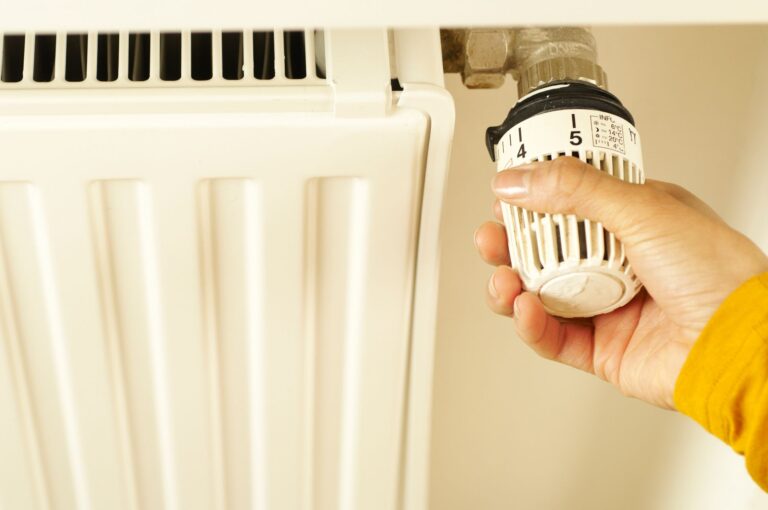

A temperamental wall thermostat can leave you fighting the dial every winter morning, especially when your furnace runs older or your home has rooms that never quite reach a comfortable temperature. Programmable models fix that by handling the schedule for you, while a few non-programmable units on this list suit simple systems or outbuildings where a manual dial is all you need. The picks below cover heat pumps, multi-stage gas furnaces, single-stage conventional setups, and a couple of specialty controls. Match the spec to the system you actually own and the right choice becomes much easier.
A Snapshot Of The Selections
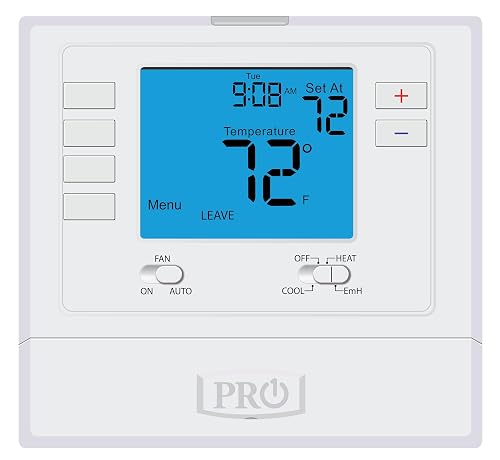
PRO1 T725 Heat Pump/Conventional Programmable Thermostat 2H/1C Heat Pump or 1H/1C Conventional

PRO1 T771 Single Stage Non-Programmable Thermostat 1H/1C Conventional
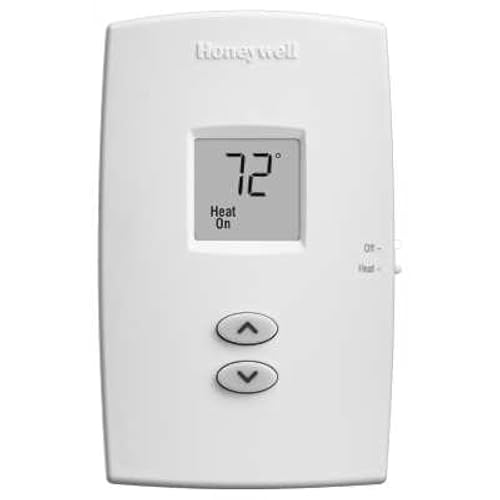
Honeywell TH1100DV1000 PRO 1000 Single-Stage Heat-Only Vertical Thermostat
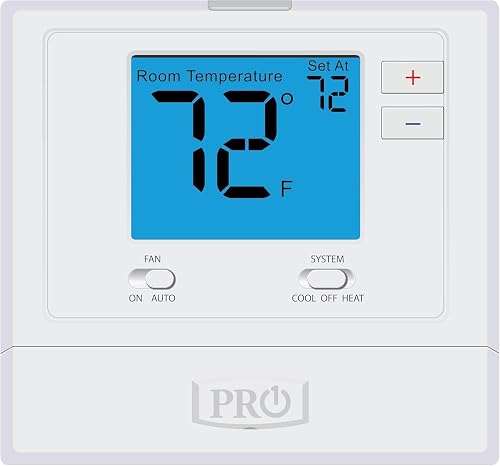
PRO1 T701 Single Stage Non-Programmable Thermostat 1H/1C Conventional

PRO1 T715 Multi-Stage Programmable Gas Thermostat 2H/2C
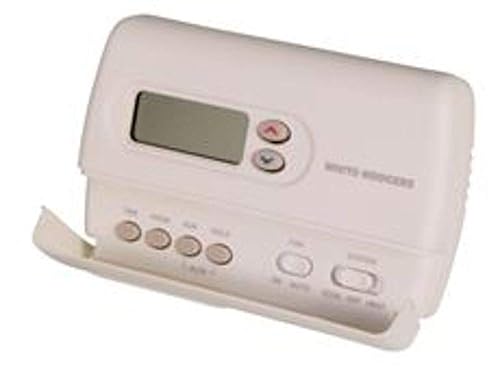
White-Rodgers 1F80-361 Emerson 80 Series Single Stage Programmable Thermostat
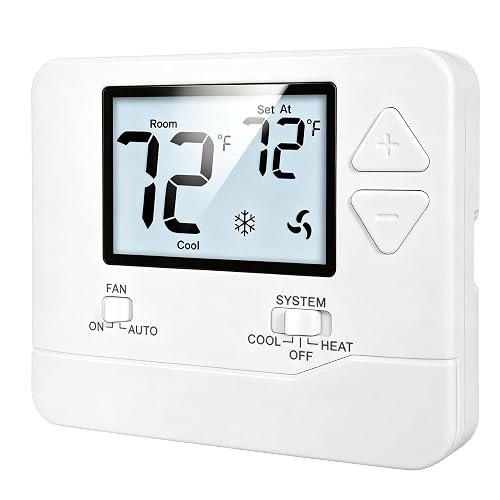
Heagstat Non-Programmable Thermostat 1H/1C Conventional Single-Stage
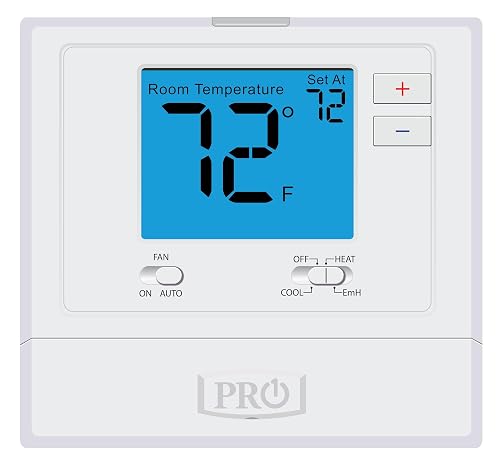
PRO1 T721 Non-Programmable Thermostat 2H/1C Heat Pump or 1H/1C Conventional

Zero KST203 Water Heater Upper Thermostat, Double Throw

PRO1 T805 Single Stage Programmable Thermostat 1H/1C Conventional
Why These Options Stand Out
The PRO1 T725 sits in a useful middle ground for households that have not fully committed to one system type. It handles a 2 heat/1 cool heat pump setup or a 1 heat/1 cool conventional system, which matters when you are unsure what is hiding behind the wall plate or you may switch equipment in the next few years.
The 4 sq. in. blue backlit screen shows the daypart label (wake, leave, return, sleep) so you always know which programmed window is active. Programming is flexible at 7-day or 5/1/1, giving you a real schedule rather than a single fixed comfort band. Compared with the T701 and T771 non-programmable options later in the list, this one trades dial simplicity for actual energy savings potential.
Useful Highlights
- Accepts both heat pump and conventional wiring, so the same unit survives an equipment swap
Worth Noting
- Setup requires identifying your system type and wire count, which can slow first-time installers
Key Specs
Who It Suits Best
Homeowners running a heat pump who want real scheduling without stepping up to a learning thermostat.
Where Another Pick Suits Better
Pick the PRO1 T805 instead if you want a noticeably larger 7 sq. in. display and you only need 1H/1C conventional support.
The T771 leans into a different job than the T725 above. Its setpoint range reaches down to 25°F, which is unusually low and makes it a useful fit for garages, sheds, and workshops where you only want the heater to kick in when the space gets genuinely cold. It is non-programmable, so you set a number and it stays there.
The 4 sq. in. blue backlit screen is the same family of display used on other PRO1 T700-series models. Swing adjustment and calibration are built in, which is the kind of detail that matters when a thermostat lives in a drafty outbuilding where the reading drifts. For a primary living space with a normal routine, a programmable unit like the T725 above is the better fit.
Points In Its Favor
- Wide 25°F to 90°F setpoint range protects unheated spaces from freezing
- Swing adjustment helps keep an outbuilding at a stable temperature
- Simple non-programmable design means nothing to set up after the initial wiring
Trade Offs
- No scheduling means you adjust it manually when the seasons change
Made For
Owners of detached garages, sheds, or workshops who need frost protection without programming complexity.
Look Elsewhere When
You live in a primary residence and want a 7-day schedule. The PRO1 T725 is a more capable everyday choice.
The Honeywell TH1100DV1000 takes a different path with a vertical layout, which is rare in this category. That taller footprint is helpful where a wide horizontal thermostat would crowd a narrow wall section, and it keeps the controls in a familiar up-down arrangement.
Heat-only systems, where no central air runs through the thermostat wires, can feel limiting, but they cover a lot of older homes with a standalone furnace. The PRO 1000 is a non-programmable unit, so you are trading schedule for mechanical simplicity. Compared with the T701 further down, the Honeywell lacks the backlit screen some people want for night checks.
Positive Takeaways
- Vertical case fits narrow wall cavities and stair landings
- Premier white finish blends into most wall paint colors
- Non-programmable layout means almost no learning curve
- Mechanical reliability backed by a long-running Honeywell PRO line
Points To Note
- Heat-only, so it cannot run a central air conditioning stage
- No backlit display on this model, which can be a drawback in dark hallways
Best Suited To
Owners of older homes with a furnace-only setup who want a no-fuss wall control with a vertical case.
Not Your Match When
You have a heat pump. The PRO1 T725 is set up for heat pump systems, while the Honeywell is heat-only.
The T701 is the dial-style cousin to the T725. It runs the same T700 platform with the 4 sq. in. blue backlit screen, but skips programming entirely. For someone who never adjusts a schedule and just wants a clear readout and reliable setpoint, that trade is worth making.
A glow-in-the-dark light button is a thoughtful touch, especially in a hallway with no windows. It works for 1 heat/1 cool conventional systems running on gas or electric, which covers a large slice of U.S. homes. Stack it against the T771, the T701 trades the wide setpoint range for a more typical home-focused comfort band.
Where It Helps
- Backlit screen and glow-in-the-dark button help in low-light hallways
- Conventional 1H/1C support covers most standard gas or electric setups
- No schedule to learn, so roommates and family members can operate it easily
Honest Caveats
- You will not see automatic setback savings, since the unit holds whatever temperature you set
- No heat pump support, which rules it out for some modern installs
Key Specs
Right Fit For
Households with a straightforward gas furnace and air conditioner who want a clear, set-and-forget wall control.
Skip It When
You want a setback schedule. The PRO1 T805 gives you a programmable schedule on the same simple platform.
The T715 is the multi-stage option in the PRO1 lineup, and it targets homes where the furnace can fire on low or high heat. That second stage of heating helps in colder climates and larger houses where a single burner cannot keep up on the worst mornings. It also handles 2 cool stages, which matters with a two-stage outdoor unit.
Programming options are 7-day, 5/1/1, or non-programmable, so you can ramp up gradually or simply use the dial. The T700 platform carries over the 4 sq. in. blue backlit display and the glow-in-the-dark light button, giving a familiar feel if you have handled a T701 before. Compared with the T725, this one trades heat pump compatibility for genuine multi-stage gas support.
Why It Works Well
- Multi-stage gas handling keeps temperatures stable on the coldest mornings
- Three operating modes let you start simple and add scheduling later
- 4 sq. in. backlit display remains easy to read at a glance
Soft Spots
- Multi-stage wiring adds time to the install compared with a 1H/1C unit
- Heating overshoot can occur in mild weather if the schedule is not dialed in
Key Specs
Perfect Match For
Owners of a two-stage gas furnace in a region with harsh winters who want real scheduling and tighter temperature control.
Reach For A Different Pick When
You have a basic 1H/1C system. The PRO1 T805 covers that simpler setup with a larger 7 sq. in. screen.
The 1F80-361 is a familiar sight in replacement work, which is part of its appeal. Many HVAC technicians have installed one of these in the past, and that history shows up in the manual’s clarity and the wiring labels. It is a single-stage unit with 5+1+1 programming and supports up to four periods per day, so the schedule can match a real household rather than a single setpoint.
Millivolt compatibility and 24V support mean it works with gas, oil, or electric systems, including older wall heaters that put out a very low control voltage. The unit is sold from a contractor bulk-pack with a White-Rodgers factory anti-static bag. Compared with the PRO1 T805 further down, this one runs on a smaller screen and a more traditional interface.
The Practical Payoff
- Millivolt and 24V compatibility covers nearly any low-voltage system you have
- 5+1+1 programming with four daily periods gives precise weekly control
- Gas, oil, and electric furnace support means one model fits many jobs
Possible Compromises
- Interface is button-driven and takes a few minutes to learn for first-time schedulers
- Display is smaller than the PRO1 T805’s 7 sq. in. panel
Feature Snapshot
Who Should Grab It
Homeowners replacing an older thermostat in a home with a gas, oil, or electric furnace who want a proven, programmable option.
A Better Fit Elsewhere
You prefer a fresh PRO1 T800-platform look. The PRO1 T805 offers a larger 7 sq. in. screen and similar 1H/1C coverage.
The Heagstat non-programmable thermostat solves a very specific problem. It is designed for 24VAC conventional single-stage systems running on 2 to 5 wires, which is the typical configuration in older homes where nobody ran a common wire. That limited wire count is a real barrier for many modern smart thermostats, and this one sidesteps it.
It works with gas, oil, and electric furnaces paired with an independent outdoor condenser. The white backlight is the kind of feature people notice in a dark hallway. Compared with the PRO1 T701, the Heagstat trades a glow-in-the-dark button for compatibility on tighter wiring setups.
Strong Points
- Wiring support for 2 to 5 wire installs opens up older homes that lack a common wire
- White backlight aids nighttime visibility
- Supports gas, oil, and electric furnace pairs
Things To Consider
- Not compatible with 6 to 8 wire systems, which limits newer installs
- Heat pump systems are not supported, ruling out some homes
- Non-programmable, so it does not generate automatic setbacks
Feature Card
Whose Shelf It Belongs On
Owners of older homes with limited thermostat wiring who need a simple 1H/1C wall control without rewiring.
Swap It Out When
You want a multi-stage gas system. The PRO1 T715 is set up for 2H/2C, while the Heagstat is single-stage only.
The T721 fills the gap between the simpler T701 and the programmable T725. It accepts a 2H/1C heat pump system or a 1H/1C conventional system, but skips the schedule entirely. That is a useful middle ground for someone who needs heat pump support without committing to a 7-day programming routine.
The 4 sq. in. blue backlit display and glow-in-the-dark light button are familiar from the rest of the T700 family, and the unit runs on either AA batteries or a hardwired common setup. Compared with the T701 below, the T721 trades conventional simplicity for heat pump coverage. Compared with the T725, it trades scheduling for a lower-fuss dial-style operation.
The Case For It
- Heat pump and conventional support in a single non-programmable model
- Glow-in-the-dark light button helps in low-light hallways
- Flexible power options work for older wiring
Less Ideal Details
- No scheduling means you adjust setpoints manually for the season
- Single-stage cooling only, so a 2-stage outdoor unit will not get full use
Built With In Mind
Heat pump households that want a clear, simple wall control and have no use for a weekly schedule.
Another Choice May Suit
You want 7-day scheduling on a heat pump. The PRO1 T725 adds programming while staying on the same display family.
The KST203 is the odd one out in this roundup, and it earns its place by being a different kind of thermostat. It is an upper thermostat for a dual-element electric water heater, which is a common replacement part on a 30, 40, or 50 gallon tank. The double-throw (SPDT) design and 120/480 VAC rating cover most residential water heater voltages.
It is adjustable, with an energy-saving range setting and a built-in safety switch to prevent overheating. The cross-reference to 59T SPDT and 66T models makes it a viable substitute for several OEM parts. Compared with the wall thermostats elsewhere in this list, this one lives inside a metal cabinet, not on a living room wall.
Advantages To Know
- Direct replacement part for many dual-element water heaters
- Built-in safety switch adds a layer of overheating protection
- 120/480 VAC range covers standard residential water heater wiring
- Adjustable energy-saving range matches household hot water habits
Worth Bearing In Mind
- Not a wall thermostat, so it does not control room temperature at all
- Installation requires working around a powered water heater, so shut off the breaker first
Feature Rundown
Who Will Love This
Homeowners with a dual-element electric water heater who need a replacement upper thermostat that fits common OEM specs.
Where A Sibling Pick Shines
You actually need a wall thermostat. Any of the PRO1 T700-series models above, like the T701, handle room temperature control.
The T805 closes the list on a strong note, especially for anyone who has squinted at a small thermostat readout. The 7 sq. in. display is genuinely large, almost double the screen area of the T701 and T725, and the setpoint and daypart label are readable from across a room.
It runs on the T800 platform and supports 1H/1C conventional systems with 7-day, 5/1/1, or non-programmable modes. A glow-in-the-dark light button helps in dim hallways. Compared with the T725 earlier, the T805 trades heat pump support for a much bigger display, so it is the better fit when a conventional system is the only goal.
Noteworthy Benefits
- 7 sq. in. blue backlit display is the largest on this list
- Three operating modes, including full 7-day scheduling
- Glow-in-the-dark light button makes night checks easier
Factors To Consider
- Conventional systems only, so heat pump homes should look at the T725
- Larger footprint may cover a wider patch of paint than the previous thermostat
Who Should Grab It
Households with a standard 1H/1C conventional system who value a large, easy-to-read display and want the option of weekly scheduling.
Skip It When
You need heat pump support. The PRO1 T721 is the non-programmable heat pump option in the same family.
What To Match Before You Choose a Programmable Thermostat for Your Furnace
System Type and Stages
The first filter is always your equipment. A 1 heat/1 cool conventional furnace pair is the simplest case and is covered by units like the PRO1 T701 and the Heagstat. A 2-stage furnace that can fire on low or high needs a multi-stage thermostat like the PRO1 T715, otherwise the second stage never activates.
Heat pump systems add a layer of complexity, and you want a thermostat explicitly listed as heat pump compatible, such as the PRO1 T725 or T721. Matching the stage count to the equipment is the single biggest factor in whether a thermostat will actually run your system the way it was designed.
Wire Count and Common Wire
Older homes often have only 4 or 5 wires running to the thermostat, while modern systems may use 6 to 8. The Heagstat accepts 2 to 5 wire installs, which suits limited wiring, while the White-Rodgers 1F80-361 covers a wider range including millivolt systems. If your wiring does not include a common (C) wire, look for thermostats that run on batteries or hardwired power and check the install notes before you start.
Programming Style and Display
Decide whether you actually want a schedule. Programmable models like the PRO1 T725 and T805 can save energy through automatic setbacks, but you have to set them up. Non-programmable units like the T701 and T771 are easier for households that prefer a set-and-forget approach. Display size matters too, since the T805’s 7 sq. in. screen is much easier on aging eyes than the smaller 4 sq. in. panels on the T700-series models.
Real-World Reliability and Use Case
Harsh winter climates benefit from multi-stage gas support for tighter temperature control, while mild regions rarely need that second stage. Detached spaces, like garages and sheds, call for a wide setpoint range that can dip low, which is the T771’s specialty. For a replacement on a household water heater, remember that a wall thermostat will not help. The Zero KST203 is the part for that job.
Key Considerations Across These Picks
Pitfalls Shoppers Hit
A common slip is buying a thermostat that supports more stages than the equipment can use, which adds cost without any performance gain. Another is assuming every modern thermostat will work on a 4-wire system. Always count the wires at the wall before you order, especially in older homes, and confirm whether the unit needs a common wire.
When Paying More Pays Off
Higher-tier picks in this category earn their cost through larger displays, multi-stage handling, and more flexible programming. The PRO1 T805 and T715 sit at the top of that range, and they make sense for households that will actually use the scheduling and the extra control. For a single-temperature outbuilding, paying more rarely translates into any real benefit, so a T771 or T701 will be a smarter use of the budget.
Frequently Asked Questions
Do programmable thermostats work with older furnaces?
Most modern programmable wall thermostats work with any low-voltage furnace control board, including many older gas and oil systems. The key is matching the wire count and confirming the thermostat is rated for your system voltage, which is usually 24VAC or millivolt in residential settings.
What is a heat pump compatible thermostat?
A heat pump compatible thermostat is a model designed to control the reversing valve and auxiliary heat strips that a heat pump system relies on. Units like the PRO1 T725 and T721 list heat pump support explicitly, while heat-only thermostats like the Honeywell TH1100DV1000 do not.
Can I install one of these thermostats without rewiring?
In most cases, you can replace a thermostat using the existing wires at the wall. Battery-powered models like the PRO1 T701 and T805 help when there is no common wire, though you should always shut off the breaker to the HVAC system before touching the wiring.
How do I know how many stages my furnace has?
The furnace nameplate or the original installer documentation usually lists the stage count, often as single-stage or two-stage. The thermostat’s model number can be a clue too, since multi-stage units like the PRO1 T715 are typically listed as 2H/2C.
Are non-programmable thermostats still a good option?
For households that never adjust a schedule, a non-programmable model is the right call. The T701 and T771 are examples that trade scheduling for simpler controls and a lower learning curve for everyone in the home.
Closing Remarks
The right thermostat for your furnace comes down to matching system type, stage count, and wire count before anything else. Once those three match, the choice between a programmable model like the T725 and a simple dial-style unit like the T701 is a matter of how much scheduling you actually want to manage. Take a quick photo of your current wiring and your furnace label before you order, and the rest of the decision tends to fall into place.