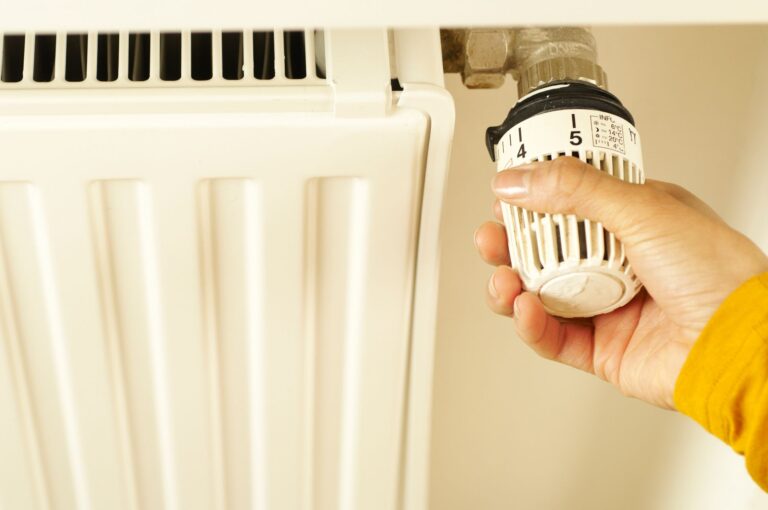

A reliable thermostat quietly shapes how your home feels through every season. Picking the wrong model leaves you fighting an uneven room, while the right one slides into the wall and just works, holding setpoints without constant fiddling. This roundup walks through ten wall-mount options from the PRO1 IAQ and White-Rodgers lines that cover most common system types. Each pick pairs a clear display with the control style you actually want to live with.
A Snapshot Of The Selections
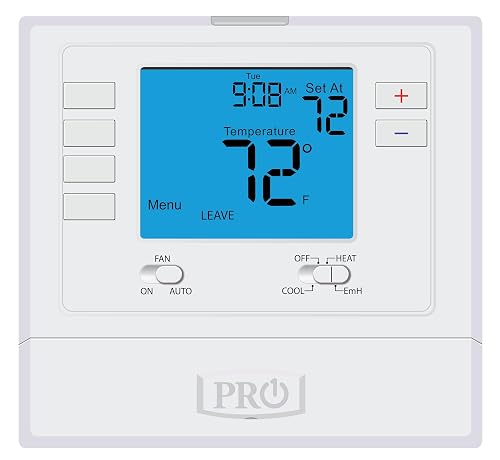
PRO1 T725 Programmable Heat Pump/Conventional Thermostat

PRO1 T771 Single Stage Non-Programmable Thermostat
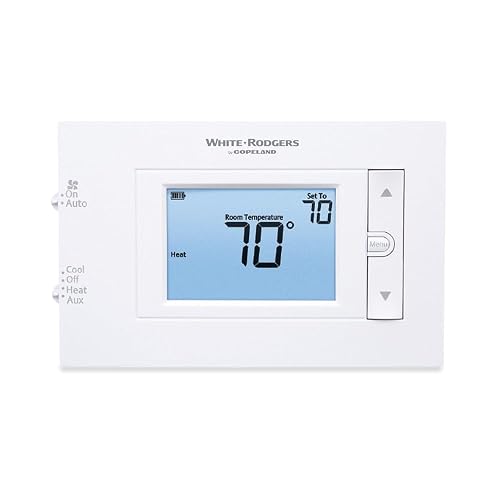
White-Rodgers 80 Series 1F83H-21NP Heat Pump Thermostat
White-Rodgers 80-Series 1F89-0211 Digital Thermostat
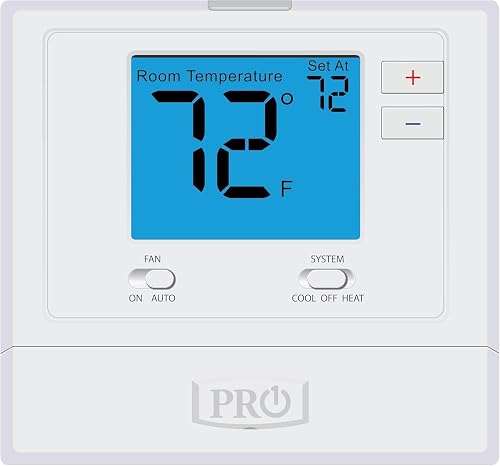
PRO1 T701 Single Stage Non-Programmable Thermostat

PRO1 T715 Multi-Stage Programmable Gas Thermostat
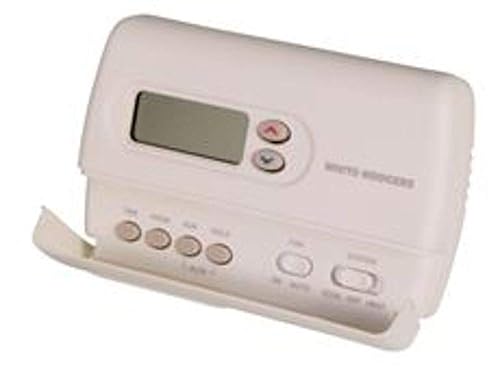
White-Rodgers 1F80-361 Single Stage Programmable Thermostat
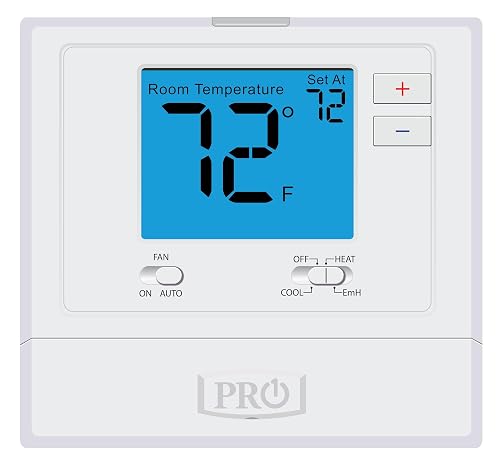
PRO1 T721 Heat Pump/Conventional Thermostat

White-Rodgers 1E78-144 Single Stage Thermostat

PRO1 T805 Single Stage Programmable Thermostat
Inside Each Recommended Option
The T725 lands at the top because it handles two common system types without forcing you into extra setup menus. A heat pump home with a backup heat strip gets the same wall unit as a straight gas furnace, which keeps the install simple when you don’t know what the next house will need. The 4 sq. in. blue backlit screen stays readable from across a hallway, and the schedule options (7-day or 5/1/1) match how most people actually live.
Compared with the T701 below, this one trades a simpler interface for true programmability. For anyone with a heat pump system, that flexibility matters more than a slightly cleaner display.
Standout Benefits
- Supports both 2 heat/1 cool heat pump and 1 heat/1 cool conventional wiring from a single unit, useful when system type is uncertain
- 7-day and 5/1/1 programming let weekday and weekend schedules run independently, which trims wasted runtime in empty rooms
- The 4 sq. in. blue backlit display is large enough to read across a room in low light
- Compatible with battery or hardwired power, giving more placement freedom during installation
Things To Consider
- The button layout takes a few days to learn if you haven’t owned a programmable model before
- AA batteries need swapping roughly every year if the C-wire is absent
Built With In Mind
Homeowners with a 2 heat/1 cool heat pump who want a real weekly schedule without paying for smart features.
Swap It Out When
The PRO1 T701 fits better for 1 heat/1 cool conventional systems that don’t need programming at all.
The T771 is the odd one in this group, and that’s the point. Its setpoint range stretches from 25°F to 90°F, which most living-room thermostats won’t do. That extra range is what makes it suited for spaces that need freeze protection, like detached garages, workshops, or sheds that aren’t part of the main house envelope. Set it low, walk away, and the heater won’t drop below the safety floor.
It skips programming entirely, which is fine for spaces that stay at the same temperature year-round. The 4 sq. in. blue backlit display is the same size used across the T700 platform, keeping the controls familiar.
What Earns Its Place
- The 25°F to 90°F setpoint range covers low-temp freeze protection unavailable on most home models
- Swing adjustment and calibration settings let you fine-tune how often the system cycles
- The familiar T700 interface means less relearning if you already own a PRO1 unit
Worth Noting
- Single-stage only, so it won’t work with multi-stage heating or cooling systems
- Non-programmable, meaning no automatic schedule across the week
- Not a fit for a primary living space that benefits from day/night setback
Feature Snapshot
Made For
Shoppers who need a no-fuss wall thermostat for a garage, shed, or workshop where freeze protection matters more than scheduling.
Where Another Pick Suits Better
The PRO1 T721 covers a similar footprint but adds heat pump support, which helps if the space runs a heat pump instead of a conventional unit.
Older heat pump systems often get the short end when thermostat shopping because many newer models assume multistage wiring. The 1F83H-21NP is purpose-built for single-stage heat pumps, which means the install doesn’t require jumper tricks or unused terminals. Setup leans toward the straightforward end, and the backlit display handles a dim hallway fine.
It skips scheduling entirely, so the focus stays on accurate setpoint control. Against the T725, you trade programmability for a cleaner install in a basic heat pump home.
Notable Gains
- Built specifically for heat pump systems, so wiring maps cleanly without adapter workarounds
- Backlit display reads clearly in low light, helpful for hallways and bedrooms
- Simple button layout avoids the layered menus common on programmable models
Trade Offs
- No weekly schedule, so the unit won’t drop the temperature while you’re at work
- Single-stage only, which limits use on multi-stage heat pumps
Right Fit For
Owners of single-stage heat pump systems who prefer manual setpoint control over a programmable schedule.
Consider Something Else When
The PRO1 T725 fits better when you also want 7-day scheduling on a heat pump system.
The 1F89-0211 is one of the more fuel-flexible units in the 80 Series. It handles heat pump systems running 2 heat/1 cool, but it also accepts oil, gas, electric, and millivolt wiring, so the same thermostat can move between homes without rewiring. The system switch cycles between Heat, Off, and Cool with a clean toggle, and the 2 sq. in. blue backlit display keeps the readout visible at night.
It’s hardwired or battery powered, which removes a common install worry. The non-programmable design is intentional, so don’t expect a weekly schedule out of the box.
Noteworthy Benefits
- Multi-fuel compatibility (oil, gas, electric, millivolt) makes it a fit for non-standard heating setups
- Dual-power design (hardwired or battery) gives flexibility when a C-wire is missing
- Heat pump support up to 2 heat/1 cool covers most common residential configurations
A Few Limitations
- The 2 sq. in. display is smaller than what the T700 PRO1 models offer
- No weekly programming, so manual setpoint changes are the rule
Feature Snapshot
Who Will Love This
Homeowners with mixed-fuel systems or older wiring who want one thermostat that handles both heat pump and conventional setups.
Skip It When
The PRO1 T725 earns the spot when programmability is a must-have on a heat pump system.
The T701 keeps things simple in the best way. It’s a non-programmable unit aimed at 1 heat/1 cool conventional systems, which covers most gas furnaces paired with a standard AC compressor. The 4 sq. in. blue backlit display has a glow-in-the-dark light button, so the controls stay findable in a power outage or a dark hallway at night.
Set it once and it tends to stay out of mind, which is the point for shoppers who’d rather not fiddle with schedules. Battery power keeps the install easy in older homes.
The Value In It
- Glow-in-the-dark light button makes the controls findable when the room is dark
- Gas or electric configuration switch adapts to the furnace type on the wall
- The 4 sq. in. backlit screen is roomy enough for quick glance reads
- Battery power removes the need to pull a C-wire through the wall
Small Caveats
- Single-stage only, so it won’t run a multi-stage furnace at full efficiency
Best Suited To
Conventional gas or electric homes with single-stage equipment who want a no-schedule thermostat that just holds a setpoint.
Look Elsewhere When
The PRO1 T805 earns the spot when a larger 7-day display and weekly scheduling are worth the upgrade.
The T715 sits a step above the rest of the PRO1 lineup, and the 2 heat/2 cool support is why. Two-stage gas furnaces paired with a two-stage AC compressor get full staging control, which is what most installers look for in a serious replacement. The 4 sq. in. blue backlit display is shared with the T700 family, and the glow-in-the-dark light button handles the same nighttime readability.
Programmability is the headline here, with 7-day, 5/1/1, or non-programmable options depending on how much scheduling you actually want. Battery or hardwired power rounds out the install picture.
Real Benefits
- 2 heat/2 cool support matches two-stage gas and AC systems for better efficiency curves
- Three operating modes (7-day, 5/1/1, non-programmable) keep the schedule flexible
- Glow-in-the-dark light button helps locate the controls at night
Points To Keep In Mind
- Two-stage equipment requires more wiring prep than single-stage installs
- Programming setup is more involved than the T701’s manual approach
Feature Snapshot
Whose Shelf It Belongs On
Two-stage gas furnace and AC homes that want full multi-stage staging with a weekly schedule on the wall.
Another Choice May Suit
The PRO1 T805 is the better match for single-stage conventional systems where a bigger display matters more than staging.
The 1F80-361 is a long-running model in the White-Rodgers 80 Series, and the 5+1+1 schedule format is a familiar layout. That setup means weekdays share a program, while Saturday and Sunday each get their own, so a remote worker with weekend shifts can stop overriding the thermostat. Up to four periods per day let you fine-tune wake, leave, return, and sleep windows.
It’s sold in a contractor bulk pack, so the unit arrives in a factory anti-static bag with the manual available on the listing. Gas, oil, and electric systems are all supported, along with 24V and millivolt wiring.
A Favorable Mix
- 5+1+1 scheduling with up to four periods per day balances control and complexity
- Multi-fuel compatibility covers gas, oil, and electric systems
- 24V and millivolt support fits older low-voltage equipment
Honest Caveats
- Single-stage only, so multi-stage equipment won’t get full staging benefit
- Contractor packaging means the manual is referenced from the listing rather than included in the box
Who Should Grab It
Single-stage conventional homeowners who want a structured weekly schedule without stepping up to multi-stage equipment.
Reach For A Different Pick When
The PRO1 T805 is the better fit when a larger 7 sq. in. display matters more than the 80 Series form factor.
The T721 covers two configurations in a single box, which is useful when the system type isn’t pinned down. A 2 heat/1 cool heat pump and a 1 heat/1 cool conventional system both wire into the same terminals, so swapping between a rental and a primary home doesn’t require a new thermostat. The 4 sq. in. blue backlit display and the glow-in-the-dark light button match the rest of the T700 family.
Power is the usual PRO1 split, with AA batteries or a hardwired option, so installation stays flexible. It stays non-programmable, which keeps the button layout simple.
Useful Touches
- Dual system support (2H/1C heat pump or 1H/1C conventional) covers common residential setups
- Glow-in-the-dark light button makes the controls findable in the dark
- Battery or hardwired power supports older homes without a C-wire
Points To Note
- Non-programmable, so it won’t run a setback schedule across the week
Feature Snapshot
Perfect Match For
Shoppers who want one thermostat that works on either a heat pump or a conventional system without buying a second unit.
Where A Sibling Pick Shines
The PRO1 T725 earns the spot when 7-day programming on a heat pump system is a priority.
The 1E78-144 is the most pared-down unit in this group, and that’s the appeal. It’s a single-stage, non-programmable thermostat that targets basic heating, cooling, and heat pump (without aux) systems. The digital display is backlit for low-light reading, and the 24V plus millivolt support covers older low-voltage setups without rewiring the wall.
It’s the kind of unit that suits a spare bedroom, a small rental, or a basic system that doesn’t need staging or scheduling. The honest read is that it does one job and stays out of the way.
What It Does Well
- Easy-to-read backlit display works in dark hallways
- 24V and millivolt support handles older low-voltage equipment
- Single-stage coverage for heating, cooling, and heat pump (without aux) systems
Worth Bearing In Mind
- Not compatible with electric baseboard heat or some other specific systems
- Non-programmable, so no automatic day/night setback
Right Fit For
Owners of basic single-stage systems who want a simple wall thermostat without scheduling or staging features.
Consider Something Else When
The PRO1 T701 fits better when a glow-in-the-dark light button and a gas/electric configuration switch matter more.
The T805 closes the roundup on the T800 platform, and the 7 sq. in. blue backlit display is the headline. That extra screen real estate matters in larger rooms or for anyone with limited vision, since the readout stays readable from across the room. Programming runs 7-day, 5/1/1, or non-programmable, so the schedule can grow into the unit as habits settle in.
It’s built for 1 heat/1 cool conventional systems, which covers the bulk of residential gas or electric setups. Battery or hardwired power keeps the install flexible in older homes.
Key Advantages
- The 7 sq. in. blue backlit display is one of the larger readouts on the wall
- 7-day, 5/1/1, or non-programmable modes match how structured your routine is
- Glow-in-the-dark light button makes the controls findable in the dark
- Battery or hardwired power supports older homes without a C-wire
Small Caveats
- Single-stage only, so it won’t run a two-stage furnace at full efficiency
- Conventional systems only, which means heat pump homes should look elsewhere
Feature Snapshot
Who It Suits Best
Conventional system homeowners who want a large display and the option to grow into a weekly schedule over time.
Not Your Match When
The PRO1 T725 is the better fit for heat pump homes that need 2 heat/1 cool wiring support.
Factors That Matter When Choosing a Programmable Wall Thermostat
A programmable thermostat refers to a wall unit that follows a set schedule (daily or weekly) without you pressing buttons every morning, while a non-programmable unit holds one setpoint until you change it. Both can be smart choices, depending on how steady your routine is.
Match The Thermostat To Your System Type
Start by identifying the equipment on the wall behind the old thermostat. Heat pump systems wire differently from conventional gas or electric setups, and multi-stage equipment needs a thermostat that supports the right number of heating and cooling stages. Picking a unit that doesn’t match the system is the most common install mistake, and it often shows up as a thermostat that won’t power on or won’t switch modes. The PRO1 T725 and PRO1 T721 both cover two configurations in a single box, which is useful when the system type is uncertain.
Decide Between Programmable And Non-Programmable
Programmable units pay off when your home is empty for predictable blocks of the day. A 7-day schedule trims runtime during work hours, while a 5/1/1 schedule keeps weekdays uniform and lets Saturday and Sunday run their own patterns. Non-programmable units are simpler, cheaper, and a fit for spaces that stay occupied most of the time, like a workshop or a spare bedroom. For most primary living spaces, the energy savings from a basic weekly schedule add up across a full heating and cooling season.
Pay Attention To Display Size And Power
A 4 sq. in. display is enough for most hallways, but a 7 sq. in. screen (like the PRO1 T805) is friendlier for anyone who reads the room temperature from a distance. Power matters as much: battery-only units install in older homes without a common wire, while hardwired thermostats pull constant power from the HVAC system. Some models accept either, which gives the most flexibility during a swap.
Key Considerations Across These Picks
Mistakes Worth Dodging
The most common slip-up is buying a thermostat that doesn’t match the system type. A 1 heat/1 cool conventional unit won’t run a heat pump properly, and a multi-stage thermostat on a single-stage furnace just adds menus you can’t use. Check the wiring label inside the old thermostat cover before ordering, and match the terminals (R, C, W, Y, G, O/B) to the new unit’s compatibility list. Another trap is overlooking the C-wire, which many newer thermostats require for constant power. Pulling a new wire through the wall isn’t always practical, so a battery or dual-power model is often the easier install.
Where The Extra Money Goes
Stepping up to a programmable unit buys a weekly schedule and the energy savings that come with it. The next jump, to a larger display or multi-stage support, is mostly about convenience and equipment efficiency. A two-stage furnace paired with a single-stage thermostat can only run at full output, which shortens the low-fire efficiency window. Multi-stage thermostats like the PRO1 T715 let the furnace modulate, which is where the upgrade cost is recovered over a few seasons. Higher-tier models also tend to ship with better backlighting and glow-in-the-dark buttons, which sounds small but matters during nighttime adjustments.
Frequently Asked Questions
What Is The Difference Between Programmable And Non-Programmable Thermostats?
A programmable thermostat follows a set schedule across the week, automatically adjusting the setpoint at preset times. A non-programmable thermostat holds one setpoint until you change it manually, which keeps the controls simple but skips any energy savings from scheduled setbacks.
Do I Need A C-Wire For These Thermostats?
Many of the units in this roundup accept either battery power or a hardwired connection, which removes the C-wire requirement for most installs. Check the listing details for each model, since the exact power setup varies by thermostat.
Can I Install A Programmable Thermostat Myself?
Most wall thermostats are designed for DIY replacement, assuming the wiring labels match between the old and new units. Always turn off the HVAC breaker before removing the old cover, and photograph the existing wiring so you can match the terminals on the new thermostat.
Are These Thermostats Compatible With Heat Pump Systems?
Several models in the list support heat pump wiring, including the PRO1 T725, PRO1 T721, White-Rodgers 1F83H-21NP, and the White-Rodgers 1F89-0211. Confirm the heat pump stage count (such as 2 heat/1 cool) matches the thermostat’s supported configuration before installing.
What Does A Glow-In-The-Dark Light Button Do?
It absorbs ambient light during the day and emits a soft glow at night, which helps you locate the thermostat’s controls in a dark hallway or during a power outage. It doesn’t run on battery, so it never needs replacing.
Wrap Up
A wall thermostat is one of the few upgrades that quietly pays you back every month in comfort and lower runtime. The right match comes down to your system type, your schedule, and how much you want to interact with the controls. Browse the ten options above, confirm the wiring, and pick the one that fits your home today.