
A ducted or ductless system only feels comfortable when the thermostat matches how you actually live. The right controller turns a confusing wall plate into a clear, everyday tool, while the wrong one leaves you nudging temperatures up and down without much real payoff. This roundup walks through wall thermostats and smart AC controllers that pair with Fujitsu systems, plus a few conventional and heat-pump picks that work well in the same household setup.
A Quick View Of The Lineup
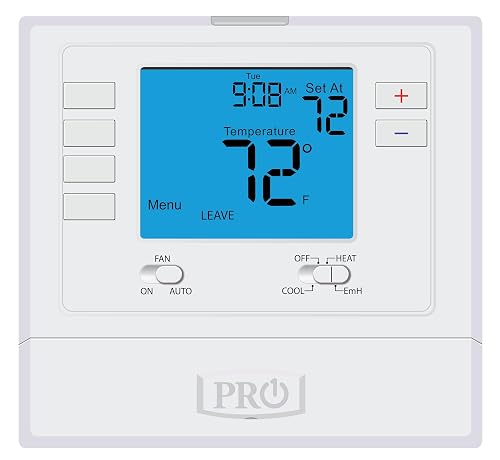
PRO1 T725 Programmable Heat Pump Thermostat (2H/1C)

PRO1 T771 Non-Programmable Wall Thermostat (1H/1C)
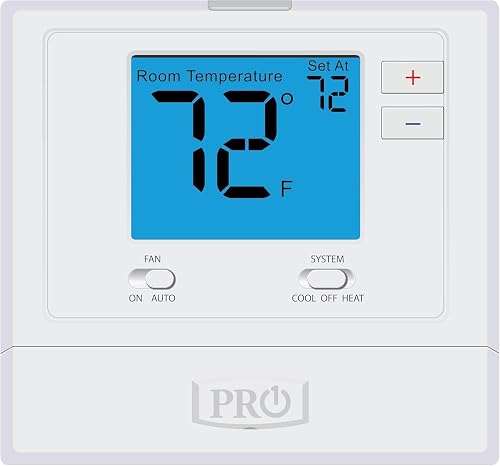
PRO1 T701 Non-Programmable Thermostat (1H/1C)

PRO1 T715 Multi-Stage Programmable Gas Thermostat (2H/2C)
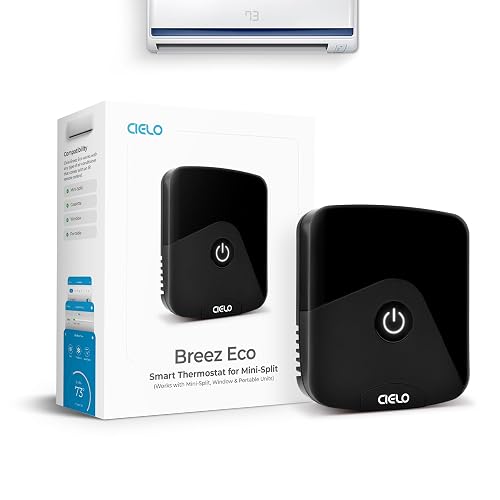
Cielo Breez Eco Smart AC Controller (Black)
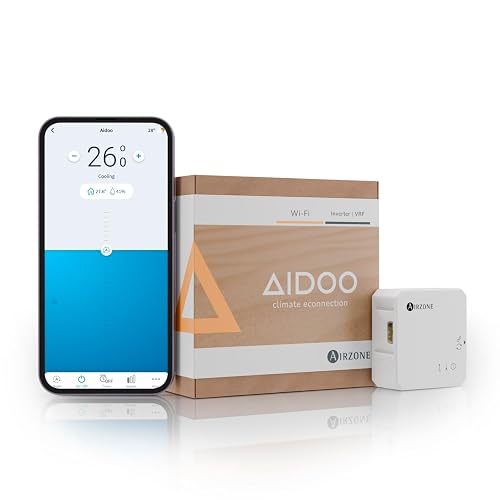
Airzone Aidoo WiFi Control for Fujitsu 3-Wire
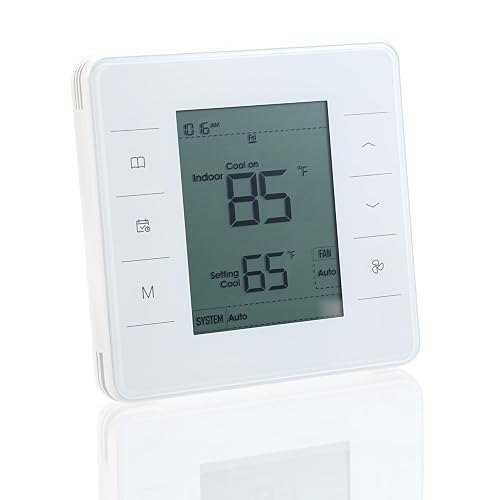
BOWSEN Programmable Thermostat (1H/1C, White)
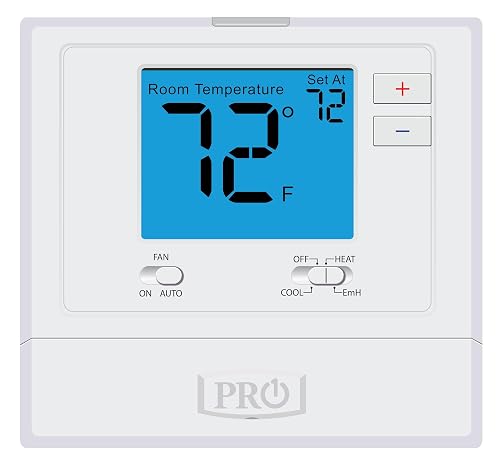
PRO1 T721 Non-Programmable Heat Pump Thermostat
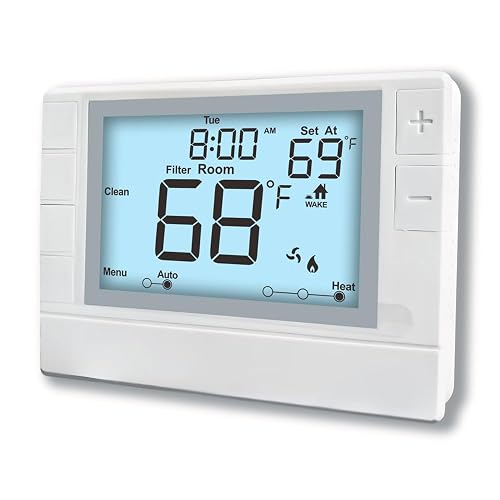
Coiiwsei Programmable Thermostat (2H/2C, White Backlight)

PRO1 T805 Programmable Wall Thermostat (1H/1C)
A Breakdown Of The Leading Choices
Homes that swing between a heat pump for shoulder seasons and a conventional furnace for deep winter get two control personalities in one wall plate here. The PRO1 T725 covers 2 heat/1 cool heat pump setups alongside 1 heat/1 cool conventional systems, which means one thermostat can follow a household through equipment swaps without another trip up the ladder.
Programmability is the headline. You get 7-day or 5/1/1 scheduling, a 4 sq. in. blue backlit screen, and a glow-in-the-dark light button for late-night tweaks. Compare that to the simpler PRO1 T701 covered later, and you can see the extra scheduling depth is the main reason to step up to the T725.
Key Advantages
- Handles both heat pump and conventional systems, so a future equipment change won’t force a new wall unit.
- 7-day or 5/1/1 programming lets you set different schedules for weekdays and weekends, which most households actually use.
- 4 sq. in. blue backlit display is easy to read from across a hallway.
- Glow-in-the-dark light button helps in power-outage or nighttime situations.
- Part of the broader T700 platform, so the menu logic feels familiar to anyone who’s used PRO1 units before.
Points To Keep In Mind
- Only 2 heat/1 cool heat pump, so three-stage heat pump homes need to look elsewhere.
- No Wi-Fi or app control built in, which may frustrate households used to remote adjustments.
- Wiring knowledge is still required, and mislabeling a common wire can leave the display dark until corrected.
Built With In Mind
Owners of 2 heat/1 cool heat pump systems who want weekday scheduling without paying for app connectivity.
Where Another Pick Suits Better
Smart-home households that want app and voice control should consider the Airzone Aidoo WiFi Control for Fujitsu 3-Wire instead.
Detached garages, workshops, and storage sheds rarely need a full weekly schedule, and the PRO1 T771 leans into that reality. The setpoint range stretches down to 25°F, which matters for spaces where you only need freeze protection rather than comfort heating. It also runs to 90°F, covering the upper end of garage summers.
Single stage, single setpoint, no menus to navigate. Where the T725 above offers programming, the T771 trades every scheduling feature for a wider usable range and a simpler interface. For most homeowners it’s the unit you mount and forget.
The Case For It
- Setpoint range from 25°F to 90°F handles low-temperature freeze protection and high-temperature garage cooling.
- Non-programmable design means almost no learning curve, even for seasonal or rental use.
- 4 sq. in. blue backlit display stays readable in dim garage lighting.
- Wide compatibility with single-stage 1 heat/1 cool conventional systems keeps installation simple.
Trade-Offs To Consider
- No scheduling, so efficiency-minded households won’t see automatic setbacks.
- Conventional systems only, so heat pump homes should look at the PRO1 T721 below instead.
- Limited to single-stage equipment, which rules out multi-stage furnace setups.
Made For
Workshop, garage, and shed owners who want reliable freeze protection without programming menus.
Skip It When
Heat pump households will get a better match from the PRO1 T721 Non-Programmable Heat Pump Thermostat.
For a primary living area that doesn’t need a schedule, the PRO1 T701 keeps things boring in the best way. It’s a 1 heat/1 cool conventional thermostat on the T700 platform, with the same 4 sq. in. blue backlit display you saw on the T725. The point here isn’t innovation, it’s predictable daily operation.
Rentals, guest rooms, and small apartments benefit most. Tenants and guests rarely want to dig through weekly programming, and a simple up/down setpoint interface removes that friction entirely. Compared to the wider-range T771, this one is happier in conditioned living space than in cold garages.
Practical Pluses
- Large 4 sq. in. backlit display that older eyes can read at a glance.
- Glow-in-the-dark light button is a small touch that helps in midnight adjustments.
- Gas or electric configurable, which covers the majority of single-stage home systems.
- Straightforward installation that mirrors other T700 units.
Some Limits To Know
- No scheduling, so anyone chasing automatic setbacks should look at the T725 instead.
- Conventional systems only, with no heat pump support.
- No wireless or app features, which limits remote control options.
Feature Snapshot
Right Fit For
Landlords and homeowners outfitting a guest room or rental with minimal setup and no programming learning curve.
Swap It Out When
Heat pump households should swap to the PRO1 T721, and scheduling-focused users should reach for the PRO1 T725.
Two-stage gas furnaces and matched two-stage air conditioners need a thermostat that actually understands what they’re doing. The PRO1 T715 steps into that role with 2 heat/2 cool staging, which keeps the system from running flat-out when a half-stage would already hold the setpoint. For colder climates with longer run times, that staging flexibility pays off in comfort.
You also get the same 7-day, 5/1/1, or non-programmable mode flexibility you’ll find on the T725, plus a glow-in-the-dark light button. The difference is the extra stage of cooling and heating headroom, and battery or hardwired power depending on the install. Compared to the simpler T701, this unit targets a more complex HVAC stack.
A Few Highlights
- 2 heat/2 cool staging helps two-stage systems run more efficiently in moderate weather.
- Three programming modes (7-day, 5/1/1, non-programmable) cover both schedule-heavy and set-and-forget households.
- 4 sq. in. blue backlit display with a glow-in-the-dark light button for low-light adjustments.
- Battery or hardwired power options make retrofits more forgiving.
Honest Caveats
- Wiring gets more involved with multi-stage equipment, so DIY first-timers may need a careful walkthrough.
- No Wi-Fi connectivity, so remote control still means walking to the wall plate.
- Overkill for single-stage homes, where the PRO1 T701 or T805 would feel less cluttered.
Best Suited To
Homeowners with two-stage gas furnace and AC systems who want both scheduling and proper staging control.
Another Choice May Suit
Single-stage households can save some menu complexity by choosing the PRO1 T805 Programmable Wall Thermostat (1H/1C) instead.
The Breez Eco sits in a different lane than the wall thermostats above. It’s a small Wi-Fi controller that talks to a mini-split, window, or portable AC through its existing IR remote signal, which means older units suddenly gain app, voice, and scheduling support. If your ductless system has a working handheld remote, this little box can piggyback on it.
You get compatibility with the major voice ecosystems, plus geofencing and a free app, with no subscription required. Compared to the Fujitsu-native Airzone Aidoo on the next page, the Breez Eco is the brand-agnostic option for mixed households. Mounting is flexible too, since a small table stand ships in the box.
What It Does Well
- Adds app control, voice control, and schedules to ACs that previously only had an IR remote.
- No subscription required for core features like geofencing and routine scheduling.
- Works with mini-split, window, and portable ACs, which broadens the use case across rooms.
- Includes a table stand, so the controller can sit on a desk instead of being wall-mounted.
Where It Is Less Suited
- Relies on the AC unit’s IR receiver, so it can’t read internal temperatures the way a wall thermostat can.
- Wi-Fi setup can be finicky on crowded networks, and the device may need a reset if your router changes.
- No native support for conventional furnace or heat pump thermostat wiring.
Quick Facts
Perfect Match For
Renters and homeowners with older mini-splits who want modern app and voice features without replacing the indoor unit.
Look Elsewhere When
Fujitsu 3-wire owners wanting a manufacturer-tuned experience should consider the Airzone Aidoo WiFi Control for Fujitsu 3-Wire instead.
If your home runs on a Fujitsu 3-wire ductless system, the Airzone Aidoo is built specifically for that hardware. It hooks into the unit’s low-voltage control terminals rather than guessing through an IR signal, which means the temperature, fan speed, and louver direction respond the way the remote would. For Fujitsu households, that direct connection is the headline advantage over the Breez Eco above.
You also get app-based scheduling and integration with the major voice ecosystems. The catch is compatibility. This unit targets the 3-wire Fujitsu setup, so anyone with a different wiring standard should verify first. The honesty test: if your Fujitsu manual says 3 wires, this is the route to smart control without losing native functionality.
Where It Delivers
- Direct 3-wire Fujitsu integration preserves the unit’s native temperature, fan, and louver control.
- App-based scheduling and remote adjustments from anywhere on your home network.
- Voice assistant support for hands-free temperature changes.
- Cleaner installation than IR-based controllers, with no line-of-sight requirement.
Practical Considerations
- Hardwired specifically to Fujitsu 3-wire systems, so non-Fujitsu or differently wired units won’t pair.
- Wiring work is required, and pulling the indoor unit cover may be uncomfortable for some DIYers.
- Advanced features depend on a stable Wi-Fi connection at the indoor unit’s location.
Who Should Grab It
Fujitsu 3-wire mini-split owners who want app and voice control without giving up native system behavior.
Reach For A Different Pick When
Households with non-Fujitsu mini-splits or portable units should reach for the Cielo Breez Eco Smart AC Controller instead.
First-time thermostat installers often get stuck between budget options that lack scheduling and premium units with features they don’t need. The BOWSEN Programmable Thermostat lands in the middle, covering 1 heat/1 cool heat pump and most 24V conventional single-stage systems. The dual-mode support mirrors what the PRO1 T725 offers, just in a more entry-focused package.
A room temperature monitor is built in, which keeps the displayed reading honest about where the thermostat actually lives. For wall placements near drafty hallways or sunny kitchens, that room reading helps you set realistic expectations. Compared to the Breez Eco, this is a wired wall unit first, with scheduling rather than app control at the center of the experience.
The Helpful Details
- Supports both 1 heat/1 cool heat pump and most 24V conventional single-stage systems.
- Built-in room temperature monitor gives a more accurate read at the wall location.
- Programmable schedule supports weekday and weekend routines.
- White housing fits cleanly into most standard wall plate openings.
Worth Noting
- Single-stage only, so two-stage systems should step up to the PRO1 T715 instead.
- No Wi-Fi or app connectivity in this model.
- Wiring diagrams vary by system, so confirming the common wire is present prevents a blank display on first power-up.
Feature Card
Who It Suits Best
First-time installers with single-stage heat pump or conventional systems who want a programmable schedule without app extras.
Not Your Match When
Smart-home users will get a better fit from the Airzone Aidoo WiFi Control for Fujitsu 3-Wire.
Heat pump homes that want manual control without a learning curve can land here. The PRO1 T721 supports 2 heat/1 cool heat pump or 1 heat/1 cool conventional systems, and skips the weekly programming menus you saw on the T725. It’s the heat-pump-capable sibling of the T701 covered earlier.
Power flexibility is a quiet plus. The T721 runs on either AA batteries or a hardwired common, which makes it easier to retrofit in older homes where a C-wire wasn’t part of the original install. The 4 sq. in. blue backlit display stays readable, and the glow-in-the-dark light button carries over from other T700 units.
Well-Handled Touches
- Heat pump support up to 2 heat/1 cool, which covers a wide range of single-stage heat pump systems.
- AA battery or hardwired power options simplify retrofits without a C-wire.
- 4 sq. in. blue backlit display with a glow-in-the-dark light button for low-light adjustments.
- Same T700 menu logic as the T725, which keeps the experience consistent across units.
A Few Limitations
- No weekly programming, so users wanting automatic setbacks should move up to the T725.
- Conventional 1 heat/1 cool only, with no multi-stage conventional support.
- No Wi-Fi, so remote adjustments require the wall plate.
Whose Shelf It Belongs On
Heat pump homeowners who want simple manual control and don’t need weekly scheduling or app features.
Consider Something Else When
Schedule-driven heat pump households will find a better fit in the PRO1 T725 Programmable Heat Pump Thermostat.
Mixed HVAC homes, where the basement furnace is gas and the upstairs addition is electric, need a thermostat that doesn’t pick favorites. The Coiiwsei Programmable Thermostat supports 2 heat/2 cool staging and lists broad system coverage, from forced air and electric furnaces to heat-only and millivolt setups. That range is the main story here.
Compatibility is a double-edged sword. More system types mean more wiring diagrams to check, and owners commonly find that verifying the terminal layout matters more than the spec sheet suggests. The white backlit display keeps the on-screen read visible, and the programmable schedule brings weekday and weekend control.
What Helps Most
- 2 heat/2 cool staging supports multi-stage gas, electric, and heat pump configurations.
- Broad system coverage, including forced air, heat-only, and millivolt fireplaces.
- Programmable schedule handles both weekday and weekend routines.
- White backlit display keeps the read visible in dim hallways.
Points To Note
- Compatibility is wide, so confirming the exact terminal labeling prevents first-install surprises.
- Some high-voltage systems are not supported, which is typical for 24V wall units.
- No native Wi-Fi, so app control would need an additional smart controller like the Breez Eco.
Key Product Details
Made For
Homeowners with mixed or upgraded HVAC systems who want a single wall unit that can handle several equipment types.
A Better Fit Elsewhere
Fujitsu mini-split owners will find a more direct path with the Airzone Aidoo WiFi Control for Fujitsu 3-Wire.
The T805 closes the list with a simple pitch. You get a 1 heat/1 cool conventional thermostat on the newer T800 platform, with a noticeably larger 7 sq. in. blue backlit display. For anyone who squints at 4 sq. in. thermostats from across the room, that screen real estate is the whole reason to consider this model.
Schedules remain flexible. The unit supports 7-day, 5/1/1, or non-programmable modes, so you can keep it manual if programming isn’t your thing. Compared to the T701 covered earlier, the T805 trades a bit of menu simplicity for a bigger display and slightly more platform polish. For most households, the honest read is that the screen size is the deciding factor.
Noteworthy Benefits
- Extra-large 7 sq. in. blue backlit display that reads clearly from across a room.
- Three programming modes (7-day, 5/1/1, non-programmable) suit both schedule-heavy and manual users.
- T800 platform brings a slightly more modern feel than the older T700 series.
- Glow-in-the-dark light button for late-night visibility.
Small Caveats
- Conventional systems only, so heat pump homes will need a different model.
- Single-stage staging, which doesn’t help two-stage equipment run efficiently.
- No Wi-Fi or app connectivity at this price tier.
Feature Overview
Perfect Match For
Conventional-system homeowners who want a clearly readable display and flexible scheduling in one wall unit.
Skip It When
Heat pump households will find a more capable match in the PRO1 T725 Programmable Heat Pump Thermostat.
What Matters Most Before Choosing A Thermostat
A few attributes carry more weight than marketing copy. System compatibility is the first checkpoint, because the right staging and voltage determine whether the thermostat will work at all.
Match The Thermostat To Your System
Start with how many stages your heating and cooling equipment actually runs. A 2 heat/2 cool system paired with a single-stage thermostat leaves efficiency on the table, while a multi-stage controller on a single-stage system is just unused overhead. Heat pump homes should confirm the thermostat explicitly supports heat pump wiring, since the conventional-only units like the PRO1 T701 and T805 won’t manage that equipment correctly.
Decide How You Want To Set The Schedule
Schedules aren’t one-size-fits-all. Households with predictable weekday routines benefit most from 7-day or 5/1/1 programming, while seasonal spaces like the garage may only need a non-programmable setpoint. The T725 and T805 offer all three modes, while the T701 and T771 keep things manual by design.
Choose Between Wired And Smart Control
Wired wall units stay reliable during internet outages and don’t depend on router changes, which matters in households that don’t want to troubleshoot Wi-Fi. Smart controllers like the Breez Eco or Airzone Aidoo add app and voice features, but rely on a stable home network and a compatible indoor unit. Your tolerance for setup work often decides this trade-off more than the spec sheet does.
Consider The Wall Location
A thermostat in a sunny hallway reads warmer than one inside a living room, which is why room sensors and glow-in-the-dark light buttons matter more than people expect. The T700 and T800 series consistently include that backlit button, and a built-in room monitor, like the one in the BOWSEN, helps you set realistic expectations at the wall.
Key Considerations Across These Picks
Common Shopping Slip Ups
The most frequent misstep is buying a thermostat that almost fits. A heat pump homeowner who picks a conventional-only unit will see the heat pump call for auxiliary heat constantly, which raises bills and wears equipment. The opposite mistake is paying for multi-stage staging on a single-stage system, which adds menu complexity without real benefit.
Why Top Tier Costs More
Higher-tier thermostats in this category earn their price through larger displays, more programming modes, and platform polish like the T800 series’ 7 sq. in. screen. The upgrade payoff shows up in day-to-day readability and schedule flexibility, especially for larger homes where thermostat tweaking happens several times a day. If you only adjust the setpoint a few times a season, a simpler unit like the T701 or T771 may serve you just as well.
Frequently Asked Questions
Are fujitsu thermostats interchangeable with conventional wall units?
Most Fujitsu mini-splits use specific control wiring that doesn’t match a standard 24V thermostat terminal layout. For a Fujitsu 3-wire system, the Airzone Aidoo is built to that wiring standard, while conventional wall units like the PRO1 T725 are designed for furnaces and central air.
Do I need a C-wire for these thermostats?
Many of the wall thermostats in this list can run on AA batteries or a hardwired common, which helps in older homes without a C-wire. Smart controllers like the Breez Eco do need a power source, so plan for a nearby outlet or a USB power tap during installation.
Can one thermostat handle both a heat pump and a furnace?
A dual-fuel system needs a thermostat that supports both equipment types and manages the changeover logic. The PRO1 T725 supports 2 heat/1 cool heat pump and 1 heat/1 cool conventional, but you’ll want to confirm the specific staging matches your equipment before wiring.
Will a smart controller work with any mini-split brand?
IR-based smart controllers like the Cielo Breez Eco work with most mini-splits that came with an IR remote, regardless of brand. Brand-specific controllers like the Airzone Aidoo are tuned to one manufacturer’s wiring, so compatibility is narrower but the control feels more native.
How difficult is self-installation?
Single-stage conventional swaps are usually manageable for someone comfortable with a voltage tester and basic wiring. Heat pump and multi-stage installs add more terminals, and Fujitsu 3-wire work in particular benefits from following the manufacturer diagram carefully before powering anything up.
Closing Remarks
A thermostat only does its job when it matches the equipment behind the wall and the routine of the people living with it. Start with the system type, decide how much scheduling you actually want, and only then pick the features that earn their place on the wall plate. The right controller fades into the background, holding the temperature steady while you focus on the rest of the day.