

A wall thermostat isn’t just a small box on drywall. It’s the thing deciding when your baseboard heater kicks on at 6 a.m. and when it finally shuts off at bedtime. Choosing the right model for a line-voltage (high voltage) system is its own little puzzle, because most consumer thermostats are made for low-voltage 24V HVAC, not 120/240V electric heat. The ten picks below cover common scenarios: shop this list if you’re renovating a cold room, replacing a tired analog dial, or stepping up to a learning thermostat that actually pays attention to your routine.
How The Shortlist Stacks Up
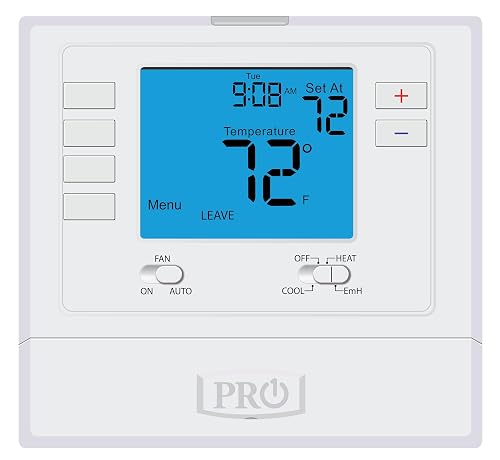
PRO1 T725 Heat Pump/Conventional Programmable Thermostat

PRO1 T771 Single Stage Non-Programmable Wall Thermostat
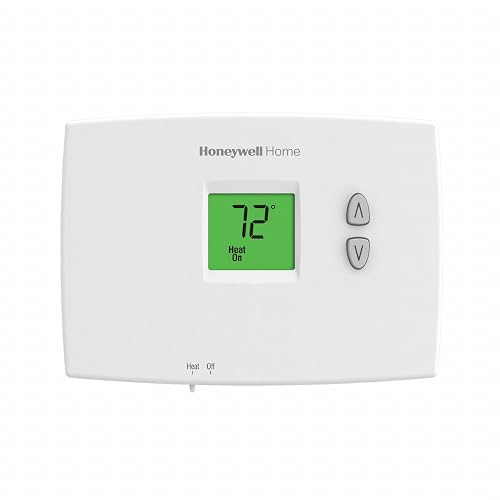
Honeywell TH1100DH1004 Horizontal PRO 1000 Thermostat
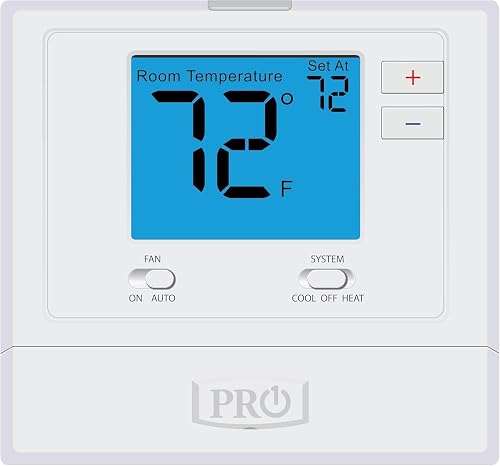
PRO1 T701 Single Stage Non-Programmable Wall Thermostat

PRO1 T715 Multi-Stage Programmable Gas Thermostat
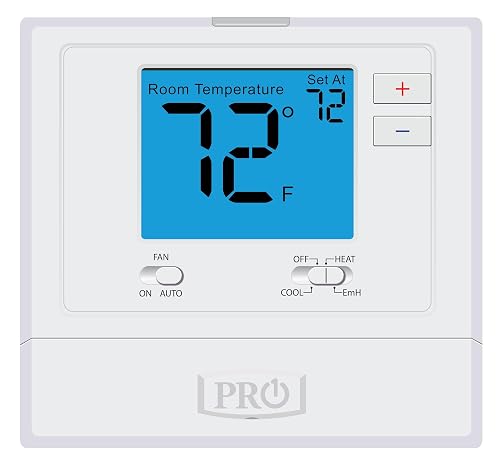
PRO1 T721 Non-Programmable Heat Pump Thermostat

White-Rodgers 1E78-144 Single Stage Thermostat

PRO1 T805 Single Stage Programmable Wall Thermostat
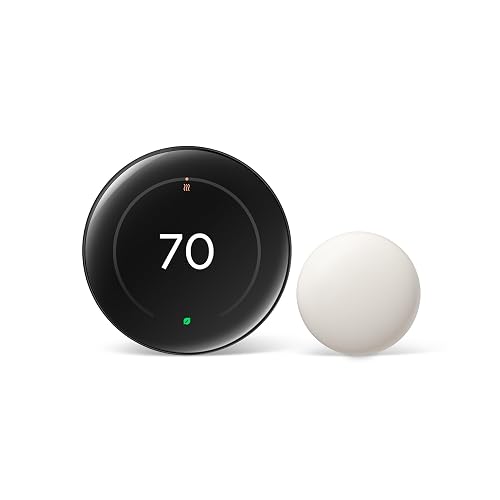
Google Nest Learning Thermostat 4th Gen Obsidian
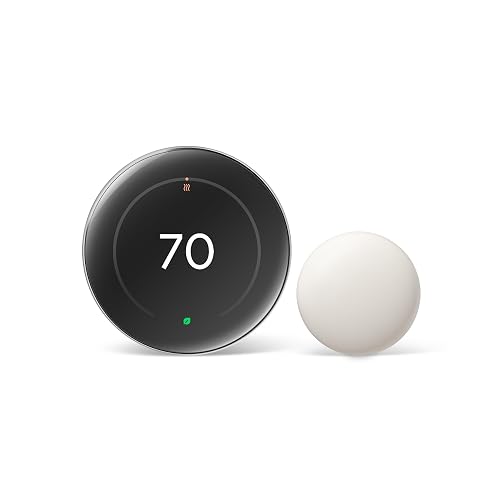
Google Nest Learning Thermostat 4th Gen Silver
More Details On Our Top Picks
The PRO1 T725 sits in that sweet spot where flexibility meets everyday usability. It handles a 2 heat/1 cool heat pump setup and a 1 heat/1 cool conventional system on the same wall plate, which makes it a useful upgrade path for households running a hybrid HVAC rig.
Programmability covers 7-day, 5/1/1, and non-programmable modes, so you can run a tight weekday schedule or leave it in a simple setpoint. The 4 sq. in. blue backlit display shows the active mode (wake, leave, return, sleep) at a glance, useful when you wander past at midnight.
Everyday Advantages
- Supports both heat pump and conventional wiring without reconfiguration headaches.
- Triple scheduling modes (7-day, 5/1/1, non-programmable) adapt to most routines.
- Blue backlit screen stays readable in dim hallways.
- Part of the T700 platform, simplifying replacement later.
Things To Consider
- Wiring complexity runs higher than single-stage picks, so a careful label of the old thermostat wires helps.
- No companion app, which may feel limiting if you’re used to phone-based schedules.
Key Specs
Who It Suits Best
Homeowners with a heat pump plus a conventional backup stage who want one thermostat to govern both without juggling remotes.
Consider Something Else When
Shoppers with a single-stage 1H/1C setup will find the simpler PRO1 T701 a more direct match for what they actually need.
The PRO1 T771 is the kind of thermostat that lives happily in a drafty garage or detached workshop. Its 25°F to 90°F setpoint range dips low enough to protect pipes and plants, then climbs high enough for summer ventilation without running out of headroom.
There are no schedules to learn and no app to pair. You walk up, press a button, and the temperature changes. The 4 sq. in. blue backlit screen makes those adjustments readable even when the overhead light is a single buzzing bulb.
Notable Upsides
- Wide setpoint range (25°F to 90°F) handles specialty low-temp use cases.
- Non-programmable design keeps the user experience essentially foolproof.
- Blue backlit display simplifies adjustments in dim spaces.
Worth Noting
- No scheduling means you set it once and adjust manually, which can drag in busy households.
- Single-stage only, so it won’t handle multi-stage heat pump setups.
Made For
Anyone heating a garage, shed, or workshop who wants reliable single-stage control and the option to drop the setpoint well below freezing.
Look Elsewhere When
Residents of a primary living space will likely prefer the PRO1 T701, which targets conventional 1H/1C homes with similar simplicity.
Honeywell’s PRO 1000 has been a quiet workhorse for years, and the TH1100DH1004 carries that reputation into current installs. The horizontal layout suits older walls where the original analog thermostat left a horizontal mark you don’t want to repaint.
It’s heat-only, which actually fits a long list of homes: basement additions, in-law suites, or older properties with no central air. Dual power (battery or hardwired) means you can mount it on a box with or without a common wire, depending on the install.
Positive Takeaways
- Adjustable temperature scale covers standard (40°F to 90°F) and garage (35°F to 90°F) ranges.
- Backlit display holds up in low light and at odd angles.
- Dual power flexibility (battery or hardwired) eases retrofits.
Honest Caveats
- Heat-only design rules out cooling or heat pump wiring, so confirm your system first.
- Non-programmable, which may frustrate anyone used to scheduled setbacks.
Quick Facts
Best Suited To
Households heating a single space or zone with electric baseboard or fan-forced heaters and no cooling stage on the same circuit.
A Better Fit Elsewhere
Anyone needing heat pump compatibility will want the PRO1 T721 instead, which supports both heat pump and conventional wiring.
The PRO1 T701 is a confident pick if you want a thermostat that doesn’t ask you to read a 30-page manual. It’s built for a 1 heat/1 cool conventional system, which is the most common residential configuration, so wiring questions are usually limited to the typical R, W, Y, G terminals.
The 4 sq. in. blue backlit display sits on the T700 platform, sharing parts and display logic with the more advanced models in this roundup. A glow-in-the-dark light button is a small touch, but it makes a difference when you walk past the thermostat at night.
Useful Touches
- Straightforward 1H/1C support matches most conventional homes.
- 4 sq. in. blue backlit display with glow-in-the-dark button for nighttime reads.
- Gas or electric configurable, simplifying fan control choices.
Trade Offs
- No scheduling means you adjust manually as seasons change.
- Single-stage only, so multi-stage furnaces will leave capacity on the table.
The Right Fit
First-time installers and renters replacing an aging thermostat who want a reliable, no-frills digital upgrade.
Skip It When
Anyone with a heat pump should look at the PRO1 T721, which is built specifically to handle that wiring pattern.
The PRO1 T715 earns its spot when your home has more than one heating or cooling stage. It’s designed for 2 heat/2 cool gas systems, which is the territory of larger homes or those with zoned comfort demands. The unit can run as 7-day, 5/1/1, or non-programmable, so you can scale up to scheduling or scale back as needed.
Battery or hardwired power options make it easier to swap in without rewiring a C-terminal. The 4 sq. in. blue backlit display and glow-in-the-dark button mirror the rest of the T700 family, keeping the on-wall look consistent across rooms.
What Helps Most
- Supports full 2H/2C multi-stage operation for larger HVAC setups.
- Three scheduling modes (7-day, 5/1/1, non-programmable) let you opt in or out of programming.
- Battery or hardwired power for flexible install paths.
Points To Note
- Overkill for single-stage homes, where the simpler T701 will save effort.
- More terminals to land correctly, so taking a photo of the old wiring pays off.
Feature Snapshot
Who Will Love This
Owners of multi-stage gas furnaces who want scheduling flexibility without stepping up to a smart thermostat.
Another Choice May Suit
Single-stage homes will be better served by the PRO1 T701, which keeps the install and operation simpler.
The PRO1 T721 is a useful bridge pick for households that don’t quite fit the conventional-only category. It supports 2H/1C heat pump systems and 1H/1C conventional systems, so a home that has both can run a single thermostat on the wall without compromise.
It is non-programmable, which keeps the interface friendly for anyone who doesn’t want to fiddle with weekly schedules. The 4 sq. in. blue backlit display and glow-in-the-dark light button stay readable in low light, and AA battery operation means you don’t need a C-wire in the box.
What Earns Its Place
- Dual compatibility with heat pump and conventional systems.
- 4 sq. in. blue backlit display with glow-in-the-dark light button.
- AA battery option simplifies installs without a common wire.
A Few Limitations
- No scheduling, so you’ll adjust manually as the weather shifts.
- Single-stage cooling, which may not stretch to larger multi-stage setups.
Right Fit For
Households that use a heat pump most of the year and a conventional system as backup, without wanting two separate thermostats.
Reach For A Different Pick When
Anyone who wants built-in weekly scheduling should consider the PRO1 T725, which adds programmability on the same T700 platform.
The White-Rodgers 1E78-144 is the kind of thermostat that makes a replacement job feel routine. It works with single-stage heating and cooling, plus heat pump systems without auxiliary heat, which covers a long list of older and mid-size homes.
You also get 24-volt and millivolt compatibility, useful if you’re replacing an old mercury-switch thermostat on a system that doesn’t carry a full 24V signal. The digital display with backlight is a small jump up from the analog dial, while keeping the on-wall footprint compact.
A Favorable Mix
- Supports single-stage heat, cool, and heat pump (without aux) systems.
- Works on 24V and millivolt systems, broadening retrofit options.
- Compact design fits the wall footprint of older thermostats.
Things To Weigh
- Not compatible with electric baseboard heat, so confirm your system type first.
- Non-programmable, which may feel limiting compared to the T700 family picks.
At A Glance
Whose Shelf It Belongs On
Anyone replacing an older single-stage thermostat and wanting a familiar footprint with a digital upgrade.
Swap It Out When
Households needing heat pump auxiliary heat support or weekly scheduling should move up to the PRO1 T721 or T725 instead.
The PRO1 T805 earns its name from the bigger 7 sq. in. blue backlit display, which gives the temperature and mode readouts more breathing room than the smaller T700 picks. If you find yourself squinting at a 4 sq. in. screen from across the room, this is the unit that will feel easier to live with.
It runs 1H/1C conventional systems with 7-day, 5/1/1, or non-programmable modes, and sits on the T800 platform for slightly more headroom. The glow-in-the-dark light button is a small but appreciated touch for late-night adjustments.
Everyday Perks
- Extra-large 7 sq. in. blue backlit display is easy to read at a distance.
- Triple-mode scheduling (7-day, 5/1/1, non-programmable) for flexible routines.
- Glow-in-the-dark light button for low-light visibility.
Softer Spots
- Larger wall footprint, so the swap may leave a slightly bigger paint touch-up than smaller units.
- Single-stage only, so multi-stage HVAC will not use its full potential.
Perfect Match For
Households who prioritize screen readability, whether for aging eyes, larger rooms, or simply less squinting at the wall.
Not Your Match When
Anyone wiring a heat pump should reach for the PRO1 T721, since the T805 targets conventional systems only.
The Google Nest Learning Thermostat (4th gen) in Obsidian is the polished face of the list. The 4th-generation model learns your temperature preferences over time and adapts the schedule as your routine shifts, which is its real draw compared to a fixed-schedule wall unit.
The Obsidian finish reads as a dark, near-black mirror when the display sleeps, blending into a modern wall palette. It also includes the Nest Temperature Sensor (2nd gen), useful for balancing hot and cold rooms in homes where one thermostat can’t capture every zone.
Standout Benefits
- Learns preferred temperatures and schedules, easing manual programming.
- Includes a Nest Temperature Sensor (2nd gen) for multi-room awareness.
- Obsidian finish suits darker interior palettes and modern decor.
Potential Drawbacks
- Higher setup commitment, including Wi-Fi pairing and account setup, which can feel like a lot for a single-room install.
- Compatibility depends on your existing HVAC wiring, so confirming the system voltage up front avoids surprises.
Built With In Mind
Connected households that want a thermostat to learn their patterns and prefer app-based control over a fixed weekly schedule.
Where A Sibling Pick Shines
Homeowners wanting scheduling without smart features can rely on the PRO1 T715, which is geared toward conventional 2H/2C systems.
The Silver version of the Nest Learning Thermostat (4th gen) shares everything under the hood with the Obsidian model, but lands in a lighter metallic finish. It blends more naturally with white trim, light wood, and traditional wall palettes.
You’ll get the same learning behavior, the included Nest Temperature Sensor (2nd gen), and the same app-driven control. For households that want a learning thermostat but prefer a less dramatic on-wall statement, the Silver finish is a sensible alternative.
Good Reasons To Consider
- Same learning engine and features as the Obsidian 4th-gen model.
- Silver finish suits lighter interior color schemes.
- Comes with the Nest Temperature Sensor (2nd gen) for room-level monitoring.
Some Limits To Know
- Setup requires Wi-Fi and a Google account, which adds steps compared to a basic programmable unit.
- Final fit depends on your HVAC voltage, so check the wiring guide before committing.
Who Should Grab It
Homeowners who want the Nest learning experience and prefer a lighter wall finish over a darker accent piece.
Where Another Pick Suits Better
Anyone with a simple 1H/1C conventional system and no interest in app control can save effort with the PRO1 T701.
What To Know Before Buying High Voltage Thermostats
Match The Thermostat To Your System Voltage
Line-voltage (high voltage) systems typically run at 120V or 240V and power electric baseboard or fan-forced heaters directly. Low-voltage systems run on 24V and feed central forced-air HVAC. The picks in this list span both worlds, and the wrong match will either fail to power on or, worse, trip a breaker the moment the heater calls for heat. Before buying, confirm the voltage on the old thermostat label or in the breaker panel description.
Decide Between Programmable And Non-Programmable
Programmable thermostats like the PRO1 T725, T715, and T805 offer 7-day or 5/1/1 scheduling, useful if your routine shifts between weekdays and weekends. Non-programmable models like the T701, T721, T771, and the White-Rodgers 1E78-144 are simpler and cheaper, ideal for guest rooms, workshops, or anyone who prefers manual control. The trade-off is flexibility: programmable units save more energy when your schedule is consistent, but require a few extra minutes of setup.
Read The Wiring Terminals Carefully
Each thermostat lists supported terminals (R, W, Y, G, C, O/B, and so on) in its documentation. A missing C-wire (common wire) can be a sticking point for many smart thermostats, while the PRO1 T700 family and White-Rodgers 1E78-144 are friendlier toward installs that lack one. For complex multi-stage systems, the PRO1 T715 and T725 are designed to land the right wires without surprises.
Consider The Display And Mounting Footprint
A 4 sq. in. screen is fine for most halls, but a 7 sq. in. screen (PRO1 T805) reads more easily from across a large room. Older homes with a horizontal analog footprint will match the Honeywell TH1100DH1004 or the compact White-Rodgers 1E78-144 nicely. Always check the dimensions against the existing wall plate, since a larger screen can leave a paint touch-up behind.
Picking The Right Thermostat For Your Space
Common Buying Slip Ups To Avoid
The most common mistake in this category is mismatching voltage: a low-voltage thermostat on a 240V baseboard circuit, or a high-voltage unit on a 24V HVAC system. Both fail. Take a photo of the old thermostat’s wire labels and read them against the new unit’s terminal list before you cut the power. Another slip-up is choosing a smart thermostat when the existing wiring lacks a C-wire; that often requires a workaround or a different model entirely. For a workshop or garage, a specialty pick like the PRO1 T771 with a wide setpoint range prevents the unit from “bottoming out” on cold nights.
When Spending More On A Smart Thermostat Makes Sense
A learning thermostat like the Google Nest 4th gen (Obsidian or Silver) earns its higher position when you genuinely benefit from app control, room sensors, and adaptive scheduling. Larger multi-zone homes typically see more value from the learning behavior than small single-room installs. If your home already runs on a consistent, fixed routine that never changes, a mid-tier programmable unit like the PRO1 T715 or T805 may deliver comparable comfort at a lower entry point.
Frequently Asked Questions
What Is A High Voltage Thermostat?
A high voltage thermostat is a wall control designed to switch 120V or 240V power directly to an electric heater, such as baseboard or fan-forced units. It carries more current than a 24V low-voltage thermostat, so the internal components, wire gauges, and safety ratings differ.
Can I Use A Regular Programmable Thermostat For Electric Baseboard Heat?
Most 24V programmable thermostats are not designed to switch 240V baseboard loads and will fail quickly if used. You need a line-voltage compatible unit, like the PRO1 T721 for heat pump systems or a dedicated line-voltage model matched to your system.
Do I Need A C-Wire For Any Of These Thermostats?
Most PRO1 T700-family units and the White-Rodgers 1E78-144 run on battery or hardwired power without requiring a common wire. The Google Nest 4th gen typically benefits from a C-wire for steady power, so confirm your existing wiring before ordering a smart unit.
How Many Stages Should My Thermostat Support?
Match the thermostat stages to your HVAC system. A single-stage furnace and air conditioner need only a 1H/1C unit like the PRO1 T701. A two-stage furnace or a heat pump with a backup stage calls for a 2H/2C multi-stage pick like the PRO1 T715.
Can I Install A High Voltage Thermostat Myself?
Many homeowners replace existing thermostats safely by following the wiring guide and turning off the breaker. For new wiring, multi-stage systems, or any uncertainty about line-voltage safety, hiring a licensed electrician is the more cautious path.
The Takeaway
A thermostat only does its job when it actually matches the system behind the wall. Sort out your voltage, confirm your stages, and decide whether you want app-based learning or a simple wall dial before you click through to a product page. The picks above cover most of those scenarios, so a little upfront homework will make the final choice feel obvious.