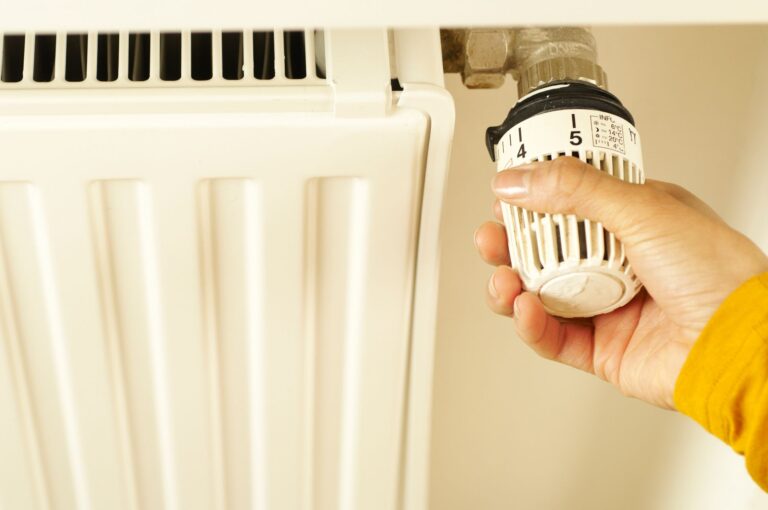

A working thermostat quietly does the heavy lifting in your home, keeping rooms comfortable through summer heat and winter cold without you thinking about it. The challenge is that the category spans everything from a programmable wall unit for a full HVAC system to a freezer controller for a converted keg fridge. Choosing the right one means matching the thermostat’s stage support, programmability, and display to the system you actually have. This roundup covers nine options across conventional systems, heat pumps, garage setups, and specialty cooling so you can find a sensible match for your space.
A Quick View Of The Lineup
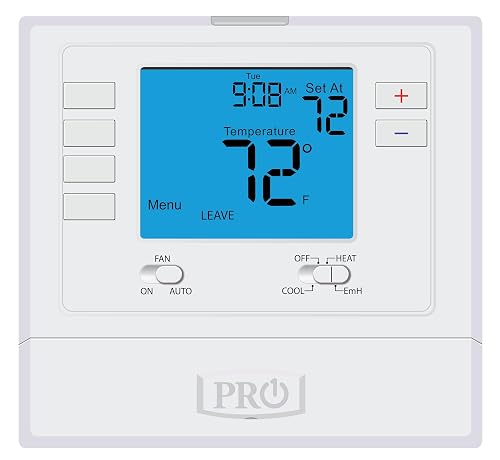
PRO1 T725 Programmable Heat Pump/Conventional Thermostat

PRO1 T771 Non-Programmable Single Stage Thermostat

Johnson Controls A19AAT-2C Freezer Temperature Controller
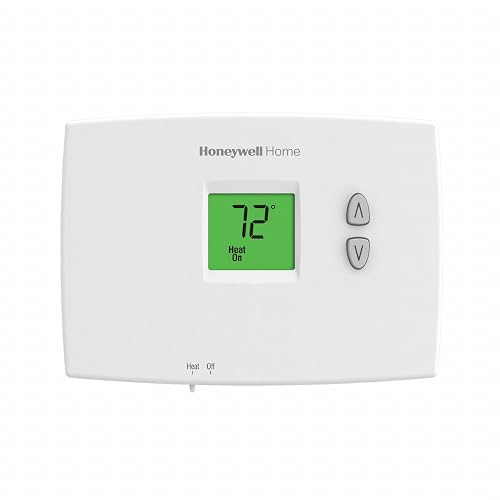
Honeywell TH1100DH1004 PRO 1000 Heat-Only Thermostat
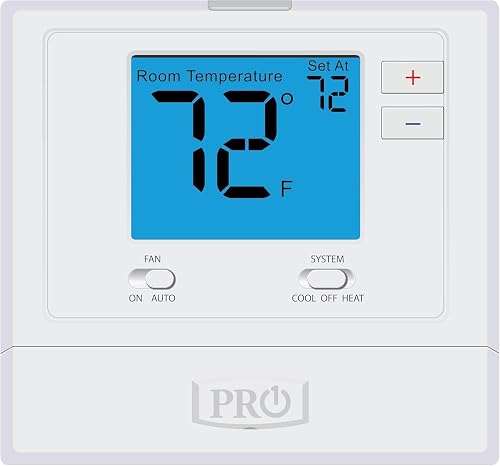
PRO1 T701 Non-Programmable Single Stage Thermostat

PRO1 T715 Multi-Stage Programmable Gas Thermostat
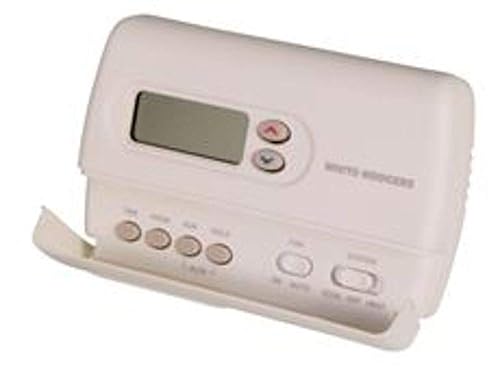
White-Rodgers 1F80-361 Emerson 80 Series Thermostat
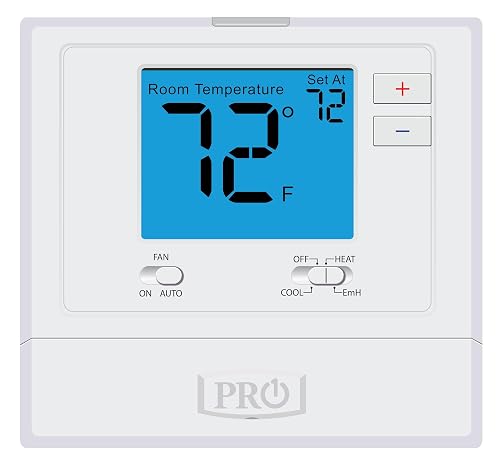
PRO1 T721 Non-Programmable Heat Pump/Conventional Thermostat

PRO1 T805 Programmable Single Stage Thermostat
The Strengths Of Each Pick
The T725 is built for homeowners who live in a transition home, somewhere between a heat pump upgrade and an older conventional system, and need one wall unit that handles both. Unlike the simpler T701 covered later, this model supports 2 heat/1 cool heat pump configurations as well as 1 heat/1 cool conventional setups, which is a rare combination in this category.
Schedule flexibility is the other anchor. The 7-day and 5/1/1 programming modes let you set weekday, Saturday, and Sunday blocks independently, which helps families with rotating work shifts or hybrid schedules. The 4 sq. in. blue backlit display shows the active schedule mode (wake, leave, return, sleep) clearly, so nobody has to squint across the room at night.
Where It Helps
- Supports both heat pump and conventional systems on one thermostat, removing the need to buy a second unit during a system change.
- 7-day and 5/1/1 scheduling fits nonstandard weekly routines better than 5+2 designs common in cheaper models.
- The 4 sq. in. backlit screen is readable from across a living room without leaning in.
- Programmable stages mean better temperature swings management through shoulder seasons.
Points To Note
- Setup requires identifying the right jumper or wiring configuration for your system type, which can feel opaque for first-time installers.
- Some users prefer more granular scheduling than the standard four daily periods provide.
Who It Suits Best
Homeowners with a mixed heat pump and conventional setup who want weekday-specific scheduling and a readable backlit screen.
Where Another Pick Suits Better
The PRO1 T715 is a better match for households running 2 heat/2 cool gas systems, since it adds a second cool stage the T725 cannot drive.
The T771 is the model to consider for unheated spaces, the kind of garage or shed that drops well below the comfort range of a normal living-room thermostat. The setpoint range runs from 25°F to 90°F, which is unusual for a wall thermostat and makes it a practical fit for workshops, detached studios, and storage buildings where pipes can freeze.
It’s a strictly single-stage unit, designed for 1 heat/1 cool conventional systems. The 4 sq. in. blue backlit display keeps the setpoint and current temperature visible in low light, and the calibration controls let you nudge readings a degree or two to match a separate thermometer.
The Upside
- 25°F lower bound protects pipes and plants in uninsulated garages, sheds, and basements.
- Swing adjustment helps prevent the heater from short-cycling in tight spaces.
- Calibration feature corrects for placement in drafty or sunny corners.
Honest Caveats
- Non-programmable means temperature changes are manual, which gets tedious if you want different settings for workdays and weekends.
- Single-stage only, so it cannot control multi-stage heating or cooling equipment.
Feature Snapshot
Best Suited To
Owners of garages, sheds, and workshops that need cold-weather protection without complex scheduling.
Consider Something Else When
The Honeywell TH1100DH1004 is a smarter pick for heat-only homes that don’t need the T771’s wider low-temp range.
The A19AAT-2C lives in a different category from the rest of the list. It’s a mechanical cooling thermostat built into a 6-foot capillary tube and gas-filled probe, designed to turn a chest freezer into a regulated refrigerator. The dial adjusts setpoint from 20°F to 80°F, which is the range most keg and fermentation builds need.
The mechanical design is the real story. There are no circuit boards, no firmware, and no power dependency beyond the compressor’s own circuit. As the gas in the probe contracts and expands with temperature, it triggers a switch inside the control head, which keeps cycling the compressor on and off without electronics.
Real-World Strengths
- 20°F to 80°F range covers both beverage serving and light fermentation temperatures in one unit.
- No electronics means the controller keeps working in damp or cold rooms where digital units struggle.
- 6-foot capillary tube allows the probe to reach into a freezer while the control head sits outside.
Potential Drawbacks
- Mechanical switching is less precise than a digital thermostat, so expect a few degrees of swing around the setpoint.
- Cooling only, so it cannot drive a heating element for fermentations that need a heat source in cold rooms.
Whose Shelf It Belongs On
Homebrewers and beverage hobbyists converting a chest freezer into a keg or fermentation fridge where reliability and simplicity matter more than precision.
Skip It When
Any home HVAC use case is a better match for the PRO1 T701 or T725, since the A19AAT-2C isn’t designed for wall-mount home heating and cooling.
The Honeywell TH1100DH1004 is a heat-only unit with one notable twist: a switchable temperature scale that lets you choose between a standard 40°F to 90°F range for living spaces and a 35°F to 90°F range for garage installations. That switch alone makes it more flexible than most single-function thermostats at the entry level.
Dual power, meaning battery or hardwired, lets the installer skip pulling a common wire in retrofit situations, which can save time during a quick replacement. The backlit display is easy to read in low light, and the precision rating of 1°F is tight enough for most comfort needs.
Points In Its Favor
- Switchable standard and garage scales support a wider range of room uses from one unit.
- 1°F precision is finer than many basic thermostats in this tier.
- Backlit display keeps the setpoint readable in dim basements and hallways.
- Dual power simplifies retrofit wiring where a common wire isn’t available.
Less Ideal Details
- Heat-only, so it’s not a fit for homes with central air conditioning that need cooling control from the same wall unit.
Quick Facts
The Right Fit
Households running a furnace-only system, especially in older homes without central air, who want a clean Honeywell baseline without programming.
Look Elsewhere When
The PRO1 T771 is the better choice for unheated garages that need a much lower setpoint minimum than the TH1100DH1004 offers.
The T701 is the sensible baseline model in the PRO1 lineup. It’s built on the T700 platform and supports straightforward 1 heat/1 cool conventional systems, which covers a large share of suburban homes with a gas furnace and central AC. The 4 sq. in. blue backlit display matches the screen size on the more expensive T725 covered earlier, just without the programmability.
The glow-in-the-dark light button is a small touch that helps in hallways and bedrooms, where a bright display would be intrusive. The unit supports gas or electric configurations, so it can drop into most standard installs without a special order.
Everyday Advantages
- Gas or electric compatibility covers most single-stage conventional HVAC installs.
- Glow-in-the-dark light button makes nighttime adjustments easier without turning on a light.
- Same 4 sq. in. display size as programmable siblings keeps the wall footprint consistent.
Some Limits To Know
- Non-programmable means no automatic setbacks, which costs a bit of energy in homes with predictable routines.
- Single-stage only, so it cannot control two-stage cooling or variable-speed equipment.
Made For
Homeowners who want a clean, no-schedule thermostat for a standard 1H/1C system and don’t need the multi-stage support of higher models.
A Better Fit Elsewhere
The PRO1 T805 is the right move if you want programmability along with a single-stage system, since the T701 skips the schedule features entirely.
The T715 is the multi-stage step up in the T700 family. Where the T725 covered earlier handles 2 heat/1 cool heat pump systems, the T715 covers 2 heat/2 cool conventional gas systems, which is a more demanding configuration common in larger homes with two-stage cooling equipment.
Schedule flexibility is broad, supporting 7-day, 5/1/1, or pure non-programmable modes depending on what the household actually uses. The 4 sq. in. blue backlit display and glow-in-the-dark light button are familiar from the rest of the line, so anyone trading up from a T701 or T725 doesn’t have to relearn the interface.
Everyday Wins
- 2 heat/2 cool staging matches two-stage gas furnace and AC systems for finer temperature control.
- Three operating modes (7-day, 5/1/1, non-programmable) in one unit let the installer match the household’s actual habits.
- Battery or hardwired power gives flexibility on the common-wire question.
Trade-Offs To Consider
- More stages mean more wiring, so installation is more involved than a single-stage replacement.
- Feature set is overkill for smaller homes running single-stage equipment.
Feature Card
Who Will Love This
Owners of larger homes with two-stage gas furnaces and AC systems who want scheduling flexibility without stepping into a smart thermostat.
Another Choice May Suit
The PRO1 T725 is the better match for homes running a heat pump rather than a gas furnace, since the T715 targets gas conventional systems specifically.
The 1F80-361 is a contractor-grade single-stage programmable thermostat from the Emerson 80 Series, sold here as a single unit from the bulk contractor pack. It’s the kind of replacement part HVAC techs keep in the truck, and that heritage shows in the compatibility list: 24V and millivolt systems, plus gas, oil, and electric heat sources.
Programming runs 5+1+1 with up to four periods per day, which gives plenty of granularity for households that want morning, daytime, evening, and overnight blocks. The manual is hosted on the listing rather than printed in the box, so it’s worth a quick download before installation.
Why It Works Well
- Millivolt compatibility opens up installations with old baseboard heaters or wall furnaces that other units reject.
- Up to four periods per day cover most realistic household routines without overcomplicating the schedule.
- Factory anti-static bag and bulk-pack sourcing point to professional-grade build and packaging.
Things To Weigh
- Single-stage only, so it’s not a fit for two-stage systems like the T715 above.
- Documentation lives on the product page, which can slow down installers used to a printed manual in the box.
Perfect Match For
Homeowners with a 24V or millivolt conventional system who want contractor-grade build quality and four daily periods for fine scheduling control.
Reach For A Different Pick When
The PRO1 T701 is a simpler swap for anyone who doesn’t need programmability and prefers a glow-in-the-dark light button over the Emerson’s interface.
The T721 is the non-programmable sibling of the T725, sharing the same 2 heat/1 cool heat pump and 1 heat/1 cool conventional compatibility, but skipping the schedule features entirely. For households that prefer to set the temperature once and leave it, that trade-off is the point.
Like the rest of the T700 family, the unit runs on either AA batteries or a hardwired common, which helps in retrofit installs where pulling a C-wire is impractical. The 4 sq. in. blue backlit display keeps the readout visible, and the glow-in-the-dark light button carries over from the T701 covered earlier.
What Helps Most
- Heat pump and conventional support means the same thermostat can survive a future system swap without replacement.
- Battery or hardwired power gives flexibility on older homes without a common wire.
- Glow-in-the-dark button is helpful in bedrooms and hallways where bright displays are unwelcome.
Possible Compromises
- No scheduling means no automatic setbacks, which can mean more manual adjustments through the week.
- 2 heat/1 cool heat pump support, not 2 heat/2 cool, so it won’t drive a two-stage cooling system.
Built With In Mind
Mixed-system homes that want heat pump and conventional flexibility without committing to a programmable schedule.
Swap It Out When
The PRO1 T725 is the upgrade path if you later want programmability, since the T721 shares the same system support and platform.
The T805 sits on the T800 platform, which is the visual step up from the T700 family covered earlier. The headline difference is the 7 sq. in. blue backlit display, which is significantly larger than the 4 sq. in. screens on the T701, T721, and T725, and easier to read from across a long room or for anyone with limited vision.
Underneath, the T805 covers 1 heat/1 cool conventional systems with 7-day, 5/1/1, or non-programmable modes. The glow-in-the-dark light button carries over from the T700 family. The extra screen real estate is the main reason to pay the step up over a T701.
The Value In It
- 7 sq. in. display is meaningfully larger than the 4 sq. in. screens on most entry-level programmable thermostats.
- Three operating modes let you decide how much scheduling you actually use.
- Glow-in-the-dark light button is a small but real comfort feature for nighttime use.
Potential Sticking Points
- Single-stage only, so it cannot drive multi-stage systems like the T715.
- Larger display can look oversized in narrow hallways or small rooms.
The Key Facts
Who Should Grab It
Households with a standard 1H/1C conventional system who want a noticeably bigger display and full scheduling flexibility.
Where A Sibling Pick Shines
The PRO1 T715 is a better match for two-stage gas systems, since the T805 only supports a single heat and cool stage.
What Matters Most When Shopping For cooling thermostats
Match the thermostat to your system type first
Before browsing features, identify whether your HVAC is conventional, heat pump, or millivolt, and how many heat and cool stages your equipment runs. A multi-stage furnace paired with a single-stage thermostat will underutilize your system, while a two-stage thermostat on single-stage equipment adds cost without real-world benefit. Heat pump systems need a thermostat that explicitly supports the staging and auxiliary heat logic, since a standard conventional unit will misread the equipment.
Decide if programmability is worth it for your routine
Programmable thermostats only pay off if you actually use the schedule. Households with predictable weekday-to-weekend routines tend to recoup the cost through setback temperatures, while households with rotating shifts or constantly changing plans may find a non-programmable model less annoying. Models like the T725 and T805 offer both 7-day and 5/1/1 options for those who want flexibility.
Consider display size and room placement
A 4 sq. in. screen works fine in most living rooms, but larger open-plan spaces, long hallways, and any home with a vision-impaired occupant may benefit from the 7 sq. in. screen on the T805. Smaller rooms, like powder rooms and tight entryways, are where oversized displays start to feel out of place.
Specialty cooling needs are a separate category
Freezer-to-refrigerator conversions, fermentation fridges, and similar builds have a totally different thermostat class. A mechanical controller like the A19AAT-2C is purpose-built for that environment, and a standard wall thermostat simply won’t work.
Key Considerations Across These Picks
Where Shoppers Go Wrong
The most common mistake is choosing a thermostat by feature list rather than by system compatibility. A programmable multi-stage unit is wasted on a single-stage furnace, while a basic non-programmable unit will misread a heat pump’s staging signals. Pull the model numbers of your indoor and outdoor units before browsing, and confirm that the thermostat’s stage support matches what your equipment actually has.
The Case For Spending Up
Higher-tier models in this category earn their cost through wider system support and larger displays rather than connectivity or app control. The PRO1 T715 costs more than the T701 because it drives a second heating and cooling stage, which translates to quieter operation and steadier temperatures in larger homes. The T805 costs more than other T700-family units primarily because of the 7 sq. in. display, which is a real upgrade for visibility in long rooms. Whether that step up is worth it depends on the size of your home and the complexity of your HVAC system.
Frequently Asked Questions
What does “1 heat/1 cool” mean on a thermostat?
It means the thermostat can control a single heating stage and a single cooling stage. Homes with two-stage furnaces or AC units need a thermostat that lists 2 heat/2 cool support instead.
Can I use a programmable thermostat without programming it?
Yes. Most programmable thermostats, including the PRO1 T725 and T805, also run in non-programmable mode, so you can ignore the schedule and use them like a basic unit.
Will a heat pump thermostat work on a conventional system?
Some models like the PRO1 T725 and T721 support both heat pump and conventional systems, but many heat pump thermostats are not designed for conventional-only equipment. Always check the compatibility list before installing.
Do I need a C-wire to install these thermostats?
Not always. Several models in this roundup, including the T715 and Honeywell TH1100DH1004, support battery power as a fallback when a common wire isn’t available at the wall.
Are mechanical thermostats still useful?
Yes, especially in damp or cold environments like chest freezers and basement keg fridges, where electronics can struggle. The Johnson Controls A19AAT-2C is purpose-built for that kind of application.
Bottom Line
The right thermostat depends almost entirely on what your HVAC system actually is, so start with the equipment, not the feature list. The PRO1 T725 and T721 are the most flexible wall options for mixed heat pump and conventional setups, while the T805 and T715 are worth considering if you want a larger display or two-stage support. For specialty cooling, the Johnson Controls A19AAT-2C is in a class of its own. The rest comes down to whether you want programmability and how visible you need the screen to be from across the room.