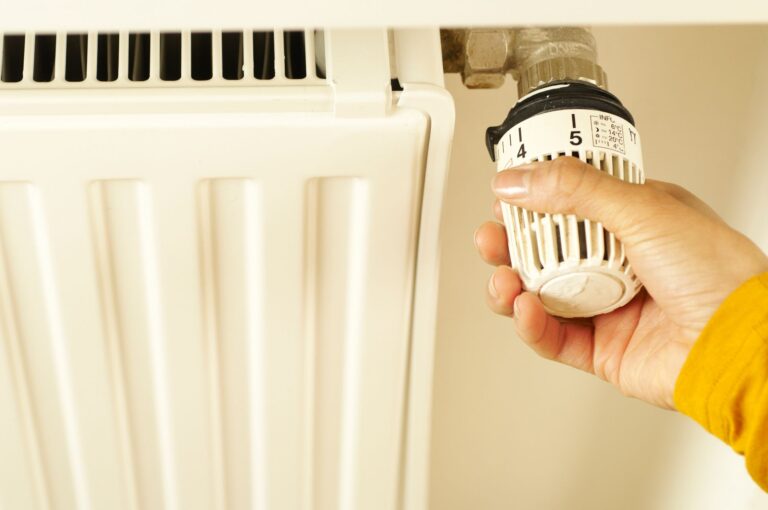

A wall thermostat quietly shapes how comfortable a home feels all year, yet it’s also the part of an HVAC system most people ignore until something feels off. A new wall unit that matches your system can smooth out temperature swings, cut wasted runtime, and make daily schedules easier to live with. This list focuses on wall thermostats from the PRO1 IAQ T700 and T800 platforms, a couple of LUX and ELECTECK options for specific setups, and two Google Nest learning thermostats for smart-home households. Each pick covers a real residential scenario, from a one-stage furnace in a small bungalow to a multi-stage gas system in a two-story house.
A Snapshot Of The Selections
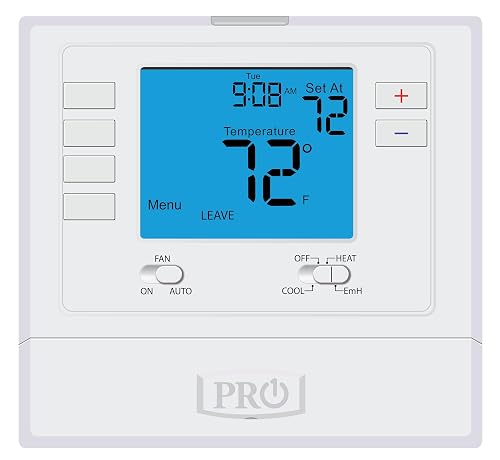
PRO1 T725 Programmable Heat Pump/Conventional Wall Thermostat

PRO1 T771 Non-Programmable Wall Thermostat for Conventional Systems
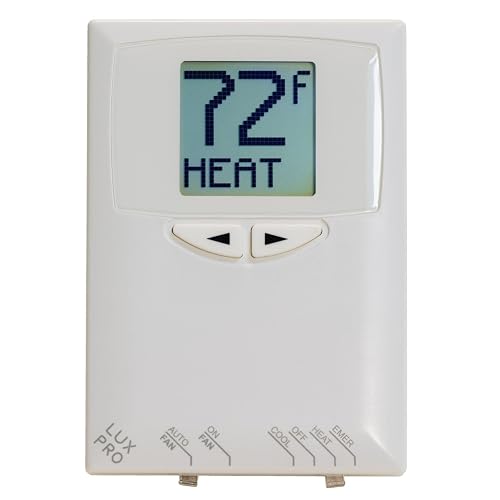
PSDH121B Non-Programmable Vert/Horiz Heat Pump Thermostat
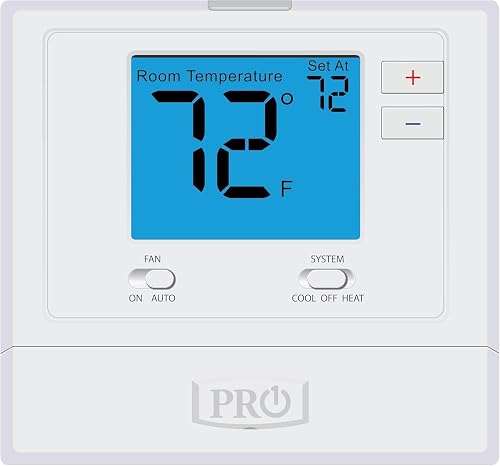
PRO1 T701 Non-Programmable Wall Thermostat for Conventional Systems

PRO1 T715 Multi-Stage Programmable Gas Thermostat
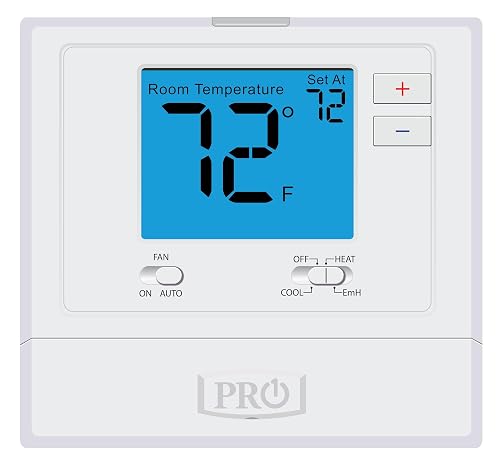
PRO1 T721 Non-Programmable Heat Pump/Conventional Wall Thermostat
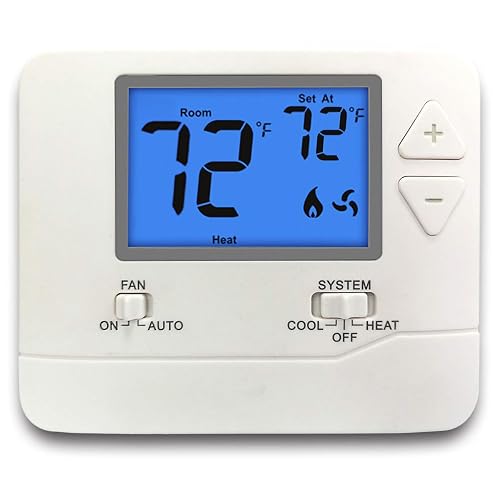
ELECTECK Non-Programmable Digital Thermostat 1 Heat/1 Cool

PRO1 T805 Programmable Wall Thermostat (T800 Platform)
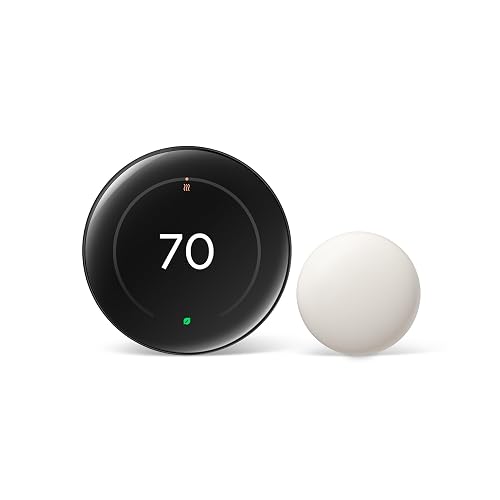
Google Nest Learning Thermostat 4th Gen + Temperature Sensor (Obsidian)
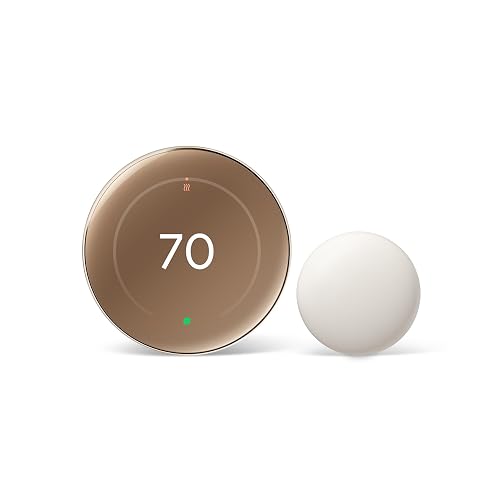
Google Nest Learning Thermostat 4th Gen (Polished Gold)
Taking A Closer Look At The Options
The PRO1 T725 sits in the middle of the T700 platform lineup, and that middle-of-the-road position is exactly what makes it useful. It handles 2 heat / 1 cool heat pump systems, which covers the majority of homes in the Southeast and Mid-Atlantic, and it also falls back to 1 heat / 1 cool conventional mode for houses that use a standard furnace and air conditioner. The 4-square-inch blue backlit display is large enough to read from across a living room, and the 7-day or 5/1/1 programming options let you build a schedule that matches a work week without leaving gaps.
Owners who have already invested in a T701 or T771 from the same brand will recognize the menu layout, which is genuinely useful during setup. The T725 is a strong step up from the non-programmable T701 if you want to automate setback periods. For most heat pump households, the T725 lands in a comfortable middle ground between the simpler T701 and the more complex multi-stage T715.
Well-Handled Touches
- Supports both heat pump (2H/1C) and conventional (1H/1C) wiring from one unit, reducing swap confusion.
- Large 4-square-inch blue backlit screen is easy to read in low light.
- 7-day or 5/1/1 programming adapts to a typical work week without manual babysitting.
- Part of the T700 platform, so menu flow feels familiar if you are upgrading from a T701 or T771.
Things To Consider
- Programming takes patience the first time out, since the menu structure is deeper than a non-programmable unit.
- You will likely need a C-wire (common wire) for continuous power, and older homes may not have one at the wall plate.
Key Specs
Built With In Mind
This fits heat pump households in mild climates that want weekday programming without paying for multi-stage hardware.
Look Elsewhere When
The PRO1 T715 Multi-Stage Programmable Thermostat is a better match for two-stage gas systems that need 2 heat / 2 cool control.
Garages, pole barns, and detached workshops usually don’t need a full weekly schedule, and they often sit in spaces where temperatures dip well below what a standard home thermostat is built to handle. The PRO1 T771 leans into that niche with a non-programmable, single-stage design rated for a wide setpoint range from 25°F to 90°F, which is much wider than a typical living-area unit. The blue backlit display is the same 4-square-inch panel used elsewhere on the T700 platform, so the screen stays readable whether you check it in a dim garage or under afternoon sun.
Swing adjustment and calibration controls are useful here because unconditioned spaces tend to drift more than a finished basement. For anyone tired of guessing what the old mercury switch is doing in the back of the shop, the T771 is a small, focused upgrade. Compare that to the T701, which is the conventional single-stage pick for inside the home, and the difference is the temperature range and the target environment.
The Good Stuff
- Wide 25°F to 90°F setpoint range handles low-temperature spaces where standard units bottom out too early.
- 4-square-inch blue backlit display stays visible in low-light shops and garages.
- Swing adjustment and calibration help tame temperature drift in unconditioned buildings.
- Single-stage 1 heat / 1 cool conventional design keeps the wall box simple and affordable.
Points To Note
- No scheduling means you will adjust the setpoint manually for seasonal changes in usage.
- Not designed for heat pump systems, so it should not be used as a swap for a heat pump wall unit.
Who Will Love This
Garage, shed, and workshop owners who want reliable low-temperature control without paying for programming they will never use.
Consider Something Else When
The PRO1 T721 Heat Pump/Conventional Thermostat is a better fit if the same wall also needs to run a heat pump system in a converted space.
The LUX PSDH121B has been around long enough that it shows up in plenty of older homes where the existing wall opening doesn’t match a modern thermostat footprint. Its defining trait is straightforward: it mounts in either vertical or horizontal orientation, which sidesteps the awkward “it almost fits” problem you get with a square unit on a narrow stud bay. A test mode lets you temporarily disable the compressor delay, and high/low temperature limits give you a ceiling and floor that renters and landlords both appreciate.
Inside, you get a non-programmable 2 heat / 1 cool heat pump control, which fits the same system class as the PRO1 T725, just without the scheduling. The LUX reads as a no-nonsense workhorse, and the install process is reportedly simple enough that a careful first-timer can handle it. If the T725’s deeper programming feels like too much, but you still need heat pump compatibility, the PSDH121B is a quieter option worth considering.
Noteworthy Benefits
- Vertical or horizontal mounting makes it a clean replacement for older or oddly shaped wall openings.
- Heat pump 2 heat / 1 cool support covers the most common residential heat pump wiring.
- Test mode temporarily disables compressor delay, which speeds up installer diagnostics.
- High and low temperature limits protect against accidental extreme setpoints.
Honest Caveats
- Non-programmable, so you handle setpoint changes by hand for setback periods.
- Visual design feels dated next to the T700 platform’s cleaner blue backlit screen.
Best Suited To
Homeowners with tight or nonstandard wall openings who need a heat pump-compatible wall unit that mounts either way.
A Better Fit Elsewhere
The PRO1 T701 Non-Programmable Wall Thermostat is a smoother pick for a conventional 1H/1C system where mounting flexibility isn’t needed.
Most older homes in the U.S. still run a single-stage furnace with a single-stage air conditioner, and the PRO1 T701 is built for exactly that everyday case. The 4-square-inch blue backlit display gives you current and setpoint temperatures at a glance, while a glow-in-the-dark light button keeps the controls visible if you get up before sunrise. Gas or electric configuration means the same unit works for a natural gas furnace or an electric air handler, which is helpful during replacement.
The T701 is the conventional sibling of the T725 we covered earlier, but it drops the programming and the heat pump mode. That trade-off makes the wall box simpler for someone who never wanted a weekly schedule in the first place. In a guest suite or a finished basement where the temperature rarely changes, you may find the simplicity more useful than any timer.
Points In Its Favor
- Spacious 4-square-inch blue backlit display is easy to read in any lighting.
- Glow-in-the-dark light button helps during nighttime adjustments without turning on a lamp.
- Gas or electric configuration covers the most common single-stage residential setups.
- Sits on the same T700 platform as the T725, so the menu logic feels familiar.
Worth Bearing In Mind
- No 7-day or 5/1/1 programming means setback periods are manual.
- Not designed for heat pump systems, so it can’t back up a heat pump on a mixed system.
Right Fit For
Owners of older single-stage homes who want a reliable wall thermostat without weekly scheduling features.
Where Another Pick Suits Better
The PRO1 T721 is a smarter choice if the same household also runs a heat pump and needs a single wall unit that handles both system types.
Two-stage gas furnaces paired with two-stage air conditioners are common in newer construction, and a single-stage thermostat can’t get the most out of that hardware. The PRO1 T715 is the multi-stage option on the T700 platform, supporting 2 heat / 2 cool systems with the same 4-square-inch blue backlit screen as its single-stage siblings. Programming modes include 7-day, 5/1/1, or non-programmable, so the same wall unit can run a tight weekday schedule for a working family or fall back to manual control in a weekend cabin.
Compared to the T725, the T715 trades the heat pump mode for true multi-stage gas staging. Owners with a modulating-style two-stage furnace will notice smaller temperature swings near the setpoint, which is where multi-stage hardware earns its keep. The T715 also accepts either battery or hardwired power, depending on what’s already at the wall plate.
What Pays Off
- True 2 heat / 2 cool staging for two-stage gas furnaces and two-stage cooling equipment.
- Three operating modes: 7-day, 5/1/1, or non-programmable, so you choose the level of automation.
- Glow-in-the-dark light button and 4-square-inch backlit display for low-light adjustments.
- Battery or hardwired power options ease install in older wall boxes without a C-wire.
Some Limits To Know
- Programming setup takes longer than the T701, so first-time users should expect a learning curve.
- Not designed for heat pump systems, so it won’t work as a direct swap for the T725 in a heat pump home.
Who Should Grab It
Homeowners with two-stage gas furnaces and two-stage cooling who want finer temperature control and weekly scheduling.
Skip It When
The PRO1 T805 Programmable Thermostat is a better fit if you want a larger 7-square-inch display on a single-stage system.
The PRO1 T721 quietly solves a problem that comes up often: a wall plate is wired for both a heat pump and a backup conventional stage, but the homeowner doesn’t want a weekly schedule. The T721 runs 2 heat / 1 cool heat pump mode or 1 heat / 1 cool conventional mode without any programming, which keeps the wall box simple even when the system behind it is mixed. The 4-square-inch blue backlit display and glow-in-the-dark light button stay consistent with the rest of the T700 family.
Power flexibility is the practical win here. The T721 can run on AA batteries or be hardwired, which makes it easier to install in older homes that lack a common wire. If you’ve been debating between the heat pump-capable T725 and the simpler T701, the T721 sits in the middle by giving you the heat pump option without the programming.
Bright Spots
- Dual mode covers 2H/1C heat pump and 1H/1C conventional systems from one wall unit.
- Battery or hardwired power options ease installation where a C-wire isn’t present.
- 4-square-inch blue backlit display with glow-in-the-dark light button for low-light use.
- Non-programmable design keeps daily operation simple for set-and-forget households.
Practical Considerations
- Battery operation means periodic AA swaps, which is a minor chore to remember.
- No weekly scheduling, so setback adjustments require manual setpoint changes.
Key Specs
Made For
Owners of mixed heat pump and conventional systems who want a simple wall unit without weekly scheduling.
Reach For A Different Pick When
The PRO1 T725 is the upgrade path if you decide you want a 7-day or 5/1/1 schedule on the same system.
The ELECTECK non-programmable thermostat is a refreshingly simple wall unit for households that want a big, readable LCD and not much else. It supports single-stage 1 heat / 1 cool systems with electric or gas/oil configuration, so it covers the same everyday case as the PRO1 T701. The big LCD is the main visual difference, and it’s a noticeable upgrade if anyone in the home has been squinting at a small wall screen.
One practical boundary worth flagging: this unit is not designed for 110-240V line-voltage electric heat, so it won’t work as a direct replacement for an electric baseboard thermostat. For forced-air gas, oil, or standard electric systems, the install is reportedly straightforward. It’s a sensible choice for rentals, guest suites, and anywhere a landlord wants predictable behavior without smart features.
Notable Upsides
- Big LCD is easier to read than smaller displays on competing non-programmable units.
- Single-stage 1 heat / 1 cool compatibility covers the most common residential HVAC setups.
- Electric or gas/oil configuration adds flexibility during install.
- Simple button layout works well for rentals and short-term properties.
Where It May Fall Short
- Not compatible with 110-240V electric baseboard or line-voltage heating.
- No Wi-Fi or learning features, so remote control requires a separate smart device.
Perfect Match For
Renters, guest suite owners, and anyone who wants a clear, no-frills wall thermostat for a single-stage system.
Swap It Out When
The Google Nest Learning Thermostat 4th Gen is a better fit if you want app control and adaptive scheduling on the same system type.
Stepping up to the T800 platform, the PRO1 T805 swaps the T700’s 4-square-inch screen for a much larger 7-square-inch blue backlit display, which is the main reason it earns a place in this list. It still serves single-stage 1 heat / 1 cool conventional systems, but the bigger panel and glow-in-the-dark light button make the wall unit feel more like a small display than a thermostat. Programming options include 7-day, 5/1/1, or non-programmable modes, so the same hardware scales up or down depending on the household.
Compare that to the T701 or T725: those are the same system class, just with a smaller screen and fewer features. The T805 is for someone who values readability and a slightly more refined look on the wall. In a living room where the thermostat is part of the décor, the larger screen reads more like a piece of hardware than a utility box.
Why It Works Well
- Extra-large 7-square-inch blue backlit display is the largest in the T700/T800 lineup reviewed here.
- Three operating modes: 7-day, 5/1/1, or non-programmable for flexible scheduling.
- Glow-in-the-dark light button keeps the controls visible at night.
- T800 platform offers a more refined visual design than the T700 series.
Trade-Offs To Consider
- Limited to single-stage 1 heat / 1 cool conventional systems, so it won’t run multi-stage hardware.
- Larger footprint may not fit older, smaller wall plates without a trim plate or repaint.
Whose Shelf It Belongs On
Single-stage homeowners who prioritize a large, easy-to-read wall display and want optional programming.
Not Your Match When
The PRO1 T715 Multi-Stage Programmable Thermostat is the better choice for two-stage gas systems that need 2 heat / 2 cool support.
The Google Nest Learning Thermostat (4th gen) is the smart-home end of the spectrum, and the Obsidian finish gives it a darker, more modern look than a typical white wall plate. The bundle includes a Nest Temperature Sensor (2nd gen), which reports temperatures from another room so the system can balance hot and cold zones without manual tweaking. The thermostat is designed to learn your preferred temperatures and timing, then build a schedule that adjusts as your routine changes week to week.
Setup is app-driven, and a C-wire is generally expected for stable power. Compatibility with the major smart-home ecosystems means you can fold the thermostat into routines that already include lights and locks. For homeowners who want a learning thermostat with an included remote sensor, this bundle covers the core use case in one box.
Positive Points
- Learning behavior builds a schedule that adapts to your routines over time.
- Included Nest Temperature Sensor (2nd gen) reads temps from another room.
- Obsidian finish offers a darker, design-forward look for modern interiors.
- App-based control works alongside most major smart-home platforms.
Possible Compromises
- Smart features require account setup, app installation, and typically a C-wire at the wall plate.
- Learning behavior takes a week or two before the schedule feels truly tuned to your home.
Key Specs
The Right Fit
Connected households that want a learning thermostat, a remote temperature sensor, and a darker wall finish.
Where A Sibling Pick Shines
The Google Nest Learning Thermostat in Polished Gold is a stronger match if a warmer metallic finish suits your living room better.
The Polished Gold version of the Google Nest Learning Thermostat (4th gen) is the same core hardware as the Obsidian unit, just with a warmer metallic finish that tends to suit traditional living rooms, brass hardware, or warmer color palettes. It still ships with a Nest Temperature Sensor, and the same learning engine gradually builds a schedule that follows your daily routine. Compatibility with Alexa, Apple HomeKit, and the Google Home app keeps it flexible across smart-home ecosystems.
Functionally, the day-to-day experience mirrors the Obsidian model: app control, on-wall dial, and the same learning behavior. The differentiator is purely visual, which is exactly why it’s paired with the Obsidian version rather than replaced. If the wall behind the thermostat is a darker color, you may find the Polished Gold pops more as a feature element than it would on a plain white wall.
The Practical Payoff
- Polished Gold finish reads as a warmer, more decorative wall piece.
- Same 4th gen learning engine and included Nest Temperature Sensor as the Obsidian bundle.
- Compatibility with Alexa, Apple HomeKit, and Google Home app for cross-ecosystem use.
- On-wall dial and app control work together for tactile and remote adjustments.
What To Weigh
- Warm metallic finish may clash with cooler, modern interiors in a darker room.
- Smart features still require a C-wire and account setup, similar to the Obsidian model.
Who It Suits Best
Homeowners who want a learning thermostat with a warmer metallic finish for a traditional or brass-accented room.
Another Choice May Suit
The Obsidian Nest bundle is a better fit if you prefer a darker, more minimalist look on the same wall plate size.
What To Match Against Your System Before Buying
Choosing the right wall thermostat starts with the system on the other side of the wall. A single-stage furnace and air conditioner is the easiest case, and most of the PRO1 T700 units reviewed here handle that with room to spare. A two-stage gas system needs a multi-stage thermostat, which is where the T715 earns its place. A heat pump calls for a unit that understands reversing valve wiring, such as the T725, T721, or the LUX PSDH121B. The Nest thermostats generally work across most low-voltage residential systems, but a C-wire is commonly required for stable operation.
Think about scheduling next. A household with a steady weekday pattern can save energy with a 7-day or 5/1/1 programmable model like the T725, T715, or T805. A guest suite, rental, or weekend cabin may not benefit from scheduling, which is where the non-programmable T701, T721, T771, or ELECTECK makes more sense. Smart-home households gain the most from a learning thermostat that adapts as routines change, which is the Nest’s home turf.
Finally, the wall plate itself matters. Older homes with narrow stud bays or nonstandard openings benefit from a unit like the LUX PSDH121B that mounts vertically or horizontally. A larger display like the T805’s 7-square-inch screen reads better from a distance, but it can require a trim plate on a small existing wall opening. Plan for the C-wire question before buying: many of these units can run on batteries or hardwired power, but the Nest expects a stable common wire.
Key Considerations Across These Picks
Pitfalls Shoppers Hit
The most common slip in this category is buying a thermostat before checking the system type on the other side of the wall. A two-stage furnace paired with a single-stage thermostat will run, but it loses the staging benefit, and a heat pump paired with a conventional-only unit can short-cycle the compressor. The second pitfall is assuming every modern thermostat needs a C-wire: some, like the T721, can run on AA batteries, but a learning thermostat like the Nest typically does not. A quick look at the existing wall plate before ordering saves a return trip later.
When Paying More Pays Off
The extra spend on a programmable or learning thermostat is easiest to justify in a home with a predictable weekday schedule. A 7-day or 5/1/1 schedule on the T725 or T805 can automate setback periods that you would otherwise adjust by hand, and a learning thermostat can build a similar pattern without the upfront programming effort. The premium also pays off when the wall display is part of the room’s visual identity, which is where the T805’s larger screen and the Nest’s metal finishes come in. For a basic single-stage home, the cost gap is harder to justify, and a non-programmable unit like the T701 or ELECTECK is usually enough.
Frequently Asked Questions
Do I need a C-wire for a PRO1 T700 thermostat?
Many PRO1 T700 models can run on AA batteries, but a C-wire is the more reliable option for stable long-term power. Check the existing wall plate for an extra wire before installing.
Will any of these thermostats work with a two-stage gas furnace?
The PRO1 T715 Multi-Stage Thermostat is built for 2 heat / 2 cool systems and is the right match in this list for two-stage gas equipment.
Can a heat pump thermostat also run a conventional system?
The PRO1 T725 and PRO1 T721 both support heat pump and conventional modes, which makes them useful in mixed-system homes.
Do the Google Nest thermostats require a subscription?
The core learning and scheduling features do not require a subscription, though some advanced features depend on the connected smart-home platform.
Are these thermostats safe to install without an electrician?
Most low-voltage residential thermostats can be installed by a careful homeowner after switching off the HVAC breaker, but a licensed professional is the safer choice if the wiring looks unfamiliar.
Closing Remarks
A wall thermostat is one of the few home upgrades that touches daily comfort without taking up extra space. Match the unit to the system on the other side of the wall first, then layer on scheduling, screen size, or smart features based on the household’s habits. The right pick usually isn’t the most expensive one, but it should match both the HVAC hardware and the way you actually live through the week.