

Plug-in temperature controllers, reptile-terrarium probes, and wall-mounted programmable thermostats all live under the same umbrella, and choosing the right one starts with knowing where it needs to work. A greenhouse in January, a basement fermenter in October, and a single-stage furnace in a small ranch house each ask different things from a control box. This roundup walks through nine options that cover the common scenarios, from a 3-in-1 outlet-style controller to a 7-day programmable wall unit, with plain-language notes on strengths, trade-offs, and ideal users for each.
An Overview Of The Picks
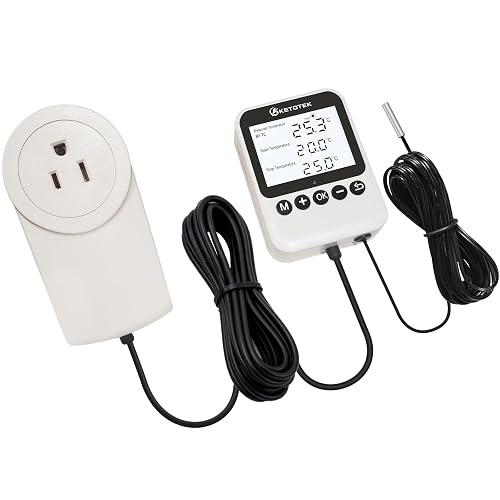
KETOTEK Digital Thermostat Timer Plug Outlet
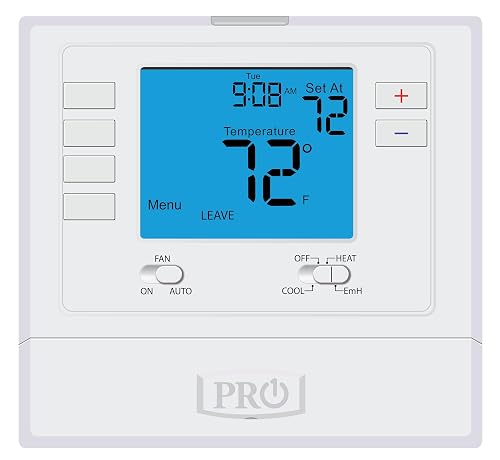
PRO1 T725 Heat Pump/Conventional Programmable Wall Thermostat

PRO1 T771 Single Stage Non-Programmable Wall Thermostat
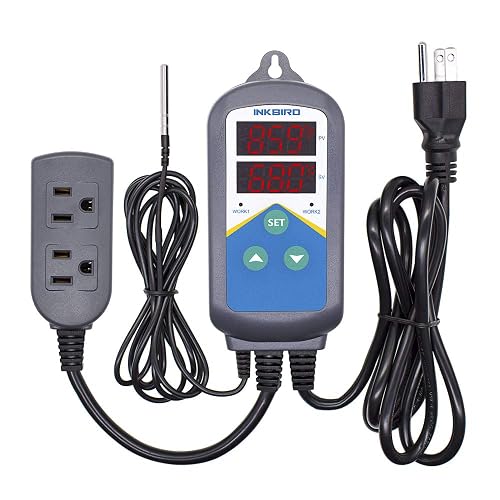
Inkbird ITC-306T Heating Thermostat with Day/Night Timer
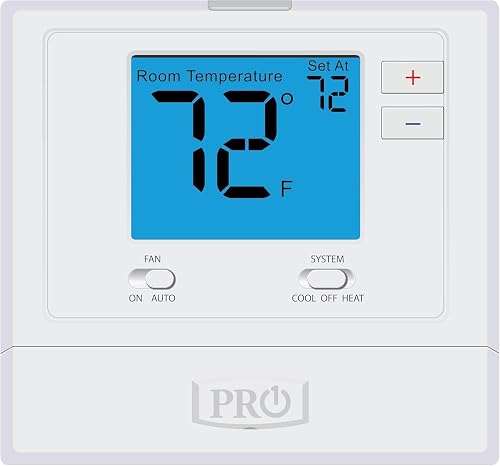
PRO1 T701 Single Stage Non-Programmable Wall Thermostat

PRO1 T715 Multi-Stage Programmable Gas Thermostat
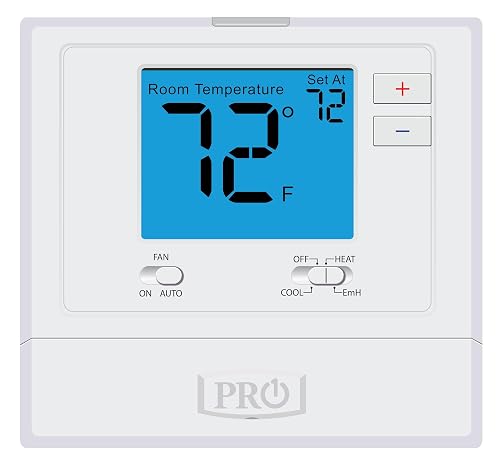
PRO1 T721 Non-Programmable Heat Pump/Conventional Thermostat
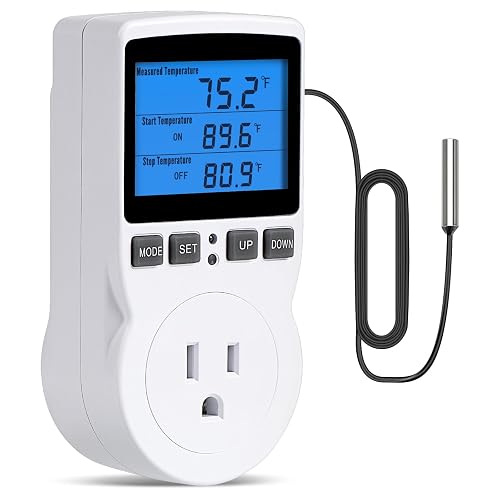
INKBIRDPLUS Plug-In Thermostat Outlet Heating/Cooling Timer

PRO1 T805 Single Stage Programmable Wall Thermostat
Meet The Standout Selections
Outlet-style temperature controllers like the KETOTEK plug into a standard 120V wall socket and switch whatever is plugged into them on or off based on probe readings. A 3m sensor probe (a thin cable that reads the actual air or surface temperature where it sits) lets you tuck the sensing end inside a terrarium while the display sits outside, and a backlit LCD helps you check setpoints without turning on the lights at night.
Three working modes cover most hobby setups: constant temperature, separate day and night setpoints, and a 24-hour on/off timer for lights or fans. Reptile keepers running basking lamps, seed starters on a heat mat, and home brewers managing fermentation chambers all fall into the supported use cases.
Notable Upsides
- Three switchable modes replace several single-purpose controllers in a hobby corner
- Long probe reach keeps the display accessible while the sensor sits inside an enclosure
- Backlit screen reads clearly in dim basements and nighttime terrarium checks
- No wiring required, so a renter can install it without touching the breaker panel
Things To Consider
- Mode-switching requires reading the manual; first-time owners may need a few setup attempts
- Plug-in form factor blocks the adjacent outlet on most wall plates
Feature Snapshot
Made For
Hobbyists running terrariums, propagation tents, or small fermentation chambers who want one controller instead of a stack of single-purpose timers.
Look Elsewhere When
You need to control a whole-home furnace or air handler; the wall-mounted PRO1 T725 is built for that workload instead.
Wall thermostats sit on the central heating and cooling system, sending low-voltage signals to the furnace, air handler, or heat pump. The PRO1 T725 is programmable on a 7-day or 5/1/1 schedule (five weekday days plus separate Saturday and Sunday blocks), and it covers both 2 heat/1 cool heat pump systems and 1 heat/1 cool conventional setups, which makes it a flexible match for many households.
The 4 sq. in. blue backlit display is part of the larger T700 platform, so the on-screen schedule mode (wake, leave, return, sleep) reads at a glance. Owners upgrading from a manual dial thermostat will find the most value here, since the schedule automatically trims runtime during work hours.
Good Reasons To Consider
- Dual compatibility means it can stay in place through a future system swap from conventional to heat pump
- 7-day programming with four daily periods gives a household real setpoint control without app dependencies
- Generous 4 sq. in. blue backlit display stays readable across a living room
Honest Caveats
- Setup requires identifying your system’s wiring (C-wire, or “common” wire, which supplies continuous 24V power) at the wall plate
- No Wi-Fi or app control, so remote schedule changes mean walking to the wall
Whose Shelf It Belongs On
Heat pump owners in mid-sized homes who want set-and-forget weekly programming and a backlit screen large enough to read from across the room.
Swap It Out When
You do not want to program anything; the PRO1 T701 delivers the same T700 platform with a simpler manual interface.
Not every space needs seven days of programming. The PRO1 T771 is a non-programmable wall unit aimed at single heating or single cooling systems, with a setpoint range that drops down to 25°F. That low floor is the reason it shows up in detached garages, workshops, and sheds where the goal is freeze protection rather than comfort precision.
The 4 sq. in. blue backlit display keeps the readout visible in dim shop lighting, and swing adjustment plus calibration let you fine-tune how often the system cycles. Compared to the T701 covered later, this one leans further toward specialty low-temperature spaces.
Real-World Strengths
- Setpoint floor down to 25°F handles freeze-watch duty in uninsulated outbuildings
- Calibration control reduces drift between the displayed and actual room temperature
- Non-programmable layout means no schedule to manage, which fits a casual workshop use case
Points To Note
- Single-stage only, so a two-stage furnace or multi-speed heat pump is out of scope
- Wide setpoint range is a strength for shops but means more attention is needed to avoid overcooling a conditioned space
Feature Snapshot
Best Suited To
Owners of detached garages, sheds, or workshops that need basic freeze protection without weekly programming.
Where Another Pick Suits Better
For a living area where comfort matters more than low-end range, the PRO1 T701 sits in a more typical household setpoint band.
Pre-wired controllers like the Inkbird ITC-306T arrive with a temperature probe and a relay output (an electrically controlled switch that turns a device on or off) already connected, which trims setup time on a seed-starting rack or reptile incubation box. The dual display window shows measured and set temperatures side by side, so you can confirm at a glance whether the heat mat is actually hitting the target.
A 24-hour day and night cycle timer lets the unit drift between two setpoints automatically, mimicking a natural warming and cooling pattern for germinating seeds or hatching eggs. Both outlets drive heating loads only, with a maximum output around 10A on 120V.
Practical Advantages
- Pre-wired probe cuts installation to plugging in the sensor and a heat source
- Dual display removes the need to toggle between measured and target values
- Day/night cycling supports germination schedules that want warmer days and cooler nights
- Calibration offset trims the reading when the probe location is slightly off from the sample area
Some Limits To Know
- Heating only, so it cannot drive a cooling fan or refrigeration element directly
- Total load stays capped at roughly 1200W on 120V, which rules out high-wattage space heaters
Right Fit For
Seed-starting gardeners, reptile breeders, and egg-incubation hobbyists who want a controller that arrives ready to plug in.
Not Your Match When
You need to drive a cooling device as well; the INKBIRDPLUS outlet in this roundup handles both heating and cooling loads.
For households that only need a clearer display and a digital setpoint, the PRO1 T701 strips programming out of the equation. It runs on the T700 platform like the T725, with the same 4 sq. in. blue backlit display, and a glow-in-the-dark light button makes late-night setpoint tweaks easier than fumbling for a switch.
It supports 1 heat/1 cool conventional systems with gas or electric configurations, which covers a wide slice of standard residential HVAC. The trade-off is no weekly schedule; you set a temperature and the system holds it.
A Strong Showing
- Manual setpoint control is the shortest learning curve in the PRO1 wall line
- Glow-in-the-dark light button helps in hallways and bedrooms without overhead lighting
- Compatibility with gas or electric conventional systems covers most older homes
Worth Bearing In Mind
- No scheduling means a working family cannot automate setback temperatures during the day
- Single-stage only, so multi-stage furnace owners need to step up to the T715
Feature Snapshot
Built With In Mind
Households that simply want a digital upgrade from an old manual thermostat and have no interest in weekly programming.
Where A Sibling Pick Shines
Schedulers will find the PRO1 T725 a more useful daily companion, since it adds 7-day programming on the same T700 platform.
Multi-stage HVAC (heating, ventilation, and air conditioning) systems run the equipment in low and high stages based on demand, which keeps temperatures steadier and the home quieter. The PRO1 T715 is built for 2 heat/2 cool gas systems and offers 7-day, 5/1/1, or non-programmable modes, so a household can opt into scheduling or run it as a manual unit.
The T700 platform display and glow-in-the-dark light button match the rest of the PRO1 wall line, and battery or hardwired power offers flexibility during installation. A larger two-stage system benefits most from this controller, since lower stages handle mild days and upper stages kick in only when the load demands it.
What Pays Off
- Two-stage heating and cooling control reduces temperature swings and short-cycles the equipment less
- Three operating modes let a household pick scheduling depth or stay fully manual
- Battery or hardwired installation simplifies retrofits where a C-wire is missing
Factors To Consider
- Programming setup runs longer than a single-stage model; plan on an afternoon
- Capability is wasted on a single-stage system, so smaller homes do not need the upgrade
Who Should Grab It
Owners of larger homes with two-stage gas furnaces and matching AC units who want programmable control without paying for app-connected features.
Skip It When
Your home runs a single-stage conventional system; the PRO1 T701 covers that workload at a lower tier.
System compatibility is where the PRO1 T721 stands out. It works with both 2 heat/1 cool heat pumps and 1 heat/1 cool conventional setups, which gives an installer flexibility to swap it between homes or carry it across a remodel. The T700 platform’s 4 sq. in. blue backlit display and glow-in-the-dark light button carry over from the rest of the line.
AA battery or hardwired power simplifies retrofits, especially in older homes where pulling a new cable through the wall is impractical. Like the T701 and T771, it skips weekly programming and focuses on a clean manual setpoint experience.
A Favorable Mix
- Heat pump and conventional compatibility reduces the chance of needing a replacement after a system change
- Glow-in-the-dark button works in dim hallways and bedrooms
- Battery or hardwired power eases installation in older wall cavities
Practical Considerations
- No scheduling, so it does not match the T725 or T805 for automated setback
- Heat pump support tops out at 2 heat/1 cool, which leaves a two-stage heat pump out of scope
Feature Snapshot
Who It Suits Best
Homeowners who may switch between a heat pump and a conventional system over the unit’s lifetime and want one thermostat that handles both.
Consider Something Else When
You want 7-day scheduling on a heat pump system; the PRO1 T725 is the programmable version in the same family.
The INKBIRDPLUS outlet pushes past the heating-only limit of the Inkbird ITC-306T by adding a cooling mode, so the same controller can switch a fan on when the temperature rises above the upper setpoint. A 15A, 120V, 1800W maximum load capacity is the highest in the plug-in category here, which makes it useful for higher-draw appliances like a space heater or a small window AC unit.
The temperature range stretches from about -72°F to 176°F, covering cold storage, fermentation coolers, and warm-season propagation in the same unit. Compared to the KETOTEK plug earlier, this one leans harder on raw load handling and dual heating/cooling logic.
Advantages To Know
- Heating and cooling modes in one outlet avoid buying a second controller for warm-season projects
- 15A load rating supports higher-wattage appliances than most plug-in thermostats
- Wide temperature range covers cold storage and warm incubation in a single unit
Where It Is Less Suited
- Plugs into the wall and blocks the neighboring outlet, which can frustrate tight power-strip layouts
- Cooling mode does not include humidity control, so greenhouses with moisture targets still need a separate humidistat
Feature Snapshot
Who Will Love This
Garage workshop owners and serious hobbyists who need to switch high-draw appliances on and off based on a temperature threshold in either direction.
A Better Fit Elsewhere
Reptile keepers running a single heat mat will find the Inkbird ITC-306T a simpler, lower-cost match.
The PRO1 T805 sits on the T800 platform, which means a noticeably larger 7 sq. in. blue backlit display, almost double the screen area of the T700 units. Setpoint numbers, mode labels, and schedule prompts stay readable from across a large living room, which matters in homes where the thermostat sits on a far wall.
Programming is 7-day, 5/1/1, or non-programmable for 1 heat/1 cool conventional systems. The glow-in-the-dark light button carries over, and the T805 typically needs a C-wire for power, so a quick check at the wall plate is worth doing before purchase.
What Makes Sense
- Largest display in the PRO1 wall line helps users with limited close-up vision
- Three operating modes let a household pick scheduling depth or run fully manual
- Compatible with common 1 heat/1 cool conventional systems, which covers a wide range of homes
Where It May Fall Short
- Single-stage only, so a multi-stage furnace or two-stage heat pump needs a different model
- Larger display also means a larger footprint on the wall, which can clash with narrow trim
Perfect Match For
Households that want a clear, room-readable display and weekly programming without paying for app connectivity or multi-stage support.
Where A Sibling Pick Shines
Multi-stage homeowners should look at the PRO1 T715 instead, which handles 2 heat/2 cool gas systems on the T700 platform.
What Matters Most Before Choosing Timer Thermostats
Match The Controller To The System
Plug-in outlet controllers and wall thermostats solve different problems. Outlet-style units like the KETOTEK and Inkbird ITC-306T sit between a wall socket and a single appliance, which works for heat mats, fans, lamps, and small heaters. Wall thermostats like the PRO1 line wire directly into the HVAC system, so they need to match the equipment’s stage count (the number of heating or cooling levels the system supports) and whether a C-wire is available. Matching first prevents the common mistake of buying a programmable unit for a system that only supports a single manual setpoint.
Programming Depth Versus Daily Habits
Programmable models earn their keep when the household follows a predictable schedule, like a workday that empties the house for nine hours. The PRO1 T725 and T805 offer 7-day and 5/1/1 schedules, which let weekdays, Saturday, and Sunday each run their own pattern. Households that prefer a single setpoint day and night will find the non-programmable T701, T721, and T771 easier to live with, since there is no menu to relearn after a power outage.
Sensor Reach And Display Readability
For outlet-style controllers, the length of the probe cable decides where the sensor can sit. A 3m probe on the KETOTEK and Inkbird units reaches deep into a terrarium or a propagation dome, while the controller body stays outside. On the wall-thermostat side, the T805’s 7 sq. in. display gives the largest readout in the PRO1 line, which matters in homes where the thermostat sits far from where people actually read it.
Capacity, Load, And Cooling Headroom
The maximum load rating is the most skipped spec on plug-in controllers. The INKBIRDPLUS outlet’s 15A, 1800W ceiling is enough for most space heaters, while the Inkbird ITC-306T caps at roughly 1200W on 120V. Cooling capability is the second divider, since the KETOTEK and Inkbird ITC-306T handle heating only, while the INKBIRDPLUS runs heating and cooling modes.
Key Considerations Across These Picks
Pitfalls Shoppers Hit
A frequent misstep is choosing a wall thermostat without confirming the system’s stage count. A two-stage furnace paired with a single-stage controller still runs, but it loses the efficiency and quieter operation that the second stage was designed to deliver. Another common error is buying a heating-only outlet controller for a reptile room that needs a cooling fan in summer, then scrambling for a second device mid-season.
Where The Extra Money Goes
Higher-tier wall thermostats in this roundup add more programmability, larger displays, and broader system compatibility. The jump from the PRO1 T701 to the T805 brings a much larger screen and 7-day scheduling, while the move from the T701 to the T715 unlocks two-stage gas system support. For outlet-style controllers, paying more gets higher load capacity and dual heating/cooling modes, which matter most in mixed-season hobby spaces.
Frequently Asked Questions
What Is The Difference Between A Timer And A Thermostat In One Device?
A timer schedules on and off times, while a thermostat reacts to measured temperature. Timer thermostats combine both, so a unit can run a heat mat on a daily cycle and also hold a target temperature inside that cycle.
Do I Need A C-Wire For A Wall Thermostat?
Many wall thermostats draw continuous 24V power through a C-wire, or “common” wire. Battery-powered options like certain PRO1 models avoid the requirement, but units that expect a C-wire will not function reliably without one.
Can One Outlet Thermostat Control Both A Heater And A Cooler?
Only models with both heating and cooling modes can, like the INKBIRDPLUS outlet in this roundup. Heating-only units such as the Inkbird ITC-306T can switch a heater but not a cooling fan.
What Is Stage Count On An HVAC System?
Stage count is the number of operating levels a furnace or heat pump supports. Single-stage systems run at one output level, while two-stage systems add a lower level for milder weather, which reduces cycling and keeps temperatures steadier.
Are Plug-In Timer Thermostats Safe For Continuous Use?
Plug-in units rated for the connected load, like the INKBIRDPLUS at 15A, are widely used for continuous incubation and greenhouse duty. Owners commonly keep the controller accessible so the display and wiring can be inspected periodically.
Closing Remarks
The right timer thermostat depends on where it has to work. A wall-mounted PRO1 unit covers a household HVAC system, while an outlet-style Inkbird or KETOTEK controller handles a single appliance in a terrarium, propagation tent, or fermentation corner. Read the system specs first, then match the controller’s stage count, load rating, and programming depth to the job at hand, and the choice tends to become much clearer.