Whether you’re chasing a steadier winter night or just tired of guessing where the dial should sit, a thermostat that handles lower setpoints without fussing is a small upgrade that changes how a room feels. The picks below cover everyday wall units, commercial-grade controls, water-heater stats, and a learning option that programs itself. Each one leans into a different kind of climate control, so the right match depends on your system, your schedule, and how much you want to think about temperature at all.
The Shortlist At A Glance
PickWhy We Picked ItBest ForAction
Editor’s Choice
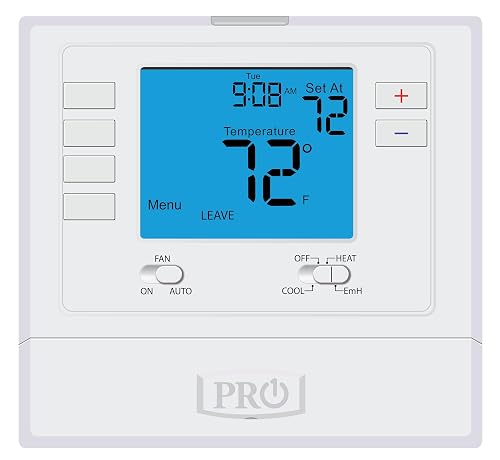
PRO1 T725 Heat Pump/Conventional Programmable Thermostat
Dual-system flexibility
Heat pump households
Low-Fuss Pick
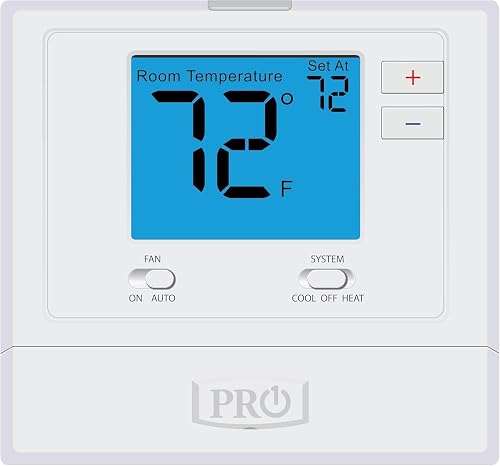
PRO1 T701 Single Stage Non-Programmable Wall Thermostat
No-schedule simplicity
Basic conventional systems

Performance Leader
PRO1 T715 Multi-Stage Programmable Gas Thermostat
Multi-stage precision
Two-stage gas systems
Commercial Pick
Venstar T2800 Commercial Platinum Slimline Thermostat
Light commercial durability
Offices and small shops
Utility Pick
Reliance 9000507-045 Lower Electric Thermostat
Water-heater replacement part
Electric water heater repairs
Flexible Favorite
PRO1 T721 Non-Programmable Heat Pump/Conventional Thermostat
Works with either system
Heads of household, simple use
Smart Upgrade
Google Nest Learning Thermostat 4th Gen with Sensor (Obsidian)
Self-learning schedules
Tech-forward households
Premium Pick
Google Nest Learning Thermostat 4th Gen with Sensor (Silver)
Polished metallic finish
Design-led interiors

Daily Driver
PRO1 T805 Single Stage Programmable Wall Thermostat
Larger display, flexible modes
Anyone who programs weekly
A Closer Look At Each Pick
Heat pumps ask more of a wall stat than a basic furnace setup does, and the PRO1 T725 is built with that reality in mind. It covers 2 heat/1 cool heat pump systems as well as standard 1 heat/1 cool conventional setups, so households with a hybrid system don’t need a second device. A four-square-inch blue backlit display keeps numbers readable from across the room, and a 7-day or 5/1/1 schedule lets you tune setpoints to match real life.
Compared with the simpler PRO1 T701 later in this list, the T725 trades straightforward operation for schedule control and dual-system support. For owners running cooler overnight setpoints in shoulder seasons, programmable blocks reduce the back-and-forth of manual tweaks. You may find the menu layout takes a weekend to fully dial in, depending on how many staging options your equipment exposes.
Everyday Perks
- ✓Compatible with both heat pump and conventional HVAC, which sidesteps buying a second control
- ✓7-day or 5/1/1 programming matches the way most working weeks actually flow
- ✓Large blue backlit screen stays legible in dim hallways and at night
- ✓Lower setpoints during sleep or work hours become a set-and-forget routine
- ✓Part of the broader T700 platform, which makes later upgrades a smaller leap
Things To Consider
- •Programming takes longer to set up than the non-programmable T701 below
- •Owners commonly report the initial staging configuration can feel layered for first-timers
Feature Snapshot
| | Feature | Specification | Why It Matters |
|---|
| System Support |
2 heat/1 cool heat pump, 1 heat/1 cool conventional |
Handles hybrid systems without a second stat |
| Programming |
7-day or 5/1/1 schedule |
Matches varied weekday and weekend routines |
| Display |
4 sq. in. blue backlit screen |
Readable from a distance in low light |
Built With In Mind
Heat pump owners with mixed conventional stages who want a programmable schedule they can leave alone once set.
Skip It When
You run a simple 1H/1C gas furnace, in which case the PRO1 T805 gives you a bigger display for the same planning effort.
Check on Amazon
Not every home needs a seven-day schedule, and the PRO1 T701 leans into that simplicity. It’s a non-programmable stat aimed at 1 heat/1 cool conventional systems, with the same four-square-inch blue backlit display the T700 platform uses elsewhere. A glow-in-the-dark light button helps when you walk past it at night, and the lack of menus means there isn’t much to misconfigure.
Pairing it against the programmable T725 above, the T701 skips scheduling in favor of straight up/down temperature control. For someone who sets a low overnight setpoint and leaves it, that tradeoff makes sense. In most homes with a basic furnace or central air setup, you may find this kind of plain control easier to live with than a clock-driven alternative.
What It Does Well
- ✓Two-button simplicity keeps the learning curve short
- ✓Compatible with gas and electric conventional HVAC
- ✓Glow-in-the-dark light button for low-light adjustments
- ✓Lower setpoint behavior is predictable and easy to repeat nightly
Worth Noting
- •No schedule means manual setpoint changes for day and night shifts
- •Not suitable for heat pump systems, where the T725 or T721 are better matched
Who It Suits Best
Anyone with a basic 1H/1C conventional system who wants an honest, dial-it-once control with no menus to memorize.
Look Elsewhere When
You want a set-and-forget weekly schedule, where the PRO1 T805 single stage programmable offers the same simplicity with weekly planning built in.
View Latest Price
Two-stage gas equipment is where the PRO1 T715 earns its keep. It’s a programmable stat built for 2 heat/2 cool systems, with 7-day, 5/1/1, or non-programmable modes depending on how you want it to behave. The T700-platform blue backlit display keeps things readable, and you can run it on batteries or hardwire it, which gives installers flexibility during a swap.
Side by side with the T725 earlier in the list, the T715 is the right pick when your gas furnace has more than one stage of heat and you’d like the stat to manage the second stage cleanly. Running lower setpoints at night, in our view, benefits from staged firing because the furnace can ramp gently rather than blast. Owners commonly appreciate the responsive control for shoulder-season mornings.
Notable Gains
- ✓Manages 2 heat/2 cool staging for finer temperature control
- ✓Three operating modes, including 7-day, 5/1/1, and non-programmable
- ✓Battery or hardwire power for easier retrofits
- ✓Glow-in-the-dark light button for late-night checks
Honest Caveats
- •Single-stage homes don’t need this much staging capability
- •Wiring a 2H/2C stat takes more terminals than a basic 1H/1C swap
Right Fit For
Owners of two-stage gas systems who want precise control during long winter nights and active summer days.
Swap It Out When
Your furnace is a single-stage conventional unit, in which case the PRO1 T805 covers the programming side without the staging complexity.
Check Latest Price
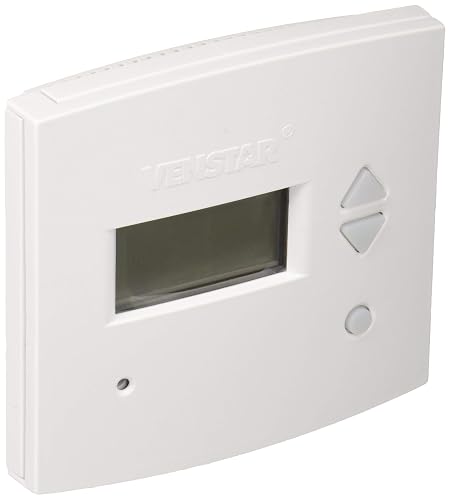
The Venstar T2800 steps outside the residential world and into light commercial spaces. It supports 3 heat/2 cool stages, three configurable outputs, and heat pump compatibility for offices and shops with mixed equipment. A 7-day programmable schedule with a smart fan function handles after-hours setbacks, and the unit holds non-volatile memory so settings survive a power outage.
Compared to the home-focused PRO1 models earlier, the T2800 is broader in scope without becoming a building management system. A backlit color display, color-coded keys, and an LED that glows green or red to show heating versus cooling give quick-glance feedback. Service filter and UV light reminders help with routine maintenance, which matters in shared spaces where no one tracks filter dates.
Where It Delivers
- ✓7-day scheduling with a smart fan for after-hours setback control
- ✓Configurable outputs offer flexibility across diverse equipment
- ✓Non-volatile memory preserves settings through power loss
- ✓Service filter and UV light reminders help with maintenance routines
Factors To Consider
- •More features than most single-family homes actually need
- •Color-coded interface and configuration take longer to learn than basic stats
Made For
Small commercial spaces, offices, and shops with multi-stage equipment and a need for reliable setback scheduling.
Another Choice May Suit
Residential users without three-stage equipment, where the PRO1 T715 already handles two-stage gas setups with less menu-diving.
View on Amazon
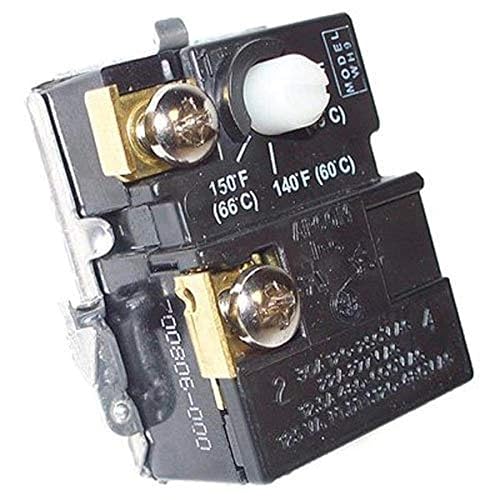
The Reliance 9000507-045 lives in a different category from the wall stats above. It’s a lower-position electric thermostat designed as a replacement part for electric water heaters, and its job is simple: snap into place, sense tank temperature, and trip the heating element. If your showers are running lukewarm, this is the kind of part that fixes the problem without replacing the whole tank.
Don’t confuse it with a living-room stat, since it doesn’t run on schedule or pair with smart home systems. For homeowners comfortable shutting off power at the breaker and pulling a couple of wires, installation is straightforward. Owners commonly keep a spare on hand because electric water heater stats tend to fail at inconvenient times.
The Good Stuff
- ✓Direct-fit replacement for many electric water heater tanks
- ✓Lower-element position restores hot water delivery quickly
- ✓Compact, no-frills design with no menus to navigate
Some Limits To Know
- •Not a wall thermostat and won’t control home HVAC
- •Requires shutting off power and basic wiring comfort for safe replacement
Best Suited To
Anyone with a standard electric water heater needing a replacement lower thermostat rather than a wall control.
A Better Fit Elsewhere
People looking to manage room air temperature, where the PRO1 T701 or T805 handle wall-mounted climate control instead.
Check on Amazon
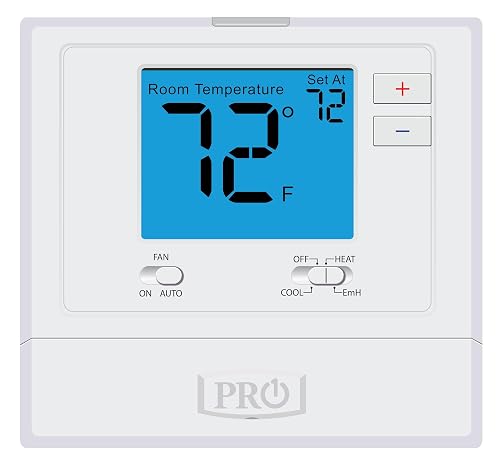
The PRO1 T721 sits in a useful middle ground between the simple T701 and the programmable T725. It supports either 2 heat/1 cool heat pump or 1 heat/1 cool conventional systems, which means the same stat can ride along if your equipment changes. The T700-platform 4 sq. in. blue backlit display and glow-in-the-dark light button keep night-time use easy, and you can run it on AA batteries or hardwire.
Versus the T725 earlier, the T721 drops the weekly scheduling in exchange for that hybrid system support. For someone who keeps a constant cool setpoint in winter and adjusts by hand in shoulder seasons, that tradeoff pays off. Depending on your home’s setup, the dual compatibility removes a layer of guesswork before you buy.
Strengths Worth Knowing
- ✓Works with both heat pump and conventional equipment on one stat
- ✓Simple, no-schedule operation reduces menu-diving
- ✓Battery or hardwire power suits a wide range of installs
- ✓Lower setpoint behavior is steady and predictable overnight
Points To Keep In Mind
- •No programming means manual changes for day and night shifts
- •Single stage of each mode, so it doesn’t cover multi-stage gas equipment
Whose Shelf It Belongs On
Households that want a no-fuss stat flexible enough to handle either a heat pump or a conventional system without rebuying later.
Reach For A Different Pick When
Weekly scheduling matters more than hybrid system support, where the PRO1 T805 delivers the same simplicity with programmable weekly blocks.
View Latest Price
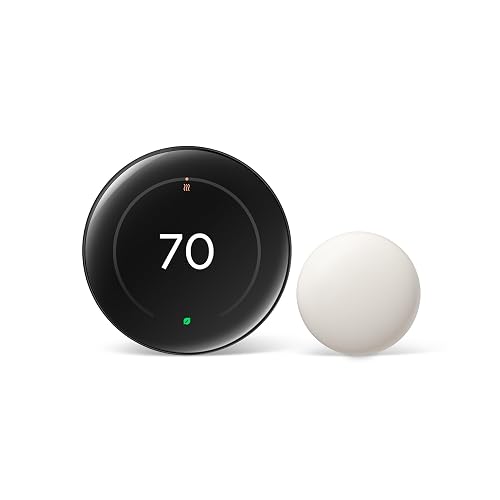
The Google Nest Learning Thermostat (4th gen) takes a different approach from every PRO1 in this roundup. It learns the temperatures you reach for, then builds a schedule around your routines, which means lower overnight setpoints become automatic once the pattern settles. The included Nest Temperature Sensor (2nd gen) lets you prioritize comfort in a specific room, like a nursery or home office.
Set against the wall stats above, Nest trades manual staging precision for app-driven flexibility and a polished dial interface. For tech-forward households, the obsidian finish reads as a deliberate design object rather than a beige rectangle. In homes with mixed rooms that run at different temperatures, the remote sensor is what tips the value toward this side of the list.
A Favorable Mix
- ✓Learns routines and adjusts schedules without manual programming
- ✓Remote temperature sensor targets comfort in a chosen room
- ✓App control from anywhere with a network connection
- ✓Obsidian finish suits darker, modern interiors
Trade Offs
- •Wi-Fi and account setup are required, unlike the standalone wall stats
- •Premium tier pricing compared to non-connected PRO1 models
Feature Rundown
| | Feature | Specification | Why It Matters |
|---|
| Learning |
Adapts to routines over time |
Schedules build themselves |
| Sensor |
Nest Temperature Sensor (2nd gen) included |
Prioritizes a chosen room |
| Finish |
Obsidian |
Reads as a darker, modern accent |
| Control |
App and on-device dial |
Flexible from anywhere or at the wall |
Perfect Match For
Tech-forward households that want a learning schedule and remote sensor targeting without a wall plate full of buttons.
Not Your Match When
You’d rather avoid app dependency, in which case the PRO1 T805 gives you a traditional programmable wall stat with no Wi-Fi required.
Check Latest Price
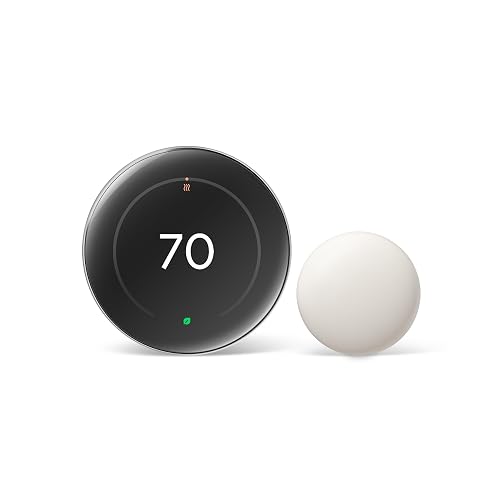
The Silver edition of the Nest Learning Thermostat (4th gen) shares the same internals as the Obsidian version but lands differently on a wall. It pairs the same learning schedule engine with the bundled Nest Temperature Sensor (2nd gen), so you can favor a single room’s reading over the hallway stat location. For homes with light or neutral palettes, the silver finish blends where the darker obsidian would stand out.
Compared to the obsidian version, this is the same smart experience wrapped in a more traditional metallic shell. You may find the silver face complements white trim better, depending on your interior. Functionally, the two models behave identically: learning routines, app control, and remote sensor balancing all carry over.
Well-Handled Touches
- ✓Polished silver finish suits lighter, neutral interiors
- ✓Self-learning schedules reduce weekly programming sessions
- ✓Remote sensor focuses comfort on a chosen room
- ✓App control and on-device dial for flexible adjustment
Where It Is Less Suited
- •Costs more than non-connected wall thermostats with similar HVAC support
- •Requires Wi-Fi and a Google account for full functionality
Who Should Grab It
Design-focused households with lighter wall colors who want the same Nest learning experience in a softer metallic finish.
Where A Sibling Pick Shines
Shoppers prioritizing function over finish often land on the PRO1 T805, which offers weekly programming without the premium price.
View on Amazon
The PRO1 T805 closes the roundup with a stat that takes the T700 family and stretches the screen. It runs 1 heat/1 cool conventional systems and offers 7-day, 5/1/1, or non-programmable modes, so you can scale complexity to taste. The 7 sq. in. blue backlit display is noticeably larger than the earlier T701 and T725, which makes it easier to read from across a living room.
Versus the T701 from earlier, the T805 adds weekly scheduling and a bigger face without jumping to multi-stage hardware. For homeowners who want a thermostat that can be set once and forgotten, that combination lands well. In our view, for a 1H/1C conventional system, this is a balanced everyday choice between the bare-bones T701 and the heat-pump-aware T725.
Where It Helps
- ✓Larger 7 sq. in. display is easier to read at a distance
- ✓7-day, 5/1/1, or non-programmable modes match varied routines
- ✓Compatible with 1H/1C gas and electric conventional HVAC
- ✓Glow-in-the-dark light button supports low-light adjustments
What To Weigh
- •Single-stage only, so multi-stage systems need the T715 instead
- •Weekly programming still requires initial setup time
Right Fit For
Owners of basic 1H/1C conventional systems who want a big, readable display and the option to schedule around their week.
Consider Something Else When
You have a heat pump system, where the PRO1 T725 brings dual-system support and similar scheduling in a heat-pump-friendly package.
Check on Amazon
What To Weigh Before Picking a Low-Temp Thermostat
Start with your equipment, not the feature list. A 1H/1C conventional system doesn’t need multi-stage hardware, and a heat pump doesn’t pair well with a basic furnace-only stat. Matching the stat to your system type (heat pump, gas, electric, or commercial) prevents wiring headaches and the frustration of staging options you can’t use.
Think about how you actually live. Households with regular weekday and weekend shifts benefit from 7-day or 5/1/1 programming, while steady-state homes may prefer the simplicity of a non-programmable dial. The PRO1 T721, for instance, gives you hybrid system support without forcing a schedule, which suits people who adjust by hand.
For lower setpoints specifically, look for thermostats with stable, repeatable behavior and a clear backlit display. Wide temperature ranges, accurate staging, and non-volatile memory (so settings survive outages) all matter. Smart options like the Nest add learning and remote sensors, but they also require Wi-Fi and a phone, which is a tradeoff worth considering before stepping up.
Common Shopping Slip Ups and Where the Extra Money Goes
Common Shopping Slip Ups
A frequent mistake is buying a stat with more stages than your equipment supports, which leaves features unusable. Another is ignoring the system type entirely and assuming any wall stat works with any furnace. Wiring matters too, and assuming a common-C wire is present can lead to a return trip. Always check the terminal count, the C-wire requirement, and whether your system is heat pump, gas, or electric before placing an order.
Where the Extra Money Goes
Higher-tier pricing usually buys better interfaces, larger displays, learning algorithms, and remote sensors. The jump from a basic PRO1 T701 to the T805 brings a larger screen and weekly programming, while moving up to the Nest line adds app control, learning schedules, and design-forward finishes. None of that matters if your equipment can’t use it, so the upgrade only pays off when the features match your routine and your home.