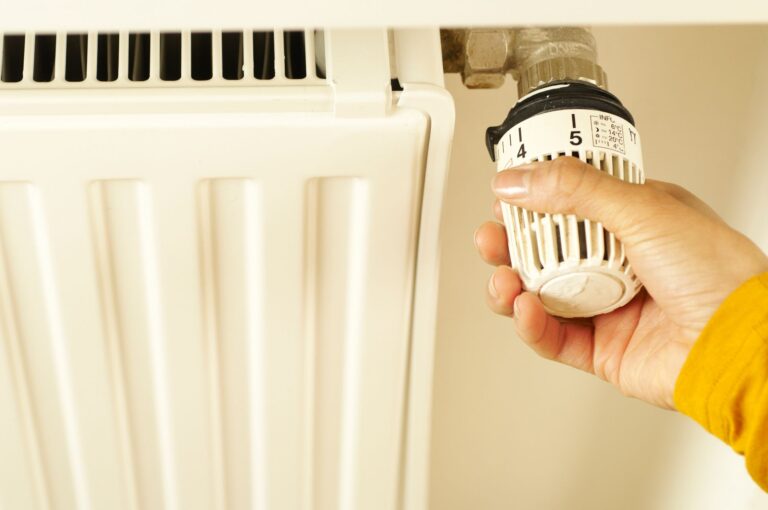

Swapping an old wall thermostat sounds simple, then you discover the wiring maze behind the faceplate and a wall of model numbers that all look nearly identical. The right thermostat depends entirely on your system type, your patience for programming, and whether you want a basic dial or a digital display that handles a schedule. This guide walks through ten wall-mounted options, mostly Honeywell and PRO1 IAQ, that cover common single-stage, multi-stage, heat pump, and line-voltage setups, so you can match the box on the wall to the box behind it.
A Side-By-Side Look
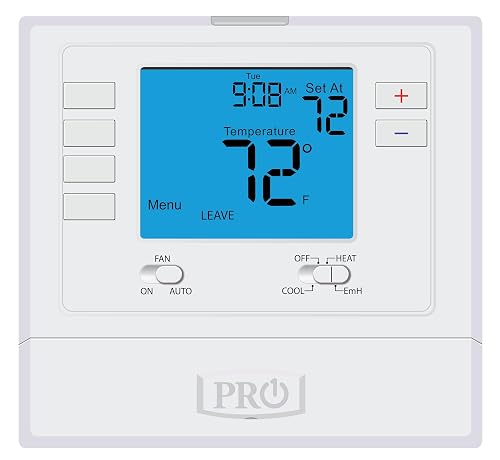
PRO1 T725 Heat Pump/Conventional Programmable Wall Thermostat

PRO1 T771 Single Stage Non-Programmable Wall Thermostat
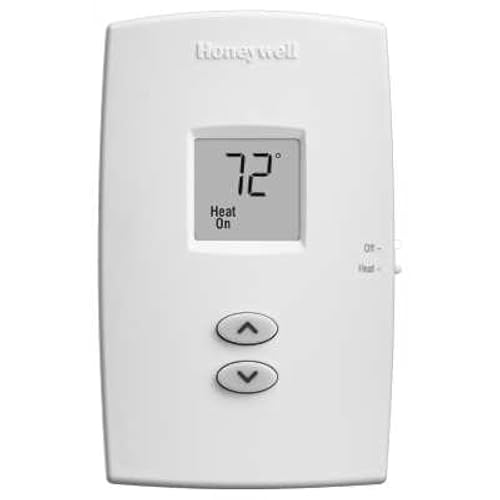
Honeywell TH1100DV1000 PRO 1000 Heat Only Thermostat
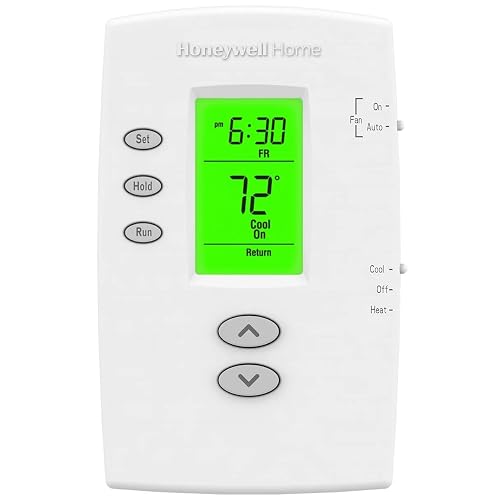
Honeywell TH2110DV1008 PRO 2000 Vertical Programmable Thermostat
PRO1 T701 Single Stage Non-Programmable Wall Thermostat

PRO1 T715 Multi-Stage Programmable Gas Thermostat
Honeywell TL7235A1003 Line Volt Pro 240-Volt Thermostat
PRO1 T721 Non-Programmable Heat Pump Thermostat
Honeywell RTH3100C1002/E1 Digital Heat/Cool Pump Thermostat

PRO1 T805 Single Stage Programmable Wall Thermostat
More On The Choices That Made The List
The T725 covers both 2 heat/1 cool heat pump setups and 1 heat/1 cool conventional systems, which makes it useful in homes where the heating equipment was upgraded piecemeal over the years. A 4 sq. in. blue backlit display shows the current schedule mode (wake, leave, return, sleep), so you always know what the thermostat is about to do next.
Programmable thermostats like this one are a “set it and forget it” play, where the comfort gains come from letting the system coast a few degrees while you’re at work. The T700 platform is a familiar foundation, and most homeowners who have used a PRO1 unit before will find the menu structure familiar.
The Helpful Details
- Works with both heat pump and conventional systems, so you don’t need to buy a second unit after a furnace upgrade.
- 7-day and 5/1/1 programming flexibility, which lets weekdays and weekends follow different routines.
- Large backlit display is easier on aging eyes in low light, especially in dim hallways.
- T700 platform familiarity makes swapping between PRO1 rooms straightforward.
Things To Consider
- Programming can feel clunky the first time, and you may need the manual nearby during setup.
- Not designed for multi-stage (2H/2C) systems, so bigger zoned homes may outgrow it.
Key Product Details
Right Fit For
Homeowners with a 2H/1C heat pump or simple conventional system who want scheduled comfort without smart-home complexity.
Look Elsewhere When
The PRO1 T715 Multi-Stage Programmable Gas Thermostat is a better match for 2H/2C multi-stage gas systems that need finer control.
The T771 is built for spaces that don’t need a schedule: garages, sheds, workshops, sunrooms. A non-programmable design means there’s nothing to set, and the wide setpoint range down to 25°F handles low-temperature protection where pipes or pets might be at risk on a cold night.
Compared to the Honeywell TH1100DV1000 covered later, the T771 brings swing adjustment and calibration options that let you fine-tune the reading against a separate thermometer. That detail matters more in a workshop than in a living room, where you trust the wall thermostat at face value.
Positive Points
- Wide setpoint range (25°F to 90°F) handles freeze-protection needs in unheated spaces.
- Swing adjustment helps the system cycle less, which is gentler on equipment in dusty or dirty spaces.
- Simple non-programmable layout means family members or tenants can’t accidentally wipe a schedule.
Points To Keep In Mind
- No scheduling, so you’ll need to adjust the temperature manually as conditions change.
- Calibration features go unused if you only need a basic on/off readout.
Best Suited To
Garage, shed, or workshop owners who want freeze protection and a clear digital readout, without programming.
A Better Fit Elsewhere
Honeywell TH1100DV1000 PRO 1000 is the simpler call when you only need a vertical heat-only single-stage box in a living space.
The TH1100DV1000 is a vertical heat-only single-stage unit in a premier white finish, sized at roughly 4-11/16 in. tall by 2-7/8 in. wide. It is the kind of thermostat you put in a basement, a single-zone apartment, or anywhere cooling isn’t part of the picture.
It’s also a useful swap for replacing an aging Honeywell Pro 1000 that’s been on the wall for a decade. If you liked the old one, this is essentially the same idea in a current production run, and the wiring labels match what you already have.
The Case For It
- Heat-only focus keeps the menu simple, which is great for a single-purpose zone.
- Vertical layout fits narrow wall sections where a square thermostat would crowd the trim.
- Honeywell Pro series familiarity for anyone replacing a previous-generation unit.
Honest Caveats
- Heat-only means you’ll need a different unit if you ever add central air.
- No scheduling, so energy savings depend on you turning the dial down manually.
Who Will Love This
Owners of single-zone heat-only homes, basements, or additions who want a simple, recognizable Honeywell.
Reach For A Different Pick When
Honeywell TH2110DV1008 PRO 2000 fits better when you want weekday and weekend programming in a similar vertical body.
The TH2110DV1008 PRO 2000 brings weekday and weekend programming to a vertical body that suits narrower wall sections. The backlit display shows the ambient room temperature at all times, and a one-touch setpoint shortcut lets you nudge the target temperature up or down without diving into menus.
Compared to the TH1100DV1000 reviewed earlier, this one adds an early-start feature, where the thermostat learns how long your system takes to reach temperature and starts earlier in the morning. That detail alone can make a real difference on cold winter weekdays.
A Few Strong Suits
- 5-2 (weekday/weekend) programming covers most working schedules without overcomplicating things.
- One-touch setpoint access for quick comfort adjustments when you walk in the door.
- Early-start logic brings the home to temperature by your target time, not 20 minutes after.
Trade Offs
- No 7-day scheduling, so a midweek day off still uses the weekday program unless you override it.
- Not designed for heat pump systems with auxiliary heat, which need a more specific model.
Feature Card
Whose Shelf It Belongs On
Homeowners with conventional heat and cool systems who want a set-and-forget weekday and weekend routine.
Consider Something Else When
Honeywell RTH3100C1002/E1 is the right call for heat pump systems with auxiliary heat rather than conventional equipment.
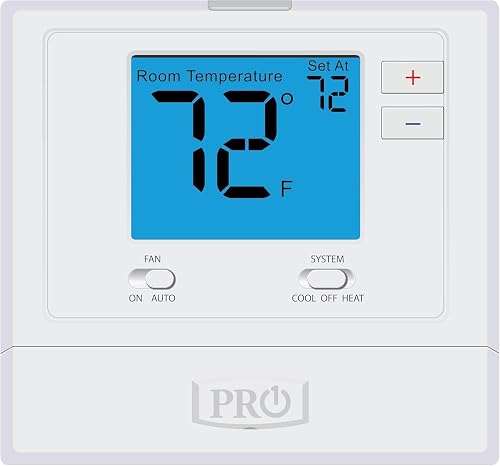
The T701 is a non-programmable 1 heat/1 cool conventional thermostat that runs on the same T700 platform as the T725 reviewed earlier. The standout detail is a glow-in-the-dark light button, which sounds minor until you’re trying to find the right key in a dark hallway at 6 a.m.
You also get the same 4 sq. in. blue backlit display, so the screen is easy to read whether the room is bright or quiet. For a basic digital swap of an old manual thermostat, this covers the essentials without the programming overhead.
Well-Handled Touches
- Glow-in-the-dark light button helps in power-outage or midnight situations.
- Large backlit screen is easy to read from across the room.
- Non-programmable design removes the chance of an accidental schedule wipe.
Possible Compromises
- No scheduling means no automatic setback when you leave for work.
- Limited to single-stage conventional systems, so multi-stage equipment will need a different model.
Built With In Mind
Renters, weekenders, and homeowners who want a simple, no-schedule wall thermostat in a basic 1H/1C home.
Skip It When
PRO1 T805 Single Stage Programmable is the upgrade path when you want 7-day scheduling on the same conventional system.
The T715 is the multi-stage sibling to the T725, designed for 2 heat/2 cool gas systems where the furnace and air conditioner each run in two stages. Two-stage equipment ramps up gradually, which keeps temperatures steadier and the system quieter, but only if the thermostat knows how to use both stages.
You can run it as 7-day, 5/1/1, or non-programmable, which makes it friendly to households that want flexibility as routines change. Battery or hardwired power gives installers more options during a swap.
What Makes Sense
- True 2H/2C control means the system uses low stage most of the time, which is quieter and more efficient.
- 7-day, 5/1/1, or non-programmable modes let you tune the schedule to your routine.
- Same 4 sq. in. blue backlit display and glow-in-the-dark light button as the rest of the T700 family.
Practical Considerations
- Wiring is more involved than a single-stage swap, and a common-wire may be required depending on your system.
- Overkill for single-stage homes that don’t need a second furnace or AC stage.
Quick Facts
Made For
Owners of two-stage gas furnace and AC systems who want steady temperatures and lower compressor cycling.
Not Your Match When
Honeywell TH2110DV1008 PRO 2000 is the simpler match for single-stage conventional homes that don’t need two stages.
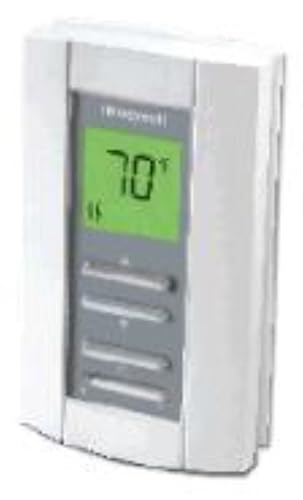
The TL7235A1003 is a different beast from the rest of this list. It is a 240-volt line-voltage thermostat, which means it controls electric baseboard heaters directly rather than talking to a low-voltage furnace control board. The on-demand backlight and soundproof operation are the kinds of details that matter when the unit is in a bedroom or a quiet study.
You can also see a heating indicator at a glance, so there’s no guesswork about whether the heaters are actually pulling current. Compared to a low-voltage PRO1 unit, this one requires line-voltage wiring knowledge, so most people hire an electrician for the install.
Notable Gains
- Direct 240-volt control is purpose-built for electric baseboard heating.
- On-demand backlight saves battery life and lights up only when you need it.
- Soundproof operation eliminates the clicking that traditional baseboard thermostats make.
Potential Drawbacks
- Line-voltage wiring is more involved than a low-voltage swap, and a licensed electrician is often the safer call.
- Not compatible with central forced-air systems, so it only fits specific heating setups.
Right Fit For
Homeowners with 240-volt electric baseboard heaters who want quiet, accurate control in each room.
Look Elsewhere When
PRO1 T701 fits a conventional forced-air system far better, since the T701 expects low-voltage control wires, not line voltage.
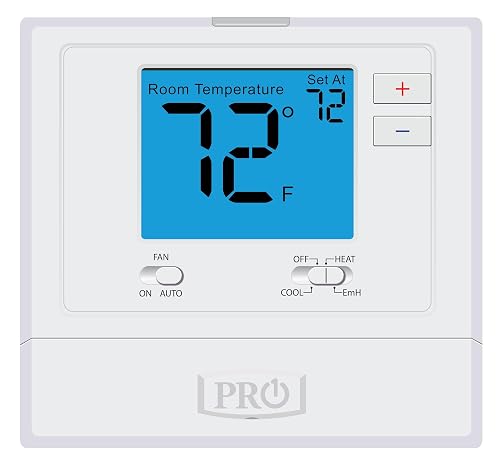
The T721 handles either a 2 heat/1 cool heat pump or a 1 heat/1 cool conventional system, which makes it a versatile swap in homes that may switch heating types in the future. The T700 platform shows up again, with the same 4 sq. in. blue backlit display and glow-in-the-dark light button that have become a signature of the line.
You can run it on AA batteries or hardwire it from the system, which is helpful in older homes where a common wire may not be present at the thermostat location. In most installs, owners report the setup taking under 20 minutes with basic tools.
The Value In It
- Dual compatibility covers heat pump or conventional systems without a model swap.
- Battery or hardwire power simplifies retrofits in older homes that lack a C-wire.
- Shared T700 UI makes the menu familiar if you already use another T700-series unit.
Soft Spots
- Non-programmable, so it doesn’t auto-setback when you leave for the day.
- Limited to single-stage conventional or basic 2H/1C heat pump configurations.
Who Should Grab It
Homeowners with a 2H/1C heat pump or 1H/1C conventional system who want a non-programmable digital control.
Swap It Out When
PRO1 T725 is the better call when you want the same dual compatibility plus 7-day or 5/1/1 programming.
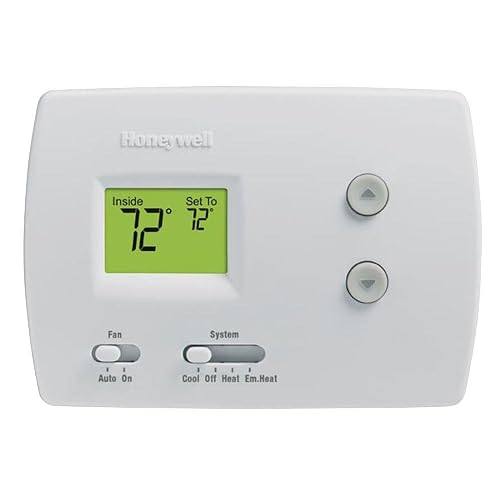
The RTH3100C1002/E1 is a non-programmable thermostat built specifically for heat pump systems with auxiliary heat, which are common in apartments and warmer-climate homes. Soft-touch buttons and a backlit display make it approachable for anyone who has avoided touchscreens.
The mercury-free design is a small but important detail, since older thermostats sometimes contained mercury switches. You also need to be aware of the limits: this is for heat pumps only, so it won’t work with electric baseboard heat, gas backup, or multi-stage systems.
Strengths Worth Knowing
- Designed for heat pump systems with auxiliary heat, including backup strips that kick in on very cold days.
- Soft-touch buttons feel more responsive than the clicky membranes on older models.
- Mercury-free construction is a meaningful upgrade for households that want safer materials.
Worth Bearing In Mind
- Heat-pump-only compatibility rules out electric baseboard, gas backup, and multi-stage systems.
- No scheduling means the comfort gains are limited to what you adjust manually.
Perfect Match For
Apartment dwellers and homeowners with dedicated heat pump systems who want a simple, mercury-free digital control.
Where A Sibling Pick Shines
PRO1 T721 handles either heat pump or conventional systems, which is a better fit if you may change equipment later.
The T805 is the larger-display cousin of the T701, with a 7 sq. in. blue backlit screen that makes it easier to read from a distance. It runs on the T800 platform and supports 7-day, 5/1/1, or non-programmable modes, which is genuinely useful for households with rotating shifts or unpredictable weeks.
Like the rest of the PRO1 family, it includes a glow-in-the-dark light button for finding the controls at night. The trade-off is size: the bigger footprint means you may need a trim plate to cover a wider opening left by a previous thermostat.
Real Benefits
- Extra-large 7 sq. in. display is the most readable screen in this lineup, especially from across the room.
- Three scheduling modes (7-day, 5/1/1, or non-programmable) cover rotating routines and travel schedules.
- Glow-in-the-dark light button keeps nighttime adjustments easy.
Small Caveats
- Larger footprint may need a trim plate if replacing a smaller thermostat.
- Single-stage compatibility only, so multi-stage homes need a different PRO1 model.
Feature Snapshot
The Right Fit
Homeowners in single-stage conventional homes who want the most flexible scheduling and the largest screen in this list.
Consider Something Else When
PRO1 T701 is the simpler, no-schedule call when you only need a basic digital thermostat in the same 1H/1C system.
What To Weigh Before Picking A Wall Thermostat
System type is the first filter, since a thermostat only works with the equipment behind the wall. A “heat pump” system is one that moves heat between indoors and outdoors using refrigerant, and it requires thermostats with heat pump logic rather than conventional furnace logic. A “conventional” system uses a gas furnace, electric furnace, or boiler and treats heat and cool as separate signals. A “line-voltage” system, like the Honeywell TL7235A1003, controls 240-volt electric baseboard heaters directly with no low-voltage control board in between.
Stages matter next, where a “single-stage” system runs at one output level and a “multi-stage” system has two or more output levels. Two-stage equipment ramps gradually, which keeps temperatures steadier, but only multi-stage thermostats like the PRO1 T715 can talk to both stages properly. If your furnace and air conditioner are both single-stage, you don’t need to pay for multi-stage control.
Power and wiring round out the decision. Battery-only thermostats install quickly but need battery swaps, while hardwired units with a C-wire (common wire) draw continuous power from the system. PRO1 T700 and T800 units typically run on either AA batteries or system power, which is helpful in older homes that lack a common wire at the thermostat location.
Finally, think about the room itself. A garage or workshop needs a wide setpoint range, which is what the PRO1 T771 is built for. A bedroom wants a quiet, dim-friendly display, which is where backlit screens and glow-in-the-dark light buttons earn their keep. The best thermostat is the one that fits both the system behind the wall and the routine in front of it.
Key Considerations Across These Picks
Pitfalls Shoppers Hit
A common mistake is buying a thermostat based on the brand alone, then discovering the wiring terminals don’t match the equipment. Heat pump thermostats use an “O” or “B” terminal for the reversing valve, while conventional systems use a simple “Rh” or “Rc” jumper. You may find the perfect-looking unit on the wall only to discover it lacks a terminal your system actually needs.
Another slip is assuming any programmable thermostat will save energy. The savings come from the schedule you set, not the device itself. A programmable unit stuck on the same temperature 24/7 costs the same to run as a manual thermostat, so think honestly about whether you’ll program it before paying extra for scheduling features.
The Case For Spending Up
Higher-tier models in this list earn their place through display size, scheduling flexibility, and multi-stage control. The PRO1 T805’s 7 sq. in. screen, for example, is meaningfully easier to read than the standard 4 sq. in. panels on the T700 series. The PRO1 T715’s two-stage support matters in homes with two-stage equipment, where a single-stage thermostat would leave half the system unused.
The upgrade is worth it when your home has the equipment to use it. In a single-stage apartment with no plans to upgrade, paying for two-stage control or a 7-day schedule is mostly wasted money. The right tier is the one that matches your system, your schedule, and the room where the thermostat actually lives.
Frequently Asked Questions
How do I know if my system is heat pump or conventional?
Check the outdoor unit, since heat pump systems have a refrigerant line set and a fan unit outside the home, while conventional systems usually have a gas meter, oil tank, or no outdoor equipment at all.
Can I install one of these thermostats myself?
Most low-voltage PRO1 and Honeywell swaps take under 30 minutes with basic tools, as long as you label the wires before removing the old thermostat. Line-voltage units like the TL7235A1003 are a different story and usually need a licensed electrician.
Do programmable thermostats really save money?
They can, but only when the schedule actually sets back the temperature during hours when no one is home. A schedule that mirrors your manual habits will produce minimal savings.
What is a C-wire and do I need one?
A C-wire, or common wire, delivers continuous 24-volt power from the system to the thermostat. Many newer units can run on AA batteries instead, which sidesteps the issue in older homes that lack a common wire at the wall.
Will a Honeywell thermostat work with a PRO1 system and vice versa?
Both brands use the same standard low-voltage terminals, so they will work in most conventional and heat pump systems. The catch is matching the system type and stages, not the brand, since the equipment determines compatibility, not the logo on the front.
Closing Remarks
The right wall thermostat is the one that matches your system type, the number of stages your equipment runs, and your tolerance for programming. Start with the equipment label on your indoor unit or the wiring at the old thermostat, then narrow from there. With a clear picture of what your home actually needs, the choices above become much easier to sort.