
HVAC gear doesn’t get more boring, or more important, than the wall thermostat controlling it. You tap it twice a day and forget it exists, until it dies or starts short-cycling your heat pump at 2 a.m. The picks below cover common Ruud-compatible scenarios (1H/1C, 2H/1C heat pump, 2H/2C multi-stage gas, plus a couple of attic-ventilator models that show up in the same product family). Each one lists the system type it drives, the display it shows, and the kind of home it suits, so you spend less time squinting at wiring diagrams.
The Essentials At A Glance
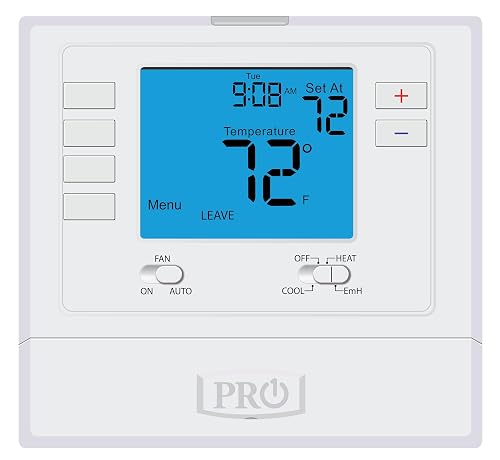
PRO1 T725 Heat Pump/Conventional Programmable Digital Wall Thermostat (2H/1C Heat Pump, 1H/1C Conventional)

PRO1 T771 Single Stage Non-Programmable Wall Thermostat (1H/1C Conventional)
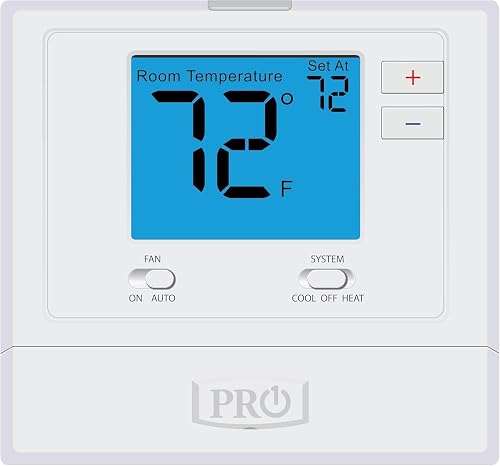
PRO1 T701 Single Stage Non-Programmable Wall Thermostat (1H/1C Conventional)

PRO1 T715 Multi-Stage Programmable Gas Thermostat (2H/2C Systems)
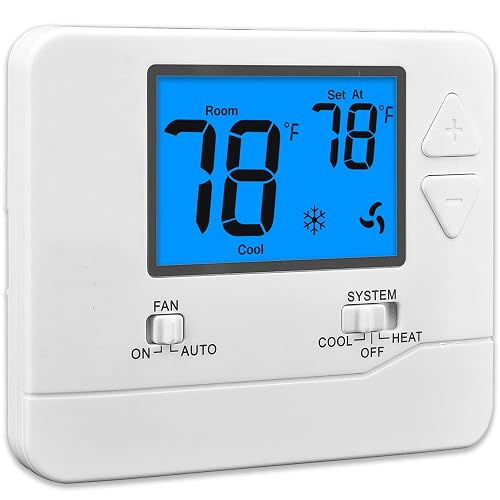
Suuwer Non-Programmable Thermostat for Home (1H/1C Conventional, Blue Backlight)
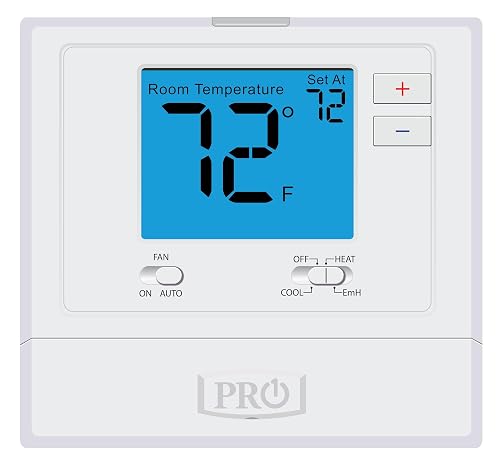
PRO1 T721 Non-Programmable Wall Thermostat (2H/1C Heat Pump or 1H/1C Conventional)
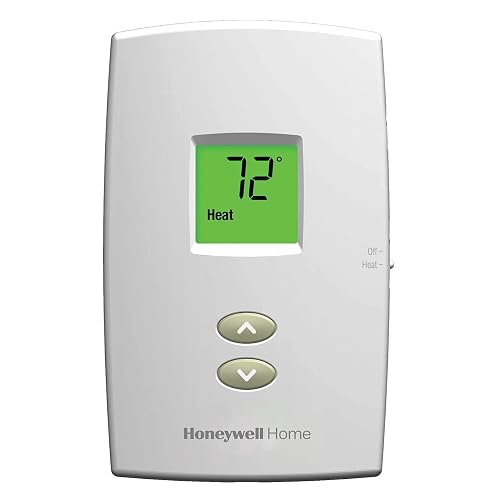
Honeywell TH1100DV1000 Pro-Digital 2-Wire Heat Only

Ventamatic XXFIRESTAT 10-Amp Adjustable Programmable Thermostat with Firestat
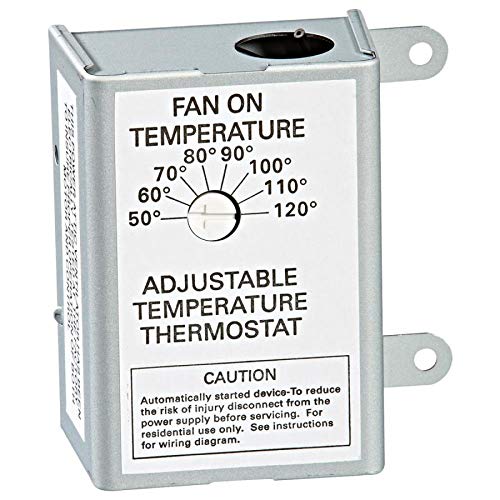
Air Vent 58033 Single Speed Adjustable Thermostat

PRO1 T805 Single Stage Programmable Wall Thermostat (1H/1C Conventional)
A Breakdown Of The Leading Choices
The T725 sits at the top of the T700 platform and earns that spot for one reason: it handles both heat pump and conventional wiring in the same body. If your Ruud system is a 2H/1C heat pump, or a standard 1H/1C gas furnace with central A/C, this thermostat will run either without a jumper swap. Most homeowners in mixed-system households run into that exact decision, so the dual compatibility cuts out a return.
Programming runs 7-day or 5/1/1 (a four-period weekday/Saturday/Sunday schedule, common on basic programmable stats), giving you separate wake, leave, return, and sleep windows. The 4 sq. in. blue backlit screen stays readable from across a hallway. For most heat-pump homes without smart-home ambitions, this is the comfortable middle ground.
A Strong Showing
- Dual system support means one model covers both heat pump and conventional setups.
- 7-day and 5/1/1 scheduling handle varied work-week patterns without manual tweaks.
- Four-period daily programming (wake, leave, return, sleep) lets you trim run time when nobody’s home.
- Backlit blue display holds up in dim hallways and during nighttime setpoint checks.
Things To Consider
- No Wi-Fi, so app or voice control stays out of reach for anyone wanting a connected stat.
- Wiring compatibility depends on your existing base, so count and label the wires before installing.
Key Specs
Who It Suits Best
Homeowners with a Ruud heat pump who want a programmable wall thermostat without learning a smart-home app.
Look Elsewhere When
Run a multi-stage 2H/2C gas system and need finer stage control; the PRO1 T715 multi-stage model is the closer match.
Where the T725 handles the main living space, the T771 leans into spaces most stats overlook: detached garages, workshops, sheds, and basements. The setpoint range stretches from 25°F to 90°F, so a non-freezing workshop stays above the pipe-burst threshold through a cold snap. That’s the real reason this model exists, since most living-area stats stop at 44°F on the low end.
Swing adjustment (a small deadband that prevents the system from short-cycling right at the setpoint) and calibration let you tune cycling behavior to a drafty outbuilding. The 4 sq. in. blue backlit display keeps things legible in a dim garage. Compare that to the PRO1 T701 below, which shares the same display size but starts at a more typical comfort range.
What Helps Most
- 25°F low setpoint protects plumbing in unheated spaces during deep cold.
- Swing adjustment lets you tune cycling for a drafty outbuilding.
- Calibration feature corrects a 1-2°F mismatch between the stat and a separate room thermometer.
Trade Offs
- Single-stage only, so it won’t drive a multi-speed Ruud system.
- Non-programmable design means manual tweaks when the season shifts.
Built With In Mind
Anyone heating a detached garage, workshop, or shed where freezing pipes are a real winter concern.
Skip It When
You need simple comfort control in a primary living space; the PRO1 T701 fits that brief without the extended low range.
The T701 is the model you hand a relative who wants a thermostat that does the obvious thing. It runs a 1H/1C conventional Ruud system, displays the temperature, and waits for you to press up or down. No menus, no scheduling, no app. In homes where nobody wants to learn a programming flow, that plainness is the feature.
The 4 sq. in. blue backlit screen pairs with a glow-in-the-dark light button, a small touch that makes a midnight adjustment easier without fumbling for a lamp. Gas or electric configuration support widens the install base across older Ruud furnaces. Against the T771 above, the T701 trades the extended low setpoint for a tighter comfort-focused range and a more typical home display.
Useful Highlights
- Single-stage simplicity removes the menu learning curve for first-time users.
- Glow-in-the-dark light button helps in a dark hallway without a phone flashlight.
- Gas or electric configuration broadens compatibility with older Ruud equipment.
- Backlit display keeps the temperature readable in low light.
Room For Improvement
- No scheduling, so weekend and weekday setbacks require manual changes.
- Single-stage only, so it won’t carry a multi-stage system.
Made For
Households that want a set-and-forget stat for a basic Ruud gas furnace and central A/C.
Consider Something Else When
You want 7-day scheduling without going smart; the PRO1 T805 adds programming on the same T800-style platform.
The T715 is where the T700 platform stretches to handle larger homes with two-stage heating and cooling. If your Ruud setup uses a two-stage gas furnace plus a two-stage compressor, this stat will run both stages separately, which is how you get the gentler temperature swings and quieter ramp-up a multi-stage system is designed to deliver. A single-stage stat would just treat the equipment like one big on/off switch.
You can run it as 7-day, 5/1/1, or as a non-programmable unit if you decide scheduling is more bother than benefit. The 4 sq. in. blue backlit display with a glow-in-the-dark light button matches the other T700-series stats in this list, so the wall look stays consistent. Compared to the T701 above, the T715 trades simplicity for stage management.
Features That Help
- 2H/2C support drives two-stage gas furnaces and compressors without losing stage separation.
- Three operating modes (7-day, 5/1/1, non-programmable) suit both planners and tinkerers.
- Glow-in-the-dark light button carries over the easy nighttime use from the smaller T700 stats.
- Battery or hardwire power options ease install in older junction boxes.
Points To Note
- Multi-stage wiring has more terminals, so installation takes longer than a single-stage swap.
- Programming has a learning curve for anyone moving up from a non-programmable stat.
Best Suited To
Homeowners with a two-stage Ruud gas furnace who want a programmable stat that can actually use the second stage.
Not Your Match When
Your system is single-stage only; the PRO1 T701 or T805 covers that scenario with simpler menus.
The Suuwer lands on a lot of shortlists for one reason: it covers a basic 1H/1C conventional setup at a low entry point. For a rental property, a basement, or a quick replacement when an old mercury-bulb stat finally gives up, the value math works in its favor. The blue backlight stays consistent with the PRO1 T701 and T715 displays, so wall-mounted units tend to look similar in passing.
Installation is the part to slow down on. The 2 to 5-wire compatibility window means you need to check the existing base before buying. That aside, once the wiring matches, the day-to-day is straightforward: set the temperature, leave it alone. Against the PRO1 T701 above, the Suuwer trades brand familiarity and glow-in-the-dark trim for a lower entry point.
Noteworthy Benefits
- Low entry price makes it a sensible pick for rentals and quick-swap projects.
- 1H/1C conventional support covers the most common residential layout.
- Blue backlight keeps the readout visible in dim hallways.
Honest Caveats
- 2-5 wire compatibility window means older or unusual bases may not match.
- Non-programmable design lacks setback savings during the workday.
- Brand support ecosystem is thinner than the PRO1 T700-series line.
Key Specs
Whose Shelf It Belongs On
Property managers and homeowners replacing a basic single-stage stat without paying for extras they won’t use.
Reach For A Different Pick When
You want a 7-day programmable schedule on the same conventional layout; the PRO1 T805 fits that brief.
The T721 is the no-schedule sibling of the T725. It accepts the same wiring scenarios, a 2H/1C heat pump or a 1H/1C conventional system, but skips the weekly programming entirely. If your household runs at roughly the same temperature morning to night and the setback savings aren’t worth the setup time, this lands as the simpler choice.
You still get the 4 sq. in. blue backlit display and the glow-in-the-dark light button that the T700-series shares. Power comes from AA batteries or a hardwire connection depending on the install. Compared to the T701 above, the T721 swaps conventional-only coverage for heat pump compatibility, which opens it up to more Ruud configurations.
Strong Points
- Heat pump and conventional dual support widens the install base.
- No programming menus to learn, so daily use stays quick.
- AA battery or hardwire power options fit varied junction boxes.
Potential Drawbacks
- No scheduling means no automatic setbacks during work hours.
- Heat pump systems sometimes need exact wiring labels, so check the terminals before installing.
Quick Facts
Right Fit For
Heat pump households that want a basic wall stat and don’t plan to program a schedule.
A Better Fit Elsewhere
You want 7-day programming on the same heat pump layout; the PRO1 T725 adds scheduling without changing the wiring scenarios.
The TH1100DV1000 fills a slot the rest of this list barely touches: heat-only systems on a two-wire connection. Older baseboard heaters, some millivolt systems (low-voltage gas heating circuits that don’t need a common wire), and certain Ruud furnaces in heating-only mode wire with just two conductors. Most programmable stats won’t run on that, since they need a common wire (a continuous return path that powers the thermostat’s display).
It runs the heat setpoint from 40°F to 90°F, displays ambient temperature at all times, and includes one-touch setpoint recall so you can return to a stored comfort number. Built-in compressor protection isn’t a factor on heat-only systems, but the protection logic is part of the firmware. Compared to the multi-mode PRO1 stats above, this is a smaller, more focused tool.
What Makes Sense
- Two-wire compatibility opens up older baseboard and millivolt systems.
- One-touch setpoint recall returns to a stored comfort temperature quickly.
- Backlit display reads in a dim basement mechanical room.
Worth Bearing In Mind
- Heat-only design means it can’t run a central A/C system, so cooling days go uncovered.
- No scheduling, so setbacks are a manual task each morning and night.
Who Should Grab It
Homeowners with a heat-only Ruud system, baseboard electric heat, or a millivolt floor furnace on two wires.
Swap It Out When
You need cooling control as well; the PRO1 T701 adds 1H/1C conventional coverage with a common-wire setup.
The XXFIRESTAT doesn’t run your living-room stat. It runs power attic ventilators, and the Firestat is the headline: a 183°F cutoff that kills the fan if attic temperatures climb into a danger range. For homeowners with a Ruud whole-house setup that pushes attic heat down through the ductwork in summer, a properly firing attic fan matters for keeping the HVAC from working overtime.
Adjustment is screwdriver-only on a bi-metallic switch (a mechanical sensor that bends slightly with temperature changes to open or close the circuit), which sounds dated but also means no menu diving. The thermostat range covers 50°F to 120°F for normal operation, and the unit can control up to three attic fans at 10 amps total. Against the rest of this list, it’s a specialty tool with a very specific job.
Real Benefits
- 183°F Firestat cutoff adds a safety layer during extreme attic heat events.
- Adjustable 50°F to 120°F range matches typical seasonal attic conditions.
- Controls up to three ventilators on a single 10-amp circuit.
Where It Is Less Suited
- Screwdriver-only adjustment means seasonal tweaks aren’t a one-button job.
- Specialty focus means it won’t replace a living-area stat on this list.
Perfect Match For
Homeowners with power attic ventilators who want a replacement stat with a built-in high-temperature cutoff.
Where A Sibling Pick Shines
You need a basic adjustable attic stat without the Firestat safety cutoff; the Air Vent 58033 covers simpler installs.
The 58033 is a single-speed adjustable thermostat built for roof-mounted and gable-mounted attic ventilators. The 60°F to 120°F range covers the seasons when an attic fan earns its keep, from late spring through early fall. If your existing attic stat is original equipment from the fan itself, this swap restores predictable on/off behavior without a smart-home integration.
Compatibility lines up with a specific list of Air Vent fan model numbers, so you want to confirm your existing fan before buying. It can’t be used with a whole-house fan on the same circuit, since the load profile is different. Compared to the Ventamatic XXFIRESTAT above, this is a simpler replacement without the 183°F safety cutoff.
Useful Touches
- Adjustable 60°F to 120°F range covers typical attic ventilation seasons.
- Single-speed design keeps the wiring and install straightforward.
- Drop-in fit for several common Air Vent fan models.
Some Limits To Know
- No Firestat safety cutoff at extreme attic temperatures.
- Not compatible with whole-house fans on the same control circuit.
Who Will Love This
Homeowners replacing a worn-out adjustable stat on a compatible Air Vent roof- or gable-mount attic fan.
Another Choice May Suit
You want a high-temperature safety cutoff built in; the Ventamatic XXFIRESTAT adds that 183°F protection layer.
The T805 closes the list as the T800-platform counterpart to the T701. The big visual win is the 7 sq. in. blue backlit display, which is roughly 75% larger than the 4 sq. in. T700 screens. From across a long living room or a sight-challenged household member’s chair, that extra real estate reads more clearly without leaning in.
You can run it as 7-day, 5/1/1, or non-programmable, which makes it a flexible swap for an existing T701 or a fresh install. The glow-in-the-dark light button carries over the easy nighttime use. Compared to the T715 above, the T805 trades multi-stage support for a larger display and conventional-only coverage.
Reasons It Performs
- 7 sq. in. display reads clearly from across a large room.
- Three operating modes (7-day, 5/1/1, non-programmable) suit a range of routines.
- Glow-in-the-dark light button carries over the easy nighttime use from the T700 line.
Potential Sticking Points
- Conventional-only coverage means heat pump homes should look at the T725 or T721 instead.
- Larger footprint takes more wall space than the compact 4 sq. in. stats.
Key Specs
Who Should Grab It
Conventional-system households that want a programmable stat with a noticeably larger readout.
Look Elsewhere When
You need heat pump coverage; the PRO1 T725 or T721 fits the heat pump side of the catalog.
What To Weigh Before Choosing A Wall Thermostat
System compatibility comes first. Count the wires at your existing base and identify the heating and cooling stages, since a mismatch here is the most common reason a new stat goes back in the box. Heat pump systems with two stages of heating and one stage of cooling need a different model than a single-stage gas furnace, and a two-wire heat-only base can’t run a five-wire programmable stat without a common wire.
Display size and backlighting matter more than people expect. A 4 sq. in. screen reads fine from a hallway; a 7 sq. in. screen reads from across a long living room. Glow-in-the-dark light buttons help in a dark house without fumbling for a phone.
Scheduling versus simplicity is the real lifestyle fork. Programmable stats save energy through weekday setbacks, but only if someone sets them up and leaves them alone. Non-programmable units suit homes where the temperature barely changes day to day, or where a simpler wall control matters more than automatic savings.
For specialty applications, an attic-ventilator thermostat is a separate category entirely. If your Ruud system depends on attic ventilation to shed heat, the Ventamatic XXFIRESTAT and Air Vent 58033 cover the safety cutoff and the basic replacement scenarios, respectively.
Key Considerations Across These Picks
Common Shopping Slip Ups
The most frequent mistake is grabbing a thermostat without checking the existing wiring. A stat that needs a common wire won’t power up on a two-wire base, and a multi-stage stat will underperform on a single-stage system. Pull the cover off the current stat and write down the wire labels before you start shopping.
The second slip is assuming “programmable” automatically means “saving money.” A programmable stat saves energy only when the schedule actually reflects when the home is empty. In a household where somebody is always home, the scheduling complexity might not pay back the extra setup time.
Where The Extra Money Goes
Higher-tier models in this category typically add scheduling flexibility, dual system support, or a larger display. The PRO1 T725, for example, costs more than the Suuwer because it handles both heat pump and conventional wiring in one body, and includes 7-day programming. The PRO1 T805 earns its position through the 7 sq. in. display, which is the practical upgrade for anyone who reads the stat from a distance.
The honest read is that the upgrade is worth it when the extra feature matches a real household need. A two-stage gas furnace in a larger home benefits from the T715’s multi-stage support. A heat pump household that wants scheduling benefits from the T725. A basic 1H/1C home with a tight budget doesn’t need any of those extras, and the Suuwer or T701 gets the job done.
Frequently Asked Questions
Do I need a C-wire (common wire) for any of these stats?
Programmable stats like the PRO1 T725, T715, and T805 typically expect a C-wire to power the backlit display continuously. Non-programmable units like the PRO1 T701 can sometimes run on battery power alone, depending on the system. Check your existing base before buying.
Will a multi-stage stat hurt a single-stage system?
A multi-stage stat will run a single-stage system in most cases, but it adds menu complexity you won’t use. Matching the stat to the system keeps the install cleaner and the day-to-day simpler.
Can I use these stats with a Ruud heat pump?
The PRO1 T725 and PRO1 T721 are built for 2H/1C heat pump configurations. The Honeywell TH1100DV1000 is heat-only and won’t run a heat pump’s cooling mode. Confirm your system’s stage count before choosing.
Are these stats compatible with smart-home systems?
None of the stats in this roundup include Wi-Fi or smart-home integration. They are wall-mounted programmable and non-programmable units focused on local control. A separate smart-stat category covers app and voice integration.
How hard is self-installation?
Installation ranges from a 10-minute wire-label swap on a same-platform replacement to a longer rewire when stages change. The Suuwer explicitly recommends caution for first-timers and a wiring check before purchase, which is sound advice across the whole list.