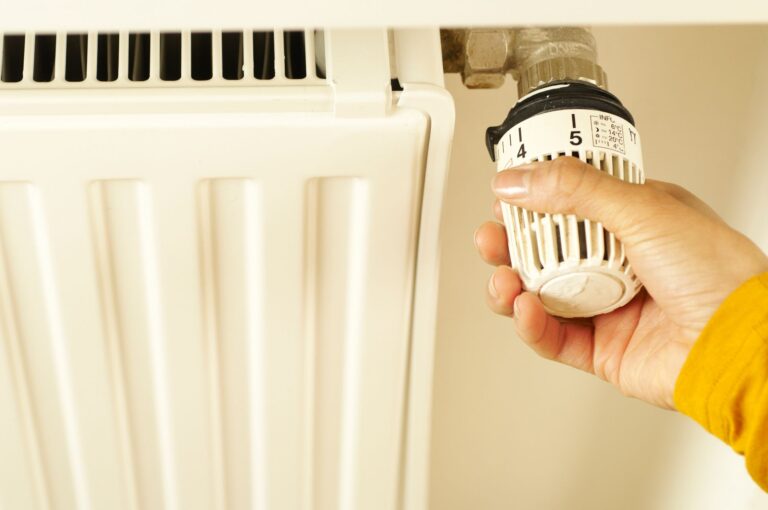

Running a small inn, a boutique rental, or a guest house means your thermostat does double duty: keep every room within a comfortable range, and let you set it up once without babysitting it. The right wall unit cuts energy waste between bookings, protects pipes in unused suites, and gives guests a screen they can actually read at a glance. This list pulls together programmable and non-programmable options, heat-pump-friendly models, and a smart learning pick for properties that want app-based oversight.
The Lineup, Simplified
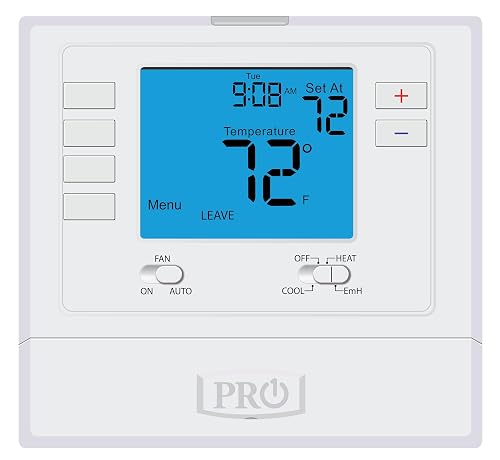
PRO1 T725 Heat Pump/Conventional Programmable Digital Wall Thermostat (2H/1C Heat Pump, 1H/1C Conventional)

PRO1 T771 Single Stage Non-Programmable Wall Thermostat (1 Heat/1 Cool)
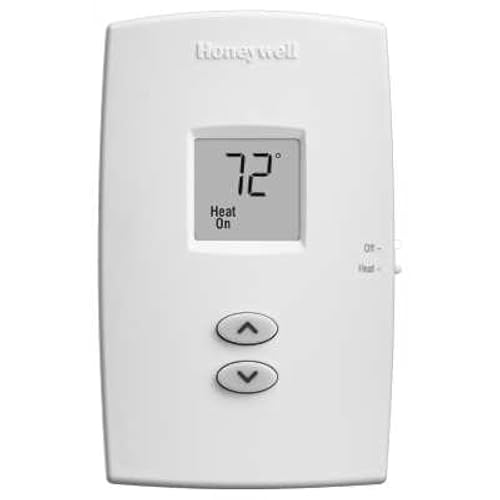
Honeywell TH1100DV1000 PRO 1000 Vertical Non-Programmable Thermostat
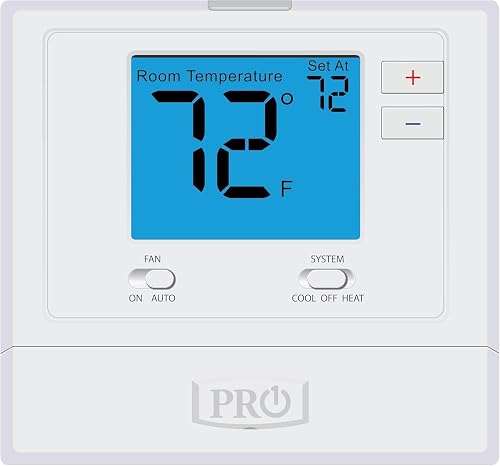
PRO1 T701 Single Stage Non-Programmable Wall Thermostat (1 Heat/1 Cool)

PRO1 T715 Multi-Stage Programmable Gas Thermostat (2 Heat/2 Cool)
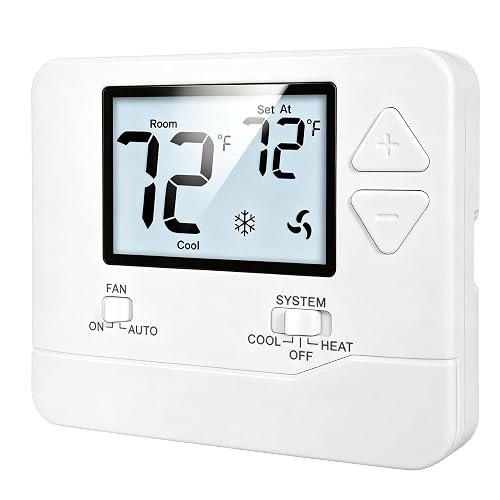
Heagstat Non-Programmable Thermostat 1 Heat/1 Cool (White Backlight)
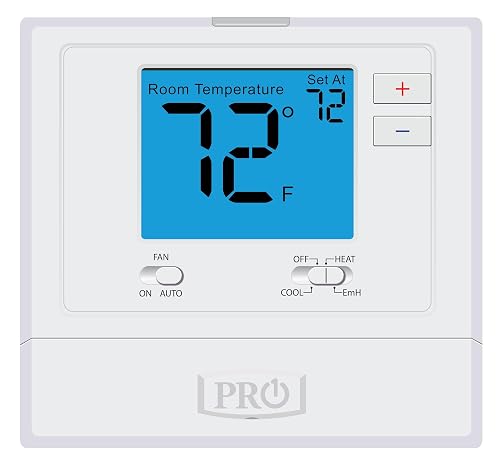
PRO1 T721 Non-Programmable Wall Thermostat (2H/1C Heat Pump or 1H/1C Conventional)

PRO1 T805 Single Stage Programmable Wall Thermostat (1 Heat/1 Cool)
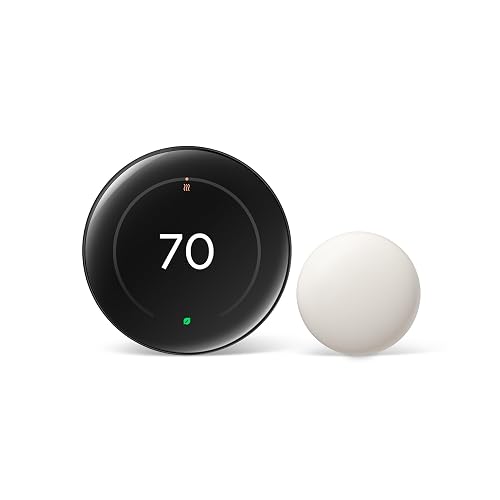
Google Nest Learning Thermostat (4th gen) + Temperature Sensor (2nd gen) – Obsidian
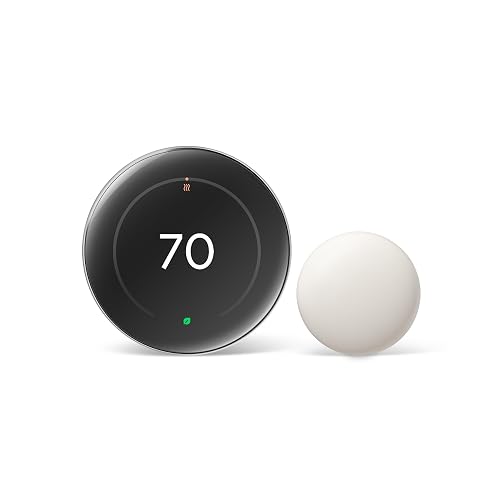
Google Nest Learning Thermostat (4th gen) + Temperature Sensor (2nd gen) – Silver
More Details On Our Top Picks
The PRO1 T725 earns its place at the top because it works in two very different buildings. It handles 2 heat/1 cool heat pump systems and 1 heat/1 cool conventional setups from the same wall plate, which keeps spare-parts inventory light for properties that mix unit types. The 4 sq. in. blue backlit display is readable from across a room, and 7-day or 5/1/1 programming lets you set a different schedule for weekdays and weekends. In our view, this is the kind of thermostat you can hand to new staff and trust it to behave.
Compared to the PRO1 T771 below, this one adds programmability, which matters more in a hotel than a garage. You can lock occupied rooms to a tighter setpoint range during the day and let vacant rooms drift a few degrees to save energy. Owners commonly report that the T700 platform interface is straightforward, with no buried menus to dig through before guests figure it out.
Reasons It Performs
- Dual compatibility with heat pump and conventional systems reduces SKU sprawl across mixed properties
- 7-day and 5/1/1 programming lets you tune energy use to actual occupancy patterns
- Large 4 sq. in. blue backlit display reads clearly from a few feet away, useful in dimly lit guest rooms
- Programmable schedule modes for wake, leave, return, and sleep align with how rooms actually get used
Worth Noting
- Requires common wire (C-wire) for full functionality in many installs, which older properties may not have
- Programming setup takes a few minutes per room, so factor in staff time across large floors
Key Specs
Made For
Properties that run a mix of heat pump and conventional HVAC on the same floor and want a single thermostat model across both.
Consider Something Else When
You only need heat-only control in a baseboard setup, where the Honeywell TH1100DV1000 PRO 1000 keeps wiring simpler and costs less to install.
The PRO1 T771 is the kind of wall thermostat you install in a garage, a wine cellar, or a maintenance shed on the property. Its setpoint range stretches from 25°F to 90°F, which means you can dial in cold rooms that protect stored linens or warm spaces that prevent pipes from freezing in winter. The 4 sq. in. blue backlit display is plain and readable, and swing adjustment helps you fine-tune how often the system cycles.
Where the T725 above is built for guest comfort, the T771 is built for utility spaces where you want reliable, low-effort control. You will not find scheduling features, and that is the point: one dial, one number, one job.
Useful Strengths
- Wide 25°F to 90°F setpoint range covers freeze-protection and storage conditions
- Swing adjustment lets you tune cycling behavior to match equipment
- Non-programmable design removes guest tampering risk in utility spaces
- Backlit display is easy to read in unheated outbuildings
Trade Offs
- No scheduling means a guest cannot be told the room will warm up before they wake
- Single-stage only, so it will not run multi-stage HVAC equipment efficiently
Whose Shelf It Belongs On
Property owners with detached garages, basements, or storage rooms that need precise temperature control without complex programming.
A Better Fit Elsewhere
For main-floor guest rooms that need a learning schedule, the Google Nest Learning Thermostat (4th gen) – Obsidian adapts itself and saves energy between bookings.
The Honeywell TH1100DV1000 PRO 1000 takes the opposite approach from the PRO1 T725: heat only, no cooling, no scheduling. Its vertical layout at roughly 4 11/16 in. tall and 2 7/8 in. wide slides neatly into the narrow wall cavities common in older inns. The premier white finish blends into most wall colors without drawing attention in a guest corridor.
Heat-only operation is a feature, not a limitation, in buildings with baseboard or boiler systems where adding cooling was never part of the original plan. The non-programmable design means a curious guest cannot accidentally change a setting they do not understand.
Everyday Advantages
- Vertical form factor fits tight wall cavities better than square units
- Heat-only focus matches baseboard, radiator, and boiler-only properties
- Premier white finish keeps the unit visually quiet in heritage buildings
Room For Improvement
- No cooling support rules it out for properties with central air
- Older model without a backlit display, which can be a small inconvenience in dim hallways
Who It Suits Best
Older boutique inns and bed-and-breakfasts with boiler or baseboard heat and no central cooling system.
Look Elsewhere When
You need to control both heating and cooling in a single unit, in which case the PRO1 T721 supports both 2H/1C heat pump and 1H/1C conventional systems.
The PRO1 T701 sits in the practical middle of the lineup. It is non-programmable, so guests cannot break a schedule they never had, and the glow-in-the-dark light button means housekeeping can find it during evening turndowns without flipping a wall switch. Built on the T700 platform, it shares the same 4 sq. in. blue backlit display family that runs through the T725, T715, and T721 above.
That shared platform matters more than it sounds. When staff learn one menu, they understand the rest, and you can swap units between rooms without retraining. The T701 is the unit you reach for when a guest room needs straightforward, dependable climate control without complications.
Real-World Strengths
- Shared T700 platform with the T725, T715, and T721 simplifies staff training and stocking
- Glow-in-the-dark light button stays visible after the room darkens for sleep
- Compatible with gas or electric conventional systems, covering most standard hotel installs
Small Caveats
- No scheduling means you cannot pre-warm a room before check-in from the thermostat itself
- Single-stage only, so it does not pair with multi-stage equipment
Key Specs
Best Suited To
Standard guest rooms on 1H/1C conventional HVAC where simplicity and reliability matter more than scheduling.
Reach For A Different Pick When
You need bigger display real estate for a hospitality common area, in which case the PRO1 T805 offers a 7 sq. in. screen on the same platform family.
The PRO1 T715 is the multi-stage sibling of the T725. It supports 2 heat/2 cool gas systems with 7-day, 5/1/1, or non-programmable modes, and you can power it from AA batteries or a hardwired connection. For a property with two-stage furnaces and air conditioners, that staging capability is the whole ballgame. Single-stage thermostats will short-cycle that equipment and wear it out faster.
Like the T701, the T715 carries a glow-in-the-dark light button and the 4 sq. in. blue backlit display, so the family resemblance holds across your hallway. Battery or hardwire power gives you flexibility in retrofits where pulling a common wire is impractical.
Practical Advantages
- 2 heat/2 cool staging matches two-stage HVAC equipment used in larger properties
- Three operating modes, including non-programmable, suit different room uses
- Battery or hardwire power accommodates older wiring configurations
Points To Keep In Mind
- Overkill for single-stage equipment, where the T701 is the more sensible choice
- Programming setup requires more time than non-programmable units, especially across many rooms
Quick Facts
Right Fit For
Hotels and inns with two-stage furnaces and air conditioners, where matching the thermostat to the equipment protects both efficiency and component life.
Skip It When
You only run single-stage systems, since the Heagstat Non-Programmable Thermostat handles 1H/1C conventional installs at a more modest feature set.
The Heagstat Non-Programmable Thermostat targets the common case of a 24VAC conventional single-stage system with two to five wires at the base. That wire range covers a lot of older properties where pulling new cabling is not in the budget. The white backlight is gentle enough not to disturb a sleeping guest but bright enough to read across a small suite.
This is the workhorse option for properties doing room-by-room retrofits on existing 1H/1C conventional systems. Owners commonly report that the limited wiring requirement saves on installation labor, which matters when you are upgrading dozens of units at once.
A Favorable Mix
- 2 to 5 wire compatibility fits a wide range of older property wiring
- 24VAC conventional system support covers gas, oil, and electric furnaces paired with central air
- White backlight strikes a usable balance between visibility and sleep comfort
Honest Caveats
- Not compatible with heat pump systems, where the PRO1 T721 fits better
- Connections with 6 to 8 wires are not supported, ruling out some newer installs
Feature Snapshot
Who Will Love This
Property owners doing budget retrofits on 1H/1C conventional systems with older two-to-five-wire thermostat bases.
Where A Sibling Pick Shines
For heat pump installs, the PRO1 T721 is a closer match, since the Heagstat does not support heat pump wiring configurations.
The PRO1 T721 does the T725’s job without the scheduling layer. It handles 2H/1C heat pumps or 1H/1C conventional systems, runs on AA batteries or hardwire, and shares the 4 sq. in. blue backlit display with its siblings. For guest rooms where you do not want a learning curve or schedule menus, this is the dependable middle ground.
You can also see it as a non-programmable alternative to the T725. Where the T725’s programmability helps in long-stay rooms with shifting occupancy, the T721 is a fit for short-stay rooms where the temperature is set at check-in and not touched again.
Points In Its Favor
- Heat pump and conventional compatibility in one unit simplifies parts stocking
- Battery or hardwire power covers installs without a common wire
- Glow-in-the-dark light button keeps the unit locatable after lights out
Soft Spots
- Non-programmable design prevents pre-arrival warming of empty rooms
- Same 4 sq. in. screen as the entry-level T701, so you do not get extra display real estate
Perfect Match For
Short-stay guest rooms on heat pump or conventional HVAC where staff want simple controls and minimal guest interaction.
Swap It Out When
You want app-based remote monitoring, which only the Google Nest Learning Thermostat (4th gen) – Silver delivers in this lineup.
The PRO1 T805 moves up to the T800 platform, and the upgrade you notice first is the 7 sq. in. blue backlit display. That is roughly 75 percent more screen area than the T701 or T721, which makes a real difference in larger common areas, lobbies, and suite-style rooms where guests read the thermostat from across the space. The unit supports 7-day, 5/1/1, or non-programmable modes on 1H/1C conventional systems.
For a hospitality common area or a corporate-style suite, the T805 reads as more polished than the T700 family without forcing you into a smart platform. It is the right pick when the thermostat is part of the visible design, not just a wall box.
Standout Benefits
- Extra-large 7 sq. in. display is the most readable on this list
- T800 platform build feels more refined than the entry-level T700 family
- Three operating modes give you scheduling flexibility without forcing it
Potential Drawbacks
- Single-stage only, so multi-stage buildings still need the T715
- Larger footprint may not align with retrofit wall plates designed for smaller units
Who Should Grab It
Lobbies, meeting rooms, and suite-style accommodations where a bigger, more refined display is part of the room’s visual language.
Not Your Match When
You need the smallest possible wall footprint, where the Honeywell TH1100DV1000 PRO 1000 fits narrow wall cavities better.
The Google Nest Learning Thermostat (4th gen) is the only smart pick in this roundup, and it earns its place for properties that want remote oversight. It learns the temperatures you set and the times you set them, then builds a schedule that adjusts as routines shift. The included Nest Temperature Sensor (2nd gen) lets the system read temperatures in another spot, useful in suites where the wall thermostat sits in a hallway and the bedroom runs a few degrees warmer.
For a small hotel with one or two owners managing several properties, the remote control aspect is the real draw. You can adjust an empty suite from your phone the morning of a booking and walk into a comfortable room at check-in. The Obsidian finish reads as a dark, premium accent on the wall.
Benefits That Matter
- Learning routines reduce manual scheduling across shifting occupancy
- Remote app control supports off-site property management
- Included temperature sensor reads conditions beyond the thermostat wall location
Less Ideal Details
- Smart features require Wi-Fi, account setup, and occasional app updates, which adds an ownership layer
- Higher complexity than wall thermostats like the T701 or T721, which a guest can use without instructions
Built With In Mind
Properties managed remotely by owners who want app-based visibility and the convenience of routines that learn over time.
Another Choice May Suit
For pure low-fuss reliability with no app dependency, the PRO1 T701 keeps things simple and guest-proof.
The Google Nest Learning Thermostat (4th gen) in Silver offers the same smart features as the Obsidian version above, just in a lighter finish that suits properties with brighter wall palettes and modern interiors. The included Nest Temperature Sensor (2nd gen) reads conditions away from the wall unit, so the system can prioritize comfort in the room where guests actually sleep.
If you are choosing between the two finishes, it really comes down to interior design. Silver tends to disappear into white or pastel walls, while Obsidian reads more as a deliberate accent. Functionally, the two are interchangeable.
Why It Works Well
- Silver finish blends into lighter wall colors and modern interiors
- Same learning and remote-control features as the Obsidian version
- External temperature sensor helps the system read the room guests actually occupy
Where It Is Less Suited
- Same Wi-Fi and account requirements as any smart thermostat, which adds ownership overhead
- Silver finish may show fingerprints more visibly than darker options on high-touch walls
The Right Fit
Boutique properties with light-colored walls and modern interiors where the thermostat needs to read as a design element rather than disappear.
Where A Sibling Pick Shines
For a darker or more heritage-style interior, the Obsidian version of the same thermostat gives you a stronger accent on the wall.
Choosing The Right Thermostat For A Hospitality Property
Match The Thermostat To Your HVAC System
A thermostat that does not match the equipment can short-cycle compressors, ignore staging, or simply not power on. Heat pump systems need a thermostat that supports reversing valve logic, and a 2 heat/2 cool gas furnace needs a multi-stage unit like the PRO1 T715. Single-stage conventional systems have the widest thermostat support, including the PRO1 T701 and the Heagstat Non-Programmable Thermostat. Before choosing, count the wires at the existing base, since two-to-five-wire bases rule out thermostats that need a common wire.
Decide Between Programmable And Non-Programmable
Programmable thermostats like the PRO1 T725 and T805 let you tighten setpoints during the day and relax them overnight, which pays off in long-stay rooms. Non-programmable units like the PRO1 T721 and Honeywell TH1100DV1000 keep the wall simple and remove the chance of a guest accidentally disrupting a schedule. Short-stay properties often lean non-programmable, while extended-stay and apartment-style rentals benefit from programming.
Consider Smart Features Only When You Need Them
Smart thermostats like the Google Nest Learning Thermostat (4th gen) add app control, learning routines, and remote sensors, but they also add Wi-Fi dependencies, account setup, and the occasional firmware update. The trade-off is real for properties where the owner manages multiple buildings from off-site, and less compelling for single-location inns that already have someone on the property every day. Pick smart when remote oversight solves a real problem, not because the features sound appealing.
Picking Smart Without Picking Wrong
Pitfalls Shoppers Hit
The most common mistake is matching a thermostat to the wrong HVAC type. A heat pump wired to a conventional-only thermostat will not control the reversing valve, and a multi-stage furnace paired with a single-stage thermostat will short-cycle the equipment. Count your wires and confirm your system type before ordering. A close second is buying a programmable unit and then leaving it in non-programmable mode, which means you paid for features you do not use.
When Paying More Pays Off
Higher-tier thermostats like the PRO1 T805 and the Google Nest Learning Thermostat add screen size, learning routines, or app control. The upgrade makes sense when the display needs to read from across a large room, when the property has shifting occupancy that benefits from learning, or when you manage rooms remotely. For a standard guest room on a 1H/1C conventional system, the mid-tier PRO1 T701 covers the real-world job without excess.
Frequently Asked Questions
What is the difference between a programmable and a non-programmable thermostat?
A programmable thermostat lets you set different temperatures for different times of day, while a non-programmable thermostat holds one setpoint until someone changes it manually. For short hotel stays, non-programmable is often simpler, while longer stays may benefit from scheduling.
Do hotel thermostats need a C-wire (common wire)?
Many modern thermostats need a C-wire to draw continuous power, though some units like the PRO1 T715 can run on AA batteries instead. Older properties without a C-wire should check compatibility or plan for a wiring upgrade before installing a hardwire-dependent model.
Can one thermostat work for both heat pumps and conventional systems?
Some models, including the PRO1 T725 and PRO1 T721, support both 2H/1C heat pump and 1H/1C conventional systems on the same unit. This is helpful for mixed properties where different rooms use different HVAC types.
Are smart thermostats worth it for small inns?
Smart thermostats earn their keep when owners manage rooms remotely or want learning routines that adjust to occupancy patterns. For single-location inns with on-site staff, a quality non-smart unit often does the same job with less complexity.
How do temperature sensors help in larger rooms?
A remote temperature sensor, like the one included with the Google Nest Learning Thermostat (4th gen), reads conditions in a spot away from the thermostat wall location. This helps the system prioritize the room where guests actually sleep, especially in suites where the thermostat sits in a hallway.
The Takeaway
The right hotel thermostat balances system compatibility, ease of use, and the level of automation your property actually needs. Heat-pump-heavy buildings get the most from the PRO1 T725 or T721, conventional 1H/1C rooms are well-served by the PRO1 T701, and remote-managed properties benefit from the smart routines in the Google Nest Learning Thermostat. Pick the unit that fits your HVAC, not the one with the longest feature list, and your guests will stay comfortable without ever thinking about the wall box.