
Picking the right wall thermostat shapes how comfortable your home feels day to day, and how predictably your heating and cooling bills behave. Pro-grade models tend to offer sturdier internals, clearer displays, and broader HVAC compatibility than the bargain-bin alternatives, which matters once you’re matching multi-stage equipment or running a heat pump. Whether you’re swapping out a tired analog dial, building out a new system, or balancing comfort across a workshop and a main living area, the ten pro thermostats below cover a useful spread of system types, scheduling needs, and price points.
The Leading Options At A Glance
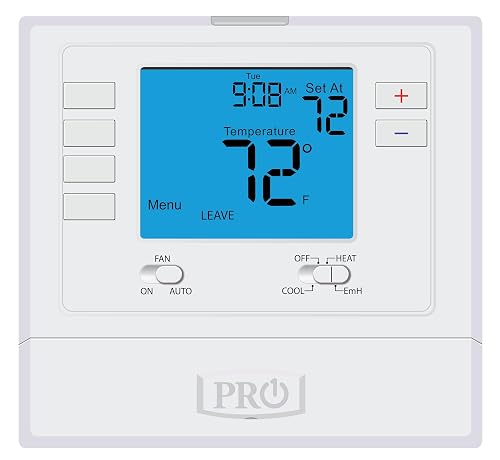
PRO1 T725 Heat Pump/Conventional Programmable Thermostat

PRO1 T771 Single Stage Non-Programmable Thermostat
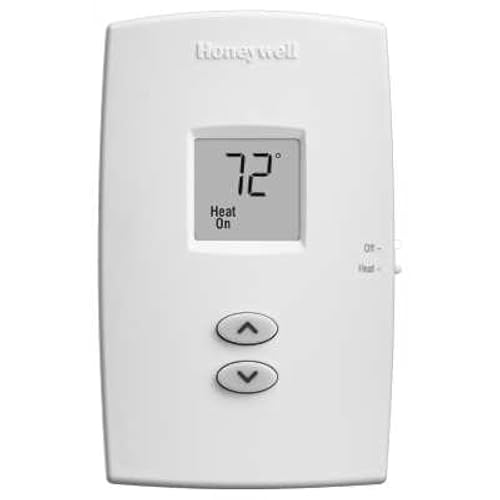
Honeywell TH1100DV1000 Pro 1000 Vertical Thermostat
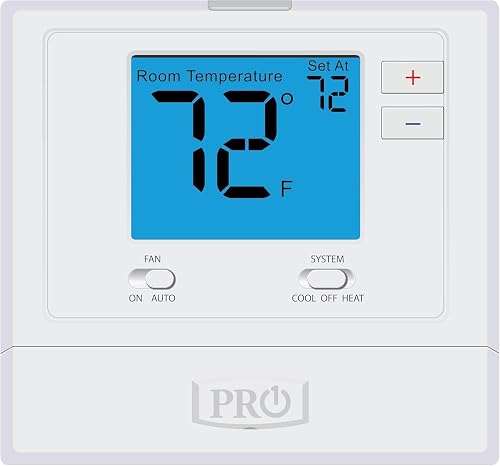
PRO1 T701 Single Stage Non-Programmable Thermostat

PRO1 T715 Multi-Stage Programmable Gas Thermostat
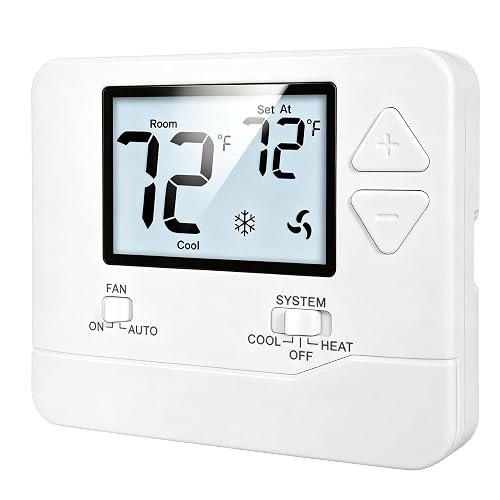
Heagstat 1 Heat/1 Cool Conventional Thermostat
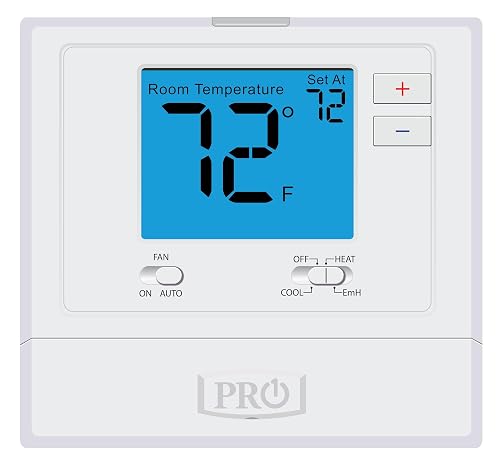
PRO1 T721 2H/1C Heat Pump Thermostat

PRO1 T805 Single Stage Programmable Thermostat
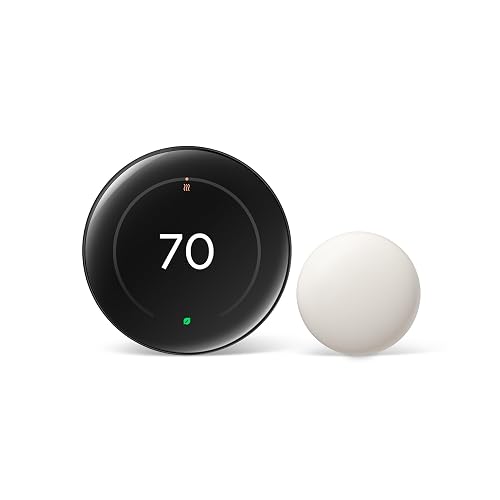
Google Nest Learning Thermostat (4th Gen) Obsidian
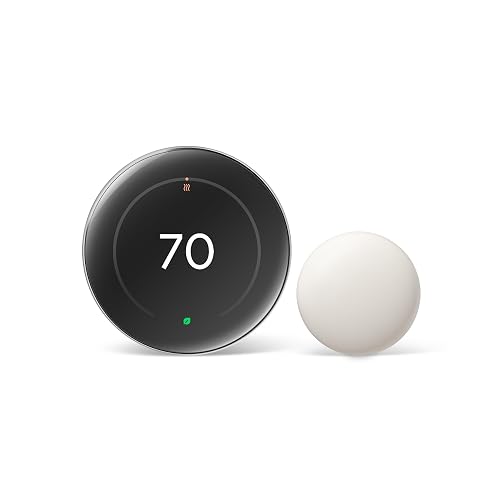
Google Nest Learning Thermostat (4th Gen) Silver
More Details On Our Top Picks
For homes running a heat pump with a backup heat stage, or a conventional gas furnace paired with central air, the PRO1 T725 covers both worlds without forcing you to pick the wrong setting at install. It supports 2 heat/1 cool heat pump configurations and 1 heat/1 cool conventional setups, which means most mixed equipment households land here. Compared to the Honeywell TH1100DV1000 down the list, this one trades heat-only simplicity for genuine dual-fuel flexibility.
The display is a 4 sq. in. blue backlit screen that walks through the standard wake, leave, return, and sleep schedule blocks, with 7-day or 5/1/1 day programming available. Owners commonly report that the interface is approachable once you’ve set a baseline schedule, and the physical buttons feel more substantial than the membrane pads on cheaper units.
Where It Delivers
- Heat pump and conventional compatibility in a single model, removing the “wrong thermostat at install” worry.
- 7-day and 5/1/1 programming give you weekday/weekend or full-week flexibility for a varied routine.
- The 4 sq. in. backlit display stays legible from across a living room in low light.
- Scheduling four periods per day (wake, leave, return, sleep) supports real energy savings when you’re out of the house.
Things To Consider
- Not the right match for multi-stage conventional systems that need 2H/2C, where the PRO1 T715 is the better fit.
- Programming a 7-day schedule takes longer upfront than the set-and-forget approach of a non-programmable model.
- The backlight is functional rather than fancy, so reading fine print in bright sunlit rooms can take a beat.
Feature Snapshot
Right Fit For
Homeowners with a heat pump and central air who want a programmable schedule without learning a smart-home app.
Look Elsewhere When
The PRO1 T715 suits you better when your system runs two heating stages and two cooling stages, and you want matching scheduling depth.
Most wall thermostats refuse to setpoint below about 45°F, which is fine for living space but useless in an unheated garage where you want freeze protection. The PRO1 T771 sidesteps that limit with a setpoint range that runs all the way down to 25°F, making it a strong fit for workshops, sheds, and other spaces where low-temperature monitoring matters more than scheduling tricks.
It stays deliberately simple: a non-programmable design with a 4 sq. in. blue backlit display and a swing adjustment that lets you fine-tune how often the system kicks on. Where the T725 up the list aims at mixed-system complexity, the T771 leans into “set the temp, walk away” reliability.
Advantages To Know
- 25°F to 90°F setpoint range handles freeze protection and cold storage without locking you out at the bottom of the dial.
- Non-programmable operation means no schedule to maintain, which suits infrequently used spaces.
- Swing adjustment and calibration controls let you dial in how aggressively the system responds.
- The same 4 sq. in. backlit screen used on the T725 keeps the read clear in dim garage lighting.
Worth Noting
- Limited to 1 heat/1 cool single-stage conventional systems, so it isn’t a substitute for heat-pump or multi-stage equipment.
- The wider setpoint range is a specialty feature; mainstream living spaces rarely need anything below 50°F.
- No scheduling means energy savings depend entirely on manual adjustments.
Whose Shelf It Belongs On
Anyone outfitting a garage, workshop, pole barn, or detached storage space that needs real low-temperature control without programming fuss.
Consider Something Else When
The Honeywell TH1100DV1000 Pro 1000 is a closer match when you want a vertical heat-only thermostat in a tighter footprint and don’t need the T771’s wide low-end setpoint range.
The Honeywell TH1100DV1000 Pro 1000 is a workhorse: vertical orientation, premier white finish, and a single-stage heat-only design that does one job without complication. For a baseboard heater, a small furnace-only install, or a utility room where cooling isn’t a factor, the lack of complexity is the entire point.
It measures 4 11/16 in. high by 2 7/8 in. wide and roughly 1 1/8 in. deep, so it tucks into narrow wall spaces where a wider horizontal unit would look awkward. Owners commonly note that the slide-switch operation feels more direct than menus, and the unit is made in the United States.
Notable Gains
- Vertical layout suits narrow wall sections and baseboard installations where horizontal clearance is tight.
- Heat-only single-stage focus removes any confusion about mode switching or cooling wiring.
- Premier white color blends with most wall finishes, keeping a utility space looking clean.
Trade Offs
- Heat-only operation rules it out anywhere central air runs through the same thermostat.
- No programming, which means manual adjustment for any schedule changes or overnight setbacks.
- The vertical look is functional, but homes with horizontal decor standards may prefer the PRO1 T701’s wider layout.
Best Suited To
Homeowners with a single-stage heat-only furnace, baseboard heater, or workshop system that needs simple, no-fuss control.
Reach For A Different Pick When
The PRO1 T771 is a smarter choice for garages needing lower setpoint capability, while the PRO1 T701 suits you better when you also need cooling control.
For a conventional 1 heat/1 cool system where nobody in the household wants to learn a schedule, the PRO1 T701 keeps things refreshingly direct. It runs on the larger T700 platform and shows the temperature on a 4 sq. in. blue backlit display, which is plenty of screen for a hallway or main living area.
Where the T725 and T715 in this list lean on programming, the T701 leans on a glow-in-the-dark light button that helps when the lights are out and you don’t want to fumble for a wall switch. It accepts either battery or hardwired power, giving you flexibility at the install step.
Noteworthy Benefits
- Glow-in-the-dark light button stays locatable in a dark hallway or during a nighttime check.
- Battery or hardwired power options ease installation in older homes without a C-wire.
- 4 sq. in. backlit display provides clear readouts at a glance, even from across the room.
- Gas or electric configuration support covers most conventional forced-air setups.
Points To Note
- Single-stage conventional only, so heat-pump households will need the T721 or T725 instead.
- No programming means the thermostat runs at one setpoint until manually changed, which can cost on monthly bills.
Who It Suits Best
Owners of conventional 1H/1C systems who want a clear display and a simple manual control with the convenience of a glow-in-the-dark button.
Skip It When
The PRO1 T805 is a better fit when you want a programmable schedule on a conventional system and a noticeably larger display.
Two-stage gas furnaces paired with two-stage air conditioning need a thermostat that can actually call for low and high stages independently, and the PRO1 T715 is built for that job. It supports 2 heat/2 cool gas systems with 7-day, 5/1/1, or fully non-programmable modes, which gives you the option to schedule deeply or skip the program entirely.
You get the same 4 sq. in. blue backlit display seen across the T700 line, plus a glow-in-the-dark light button for after-hours adjustments. The trade-off versus the T725 up the list is the stage count: more equipment support in exchange for slightly more involved wiring at install.
Bright Spots
- 2H/2C multi-stage support lets low and high stages modulate, which can smooth temperature swings in larger homes.
- 7-day, 5/1/1, or non-programmable modes let you decide how deep into scheduling you want to go.
- Glow-in-the-dark light button helps you find the controls without flipping a room switch.
Honest Caveats
- Wiring is more involved than single-stage installs, so you’ll want a confident DIYer or a pro on hand.
- Multi-stage benefits mostly show up in larger homes; smaller footprints may not notice the difference versus the T725.
Made For
Households with two-stage gas furnaces and central air who want matching scheduling depth on the wall control.
Where Another Pick Suits Better
The PRO1 T725 is a smarter choice when you only need single-stage cooling or you run a heat pump rather than a gas furnace.
The Heagstat NonProgrammable Thermostat targets the common 24VAC single-stage conventional setup found in many older homes, where a 2-to-5 wire bundle runs from the furnace. The white backlight keeps the temperature readable in dim hallways, and the non-programmable design keeps the user surface area small.
It only accepts 2 to 5 wires, so if your existing bundle carries 6 to 8 conductors, you’ll want a different model. Within its lane, it covers gas, oil, and electric forced-air systems paired with a separate outdoor condenser, which fits a lot of mid-century homes.
Everyday Perks
- Lower cost of entry for a straightforward thermostat swap on a 24VAC conventional system.
- White backlight keeps the screen readable in low light without flooding the room with glow.
- Compatibility with gas, oil, and electric furnaces widens the addressable install base.
Things That May Matter
- 2 to 5 wire limit excludes installs with 6 to 8 wire bundles, so measure before buying.
- Heat-pump systems fall outside the supported equipment list, so the PRO1 T721 is a better match there.
- Non-programmable operation means manual setpoint changes for any setback or schedule.
Who Will Love This
Anyone replacing an aging thermostat on a basic conventional forced-air system who wants a no-frills upgrade at a friendly cost.
Not Your Match When
The PRO1 T701 is a closer fit for a similar conventional system if you value the glow-in-the-dark button and a slightly larger display.
The PRO1 T721 is the non-programmable cousin of the T725, covering 2 heat/1 cool heat pumps or 1 heat/1 cool conventional systems on the same T700 platform. Heat-pump households that want heat pump and conventional fallback in one box land here, especially when nobody in the home is going to program a schedule.
The 4 sq. in. blue backlit display is the same panel used across the lineup, and the glow-in-the-dark light button shows up again for low-light control. Power is handled by AA batteries or a hardwired feed, depending on what your existing wiring supports.
A Few Strong Suits
- Heat-pump and conventional compatibility in one unit, useful for homes that may switch equipment later.
- Glow-in-the-dark light button helps with after-dark tweaks without turning on room lights.
- Battery or hardwired power options give you installation flexibility on older wire bundles.
Points To Keep In Mind
- Non-programmable design means no automatic setbacks, which can add up over a heating season.
- 2H/1C limits it to single-stage cooling, so two-stage AC owners should look at the T715.
Perfect Match For
Heat-pump owners with a 2H/1C setup who want the same equipment flexibility as the T725 without committing to a weekly schedule.
Swap It Out When
The PRO1 T725 is a smarter pick if you want full 7-day programming on the same heat-pump and conventional compatibility.
The PRO1 T805 steps up to a noticeably bigger display on the T800 platform, which is the real story here. The 7 sq. in. blue backlit screen is large enough to read across a living room without squinting, and the glow-in-the-dark light button stays consistent with the rest of the PRO1 line.
Underneath the larger display, you get a programmable thermostat designed for 1 heat/1 cool conventional systems, with 7-day, 5/1/1, or non-programmable modes to choose from. For a household that values a glanceable readout over a feature-stacked interface, the T805 is the easy call.
Real-World Strengths
- 7 sq. in. display is meaningfully larger than the 4 sq. in. panels on the T700 line, which helps aging eyes.
- 7-day, 5/1/1, or non-programmable modes let households ease into scheduling at their own pace.
- Glow-in-the-dark light button keeps the unit findable in a dark hallway or bedroom.
Small Caveats
- Single-stage conventional only, so heat-pump households need the T721 or T725 instead.
- The larger footprint requires a wider wall plate, which may not align with an existing hole in the drywall.
Who Should Grab It
Conventional 1H/1C homeowners who want a bigger display, optional scheduling, and a familiar PRO1 interface.
A Better Fit Elsewhere
The PRO1 T725 is a better match when you also need heat-pump support alongside conventional equipment.
The Google Nest Learning Thermostat in its 4th generation shifts the conversation away from manual scheduling entirely. It learns the temperatures you set, when you set them, and gradually builds a routine that adapts as your week changes. Bundled with the 2nd gen Nest Temperature Sensor, it can read the temperature in additional rooms, which helps balance comfort across a larger footprint.
The obsidian finish sits on the wall as a piece of hardware, not just a control panel, and it integrates with broader smart-home setups. Where every other entry on this list asks you to program a schedule, this one asks you to live your week and watches how you adjust.
Useful Strengths
- Self-learning scheduling removes the upfront task of programming a weekly plan.
- Included 2nd gen Nest Temperature Sensor reads the temperature in another room, useful for nurseries or bonus rooms.
- Obsidian finish gives the wall a darker, more sculptural look compared to the lighter PRO1 panels.
Less Ideal Details
- Smart features rely on a stable network connection and an account setup that some households may not want to manage.
- Learning takes a couple of weeks to settle, so early weeks may feel like over- or under-heating until the model catches up.
Feature Snapshot
Built With In Mind
Connected households that want the thermostat to learn their patterns and don’t mind leaning on a smart-home ecosystem.
Where A Sibling Pick Shines
The PRO1 T805 is a stronger match when you’d rather have a non-connected programmable unit and a larger 7 sq. in. display.
The silver version of the 4th generation Nest Learning Thermostat delivers the same self-learning scheduling and smart-home integration as the obsidian model, dressed in a brighter finish that pairs well with lighter walls and modern kitchens. The included 2nd gen Nest Temperature Sensor adds the same multi-room temperature reading you’d get from the obsidian unit.
If you want the learning behavior but the obsidian feels too heavy on the wall, silver is the alternative finish to consider. Functionally, both finishes behave the same; the choice comes down to how the thermostat reads against your paint color and cabinetry.
A Few Highlights
- Silver finish blends with lighter walls and contemporary kitchen palettes more easily than the obsidian option.
- Self-learning schedule removes the manual programming step that other thermostats on this list require.
- Included 2nd gen Nest Temperature Sensor extends room-temperature awareness beyond the wall unit.
Points To Note
- Like the obsidian version, it depends on a stable network connection and account-based setup.
- The early weeks of learning may produce slightly off-target temperatures until the model settles.
The Right Fit
Homeowners who want a learning thermostat in a lighter wall finish and don’t mind trading manual scheduling for adaptive behavior.
Another Choice May Suit
The obsidian Nest suits you better if you prefer a darker, more sculptural look on the wall, while the PRO1 T805 covers a non-connected alternative.
What To Match Before Choosing pro thermostats
Start with the system itself, not the feature list. A thermostat that doesn’t match your equipment stages or wire count won’t run correctly, no matter how nice the display looks. For a heat pump with a backup heat stage, look at the T725 or T721. For a two-stage gas furnace, the T715 is the proper fit. Single-stage conventional systems have the widest selection, including the T701, T805, and the Heagstat model.
Wire count is the second filter, and it often gets skipped. The Heagstat unit caps out at 5 wires, while Honeywell and PRO1 models typically accept common residential bundles. Pull the existing thermostat off the wall and count conductors before ordering; this step saves a return trip and a half-finished install.
Finally, decide whether scheduling actually fits your routine. Programmable thermostats like the T725, T715, and T805 pay off when your weekdays follow a predictable pattern. Households with rotating shifts or mostly manual habits often prefer a non-programmable model with a clear display, like the T701 or the Honeywell Pro 1000. Smart thermostats like the 4th gen Nest learn over time, but they lean on a stable network and a paired app.
Key Considerations Across These Picks
Where Shoppers Go Wrong
The most common slip is buying a thermostat by feature list instead of system type. A programmable or smart unit is wasted on a heat-pump system that the thermostat can’t address correctly. Always confirm your equipment stages, wire count, and power source before narrowing down by feature.
A second trap is underestimating the value of a clear display. A 4 sq. in. backlit screen is fine for a hallway, but a living room thermostat gets read from across the room more often than you might think. Models like the T805, with a 7 sq. in. panel, reduce the squinting factor quickly, especially in homes where an older adult reads the temperature.
When Paying More Pays Off
Higher-tier models in this category cost more because they handle more equipment stages and offer more control surfaces. The T715 commands a step up over the T701 because it supports 2H/2C, and the T805 sits above the T701 because of the larger display and optional scheduling. The Nest Learning Thermostat sits at the top because it removes manual scheduling entirely and adds multi-room sensing.
The upgrade is worth it when your equipment actually needs the extra stages, or when you value the larger display and learning behavior enough to use them. For a basic 1H/1C conventional system in a small home, a non-programmable model like the T701 or Honeywell Pro 1000 does the job without the extra spend.
Frequently Asked Questions
What does “single-stage” mean on a thermostat?
Single-stage means the system can only run at one heating or cooling output level, so the thermostat turns it fully on or fully off. Multi-stage thermostats like the T715 can call for low and high output independently, which can smooth temperature swings in larger homes.
Can I install a pro thermostat myself?
Most wall thermostats in this roundup are designed for DIY install, but you should always cut power at the breaker, photograph the existing wiring, and confirm the new unit supports your wire count and system type before you start. Heat-pump and multi-stage wiring is more involved, and a miswire can short equipment, so a professional installer is the safer choice in those cases.
Do I need a C-wire for these thermostats?
It depends on the model. Several PRO1 units accept either AA batteries or a hardwired feed, which sidesteps the C-wire question on older homes. Smart thermostats like the Nest typically need continuous power, so a missing C-wire may require an adapter or a new wire run.
How wide is the setpoint range on the PRO1 T771?
The T771 supports a setpoint range from 25°F up to 90°F, which is wider than most residential thermostats. That extended low end is what makes it useful in garages, sheds, and other spaces where freeze protection matters.
Are smart thermostats worth it over programmable models?
Smart thermostats earn their keep when you want the schedule to adapt automatically, when you want to read the temperature in more than one room, and when you already use a connected ecosystem. For predictable weekly routines, a programmable model like the T715 or T805 gives most of the comfort benefit without the network dependency.
Closing Remarks
The right pro thermostat is the one that matches your equipment, your wiring, and your willingness to engage with a schedule. Heat-pump households get the most from the T725 or T721, multi-stage gas homes need the T715, and conventional 1H/1C systems have a wide lane from the simple T701 to the larger-display T805. Smart-home households that want adaptive behavior can lean on the Nest Learning Thermostat in either finish, while specialty spaces like garages fit the T771’s wide setpoint range. Pick the system match first, then let the display, scheduling, and connectivity features tip the scale.