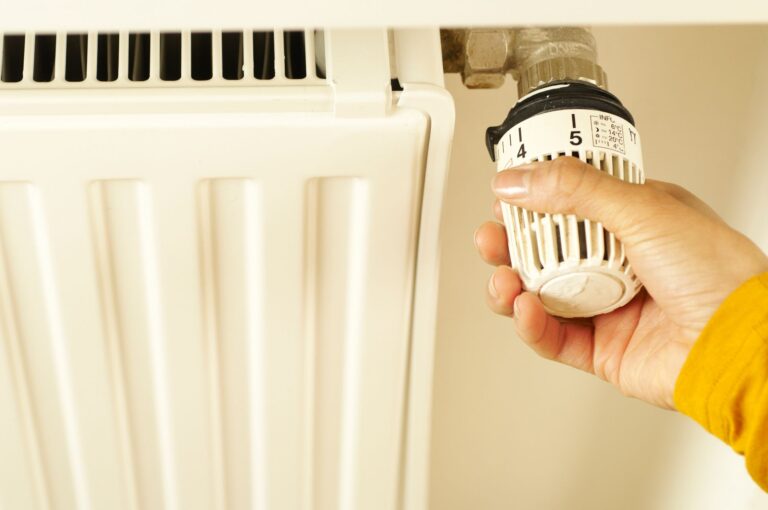

Finding the right wall thermostat for a Trane-compatible system means matching voltage stages, system type, and how much daily scheduling you actually need. This lineup covers conventional single-stage setups, multi-stage gas systems, and heat pump configurations, so you can match your equipment to a control that fits your routine.
A Quick View Of The Lineup
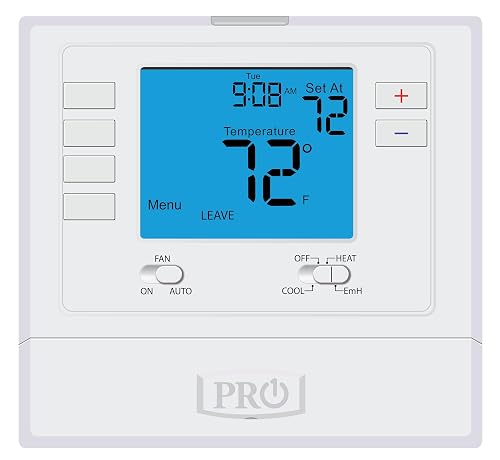
PRO1 T725 Heat Pump/Conventional Programmable Wall Thermostat

PRO1 T771 Single Stage Non-Programmable Wall Thermostat
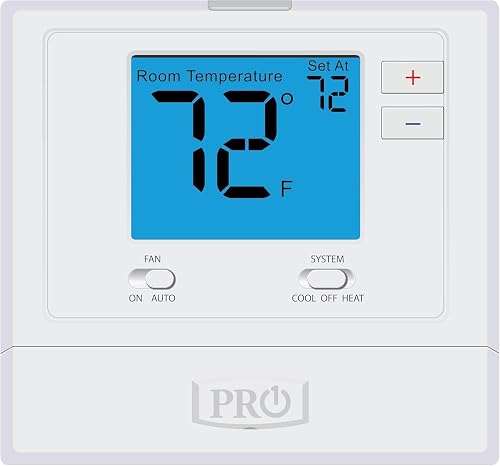
PRO1 T701 Single Stage Non-Programmable Wall Thermostat

PRO1 T715 Multi-Stage Programmable Gas Thermostat
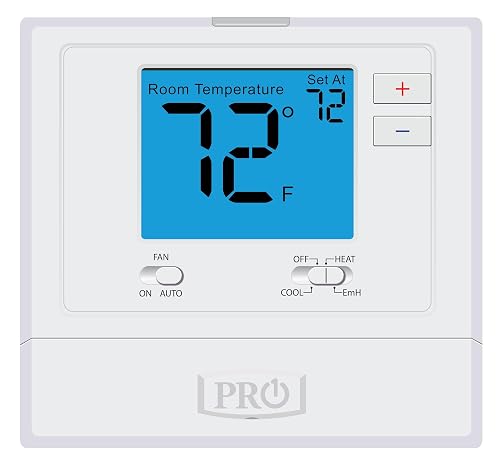
PRO1 T721 Non-Programmable Wall Thermostat
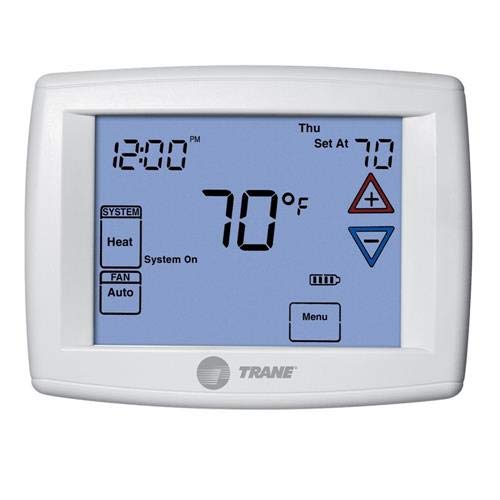
Trane TCONT302AS42DA Multi-Stage Touchscreen Thermostat

PRO1 T805 Single Stage Programmable Wall Thermostat
A Deeper Look At The Lineup
Households running a mix of equipment benefit from a wall thermostat that won’t lock them into one mode. The PRO1 T725 covers 2 heat/1 cool heat pump systems and falls back to 1 heat/1 cool conventional control from the same wall plate, which keeps things tidy when a system has been upgraded in stages.
The large 4 sq. in. blue backlit display shows the current schedule mode (wake, leave, return, sleep), so you can confirm the programmed block at a glance. A 7-day or 5/1/1 schedule gives weekdays and weekends their own rhythm. For most homes with a heat pump plus a backup air handler, this lands as a comfortable middle-ground choice.
Where It Delivers
- Dual compatibility removes the guesswork when you don’t know which mode your system runs in today.
- 7-day programming trims wasted runtime on weekdays when nobody’s home.
- Backlit screen stays readable in dim hallways and basements.
- Sturdy T700 platform build handles daily presses without feeling flimsy.
Things To Consider
- You’ll need to confirm your system’s C-wire (common wire) availability, since many heat pumps require constant power for the thermostat.
- Programming setup can take an afternoon the first time, especially for households new to 5/1/1 schedules.
Feature Snapshot
Made For
Homeowners with a heat pump plus conventional backup who want weekly scheduling without learning a complicated interface.
Consider Something Else When
The PRO1 T721 Non-Programmable Wall Thermostat suits shoppers who’d rather skip weekly scheduling entirely.
Not every space needs a seven-day schedule. Garages, workshops, and sheds often just need a wall thermostat that holds a steady temperature through the work week, which is where the PRO1 T771 fits. Its setpoint range stretches from 25°F to 90°F, so cold-storage and overwintered equipment rooms can stay protected without freezing.
The 4 sq. in. blue backlit display keeps the current reading visible even in a dim garage corner, and swing adjustment plus calibration settings help fine-tune the response to a drafty room. For spaces where you walk up, set the temperature, and walk away, the simple interface lands right.
The Good Stuff
- Wide setpoint range handles low-temp protection in unheated areas.
- Swing adjustment and calibration tailor cycling behavior to a drafty space.
- Plain interface works well for guests, renters, or older family members.
Trade Offs
- No weekly scheduling means you’ll adjust manually for seasonal shifts.
- Single-stage only, so multi-speed furnaces and heat pumps won’t pair with it.
Whose Shelf It Belongs On
Property owners with a detached garage, workshop, or shed who need freeze protection and a simple wall control.
Look Elsewhere When
The PRO1 T725 covers a primary living space with weekly scheduling and heat pump compatibility.
Sometimes the right answer is a wall thermostat that just does the job. The PRO1 T701 targets 1 heat/1 cool conventional systems, which covers a wide share of basic central air setups in older homes. The larger T700 platform gives the screen enough room to read at a glance, even from across the room.
A glow-in-the-dark light button helps when you’re adjusting the temperature in a dark hallway at night. Gas or electric configuration keeps it flexible across common fuel types. For anyone who finds programming menus a chore, the straightforward controls land as a relief.
Practical Pluses
- Big, readable display suits low-vision users and night-time checks.
- Glow-in-the-dark button finds the right key without turning on the lights.
- Gas or electric configuration adapts to most conventional setups.
Worth Noting
- No scheduling means you’ll nudge the setpoint when leaving for trips.
- Not designed for multi-stage or heat pump systems.
Best Suited To
Owners of older homes with a single-stage conventional furnace who prefer a no-menu wall control.
Swap It Out When
The PRO1 T805 single-stage programmable model fits a household that wants weekly schedules on a basic conventional system.
Two-stage gas furnaces and matching air conditioners need a wall thermostat that can talk to both stages without short-cycling. The PRO1 T715 handles 2 heat/2 cool systems, which covers most multi-stage residential gas setups. Owners can choose between a 7-day schedule, 5/1/1, or run it as a non-programmable unit if a simpler life is preferred.
The 4 sq. in. blue backlit display keeps the mode and setpoint visible, while a glow-in-the-dark light button is a quiet touch in a dark bedroom. Power can come from batteries or a hardwired common connection, which helps when the wall doesn’t already have a C-wire run.
The Case For It
- 2 heat/2 cool staging supports two-stage furnaces and AC compressors.
- Schedule flexibility lets you start simple and add automation later.
- Battery or hardwire power covers older and newer wiring alike.
Honest Caveats
- Installation is more involved than a single-stage swap, especially when staging wires need re-labeling.
- Programming depth may feel like overkill for a small bungalow with a basic furnace.
Key Specs
Right Fit For
Homeowners with a two-stage gas furnace and central AC who want full weekly control.
A Better Fit Elsewhere
The PRO1 T701 is the better match for a single-stage conventional system that doesn’t need staging.
Setting a single comfortable temperature and forgetting about it has real appeal, especially in second homes and rental units. The PRO1 T721 runs as a non-programmable wall thermostat that covers 2 heat/1 cool heat pumps or 1 heat/1 cool conventional systems. You pick the mode during setup and it stays put.
The 4 sq. in. blue backlit display and glow-in-the-dark light button make late-night adjustments easy without flooding the room with light. Power can come from AA batteries or a hardwired common, so it slots into existing wiring without forcing a rewire. For a guest suite or mother-in-law cottage, this is a low-touch solution.
A Few Strong Suits
- Heat pump and conventional compatibility handles most residential systems.
- Glow-in-the-dark button helps in dark hallways and bedrooms.
- Battery or hardwire power fits existing wall boxes.
Small Caveats
- No scheduling means manually adjusting for vacations and seasonal shifts.
- Single cool stage, so multi-stage AC compressors won’t fully pair with it.
Built With In Mind
Owners of rental units, guest suites, or cottages who want one setpoint and minimal menu time.
Another Choice May Suit
The PRO1 T725 fits the same system types with full 7-day scheduling.
Larger Trane HVAC systems with multiple heating and cooling stages call for a wall control that can keep up. The Trane TCONT302AS42DA supports up to 4 heat and 2 cool stages, which covers dual-fuel setups, heat pumps, gas, oil, and electric configurations. A 7-day programmable schedule with 5/1/1 and non-programmable options keeps the weekly rhythm flexible.
The touchscreen interface replaces button-heavy panels, and the unit is intended as a hardwired replacement rather than a plug-and-play swap. Most owners will want a professional to handle the rewiring, since older TCONT800 series thermostats require a new subbase. For whole-home Trane systems, this is a serious step up from the basic wall controls.
Advantages To Know
- Up to 4 heat and 2 cool stages cover complex Trane HVAC setups.
- Touchscreen interface replaces the older button panels on legacy Trane thermostats.
- Schedule flexibility suits large homes with shifting occupancy patterns.
Points To Keep In Mind
- Rewiring and subbase replacement are typically required, so professional installation is common.
- Higher staging capacity is unnecessary for small homes with single-stage equipment.
Product Snapshot
Who Should Grab It
Owners of larger Trane HVAC systems with multi-stage furnaces or dual-fuel setups who want a native touchscreen control.
Skip It When
The PRO1 T715 handles 2H/2C gas systems at a simpler level for mid-size homes.
Households that want weekly scheduling without giving up a large, easy-to-read display will land on the PRO1 T805. The T800 platform stretches the screen to roughly 7 sq. in., which is a meaningful jump from the 4 sq. in. panels earlier in this lineup. The blue backlit readout stays readable from across a long living room.
Designed for 1 heat/1 cool conventional systems, the T805 supports 7-day, 5/1/1, or non-programmable modes, so you can scale the schedule up or down as routines settle in. A glow-in-the-dark light button keeps the night-time adjustment quick. For most single-stage homes, this hits a comfortable sweet spot between simplicity and control.
A Strong Showing
- Extra-large 7 sq. in. display improves readability for aging eyes and long sightlines.
- Flexible schedule modes let you start simple and add complexity later.
- Glow-in-the-dark button helps during late-night adjustments.
Things To Weigh
- Conventional only, so heat pump and multi-stage homes need a different pick.
- Larger footprint may cover a wider wall cutout than older thermostats.
Technical Sheet
Perfect Match For
Owners of single-stage conventional homes who want weekly scheduling and a larger display.
Reach For A Different Pick When
The PRO1 T715 supports two-stage gas systems for homes that need more heating capacity.
What Matters Most Before Choosing Trane Communicating Thermostats
Match The Stages To Your System
Heating and cooling systems are described in stages, which simply means how many speed steps the equipment can run at. A single-stage furnace is either on or off, while a two-stage furnace can run at a lower output most of the time and ramp up on cold mornings. Choosing a thermostat that doesn’t match your equipment’s staging leaves you with underused capacity or short-cycling. Pull up the model number on your indoor unit or ask your installer before committing.
Decide How Much Scheduling You Actually Want
A 7-day programmable thermostat rewards people with predictable weekday and weekend routines. A non-programmable model wins for rentals, guest suites, and households that prefer one setpoint year-round. Honest reflection on how often you’ll actually reprogram a schedule usually points to the right answer. A thermostat that ends up in “hold” mode is the wrong pick.
Plan For Wiring And Power
Many modern wall thermostats need a C-wire (common wire) to deliver constant 24-volt power, especially for touchscreen panels and Wi-Fi boards. Battery-powered units avoid that requirement but trade off features like glow buttons and bright backlights. Checking the existing wall box for an unused common conductor saves a return trip to the hardware store.
Think About Where The Wall Thermostat Lives
Garages, basements, and sunrooms have wider temperature swings than conditioned living space. A wider setpoint range, like the 25°F to 90°F spread on the PRO1 T771, helps in those zones. For main living areas, a larger display and a glow-in-the-dark button pay off during late-night adjustments.
Key Considerations Across These Picks
Pitfalls Shoppers Hit
A common stumble is buying a multi-stage thermostat for a single-stage system, or vice versa. Another is overlooking the C-wire requirement on touchscreen units, which forces a last-minute rewire. Measuring the existing wall cutout before ordering also prevents a mismatched footprint on the drywall.
When Paying More Pays Off
Higher-tier thermostats like the Trane TCONT302AS42DA add staging capacity, touchscreen interfaces, and dual-fuel support that basic models simply don’t offer. For whole-home Trane systems with multiple heating and cooling stages, the upgrade prevents the wall control from becoming a bottleneck. Smaller homes rarely need that headroom, so the extra cost sits unused.
Frequently Asked Questions
Do Trane communicating thermostats need a C-wire?
Most multi-stage and touchscreen units do, because the display and control board draw constant 24-volt power. Single-stage battery-powered models can run without one, though you give up features like glow buttons and brighter backlights.
Can I install a Trane communicating thermostat myself?
Single-stage swaps in homes with existing low-voltage wiring are manageable for confident DIYers. Multi-stage or touchscreen replacements usually call for a professional, especially when a new subbase is required.
Will any programmable thermostat work with a heat pump?
No, only thermostats rated for heat pump staging. The PRO1 T725 and T721 both support heat pump operation, while the conventional-only models don’t.
How wide is the setpoint range on the PRO1 T771?
The PRO1 T771 setpoint range runs from 25°F to 90°F, which is wide enough for low-temperature spaces like garages and storage rooms.
What’s the difference between 7-day and 5/1/1 scheduling?
A 7-day schedule lets you set each day independently, while 5/1/1 groups weekdays together with separate Saturday and Sunday blocks. Pick 7-day for irregular routines, and 5/1/1 for steadier patterns.
Closing Remarks
The right wall thermostat comes down to matching your system’s staging, your weekly routine, and your tolerance for programming menus. Multi-stage Trane homes benefit from the touchscreen headroom of the TCONT302AS42DA, while single-stage households find a comfortable fit in the PRO1 T701 or T805. Take a few minutes to confirm your wiring and equipment before you buy, and the rest of the decision tends to fall into place.