

Running two thermostats in one home used to feel like juggling two remotes. Today’s options let a single household manage upstairs and downstairs climates separately, or pair a smart unit with a trusty conventional backup for the workshop or garage. The trick is matching each thermostat to the HVAC system it actually controls, and that’s where this list earns its keep.
Some picks lean smart and app-driven, others stay refreshingly analog. A couple are accessories that tidy up an existing install. Below, every option is broken down by what it does well, where it trades off, and the kind of home it’s built for.
The Leading Options At A Glance
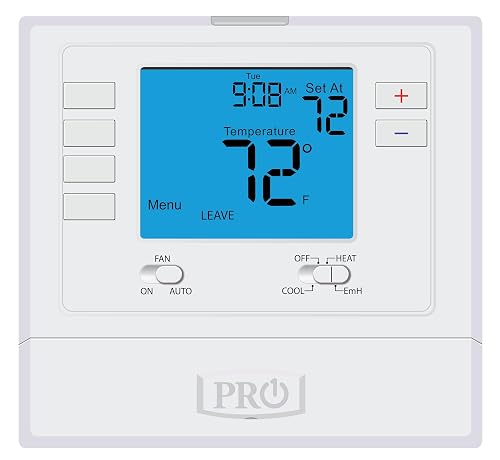
PRO1 T725 Heat Pump/Conventional Programmable Digital Wall Thermostat

PRO1 T771 Single Stage Non-Programmable Wall Thermostat
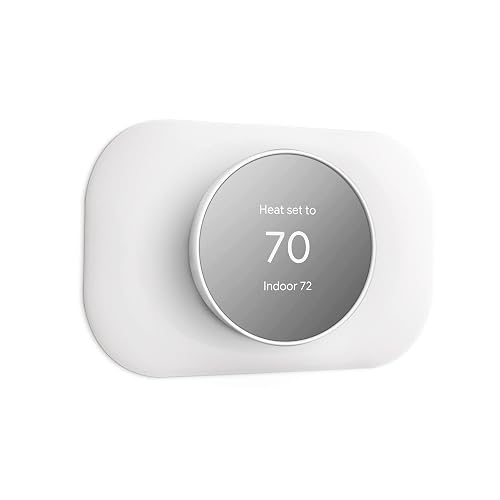
Petrichor Nest Thermostat Wall Plate (Snow)
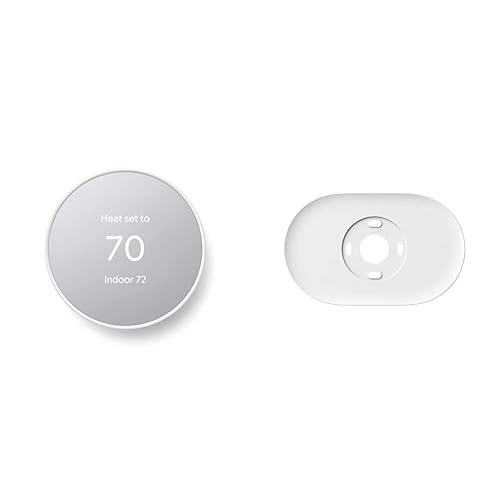
Google Nest Thermostat with Trim Kit (Snow)
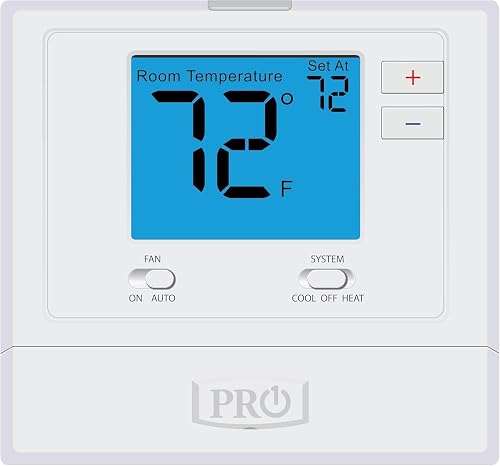
PRO1 T701 Single Stage Non-Programmable Thermostat

PRO1 T715 Multi-Stage Programmable Gas Thermostat
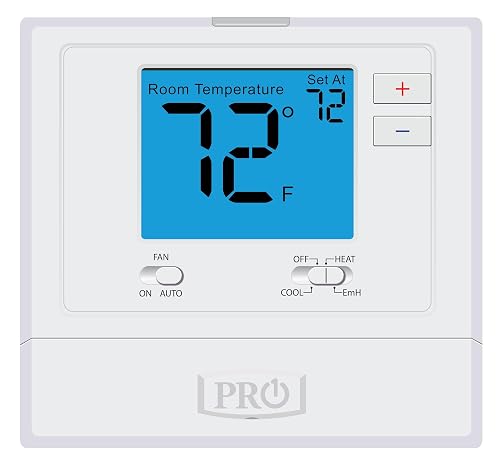
PRO1 T721 Heat Pump/Conventional Thermostat
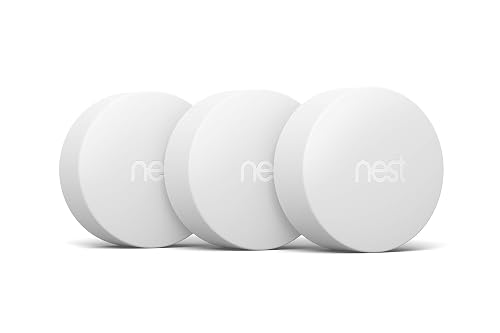
Google Nest Temperature Sensor 3-Pack
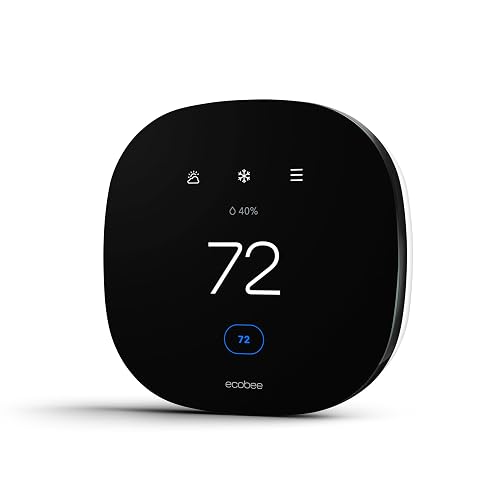
ecobee3 Lite Smart Thermostat (Black)

PRO1 T805 Single Stage Programmable Thermostat
More On The Choices That Made The List
The T725 sits in a sweet spot for homeowners with a 2 heat/1 cool heat pump, where the heat pump handles most of the season and backup heat kicks in during deep cold. Compared with the T701 below, this one adds 7-day or 5/1/1 programmability, so the thermostat can match a real work-and-sleep rhythm instead of running the same setting all day.
It’s the right pick for someone who wants scheduled comfort without paying for app connectivity. A 4-square-inch backlit screen keeps the readout large enough to scan from across the room, and a glow-in-the-dark light button means fumbling in a dark hallway is less of an issue.
Everyday Perks
- Heat-pump-ready without a separate model for backup stages
- Programmable schedule wakes you up warm, cools when you’re gone
- Glow-in-the-dark button is a small but useful nighttime touch
- Battery or hardwire (a dedicated wire that carries constant 24V power from the HVAC system) options ease retrofits in older homes
Things To Consider
- No Wi-Fi, so you can’t tweak settings from your phone once you leave the house
- Not designed for 2H/2C systems; homes with two-stage cooling need a step up to the T715
Feature Snapshot
Made For
Heat-pump owners who want a programmable, dial-style thermostat and don’t need remote app control.
Consider Something Else When
The Google Nest Thermostat is a stronger fit for anyone who wants phone-based scheduling and presence sensing.
The T771 stands out for a specific reason: a setpoint range (the minimum and maximum temperature the user can dial in) that drops to 25°F. That makes it a natural match for unheated garages, sheds, or workshop zones where a regular thermostat’s 40°F floor simply can’t keep pipes or paint from freezing. The T701 reviewed next is a better everyday choice for living space.
Swing adjustment (a setting that controls how far the room temperature can drift before the system kicks back on) and calibration features are the kind of behind-the-scenes controls that contractors appreciate in a specialty install.
Positive Takeaways
- Setpoint range down to 25°F, useful for cold storage spaces
- Same backlit 4-square-inch display as the other T-series units
- Calibration support for matching actual room temperature
Worth Noting
- No programmability, which limits use in main living areas
- Only fits single-stage conventional systems, not heat pumps
Right Fit For
Homeowners with a garage, attic workshop, or three-season space that needs freeze protection.
Look Elsewhere When
The PRO1 T701 is a more natural fit for everyday living-room comfort in a conventional 1H/1C system.
The Petrichor wall plate is a different kind of pick. It’s not a thermostat at all, but a trim cover designed for the 2020 Google Nest Thermostat. When you swap a wider old-school thermostat for the smaller Nest puck, the leftover paint and screw gaps look rough. This plate hides them.
If your project list already includes the Nest Thermostat reviewed next, this accessory pairs naturally. It’s also fingerprint-resistant in the Snow finish, so the wall area stays clean-looking in a hallway or open living space.
A Strong Showing
- Covers the gaps left by older, larger thermostats
- Flush-mount look feels intentional rather than patched-in
- Snow finish blends into light-painted walls
Honest Caveats
- Only fits the 2020 Nest Thermostat (model G4CVZ)
- No functional upgrade, just a cosmetic fix
Feature Card
Best Suited To
Anyone installing a 2020 Nest in a wall with visible paint gaps or old mounting holes.
Swap It Out When
You don’t actually own a 2020 Nest Thermostat, in which case the accessory is irrelevant.
The 2020 Nest Thermostat is the entry point into Google’s smart home climate system. It comes with both a trim plate for drywall and a steel plate for electrical box installs, so the install goes smoothly whether the wall is clean sheetrock (the standard paper-faced gypsum board used on interior walls) or has an old box behind it. ENERGY STAR certification (a U.S. government-backed efficiency label) is built in.
The headline feature is presence-based scheduling. The thermostat learns when you leave and turns itself down, which on a typical household budget adds up over a heating season. Scheduling itself runs through the Google Home app on Android or iPhone, so the wall unit stays minimal.
Benefits That Matter
- App-based scheduling removes the wall-button shuffle for routine tweaks
- Includes both trim and steel mounting plates for varied install situations
- Works seamlessly with the Nest Temperature Sensor 3-pack reviewed below
Points To Keep In Mind
- App-dependent for setup, which is a learning curve for non-smartphone households
- Older homes without a C-wire (a dedicated continuous-power wire required by most Wi-Fi thermostats) may need a power adapter add-on
Core Details
Who It Suits Best
First-time smart-thermostat owners who want app scheduling and a clean install out of the box.
Another Choice May Suit
The ecobee3 Lite is a better match for households committed to Alexa or Siri voice control.
The T701 keeps the experience intentionally simple. It’s a non-programmable wall thermostat for a 1 heat/1 cool conventional system, meaning a typical gas furnace plus central AC. If a parent or tenant just needs a clear “set the temperature and forget it” panel, this delivers.
It runs on the T700 platform with the same 4-square-inch blue backlit display the rest of the series uses, plus a glow-in-the-dark light button. Gas or electric configuration is selectable at install.
Well-Handled Touches
- Intuitive for anyone who’s used a basic thermostat before
- Backlit display holds up in dim hallways and bedrooms
- Gas or electric switch is conveniently on the unit
Trade Offs
- No weekly schedule, so the temperature stays the same until manually changed
- Not compatible with heat-pump systems
Perfect Match For
Renters or homeowners on a conventional system who prefer the simplest possible wall control.
Reach For A Different Pick When
You want any kind of schedule, in which case the PRO1 T725 or PRO1 T805 is the upgrade path.
The T715 steps up to 2 heat/2 cool systems, the configuration found in many two-stage gas furnace plus two-stage AC homes. Two-stage means the system can run at a lower output on mild days and ramp up on the coldest ones, which smooths temperature swings and trims energy use.
For most homes, that’s the practical sweet spot of comfort and control without crossing into full smart-thermostat territory. You get 7-day, 5/1/1, or non-programmable modes so the same hardware can run a fixed schedule or stay dial-only.
Why It Works Well
- Two-stage heating and cooling support matches modern high-efficiency equipment
- Three schedule modes give the installer real flexibility
- Battery or hardwire power is a small but useful detail during retrofit work
Soft Spots
- No Wi-Fi, so changes require walking to the wall panel
- More configuration choices mean a slightly longer setup versus the T701
Quick Facts
Whose Shelf It Belongs On
Two-stage gas furnace homes that want scheduled comfort without paying for app connectivity.
Where A Sibling Pick Shines
The PRO1 T725 is a better fit for heat-pump households, which the T715 doesn’t support.
The T721 is the no-schedule version of the T725, designed for 2 heat/1 cool heat pumps or 1 heat/1 cool conventional setups. It works well as a second thermostat in homes that have already committed to the T700 platform elsewhere, since the controls feel identical between rooms.
Two AA batteries or a hardwire common (the C-wire that delivers steady 24V power) option makes install painless in either newer or older homes. A glow-in-the-dark light button is the same friendly nighttime touch found across the series.
Practical Advantages
- Same UX as the rest of the T700 series for whole-home consistency
- Dual-system support for heat pump or conventional wiring
- Pick between battery and common-wire power at install
Factors To Consider
- No scheduling means temperature is fixed until manually adjusted
- Only fits single-stage heat pumps, not multi-stage equipment
Built With In Mind
Multi-zone homes where one zone needs simple heat-pump or conventional control.
Not Your Match When
You want a weekly schedule, in which case the PRO1 T725 is the better tool.
These are little battery-powered temperature reporters, not thermostats. Drop one in the nursery, one in the living room, and one in a home office, and a compatible Nest thermostat uses their readings to drive heating and cooling decisions per room. The sensors talk to the thermostat over Bluetooth Low Energy (a short-range wireless protocol that uses very little battery power) up to about 50 feet.
Two-story homes with chronically hot upstairs bedrooms benefit most. You can prioritize which room the system “listens to” at different times of day.
Points In Its Favor
- Targets the actual room that feels too warm or too cold, not the hallway thermostat
- Three-pack covers most households in a single purchase
- Low Energy Bluetooth keeps the batteries running for years
Some Limits To Know
- Only works with compatible Nest thermostats, so it’s an add-on, not a standalone
- Doesn’t measure humidity, just temperature
Important Details
Who Should Grab It
Nest thermostat owners with uneven temperatures between rooms or floors.
Skip It When
You don’t already run a compatible Nest, since the sensors have no independent function.
The ecobee3 Lite is the value tier in the ecobee lineup. You give up the remote room sensor that ships with the higher-end ecobee models, but you keep the smart-home integrations that matter: Siri, Alexa, and Google Assistant. ENERGY STAR certification comes standard, and the install is genuinely DIY-friendly for most homeowners.
For households that have already committed to a voice assistant ecosystem, this thermostat slots in without friction. You can also schedule through the ecobee app on iOS or Android.
What Pays Off
- Voice control across the three major assistants, no extra hub required
- ENERGY STAR certified, which can matter at tax time where rebates apply
- App-driven scheduling means a real weekly rhythm is easy to set up
Where It May Fall Short
- No room sensor included, so multi-room balancing requires a separate purchase
- Wi-Fi dependent, so the wall control feels limited if your network drops
The Right Fit
Smart-home households that want voice control and a single app for scheduling.
A Better Fit Elsewhere
The Google Nest Thermostat makes more sense for homes already living in the Google Home app.
The T805 closes the list with a generous 7-square-inch display, the largest in the lineup. For anyone who wants to read the room temperature from across the room without glasses, that extra screen real estate is meaningful. It uses the newer T800 platform and supports 1 heat/1 cool conventional systems with 7-day, 5/1/1, or non-programmable modes.
It’s a natural fit for a main-floor living area where the thermostat doubles as a clock and weather readout, paired with a smaller conventional unit like the T701 in a bedroom.
Practical Pluses
- Largest backlit display in the roundup at 7 square inches
- Three schedule modes cover both daily and weekend routines
- Glow-in-the-dark light button for nighttime reads
Possible Compromises
- Conventional only, no heat-pump support
- No Wi-Fi, so all settings happen at the wall
Feature Rundown
Who Will Love This
Households that want a big, easy-to-read wall thermostat with a real weekly schedule.
Not Your Match When
You need heat-pump support, in which case the PRO1 T725 is the right tool.
What To Match Before Picking Your Pair
Running 2 nest thermostats, or any two-thermostat setup, is really a wiring problem dressed up as a comfort problem. Every HVAC system (heating, ventilation, and air conditioning) speaks a different electrical “language,” and the thermostat has to speak the same one. Look at the existing wall plate first: count the wires, note whether there’s a C-wire, and confirm whether the system is a conventional furnace/AC combo or a heat pump. Mismatching these is the fastest way to a non-working install.
The next question is scheduling. A weekly programmable thermostat (the T725, T715, T805) earns its keep when your days follow a pattern. A non-programmable unit (the T701, T721, T771) is honest, simple, and a fine fit for a workshop or guest room where the temperature rarely changes.
Smart thermostats add another layer. The Google Nest Thermostat and the ecobee3 Lite both rely on a stable Wi-Fi connection and a C-wire. In an older home without that constant-power wire, plan on a power adapter or expect to repurpose the green wire as a C-wire substitute. The Nest Temperature Sensors only work alongside a compatible Nest thermostat, so they’re an add-on, not a starting point.
Think about who actually adjusts the thermostat. A large display and glow button help anyone with low vision or a fear of fiddly buttons. A simple dial-style PRO1 is friendlier for a parent or a rental tenant than a screen-driven app. Match the interface to the person standing in front of it most.
Finally, consider whether you want your two thermostats to “talk” to each other. Most conventional and smart units operate independently, which is fine for separate zones. If you want a single view of the whole home, the Google Home app pulls in multiple Nest units cleanly, while ecobee handles multiple units through the ecobee app. PRO1 units don’t have a unifying app, so each thermostat is its own island.
Key Takeaways For The Smart Shopper
Mistakes Worth Dodging
A common error is buying a thermostat that supports the wrong number of stages. A 2 heat/2 cool system paired with a 1 heat/1 cool thermostat may seem to work at first, then behave strangely when the second stage kicks in. Count your equipment stages before ordering. The second slip is assuming any thermostat works with a heat pump; many conventional units will technically power up but misinterpret the reversing valve (a heat-pump component that switches the system between heating and cooling modes), leaving the home stuck in heat or cool. The third trap is skipping the C-wire check on a smart thermostat, which leads to a unit that powers up and then slowly drains its backup battery over a few weeks.
Where The Extra Money Goes
Higher-tier thermostats earn their cost in three places. First, multi-stage support handles equipment that runs more efficiently at part load, which can quietly cut energy use year-round. Second, Wi-Fi and app control let you adjust a home before you arrive or after you leave, which matters in climates with big daytime swings. Third, larger displays and glow-in-the-dark buttons cost almost nothing to add in manufacturing but meaningfully help anyone with low vision or anyone who uses the thermostat as a bedside readout. For most households, paying up makes sense when the equipment is multi-stage or when at least one occupant benefits from the accessibility features. For a workshop or guest space, a simple non-programmable unit is honest value.