
Replacing an old thermostat gets confusing fast once you open the wall plate and count the wires. Many older homes and garages run just two conductors, and most modern smart thermostats demand a common wire (the “C-wire,” a continuous power return line) or a battery to function. That mismatch leaves plenty of people stuck choosing between rewiring or picking hardware that actually cooperates with low-voltage systems. The right choice depends on your equipment type, your comfort with scheduling features, and whether you want app control.
This roundup focuses on thermostats that play nicely with simple 2-wire setups, plus a couple of smart options for households ready to step up. You’ll find traditional wall units alongside learning thermostats for homes that already include a C-wire somewhere down the line.
The Main Contenders
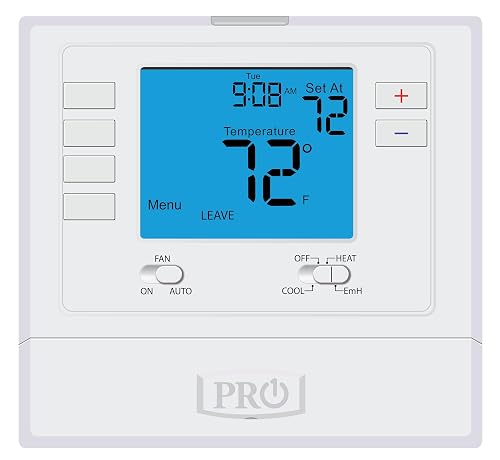
PRO1 T725 Heat Pump/Conventional Programmable Thermostat (2H/1C)

PRO1 T771 Single Stage Non-Programmable Wall Thermostat (1H/1C)
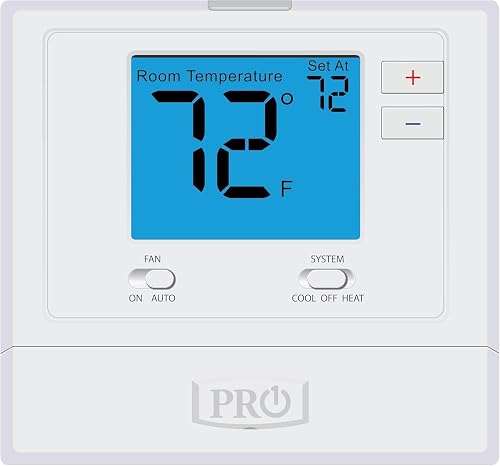
PRO1 T701 Single Stage Non-Programmable Wall Thermostat (1H/1C)

PRO1 T715 Multi-Stage Programmable Gas Thermostat (2H/2C)
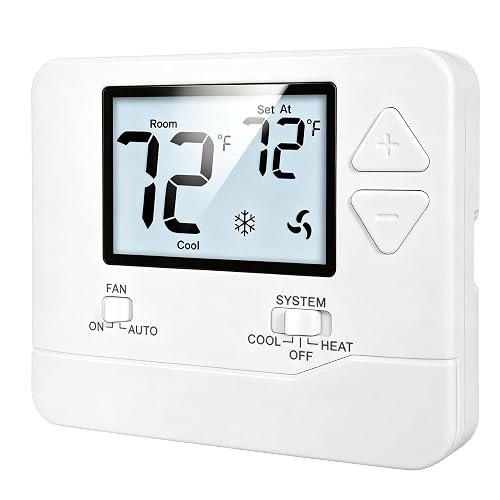
Heagstat NonProgrammable Thermostat 1 Heat/1 Cool (Single-Stage)
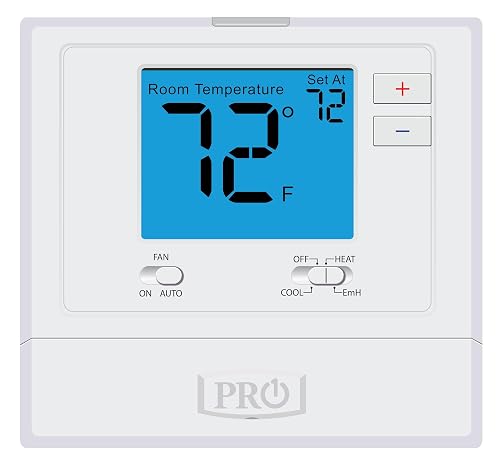
PRO1 T721 Non-Programmable Wall Thermostat (2H/1C Heat Pump / 1H/1C)
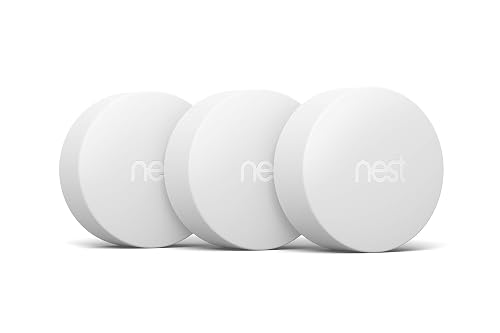
Google Nest Temperature Sensor 3-Pack (Smart Home Accessory)

PRO1 T805 Single Stage Programmable Wall Thermostat (1H/1C, T800)
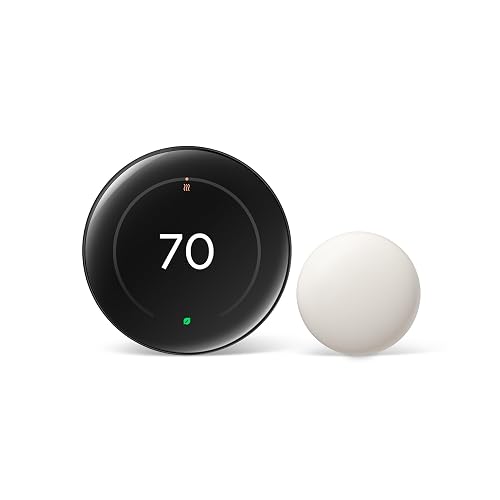
Google Nest Learning Thermostat (4th Gen) + Temperature Sensor (Obsidian)
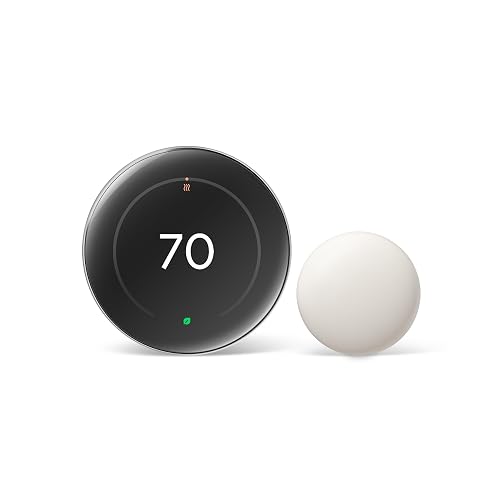
Google Nest Learning Thermostat (4th Gen) + Temperature Sensor (Silver)
Taking A Closer Look At The Options
The PRO1 T725 earns its place at the top because it covers more system types than most wall thermostats in this price band. It works with 2 heat/1 cool heat pump setups and 1 heat/1 cool conventional systems, which means a homeowner switching between equipment types won’t have to swap the wall unit. The 7-day and 5/1/1 (weekday/Saturday/Sunday) scheduling options let you set distinct routines for weekdays and weekends without overcomplicating the menu.
Compared to the simpler PRO1 T701 reviewed below, this one adds programmability and heat-pump compatibility. The 4 sq. in. blue backlit display is comfortable to read from across a room, and the menu structure stays approachable for anyone setting up a schedule for the first time.
Standout Benefits
- Dual system support removes guesswork during equipment changes
- Flexible 7-day or 5/1/1 scheduling matches real work weeks
- Backlit screen stays legible in dim hallways
- AA battery or hardwire power options simplify install
Things To Consider
- Heat-pump menus require basic familiarity with mode switching
- Programming takes longer than a manual dial the first time
Who It Suits Best
Homeowners running a heat pump today who might switch to a conventional system later, and want one thermostat to span that transition.
Where Another Pick Suits Better
The PRO1 T715 is a stronger match for multi-stage gas furnaces needing 2H/2C control, while the T725 stays the right call for single-stage conventional homes.
Garages, sheds, and outbuildings rarely need a learning thermostat, and many of those spaces have simple 2-wire hookups. The PRO1 T771 is built for exactly that scenario with a 25°F to 90°F setpoint range that goes far lower than a typical living-room unit. Owners commonly use the lower end to keep pipes from freezing in winter, which is the main reason this model gets picked for non-living spaces.
Unlike the PRO1 T701 covered next, the T771 adds swing adjustment and calibration controls, giving you tighter control over when the system kicks in. The 4 sq. in. blue backlit display reads clearly even in dusty workshops, and the simple up/down setpoint buttons make operation almost mistake-proof.
Advantages To Know
- Wide setpoint range supports freeze-prevention use
- Calibration control adapts to drafty spaces
- Backlit screen stays visible in low light
Worth Noting
- Single-stage only, so it won’t run multi-stage equipment
- No scheduling, which limits its use as a primary home thermostat
Made For
Anyone heating a detached garage, workshop, or shed with a basic forced-air system who needs freeze protection and nothing more.
Consider Something Else When
The PRO1 T701 makes more sense for everyday home use, while the T771 is purpose-built for spaces that need low-temperature capability.
Not everyone wants to program a schedule. The PRO1 T701 is the kind of thermostat you install, set to a comfortable temperature, and leave alone. It supports 1 heat/1 cool conventional systems with gas or electric configuration, which covers a large share of older homes with straightforward furnaces. The 4 sq. in. blue backlit display is identical in size to the T725 reviewed above, but the controls stay minimal.
A glow-in-the-dark light button earns its keep on late-night bathroom runs, and the option to run on AA batteries or hardwire power means the install stays flexible. Compared to the T771, this one trades low-temperature setpoint range for everyday comfort in a living space.
The Upside
- Simple up/down controls are easy for any household member
- Glow-in-the-dark light button helps in midnight adjustments
- Battery or hardwire power supports different wiring setups
Trade Offs
- No scheduling, so comfort stays constant rather than adaptive
- Single-stage only limits compatibility with multi-stage equipment
Right Fit For
Households with a basic 1H/1C furnace who prefer simplicity over features and don’t want to learn a programming menu.
Skip It When
The PRO1 T805 offers a much larger display and programming flexibility if you want both simplicity and the option to schedule.
Two-stage gas furnaces need a thermostat that knows when to call for first-stage heat versus second-stage heat, and the PRO1 T715 handles exactly that. It supports 2 heat/2 cool systems and offers 7-day, 5/1/1, or non-programmable modes, so you can scale the menu up or down depending on how hands-on you want to be. The 4 sq. in. blue backlit display sits in the same family as the T701 and T725 covered above.
Where this one diverges is its multi-stage intelligence, which spreads heating cycles across two furnace stages to reduce temperature swings. For homes with high-BTU (British Thermal Units, a measure of heating output) gas systems, that smoother cycling often translates to quieter operation. The glow-in-the-dark light button carries over from other T700 models.
Good Reasons To Consider
- Native 2H/2C support unlocks smoother furnace staging
- Three operating modes keep the menu flexible
- Battery or hardwire power eases installation
Honest Caveats
- Multi-stage setup requires understanding of furnace staging
- Programming complexity is higher than a non-programmable unit
Who Should Grab It
Owners of two-stage gas furnaces who want their thermostat to actually use both stages instead of running flat-out most of the day.
Look Elsewhere When
The PRO1 T701 covers single-stage gas furnaces just fine and is easier to set up, so reach for the T715 only when you have actual 2H/2C equipment.
The Heagstat 1H/1C is the value play of the roundup, aimed at households that need a working thermostat without the premium feature set. It runs on 24VAC (24-volt alternating current, the standard low-voltage power supplied by most HVAC systems) conventional single-stage systems including gas, oil, and electric furnaces paired with an independent air-conditioning condenser (the outdoor unit that pumps refrigerant for cooling). The base accepts 2 to 5 wires, which means it fits the 2-wire scenario this whole list is built around.
What you give up is programmability, smart features, and the wider setpoint range of the PRO1 T771. The white backlight stays easy on the eyes in bedrooms, and the basic up/down setpoint keeps the learning curve short. Compare that to the PRO1 T701 reviewed earlier, which adds a glow-in-the-dark button and dual fuel compatibility.
Where It Helps
- Honest pricing for tight replacement budgets
- 2 to 5 wire compatibility covers most basic setups
- White backlight reads cleanly in dark hallways
Points To Note
- Not compatible with heat pumps or multi-stage systems
- No scheduling, so you set it and forget it
- Connections with 6 to 8 wires won’t fit this base
Best Suited To
Cost-conscious shoppers running a basic forced-air furnace and air-conditioning system who want a reliable wall control without extras.
Not Your Match When
The PRO1 T721 is a better fit for homes with a heat pump or future equipment changes, since it covers both system types.
The PRO1 T721 lives in the middle ground between the T701 and the T725. It supports 2 heat/1 cool heat pumps or 1 heat/1 cool conventional systems, but unlike the T725 reviewed at the top of this list, it skips programmability entirely. That makes it a smart pick for someone who wants heat-pump flexibility without learning a schedule menu.
The 4 sq. in. blue backlit display matches the rest of the T700 platform, and the glow-in-the-dark light button carries over too. Power comes from AA batteries or a hardwire connection, which keeps the install straightforward in older homes. Compared to the Heagstat covered just before, this one opens up heat-pump territory.
Useful Strengths
- Heat-pump and conventional support in one unit
- Backlit display and glow-in-the-dark button for low-light use
- Battery or hardwire power adds install flexibility
Small Caveats
- Non-programmable, so no automatic schedule adjustments
- Heat-pump mode requires understanding of mode changes for heating and cooling
Who Will Love This
Homeowners with a heat pump who prefer a manual thermostat but want the option to switch to a conventional system later.
A Better Fit Elsewhere
The PRO1 T725 is the upgrade path when you decide you actually want 7-day scheduling, since it covers the same system types with added programmability.
This pick is a different kind of entry on the list. The Google Nest Temperature Sensor 3-pack doesn’t replace your wall thermostat; it adds room-level awareness to a compatible Nest thermostat. Place sensors in different rooms, like a nursery or a basement office, and the parent thermostat prioritizes the temperature in the room you select at a given time.
The sensors communicate over low-energy Bluetooth (a short-range wireless protocol designed for minimal battery drain) up to about 50 feet from the thermostat. They work with the Nest Learning Thermostat and the Nest Thermostat E. If you already own one of those, this is the easiest way to stop fighting over which room the thermostat “should” live in. For households without a Nest thermostat, this 3-pack won’t do much on its own.
Positive Points
- Solves hot and cold spots in multi-room homes
- Wireless sensors install without running new wires
- Three-pack covers most whole-home layouts
A Few Limitations
- Requires a compatible Nest thermostat to function
- Sensors rely on Bluetooth range, which walls can shorten
Perfect Match For
Existing Nest thermostat owners in multi-room homes where one wall reading doesn’t reflect actual comfort in the nursery, bedroom, or office.
Another Choice May Suit
The Google Nest Learning Thermostat (4th Gen) bundles a sensor in the box if you don’t already own a Nest thermostat and want to start from scratch.
The PRO1 T805 is the bigger sibling of the T701 reviewed above, built on the T800 platform with a 7 sq. in. blue backlit display. That extra screen real estate is a meaningful upgrade for anyone who squints at small temperature numbers from across the room. It supports 1 heat/1 cool conventional systems and offers 7-day, 5/1/1, or non-programmable modes.
That mode flexibility is the real story. You can start with non-programmable behavior to learn the thermostat, then enable scheduling once you trust the menu. The glow-in-the-dark light button is carried over from the T700 line. If you need a multi-stage upgrade instead, the PRO1 T715 covered earlier is the better path.
Benefits That Matter
- Extra-large display improves readability for aging eyes
- Three operating modes let you grow into scheduling
- Glow-in-the-dark button helps in low light
Possible Compromises
- Larger footprint may not fit older narrow wall plates
- Single-stage only, so it can’t run multi-stage equipment
Built With In Mind
Conventional 1H/1C homeowners who want a clearly readable display and the option to add scheduling later without buying a new unit.
Swap It Out When
Pick the PRO1 T805 if the display size matters most, but the T725 is the better choice for heat-pump compatibility.
The 4th-generation Nest Learning Thermostat is the top of Google’s thermostat line, paired here with a 2nd-generation Nest Temperature Sensor in the Obsidian finish. It learns your preferred temperatures across the day, then adjusts the schedule as your routine shifts. The included temperature sensor extends that awareness into a second room without rewiring.
You’ll need a C-wire or a compatible power accessory to run this thermostat; a 2-wire setup alone won’t power it. That makes the Nest a better fit for households that have already pulled a common wire through the wall, or for new construction. Compared to the standalone sensor 3-pack reviewed just above, this bundle includes the brain plus one remote sensor in a single purchase.
Noteworthy Benefits
- Adaptive learning reduces manual schedule edits
- Bundled sensor adds room-specific awareness out of the box
- Obsidian finish blends with darker wall plates and modern decor
Practical Considerations
- Requires a C-wire or compatible power accessory to install
- App-dependent for full feature access
Whose Shelf It Belongs On
Tech-forward households with a C-wire already in place who want a learning thermostat that adapts without constant reprogramming.
Where A Sibling Pick Shines
The PRO1 T725 is a more practical pick for 2-wire homes without a C-wire, since it runs on batteries or hardwire without needing common-wire power.
Functionally identical to the Obsidian version reviewed just above, the Silver finish offers a lighter aesthetic for kitchens, hallways, or rooms with bright wall colors. You still get the 4th-generation learning engine, the bundled 2nd-generation temperature sensor, and the same installation requirements. The hardware difference is purely cosmetic.
For households choosing between the two Nest bundles, the decision usually comes down to wall plate and decor rather than features. The C-wire requirement applies here just the same, so this remains a better pick for homes with existing common-wire infrastructure rather than bare 2-wire walls.
Well-Handled Touches
- Silver finish fits lighter wall colors and contemporary spaces
- Same learning engine and bundled sensor as the Obsidian model
- Compatible with the additional Nest sensors if you want more zones later
Some Limits To Know
- Same C-wire requirement as the Obsidian model
- Premium price compared to non-learning wall units
Right Fit For
Design-focused smart homes with a C-wire in place that prefer a lighter thermostat finish over darker options.
Reach For A Different Pick When
Pick the PRO1 T805 for a large-display programmable unit on a 2-wire system, since the Nest demands more wiring infrastructure than simpler setups offer.
What To Weigh Before Choosing a 2 Wire Thermostat
Match the Thermostat to Your Equipment
The single biggest decision is whether your system is conventional (a furnace with separate heating and cooling stages) or a heat pump (a single unit that moves heat in either direction using refrigerant). A conventional 1H/1C system only needs two wires: R (the 24VAC power supply from the transformer) and W (the call for heat). Heat pumps often need additional terminals like O/B (the reversing valve that switches between heating and cooling modes) and Y (the call for cooling), so the wall unit has to support them. Buying a thermostat that doesn’t match your equipment type leads to a non-functional setup or, in some cases, short cycling (the system rapidly turning on and off without completing a full heating or cooling cycle). The PRO1 T701 and T805 are conventional-only, while the T721 and T725 add heat-pump support.
Decide Between Programmable and Manual
Programmable thermostats let you set temperatures for different times of day, which can reduce runtime during sleeping or work hours. Manual thermostats stay at one temperature until you change them. Households with predictable schedules benefit most from programming; people who work from home and adjust on the fly often prefer a simple manual like the PRO1 T771. The good news is that several models on this list, including the T715 and T805, offer both modes so you can start simple and grow into scheduling.
Consider the C-Wire Question for Smart Upgrades
Smart thermostats like the Nest Learning Thermostat need continuous power to run their Wi-Fi radios, displays, and learning algorithms. That power typically comes from a C-wire (common wire), which completes the 24VAC circuit back to the transformer. Many older 2-wire homes don’t have one. If yours doesn’t, you can either pull a new wire through the wall, install a C-wire adapter at the furnace, or stick with battery-powered units like most of the PRO1 models here. Running a C-wire adapter is a common project for handy homeowners, but the wiring work can feel involved if you’ve never opened the furnace panel.
Check the Display and Accessibility Features
A thermostat you can’t read from the couch isn’t doing its job. Larger displays like the 7 sq. in. screen on the PRO1 T805 help anyone with reduced vision or anyone who simply prefers bigger numbers. Glow-in-the-dark light buttons, like the ones on the T701, T715, and T805, make midnight adjustments easier without fumbling for a flashlight. If the thermostat lives in a hallway or near a bedroom, those details add up.
Key Considerations Across These Picks
Common Shopping Slip Ups
The most frequent mistake is buying a smart thermostat for a 2-wire system without checking for a C-wire. Many shoppers get the box home, open the instructions, and discover the unit won’t power up. Always count your wires at the wall and confirm a C-wire or C-wire adapter plan before choosing a learning model.
Another slip is picking a heat-pump thermostat for a conventional furnace or vice versa. The PRO1 T725 and T721 cover both system types, but cheaper units like the Heagstat 1H/1C are conventional-only. Installing the wrong category can short cycle equipment or prevent the system from turning on at all.
Where The Extra Money Goes
Higher-tier models like the Google Nest Learning Thermostat (4th Gen) cost more because they include Wi-Fi radios, machine learning, and remote sensors. The price covers ongoing algorithm updates, app control, and adaptive scheduling that a non-programmable wall unit simply can’t replicate.
Mid-tier programmable units like the PRO1 T805 or T715 add scheduling flexibility, larger displays, and multi-stage support. The extra spend usually pays off in homes with variable routines or multi-stage furnaces, where the smoother temperature control justifies the upgrade. For single-stage homes with constant schedules, a non-programmable model handles the job without the extra cost.
Frequently Asked Questions
Can a 2 wire thermostat work without a C-wire?
Yes, most non-smart thermostats on this list run on just R and W wires, drawing small amounts of power directly from the heating circuit. Battery-powered units like the PRO1 T701 and T725 add AA backup for consistent operation. Smart thermostats typically need a C-wire for continuous power.
What is the difference between programmable and non-programmable?
A programmable thermostat lets you set temperature schedules for different times of day, while a non-programmable stays at one setpoint until you change it manually. Programmable units save energy in homes with predictable routines; non-programmable units stay simpler for households that prefer one consistent temperature.
Are 2 wire thermostats compatible with heat pumps?
It depends on the model. Standard 2-wire heat-only systems can use simple thermostats, but most heat pumps need additional terminals like Y and O/B. The PRO1 T721 and T725 explicitly support heat-pump wiring, while units like the Heagstat 1H/1C are conventional-only.
Do I need a C-wire adapter for a Nest thermostat?
In most cases, yes. The Nest Learning Thermostat requires continuous power, which a 2-wire setup can’t provide on its own. A C-wire adapter installed at the furnace end is a common workaround, though pulling a new wire through the wall is a cleaner long-term solution.
Can I install a 2 wire thermostat myself?
Most homeowners with basic electrical comfort can swap a wall thermostat in under an hour. Turn off the breaker, label the wires, mount the new base, and reconnect. Smart thermostats and C-wire adapters are more involved and may justify professional help if you’re unsure about working near the furnace control board.
Closing Remarks
The right thermostat depends less on brand hype and more on matching equipment type, wiring reality, and how hands-on you want to be with scheduling. Homes with simple 2-wire conventional systems have plenty of solid wall-unit options, while heat-pump households should look at the T721 or T725. Smart thermostats earn their place when a C-wire already exists and you want the thermostat to learn your routine. Match the unit to your system, check the wiring before you buy, and the rest tends to fall into place.