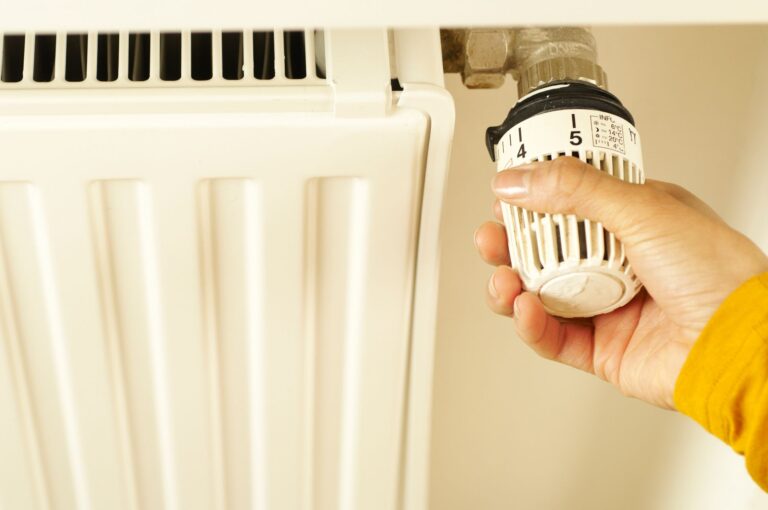

Upgrading a wall thermostat is one of those small home projects that quietly pays you back, in comfort, in lower runtimes on the furnace or air handler, and in fewer “why is this room freezing” arguments. The category now spans everything from a $20 manual dial replacement to a learning smart thermostat that knows your schedule better than you do. The trick is matching the thermostat to the system you already have, the wiring it can accept, and the kind of programming you actually want to bother with.
This lineup covers wall-mounted units, floor-heating controls, and a plug-in outlet style, so you can find something that fits the heating or cooling equipment you live with right now.
A Closer Look At The Lineup
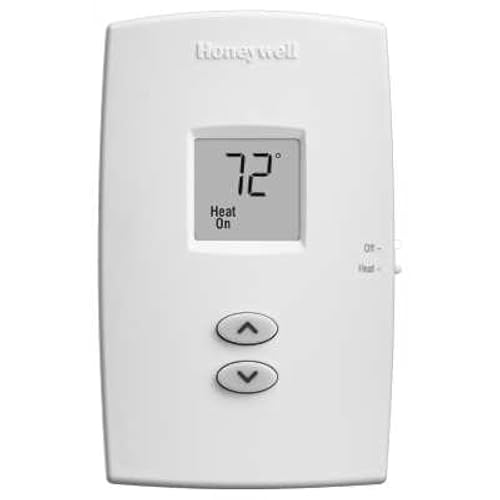
Honeywell TH1100DV1000 PRO 1000 Vertical Thermostat
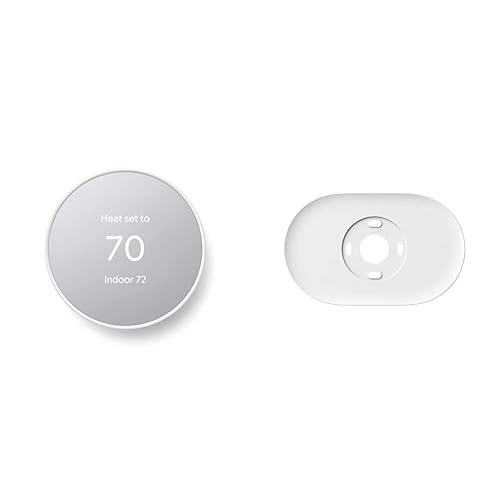
Google Nest Thermostat with Trim Kit (Snow)
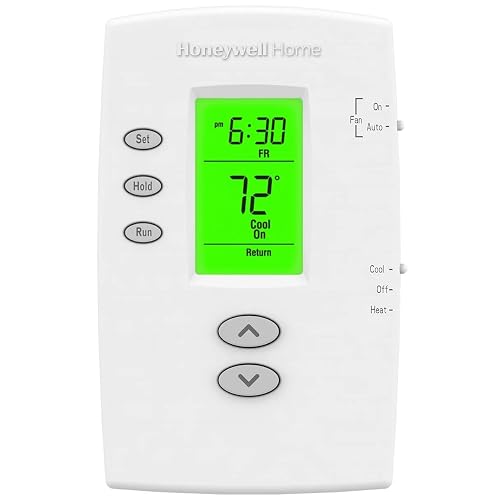
Honeywell TH2110DV1008 PRO 2000 Programmable Thermostat
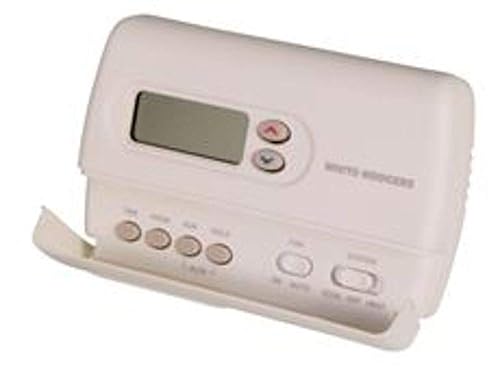
White-Rodgers 1F80-361 Emerson 80 Series Thermostat
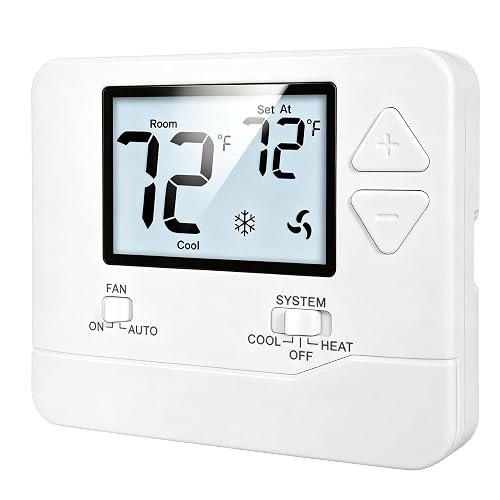
Heagstat Non-Programmable 1 Heat/1 Cool Thermostat
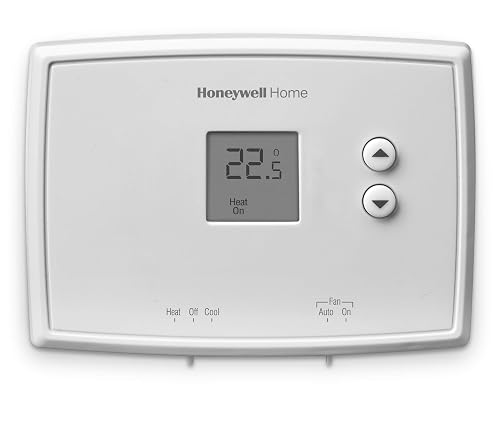
Honeywell Home RTH111B Digital Thermostat
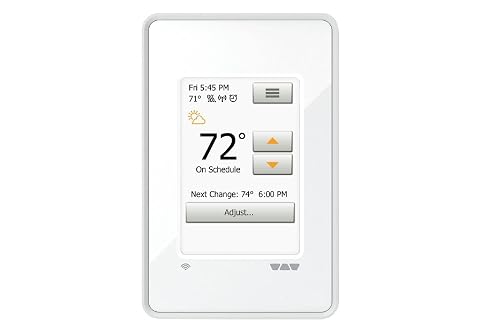
Schluter Ditra-Heat-E-WiFi Floor Heating Thermostat
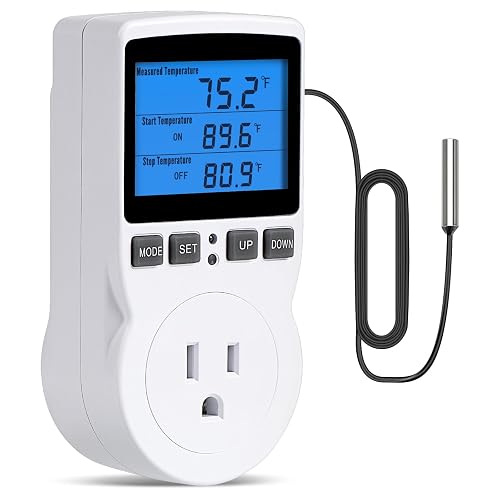
INKBIRDPLUS Plug-In Thermostat Outlet
White-Rodgers 1F78-151 70 Series Thermostat
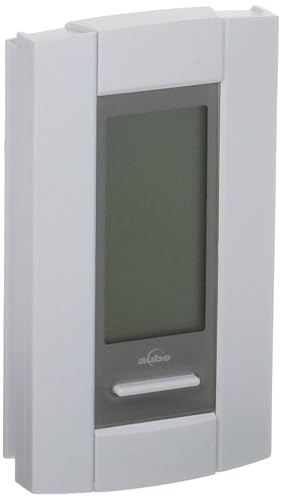
Honeywell TH115-A-12 7-Day Digital Heat Thermostat
The Details Behind The Selections
The Honeywell TH1100DV1000 PRO 1000 is one of those analog-style vertical thermostats that homeowners quietly install and forget about. It’s built for single-stage heat only systems, which makes it a natural fit for hot-water baseboard boilers, dedicated furnace circuits, or older homes where cooling runs on a separate wall unit.
Where this Honeywell earns its keep is honesty. There’s no menu tree, no Wi-Fi password, no firmware update at midnight. The vertical slide format reads at a glance from across the room, and the white finish blends into most hallways. In a vacation cabin or a rental where guests fiddle with the controls, simpler is safer.
Notable Gains
- Heat-only single-stage design eliminates cooling-mode confusion in boiler-only homes
- Vertical slider lets you feel the setpoint change rather than navigate a digital menu
- Compact 4 11/16 in. tall by 2 7/8 in. wide footprint fits narrow wall sections
- Premier white color matches builder-grade trim in most houses
- No programming required, so it works for renters, seniors, and second homes
Things To Consider
- Heat-only design means it cannot run a central air system
- No scheduling, so you adjust manually for setbacks when you leave
Right Fit For
Owners of boiler-based or single-stage furnace homes who want predictable, no-fuss control without programming menus.
Look Elsewhere When
You need cooling and heating from one wall unit, in which case the Honeywell TH2110DV1008 PRO 2000 covers both.
The Google Nest Thermostat turns the wall control into a small, app-driven panel that talks to your phone. Setup runs through the Google Home app on Android or iPhone, and once it’s on Wi-Fi you can build a weekly schedule from the couch instead of leaning over the thermostat at midnight. The included trim plate and steel plate help when the old paint outline shows through or when you’re mounting over a junction box.
For households with shifting routines, the auto-away behavior is the headline feature. When nobody’s home, the Nest eases the setpoint back on its own, which is where most utility savings actually come from. ENERGY STAR certification puts a number on the efficiency side, even if the exact figure depends on your climate and equipment.
What Helps Most
- Wi-Fi scheduling through the Google Home app means no button mashing on the wall
- Auto-away temperature drop trims wasted runtime in empty homes
- ENERGY STAR certification signals third-party efficiency verification
- Trim plate covers paint lines left by older thermostats
- Steel mounting plate adds rigidity over electrical boxes
Points To Keep In Mind
- Requires a common wire or compatible power adapter on many older systems
- Full feature set depends on a stable home Wi-Fi connection
Key Specs
Who It Suits Best
Renters and owners with stable Wi-Fi and a fairly modern HVAC system who want phone-based scheduling and auto-away savings.
A Better Fit Elsewhere
Heat-only boiler homes without a common wire may be better served by the Honeywell TH1100DV1000 PRO 1000, which doesn’t need Wi-Fi at all.
The Honeywell TH2110DV1008 PRO 2000 steps up from the no-frills vertical into a programmable wall unit with a backlit display. It’s made for heat/cool or heat-pump-without-auxiliary-heat systems, so it covers a wider slice of American homes than a heat-only model. The vertical layout keeps the buttons familiar to anyone upgrading from an old mercury switch.
What makes this one a daily driver is the 5-2 day programming, which separates the work week from the weekend. You can run a cooler setpoint while you’re at the office and a warmer one for Saturday morning without touching the schedule. Early start is the hidden gem: it figures out when to kick the system on so the room hits the target by the time you walk in.
Bright Spots
- 5-2 day programming separates weekday and weekend routines
- Backlit display stays readable in dim hallways and basements
- Early-start logic recovers the setpoint before you get home
- Works with heat/cool and heat-pump systems without auxiliary heat
- Temporary and permanent overrides let you skip the schedule without losing it
Trade Offs
- Not designed for heat pumps with auxiliary or emergency heat strips
- Programming is button-based, so first-time setup takes a few minutes of patience
Made For
Households with a predictable weekday and weekend rhythm who want automatic setbacks without a smart-home hub.
Not Your Match When
You need a learning thermostat with geofencing, in which case the Google Nest Thermostat adds app control and auto-away behavior.
The White-Rodgers 1F80-361 brings 5+1+1 day programming, which is one step beyond a basic 5-2 model. The “plus one” is the difference: weekdays share a schedule, Saturday gets its own, Sunday gets its own, and your Sunday-afternoon nap no longer fights the Saturday-night setback. The Emerson 80 Series housing is the same footprint used on many contractor installations, so it often drops right onto an existing backplate.
Compatibility is a quiet strength here. It works with single-stage heat and cool, 24-volt and millivolt systems, and gas, oil, or electric equipment. If your furnace is a 1990s Carrier and your air conditioner was added later, this thermostat usually accepts the wiring as-is. The unit ships in a contractor anti-static bag, which signals a professional-grade part rather than a glossy retail box.
The Practical Payoff
- 5+1+1 day schedule covers three different weekly routines
- Up to four periods per day for fine-grained morning, day, evening, and night setpoints
- Works with 24V and millivolt systems, gas, oil, and electric equipment
- Standardized footprint fits many existing backplates
Worth Noting
- Single-stage only, so multi-stage furnaces and dual-fuel systems will need a different model
- Setup is button-driven, which can feel clunky if you grew up with touchscreen apps
Feature Snapshot
Best Suited To
Households with shifting weekly routines who want programmable control without subscribing to a smart-home platform.
Skip It When
Your system needs Wi-Fi scheduling, in which case the Google Nest Thermostat covers the same single-stage equipment with phone-based control.
The Heagstat non-programmable thermostat is aimed at the homeowner who just needs the old wall unit replaced without learning a new app. It works on 24VAC conventional single-stage 1H/1C forced-air systems, which covers most gas, oil, and electric furnaces paired with a separate outdoor air conditioner. The white backlit display is easy to read at a glance.
The wiring limit is the detail to weigh carefully. The base accepts 2 to 5 wires, but systems running 6 to 8 wires are not a fit. Many older homes with multi-speed blowers or heat-pump reversing valves fall into that second group, so the wire count at your current thermostat is the first number to check before ordering.
Where It Delivers
- Handles 1 heat and 1 cool on conventional forced-air systems
- Compatible with gas, oil, and electric furnace setups
- White backlit display improves nighttime visibility
- 2 to 5 wire compatibility covers many older single-stage installs
Room For Improvement
- Not compatible with heat pumps, which rules out many all-in-one systems
- Systems requiring 6 to 8 wires are not supported, so verify your harness first
Spec Overview
Perfect Match For
Owners of older gas or electric forced-air homes who want a no-program, no-app replacement for a worn-out wall thermostat.
Reach For A Different Pick When
You have a heat pump, in which case the Honeywell TH2110DV1008 PRO 2000 is built for heat-pump-without-auxiliary systems.
The Honeywell Home RTH111B is the most stripped-down digital unit in the Honeywell Home line. There’s a small screen that shows the current room temperature and the setpoint, and a row of soft-touch buttons along the side. No menu tree, no scheduling, no app to install. For many households that’s the point.
The trade-off is precision without programming. You set the temperature you want and the system holds it. If you leave for work and forget to turn it down, it keeps running, so a low-fuss thermostat pairs best with people whose daytime temperature tolerance is wide or whose utility bill is shared with a landlord.
Useful Highlights
- Digital precision without the learning curve of a programmable model
- Soft-touch buttons feel more modern than membrane pads
- Minimal display reduces clutter for users who only need the setpoint
Small Caveats
- No scheduling means no automatic setbacks for working hours
- Compact display can be hard to read from across a large room
Whose Shelf It Belongs On
People who set the thermostat once and leave it, and who don’t want to navigate a programming menu to do it.
Swap It Out When
You want weekday and weekend setbacks on a single-stage system, in which case the Honeywell TH2110DV1008 PRO 2000 adds 5-2 programming without going full smart-home.
The Schluter Ditra-Heat-E-WiFi thermostat is built for one specific job: controlling an electric radiant floor heating mat under tile. The 3.5-inch color screen is a notable upgrade over the tiny black-and-white panels that come with many floor-heating kits, and it accepts both 120V and 240V heating cables up to 15 amps. A Class A GFCI is built into the unit, which is a real safety plus in a bathroom where water and electricity share a wall.
This is the right pick if you have (or are installing) a Schluter DITRA-HEAT system, or a comparable electric mat with the same voltage and amperage. If you’re running a forced-air furnace, this is the wrong category entirely, and one of the wall-mounted units above is a far better fit.
Points In Its Favor
- Class A GFCI built into the thermostat protects a wet location
- 3.5-inch color screen is easy to read from a standing position
- Supports 120V and 240V heating cables, covering most residential mat systems
- Wi-Fi control via app supports tracking and scheduling
Honest Caveats
- Designed only for electric radiant floor heat, not central HVAC
- Requires a compatible heating mat, so it is a system-specific purchase
Key Product Details
Who Should Grab It
Homeowners finishing a bathroom or kitchen with electric radiant floor heating who want app control and a real GFCI on the wall.
Consider Something Else When
You’re controlling a central furnace and air conditioner, in which case the White-Rodgers 1F80-361 Emerson 80 Series is a better wall-mounted fit.
The INKBIRDPLUS plug-in thermostat skips the wall mount entirely. It sits between the wall outlet and the device you want to control, which makes it the right answer for a space heater in a drafty office, a window AC in a sunroom, or a germination mat in a basement. Plug-and-play setup means no wiring at all.
The temperature control range runs from about -72°F to 176°F, so it covers everything from a reptile heat mat to a greenhouse fan. The max load of 15 amps at 120V (1800W) handles a typical portable heater, but you wouldn’t plug a hair dryer and a heater into the same outlet downstream.
Positive Points
- No wiring required, so renters and apartments benefit most
- Wide -72°F to 176°F control range handles reptile, plant, and room use
- 1800W / 15A output covers most portable heaters and fans
- Timing function adds cycling control beyond a single setpoint
Worth Bearing In Mind
- Controls only whatever is plugged into the outlet, not a whole-home system
- Not a substitute for a wall thermostat on a central furnace or boiler
Built With In Mind
Apartment dwellers, hobbyists, and plant growers who need temperature control for a single plug-in appliance without touching the main HVAC system.
Where Another Pick Suits Better
Whole-home heating and cooling belongs on a wall unit like the Honeywell TH2110DV1008 PRO 2000, not an outlet controller.
The White-Rodgers 1F78-151 is part of the 70 Series Classic line and a long-standing replacement pick. It’s a 5-2 day programmable thermostat with an easy-to-read backlit display, and it works on most single-stage systems. The 24-volt and millivolt compatibility gives it flexibility across gas, oil, and some electric equipment.
Where it doesn’t fit is electric baseboard heat. The internal switching isn’t designed for the high-current draw of 240V baseboard wiring, and a few other specialty systems. Confirm your equipment before ordering, but for a standard forced-air system, it’s a quietly solid workhorse.
Noteworthy Benefits
- 5-2 day programming balances weekday and weekend routines
- Backlit display improves low-light readability
- 24V and millivolt compatibility suits many legacy systems
- Long-running 70 Series model with widely available documentation
Less Ideal Details
- Not compatible with electric baseboard heat, so verify your system first
- Single-stage only, so multi-stage equipment needs a different model
Who Will Love This
Homeowners replacing a worn-out single-stage thermostat on a standard forced-air system who want programmable setbacks without learning an app.
Not Your Match When
You have electric baseboard heating, in which case the Honeywell TH115-A-12 is built for that exact high-current load.
The Honeywell TH115-A-12 is the high-capacity option in this list. A TRIAC is a solid-state switch that turns the heater on and off silently, and on a 120V electric baseboard or convector, that silence is a real quality-of-life upgrade over the mechanical clicking of a cheaper thermostat. The 4-wire SPST configuration is the standard hookup for line-voltage electric heat, and the 7-day programming lets you set four periods per day, every day of the week.
Microprocessor-optimized 15-minute cycles add a layer of refinement that you don’t see on budget models. For most homes that means the room temperature stays closer to the setpoint without the swing-and-correct cycle of a basic unit. The premium framing makes sense in a finished basement or a converted attic where the heat runs often.
Positive Takeaways
- Silent TRIAC switching replaces the click of a mechanical relay
- 7-day programming with up to four periods per day
- 15-minute cycle optimization keeps the room closer to the setpoint
- Remote input allows external signaling on some installations
Practical Considerations
- 120V only, so 240V baseboard heaters need a different model
- Line-voltage wiring should be done carefully, and a qualified installer is often the right call
Core Details
The Right Fit
Owners of 120V electric baseboard or convector heaters who want quiet, precise control and a 7-day schedule.
Where A Sibling Pick Shines
For low-voltage central HVAC, the Honeywell TH2110DV1008 PRO 2000 is the more relevant wall thermostat, since it speaks the same language as a furnace control board.
What To Weigh Before Choosing automatic thermostats homes
Start with the equipment you already have, not the thermostat you want. The system type (forced air, heat pump, boiler, electric baseboard, or radiant floor) and the wire count at the wall together determine which models will even power on. A common wire (often labeled “C”) is the small extra conductor that many Wi-Fi thermostats need for continuous power, and older homes often lack one.
Compatibility is the first filter. “Single-stage” means one heating speed and one cooling speed. “Multi-stage” means a furnace that can run low and high, or a heat pump with auxiliary strips. “Millivolt” describes the low-voltage switching used by some gas fireplaces and older boilers. “Line-voltage” (120V or 240V) describes electric baseboard heat, which needs a thermostat that switches the heating current directly. Picking the wrong category usually means the thermostat will not work, or worse, will not be safe.
Programming depth is the second filter. A non-programmable model is honest and simple, but it relies on you to turn the heat down when you leave. A 5-2 day programmable model handles weekday and weekend routines. A 5+1+1 model adds a separate Sunday. A 7-day model lets every day be different. A learning or Wi-Fi model adds auto-away and remote control. Match the schedule complexity to your real routine, or you’ll turn the programming off within a month.
The third filter is the user. A Wi-Fi thermostat is wasted on a senior who never opens an app. A non-programmable unit is a poor fit for a working family with a tight utility budget. Households with a mix of tech comfort and tech aversion often do best with a mid-range programmable model that has a physical schedule button.
Finally, consider installation. Most homeowners can swap a like-for-like low-voltage thermostat in under thirty minutes with a screwdriver and a phone photo of the old wiring. Line-voltage thermostats, common on electric baseboards, carry full household current and benefit from a qualified installer, since the wrong connection can damage the heater or the panel.
A Few Things To Keep In Mind
Pitfalls Shoppers Hit
The most common mistake is buying a thermostat that doesn’t match the system voltage. A low-voltage programmable unit wired into a 240V baseboard will fail quickly. The second most common is ignoring the wire count: a five-wire thermostat installed on a two-wire system will not power on, and a Wi-Fi model without a common wire will lose its connection every few days. The third is over-programming. A seven-day schedule with four periods per day is impressive, but most households only need two or three meaningful changes. Start simple and add complexity only when a real routine change justifies it.
Where The Extra Money Goes
Stepping up to a smart thermostat pays off when your schedule is unpredictable, since auto-away features handle the days you forget. A higher-tier programmable model earns its keep when you want finer-grained control without a phone. The premium line-voltage models, like the Honeywell TH115-A-12, add silent TRIAC switching, which is a quality-of-life improvement you can hear in a quiet bedroom. The upgrade is worth it when the thermostat sits in a living space you actually use, and worth skipping when it’s tucked into a utility closet nobody enters.
Frequently Asked Questions
Do automatic thermostats for homes need a C-wire? Many Wi-Fi models do, since they draw continuous power to maintain the network connection. Some non-programmable and battery-powered units run fine without one. The Google Nest Thermostat in this list usually wants a common wire or a power adapter on older systems.
Can I install a thermostat myself? Low-voltage swaps on a like-for-like system are usually a safe DIY project: turn off the breaker, photograph the wires, and match the terminals on the new base. Line-voltage thermostats on electric baseboards carry full current and are better left to a qualified installer.
What is the difference between programmable and learning thermostats? A programmable model follows a fixed schedule that you set. A learning or smart model adjusts the schedule based on your habits or your phone’s location, and may include remote control through an app.
Will any thermostat work with a heat pump? No. Heat pumps need a thermostat that understands the reversing valve, often marked “O” or “B” on the terminal board. Some heat pumps also have auxiliary or emergency heat strips that require additional terminals. Check the equipment’s documentation before ordering.
How often should a thermostat be replaced? Most wall thermostats last ten to fifteen years. Replace sooner if the display fades, the buttons stop responding, or the room temperature drifts away from the setpoint. A new model is also worth considering when utility bills climb without an equipment change.