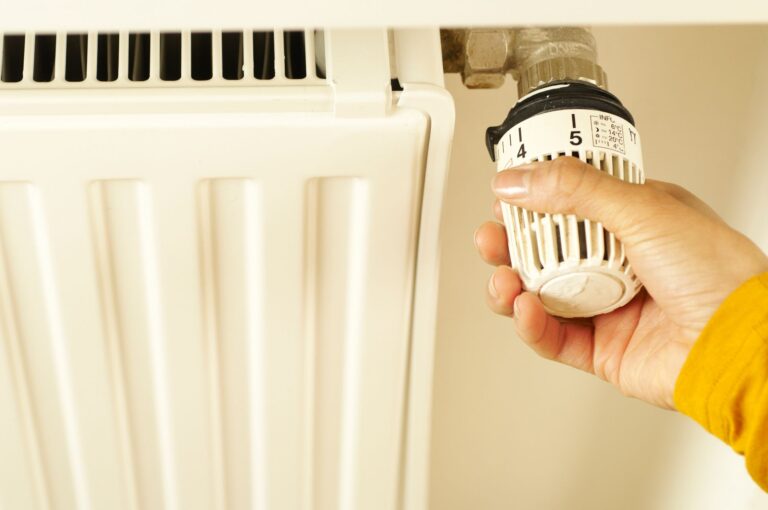

Most folks don’t need a thermostat that doubles as a sci-fi control panel. You want something that holds a steady temperature, doesn’t fight you during setup, and quietly does its job through a cold snap or a muggy August week. The “average” thermostat market sits in a comfortable middle: dependable wall units with backlit displays, basic scheduling for those who want it, and a couple of smart options for folks ready to step into app control.
The list below leans into that middle. You’ll see straightforward single-stage dials, a few multi-stage programmable picks for gas systems with two-stage furnaces, and two learning thermostats for anyone who’d rather their heating and cooling adapt on its own. I’ve grouped them by what kind of system you actually have at home, because nothing matters more than matching the wiring to the wall plate.
A Closer Look At The Lineup
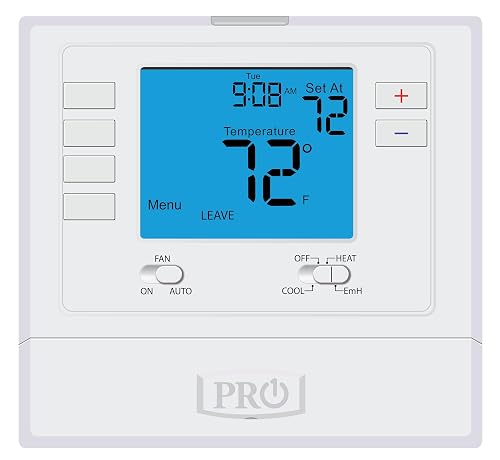
PRO1 T725 Heat Pump/Conventional Programmable Digital Wall Thermostat

PRO1 T771 Single Stage Non-Programmable Wall Thermostat
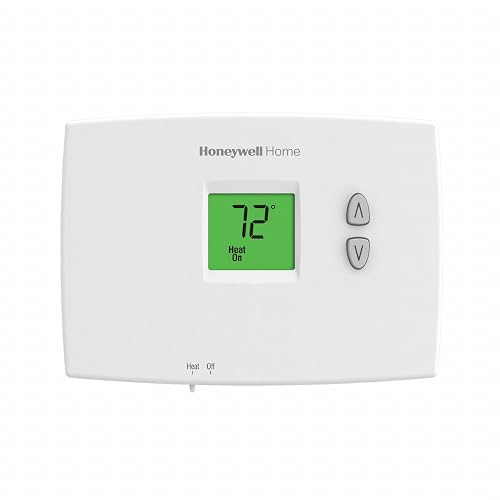
Honeywell TH1100DH1004 Horizontal PRO 1000 Non-Programmable Thermostat
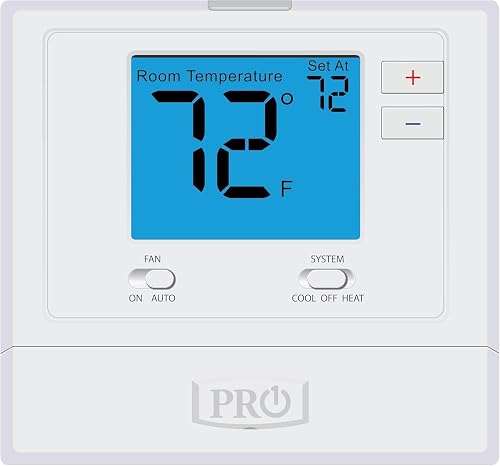
PRO1 T701 Single Stage Non-Programmable Wall Thermostat

PRO1 T715 Multi-Stage Programmable Gas Thermostat
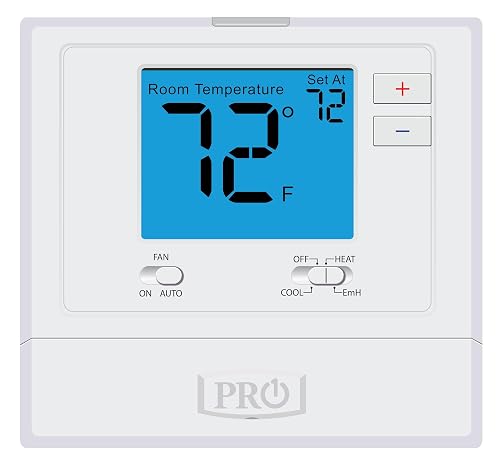
PRO1 T721 Non-Programmable Wall Thermostat

White-Rodgers Single Stage Non-Programmable Thermostat, 1E78-144

PRO1 T805 Single Stage Programmable Wall Thermostat
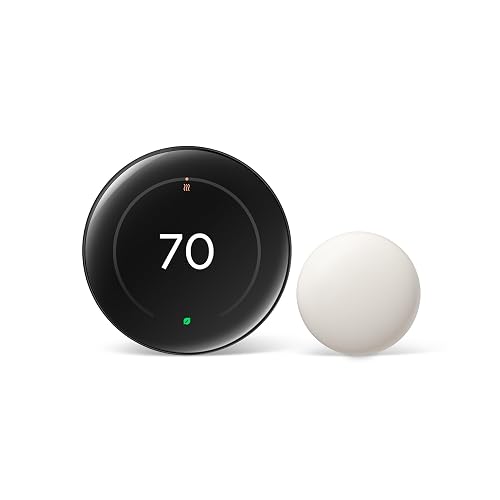
Google Nest Learning Thermostat (4th gen) with Temperature Sensor
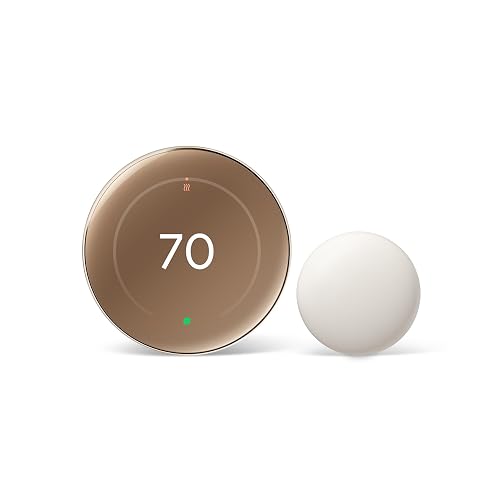
Google Nest Learning Thermostat (4th Gen, 2024) Polished Gold
More On The Choices That Made The List
The PRO1 T725 earns the top spot because it does something most wall thermostats avoid: it speaks both languages. Homes that run a heat pump with a backup strip can wire this in without a second trip to the hardware store, and conventional gas or electric systems fit the same board. For owners who aren’t 100% sure what their handler does, that flexibility removes a real headache.
A 4 sq. in. blue backlit screen shows the schedule mode at a glance, and 7-day or 5/1/1 programmability (the latter means five weekdays plus a separate Saturday and Sunday schedule) lets you build a routine that matches a working week. Unlike the simpler PRO1 T701 further down, this one actually remembers when you leave the house.
Key Advantages
- Handles 2 heat/1 cool heat pump and 1 heat/1 cool conventional setups from a single wall unit
- 7-day scheduling with multiple daily setpoints fits a rotating work schedule
- Backlit display stays readable in dim hallways and basements
- Programmable or non-programmable modes give you a soft landing if you stop using schedules
- Sits on the proven T700 platform, so replacement parts tend to stay available
Worth Noting
- The menu layout takes an evening to learn, especially if you’ve never programmed a thermostat before
- Battery-backed memory is helpful but you’ll want fresh AA cells on hand for the first winter
Key Specs
Made For
Owners of heat pump systems with backup heat who want real scheduling without paying smart-thermostat prices.
Look Elsewhere When
You only need a basic single-stage wall unit, in which case the PRO1 T701 handles the same wiring with fewer menus.
The PRO1 T771 looks ordinary on the wall, but the setpoint range tells a different story. It runs from 25°F up to 90°F, which sounds extreme until you remember that a workshop or detached garage often needs to hover near freezing when no one’s inside. For hobby spaces and outbuildings, that range matters more than scheduling or a slick screen.
Compared to the PRO1 T701 higher on this list, the T771 trades programmability for that wider low-end swing and keeps the rest simple. A 4 sq. in. blue backlit display handles the readout, and swing adjustment plus calibration (small built-in offsets to fine-tune how the thermostat reads against a separate thermometer) help when the unit sits near a drafty door.
Notable Upsides
- 25°F to 90°F setpoint range covers unheated garage winters and warm attic summers
- Single-stage design keeps wiring clean for simpler 1H/1C conventional systems
- Swing adjustment lets you tune how often the system cycles
Room For Improvement
- No scheduling means you’ll nudge the temperature manually if your routine changes
- Best suited to spaces where you’re walking past the thermostat often
- The wide low-end range is overkill for a conditioned living room
Right Fit For
Garages, sheds, and workshop additions where low-temperature control beats scheduling every day of the week.
Skip It When
You want a bedroom thermostat with weekday/weekend routines, in which case the PRO1 T805 fits that profile better.
The Honeywell TH1100DH1004 keeps things unfussy. The horizontal layout is the first thing you notice, and it makes a real difference in narrow hallways or above a baseboard heater where a tall square thermostat looks awkward. Heat-only operation with dual power (hardwire or battery) means it works in older homes where the C-wire (the common wire that delivers continuous 24V power) was never run.
Setpoint range runs 40°F to 90°F for standard rooms or 35°F to 90°F for garage mode, which gives a low-end margin similar to the PRO1 T771 above. The backlit display reads cleanly in dim basements, and the precise comfort control (within 1°F or 0.5°C) keeps temperatures steady without constant cycling.
Notable Gains
- Horizontal form factor suits narrow wall spots and replaces older rectangular Honeywell units
- Dual power (hardwire or battery) sidesteps the common-wire problem
- Precise comfort control keeps temperatures stable within about 1°F
- Garage mode extends the low setpoint to 35°F
Points To Keep In Mind
- Heat-only, so this won’t run central air conditioning
- No scheduling means manual nudging each season change
Best Suited To
Older homes with hot-water baseboard or boiler heat where the existing wiring is heat-only and a horizontal box looks right.
Where Another Pick Suits Better
If your system handles cooling too, the PRO1 T701 covers both heat and cool from a single wall plate.
The PRO1 T701 is the no-drama option in the lineup. It handles 1 heat/1 cool conventional systems, accepts either gas or electric configurations, and stays out of your way. There’s no schedule to build and no app to forget your password for. For an apartment or a guest room, that simplicity reads as a feature rather than a limitation.
The T701 also adds a glow-in-the-dark light button, which sounds minor until you walk past it at 2 a.m. with a sick kid. The 4 sq. in. blue backlit display is the same panel used across the T700 platform, so you’ll recognize it from the T725 review above. Battery or hardwire power gives you flexibility during install.
The Practical Payoff
- Glow-in-the-dark light button helps in nighttime hallways
- Gas or electric compatibility covers most residential furnaces
- Common 4 sq. in. blue backlit display is easy to read from across the room
- Battery or hardwire install works in older homes without a C-wire
Honest Caveats
- No scheduling means you set it once and forget it, which is also the point
- Single-stage only, so a two-stage furnace won’t get its full efficiency benefit
Who It Suits Best
Renters and homeowners with a basic forced-air furnace who want a set-and-go wall unit without menus.
Swap It Out When
You actually want weekday and weekend setpoints; the PRO1 T725 adds scheduling on the same platform.
The PRO1 T715 steps up where the T701 stops. It supports 2 heat/2 cool systems, which matters in homes with a two-stage gas furnace. Those furnaces run a low fire most of the time and ramp up only on the coldest mornings, so a single-stage thermostat never lets the system stretch its legs. The T715 hands the system back the control it’s been waiting for.
You also get 7-day, 5/1/1, or non-programmable modes, which lets you start with schedules and back off to manual if life gets busy. The glow-in-the-dark light button carries over from the T701, and the same 4 sq. in. blue backlit display keeps the family look across the platform.
What Makes Sense
- 2 heat/2 cool control lets a two-stage furnace run efficiently
- Three programming options (7-day, 5/1/1, or off) match any household rhythm
- Same glow-in-the-dark button as the rest of the T700 lineup
- Battery or hardwire install fits most existing wall wiring
Less-Strong Areas
- Wiring a 2H/2C system is more involved, and mistakes show up as short-cycling equipment
- Heavier feature set means a steeper first-night learning curve
Whose Shelf It Belongs On
Owners of two-stage gas furnaces in moderate climates who want scheduling without crossing into smart-thermostat territory.
Another Choice May Suit
If your furnace is single-stage, the Honeywell TH1100DH1004 handles heat duty more cleanly at a lower complexity.
The PRO1 T721 sits in a useful middle ground. It covers 2 heat/1 cool heat pump systems and 1 heat/1 cool conventional systems, but skips the scheduling that the T725 offers above. For someone whose routine rarely changes and whose heat pump handles the same load winter after winter, that trade-off feels reasonable.
The 4 sq. in. blue backlit display and glow-in-the-dark light button match the rest of the T700 family, so swapping this in over a failed T701 or T725 won’t leave you re-learning the layout. AA battery or hardwire power keeps install flexible.
Useful Strengths
- Dual system compatibility (heat pump or conventional) on one wall plate
- Glow-in-the-dark button for late-night visibility
- Familiar T700 menu layout if you’re upgrading from another PRO1 unit
- AA battery or hardwire install works with older wiring
Small Limitations
- Non-programmable only, so weekend setpoints won’t shift on their own
- Heat pump owners may want the T725 if scheduling matters
Who Should Grab It
Heat pump households that prefer manual setpoint changes and want a no-schedule wall unit without sacrificing system coverage.
Not Your Match When
You run a two-stage furnace, which the PRO1 T715 covers with its 2H/2C wiring.
The White-Rodgers 1E78-144 has been a staple replacement thermostat for years, and it stays in rotation for good reason. It accepts 24-volt and millivolt systems, which covers everything from a modern forced-air furnace to an older gas floor furnace that puts out only a fraction of a volt. Compatibility like that doesn’t come around often at this end of the market.
The non-programmable layout keeps things simple, and the easy-to-read digital display with backlight handles low-light basements without complaint. Compared to the Honeywell TH1100DH1004 earlier on this list, this one adds cooling support and broader voltage compatibility in the same form factor.
Useful Touches
- Compatible with single-stage heating, cooling, and heat pump (without aux) systems
- Works on 24V and millivolt systems, which covers older gas equipment
- Backlit digital display stays legible in dim utility rooms
Trade-Offs
- Not compatible with electric baseboard heat, which limits it in some older homes
- Non-programmable only, so weekday/weekend setpoints need manual adjustment
Perfect Match For
Homeowners replacing a failed wall thermostat on a basic single-stage system who want a proven, no-frills replacement.
Reach For A Different Pick When
You have a heat pump with auxiliary heat strips, where the PRO1 T725 or T721 handles the wiring cleanly.
The PRO1 T805 jumps to the T800 platform, and the most noticeable upgrade is screen real estate. The 7 sq. in. blue backlit display is nearly twice the area of the 4 sq. in. screens on the T700 units reviewed above. For anyone who programs a thermostat by feel or who keeps the display across the room, that extra space changes how often you have to walk over to check the time.
You get 7-day, 5/1/1, or non-programmable modes for 1 heat/1 cool conventional systems, plus the same glow-in-the-dark light button. For an aging parent or anyone with bifocals, this is the pick in the lineup that’s easiest to live with day to day.
Real-World Strengths
- Extra-large 7 sq. in. display reads from across a room
- 7-day, 5/1/1, or non-programmable modes in one unit
- Glow-in-the-dark light button for hallway use at night
- Sits on the T800 platform, which uses a different wall footprint than the T700 series
Some Limits To Know
- Single-stage only, so a 2-stage furnace won’t get full benefit
- The T800 wall plate is wider, so the cutout in older drywall may need a mounting plate or wall patch
Built With In Mind
Households that want a programmable schedule but also need a screen that stays legible from the kitchen or living area.
Where A Sibling Pick Shines
If your system is a 2-stage furnace, the PRO1 T715 covers the heavier wiring at the cost of the bigger screen.
The Nest Learning Thermostat (4th gen) changes the relationship you have with your wall unit. Instead of programming setpoints, you adjust the dial when you’re hot or cold, and the thermostat quietly builds a schedule from those nudges over the following week or two. The included Nest Temperature Sensor (2nd gen) lets a separate room like a nursery pull more weight in the decision, which solves the classic thermostat-too-far-from-the-bedroom problem.
Unlike every wall unit on this list so far, the Obsidian finish and rotating dial put this firmly in the “smart” category. It’s the right pick for someone who wants their heating and cooling to adapt on its own, not for someone who just needs a working wall thermostat after a replacement.
Where It Delivers
- Learning algorithm adjusts to your routine without manual programming
- Included temperature sensor balances comfort across rooms
- Obsidian finish looks like a design object, not a utility part
- Compatible with most 24V heating and cooling systems
Where It May Fall Short
- Requires a C-wire or compatible power adapter in older homes
- Learning phase feels awkward for the first week or two until patterns emerge
- Heavier price tag than any other pick on this list
Quick Facts
Who Will Love This
Smart-home tinkerers and busy households who don’t want to fiddle with weekday/weekend schedules by hand.
Consider Something Else When
You live in an older home without a C-wire and don’t want to run a new wire or install an adapter.
The Polished Gold Nest Learning Thermostat (4th Gen, 2024) is essentially the same brain as the Obsidian unit reviewed just above, dressed up in a finish that pops on a pale wall. For homeowners matching brass hardware or warm wood tones, the color shift is the deciding factor between these two Nest options.
Voice assistant compatibility with Alexa, Apple HomeKit, and Google Home gives this pick broader smart-home reach than most wall thermostats. The included Nest Temperature Sensor keeps multi-room balancing in play, just like its sibling.
Well-Handled Touches
- Polished Gold finish complements warm-tone interiors
- Works with Alexa, Apple HomeKit, and Google Home apps
- Energy-saving learning routine trims heating and cooling runtime
- Includes the Nest Temperature Sensor for second-room readings
Practical Considerations
- Same C-wire requirement as the Obsidian Nest above
- Color availability can vary, so check current options at the listing
Who Should Grab It
Connected households who want the smart features and prefer a warmer metallic finish over darker Obsidian or stainless.
A Better Fit Elsewhere
If you’d rather keep the wall unit traditional and save the budget for furnace work, the PRO1 T701 delivers honest day-to-day control.
What To Weigh Before Choosing An Average Thermostat
Match The Thermostat To Your System First
Before looking at screens or finishes, pull the cover off your current thermostat and read the wiring letters. A “C” terminal means the system can power a smart thermostat continuously. “Heat pump” or “conventional” labels on the existing wiring will narrow your options quickly. A mismatch here is the single most common reason for short-cycling equipment or a thermostat that won’t turn on at all.
Heat-only homes (older boilers, baseboards) lean toward units like the Honeywell TH1100DH1004. Two-stage furnace homes want the PRO1 T715. Heat pump owners typically choose between the PRO1 T725 (programmable) and the PRO1 T721 (non-programmable) depending on whether they want scheduling.
Decide If Scheduling Actually Helps You
Programmable thermostats save real energy in homes with predictable routines, but they add friction in homes where someone’s always home. A non-programmable PRO1 T701 may waste less effort than an unused weekly schedule on a T725, because the latter sits at a default temperature most of the time anyway.
For households whose routines swing wildly week to week, the Nest learning models adapt without forcing anyone to set a schedule. The trade-off is a learning curve and a C-wire requirement.
Check For A C-Wire If You’re Going Smart
The Nest Learning Thermostat and similar smart units need continuous power, which usually comes from a C-wire. Older homes often lack this wire, and pulling a new one through a finished wall isn’t always practical. Power adapters exist but add a step to the install. Before clicking through to a smart pick, confirm your current wiring includes the C terminal.
Key Considerations Across These Picks
Wrong Turns To Avoid
The most common slip-up is buying a thermostat that matches the wrong system stage. A single-stage thermostat on a two-stage furnace leaves the high stage permanently unused, which can leave rooms uneven on cold nights. Equally common: skipping the C-wire check before buying a smart model, then discovering the existing wiring can’t power it.
Another easy mistake is choosing a programmable model and never setting the schedule. In that case, the thermostat sits in hold mode at one temperature all week, which gives you none of the savings and all of the complexity. Honest call: pick the simplest thermostat that fits your routine.
Why Top Tier Costs More
Higher-tier thermostats earn their price with wider system compatibility, larger displays, and scheduling that actually fits a working week. The Nest Learning Thermostat adds app control, learning behavior, and voice-assistant compatibility on top of that.
The upgrade is worth it for homes with multi-stage equipment, predictable but shifting routines, or smart-home hubs already in place. For a small apartment with a basic furnace, the extra features tend to sit unused, and a dependable single-stage unit handles the job for less.
Frequently Asked Questions
Do I need a C-wire for a programmable wall thermostat?
Most non-smart programmable thermostats run on AA battery power, so a C-wire isn’t required. Smart thermostats like the Nest Learning Thermostat typically need continuous 24V power, which usually comes from a C-wire or a compatible adapter.
What’s the difference between 1H/1C and 2H/2C?
1H/1C means one stage of heating and one stage of cooling, which fits basic forced-air systems. 2H/2C means two stages each, allowing a furnace to run on low fire most of the time and ramp up only on cold mornings, and a two-stage air conditioner to do the same in summer.
Can I install one of these myself?
Most wall thermostats in this list use low-voltage wiring and are common DIY projects, but always turn off the breaker at the panel first and take a photo of the existing wiring before disconnecting anything. Heat pump systems and multi-stage equipment often benefit from a professional installer.
How wide should the temperature swing be?
A swing setting (the gap between when the system turns on and turns off) of 1°F to 2°F is typical for residential comfort. Smaller swings run the system more often, while larger swings save energy but let temperatures drift further from the setpoint before correcting.
Will a smart thermostat actually save money?
Smart thermostats save the most in homes with predictable schedules that would otherwise be left at one temperature all day. In homes where someone is always adjusting things manually, the savings tend to be smaller because there’s less routine to optimize.
The Takeaway
The right average thermostat is the one that fits your wiring and your routine, not the one with the biggest screen. Start with system stage and C-wire availability, then decide whether scheduling or learning behavior actually fits your week. From there, the picks above cover nearly every common residential setup, from a workshop in the back yard to a connected living room with a Nest dial.