

Picking a wall thermostat for an older HVAC system or a specialty space can feel surprisingly tricky. Compatibility matters more than fancy screens, and a misstep on voltage or staging means a return trip to the hardware store. The picks below cover single-stage, multi-stage, and heat pump setups, with a focus on the Braeburn models that handle AC duty reliably, plus a few strong neighbors worth considering if your system matches their specs.
The Essentials At A Glance
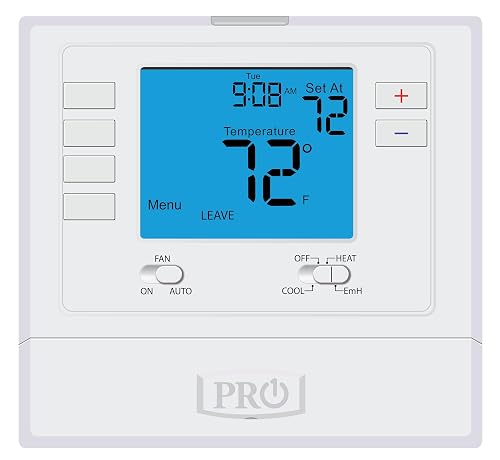
PRO1 T725 Heat Pump/Conventional Programmable Digital Wall Thermostat

PRO1 T771 Single Stage Non-Programmable Wall Thermostat
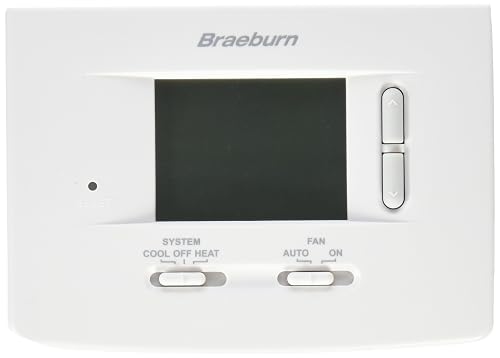
Braeburn 1020 Thermostat, Non-Programmable, 1H/1C

Braeburn 1020NC Builder Series Non-Programmable Thermostat
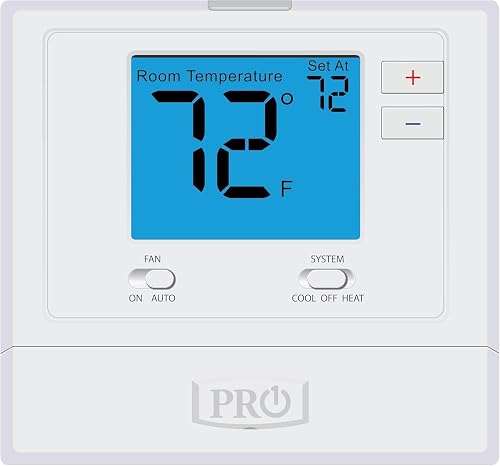
PRO1 T701 Single Stage Non-Programmable Wall Thermostat

PRO1 T715 Multi-Stage Programmable Gas Thermostat
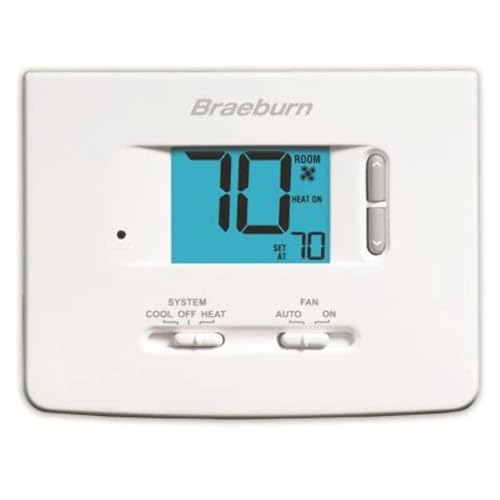
Braeburn 1020NC Thermostat, Non-Programmable, 1H/1C
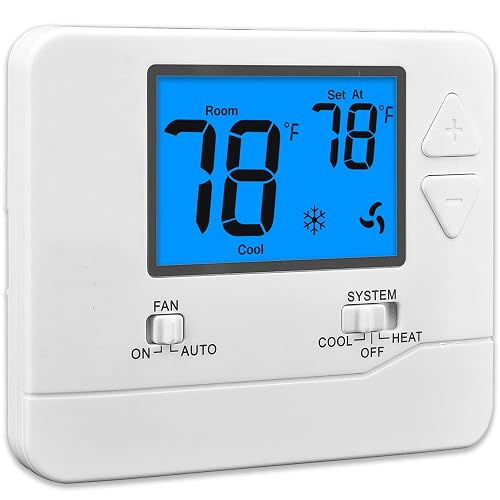
Suuwer Non-Programmable Thermostat for Home
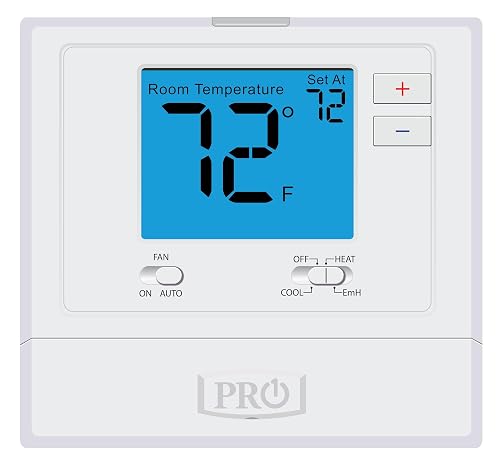
PRO1 T721 Non-Programmable Wall Thermostat, 2H/1C

PRO1 T805 Single Stage Programmable Wall Thermostat
More On The Choices That Made The List
The PRO1 T725 lives in that useful middle ground where flexibility and simplicity meet. It handles 2 heat/1 cool heat pump systems and 1 heat/1 cool conventional systems on the same unit, which matters if your home mixes equipment or you’re replacing an aging stat and aren’t sure what the wiring closet actually contains.
Programmability covers 7-day or 5/1/1 schedules (separate weekday, Saturday, and Sunday blocks), and the 4 sq. in. blue backlit screen keeps the schedule mode readable from across a hallway. For households that want weekday energy savings without giving up weekend comfort, it lands in a sweet spot the simpler picks below can’t match.
Useful Touches
- Dual heat pump and conventional compatibility removes the guesswork when you don’t know the system type
- 7-day and 5/1/1 scheduling give you weekday savings with separate weekend comfort blocks
- Large blue backlit display stays readable in dim hallways and at night
- Sits on the T700 platform, so the menu logic stays consistent with other PRO1 thermostats on this list
Things To Consider
- Programmability is wasted if you never set a schedule, and the default hold mode can confuse first-time users
- Multi-stage wiring means installation is slightly less forgiving than a single-stage swap
Key Specs
Best Suited To
Homeowners with a heat pump or mixed HVAC system who actually want to set a weekly schedule.
Reach For A Different Pick When
The Braeburn 1020 Thermostat is a better fit for rental properties where programmability adds complexity a tenant won’t use.
The T771 is the specialist of the group. Where most living-area thermostats top out around 45°F at the low end, this one stretches down to 25°F, which is exactly what you need in a garage workshop, a greenhouse, or a shed where you want freeze protection but not full comfort heating.
It runs on a single-stage conventional 1 heat/1 cool system and skips the programming menus entirely, so installation is quick and the controls are obvious. For spaces that don’t need weekly schedules but do need reliable wide-range temperature control, the T771 earns its spot.
Positive Points
- Setpoint range down to 25°F covers unheated outbuildings needing freeze protection
- Non-programmable layout means zero learning curve for occasional users
- 4 sq. in. blue backlit display is easy to read in low shop lighting
Worth Noting
- Single-stage conventional only, so it won’t drive a heat pump or multi-stage system
- Lacks scheduling, which makes it a poor fit for primary living spaces
Who It Suits Best
Owners outfitting a detached garage, workshop, or shed who want freeze protection without programmability.
Skip It When
The PRO1 T701 Single Stage Non-Programmable Wall Thermostat is the better fit for main living areas where the wider setpoint range is unnecessary.
The Braeburn 1020 is the kind of stat that just gets out of your way. Owners commonly describe it as set-and-forget hardware, and the spec sheet backs that up: single stage 1 heat/1 cool, hardwire or battery powered, with a permanent memory that holds your settings through power loss.
Compatibility runs impressively wide, including single-stage heat pumps and millivolt heating systems, which is why it shows up in so many older homes. The 3 sq. in. display is on the smaller side compared to the PRO1 picks above, but the bright blue backlight makes it readable from across most rooms.
Positive Takeaways
- Wide system compatibility covers gas, oil, electric, single-stage heat pumps, and millivolt setups
- Permanent memory retains settings through battery or power loss
- Hardwire or two AA battery power offers flexible installation
- Adjustable temperature limits prevent accidental extreme setpoints
Trade Offs
- Smaller 3 sq. in. display is harder to read at a distance than the 4-inch screens on PRO1 models
- No scheduling means no automatic setback for energy savings
Right Fit For
Rental property owners and landlords who want a reliable, hard-to-misuse stat that tenants can adjust but won’t accidentally reprogram.
Look Elsewhere When
The PRO1 T725 Heat Pump/Conventional Programmable Digital Wall Thermostat makes more sense in a primary residence where weekly scheduling matters.
The 1020NC is what builders reach for when they want Braeburn quality at a price that keeps margins healthy. It’s a non-programmable single-stage stat for conventional or heat pump systems, and the “NC” version adds a layer of protection features that the standard 1020 skips.
Compressor short cycle protection, separate O and B terminals for heat pump changeover valves, ESD guard electronics, and a front access reset button all point to a stat designed to survive a decade on a hallway wall. The 2 sq. in. display is the smallest in the Braeburn lineup here, but the bright blue backlight keeps it functional.
The Case For It
- Compressor short cycle protection extends the life of outdoor AC equipment
- Separate O and B terminals simplify heat pump changeover wiring
- ESD guard circuitry and a front reset button help with field serviceability
- Bilingual English/Spanish packaging suits multi-trade job sites
Honest Caveats
- 2 sq. in. display is noticeably smaller than the 3-inch screen on the related 1020
- Builder-grade build means fewer end-user comfort features like temperature limits on the front panel
Made For
New construction and remodel projects where a reliable single-stage stat needs to handle heat pump changeover without fuss.
A Better Fit Elsewhere
The Braeburn 1020 Thermostat is a stronger choice for finished living spaces where the larger display and temperature limits matter more than service-friendly internals.
The T701 is what most people picture when they imagine a no-fuss wall thermostat for a main living area. It’s a single-stage conventional 1 heat/1 cool unit with the larger 4 sq. in. blue backlit screen, and a glow-in-the-dark light button for finding the display in a dark hallway at 2 a.m.
Unlike the Braeburn 1020 above, the T701 skips compatibility with millivolt systems, so it’s a strictly conventional pick. For gas or electric forced-air homes, that trade-off is invisible, and you get a cleaner, larger display in return.
Where It Excels
- 4 sq. in. blue backlit display is comfortable to read from across a living room
- Glow-in-the-dark light button helps in power-outage conditions
- Gas or electric configurable fan switch covers most conventional setups
- Non-programmable layout avoids accidental schedule wipes
Points To Note
- Conventional only, so it won’t drive millivolt or heat pump systems
- No scheduling means manual setback is on you
Key Specs
Who Should Grab It
Homeowners with a standard gas or electric forced-air system who want a big, readable display without programming menus.
Not Your Match When
The PRO1 T721 Non-Programmable Wall Thermostat, 2H/1C handles heat pump households where the T701 falls short.
The T715 is the multi-stage answer in the PRO1 lineup. Where the T701 handles a single-stage furnace, this one drives 2 heat/2 cool gas systems, which means two-stage heating and two-stage cooling, common in higher-efficiency gas furnaces and modern AC condensers.
Schedule options run 7-day, 5/1/1, or fully non-programmable, so you can match the menu to the household rather than the other way around. Owners commonly report that the glow-in-the-dark light button is a small but appreciated touch on the same platform as the T701.
What Earns Its Place
- Drives 2 heat/2 cool systems for higher-efficiency two-stage HVAC equipment
- 7-day, 5/1/1, or non-programmable modes let you scale scheduling to your routine
- 4 sq. in. blue backlit display with glow-in-the-dark light button
- Battery or hardwire power accommodates different wiring closets
Soft Spots
- Overkill for single-stage homes, where the T701 is a more sensible match
- Two-stage wiring can be intimidating for first-time installers
Feature Snapshot
The Right Fit
Owners of two-stage gas furnaces who want the comfort and efficiency gains that come with proper staging control.
Another Choice May Suit
The PRO1 T701 Single Stage Non-Programmable Wall Thermostat makes more sense in a single-stage home where multi-stage hardware would go unused.
The 1020NC under the B00ECC4W3I listing is the more compact sibling of the 1020. It measures 3.62 inches high by 4.72 inches wide, which lands it in the smaller end of this roundup, useful when you’re replacing a stat on a narrow wall plate or in a tight hallway.
It carries the same broad compatibility as the 1020, covering single-stage gas, oil, electric, single-stage heat pumps, and 250Mv to 750Mv millivolt heating systems. For older homes with millivolt baseboard or wall heaters, that compatibility is the main reason to pick it over a stricter conventional-only stat.
What Pays Off
- Compact 3.62 by 4.72 inch footprint fits tight wall locations
- Millivolt compatibility opens it up to older heating systems
- Hardwire or two AA battery power offers install flexibility
- Adjustable temperature limits protect against accidental extremes
Practical Considerations
- 2 sq. in. display is the smallest in this roundup
- Non-programmable, so energy-conscious schedulers will want to look elsewhere
Whose Shelf It Belongs On
Owners of older homes with millivolt heating systems who need a slim, compatible, set-and-forget stat.
Swap It Out When
The PRO1 T701 Single Stage Non-Programmable Wall Thermostat is the better match when a larger 4 sq. in. display is the priority.
The Suuwer is the budget-tier option in this roundup, and it earns that spot by doing the basics without overreaching. It’s a non-programmable 1 heat/1 cool conventional stat with a blue backlight, designed for 2-to-5 wire installations, which covers the bulk of simple single-stage systems.
It lacks the millivolt compatibility of the Braeburn picks above, so this one is firmly for conventional forced-air homes. For light-use spaces, guest rooms, or a quick replacement on a tight budget, it lands in a useful spot.
What Stands Out
- 2-to-5 wire compatibility covers most basic conventional installations
- Blue backlight keeps the display visible at night
- Non-programmable layout means no schedule to maintain
Less Ideal Details
- Conventional only, with no millivolt or heat pump support
- Installation notes in the listing warn that inexperienced installers should verify their existing base wiring first
Perfect Match For
Homeowners with a basic conventional HVAC system who want a simple, no-frills replacement on a tight budget.
Where A Sibling Pick Shines
The Braeburn 1020 Thermostat is a stronger fit when millivolt or single-stage heat pump compatibility is required.
The T721 is the heat pump answer in the non-programmable PRO1 lineup. It drives 2 heat/1 cool heat pump systems or 1 heat/1 cool conventional systems, so it’s the right unit for a heat pump household that doesn’t want to bother with weekly schedules.
The 4 sq. in. blue backlit display, glow-in-the-dark light button, and AA battery or hardwire power mirror the rest of the T700 family. If you’ve handled a T701 installation, the T721 will feel familiar.
Reasons It Performs
- Heat pump and conventional dual compatibility in one non-programmable stat
- 4 sq. in. blue backlit display is consistent with the T700 platform
- AA battery or hardwire power for flexible installation
Possible Compromises
- No scheduling means manual setback for energy savings
- Not multi-stage, so two-stage heat pumps will run only one stage
Quick Facts
Built With In Mind
Heat pump owners who prefer the simplicity of a non-programmable wall stat over weekly scheduling.
Where Another Pick Suits Better
The PRO1 T725 Heat Pump/Conventional Programmable Digital Wall Thermostat is the better match when you actually want a 7-day or 5/1/1 schedule.
The T805 is the big-screen conventional programmable in the PRO1 catalog. The headline feature is a 7 sq. in. blue backlit display, which is roughly 75 percent larger than the 4 sq. in. screens on the T700-series picks above, and a real advantage in a long living room or for anyone who squints at smaller stats.
It supports 7-day, 5/1/1, or non-programmable modes, so a household that initially wants scheduling can dial back to manual control if the routine changes. For conventional 1 heat/1 cool systems where screen real estate matters, it pulls ahead of the T725.
The Value In It
- 7 sq. in. display is the largest in this roundup for long-distance readability
- 7-day, 5/1/1, or non-programmable modes scale to your routine
- Glow-in-the-dark light button matches the rest of the T800 family
Small Caveats
- Conventional only, with no heat pump or millivolt support
- Larger display adds a bit of wall presence compared to compact stats
Spec Overview
Who Will Love This
Conventional-system homeowners who want the largest display on the list and the option of weekly scheduling.
Consider Something Else When
The PRO1 T715 Multi-Stage Programmable Gas Thermostat is the right call for two-stage gas equipment that the T805 can’t drive.
What Matters Most Before Choosing Braeburn AC Thermostats
Matching System Type To The Stat
Start by identifying the system in your home: conventional forced-air, heat pump, or millivolt heating. A “1 heat/1 cool” label refers to a single heating stage and a single cooling stage, which is the most common setup. A “2 heat/1 cool heat pump” stat like the PRO1 T721 covers a heat pump with auxiliary heat, which is a different wiring layout. Picking the wrong category is the fastest way to a return trip, so verify the equipment label before anything else.
Deciding Between Programmable And Non-Programmable
Programmable thermostats, meaning units that follow a weekly heating and cooling schedule, deliver real savings when a household keeps a consistent weekday pattern. Non-programmable stats like the Braeburn 1020 or PRO1 T701 are simpler, harder to misuse, and a better match for rentals, guest rooms, and less predictable schedules. The honest read is that a programmable stat does no good if you never set the schedule.
Display, Wiring, And Power Options
A larger display, measured in square inches of visible screen, is a real upgrade for anyone who reads the stat from across a room. Wiring count matters too: most of these stats run on 2 to 5 wires, but millivolt and multi-stage systems add specific terminal requirements. Hardwire with a C-wire (the common wire that delivers continuous 24V power) gives steady power, while battery operation avoids the wiring hunt but trades you annual battery swaps.
Key Considerations Across These Picks
Pitfalls Shoppers Hit
The most common mistake is buying a thermostat that doesn’t match the staging of the HVAC equipment. Single-stage stats on multi-stage systems leave capacity on the table, and multi-stage stats on single-stage systems can confuse simpler furnaces. Another trap is ignoring millivolt compatibility: older baseboard and wall heaters run on very low voltage, and a conventional-only stat simply won’t work on them. Always verify the existing wiring before ordering, and photograph the terminals if anything looks unfamiliar.
What Separates Premium From Basic
The jump from a non-programmable stat to a programmable one isn’t just about schedules, it’s also about display size, platform consistency, and the protection circuitry behind the screen. PRO1’s T800 platform adds a 7 sq. in. display and refined menu logic, while Braeburn’s 1020 series layers in compressor short cycle protection and millivolt compatibility. The extra spend is worth it for primary living areas where you actually use the features, and harder to justify in a guest room or garage where simplicity wins.
Frequently Asked Questions
Are Braeburn AC thermostats compatible with heat pumps?
Several Braeburn models, including the 1020, 1020NC, and the related PRO1 T721 and T725, support single-stage heat pumps. The key is matching the stat’s staging labels, “1 heat/1 cool heat pump” or “2 heat/1 cool heat pump”, to the equipment in your home.
Can a non-programmable thermostat save on energy bills?
Non-programmable stats don’t run automatic setbacks, so they don’t deliver the schedule-driven savings a programmable model can. They still help by replacing older manual thermostats with tighter temperature control and adjustable setpoint limits.
How many wires do these thermostats need?
Most of the conventional picks in this roundup run on 2 to 5 wires, which covers standard single-stage systems. Heat pump and millivolt setups add specific terminals, so check the installation diagram against the wires in your wall before ordering.
What is millivolt heating and why does it matter?
Millivolt heating uses very low voltage (250 to 750 millivolts, far below standard 24V HVAC wiring) and is common in older gas fireplaces and baseboard heaters. A thermostat must explicitly list millivolt compatibility, like the Braeburn 1020 and 1020NC, to work safely on those systems.
Should I choose a programmable or non-programmable thermostat?
Programmable thermostats reward consistent weekday routines with automatic setbacks. Non-programmable models are simpler, harder to misuse, and a better fit for rentals, guest rooms, and households that prefer manual control.
The Takeaway
The right thermostat is the one that matches your system staging, wiring count, and daily routine more than the one with the most features. For conventional forced-air homes, the PRO1 T701 and Braeburn 1020 cover the basics cleanly. Heat pump households get more flexibility from the PRO1 T721 or T725, and two-stage gas systems benefit from the T715. Match the stat to the equipment first, then pick the display and scheduling features that fit how you actually live.