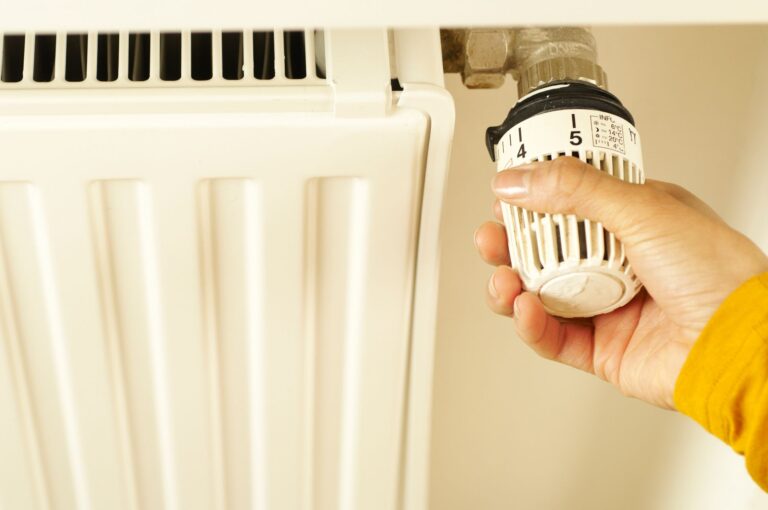

Replacing a wall thermostat is one of those jobs that feels small until you stand in the hardware aisle staring at a wall of options. Climate systems vary widely, wiring labels are confusing, and the wrong pick simply will not work with your setup. This roundup gathers eight solid Climatemaster and PRO1 IAQ wall thermostats and one compatible OEM sensor, each matched to a specific system type and comfort need, so you spend less time decoding specs and more time enjoying steady temperatures at home.
The Main Contenders
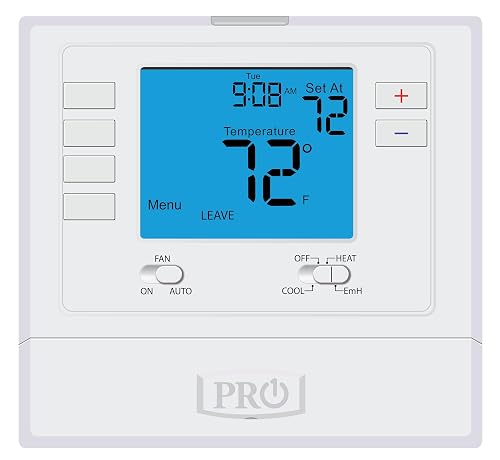
PRO1 T725 Heat Pump/Conventional Programmable Digital Wall Thermostat

PRO1 T771 Single Stage Non-Programmable Wall Thermostat
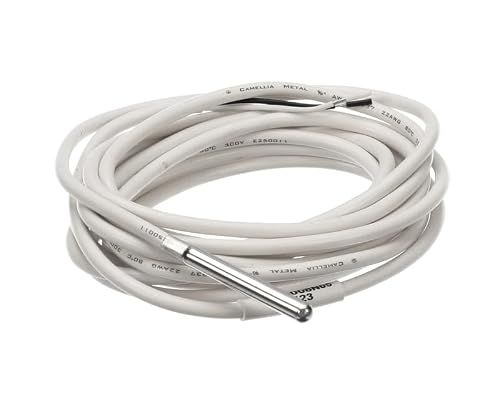
Climatemaster 17B0008N05 OEM Thermistor Sensor (10K, White)
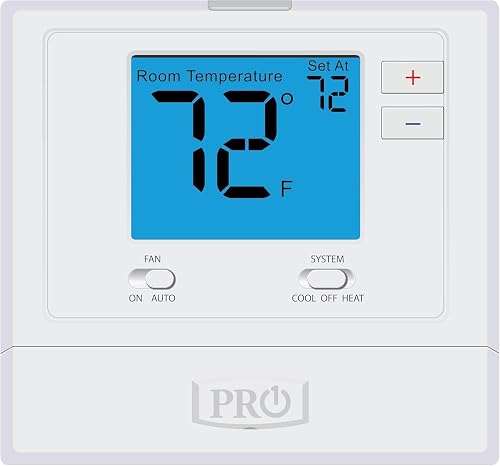
PRO1 T701 Single Stage Non-Programmable Wall Thermostat

PRO1 T715 Multi-Stage Programmable Gas Thermostat
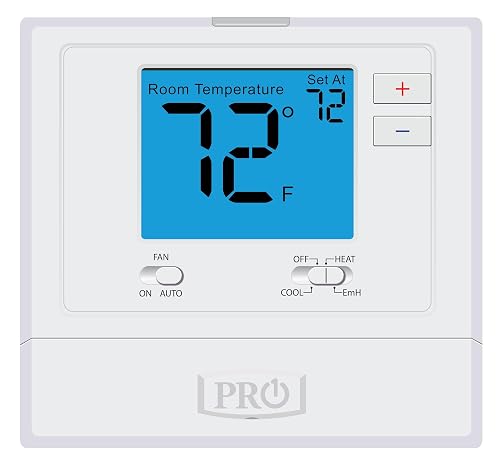
PRO1 T721 Non-Programmable Wall Thermostat

CLIMATEMASTER ATP32U03 24V Digital Programmable Thermostat

PRO1 T805 Single Stage Programmable Wall Thermostat
Taking A Closer Look At The Options
The PRO1 T725 sits in a comfortable middle ground for households that want scheduling without a steep learning curve. It covers 2 heat/1 cool heat pump setups and 1 heat/1 cool conventional systems, which means most homeowners with a heat pump paired with backup strips can stop worrying about compatibility. A 4 sq. in. blue backlit screen keeps the wake, leave, return, and sleep schedule visible at a glance.
For mixed homes, this one earns its spot. The 7-day or 5/1/1 scheduling (where 5/1/1 means weekdays plus Saturday and Sunday set independently) lets you keep weekdays tight and loosen things up for the weekend without redoing the entire program. Unlike the simpler T701 covered later, this one lets you shape a real schedule that matches the way your household actually moves.
A Strong Showing
- Compatible with both heat pump and conventional systems, which removes the “which one do I have” guesswork
- 7-day or 5/1/1 scheduling supports genuine weekday-versus-weekend routines
- 4 sq. in. blue backlit display is comfortable to read in dim hallways at night
- Part of the established T700 platform, so installation manuals and wiring diagrams are easy to find
Things To Consider
- No touchscreen: the button-driven interface can feel dated if you are used to smartphone controls
- Requires a common wire (the C-wire carries continuous 24V power from the furnace to the thermostat) on many installations, which older homes sometimes lack
Key Specs
Made For
Owners of heat pump homes with backup electric strips who want a set-and-forget weekly schedule without paying smart-thermostat prices.
Look Elsewhere When
You only run a single-stage conventional furnace and do not need a weekly schedule, in which case the simpler PRO1 T701 covers the same basics with fewer buttons.
Garages, basements, workshops, and detached sheds rarely need fancy scheduling, but they often need a thermostat that can hold unusually low temperatures without complaining. The PRO1 T771 leans into that exact use case with a setpoint range stretching from 25°F up to 90°F, which means it can protect a garage full of paint cans through a cold snap just as easily as it keeps a workbench comfortable in summer.
It is a 1 heat/1 cool conventional unit, so it pairs naturally with simple gas furnaces, electric baseboard setups, or single-stage cooling. Swing adjustment and calibration controls give you a say in how often the system cycles, and the 4 sq. in. blue backlit display remains readable across a dusty shop.
What Works In Its Favor
- Wide 25°F to 90°F setpoint range handles cold storage and high-heat needs alike
- Non-programmable layout removes accidental schedule changes from visiting relatives
- Swing and calibration adjustments help fine-tune short cycling in oversized equipment
Points To Note
- No weekly programming, which is a limitation in main living spaces
- Conventional only: it will not communicate correctly with multi-stage or heat pump systems
- Owners commonly report the button labels can wear after several years of heavy shop use
Right Fit For
Homeowners outfitting a detached garage, pole barn, or workshop who need reliable low-temperature control without paying for features that will never get used.
Consider Something Else When
You want a primary living-area thermostat with scheduling, in which case the PRO1 T805 offers a much larger display and 7-day programmability.
This is the only item on the list that is not a wall thermostat, and that is precisely the point. The Climatemaster 17B0008N05 is a genuine OEM thermistor (a resistor whose resistance changes predictably with temperature) probe designed to feed accurate temperature readings back to a ClimateMaster geothermal or heat pump system. The NTC 10K rating (meaning resistance drops as temperature rises, with 10K ohms at a standard reference point) matches the original wiring spec, which matters more than it sounds when a control board is checking readings every few seconds.
Owners chasing a strange temperature swing or an open-circuit fault code often discover the culprit is a tired sensor rather than the board itself. Compared to the wall thermostats reviewed here, this is a repair part, not a comfort upgrade, but it is the right tool when your system is throwing sensor-related codes.
Good Reasons To Consider
- Genuine OEM part, so calibration curves match ClimateMaster control boards without reconfiguration
- 10K NTC resistance rating keeps replacement readings consistent with the original sensor
- Compact white housing fits common wire-routing paths inside indoor units
Room For Improvement
- Requires basic wiring comfort and the right crimp connectors to install cleanly
- Diagnostic value depends on your ability to read the fault code list for your specific ClimateMaster model
Feature Snapshot
Who Should Grab It
ClimateMaster system owners who have already isolated a faulty air or water temperature sensor and need a direct replacement that matches the original part spec.
Skip It When
You are looking for a wall-mounted control upgrade instead of an internal probe swap, in which case the PRO1 T725 or PRO1 T805 will be a better fit.
For homes running a simple single-stage furnace and air conditioner, the PRO1 T701 is the thermostat you buy when “set the temperature and walk away” is the entire job description. It mounts to the same T700 platform as the programmable models reviewed earlier, so the wiring layout and the 4 sq. in. blue backlit display will look familiar to anyone who has held a PRO1 unit before.
The glow-in-the-dark light button earns its keep in hallways and bedrooms where fumbling for a switch at 2 a.m. is the norm. Unlike the T771 covered above, this one is tuned for living-area temperatures rather than garage extremes, so its internal range focuses on typical comfort settings rather than low-temp protection.
Positive Points
- Glow-in-the-dark light button helps in midnight hallway adjustments
- Same T700 platform footprint as the programmable models, simplifying replacements
- Supports both gas and electric conventional systems for flexible install
Honest Caveats
- No scheduling means you adjust the temperature manually for sleep and wake routines
- Conventional systems only: it will not operate a heat pump
Best Suited To
First-time installers and downsizers who want reliable single-stage control without learning a programming menu.
A Better Fit Elsewhere
Heat pump owners will get more from the PRO1 T721, which covers 2 heat/1 cool heat pump configurations in a similarly simple package.
Two-stage gas furnaces and matching two-stage air conditioners need a thermostat that can actually talk to both stages, and the PRO1 T715 is built for exactly that job. It supports 2 heat/2 cool conventional systems and gives you 7-day, 5/1/1, or non-programmable modes, so a household that decides to skip scheduling later can simply turn programming off without swapping hardware.
Like the T701, it carries the glow-in-the-dark light button, but the bigger story is the multi-stage coordination. When the morning is mild, only the first stage runs, which keeps the blower quieter and reduces temperature swings compared to a single-stage call for heat.
Practical Pluses
- 2 heat/2 cool staging reduces temperature swings and short cycling in two-stage equipment
- Three scheduling modes (7-day, 5/1/1, non-programmable) cover every preference
- Battery or hardwired power options simplify retrofits in older homes
Trade Offs
- More wiring terminals to land correctly, so installation takes longer for first-timers
- You pay for multi-stage capability you may not need if your furnace is single-stage
Quick Facts
Whose Shelf It Belongs On
Two-stage gas furnace owners who want quieter operation and steadier temperatures, plus the option to schedule or run the system manually.
Another Choice May Suit
Heat pump homes should look at the PRO1 T725 instead, since the T715 is intended for conventional gas systems.
The PRO1 T721 is a quiet overachiever in this roundup: a non-programmable wall unit that nevertheless covers 2 heat/1 cool heat pump systems or 1 heat/1 cool conventional systems. For an add-on room, a converted attic, or a small business suite where nobody wants to fiddle with a schedule, that flexibility removes a lot of “wait, which model do I need” hesitation.
It rides on the T700 platform with the same 4 sq. in. blue backlit display and glow-in-the-dark light button the other PRO1 units share, so spare parts and trim plates stay consistent. Power options include AA battery or hardwired, which helps in spaces where running a new common wire would mean opening up the wall.
Advantages To Know
- Heat pump and conventional compatibility in one unit reduces ordering errors
- Battery or hardwired power accommodates older wiring situations
- Glow-in-the-dark light button helps in low-visibility spaces
Soft Spots
- No scheduling, so comfort adjustments are manual
- Limited to 2 heat/1 cool staging, so larger two-stage systems need the T715 instead
Right Fit For
Unfinished basements, converted attics, and accessory dwelling units where simple manual control is preferred over a weekly program.
Reach For A Different Pick When
You want a primary living-area thermostat with a real schedule, which is where the PRO1 T805 earns its premium price.
The CLIMATEMASTER ATP32U03 is the original-style 24-volt digital control that many older ClimateMaster heat pump installations shipped with. It supports heat plus two cooling stages and is programmable, which keeps the comfort schedule alive when an aging control finally gives up. For homeowners trying to match an exact replacement without re-engineering the wall cavity, this model keeps the wiring layout familiar.
It is not a touchscreen, and the key-driven interface feels industrial by today’s standards. But for a system that was wired around this control originally, that simplicity is the point, and swapping in a generic smart thermostat can occasionally confuse legacy staging logic.
A Favorable Mix
- Heat plus 2-cool staging fits many legacy ClimateMaster heat pump configurations
- 24-volt key-driven control is straightforward to wire into existing ClimateMaster setups
- Programmable scheduling maintains the daily routines the original unit supported
Practical Considerations
- Key-driven interface feels dated next to the PRO1 T725’s modern display
- Best paired with existing ClimateMaster wiring, so it is less flexible for new-construction installs
At A Glance
Built With In Mind
Owners of older ClimateMaster heat pump systems who want a like-for-like replacement without re-engineering the wall box or staging logic.
Swap It Out When
You are wiring a new system from scratch and prefer a larger modern display, in which case the PRO1 T805 gives you a 7 sq. in. screen and similar scheduling.
The PRO1 T805 is the T800-platform upgrade over the smaller PRO1 units reviewed earlier, and the first thing you notice is the display. At roughly 7 sq. in., the blue backlit screen is roomy enough to read from across the living room, which makes a real difference for anyone who squints at smaller digits or wants the temperature visible at a glance.
It is a 1 heat/1 cool conventional thermostat, so it is the right shape for typical gas furnace and central air homes. The glow-in-the-dark light button carries over from the T700 line, which keeps the late-night experience familiar if you are moving up from a T701 or T715.
Useful Strengths
- Extra-large 7 sq. in. display improves readability for low-vision users and across-room glances
- 7-day, 5/1/1, or non-programmable modes keep the interface flexible
- T800 platform supports modern wiring layouts and future accessory add-ons
Minor Gripes
- Conventional systems only: heat pump homes will need the PRO1 T725 instead
- Larger footprint means the wall plate may not cover older paint edges or screw holes
Perfect Match For
Main living areas where the display is the centerpiece and anyone in the household benefits from bigger numbers, whether for vision reasons or pure convenience.
Where A Sibling Pick Shines
Heat pump owners will find the PRO1 T725 a smarter match, since it covers heat pump staging the T805 simply does not support.
What To Weigh Before Choosing a Climatemaster Thermostat
Start with system type. Heat pump homes need a thermostat that explicitly supports 2 heat/1 cool or 2 heat/2 cool staging, while conventional gas or electric homes can choose a simpler single-stage unit. The PRO1 T725 and T715 carry the heat pump and multi-stage banners, while the T701, T771, and T805 are conventional-only by design.
Next, decide whether scheduling actually matters in the room where the thermostat will live. Main living areas reward a 7-day or 5/1/1 program, but a garage or workshop rarely does, which is exactly why the T771 leans into a wide setpoint range instead of a schedule.
Finally, look at your wiring. A common wire (the C-wire) simplifies power and is required by some models for steady operation. If you do not have one, the battery-friendly PRO1 T715 or T721 can save you from opening the wall, and matching the original part spec matters when replacing an OEM ClimateMaster component like the 17B0008N05 thermistor.
Key Considerations Across These Picks
Wrong Turns To Avoid
A common slip is choosing a thermostat based on the brand label without checking the staging count. The T701, T771, T805, and T721 are all PRO1 units, but they are not interchangeable: a heat pump home will refuse to behave correctly on a conventional-only model. Confirming 1H/1C, 2H/1C, or 2H/2C in the model number before ordering saves a return trip.
Another trap is buying a smart-style touchscreen for a system that was wired around a key-driven control. Mismatched staging signals can cause the heat or cool to short-cycle, and the homeowner ends up blaming the new thermostat when the wiring was the issue all along.
Where The Extra Money Goes
Higher-tier picks like the PRO1 T715 and T805 earn their cost through multi-stage coordination and larger displays, not flashy software. In homes with two-stage gas furnaces, the T715 reduces blower noise and temperature swing by calling only the first stage on mild mornings, which is a real comfort and wear benefit over time.
The T805 spends its premium on screen size and the T800 platform, which pays off for anyone who wants numbers readable from across the room. For households without those specific needs, the T701 or T721 deliver reliable control at a lower tier without missing essentials.
Frequently Asked Questions
Are Climatemaster thermostats compatible with non-Climatemaster HVAC systems?
PRO1 IAQ thermostats like the T725, T805, and T715 work with most standard 24-volt HVAC equipment regardless of brand. The genuine ClimateMaster-branded ATP32U03 and the 17B0008N05 sensor, however, are tuned for ClimateMaster heat pump and geothermal systems specifically.
Do these thermostats need a C-wire?
Most PRO1 T700 and T800 series units work with battery power, though a common wire provides steadier operation and avoids periodic battery swaps. Heat pump systems in particular tend to behave more reliably when a C-wire is present.
Can I install a Climatemaster thermostat myself?
Homeowners comfortable with low-voltage wiring, turning off the breaker, and matching labeled terminals can usually handle a swap in under an hour. Anyone uncomfortable identifying R, W, Y, G, and C terminals should call a licensed HVAC technician.
What is the difference between programmable and non-programmable models?
Programmable thermostats like the T725, T715, T805, and ATP32U03 let you set a weekly schedule, while non-programmable units like the T701, T721, and T771 require manual adjustments for day and night comfort.
How do I know if my sensor is the problem instead of the thermostat?
Fault codes that reference sensor or thermistor readings, sudden temperature swings, or an unresponsive display often point to the ClimateMaster 17B0008N05 sensor rather than the wall control. Replacing the OEM probe is a low-cost diagnostic step before replacing the wall unit.
Closing Thoughts
The right Climatemaster thermostat depends almost entirely on your existing system and how much scheduling you actually want to use. Match the staging count first, then choose between the simple controls and the programmable units based on the rooms you are heating and cooling. With those two decisions clear, the rest of the roundup falls into place.