

Most homes run the same heating and cooling cycle for years without anyone questioning the dial on the wall. A modern programmable thermostat changes that, letting you shape comfort around your actual routine instead of the other way around. The picks below cover everything from straightforward replacements to learning thermostats that adapt on their own, so the right match depends less on budget and more on how your home is wired and how hands-on you want to be.
A Fast Comparison Of The Options
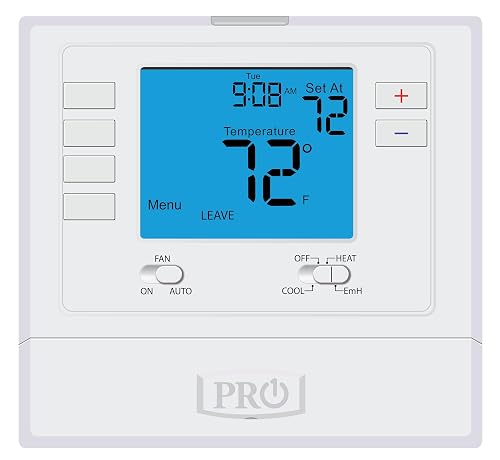
PRO1 T725 Heat Pump/Conventional Programmable Wall Thermostat

PRO1 T771 Single Stage Non-Programmable Wall Thermostat
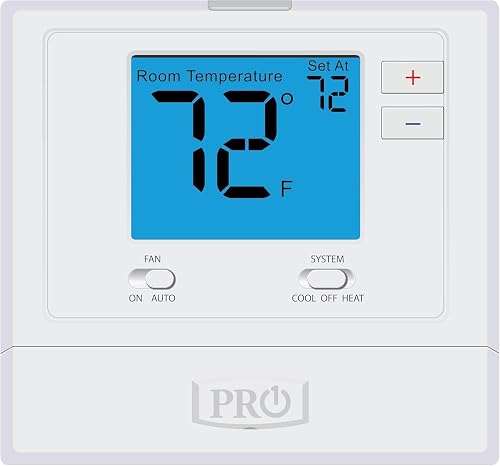
PRO1 T701 Single Stage Non-Programmable Wall Thermostat

PRO1 T715 Multi-Stage Programmable Gas Thermostat
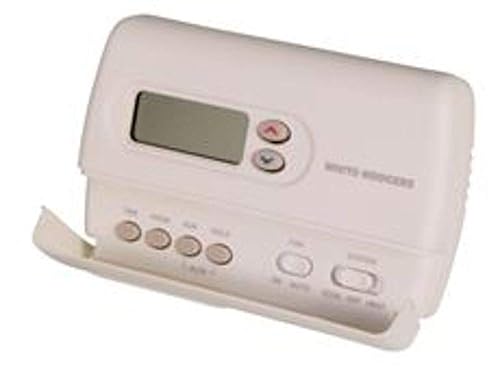
White-Rodgers 1F80-361 Emerson 80 Series Thermostat
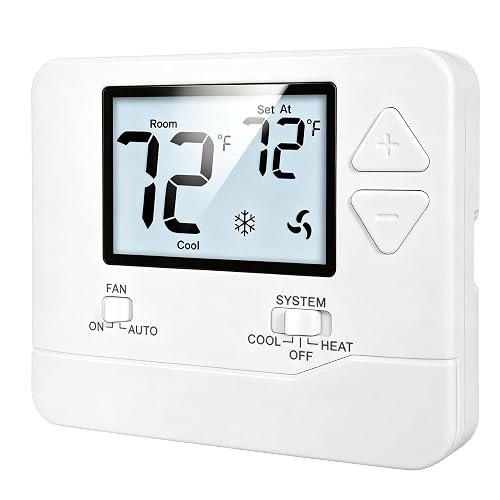
Heagstat NonProgrammable Thermostat 1 Heat/1 Cool
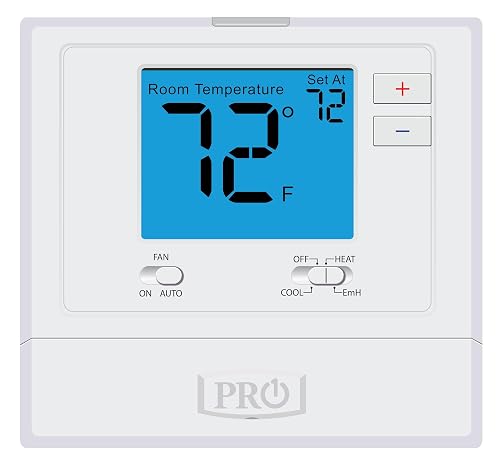
PRO1 T721 Non-Programmable Wall Thermostat

OJ Microline UTN4 Radiant Floor Heat Thermostat w/Class A GFCI

PRO1 T805 Single Stage Programmable Wall Thermostat
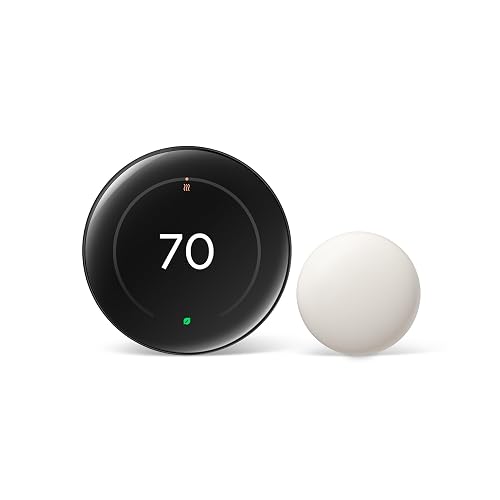
Google Nest Learning Thermostat (4th gen) with Temperature Sensor
More Details On Our Top Picks
The PRO1 T725 sits in a useful middle ground for households that want real scheduling power without giving up heat pump compatibility. It’s built for 2 heat/1 cool heat pump systems and also falls back gracefully to 1 heat/1 cool conventional setups, which means renters and owners with older equipment can use the same wall unit after a system change.
The 4 sq. in. blue backlit display shows wake, leave, return, and sleep schedule blocks at a glance, and the 7-day or 5/1/1 programming modes let you tune weekdays and weekends separately. For most heat pump owners, that translates into noticeable comfort gains during shoulder seasons when the system switches between heating and cooling more often.
What Helps Most
- Dual compatibility covers 2H/1C heat pumps and 1H/1C conventional systems in one unit.
- 7-day or 5/1/1 programming matches real workweek patterns.
- Blue backlit 4 sq. in. display stays readable from across the room.
- Schedule icons (wake, leave, return, sleep) keep programming intuitive for first-timers.
- Hardwired or battery power options simplify retrofits in older homes.
Things To Consider
- You may find the interface less polished than touchscreen learning thermostats.
- Requires basic wiring knowledge during installation.
Key Specs
Right Fit For
Heat pump households with mixed week routines who want a wall-mounted schedule without touching an app.
Look Elsewhere When
You prefer app-driven learning, in which case the Google Nest Learning Thermostat (4th gen) is a smarter fit.
The PRO1 T771 is the kind of thermostat that earns its place in places most people forget about. Garages, workshops, sheds, and converted bonus rooms all need reliable temperature control, but they rarely need an app or a seven-day schedule. A non-programmable unit with a wide setpoint range is a better fit for those spaces.
Its 25°F to 90°F operating window makes it useful for low-temperature applications, while swing adjustment and calibration help match its cycling behavior to whatever forced-air system happens to be in the room. The 4 sq. in. blue backlit screen is bright enough to read across a dim workshop.
Real Benefits
- Wide setpoint range supports both freezing protection and summer cooling.
- Single-stage design keeps wiring simple for non-programmable households.
- Swing adjustment helps match cycling to oversized or undersized equipment.
Worth Noting
- No scheduling means manual setpoint changes throughout the day.
- Less suited to main living areas where routines change hour to hour.
Whose Shelf It Belongs On
Workshop and garage owners who want a set-and-forget digital wall unit for single-stage equipment.
Skip It When
You want weekday and weekend scheduling, in which case the PRO1 T805 offers the same brand with a much larger display.
The PRO1 T701 takes the basic template of a non-programmable thermostat and stretches it just enough to feel modern. The 4 sq. in. blue backlit display is comfortable to read from the kitchen counter, and the glow-in-the-dark light button is a thoughtful touch for hallways and bedrooms that never quite catch the lamp light.
Unlike the T771 above, this one is aimed squarely at conventional 1 heat/1 cool systems, which covers most gas, oil, and electric forced-air homes. The result is a no-drama replacement that handles the daily basics without pulling you into menus.
Features That Help
- 4 sq. in. blue backlit display reads clearly across the room.
- Glow-in-the-dark light button helps late-night adjustments.
- Gas or electric configuration supports most conventional forced-air systems.
Trade Offs
- No scheduling features at all, so you manage comfort manually.
- Limited flexibility for households that want weekend-versus-weekday programs.
Made For
Owners replacing an aging single-stage thermostat who value simplicity over programmability.
Not Your Match When
You need multi-stage gas control, which the PRO1 T715 covers more thoroughly.
The PRO1 T715 exists for homes where the HVAC system has more than one stage, and that distinction matters. Two-stage gas furnaces can run on a low fire most of the day and a high fire only when the temperature gap demands it, which generally means quieter operation and steadier room temperatures.
This thermostat handles 2 heat/2 cool systems with 7-day, 5/1/1, or non-programmable modes, so you can start with simple setpoint control and grow into a full weekly schedule. The shared T700 design language carries the same 4 sq. in. blue backlit screen and glow-in-the-dark light button found on the T701 above.
What Works In Its Favor
- Supports 2H/2C multi-stage gas systems for finer temperature control.
- Three operating modes let you start simple and add scheduling later.
- Shared T700 platform means consistent button layout and backlight behavior.
Points To Keep In Mind
- Overkill for single-stage systems where the T701 already does the job.
- Programming menus can feel denser than simpler single-stage units.
Best Suited To
Two-stage gas households looking for genuine scheduling and quieter low-fire operation.
Another Choice May Suit
Single-stage homes that simply want a no-frills swap, where the Heagstat NonProgrammable Thermostat is often plenty.
The Emerson 80 Series 1F80-361 has the feel of a thermostat that contractors have installed in countless homes over the years, and that long track record is part of the appeal. It’s a 5/1/1 programmable unit that allows up to four periods per day, which is the schedule structure many homeowners are already familiar with from older models.
Where this pick really earns its keep is in mixed wiring situations. It’s compatible with 24V systems and millivolt setups, and works with gas, oil, or electric equipment. That’s flexibility you don’t get from every wall unit in this roundup.
A Few Highlights
- 5/1/1 programming with four daily periods gives plenty of scheduling granularity.
- 24V and millivolt compatibility covers a wide range of older and newer systems.
- Works with gas, oil, and electric equipment without extra configuration.
- Factory anti-static packaging suggests a contractor-grade build quality.
Soft Spots
- Programming interface leans on traditional button menus, not touchscreens.
- Visual design is more utilitarian than the sleeker T800-series units from PRO1.
Who It Suits Best
Homeowners with millivolt or older 24V systems who want a familiar 5/1/1 weekly program.
Where A Sibling Pick Shines
If you prefer a larger, easier-to-read screen, the PRO1 T805 steps up with a 7 sq. in. display and similar scheduling flexibility.
Not every home needs a learning thermostat, and the Heagstat NonProgrammable Thermostat leans into that reality. It’s built for 24VAC conventional single-stage 1H/1C forced-air systems running on gas, oil, or electric furnaces matched with an independent outdoor air-conditioning condenser.
The wiring constraint is worth noting. The base accepts a maximum of 2 to 5 wires, and 6 to 8 wire connections are not supported. That covers most standard retrofits, but homes with accessories like dehumidifiers or whole-home humidifiers may need to look elsewhere.
Why It Works Well
- Compatible with gas, oil, and electric conventional forced-air systems.
- White backlight keeps the display easy on the eyes at night.
- Direct dial or button control means almost no learning curve for first-time installers.
Honest Caveats
- Limited to 2 to 5 wire configurations, which excludes some accessory-rich installs.
- Not compatible with heat pump systems, so dual-fuel homes will need a different model.
- No scheduling, which can feel limiting in homes where temperatures swing during the workday.
Feature Card
Who Should Grab It
Owners with a basic gas, oil, or electric 1H/1C system who just want a clean digital replacement.
Reach For A Different Pick When
You have a heat pump, in which case the PRO1 T721 offers similar simplicity with heat pump compatibility.
The PRO1 T721 is the non-programmable cousin to the T725, and it shares much of the same internal DNA. It supports 2 heat/1 cool heat pump systems as well as 1 heat/1 cool conventional setups, which makes it a smart choice for homeowners who aren’t sure whether their current equipment will change in the next few years.
The 4 sq. in. blue backlit display and glow-in-the-dark light button are familiar from earlier T700-platform picks, and the AA battery option keeps installation simple in homes without a common wire running to the wall.
A Strong Showing
- Dual-mode support covers heat pump or conventional systems without changing thermostats.
- Battery or hardwired power accommodates older wiring configurations.
- Glow-in-the-dark light button helps in dark hallways or bedrooms.
Room For Improvement
- No scheduling means temperature changes happen by hand.
- Interface uses traditional buttons rather than the larger touchscreens of smart thermostats.
Perfect Match For
Households with mixed or aging HVAC equipment who value flexibility over advanced scheduling.
Swap It Out When
You want weekly scheduling with a large display, in which case the PRO1 T805 is the natural next step up.
The OJ Microline UTN4 is a different animal than the rest of this list, and that’s exactly why it earns its place. It’s designed specifically for electric radiant floor heating, with a built-in Class A GFCI (Ground Fault Circuit Interrupter), a feature required for underfloor heating systems and a welcome safety layer for any household with tile, stone, or laminate over a heating mat.
It’s rated for 120/240V installations, supports dual sensing via the included floor and air sensors, and works under tile, carpet, stone, laminate, and engineered wood. The non-programmable interface keeps the focus on steady setpoint control rather than weekly schedules, which is often all a radiant floor really needs.
Useful Touches
- Built-in Class A GFCI satisfies code requirements for electric radiant floors.
- 120/240V compatibility covers most North American residential circuits.
- Dual sensing reads both floor and air temperatures for more consistent comfort.
- Compatible with under tile, carpet, stone, laminate, and engineered wood surfaces.
Things To Consider
- Not designed for forced-air systems, so it isn’t a general-purpose replacement.
- Non-programmable operation means you set temperatures manually as seasons change.
- Installation typically benefits from an electrician familiar with line-voltage floor heating circuits.
Feature Card
Right Fit For
Homeowners with electric radiant floor heating in bathrooms, kitchens, or basements who want code-ready temperature control.
Consider Something Else When
You’re heating a standard forced-air home, where any of the PRO1 wall units in this list will fit far better.
The PRO1 T805 takes the familiar T700 platform and stretches the screen almost twice the size. Its 7 sq. in. blue backlit display is one of the largest in this roundup, which makes a real difference from across a living room or for anyone whose eyes prefer bigger numbers.
Programming covers 7-day, 5/1/1, or non-programmable modes for 1 heat/1 cool conventional systems, so you can run it as a simple setpoint unit on day one and unlock the full weekly schedule when you’re ready. The glow-in-the-dark light button is back, this time on the larger T800 chassis.
A Few Strong Suits
- 7 sq. in. display is significantly larger than most wall thermostats.
- Three programming modes give you room to grow into scheduling.
- Glow-in-the-dark light button helps in dim hallways and bedrooms.
A Few Limitations
- Limited to single-stage conventional systems, so heat pump homes need a different model.
- Larger footprint may not suit narrow wall plates between door frames.
Built With In Mind
Single-stage households who prioritize a big, readable display and want scheduling optionality over time.
A Better Fit Elsewhere
Heat pump owners should look at the PRO1 T725 for similar scheduling with heat pump compatibility.
The Google Nest Learning Thermostat (4th gen) sits at the opposite end of this list from the basic wall units, and it earns that spot on the strength of its learning behavior. Rather than asking you to program a schedule, it watches how you adjust the temperature and gradually builds a routine that follows your week, then adapts when your habits change.
This bundle adds the 2nd-generation Nest Temperature Sensor, which lets the system read temperature in a second room, useful for homes with hot upstairs bedrooms or a chilly nursery. It’s a meaningful upgrade for multi-zone households where the thermostat lives in a hallway but comfort really lives in the living room.
Everyday Wins
- Self-learning schedule reduces the need to program weekly blocks by hand.
- Includes a 2nd-generation temperature sensor for multi-room awareness.
- Obsidian finish and rotating dial give it a more modern look than the wall units above.
- Connects to broader smart home ecosystems for voice and app control.
Practical Considerations
- Learning behavior takes a couple of weeks to settle into a useful schedule.
- Requires a C-wire (common wire) or compatible power accessory in many older homes.
- App-dependent features may feel like overkill for set-and-forget users.
Feature Card
Who Will Love This
Connected households with shifting routines who prefer the thermostat to do the scheduling work for them.
Where A Sibling Pick Shines
Renters and offline homes may prefer the PRO1 T701, which delivers digital control without Wi-Fi dependency.
What To Weigh Before Choosing A Programmable Thermostat
The first thing to confirm is what your HVAC system actually is. Look at the wiring at your current thermostat and count the labels, or peek at the breaker panel to identify whether you have a conventional furnace, a heat pump, a dual-fuel system, or electric radiant floors. Matching the thermostat to the system is more important than matching it to a feature list.
For most single-stage homes, a 1 heat/1 cool conventional model like the PRO1 T701, the Heagstat, or the Emerson 1F80-361 is enough. Heat pump households need a unit that supports 2H/1C or 2H/2C heat pump logic, which is where the PRO1 T725, T721, and T715 come in. Two-stage gas homes benefit most from the multi-stage T715, while electric radiant floor owners will want a specialty unit like the OJ Microline UTN4 with a built-in GFCI.
Programming Versus Simplicity
Programmable thermostats fall into three practical groups. Non-programmable units hold a single setpoint until you change it, which is ideal for guest rooms, garages, and homeowners who simply don’t want to manage a schedule. 5/1/1 or 5+1+1 models let weekdays share one routine while Saturday and Sunday get their own, and 7-day models give every day its own program. The first schedule style fits most working households, but anyone with rotating shifts or remote work weeks tends to appreciate 7-day flexibility.
Smart Features And Connectivity
Learning thermostats like the Google Nest (4th gen) handle scheduling for you over time and tie into broader smart home platforms, which is a real advantage for connected households. The trade-off is dependency on Wi-Fi, app setup, and usually a C-wire for consistent power. Non-smart wall units stay useful even when the internet drops, and many homeowners prefer that reliability.
Display, Power, And Installation
Larger displays (the PRO1 T805 with its 7 sq. in. screen is the clear example) are easier to read from across a room, which matters more in open floor plans. Battery-powered units install easily in older homes, while hardwired models with a C-wire tend to deliver steadier power for backlights and Wi-Fi radios. When in doubt, a quick photo of your existing wiring saves a return trip.
Things To Watch Before You Click Buy
Common Shopping Slip Ups
The most frequent mistake is buying a thermostat that doesn’t match the HVAC system. A conventional 1H/1C unit simply won’t communicate with a heat pump, and a heat pump model wired into a gas furnace can produce confusing short cycles. Confirm whether you have conventional, heat pump, multi-stage, or dual-fuel equipment before choosing.
Wire count is the second trap. Models like the Heagstat cap out at 5 wires, so accessory-heavy installs with humidifiers or dehumidifiers may need a unit that supports more terminals. A C-wire is also worth verifying if you plan to use a learning thermostat, since Wi-Fi and bright displays drain batteries quickly.
Where The Extra Money Goes
Spending up generally buys three things in this category. A larger, easier-to-read display, multi-stage system support for two-stage furnaces or variable-speed equipment, and connectivity that automates scheduling around your life. For homeowners with simple routines and single-stage equipment, a mid-range wall unit often delivers all the comfort most people notice. The upgrade path matters most for larger homes, multi-zone households, and anyone who wants the thermostat to learn their habits instead of being programmed by hand.
Frequently Asked Questions
How Do I Know If I Need A Programmable Or Non-Programmable Thermostat?
Programmable thermostats make sense when your week follows a predictable rhythm and you want different temperatures for sleep, work, and home hours. Non-programmable units fit guest rooms, garages, and households that prefer a single setpoint all day.
What Is A C-Wire And Why Does It Matter?
A C-wire, or common wire, delivers continuous 24V power to the thermostat. Learning thermostats with Wi-Fi and bright displays need steady power, so many of them require a C-wire or a compatible power accessory to operate reliably.
Can One Thermostat Handle Both A Heat Pump And A Conventional System?
Yes, but only specific dual-mode models like the PRO1 T725 or T721 are designed for that flexibility. Most thermostats are built for either heat pump or conventional operation, not both.
How Many Schedule Periods Per Day Are Enough?
Four daily periods (wake, leave, return, sleep) cover most households comfortably. More periods rarely change how the home feels, but they can add complexity during setup.
Will A Smart Learning Thermostat Actually Save Money?
In homes with stable routines, a learning thermostat can reduce wasted heating and cooling by adjusting temperatures when the house is empty or asleep. The savings depend heavily on your existing habits and the size of the home.
Closing Remarks
The right thermostat is the one that matches your HVAC system, fits your wiring, and slots into how you actually live. Start with the system type, then choose between simple wall units, programmable models, and a learning thermostat based on how much scheduling you want to manage by hand. Any of the picks above can run a comfortable home; the differences come down to display size, system support, and whether you want the thermostat to think for you.