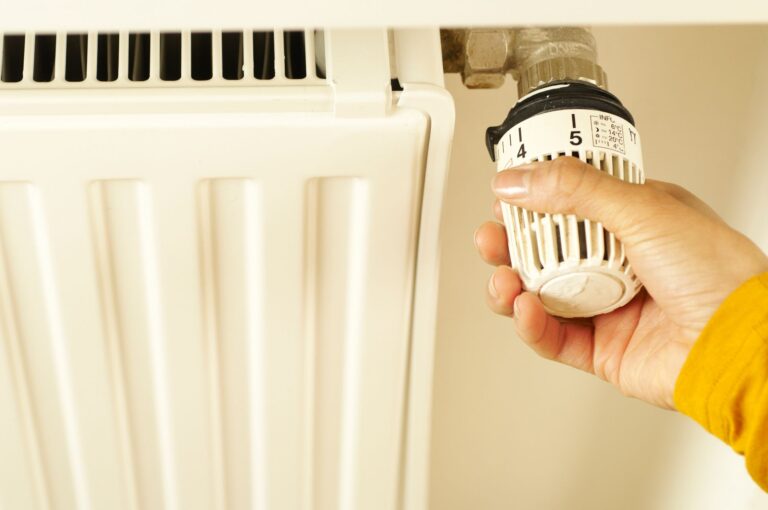

Swapping an old wall thermostat shouldn’t feel like rewiring the whole house. The picks below lean toward low-voltage wall units with small, clearly labeled terminal blocks, plus a couple of smart extras for households ready to branch out. The goal is honest matching, not feature dumping: a garage needs different muscle than a two-stage gas system, and a learning thermostat only earns its keep when you actually want the learning.
A Snapshot Of The Selections
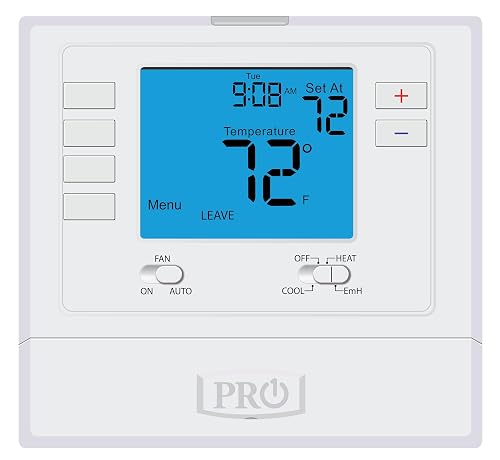
PRO1 T725 Heat Pump/Conventional Programmable Digital Wall Thermostat

PRO1 T771 Single Stage Non-Programmable Wall Thermostat
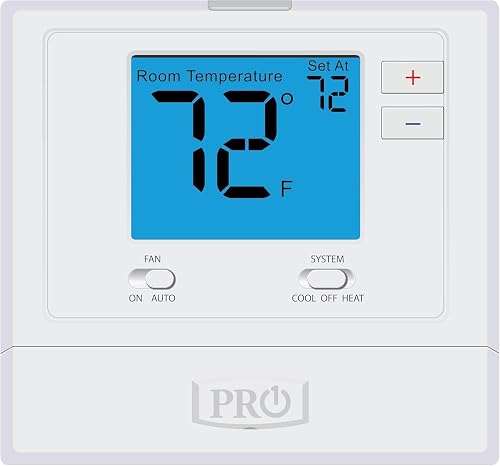
PRO1 T701 Single Stage Non-Programmable Wall Thermostat

PRO1 T715 Multi-Stage Programmable Gas Thermostat
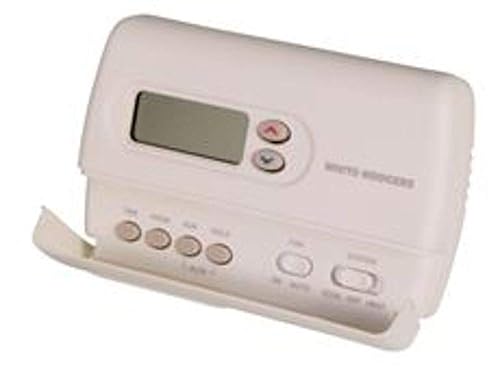
White-Rodgers 1F80-361 Emerson 80 Series Single Stage Thermostat
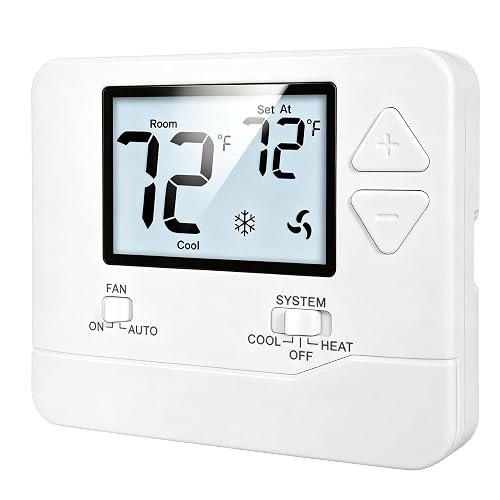
Heagstat NonProgrammable Thermostat 1 Heat/1 Cool
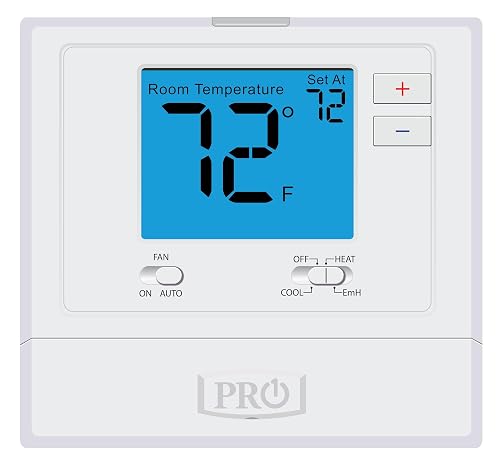
PRO1 T721 Non-Programmable Wall Thermostat, 2H/1C
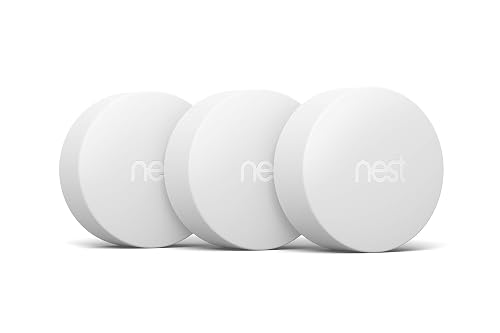
Google Nest Temperature Sensor 3 Count Pack

PRO1 T805 Single Stage Programmable Wall Thermostat
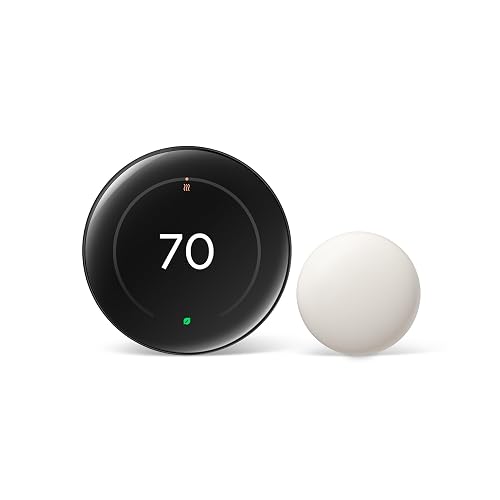
Google Nest Learning Thermostat (4th gen) + Sensor
A Deeper Look At The Lineup
Homes that straddle heat pump and conventional setups usually need two separate thermostats, but the T725 sidesteps that headache. It supports 2 heat/1 cool heat pump systems alongside 1 heat/1 cool conventional systems on the same wall unit, which removes a layer of inventory confusion for anyone managing a hybrid property.
The 4 sq. in. blue backlit display keeps numbers readable from across a room, and the T700 platform gives you 7-day or 5/1/1 (weekday/Saturday/Sunday) scheduling flexibility. The wake, leave, return, and sleep schedule blocks let you tailor a routine without needing an app, and AA battery or hardwire (C-wire) options cover both modern and older installs.
A Strong Showing
- Covers both heat pump and conventional systems on a single wall plate, sparing a second purchase.
- 7-day plus 5/1/1 programming keeps weekday, weekend, and off-day routines independent.
- 4 sq. in. blue backlit screen reads clearly from a couch or doorway.
- Battery or hardwire power, so older homes without a common wire (C-wire) still work.
Worth Noting
- Lacks any smart or app connectivity, so remote adjustments require physical interaction.
- Compatibility depends on matching your existing wire count to the labeled terminal block, which can take a careful read for first-timers.
Key Specs
Made For
Households running a heat pump in summer and a conventional furnace in winter on a shared wall thermostat.
A Better Fit Elsewhere
Shoppers wanting a learning, app-driven experience should consider the Google Nest Learning Thermostat (4th gen) instead.
Most thermostats bottom out around 40°F, but the T771 goes down to 25°F, which makes it a natural fit for unheated garages, sheds, and workshops where pipes can sweat in winter. The straightforward 1 heat/1 cool single-stage design avoids any programming ceremony.
Swing adjustment and calibration controls let you nudge the reading when the wall unit sits near a drafty door, and the same 4 sq. in. blue backlit screen used across the T700 family keeps the price tag reasonable. A glow-in-the-dark light button means fumbling around in a dim garage at 6 a.m. stays manageable.
Everyday Advantages
- Setpoint range down to 25°F handles freeze protection in uninsulated spaces.
- Swing adjustment (the small temperature buffer before the system kicks on) helps dial in comfort near drafty doors.
- Non-programmable layout cuts the learning curve for occasional users.
Honest Caveats
- Lacks the 7-day or 5/1/1 scheduling of the programmable PRO1 siblings.
- Wiring configuration is single-stage only, so it won’t suit multi-stage furnace homes.
- No humidity or air quality readouts, which some garage workshops may want in summer.
Right Fit For
Anyone setting climate control in a detached garage, shed, or workshop where low-temp protection matters more than a schedule.
Reach For A Different Pick When
Main-floor dwellers looking for weekday scheduling should look at the PRO1 T805 Single Stage Programmable Wall Thermostat instead.
For renters and homeowners who just want a wall thermostat to do its job, the T701 keeps things simple. It’s built for 1 heat/1 cool conventional systems, which covers most gas furnace plus central AC setups across the country.
The T700 platform’s 4 sq. in. blue backlit display and glow-in-the-dark light button work together for late-night adjustments, while gas or electric configuration settings handle the most common fuel types. The non-programmable stance means fewer buttons to learn and fewer mistakes to make at the wall plate.
The Case For It
- Conventional 1H/1C compatibility covers a wide share of U.S. homes.
- Glow-in-the-dark light button simplifies nighttime wall adjustments.
- Plain interface suits anyone replacing an aging analog dial.
- Gas and electric switchover inside the menu handles both furnace types.
Points To Note
- No scheduling means manual setpoint changes for day/night routines.
- Not designed for heat pump systems, which the T725 covers more cleanly.
Best Suited To
Households with a straightforward furnace-and-AC system who want an inexpensive, no-app upgrade from an old manual thermostat.
Look Elsewhere When
Heat pump owners should consider the PRO1 T725 Heat Pump/Conventional Programmable Digital Wall Thermostat instead.
Two-stage gas systems waste energy cycling hard on mild days, and the T715 is built to manage them properly. It supports 2 heat/2 cool setups, so both furnace stages and AC stages get their own dedicated controls rather than getting jammed into a single-stage housing.
Like the rest of the T700 family, it offers 7-day, 5/1/1, or fully non-programmable operation, which is handy if you want to set it and forget it later. The 4 sq. in. blue backlit display and glow-in-the-dark light button stay consistent with the line, and battery or hardwire power covers older wiring situations.
Benefits That Matter
- Handles 2H/2C gas systems, which cheaper single-stage units can’t match.
- Three operating modes (7-day, 5/1/1, or non-programmable) on one unit.
- Compatible with battery or hardwire, including C-wire setups (a common wire that supplies continuous 24V power).
Room For Improvement
- Multi-stage wiring demands more terminal attention, so first-timers may want a multimeter and a wiring diagram handy.
- No app or smart-home connectivity, unlike the Google Nest picks further down.
- Display size matches the smaller PRO1 models, not the larger T805.
Who Should Grab It
Owners of a two-stage gas furnace plus central AC who want programmable scheduling without paying for smart features.
Not Your Match When
Households chasing a learning, app-driven experience should consider the Google Nest Learning Thermostat (4th gen) instead.
Emerson’s 80 Series has been a workhorse replacement for years, and the 1F80-361 keeps that tradition alive. It works as a single-stage heat/cool thermostat with millivolt (low-voltage) compatibility, which means it can run on the small current from a standing pilot light or on standard 24V systems.
The 5+1+1 schedule format gives you separate weekday, Saturday, and Sunday blocks, with up to four periods per day. Programming lives on the wall unit itself, with the manual referenced on the listing for anyone new to the brand. It arrives in a White-Rodgers factory anti-static bag, a sign it’s the contractor-grade packaging rather than a flashy retail box.
Bright Spots
- 5+1+1 programming with up to four daily periods handles varied routines.
- Millivolt and 24V compatibility covers gas, oil, and electric systems.
- Contractor bulk-pack form factor suits property managers replacing units in volume.
Small Caveats
- Single-stage only, so multi-stage gas homes should look at the T715 instead.
- No app connectivity or learning features.
Perfect Match For
Property managers and homeowners replacing an aging single-stage thermostat in a gas, oil, or electric system on a tight budget.
Swap It Out When
Shoppers wanting a larger screen and programmable scheduling should look at the PRO1 T805 Single Stage Programmable Wall Thermostat instead.
First-timers often stall at the wall plate because the labels feel cryptic. The Heagstat non-programmable thermostat keeps the wiring base limited to 2 to 5 wires, which matches most older furnace setups and avoids forcing you to deal with the 6-to-8-wire configurations that bigger homes sometimes carry.
It’s a 24VAC (24-volt alternating current, the standard residential HVAC control voltage) conventional single-stage unit with a white backlight, so the screen stays readable without being a flashlight at night. Compatibility covers gas, oil, and electric forced-air systems paired with an independent outdoor AC condenser (the outdoor unit that compresses refrigerant for cooling) and full indoor ductwork.
Where It Delivers
- 2-to-5-wire base simplifies the wall plate for older homes.
- 24VAC compatibility covers gas, oil, and electric forced-air systems.
- White backlight keeps the temperature visible without glare at night.
- Non-programmable layout means fewer menu layers for new installers.
Points To Keep In Mind
- Not compatible with heat pump systems, which the T725 and T721 handle.
- Limited to 2-5 wire setups, so newer multi-stage homes may need a different model.
Built With In Mind
First-time installers with a conventional furnace and 2-to-5 existing thermostat wires on the wall.
Where A Sibling Pick Shines
Households with heat pump equipment should consider the PRO1 T721 Non-Programmable Wall Thermostat instead.
The T721 handles either 2 heat/1 cool heat pump systems or 1 heat/1 cool conventional systems, depending on the menu setting. That flexibility matters when a household plans to swap equipment later or owns a property that crosses between fuel types.
The 4 sq. in. blue backlit display and glow-in-the-dark light button stay consistent with the T700 line, and AA battery plus hardwire options cover both older homes without a C-wire and newer installs. There’s no scheduling layer, which keeps the interface approachable for anyone who doesn’t want to memorize weekday blocks.
Why It Works Well
- Switches between heat pump and conventional operation through the setup menu.
- AA battery or hardwire power handles both modern and legacy wiring.
- Matches the T700 platform’s familiar display and button layout.
Worth Bearing In Mind
- Non-programmable design means manual setpoint changes for routine shifts.
- No multi-stage support beyond 2H/1C, so two-stage gas homes should look at the T715.
Whose Shelf It Belongs On
Owners of a heat pump who want a simple, no-schedule wall thermostat and may switch to conventional fuel later.
Skip It When
Households wanting 7-day programming should consider the PRO1 T725 Heat Pump/Conventional Programmable Digital Wall Thermostat instead.
The Nest Temperature Sensor pack isn’t a thermostat on its own. It’s an accessory that reports room temperatures back to a compatible Nest thermostat, which then decides when to fire the heat or AC. The 3-pack is a sensible starting point for homes with a hot upstairs bedroom, a cool basement, and a drafty nursery.
Each sensor uses low-energy Bluetooth to talk to a Nest Learning Thermostat or Nest Thermostat E from up to about 50 feet away, which usually covers most floor plans. Place one in a baby’s room, one in a living area, and the third in a home office, and you get a fuller picture than a single hallway reading.
Everyday Wins
- Adds room-level temperature data to a single Nest thermostat, no second wall unit required.
- Low-energy Bluetooth avoids extra Wi-Fi congestion or hub hardware.
- Three-pack covers most multi-room homes in a single purchase.
Less-Strong Areas
- Requires a compatible Nest thermostat to function, so it’s not a standalone solution.
- Wireless range tops out around 50 feet, which may leave a far-flung garage or detached workshop out of reach.
The Right Fit
Nest thermostat owners who want a chosen room to drive heating and cooling priorities without running new wires.
Another Choice May Suit
First-time smart thermostat shoppers should consider the Google Nest Learning Thermostat (4th gen) bundle to start with the thermostat itself.
The T805 is the readable sibling in the PRO1 family, stepping up to a 7 sq. in. blue backlit display, which is roughly 75% larger than the standard 4 sq. in. panel. Aging eyes and anyone who just likes big numbers will appreciate the difference from across the room.
It runs on the T800 platform with 7-day, 5/1/1, or non-programmable operation, plus a glow-in-the-dark light button for night adjustments. Conventional 1H/1C compatibility covers most residential gas furnace plus central AC combos, and the AA battery or hardwire options keep the install flexible.
Notable Gains
- 7 sq. in. display is much easier to read from a distance or in low light.
- Three operating modes cover everything from full scheduling to set-and-forget.
- Glow-in-the-dark light button keeps the wall plate findable at night.
- Battery or hardwire power adapts to older and newer wiring.
Potential Sticking Points
- Single-stage only, so multi-stage gas homes will need a T715 or Nest instead.
- Conventional systems only, with no heat pump option in this model.
Who Will Love This
Anyone with a conventional furnace who wants a larger display and a 7-day schedule without paying for app features.
Consider Something Else When
Heat pump households should consider the PRO1 T721 Non-Programmable Wall Thermostat instead.
The fourth-generation Nest Learning Thermostat is the most app-driven option in this lineup. It tracks the temperatures you set, the times you set them, and how that shifts across the week, then builds a schedule you no longer have to maintain by hand. The included 2nd-gen Nest Temperature Sensor helps a single thermostat reflect a specific room rather than a hallway.
Bundle pairing means you start with both a thermostat and a remote sensor in one purchase, which skips the extra trip for the sensor pack. Obsidian finish gives the wall plate a darker, low-glare look that blends into a modern interior. Setup leans on the app for Wi-Fi connection and account pairing, so a stable home network matters for a smooth install.
The Upside
- Learns your preferred temperatures and timing, building a schedule without manual programming.
- Includes a 2nd-gen Nest Temperature Sensor for room-specific readings.
- Obsidian finish suits darker, modern interior palettes.
Trade-Offs To Consider
- Smart features depend on a stable Wi-Fi network and a Google account for app control.
- Pricing sits well above the conventional PRO1 units, so budget-focused shoppers should look elsewhere.
Key Specs
Perfect Match For
Smart-home enthusiasts who want a learning thermostat and a starter sensor in a single bundle, and who already have a reliable Wi-Fi network.
Where Another Pick Suits Better
Renters or anyone who can’t rely on a steady Wi-Fi signal should look at the PRO1 T701 Single Stage Non-Programmable Wall Thermostat instead.
What Matters Most Before Choosing Easies To Install Thermostats
Match The System Type First
Every other consideration falls apart if the thermostat doesn’t speak your HVAC’s language. Stage count (the number of heating or cooling output levels a system supports) is the most important number: a 1H/1C conventional system needs a different thermostat than a 2H/2C gas furnace, and a heat pump setup has its own wiring expectations. The PRO1 T701 and Heagstat handle the simplest conventional systems, while the T715 and T805 step up for two-stage gas homes, and the T725 plus T721 cover heat pump configurations. Picking the wrong stage count usually means the system runs but doesn’t behave efficiently, and it can sometimes cause short-cycling (frequent on-and-off cycling that wastes energy and wears parts).
Wiring Reality On The Wall
“Easy to install” often depends less on the thermostat and more on the wires already in the wall. Older homes may have 2 to 5 wires, which the Heagstat accommodates but a C-wire-only smart thermostat will reject. A C-wire is a dedicated common wire that delivers continuous 24V power, and many newer thermostats need it. PRO1’s T700 and T800 platforms accept AA battery or hardwire, so missing a C-wire doesn’t block the install. Count and label the existing wires before ordering, and photograph the old thermostat’s terminals so you can match them on the new plate.
Programming vs. Learning
Non-programmable units (T701, T721, T771, Heagstat) do one thing well: hold a setpoint until you change it. Programmable units (T725, T715, T805) add 7-day or 5/1/1 schedules, which is useful for predictable routines. The Google Nest Learning Thermostat goes further by building its own schedule from your adjustments. For most households, a programmable unit strikes a fair balance, while learning thermostats pay off when your routine shifts week to week.
Display And Readability
A 4 sq. in. display fits most walls fine, but the 7 sq. in. screen on the PRO1 T805 makes a real difference in large living rooms or for anyone with limited near vision. Backlight color (blue, white) is a smaller detail, though a glow-in-the-dark light button earns its keep in hallways at night.
Key Considerations Across These Picks
Wrong Turns To Avoid
A common mistake is choosing a thermostat based on appearance alone. The Heagstat, for example, looks like a simple 1H/1C unit, but it explicitly excludes heat pump homes, so installing it on a heat pump system creates setup problems. Another slip is buying a smart thermostat without confirming Wi-Fi coverage at the wall location. Routers tucked in basements often leave upstairs hallways with weak signals, and a thermostat that drops offline frustrates more than a non-smart unit would. Counting wires matters too: assuming a C-wire exists when it doesn’t forces a return or a new wire run.
When Paying More Pays Off
Premium picks like the Google Nest Learning Thermostat earn their higher price through app control, learning behavior, and the included temperature sensor. The bundle saves a separate sensor purchase and supports room-specific comfort. The T800 platform’s larger 7 sq. in. display on the T805 also represents a tangible upgrade over the standard 4 sq. in. screen, useful for users who want easier reading. Across the lineup, paying more generally buys smarter scheduling, more system support, or a friendlier interface, while the budget PRO1 and Emerson units cover basic needs with fewer frills.
Frequently Asked Questions
Do I Need A C-Wire For These Thermostats?
PRO1 T700 and T800 models can run on AA batteries, so a C-wire isn’t required, though hardwire is also supported. The Heagstat works with 2-to-5-wire conventional setups, and the Google Nest Learning Thermostat depends on a stable power source and Wi-Fi.
Will Any Of These Work With A Heat Pump System?
The PRO1 T721 and T725 are designed for heat pump systems, with the T725 adding programmable scheduling. The T701, T771, T805, and Heagstat are conventional-only and shouldn’t be used with a heat pump.
Can I Install These Myself?
Most of the wall-mount units on this list are friendly to a careful DIY install, especially when you photograph the existing wiring first. The smart thermostats add app setup steps, and multi-stage gas systems like the T715 benefit from a multimeter check on the terminals before powering on.
Are Programmable Thermostats Worth It Over Non-Programmable Units?
Programmable thermostats (T725, T715, T805) save energy by automatically adjusting temperatures during work and sleep hours, while non-programmable units rely on manual changes. For predictable routines, programmable models usually pay back the small upgrade cost through lower utility use.
How Far Does The Nest Temperature Sensor Reach?
The 3-pack Nest sensor talks to a compatible Nest thermostat from up to about 50 feet away using low-energy Bluetooth, which covers most single-floor homes and many two-story layouts.
Closing Remarks
The right thermostat comes down to a clear match with your HVAC system, a wiring count that lines up with the new unit, and a feature set you actually use. PRO1 covers the conventional and heat pump mainstream, Emerson handles the contractor-grade single-stage niche, Heagstat eases first-time installs, and the Nest Learning bundle opens the door to room-aware smart control. Pick the one that fits your system today, and you’ll spend the rest of the year adjusting comfort, not wiring.