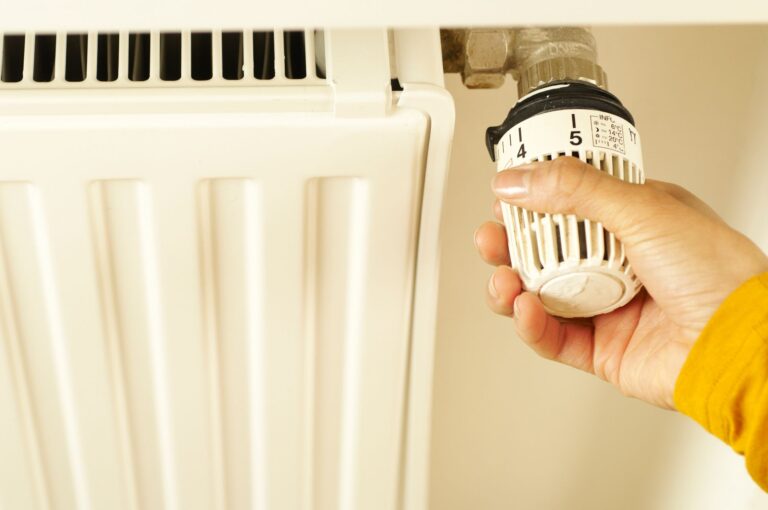

Nothing ruins a cold morning like stepping onto bare tile in socks. Electric underfloor thermostats turn that first step into the coziest part of your day, quietly warming tile, laminate, or stone from below while a wall-mounted controller keeps the room at your chosen temperature.
You’ll see complete kits that bundle heating cable with a matching thermostat, plus standalone controllers that swap into an existing mat or cable system. The list below mixes both, covering everything from a small bathroom upgrade to a larger primary suite, with simple non-programmable dials, touchscreen schedulers, and full app-driven smart controls.
The Choices Worth Comparing
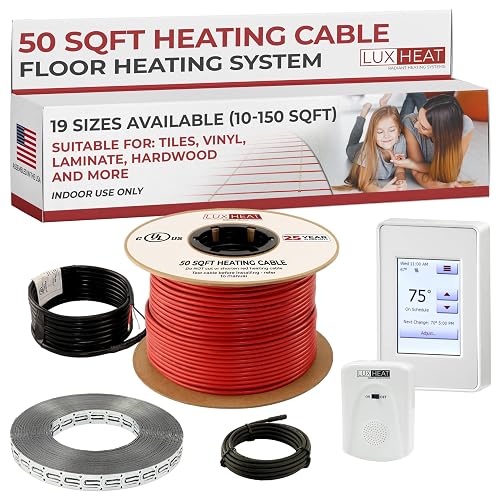
LuxHeat 50sqft Floor Heating Cable Kit with UDG4 Thermostat
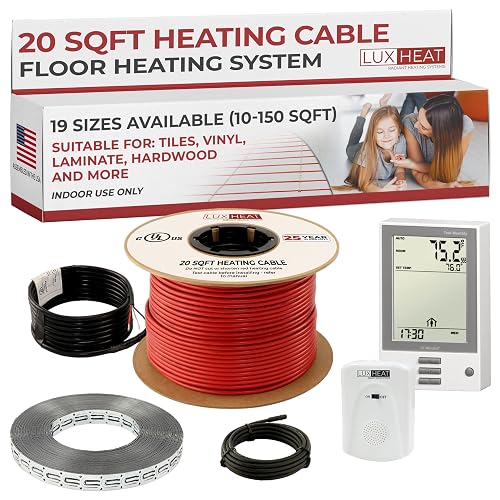
LuxHeat 20sqft Floor Heating Cable Kit with UDG Thermostat
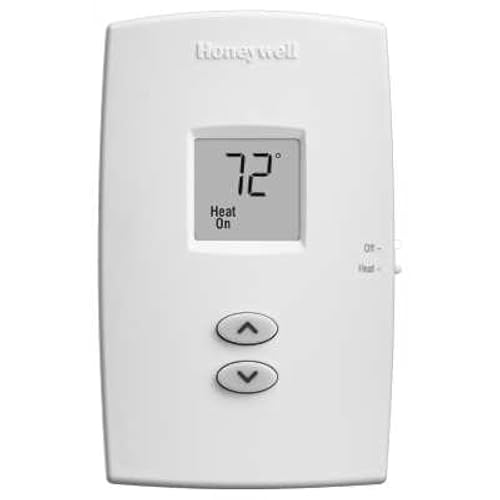
Honeywell TH1100DV1000 PRO 1000 Vertical Non-Programmable Thermostat
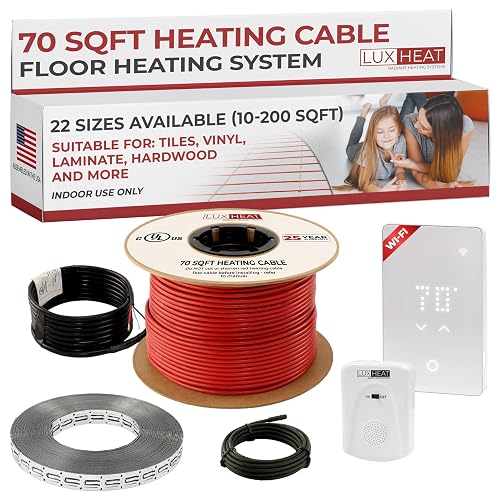
LuxHeat 70sqft Floor Heating Cable Kit with UWG5 WiFi Thermostat
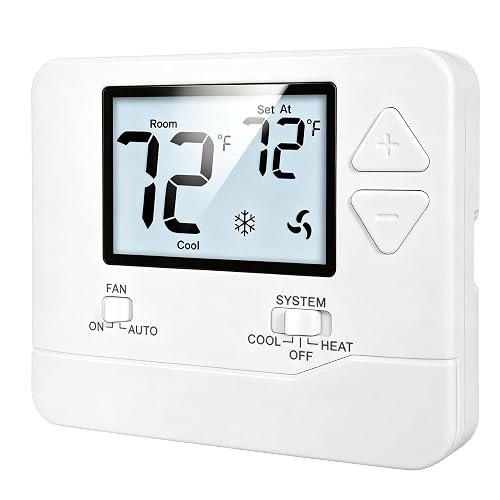
Heagstat Non-Programmable Thermostat 1 Heat/1 Cool
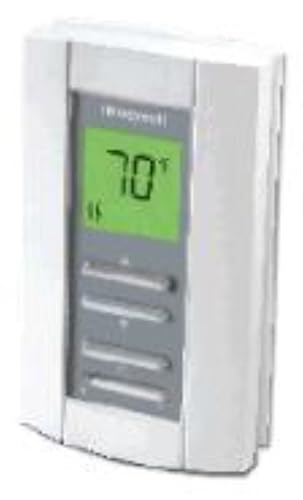
Honeywell TL7235A1003 Line Volt Pro 240V Digital Thermostat
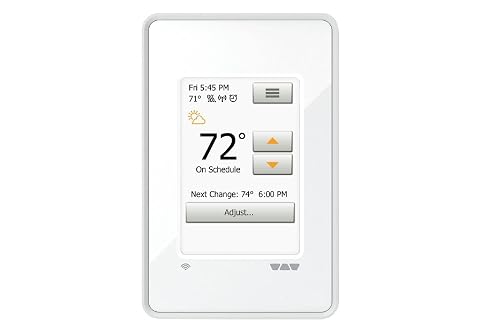
Schluter Ditra-Heat-E-WiFi Programmable Thermostat (DHERT104/BW)
nVent Home Programmable Dual-Voltage Thermostat with Touchscreen

OJ Microline UTN4 Radiant Floor Heat Thermostat with Class A GFCI
Honeywell TH115-A-12 120V 4-Wire 7-Day Digital Heat Thermostat
What Each Pick Brings To The Table
This is the package most DIYers reach for when a mid-size bath or laundry room needs warm tile without juggling separate components. The 50-square-foot cable runs on a standard 120V circuit, the UDG4 thermostat ships with a built-in GFCI (a ground-fault interrupter that cuts power instantly if moisture creates a stray current), and the strapping guides keep loops evenly spaced during the pour.
Compared with the smaller 20-square-foot LuxHeat kit below, this one covers about two and a half times the floor area while keeping the same touchscreen control scheme. Owners commonly find the included alarm reassuring during installation because it beeps if the cable is damaged before the thinset goes down.
Practical Pluses
- All-in-one kit removes the guesswork of matching cable to thermostat
- Built-in Class A GFCI satisfies electrical code for wet locations
- Programmable touchscreen lets you set a morning warm-up schedule
- 50-square-foot coverage handles most secondary bathrooms
- Strapping strips speed up a tidy cable layout in thinset
Things To Consider
- 120V design means you may need a dedicated circuit from the panel
- Cable cannot be cut or shortened, so measuring must be precise
- Programming takes a few minutes to learn on first power-up
Quick Facts
Who It Suits Best
DIYers tackling a single bathroom remodel who want one part number, one warranty, and a thermostat that already meets code.
Consider Something Else When
Floor plans larger than about 70 square feet should look at the LuxHeat 70sqft cable kit below, which ships with the WiFi-enabled UWG5 controller.
Tiny rooms call for shorter cable runs, and this kit lands at the compact end of the LuxHeat line. Twenty square feet is enough for a half bath, a mudroom entry, or the strip in front of a vanity, and the UDG thermostat keeps the same touchscreen logic as its bigger siblings.
Next to the 50-square-foot kit above, you trade coverage for a faster install and a less crowded breaker panel. The included floor sensor and installation alarm make it approachable for first-time installers who have never laid radiant cable before.
Benefits That Matter
- Compact footprint suits powder rooms and small entries
- Same proven UDG thermostat family as larger LuxHeat kits
- Built-in GFCI satisfies code without buying a separate breaker
- Lower total draw fits existing 15-amp household circuits
Worth Noting
- Under 25 sq ft of coverage limits you to very small rooms
- 120V only, so no option to step up to 240V for faster recovery
Built With In Mind
Homeowners warming a single half bath or a narrow entry strip on a tight budget.
Skip It When
Anyone heating a primary bathroom should step up to the LuxHeat 50sqft cable kit above for more headroom.
The Honeywell PRO 1000 is the kind of controller you fit when you want a wall box that just does its job. It is a single-stage, heat-only unit in a vertical layout, designed for line-voltage or low-voltage systems that don’t need scheduling or app control.
Compared with the LuxHeat touchscreen kits above, this is the dial-and-done alternative for people who prefer a set-and-forget mechanical feel. The premier white housing sits at roughly 4-11/16 inches tall by 2-7/8 inches wide, so it covers most standard wall openings without a trim plate.
Notable Upsides
- Heat-only design simplifies wiring in single-purpose rooms
- Vertical footprint matches typical gang box dimensions
- Predictable non-programmable behavior for rental properties
- Honeywell brand carries weight with code inspectors
Minor Gripes
- No scheduling, so manual setpoint changes through the day
- Heat-only, not suitable if you ever add cooling to the same wall location
Right Fit For
Replacement shoppers upgrading an aging mechanical stat on a heat-only baseboard or radiant zone.
Look Elsewhere When
Smart-home households should reach for the Schluter Ditra-Heat-E-WiFi thermostat further down, which adds app and voice control.
When the project is bigger than a half bath, this LuxHeat kit stretches to 70 square feet and pairs the cable with the UWG5 WiFi thermostat. The touchscreen shifts to an LED panel with wireless connectivity, so you can warm the floor from your phone before getting out of bed.
The trade-off is power draw, and depending on your panel space, you may need a dedicated 20-amp breaker. Against the 50-square-foot kit in spot one, this is the same install workflow with more coverage and a smarter brain on the wall.
Real Benefits
- WiFi control means no walking to the thermostat for setpoint changes
- 70 sq ft covers a primary suite bath or combined bath and closet
- Built-in GFCI keeps the install compliant for wet rooms
- LED touchscreen mirrors the look of the smaller UDG units
Points To Keep In Mind
- WiFi setup requires a 2.4 GHz network and the companion app
- 120V cable may stretch the limit of a shared household circuit
Feature Snapshot
Made For
Tech-comfortable homeowners outfitting a primary bathroom with both a heated floor and remote scheduling.
Reach For A Different Pick When
Anyone running 240V service should consider the Honeywell TL7235A1003 further down for higher-amperage line-voltage control.
This is the stat you fit when you want a clean backlit display on a forced-air system without paying for a touchscreen. The Heagstat is a non-programmable 1-heat / 1-cool unit built for 24VAC conventional single-stage HVAC, including gas, oil, and electric furnaces paired with an outdoor AC condenser.
Unlike the floor-cable kits above, this one is designed for ducted heating and cooling rather than radiant loops, so it earns its place as a swap-in for an outdated mechanical thermostat. Wiring tops out at five conductors, and you’ll want to count existing wires before you order.
Standout Benefits
- White backlight makes the readout readable in dark hallways
- Works with most single-stage gas, oil, or electric furnaces
- Simple up-and-down setpoint controls for any user
Room For Improvement
- Not compatible with heat pump or multi-stage systems
- Limited to 2-5 wire installs, so 6-8 wire panels need a different stat
Best Suited To
Conventional single-stage HVAC households replacing an old analog dial on a tight remodel budget.
A Better Fit Elsewhere
Anyone with a radiant floor zone should look at the OJ Microline UTN4 later on, which is purpose-built for underfloor heating.
Most electric underfloor thermostats on this list run on 120V, but the Honeywell TL7235A1003 steps up to 240V line-voltage territory. That makes it the right wall box for retrofitting 240V baseboards, cove heaters, and large-format radiant cable installations.
The on-demand backlight helps you read the setpoint in a dim hallway, and the soundproof switching means no clicking when the relay opens and closes. It skips app control entirely, leaning instead on a clear digital readout and physical buttons.
The Upside
- 240V support handles higher-amperage line-voltage loads
- Soundproof operation cuts the familiar click of mechanical stats
- Backlit display shows current temperature at a glance
A Few Limitations
- Non-programmable, so no setpoint scheduling
- 240V wiring requires confidence with line-voltage circuits
Perfect Match For
Homeowners replacing a 240V baseboard stat or running a high-output cable mat on a dedicated double-pole breaker.
Swap It Out When
Lower-voltage 120V projects pair more naturally with the Honeywell TH1100DV1000 above or the LuxHeat kits.
The Schluter Ditra-Heat-E-WiFi is the dedicated controller for homes built on the Ditra-Heat uncoupling membrane, and it carries one of the most polished interfaces on this list. The 3.5-inch color screen, dual-voltage support (120V and 240V), and built-in Class A GFCI make it a true set-and-forget smart stat.
Compared with the LuxHeat UWG5 in spot four, this unit integrates more tightly with voice assistants and offers an energy-tracking dashboard in the app. A max load of 15 amps covers most residential cable installations, with a separate power module available for larger systems.
Good Reasons To Consider
- Color touchscreen reads well from across the room
- Dual-voltage compatibility simplifies 120V or 240V wiring decisions
- Built-in Class A GFCI removes the need for a separate breaker GFCI
- App-based energy tracking helps spot wasteful schedules
Honest Caveats
- Premium pricing over basic non-programmable thermostats
- Smart features assume a stable home WiFi connection
Technical Highlights
Who Should Grab It
Ditra-Heat homeowners ready to invest in voice, app, and energy-tracking control of their radiant floor.
Another Choice May Suit
Shoppers staying with a LuxHeat cable kit may prefer the UWG5 WiFi controller above for a simpler app-only experience.
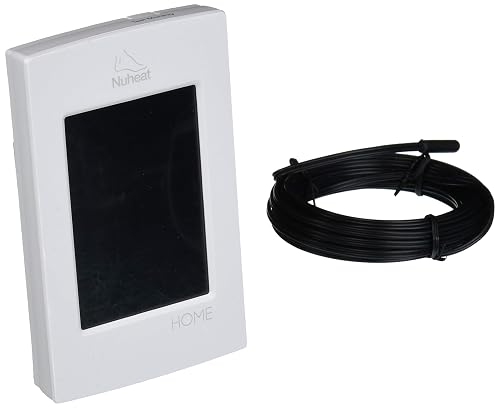
The nVent Home thermostat slides into existing NUHEAT mat installations, which is helpful if you’re upgrading a system installed years ago. It pairs a 3.5-inch color touchscreen with dual-voltage support and a built-in Class A GFCI for code compliance.
The standout feature is the seven-day programming and on-screen energy monitor, which lets you see how many kilowatt-hours the floor pulled last week. Next to the Schluter in spot seven, this is a similar feature set with a slightly different ecosystem behind it.
What It Does Well
- Seven-day programming matches real weekly routines
- Energy monitor surfaces actual consumption in the app
- Physical on/off switch adds a hard disconnect for service work
- Class A GFCI built into the unit, not the breaker
Softer Spots
- Best fit is a property already running NUHEAT cable
- Touchscreen UI runs slower than the Schluter interface
Whose Shelf It Belongs On
Households with an installed NUHEAT mat looking to swap a tired controller for a smarter, app-aware unit.
Where A Sibling Pick Shines
Ditra-Heat homes will be happier with the Schluter Ditra-Heat-E-WiFi thermostat above for tighter ecosystem integration.
OJ Microline has built its reputation on radiant heating controls, and the UTN4 is the no-nonsense digital controller in the lineup. It is dual-sensing (reading both air and floor temperature), non-programmable, and accepts 120V or 240V cable, with the floor sensor included in the box.
The bundled Class A GFCI satisfies code, and a three-year warranty backed by USA-based product support gives an extra cushion if anything goes sideways. It is a sensible swap-in when an existing radiant zone needs a fresh controller without the cost of a full smart thermostat.
Reasons It Performs
- Dual sensing balances air and slab temperature for steadier comfort
- Compatible with tile, stone, laminate, and engineered wood floors
- Includes floor sensor in the box
- Three-year warranty plus USA-based product support
Where It May Fall Short
- No scheduling, so setpoint changes happen at the wall
- Display is utilitarian compared with touchscreen smart stats
Who Will Love This
Homeowners who want a reliable, code-compliant radiant stat without paying for app or voice features.
Look Elsewhere When
Smart-home households will prefer the Schluter Ditra-Heat-E-WiFi thermostat above for full app and voice integration.
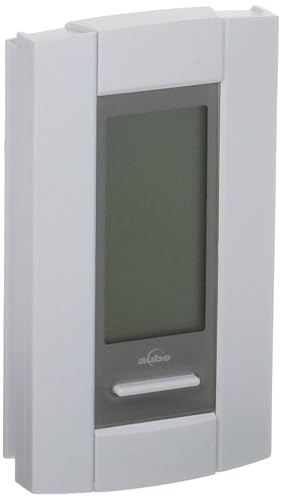
The Honeywell TH115-A-12 closes out the list with a precision-focused controller that pros reach for on tight-tolerance radiant jobs. Its TRIAC switching (a solid-state relay that switches silently with no mechanical click) is paired with a 15-minute cycle algorithm and a remote input, so it slides into custom wiring layouts.
You can program up to four events per day across all seven days, which is plenty for most routines. Against the touchscreen LuxHeat units, this is a quieter, more electrician-friendly box with deeper scheduling muscle.
Practical Advantages
- TRIAC silent switching keeps the wall box click-free
- 15-minute cycle optimization holds temperature close to setpoint
- Four daily events over seven days for fine-tuned scheduling
Things That May Matter
- 120V, SPST switching limits system wiring options
- Programming interface feels dated next to modern touchscreens
Feature Card
The Right Fit
Electricians and serious DIYers outfitting a precision radiant zone where quiet switching and tight temperature control matter more than screen flash.
Not Your Match When
Households that want app or voice control should look at the Schluter Ditra-Heat-E-WiFi thermostat above instead.
Choosing The Right Thermostat For Your Floor Project
A thermostat is more than an on-off switch for your floor, and getting the right match starts with three core questions: what voltage runs through your home, what floor area you need to cover, and how much scheduling you actually want.
Match Voltage To Your Wiring First
Most homes run 120V circuits, which is why the LuxHeat kits and the Honeywell TH115-A-12 dominate this list. If your breaker panel feeds 240V, like many Canadian homes or large North American baseboard retrofits, the Honeywell TL7235A1003 and the Schluter Ditra-Heat-E-WiFi step up cleanly. Mismatched voltage trips breakers or, worse, damages the cable, so confirm the rating before you commit.
Size The Cable To The Room, Not The Other Way Around
Coverage is the single number that matters most once voltage is sorted. A 20-square-foot kit handles a powder room; 50 sq ft covers most secondary baths; 70 sq ft stretches to a primary suite. Measure the open floor area and subtract permanent fixtures, then pick the kit whose square footage lands within 10% of that number.
Decide How Much Scheduling You Want
Non-programmable stats like the Honeywell PRO 1000, Heagstat, Honeywell TL7235A1003, and OJ Microline UTN4 keep things simple. Seven-day programmable units such as the Honeywell TH115-A-12 and nVent Home let you set morning warm-ups. WiFi touchscreens like the LuxHeat UWG5 and Schluter Ditra-Heat-E-WiFi add app and voice control, which is helpful if your routine changes often.
Mistakes Worth Dodging In A Radiant Thermostat Purchase
Common Shopping Slip Ups
The most common error is matching a 120V thermostat to a 240V cable, or vice versa, because both look similar on a shelf. Always check the breaker rating and the cable label before ordering. Another misstep is under-sizing coverage, which forces cold stripes where the cable runs short. Measure twice, and remember the cable cannot be cut or extended.
Where The Extra Money Goes
Premium thermostats earn their higher cost through features you actually feel: silent TRIAC switching, larger color touchscreens, dual-voltage flexibility, energy tracking, and built-in Class A GFCI protection. If you heat a single small bath and rarely touch the stat, a basic model handles the job. If you want morning warm-ups, app control, and a quieter wall box, the upgrade pays off in everyday comfort.
Frequently Asked Questions
Do I need a GFCI breaker if the thermostat already has one?
When the thermostat carries a built-in Class A GFCI, it typically satisfies code for the radiant circuit on its own, though local rules vary. Confirm with your local inspector before skipping the breaker GFCI.
Can I install a 120V floor heating system on any existing circuit?
Most 120V radiant kits draw enough current to justify a dedicated 15- or 20-amp circuit, depending on square footage. Sharing a circuit with bathroom receptacles often trips breakers during cold startup.
Will a smart thermostat work without a strong WiFi signal at the wall?
WiFi thermostats need a reliable 2.4 GHz connection at the install location to keep schedules synced and the app responsive. Weak signal leads to dropped setpoints, so check coverage before mounting.
How long do electric underfloor heating cables usually last?
Properly installed radiant cable systems are commonly rated for decades of service under tile or in thinset. The thermostat, being an electronic device, is the part most likely to need replacement first.
Can one thermostat control two separate rooms?
Standard thermostats read one floor sensor and switch one load, so separate rooms need separate thermostats or a master with power modules. Zoning from a single controller is possible only with compatible accessories.
Closing Remarks
The right electric underfloor thermostat depends on the floor in front of you, the wiring in your walls, and how much daily fiddling you actually enjoy. Match voltage and coverage first, then pick the level of scheduling that fits your routine, and you’ll spend less time second-guessing the wall box and more time enjoying the warm tile under your feet.