

Picking the right wall thermostat affects how comfortable your home feels through every season, and how much you spend keeping it that way. The category covers everything from no-frills dials to learning thermostats that adapt to your routine. This roundup walks through nine solid electronic options across budgets, system types, and smart-home setups, so you can find one that matches your home’s wiring and your daily habits.
The Picks In Brief
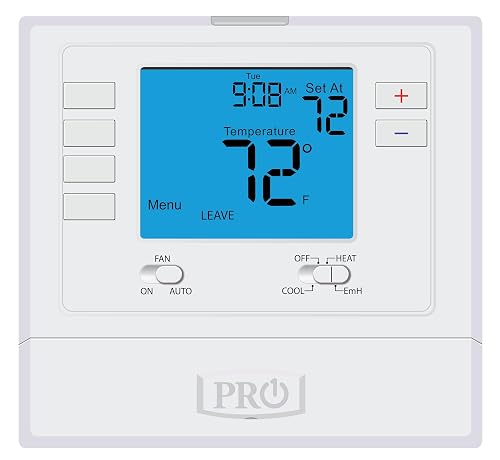
PRO1 T725 Programmable Heat Pump Thermostat
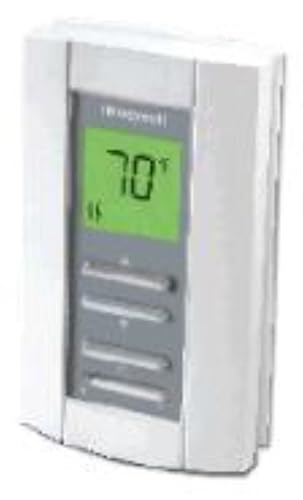
Honeywell TL7235A1003 Line Volt Thermostat 240V
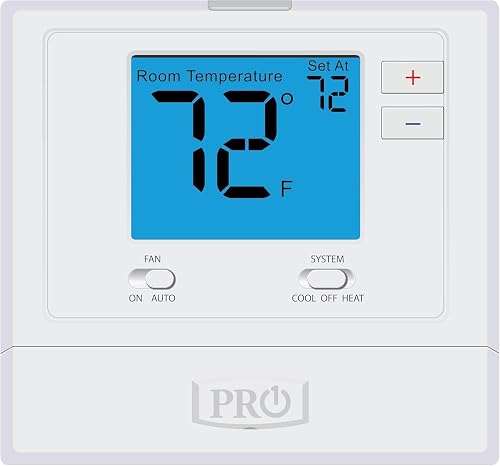
PRO1 T701 Non-Programmable Single Stage Thermostat

PRO1 T715 Programmable Multi-Stage Gas Thermostat
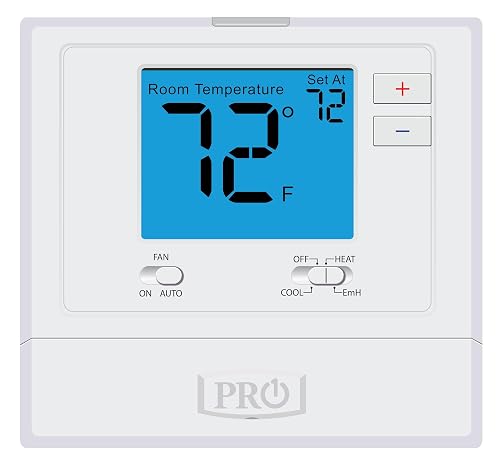
PRO1 T721 Non-Programmable Heat Pump Thermostat
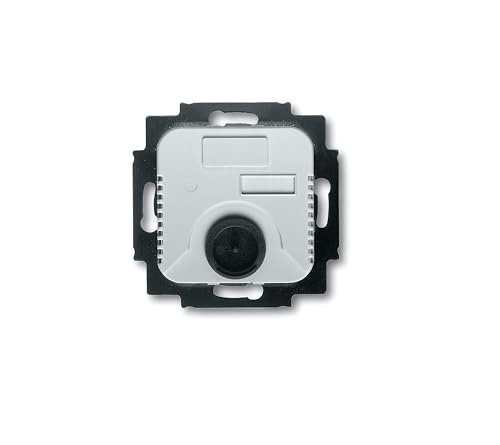
Busch-Jaeger 1094U Electronic Room Thermostat
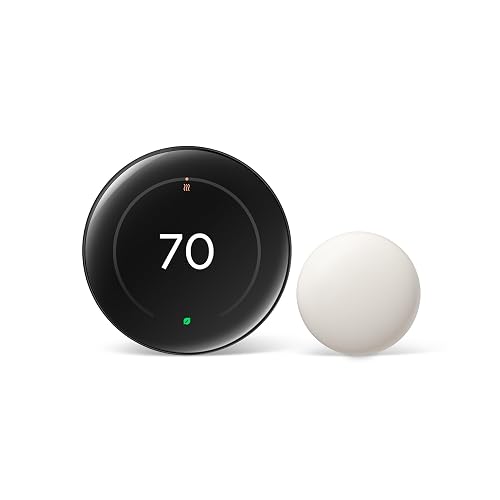
Google Nest Learning Thermostat 4th Gen (Obsidian)
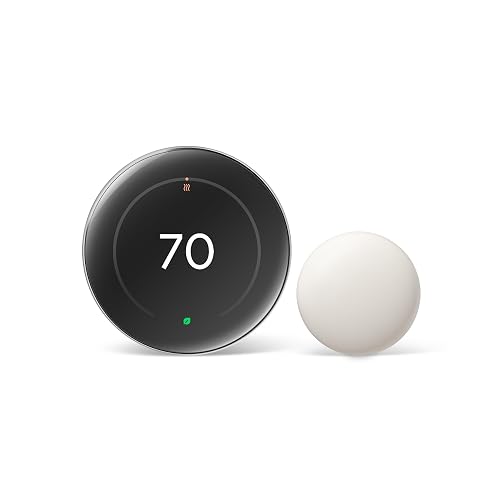
Google Nest Learning Thermostat 4th Gen (Silver)

PRO1 T805 Programmable Single Stage Thermostat
Taking A Closer Look At The Options
The PRO1 T725 sits in an interesting middle ground: programmable enough to trim heating costs, simple enough that you don’t need a smartphone. Built for 2 heat/1 cool heat pump systems and 1 heat/1 cool conventional systems, it covers most residential HVAC setups without locking you into a specific brand’s ecosystem. Compared to the simpler PRO1 T701 reviewed below, this model adds a 7-day or 5/1/1 schedule and a backlit display that holds up in dim hallways.
For households on a heat pump with auxiliary strips, the scheduling flexibility pays off. You can drop the temperature overnight and let the unit ramp back up before the family wakes. The interface is button-based rather than touchscreen, which keeps the price reasonable while still giving you weekday/weekend programming. For most homes, that’s plenty.
Standout Benefits
- Heat pump compatibility plus conventional fallback in one unit
- 7-day or 5/1/1 programming matches real working schedules
- Blue backlit screen remains readable in low light
- Manual override when guests visit and the schedule doesn’t fit
- No smart-home app required, reducing setup friction
Trade Offs To Consider
- No Wi-Fi means no remote adjustments from your phone
- Button interface can feel dated next to touchscreen models
Feature Snapshot
Best Suited To
Heat pump owners who want scheduling flexibility without smart-home complexity.
Where Another Pick Suits Better
The PRO1 T701 makes more sense for renters who only need basic single-stage conventional control.
Most thermostats on this list work with low-voltage 24V HVAC systems, but the Honeywell TL7235A1003 is built for line-voltage electric baseboard heaters at 240V. That distinction matters: plugging a low-voltage thermostat into a 240V circuit is a common and expensive mistake. This unit speaks the right language for those heaters directly.
The trade-off is a stripped-down feature set. You get precise electronic temperature control and a straightforward digital display, with no weekly programming. The on-demand backlight helps in dim rooms, and soundproof operation reduces the familiar clicking that older mechanical baseboard thermostats produce. For most baseboard-heated apartments and additions, it’s a practical fit.
Features That Help
- 240V line-voltage compatibility for direct baseboard wiring
- On-demand backlight for quick nighttime adjustments
- Soundproof operation eliminates loud mechanical clicks
- Heating indicator confirms the system is actively running
Honest Caveats
- No weekly scheduling, so adjustments stay manual
- Not a substitute for low-voltage central HVAC thermostats
- Limited to electric resistance heating applications
Whose Shelf It Belongs On
Anyone with 240V electric baseboard heat who wants accurate digital control.
Swap It Out When
The PRO1 T725 belongs in homes with a central heat pump system instead of baseboards.
If a programmable schedule sounds like overkill, the PRO1 T701 strips things back to the basics. It’s a non-programmable unit aimed at 1 heat/1 cool conventional systems, which covers the majority of single-stage central setups in older homes and rentals. You set the temperature, the thermostat holds it, and that’s the whole experience.
The 4 sq in blue backlit display is comfortably large for a budget unit, and a glow-in-the-dark light button makes it usable during a midnight trip down the hall. It runs on batteries or can be wired to common C-wire setups depending on installation. Compared to the T725 reviewed earlier, you’re losing the weekly schedule, but gaining a much simpler install for anyone who’s never replaced a thermostat before.
A Favorable Mix
- Beginner-friendly operation with no learning curve
- Generous 4 sq in backlit display for a non-programmable unit
- Glow-in-the-dark button helps in low-light hallways
- Compatible with most 1H/1C conventional HVAC systems
Worth Noting
- No scheduling means no automatic setback when you leave
- Battery-only installations need periodic replacements
Made For
Renters and homeowners with a single-stage conventional system who prefer manual temperature control.
Not Your Match When
The PRO1 T715 fits two-stage gas furnace households that need multi-stage control.
Two-stage gas furnaces and two-stage cooling need a thermostat that can talk to both stages independently, and the PRO1 T715 fills that role without pushing you into smart-home territory. It supports 2 heat/2 cool systems and offers 7-day, 5/1/1, or non-programmable modes, so the same unit works whether you want a tight weekday schedule or basic manual control.
The big practical benefit of multi-stage support is comfort: low-stage runs handle mild days quietly and efficiently, while high-stage kicks in only when temperatures swing hard. The 4 sq in backlit display and glow-in-the-dark light button carry over from the rest of the PRO1 T700 series, keeping the visual language consistent if you swap from a T701 or T721. Battery or hardwired power is flexible for most retrofit installs.
Noteworthy Benefits
- True 2H/2C multi-stage control for two-stage gas furnaces
- Three operating modes, from full 7-day programming to manual
- Quiet low-stage operation improves everyday comfort
- Consistent display layout with the rest of the T700 family
Some Limits To Know
- Overkill for single-stage homes that don’t need both stages
- No Wi-Fi means no learning or remote control
Core Details
Right Fit For
Owners of two-stage gas furnace systems who want efficient low-stage operation without smart features.
Reach For A Different Pick When
The Google Nest Learning Thermostat makes more sense for households that want automatic schedule learning.
The PRO1 T721 handles two different system types from a single wall unit, supporting 2H/1C heat pump or 1H/1C conventional configurations. That flexibility makes it a useful pick for homeowners whose system description doesn’t quite match the standard “gas furnace” or “heat pump only” labels. You set the system type during install, and the thermostat takes it from there.
Like the T701, it skips the weekly programming in favor of straightforward manual control. The 4 sq in backlit display and glow-in-the-dark light button keep the night-time experience smooth. Power can come from AA batteries or a hardwired setup, depending on the wiring in the wall. For most homes, the T721 covers the gap when you want heat pump compatibility but don’t need the schedules of the T725.
Everyday Wins
- Configurable for heat pump or conventional systems
- No learning curve with manual temperature control
- Backlit display with glow-in-the-dark button
- Flexible power, batteries or hardwired
Points To Keep In Mind
- No scheduling means temperature changes stay manual
- Setup requires choosing the correct system type at install
Perfect Match For
Households with heat pump systems who don’t need a full weekly program.
A Better Fit Elsewhere
The PRO1 T725 is a stronger pick if you want 7-day scheduling on the same system type.
The Busch-Jaeger 1094U breaks from the rest of this list because it’s built for European electrical standards. Nominal voltage runs at 250V, and the unit is rated for 10A with a temperature range of 5°C to 30°C, suited to underfloor heating manifolds, electric radiators, and similar 230V/250V systems common in European homes. The flush-mount design fits standard European wall boxes.
Inside, the electronic room temperature control insert opens the switching contact when the set temperature is reached, with a separate connection for time-controlled night mode that drops the target by 4K (a 4-degree reduction). For most U.S. households, this won’t be the right match, but for European-style installs or 240V hydronic systems, it does exactly what it claims without unnecessary extras.
Strong Points
- 250V rating fits European 230V/240V systems
- Wide 5°C to 30°C adjustment range
- Separate night mode connection for setback scheduling
- Compact flush-mount form factor
Practical Considerations
- Not compatible with standard 24V U.S. low-voltage HVAC
- Documentation assumes European wiring conventions
Quick Technical Notes
Who Should Grab It
Anyone with a 230V or 250V European-style heating system who needs a flush-mount thermostat.
Skip It When
U.S. homes running 24V central HVAC are better matched to the Honeywell TL7235A1003 or the PRO1 T725.
The Google Nest Learning Thermostat 4th gen in Obsidian represents the smart-home end of the category, and it shows. Rather than asking you to program a schedule, it watches your manual temperature changes for the first week or two and builds a routine from there. The included Nest Temperature Sensor (2nd gen) extends awareness to other rooms, useful for homes where the hallway thermostat doesn’t represent the bedroom.
Compared to the button-driven PRO1 models reviewed earlier, this unit trades simplicity for adaptability. You get a high-resolution display, app control, and integration with broader smart-home platforms. The trade-off, of course, is cost and a more involved install. For most households deeply invested in connected home gear, the hands-off scheduling pays off over the first few months.
The Practical Payoff
- Learns your routine and adjusts without manual programming
- Remote sensor helps balance temperatures room to room
- App control for adjustments away from home
- Obsidian finish suits darker wall colors and modern interiors
Factors To Consider
- Installs typically require a C-wire or included power adapter
- Higher cost than non-connected alternatives
- Smart features depend on continued app and platform support
Built With In Mind
Smart-home households that want automatic scheduling and remote sensor support.
Where A Sibling Pick Shines
The PRO1 T715 is a smarter choice for two-stage gas homes that don’t want to add a connected ecosystem.
The Silver version of the Google Nest Learning Thermostat 4th gen offers the same learning behavior and remote sensor bundle as the Obsidian model above, but in a lighter finish that suits brighter wall colors and traditional decor. Functionally, you’re looking at an identical product with a different face.
For most people weighing the two, the choice comes down to aesthetics. The Silver finish blends into light walls and looks less like a piece of tech hardware. In terms of installation, app setup, and learning behavior, the experience matches the Obsidian variant exactly. The bundled Nest Temperature Sensor (2nd gen) still helps balance rooms that run hot or cold relative to where the thermostat lives.
Where It Delivers
- Silver finish suits light walls and traditional interiors
- Identical learning engine and sensor bundle as the Obsidian version
- Adaptable scheduling for households with shifting routines
- Remote adjustments through the companion app
Where It Is Less Suited
- Same install complexity as the Obsidian version, including C-wire needs
- Feature overlap with the Obsidian model means a price-driven decision
Who Will Love This
Homeowners who want the Nest experience in a finish that pairs with lighter walls and classic trim.
Look Elsewhere When
The PRO1 T701 covers the basics for households not interested in connected features.
The PRO1 T805 closes out this list by leaning into readability. Built on the T800 platform, it features an extra-large 7 sq in blue backlit display, which is roughly 75% bigger than the 4 sq in screens on the rest of the PRO1 lineup reviewed above. For anyone squinting at small thermostat text from across a room, that difference matters more than the spec sheet suggests.
It’s designed for 1H/1C conventional systems and supports 7-day, 5/1/1, or non-programmable modes, so you can use the full scheduling or strip it back to manual control. The glow-in-the-dark light button carries over from earlier models. For most homes with a standard single-stage conventional system that wants a clear display plus scheduling, the T805 hits a comfortable middle ground between the smaller T701 and the more feature-dense T715.
Positive Takeaways
- 7 sq in display is significantly easier to read
- Three operating modes from full 7-day to manual
- Glow-in-the-dark button for nighttime visibility
- Clean fit for 1H/1C conventional HVAC systems
Points To Note
- Limited to single-stage conventional systems
- Larger footprint than the slimmer T700-series units
Details At A Glance
Who It Suits Best
Households with 1H/1C conventional systems who prioritize a large, easy-to-read display.
Consider Something Else When
The PRO1 T725 is a better match for heat pump homes that need more than single-stage support.
What To Match Against Your HVAC Before Buying
The single biggest decision factor is your system type. A 24V central HVAC setup can use nearly every model in this roundup except the Honeywell TL7235A1003 and the Busch-Jaeger 1094U, which target 240V baseboard and 230V/250V European systems respectively. A “stage” refers to how many levels your furnace or compressor can run at: single-stage means on or off, while multi-stage systems offer low and high output for finer comfort control.
Compatibility matters more than features. A thermostat that supports 2H/2C is wasted on a 1H/1C system, and a heat pump thermostat wired to a gas furnace won’t behave correctly. Check your existing wiring before installing. A “C-wire,” or common wire, supplies continuous 24V power and is required for many smart thermostats, including the Google Nest 4th gen models. The PRO1 T700 and T800 series support battery or hardwired installs, which sidesteps the C-wire concern in many older homes.
Display size and scheduling depth trade off against one another. Larger screens, like the 7 sq in T805 panel, help readability but take up more wall space. Programming flexibility costs more up front but saves energy over the first year, particularly for households on regular work or school schedules. For most homes with a consistent routine, 7-day programming offers the strongest balance of cost and energy savings.
Key Considerations Across These Picks
Pitfalls Shoppers Hit
Many shoppers pick a thermostat based on features alone and ignore voltage and staging. Installing a 24V smart thermostat on a 240V baseboard heater, or selecting a single-stage unit for a two-stage furnace, creates real problems that show up as flickering displays, short cycling, or no operation at all. Confirm your system type, voltage, and stage count before adding to cart.
Another common slip is skipping the C-wire check for smart thermostats. The Google Nest 4th gen expects continuous power, and adapters can bridge older 4-wire systems, but the install takes longer than expected without that wire. Looking at the existing wall plate and counting conductors before buying saves a return trip.
When Paying More Pays Off
Higher-tier models in this category earn their premium through scheduling depth, larger displays, or smart-home integration. The PRO1 T805 costs a little more than the T701, and the difference is the bigger screen and full 7-day programming. For most households, those features pay for themselves through lower heating bills over a single winter, particularly in regions with cold nights and warmer days.
The Google Nest 4th gen represents the largest jump in price, and the value case depends on how much you change temperatures manually. Households with shifting schedules benefit most from automatic learning, while those with rock-solid routines may not recoup the extra cost compared to a programmable PRO1 model. For most buyers weighing smart versus standard, the honest read is: smart makes sense when schedules shift often, and a programmable unit makes sense when routines are predictable.
Frequently Asked Questions
What is a C-wire and do I need one?
A C-wire, or common wire, delivers continuous 24V power from your HVAC system to the thermostat. Many smart thermostats, including the Google Nest 4th gen, require one. The PRO1 T700 and T800 series can run on battery power, which avoids the requirement.
Can I install a thermostat myself?
Most homeowners can swap a like-for-like thermostat in under an hour with basic tools. You turn off the HVAC breaker, label the wires, swap the wall plate, and reconnect. The Google Nest 4th gen includes app-based install guidance, while line-voltage models like the Honeywell TL7235A1003 should be wired by someone comfortable working with 240V circuits.
What does multi-stage support mean for comfort?
Multi-stage systems run at low output most of the time and ramp to high output only when temperatures swing. A thermostat that supports 2H/2C, like the PRO1 T715, can use those stages properly, reducing temperature swings and fan noise compared to a single-stage unit on the same furnace.
Do I need a smart thermostat to save energy?
Not necessarily. A programmable thermostat set to a 7-day or 5/1/1 schedule saves meaningful energy by dropping temperatures when you’re away or asleep. Smart thermostats add convenience, but the energy savings come from setbacks, which any programmable unit can deliver.
What’s the difference between 24V and 240V thermostats?
24V thermostats work with central HVAC systems that use a low-voltage control circuit. 240V thermostats like the Honeywell TL7235A1003 directly switch line-voltage electric baseboard heaters. Using the wrong type on either system creates a safety risk, so matching voltage to your heating equipment is essential.
Closing Remarks
The right electronic thermostat depends less on brand and more on matching the system you actually have, whether that’s a 1H/1C conventional setup, a 240V baseboard, or a multi-stage heat pump. Once that match is made, the choice between manual, programmable, and learning comes down to how much schedule variation your household sees day to day. Any of the nine picks above will do its job well; the trick is picking the one whose strengths line up with your routine.