
Swapping a wall thermostat sounds like a tiny project, then the model numbers blur together and you wonder whether you need a heat pump variant, a programmable schedule, or a basic dial. The ten picks below cover the main setups you’ll actually meet in a North American home, from single-stage conventional systems in apartments to multi-stage gas rigs in older houses. Each one is matched to a specific system type and budget, so you spend less time cross-referencing wiring diagrams and more time enjoying consistent room temperatures.
A Side-By-Side Look
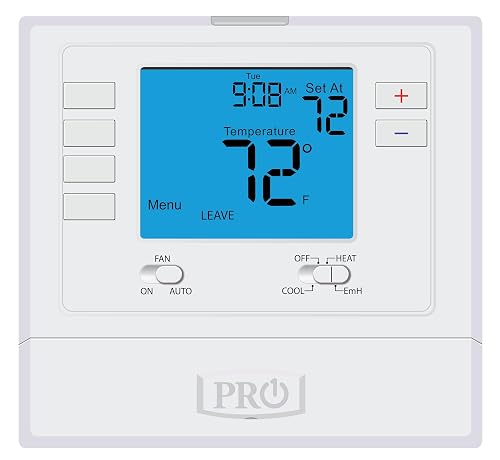
PRO1 T725 Heat Pump/Conventional Programmable Thermostat

PRO1 T771 Single Stage Non-Programmable Wall Thermostat
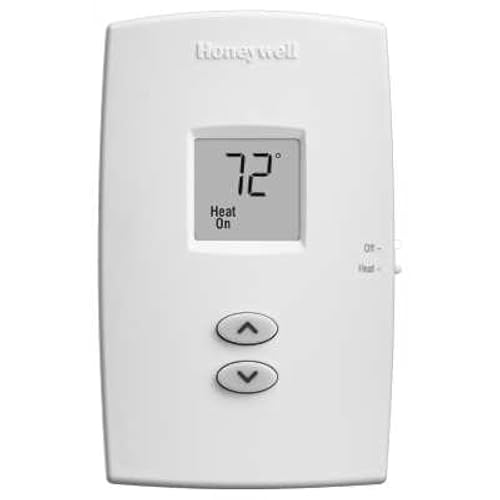
Honeywell TH1100DV1000 PRO 1000 Vertical Thermostat
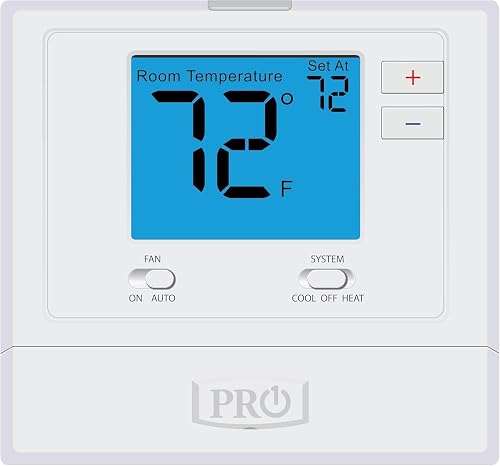
PRO1 T701 Single Stage Non-Programmable Wall Thermostat

PRO1 T715 Multi-Stage Programmable Gas Thermostat
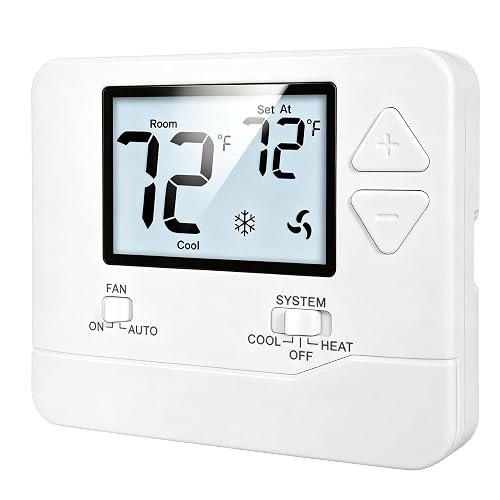
Heagstat Non-Programmable Thermostat 1 Heat/1 Cool

EconoHome Non-Programmable Home Thermostat
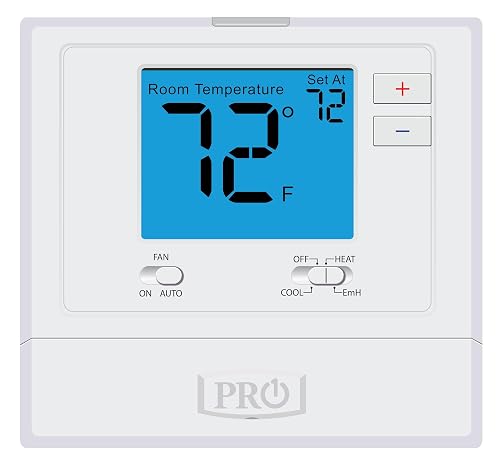
PRO1 T721 Non-Programmable Heat Pump Thermostat
White-Rodgers 70 Series Classic 1F78-151

PRO1 T805 Single Stage Programmable Thermostat
What Each Pick Brings To The Table
The T725 handles a tricky middle ground that trips up a lot of homeowners: it works as a programmable thermostat for both 2 heat/1 cool heat pump systems and standard 1 heat/1 cool conventional setups. That dual-mode compatibility (the ability to operate on two fundamentally different HVAC equipment types) means you don’t need to repurchase the unit if you upgrade from a traditional furnace to a heat pump later, or vice versa.
Programmability runs to 7-day or 5/1/1 schedules, where 5/1/1 means five weekdays plus separate Saturday and Sunday blocks, which is plenty for most families who want a different routine on weekends. The 4 sq. in. blue backlit screen shows the active schedule mode (wake, leave, return, sleep), so glancing at the wall tells you which phase the system is in. Power can come from AA batteries or a hardwired common (a continuous 24V return wire, labeled “C” on most HVAC boards), which gives flexibility in older homes without a C-wire.
What Makes Sense
- Supports both heat pump and conventional wiring, sparing a future repurchase
- 7-day and 5/1/1 scheduling covers most work-week routines
- 4 sq. in. blue backlit screen is readable from across a small room
- Battery or hardwired C-wire power suits older homes
Worth Noting
- 2H/1C heat pump limit means it can’t run a three-stage heat pump system
- Programming menus take a few minutes to learn on first setup
Key Specs
Best Suited To
Homeowners with a 2H/1C heat pump who want flexible scheduling without moving to a smart thermostat.
Where Another Pick Suits Better
Homeowners with a two-stage gas furnace should consider the PRO1 T715, which supports 2H/2C systems.
Detached spaces run cold in winter, and a standard living-room thermostat won’t dip low enough to keep pipes safe without wasting fuel. The T771 sidesteps that with a setpoint range stretching down to 25°F, which is unusually low for a residential wall unit and well-suited to garages, workshops, and sheds that only need freeze protection.
It’s a non-programmable single-stage design, which keeps the interface close to a simple up/down setpoint. The 4 sq. in. blue backlit display stays readable in dim shop lighting, and swing adjustment (the temperature gap between when heating kicks on and when it shuts off) plus calibration give you a way to fine-tune comfort without entering a programming menu.
Everyday Wins
- 25°F minimum setpoint protects pipes in unheated spaces
- Single-stage simplicity works with most basic furnace and AC combos
- Swing adjustment and calibration for fine-tuned comfort
Points To Note
- No scheduling, so you’ll adjust setpoints manually with the seasons
- Not designed for multi-stage equipment found in larger homes
Whose Shelf It Belongs On
Anyone heating a detached garage, pole barn, or workshop where freeze protection matters more than scheduling.
Skip It When
Main-floor living rooms with a 1H/1C conventional system get a more dialed-in experience from the PRO1 T701.
Heat-only systems are common in older homes with a boiler or a furnace and no central AC, and they need a thermostat that doesn’t pretend cooling exists. The Honeywell TH1100DV1000 PRO 1000 stays out of the way with a vertical, non-programmable design that calls out heating exclusively, removing the cooling controls that can confuse first-time users.
At roughly 4 11/16 in. high by 2 7/8 in. wide, the unit has a tall footprint that fits nicely between door frames or in narrow wall sections where horizontal models look cramped. The premier white finish tends to blend into most trim, and being made in the United States appeals to homeowners who value domestic assembly.
Real Benefits
- Purpose-built for heat-only systems, no cooling clutter
- Vertical layout suits narrow wall sections
- Non-programmable simplicity for set-and-forget use
Honest Caveats
- Not suitable for homes with central air conditioning
- No scheduling means manual setpoint changes between day and night
Made For
Owners of older homes with a boiler or furnace-only setup who want a clean, dedicated heat thermostat.
Another Choice May Suit
If you also need cooling control, the PRO1 T701 supports 1H/1C conventional systems in a single wall unit.
Most U.S. homes still run a basic 1 heat/1 cool conventional system, and the T701 fits that profile without piling on features you’ll never use. It’s a non-programmable unit, so the entire interface is up and down arrows plus a system switch, which renters and seniors tend to appreciate.
The 4 sq. in. blue backlit display is paired with a glow-in-the-dark light button, so finding the thermostat in a dark hallway at 2 a.m. doesn’t require fumbling. It works on gas or electric configurations, and the T700 platform gives it the same chassis used across the PRO1 line, which means replacement parts and trim plates tend to be interchangeable with siblings like the T721 and T725.
Bright Spots
- Gas and electric compatibility in a single model
- Glow-in-the-dark light button is a thoughtful touch
- Backlit display readable in low light
- Simple controls ideal for renters and less tech-focused households
Soft Spots
- No scheduling means daily setpoint adjustments
- Single-stage only, so no support for two-stage equipment
Key Specs
Who It Suits Best
Renters, seniors, or anyone who prefers a simple dial-and-arrow thermostat over scheduling menus.
Look Elsewhere When
Households wanting automatic day/night setbacks will find more value in the PRO1 T805, which adds programming.
Two-stage gas furnaces ramp up gradually instead of blasting at full power, and they need a thermostat that understands multiple heating levels. The T715 supports 2 heat/2 cool configurations, which lets a two-stage furnace run on low most of the time and only kick to high on the coldest mornings, a quieter and more efficient operating pattern.
Scheduling options include 7-day, 5/1/1, or fully non-programmable, so the same unit works for set-and-forget households and detailed schedule builders. The shared 4 sq. in. blue backlit screen and glow-in-the-dark light button match the T701, which helps when a home has multiple PRO1 units on different walls.
Strengths Worth Knowing
- 2H/2C support unlocks quieter two-stage furnace operation
- 7-day, 5/1/1, and non-programmable modes in one unit
- Battery or hardwired C-wire power for flexible installs
Practical Considerations
- Wiring takes more time than a single-stage swap, so first-timers may want a technician
- Programming depth is overkill for a small apartment
Right Fit For
Owners of two-stage gas furnaces in mid-to-large homes where the furnace runs frequently through winter.
Not Your Match When
Heat pump households in mild climates will be better served by the PRO1 T725’s heat pump focus.
Many older homes have just two or five wires running to the thermostat, and using a six-or-eight-wire model means capping off leads and hoping nothing grounds out. The Heagstat non-programmable unit is built around a 2 to 5 wire base, so it lands cleanly on legacy systems where modern seven-wire thermostats simply won’t fit.
It’s a 24VAC conventional single-stage design, meaning it works with gas, oil, and electric furnaces paired with a separate AC condenser. Owners commonly report the white backlight staying readable from a couch across a medium-sized room, and the lack of programming menus keeps tenants from accidentally overwriting a landlord’s preferred settings.
Useful Highlights
- 2 to 5 wire compatibility fits older homes with limited wiring
- Works with gas, oil, and electric furnace systems
- White backlight readable in dim hallways
- Non-programmable design resists tenant tampering
Worth Bearing In Mind
- Not compatible with heat pump systems or electric baseboard heat
- No scheduling features for energy-saving setbacks
Perfect Match For
Landlords managing rental properties with older two-to-five-wire HVAC wiring who want a tenant-proof thermostat.
Reach For A Different Pick When
Homeowners with heat pump equipment should choose the PRO1 T721, which is purpose-built for that wiring scheme.
First-time installers often worry about wiring a thermostat backward, and a clean push-button layout reduces that anxiety. The EconoHome non-programmable unit targets single-stage central gas, oil, and electric furnace systems, with cool-only compatibility for separate AC condensers and a fan switch toggling on or auto.
Because there’s no scheduling layer, the install is closer to swapping a cover plate than commissioning a smart home device. You may find the lack of programming a deal-breaker if you want automatic setbacks, but for cottages, in-law suites, and small apartments the simplicity is the main attraction.
Everyday Advantages
- Push-button layout that first-time installers can wire confidently
- Compatible with gas, oil, and electric furnace systems
- Fan on/auto switch for ventilation control
Some Limits To Know
- No scheduling means manual seasonal setpoint changes
- Not designed for multi-stage or heat pump equipment
Who Should Grab It
First-time installers replacing a wall thermostat in a small home, in-law suite, or cottage with a basic furnace.
A Better Fit Elsewhere
Households that want automatic day/night setbacks will find the PRO1 T805 worth the small step up in complexity.
Some homes straddle two worlds: a heat pump for most of the year, with a conventional backup furnace for sub-zero stretches. The T721 is built for that exact scenario, supporting 2H/1C heat pump wiring and 1H/1C conventional on the same wall plate without an equipment swap.
Like the T701, it leans on the shared T700 chassis with a 4 sq. in. blue backlit display and glow-in-the-dark light button, so the learning curve stays low. Power comes from AA batteries or a hardwired C-wire, which keeps the install flexible across older homes. In most mixed-system homes, that flexibility removes a return trip to the hardware store.
Benefits That Matter
- Handles both heat pump and conventional systems on one wall plate
- Backup-furnace compatibility for cold-climate homes
- Battery or C-wire power accommodates older wiring
Where It May Fall Short
- Non-programmable, so no automatic setbacks
- Limited to single-stage cooling, not multi-stage compressors
Feature Snapshot
Who Will Love This
Homeowners with a heat pump paired with a backup furnace in regions that see sub-freezing temperatures.
Swap It Out When
If automatic day/night setbacks matter, the PRO1 T725 adds programmability to the same dual-system flexibility.
There’s a reason the White-Rodgers 70 Series has been on hardware shelves for years, and the 1F78-151 carries that lineage forward. It runs on 24-volt and millivolt systems, the latter being older furnace controls that output less than one volt, and it works on most single-stage heating and cooling setups without rewiring the wall cavity.
Scheduling is 5/2 day, meaning five weekday blocks plus separate Saturday and Sunday programs, which covers the routine of most working households. The easy-to-read display with backlight is the same kind of no-frills readability that made earlier 70 Series units popular, and a long-standing install base means replacement parts and trim plates are easy to source.
Why It Works Well
- Compatible with 24V and millivolt systems for older homes
- 5/2 day programming fits standard work-week routines
- Backlit display readable across a medium room
Trade-Offs
- Not compatible with electric baseboard heat
- No 7-day flexibility, only 5/2 scheduling
Best Suited To
Households with a standard weekly routine who want set-and-forget programming on a single-stage system.
Consider Something Else When
Heat pump owners will want the PRO1 T725, which adds heat pump compatibility to a similar programmable layout.
Walking across a sunlit living room to read a tiny thermostat display gets old fast, and the T805 solves that with a 7 sq. in. screen, nearly double the reading area of the typical 4 sq. in. unit. It’s part of the T800 platform, which pairs the larger display with the same scheduling flexibility you’d expect from a programmable model.
You can run 7-day, 5/1/1, or non-programmable modes on a single-stage conventional 1H/1C system. The glow-in-the-dark light button is a carryover from the T700 line, which means the muscle memory transfers if you’ve used a PRO1 unit before. For glare-prone rooms, the larger screen generally beats smaller displays at a glance, depending on your wall placement.
What It Does Well
- 7 sq. in. extra-large display is readable from across a room
- 7-day, 5/1/1, and non-programmable modes on one unit
- Glow-in-the-dark light button for nighttime adjustments
Possible Compromises
- Single-stage only, so no two-stage furnace support
- Larger face may stand out on narrow wall sections
Key Specs
Perfect Match For
Households with a single-stage conventional system who want a generous display and flexible programming.
Where A Sibling Pick Shines
Two-stage gas furnace owners should consider the PRO1 T715, which supports 2H/2C systems with similar scheduling depth.
Matching System Types To The Right Thermostat
Choosing a thermostat starts with what hangs in your mechanical room, not the feature list. A heat pump system (an HVAC unit that moves heat rather than generating it, common in milder climates) needs a thermostat with heat pump wiring, and a conventional furnace with AC needs something different. Mismatching is the most common cause of a “thermostat doesn’t work” call to an HVAC tech, and it’s almost always avoidable with a five-minute wire count.
Stage count matters too. Single-stage equipment runs at one output level, while multi-stage equipment (two-stage furnaces, variable-speed heat pumps) ramps up gradually, saving energy and reducing cold drafts. Two-stage thermostats can drive single-stage equipment, but not the other way around. A 24V system is the standard residential HVAC voltage, while millivolt systems use less than one volt and appear in some older furnaces, so a thermostat that supports both covers more replacement scenarios.
The number of wires at your existing thermostat decides what will physically connect. Two-wire heat-only systems can’t suddenly accept a seven-wire smart thermostat without a common wire (C-wire, providing continuous 24V power) or a power-stealing workaround. If you count four or five wires, the PRO1 T701 and Heagstat 1H/1C fit cleanly. Seven or more wires opens up the wider T700 and T800 platforms plus the White-Rodgers 1F78-151.
Programming needs depend on routine stability. Households with rigid weekday/weekend schedules benefit from 5/2 day programming, while shift workers and remote households need 7-day flexibility. Set-and-forget households often do fine with a non-programmable unit and a sweater in winter.
Key Considerations Across These Picks
Where Shoppers Go Wrong
The single most common mistake is buying a thermostat based on the previous owner’s brand, not your current equipment. A heat pump home that installs a conventional-only thermostat will see the heat pump running in a mode the thermostat cannot control, which can cause short cycling (the system turning on and off rapidly) or no heating at all. Count your wires first, confirm whether you have a heat pump, then shop.
The second trap is ignoring the C-wire situation. Battery-only thermostats like the Honeywell TH1100DV1000 work, but the batteries need annual replacement, and a dead battery can leave a winter home vulnerable. Where a C-wire is available, hardwiring the unit is usually less maintenance over time, though running a new C-wire through finished walls is a bigger project than most shoppers expect.
Where The Extra Money Goes
Higher-tier models like the PRO1 T805 and T715 add programmability and multi-stage support, which is where the extra cost lands. The T805’s 7 sq. in. display is also a meaningful upgrade in larger rooms where a small screen forces you to walk over to read the setpoint.
The honest read is that for a basic 1H/1C system, a non-programmable unit does the same job as a programmable one if you remember to adjust the setpoint manually. The upgrade pays off when routines get more complex or when a multi-stage system rewards the thermostat’s ability to drive low-fire and high-fire stages independently. For a single-stage furnace in a small home, the simpler units tend to be the smarter spend.
Frequently Asked Questions
What does “heat pump” mean on a thermostat listing? A heat pump is an HVAC unit that moves heat between indoors and outdoors instead of generating it, and thermostats labeled for heat pumps include wiring terminals (often called O and B) that conventional thermostats lack. Pick a heat pump thermostat only if your system includes a heat pump.
Can I use a programmable thermostat on a non-programmable schedule? Yes, programmable thermostats generally let you skip scheduling and run as a manual unit, which is helpful during the first week after installation while you learn the menu layout.
How many wires do I need for a 7-day programmable model? Most 7-day programmable thermostats need at least five wires, including a C-wire for continuous power. Four-wire installs can run on batteries, but the schedule can be lost during a power outage without battery backup.
Are these thermostats compatible with electric baseboard heat? Most wall thermostats in this roundup are not designed for line-voltage electric baseboard heat, which runs on 120V or 240V rather than 24V. A specialized high-voltage thermostat is required for that equipment.
What is a C-wire and do I need one? A C-wire, or common wire, provides continuous 24V power from the HVAC system to the thermostat. Battery-only units don’t need one, but hardwired programmable units run more reliably when a C-wire is present.
Closing Remarks
The right wall thermostat is the one that matches your system type, your wiring, and the amount of effort you want to spend on scheduling. For a basic 1H/1C conventional system, the PRO1 T701 and EconoHome are sensible starting points. Heat pump households will want the dual-mode flexibility of the T721 or T725, and two-stage gas homes benefit from the T715. Whichever you pick, count the wires, confirm the equipment type, and you’ll land on a thermostat that simply works for years.