
Picking a new wall thermostat should feel straightforward, but the category has more variation than most people expect. You might be replacing a dead unit, upgrading from a manual dial, or finally wiring a smarter schedule into a heat pump. Whatever brought you here, the goal is the same: lower energy bills without sacrificing comfort. This roundup focuses on energy-efficient thermostats that match common household HVAC setups, from single-stage conventional furnaces to multi-stage heat pumps. Each pick below was chosen for genuine fit rather than hype, so you can match the right control to the right system and skip the guesswork.
A Fast Comparison Of The Options
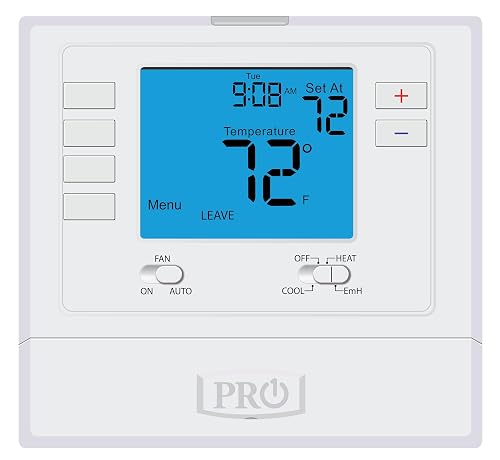
PRO1 T725 Heat Pump/Conventional Programmable Wall Thermostat (2H/1C, 1H/1C)

PRO1 T771 Single Stage Non-Programmable Wall Thermostat (1H/1C)
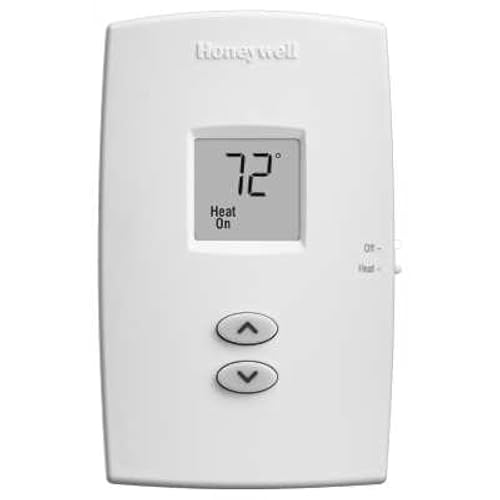
Honeywell TH1100DV1000 PRO 1000 Vertical Heat-Only Thermostat
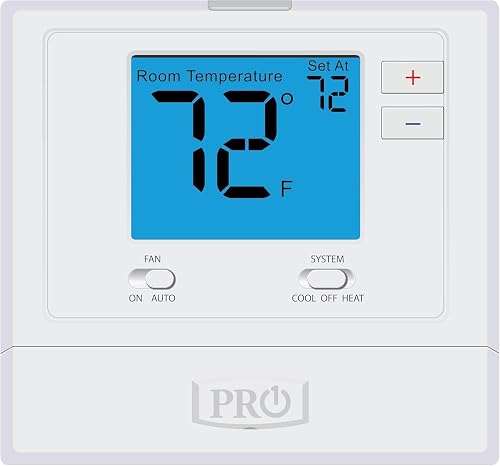
PRO1 T701 Single Stage Non-Programmable Wall Thermostat (1H/1C)

PRO1 T715 Multi-Stage Programmable Gas Thermostat (2H/2C)
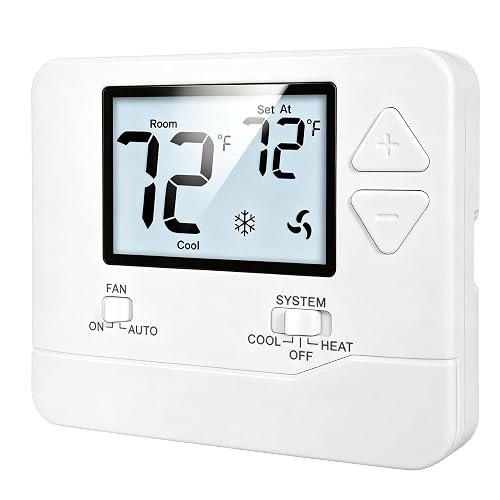
Heagstat NonProgrammable Thermostat 1 Heat/1 Cool (White Backlight)
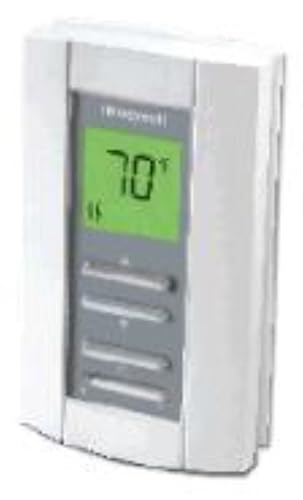
Honeywell TL7235A1003 Line Volt Pro 240V Digital Thermostat
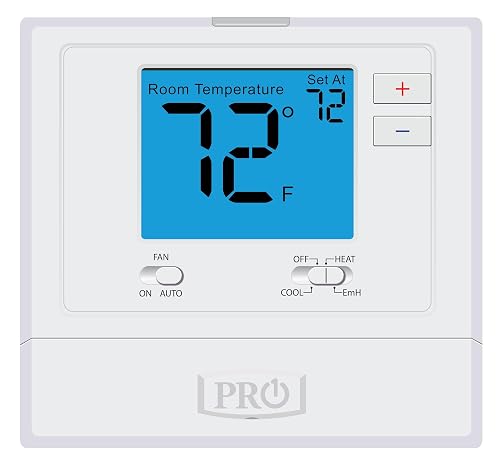
PRO1 T721 Non-Programmable Wall Thermostat (2H/1C Heat Pump / 1H/1C)
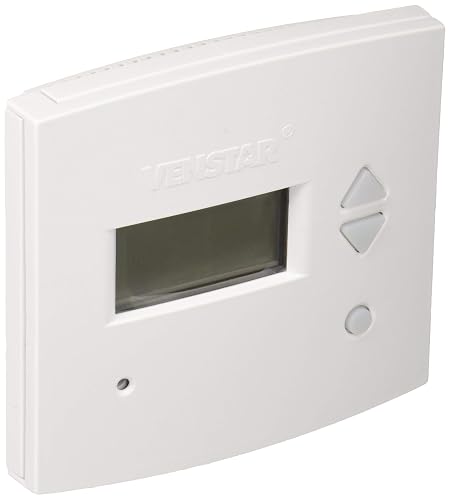
Venstar T2800 Commercial Platinum Slimline Thermostat (White)

PRO1 T805 Single Stage Programmable Wall Thermostat (1H/1C)
The Strengths Of Each Pick
The PRO1 T725 sits at the top of this list because it handles two very different HVAC worlds in one box. It supports 2 heat/1 cool heat pump systems alongside 1 heat/1 cool conventional systems, which means renters, owners, and even light contractors can standardize on a single wall unit rather than stocking multiple models.
Daily use feels approachable: a 4-square-inch blue backlit display keeps room temperature readable from across a hallway, and 7-day or 5/1/1 programmability gives you a workable schedule without forcing you into smart-home territory. For most homes with a heat pump, this is the comfortable middle ground.
Where It Excels
- Compatible with both heat pump and conventional setups, so the same unit survives a system swap
- 7-day or 5/1/1 programming adapts to shift workers and weekend routines alike
- Backlit screen makes late-night adjustments painless without flipping a hallway light
- Part of the broader T700 platform, so replacement parts and accessories tend to stay available
Trade Offs To Consider
- Hardwired or battery setup, depending on the install, which can complicate DIY work
- Lacks the learning features of a true smart thermostat, so adaptive scheduling is on you
Key Specs
Made For
Homeowners with a heat pump who want programmable savings without paying for a full smart-home hub.
A Better Fit Elsewhere
Pick the Honeywell TH1100DV1000 instead if your system is heat-only and you prefer a vertical, no-frills design.
The PRO1 T771 is built for spaces that barely need a thermostat, but still deserve precise control. Its wide setpoint range reaching down to 25°F makes it a natural fit for unheated garages, workshops, and sheds where freezing pipes or paint failures are real concerns.
There is no programming to fuss with, just swing adjustment and calibration for dialing in accuracy. Compared to the T725 above, the T771 trades flexibility for simplicity, and that is exactly the point.
Why It Works Well
- Setpoint range extending to 25°F protects pipes and finishes in cold outbuildings
- Non-programmable design removes scheduling guesswork for casual users
- Calibration and swing adjustments help match the thermostat to the actual room
- Backlit display stays readable in dim garages and basements
Small Caveats
- Single-stage only, so larger multi-stage systems will need a different control
- Limited appeal in primary living spaces where scheduling saves more energy than setpoint range
Who It Suits Best
Anyone with a detached garage, pole barn, or workshop where frost protection and simple on/off control matter more than scheduling.
Consider Something Else When
Choose the PRO1 T721 if the same space is wired for a heat pump and you occasionally want setpoint flexibility on the cooling side.
The Honeywell TH1100DV1000 is the kind of no-nonsense control that disappears into the wall and just does its job. Its vertical layout and heat-only design suit older homes, additions, and baseboard systems that never needed cooling in the first place.
Compared to the wider PRO1 T701 below, this Honeywell is narrower in scope but feels right-sized for the job. Premier white finish keeps it visually quiet, and the slide-switch operation tends to be intuitive for guests and family members who never read a manual.
What Earns Its Place
- Heat-only design avoids the complexity of cooling stages the system does not have
- Vertical form factor fits narrow wall sections between door frames and windows
- Premier white finish blends with most trim and wall colors
- Mechanical-style reliability appeals to households wary of touchscreens
Points To Keep In Mind
- No cooling support at all, so adding central air later means another swap
- Non-programmable, which limits savings on a system that runs every winter
- Lacks a backlight, so nighttime adjustments can be a small hassle in dark hallways
Best Suited To
Older homes and additions with simple heat-only systems where straightforward mechanical-style control beats extra features.
Skip It When
Reach for the PRO1 T805 if you want 7-day scheduling and a large display on a similar 1 heat/1 cool system.
The PRO1 T701 is the digital wall thermostat you recommend to a neighbor who just wants something that works. Built on the larger T700 platform, it pairs a clear 4-square-inch blue backlit display with a glow-in-the-dark light button, which sounds small until you stumble into a dark hallway at 2 a.m.
It supports 1 heat/1 cool conventional systems, so it covers the most common residential setup in North America. Where the T725 above adds programmability, the T701 keeps things simple, and many households prefer that trade.
What Works In Its Favor
- Glow-in-the-dark light button makes the unit easy to locate during a power flicker
- Gas or electric configuration supports both common furnace types
- Backlit display offers strong readability without the glare of larger screens
- Conventional 1H/1C coverage fits the majority of U.S. households
Honest Caveats
- Non-programmable only, so weekend warriors with shifting schedules may want a programmable alternative
- Single-stage design is a mismatch for two-stage furnaces that benefit from finer control
Who Should Grab It
Anyone replacing a dead analog thermostat in a typical 1 heat/1 cool home who values reliability over scheduling.
Look Elsewhere When
The PRO1 T805 is a stronger match for households that want the same T700 platform feel with full 7-day scheduling.
The PRO1 T715 is the right answer when the rest of the roundup feels undersized. A 2 heat/2 cool gas system with multiple stages is the kind of equipment that benefits from a thermostat designed to use it properly, and this one lets each stage earn its keep.
You can run it as 7-day, 5/1/1, or non-programmable, which is unusual flexibility at this level. The T700-platform display and glow-in-the-dark light button match the T701 above, so the family resemblance makes whole-home upgrades feel consistent.
A Few Highlights
- 2 heat/2 cool staging supports larger homes with zoned comfort needs
- Three programming modes cover everything from rigid schedules to set-and-forget use
- Battery or hardwire power options simplify retrofits in older properties
Softer Spots
- Overkill for a small home running a single-stage furnace
- Programming setup takes longer the first time than a non-programmable unit
Right Fit For
Owners of two-stage gas systems who want scheduling and tighter temperature swings without stepping up to a learning thermostat.
Not Your Match When
The Heagstat NonProgrammable is a calmer fit for a small apartment on a single-stage system.
The Heagstat NonProgrammable is a refreshingly focused wall control for a forced-air home. It works with 24VAC conventional single-stage 1H/1C systems, including the gas, oil, and electric furnaces most rentals and starter homes rely on, paired with an outdoor AC condenser and indoor ductwork.
Wiring is the one detail that catches people off guard: the base accommodates 2 to 5 wires, while 6 to 8-wire systems are not supported. For the right setup, the install is clean and the white backlight keeps the screen readable without overwhelming a small wall.
The Good Stuff
- Compatible with gas, oil, and electric forced-air systems for broad retrofit fit
- White backlight adds readability without the harsh blue glow of some competitors
- Non-programmable design lowers the learning curve for first-time installers
Worth Noting
- Not compatible with heat pump systems, so the PRO1 T725 is the safer pick there
- 2 to 5-wire base means homes with 6 to 8 conductors need a different control
- No scheduling features, which limits energy savings for daily commuters
Whose Shelf It Belongs On
Renters and budget-focused homeowners with a basic forced-air furnace who want a modern wall control without a learning curve.
Where A Sibling Pick Shines
Pick the PRO1 T701 if you want a similar non-programmable feel but prefer the T700 platform and glow-in-the-dark button.
The Honeywell TL7235A1003 is in a different category from the rest of the roundup, and that is precisely its strength. It is a 240-volt line-voltage thermostat built for electric baseboard and convection heaters, which is why it cannot be swapped with the low-voltage PRO1 units above.
An on-demand backlight, soundproofed relay operation, and a heating indicator that glows when the system is active give it a refined feel. For most baseboard-heavy homes, the trade-off is precision for compatibility, and it is usually worth it.
Good Reasons To Consider
- Electronic temperature control delivers tighter accuracy than typical baseboard bi-metal thermostats
- On-demand backlight keeps nighttime adjustments simple without glare
- Soundproof operation reduces the relay click that can echo through quiet rooms
- Heating indicator offers quick visual confirmation that the system is actually running
A Few Limitations
- 240-volt wiring means professional installation is the safer path for most households
- Not interchangeable with low-voltage systems, so it cannot replace a furnace thermostat
- Non-programmable, so multi-room baseboard setups may benefit from separate scheduling controls
Perfect Match For
Homeowners with 240V electric baseboard or convection heaters who want a quieter, more accurate replacement for an aging bi-metal unit.
Another Choice May Suit
Stick with the PRO1 T725 if the household runs a central heat pump rather than line-voltage electric heat.
The PRO1 T721 is a thoughtful middle ground between the simpler T701 and the programmable T725 above. It supports 2 heat/1 cool heat pump systems or 1 heat/1 cool conventional systems, which makes it handy when you are unsure what the next homeowner will install.
AA battery or hardwire power options give installers flexibility on retrofits. The same T700 display and glow-in-the-dark light button carry over, so a multi-property portfolio can look consistent without locking you into a single feature set.
Notable Gains
- Heat pump and conventional compatibility in a single non-programmable unit
- AA battery or hardwire power supports older homes without a common wire
- Glow-in-the-dark button keeps the unit findable in dark utility rooms
Room For Improvement
- No scheduling, so shift workers lose the chance to automate setpoints
- Wiring mistakes on a heat pump can be tricky, so the install is worth planning carefully
Who Will Love This
Landlords and homeowners who want a heat-pump-ready wall unit that can also serve a future conventional system without a swap.
Swap It Out When
The PRO1 T725 is the better call for households that want 7-day programming on the same dual-mode platform.
The Venstar T2800 brings a light-commercial mindset into a slim wall footprint. It is built around 7-day programming, a smart fan mode, 3 heat/2 cool staging, and 3 configurable outputs that give installers unusual freedom to tailor the system to the building.
Heat pump compatibility, color-coded backlit keys, and a large backlit display are all aimed at spaces where visibility and serviceability matter. For most residences this is more than needed, but for a small office or accessory dwelling unit, the flexibility earns its place.
Strong Points
- Configurable outputs cover unusual HVAC wiring that simpler thermostats leave unsupported
- 3 heat/2 cool staging suits larger rooftop units and small commercial systems
- Service filter and UV light reminders help maintain indoor air quality on a schedule
- Non-volatile memory preserves settings through power outages
Things To Weigh
- More features than a typical household needs, which can complicate everyday use
- Larger feature set usually means a longer initial setup
Built With In Mind
Light commercial spaces, accessory dwellings, and homeowners running a rooftop or packaged unit with multiple stages.
Reach For A Different Pick When
The PRO1 T715 is a calmer fit for a 2H/2C residential system that does not need commercial-grade outputs.
The PRO1 T805 closes the list on a high note, especially for anyone who has squinted at smaller wall displays. An extra-large 7-square-inch blue backlit screen is the headline feature, and the same T800 platform supports a glow-in-the-dark light button for low-light operation.
7-day, 5/1/1, or non-programmable modes let the same thermostat match a household’s schedule maturity. For most 1H/1C conventional homes, this is the comfortable step up from the T701 above.
Useful Touches
- 7 sq. in. display is markedly easier to read than the 4 sq. in. T700 series
- Three operating modes support a gradual upgrade from manual to fully scheduled use
- Glow-in-the-dark light button adds visibility during late-night checks
Potential Drawbacks
- Larger footprint may not fit narrow wall sections between trim and doors
- Single-stage only, so multi-stage systems will need a different control
Who It Suits Best
Schedulers in 1H/1C conventional homes who want a generous display and flexible programming on the same wall plate.
A Better Fit Elsewhere
Pick the PRO1 T701 if a smaller, non-programmable unit is a better match for the space and the household routine.
What To Weigh Before Choosing A Wall Thermostat
Match The System First, The Features Second
The single biggest decision is whether your HVAC is low-voltage (24VAC, common in central forced-air and heat pumps) or line-voltage (120V or 240V, common in electric baseboard heaters). Cross that threshold first, because a 240V unit like the Honeywell TL7235A1003 will not safely replace a 24V PRO1 model, and vice versa.
Within low-voltage systems, count your wires before you shop. Conventional 1H/1C systems usually need 4 or 5 wires, while heat pumps often need 5 to 8 wires including the orange O wire for reversing valve control. A thermostat that supports only 2 to 5 wires, like the Heagstat NonProgrammable, will be a frustrating match in homes with denser wiring. Getting this right protects you from a Sunday afternoon of unexpected returns.
Decide Whether You Need Programmability
Programmable thermostats, including the PRO1 T725, T715, and T805, deliver the largest energy savings for households with predictable schedules. Setpoints can be set back during work hours, raised again before the family arrives, and lowered overnight without anyone touching the wall.
Non-programmable controls like the PRO1 T701 and T771 trade that automation for simplicity, which works well in spaces with steady occupancy (guest rooms, workshops, rentals) or for people who simply prefer a fixed temperature. The honest read is that programmability pays off most when someone remembers to set it up properly on day one.
Look For Practical, Real-World Touches
Backlit displays and glow-in-the-dark light buttons sound minor, but they matter during a power flicker at 2 a.m. Swing adjustment and calibration help a thermostat match the actual room rather than the wall it’s mounted on, which is especially useful in hallways and exterior walls.
For most homeowners, a 4-square-inch display is comfortable, while larger 7-square-inch screens like the PRO1 T805 help anyone with vision needs or anyone who reads the temperature from across a long room. These small touches tend to separate thermostats that get used daily from thermostats that get ignored.
Smart Considerations Before You Commit
Wrong Turns To Avoid
A frequent mistake is buying a thermostat before confirming the system type. A heat pump and a conventional furnace use different terminal letters, and choosing the wrong control can leave features stranded or wires unused. A quick photo of the existing thermostat wiring with the faceplate removed is usually enough to clear this up before checkout.
Another common trap is assuming “programmable” automatically means “energy efficient.” A programmable thermostat only saves energy when the schedule matches the household. For homes where someone is always present, a simpler non-programmable unit may deliver the same comfort with less setup.
When Paying More Pays Off
Higher-tier models like the PRO1 T715 and the Venstar T2800 cost more because they add real capability: multi-stage support, configurable outputs, and longer scheduling windows. For larger homes with zoned comfort, two-stage furnaces, or light commercial equipment, the extra cost shows up in more even temperatures and fewer short cycles.
For smaller homes with a single-stage furnace, the upgrade rarely justifies itself. A budget-friendly non-programmable unit can deliver the same basic comfort at a noticeably lower price, and the savings can be redirected toward better insulation or a smart vent register, which often moves the needle more on energy bills.
Frequently Asked Questions
Do programmable thermostats really lower energy bills?
They can, especially in homes with predictable daily schedules. Setback periods during work hours and overnight tend to produce the largest gains, while a thermostat left at one temperature all day often gives back those savings.
What is the difference between single-stage and multi-stage systems?
A single-stage system runs at one output level, while a multi-stage system can run at lower and higher outputs depending on demand. Two-stage furnaces cycle less and tend to hold more even temperatures, which is why a multi-stage thermostat like the PRO1 T715 exists.
Can I install a wall thermostat myself?
Many low-voltage swaps are within reach of a careful DIYer, especially when wiring labels are clear. Line-voltage units like the Honeywell TL7235A1003 are best left to a licensed electrician, since the 240V circuit carries real safety risk.
How do I know if my system is a heat pump?
Heat pump systems usually include an outdoor unit that runs year-round, paired with an indoor air handler. Your existing thermostat will likely be labeled with terminal letters including O or B for the reversing valve, which is a strong clue.
Are non-programmable thermostats a bad choice?
Not at all. They suit rentals, workshops, and households where a fixed temperature is acceptable. The PRO1 T701 and Heagstat NonProgrammable are good examples of how a no-schedule control can still be a comfortable, reliable fit.
The Takeaway
The right thermostat is the one that matches the system already in your walls, supports the wiring that is already there, and fits the way your household actually lives. Start with system type and wire count, then choose between programmable and non-programmable based on how predictable your week is. From there, the picks above cover everything from a tight-budget rental upgrade to a light-commercial rooftop unit, so the search usually narrows faster than expected.