

Fixed temperature thermostats solve a very specific comfort problem: you want a stable, predictable temperature without fiddling with apps, schedules, or voice commands. They’re the right call in utility rooms, guest spaces, workshops, garages, sheds, and anywhere you care more about reliability than features you may never touch. This roundup walks through ten solid wall-mount and specialty options across conventional, heat pump, and water-heater setups, so you can match the right thermostat to the system you already have, and skip the ones that simply don’t fit.
Your Options, Compared
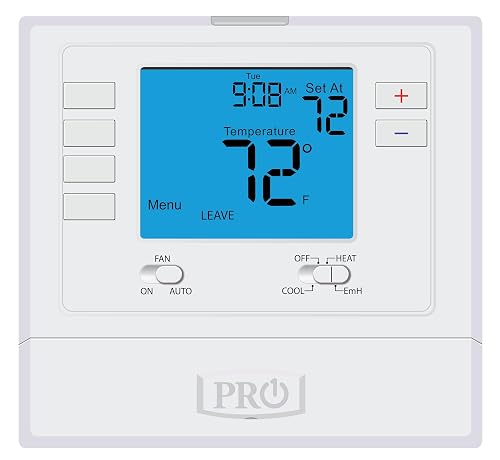
PRO1 T725 Heat Pump/Conventional Programmable Digital Wall Thermostat

PRO1 T771 Single Stage Non-Programmable Wall Thermostat
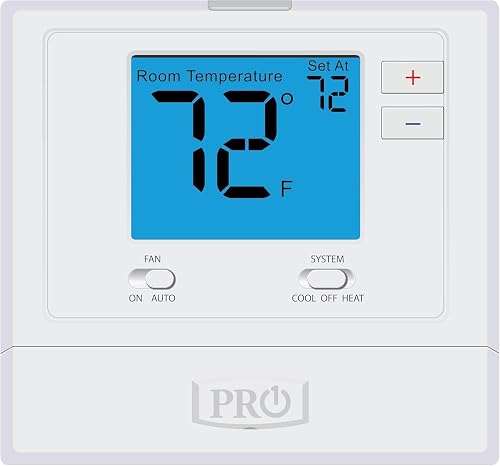
PRO1 T701 Single Stage Non-Programmable Wall Thermostat

PRO1 T715 Multi-Stage Programmable Gas Thermostat
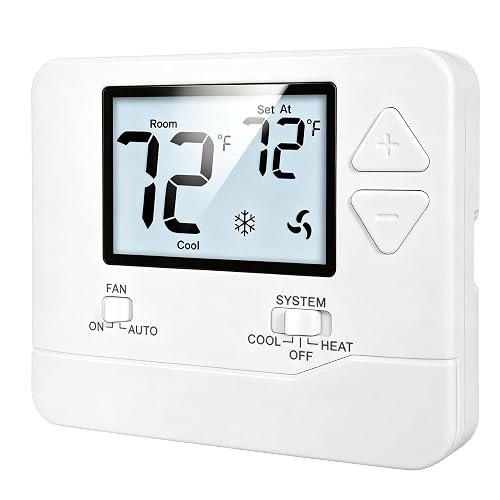
Heagstat NonProgrammable Thermostat 1 Heat/1 Cool
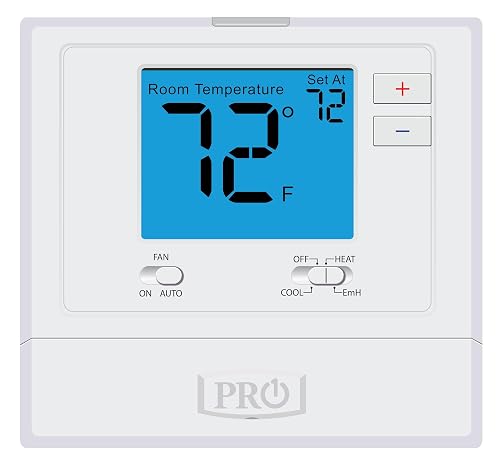
PRO1 T721 Non-Programmable Wall Thermostat

Zero KST203 Water Heater Thermostat (Upper, UL Certified)

PRO1 T805 Single Stage Programmable Wall Thermostat
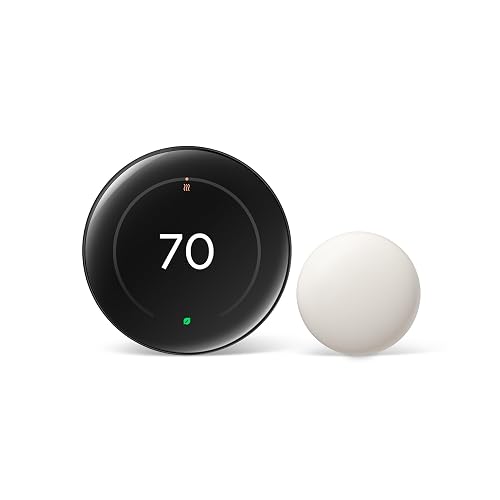
Google Nest Learning Thermostat 4th Gen + Sensor (Obsidian)
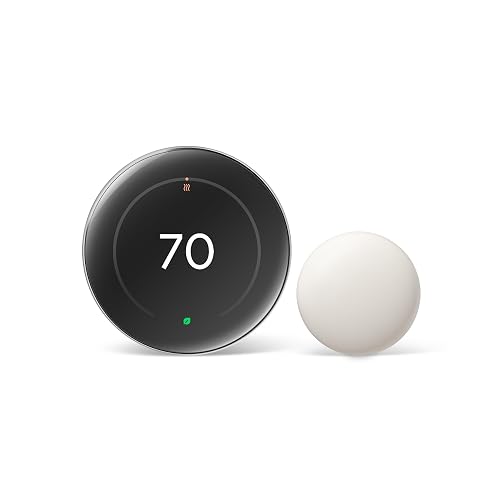
Google Nest Learning Thermostat 4th Gen + Sensor (Silver)
Why These Options Stand Out
The T725 sits in that comfortable middle of the PRO1 line: programmable where you want structure, flexible enough to cover either a 2H/1C heat pump or a 1H/1C conventional setup. The 4 sq. in. blue backlit screen reads clearly from across a hallway, and the schedule modes (wake, leave, return, sleep) handle a typical family routine without you needing to think about them. Compared with the simpler T701 below, this unit earns its keep the moment your home runs on a heat pump.
For mixed-system homes, this is a sensible anchor pick. It also shares the T700 platform footprint, so swapping an older PRO1 model for this one is usually a quick wall-plate swap rather than a fresh wiring job.
Strengths Worth Knowing
- Dual compatibility: 2H/1C heat pump and 1H/1C conventional in one unit.
- 7-day or 5/1/1 scheduling gives you a weekday/weekend structure without daily resets.
- Blue backlit display remains readable in dim hallways and at night.
- Shares the T700 mounting footprint, simplifying replacement installs.
Worth Noting
- Not suited to multi-stage (2H/2C) gas systems; you’ll want the T715 for that.
- Programmable features add a small learning curve for anyone who has only used manual dials before.
- Commonly reported: the backlight brightness sits in a fixed range, which may feel a touch bright in a bedroom.
Key Specs
Built With In Mind
Homeowners with a single-stage heat pump who want a programmable schedule without stepping up to a 2H/2C multi-stage model.
Look Elsewhere When
You’re running a two-stage gas furnace: the PRO1 T715 is the better fit, with 2H/2C staging built in.
The T771 leans into the “fixed” side of fixed temperature thermostats. There’s no schedule to set, no programming menus to learn, just a wide setpoint range from 25°F to 90°F on a backlit display. That low-end reach is what makes it useful in a garage, shed, or workshop where you actually want the temperature to drop well below a normal home’s comfort band without anything calling for backup heat.
It runs on the same T700 platform you’ll see in the T701, which keeps the wall footprint familiar if you’re upgrading from a much older mercury-bulb unit. Swing adjustment and calibration access help dial in accuracy for spaces that swing hard between day and night.
Strong Points
- 25°F to 90°F setpoint range covers low-temp spaces like garages and basements.
- Non-programmable layout keeps the control surface small and approachable.
- Swing and calibration adjustments help fine-tune cycling behavior.
- 4 sq. in. blue backlit display, easy to read at a glance.
Trade Offs
- Single-stage only, so it won’t drive a multi-stage furnace or heat pump.
- No scheduling means you’ll nudge the setpoint manually when seasons change.
Best Suited To
Garages, sheds, workshops, and bonus rooms where you want one setpoint and very little fuss.
Consider Something Else When
You want scheduling for a primary living space: the PRO1 T701 covers the same wiring with a clean non-programmable feel, while the T725 adds 7-day control.
The T701 is the kind of thermostat that disappears into the wall and just does its job. It’s a non-programmable unit for 1H/1C conventional systems, with the same 4 sq. in. blue backlit display the rest of the T700 family uses. The small but genuinely useful touch here is the glow-in-the-dark light button, which means fumbling for the lamp at 2 a.m. becomes a non-event.
Gas or electric compatibility makes it a safe replacement across most older homes, and the simpler control layout is the right call for anyone who has been avoiding a touchscreen for years. Set it, leave it, swap the batteries once a year.
Real-World Strengths
- Glow-in-the-dark light button makes nighttime adjustments easier.
- Works with gas or electric 1H/1C conventional systems.
- Large, well-spaced buttons reduce mis-presses for anyone with limited dexterity.
- Big backlit numbers are easy to read across a room.
Points To Note
- No scheduling means no automatic setback when you leave for work.
- Limited to single-stage systems, so a 2H/2C upgrade will require a different unit.
Feature Snapshot
Right Fit For
Anyone running a basic 1H/1C gas or electric system who values simplicity over scheduling.
Skip It When
You want 7-day scheduling on a conventional system: the PRO1 T805 is the step up with a larger display and programmability.
The T715 is where PRO1’s T700 platform stretches its legs. Built for 2H/2C gas systems, it gives you 7-day, 5/1/1, or non-programmable operation, so you can grow into scheduling without buying a new thermostat later. The same glow-in-the-dark light button and 4 sq. in. backlit display from the T701 carry over, keeping the look consistent if you’re matching a unit room by room.
You can run it on batteries or hardwire it, which is handy in older homes where the common wire hasn’t been pulled to every wall plate. Compared with the T701, this is the model to step up to once your furnace and air conditioner both have two stages.
What It Does Well
- 2H/2C staging suits modern two-stage gas furnaces and matching AC condensers.
- Three operating modes: 7-day, 5/1/1, or non-programmable, in one unit.
- Battery or hardwire power options for older wiring configurations.
- Glow-in-the-dark light button helps with late-night adjustments.
Some Limits To Know
- Not designed for heat pump systems; the T721 or T725 cover that ground instead.
- More configuration options than the T701 mean a slightly longer first-time setup.
Whose Shelf It Belongs On
Owners of two-stage gas furnaces who want scheduling without jumping to a smart thermostat.
Another Choice May Suit
Your system uses a heat pump: the PRO1 T725 handles 2H/1C heat pumps with similar programmability.
The Heagstat is a straight-to-the-point wall thermostat for 1H/1C conventional systems. It’s strictly 24VAC single-stage, working with gas, oil, or electric furnaces paired with an independent outdoor AC condenser, and the base accepts only 2 to 5 wires, which actually narrows the install down to clean, simple retrofits.
The white backlight is gentle enough for a hallway, and the non-programmable layout keeps the daily routine to “set it and walk away.” In rentals or older homes where pulling a common wire is a non-starter, this thermostat is the kind of unit you can swap in with the wires already in the wall. Compatibility exclusions matter: it won’t run a heat pump or systems needing 6 to 8 wires.
A Favorable Mix
- Works with 24VAC gas, oil, and electric single-stage systems.
- 2 to 5 wire base suits many older homes without rewiring.
- White backlight is easy on the eyes in a dim hallway.
- Non-programmable layout is approachable for first-time DIYers.
Honest Caveats
- Not compatible with heat pumps or systems requiring 6 to 8 wires.
- Single-stage only, so it can’t take advantage of two-stage equipment.
Feature Card
Made For
Renters and DIYers replacing an aging wall thermostat in a 1H/1C conventional home with limited wiring.
A Better Fit Elsewhere
You have a heat pump or a multi-stage furnace: the PRO1 T721 or T715 will match that equipment properly.
The T721 quietly handles one of the most common equipment scenarios in older homes: a 2H/1C heat pump that might get replaced with a conventional system down the road, or vice versa. Because it accepts either configuration, it stays useful through a system swap. The T700 platform keeps the layout familiar to anyone who has used the T701 or T715.
Like the other T700 units, it offers a glow-in-the-dark light button and the same 4 sq. in. backlit display. AA battery or hardwire power keeps it flexible across wiring setups, which is a small detail that often decides whether an install goes smoothly on a Saturday morning.
The Value In It
- Works with 2H/1C heat pump or 1H/1C conventional systems.
- Non-programmable layout keeps daily operation simple.
- Battery or hardwire power for varied wiring situations.
- Matches the T700 look and feel if you’re standardizing across rooms.
Where It May Fall Short
- No 7-day scheduling, so this isn’t the right call if you want automatic setbacks.
- Single-stage cooling only on the conventional side.
Who It Suits Best
Homeowners with a single-stage heat pump who don’t want scheduling features and may switch equipment types later.
Reach For A Different Pick When
You want 7-day scheduling on a heat pump: the PRO1 T725 covers that need with the same equipment support plus programmability.
The KST203 isn’t a wall thermostat, it’s a fixed-temperature control for a residential electric water heater. It serves as the upper thermostat on dual-element tanks, rated 120/480 VAC. The adjustable setpoint, the built-in safety switch that trips on overheating, and the UL certification all point to a part meant to slot into a standard water-heater replacement.
Cross-references to common part numbers (59T and 66T-style SPDT controls) make it a sensible pick when matching a failed OEM unit. For homeowners comfortable with a screwdriver, a voltage meter, and shutting off the breaker, this is a practical DIY fix that restores consistent hot water without calling a plumber for a full tank replacement.
Practical Advantages
- UL certification, which matters for any component wired into a heating circuit.
- Adjustable setpoint within an energy-saving range.
- Built-in safety switch for overheating protection.
- Cross-references common upper-element thermostat part numbers.
Practical Considerations
- Installation involves working with 240V water-heater wiring, so breaker-off and basic electrical caution are non-negotiable.
- Replacing one element without inspecting the lower thermostat can leave a mismatched pair.
Perfect Match For
DIYers replacing a failed upper thermostat on a dual-element residential electric water heater.
Swap It Out When
You need a wall-mounted thermostat for an HVAC system: any of the PRO1 or Heagstat picks above are the right category for that job.
The T805 takes the T701’s straightforward single-stage approach and adds a noticeably larger 7 sq. in. blue backlit display, which makes a real difference if you’ve been squinting at smaller wall units. It also steps up to PRO1’s T800 platform, which still offers 7-day, 5/1/1, or non-programmable operation.
The glow-in-the-dark light button from the T700 series carries over, so locating the controls at night stays easy. In practice, the T805 fits the same 1H/1C conventional equipment the T701 covers, just with more on-screen real estate and scheduling baked in.
Benefits That Matter
- 7 sq. in. backlit display is easier to read from across a room.
- Three operating modes: 7-day, 5/1/1, or non-programmable.
- Compatible with standard 1H/1C conventional HVAC equipment.
- Glow-in-the-dark light button helps in low light.
A Few Limitations
- Limited to single-stage equipment, so it can’t drive a 2H/2C system.
- Larger display means a slightly bigger wall footprint than the T701.
Who Should Grab It
Anyone with a 1H/1C conventional system who wants scheduling plus a clearly readable display.
Not Your Match When
You run a heat pump: the PRO1 T725 covers heat pump systems with comparable scheduling.
The Nest Learning Thermostat (4th gen) is the connected end of this list. It learns your preferred temperatures over time and adjusts as your routine changes, so it leans more toward “smart scheduling” than the truly fixed-temperature category, but it stays on this list for anyone weighing a move from a basic wall unit. The included 2nd-gen Nest Temperature Sensor extends useful readings into other rooms.
The Obsidian finish sits well in darker interiors and modern builds. Compared with the PRO1 T805, the Nest asks more of you on the setup side, but pays you back in remote control and adaptive scheduling. Compatibility with your specific HVAC system still matters, so check the wiring count and common-wire needs before committing.
Real Benefits
- Learns a temperature schedule from your manual adjustments over time.
- Bundled 2nd-gen temperature sensor helps balance readings across rooms.
- Obsidian finish works well in darker interiors and modern spaces.
- Remote control through the Nest app once installed.
Where It Is Less Suited
- Higher complexity than the other picks here, including a longer initial setup.
- Some HVAC systems require a common wire or power adapter that not every home has on the wall.
Core Details
Who Will Love This
Homeowners who want a learning schedule and remote control, and who already have compatible HVAC wiring.
Where Another Pick Suits Better
You just want a setpoint and a backlit display: the PRO1 T701 handles that with far less setup.
The Silver version of the 4th-gen Nest Learning Thermostat offers the same learning behavior and bundled 2nd-gen temperature sensor as the Obsidian model, with a lighter finish that suits brighter rooms and lighter switch plates. It’s the same internal hardware, just a different visual match for your wall.
If you read the Obsidian review above, the strengths and trade-offs carry over almost line for line. The honest read is that the decision between this and pick 9 comes down to interior style and lighting rather than performance.
Reasons It Performs
- Adaptive scheduling that adjusts to your routine over time.
- Bundled 2nd-gen temperature sensor for multi-room awareness.
- Silver finish that pairs well with lighter walls and trim.
- Remote control through the Nest app after setup.
Worth Bearing In Mind
- Setup is more involved than a basic non-programmable wall unit.
- Some HVAC systems will need a common wire or compatible power kit.
Made For
Homeowners with brighter interiors who want the same Nest learning experience in a silver finish.
Look Elsewhere When
You prefer a darker, low-glare finish on the wall: the Obsidian Nest (pick 9) covers that preference.
Getting The Right Match For Your System
Picking a fixed temperature thermostat really comes down to knowing three things about your HVAC setup: the system type (conventional, heat pump, multi-stage, or water heater), the number of heating and cooling stages, and how many wires run to your current wall plate. Match those first, and almost every other decision falls into place.
Conventional single-stage systems are the easiest match. A 1H/1C setup, meaning one stage of heating and one of cooling, runs cleanly on the PRO1 T701, the Heagstat, or the PRO1 T805 if you want programmability. Two-stage gas systems need 2H/2C support, which points to the PRO1 T715 and its 7-day or 5/1/1 scheduling.
Heat pump homes need thermostats that explicitly call out heat pump support. The PRO1 T721 (non-programmable) and T725 (programmable) cover 2H/1C heat pump configurations, and the T725 also handles conventional systems. The T771 is the outlier: it spans 25°F to 90°F, which is what makes it useful in garages and sheds where the temperature routinely drops below standard home comfort levels.
Water-heater thermostats are a separate category. The Zero KST203 is an upper-element replacement for dual-element electric tanks, not a wall control. It earns its place on this list for shoppers who specifically need that part, and UL certification plus a built-in safety switch are the two details worth checking.
For smart-home adopters, the two Nest 4th-gen bundles bring learning schedules, app control, and an extra temperature sensor, at the cost of a more involved install and a likely need for a common wire. They’re worth considering if remote access matters more than the simplicity of a wall-only unit.
Picking The Right Tier Without Overpaying
Common Shopping Slip Ups
The most frequent mistake is matching thermostat to equipment by guess. Buying a 1H/1C conventional unit for a 2H/2C furnace leaves you with unused capacity and a thermostat that can’t talk to the second stage. Count the wires at your wall plate, check the furnace and AC data plates, and confirm heat-pump versus conventional before you add anything to your cart.
The second slip is assuming every thermostat needs a common wire. Several picks here, including the PRO1 T715 and the Heagstat, work on limited wiring, which is genuinely useful in older homes. Skipping that check leads to a return trip to the retailer.
Where The Extra Money Goes
Higher-tier models add scheduling, larger displays, multi-stage support, and learning behavior. The PRO1 T805 vs. the T701 is a clean example: same equipment support, more on-screen real estate, and 7-day programmability. The Nest 4th-gen jumps further into remote access and adaptive scheduling, which costs more but pays off if those features actually fit how you live.
For most households, the upgrade is worth it when the thermostat is in a high-traffic wall, schedules genuinely save energy, or the equipment has more than one stage. For a workshop thermostat that holds one temperature year-round, a simple non-programmable unit is the smarter spend.
Key Considerations Across These Picks
Pitfalls Shoppers Hit
Mismatched system type is the biggest one. Heat pumps, conventional systems, and multi-stage equipment each call for a specific thermostat, and the model number matters. The second is wiring: count the wires at your existing plate, including any unused ones tucked into the wall, before choosing between 2-wire and 5-wire units. The third is feature creep. A learning thermostat in a guest bedroom adds cost without adding comfort, so the simpler non-programmable picks often make more sense in low-use rooms.
Why Top Tier Costs More
The jump from a non-programmable to a programmable model covers scheduling hardware, a larger display, and the controls to manage it. Going further to a learning thermostat adds sensors, networking, and software that adapts over time. You pay for the extra hardware and for the engineering that makes scheduling and remote access reliable. The upgrade is worth it when schedules genuinely shape your energy use, or when remote access solves a real problem, like adjusting the temperature before you get home from a trip.
Frequently Asked Questions
What does “fixed temperature thermostat” actually mean here? It refers to thermostats that hold a setpoint rather than learning or auto-adjusting, including non-programmable units you set once and leave, plus programmable models you set on a fixed weekly schedule.
Will any of these work with my existing wiring? Most PRO1 T700 and T800 models and the Heagstat work with 2 to 5 wires, but the Nest 4th gen often needs a common wire. Counting the wires at your current wall plate is the fastest way to confirm.
Can I install a thermostat myself? Most of these are DIY-friendly with basic tools and a clear understanding of which wire goes where. Turn off the breaker, photograph the existing wiring, and follow the included manual step by step. The water-heater thermostat is a more involved job that calls for extra caution with 240V wiring.
Do I need a programmable thermostat to save energy? Programmable scheduling helps when your routine leaves the house empty for predictable blocks during the day. A simple non-programmable thermostat set to a reasonable setpoint is often enough in low-traffic rooms.
How do I know if I have a heat pump or a conventional system? Heat pumps usually have an outdoor unit that runs year-round, and the indoor handler often has electric strip heat. Conventional systems pair a furnace (gas, oil, or electric) with a separate outdoor AC unit. Your HVAC contractor’s paperwork or the data plate on your indoor unit is the most reliable source.
Wrap Up
The honest read is that the right thermostat depends almost entirely on your equipment, not on which model has the longest feature list. Match the system type first, then decide whether you want scheduling, learning, or just a clean backlit display. Once those choices are made, the picks above should make the rest of the decision straightforward.