
Shopping for a wall thermostat that just works shouldn’t feel like a research project, yet the category gets noisy fast. Heat pump homes need different wiring than single-stage conventional systems, and garage or workshop spaces call for a wider setpoint range than a bedroom. The picks below cover the most common scenarios you’ll actually run into, from no-frills single-stage units to a learning thermostat that adapts to your routine.
The Essentials At A Glance
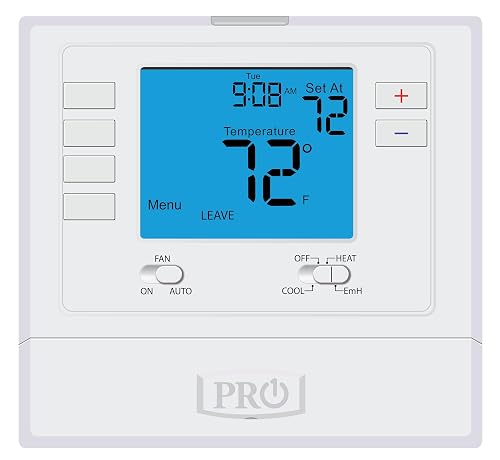
PRO1 T725 Heat Pump/Conventional Programmable Digital Wall Thermostat

PRO1 T771 Single Stage Non-Programmable Wall Thermostat
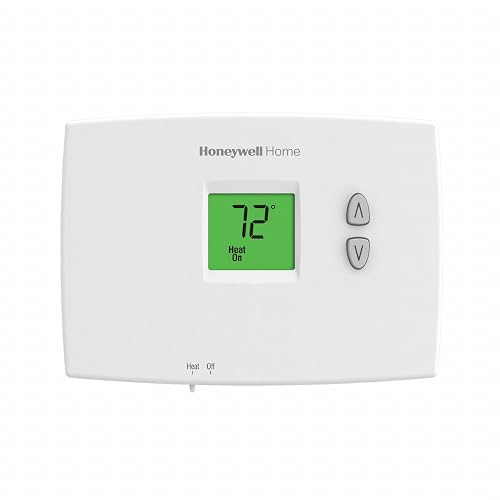
Honeywell TH1100DH1004 Horizontal PRO 1000 Thermostat
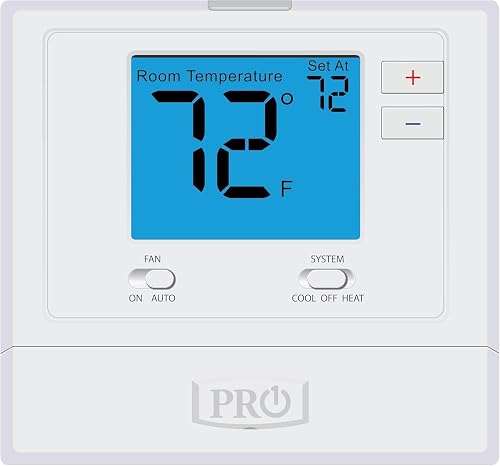
PRO1 T701 Single Stage Non-Programmable Wall Thermostat

PRO1 T715 Multi-Stage Programmable Gas Thermostat
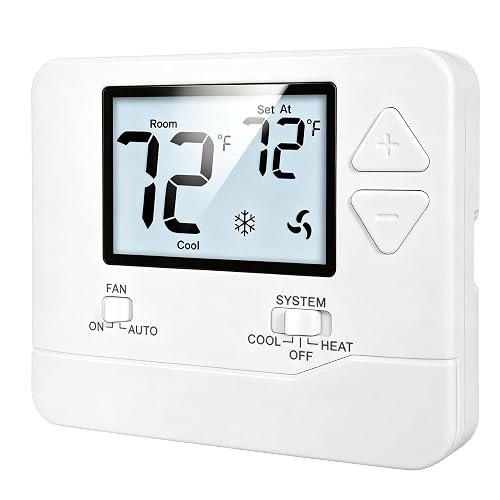
Heagstat NonProgrammable Thermostat 1 Heat/1 Cool
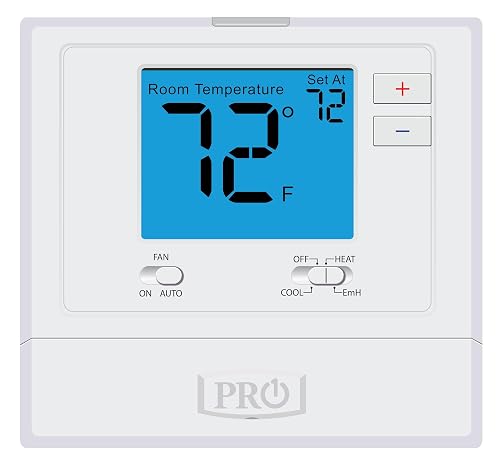
PRO1 T721 Non-Programmable Wall Thermostat
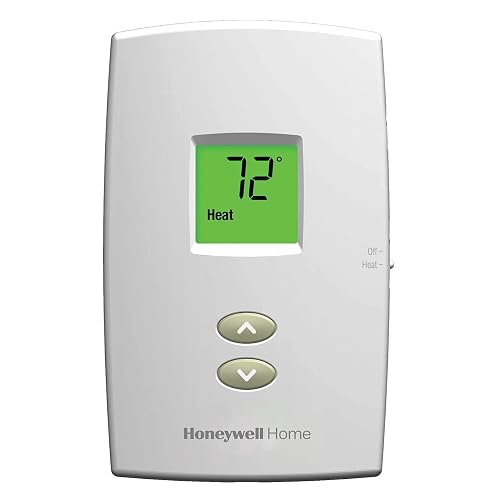
Honeywell TH1100DV1000 Pro-Digital 2-Wire Heat Only

PRO1 T805 Single Stage Programmable Wall Thermostat
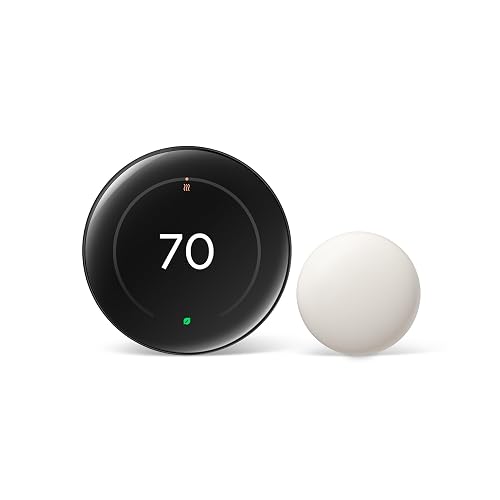
Google Nest Learning Thermostat (4th gen) + Nest Temperature Sensor (2nd gen) – Obsidian
A Deeper Look At The Lineup
The PRO1 T725 sits at the top of the list because it covers a configuration most homes actually use: a 2 heat/1 cool heat pump alongside a 1 heat/1 cool conventional system. That flexibility matters if you have a heat pump with backup heat strips, or a property where the upstairs runs a different system than the basement. The 4 sq. in. blue backlit display stays readable in low light, and the 7-day or 5/1/1 programming lets you shape a weekday and weekend schedule without fuss.
For households stepping up from a basic slider thermostat, the schedule modes (wake, leave, return, sleep) give meaningful control without a learning curve. The T700 platform is widely used by pros, which usually means replacement parts and tech familiarity are easy to find. Compared to the non-programmable T771 later in this list, you’re paying a small premium for the scheduling logic and the heat pump compatibility, but for many mixed-system homes that’s the trade that makes sense.
Bright Spots
- Heat pump and conventional compatibility in one unit
- 7-day or 5/1/1 programming with four daily schedule modes
- Large 4 sq. in. blue backlit display for dim hallways
- Sits on the T700 platform that installers recognize
Things To Consider
- Programming setup takes an afternoon the first time around
- More configuration menus than a non-programmable unit
Feature Snapshot
Made For
Homeowners with a heat pump system plus a backup conventional stage who want full scheduling without jumping to a smart thermostat.
Consider Something Else When
Shed or garage heating in a single-stage conventional space suits the PRO1 T771 better, with its wider setpoint range.
The PRO1 T771 earns its spot for spaces that need to hold temperatures a standard living-area thermostat can’t reach. The 25°F to 90°F setpoint range is the headline here: garages, workshops, basements, and sheds that get cold in winter won’t be fighting a 50°F floor the way a typical residential thermostat forces. The 4 sq. in. blue backlit display keeps the readings visible, and the non-programmable design keeps the wall clutter to a minimum.
Setpoint swing adjustment and calibration controls live behind the faceplate for installers, which is helpful if your space runs a few degrees off. For a primary living area where you’d benefit from 5/1/1 programming, the PRO1 T725 ahead of it remains the better fit. The T771’s job is narrower, and it does that job well.
Everyday Advantages
- Extended setpoint range down to 25°F
- Calibration controls for off-baseline spaces
- Backlit display readable in dim workshops
Worth Noting
- No scheduling, so you’ll nudge it seasonally
- Single-stage only, not for multi-stage equipment
Right Fit For
Anyone heating a detached garage, workshop, or shed where a standard residential thermostat can’t drop low enough.
Look Elsewhere When
A main-floor home with central air benefits more from the Honeywell TH1100DH1004 if you run a heat-only conventional system and want a familiar nameplate.
The Honeywell TH1100DH1004 has been a go-to for landlords and homeowners with a heat-only system for years, and the Horizontal PRO 1000 carries that reputation forward. The non-programmable design means the controls are exactly what you need and nothing else: up, down, set. The backlit display helps in low-light hallways or basements where you’d otherwise be squinting at the wall.
Dual power (battery or hardwire) is the practical detail that often makes this model installable in places where other units would balk. An adjustable temperature scale from 40°F to 90°F covers most homes, with a separate 35°F to 90°F garage mode if you need it. Compared to the PRO1 T701 further down, you’re giving up a glow-in-the-dark light button and a larger display, but the Honeywell nameplate and horizontal layout appeal to those who want a familiar feel.
Where It Helps
- Heat-only simplicity with dual power support
- Backlit display for low-light reading
- Adjustable scale suits both homes and garages
Trade Offs
- No cooling control at all
- Smaller display footprint than newer T700-platform units
Best Suited To
Heat-only households who want a proven, no-frills wall unit and aren’t running central air through the same thermostat.
Reach For A Different Pick When
You need cooling control as well, in which case the PRO1 T701 handles 1H/1C conventional systems on the same straightforward idea.
The PRO1 T701 is the kind of thermostat you put in a rental property or a guest suite and forget about. It’s a 1 heat/1 cool conventional unit on the T700 platform with a 4 sq. in. blue backlit display that doesn’t strain your eyes. The glow-in-the-dark light button is a small but appreciated touch, especially for a thermostat at the end of a hallway where the wall switch is on the other side of the room.
Gas or electric configuration flexibility means an installer can hand it to a technician and know it covers most standard central HVAC setups. The non-programmable nature is a feature here, not a limitation: a tenant or a houseguest can’t accidentally wipe your schedule. For anyone who wants scheduling, the PRO1 T805 later in this list adds 7-day programming to the same T700 platform idea.
What Works In Its Favor
- Glow-in-the-dark light button for nighttime access
- Gas or electric configuration options
- T700 platform consistency for service familiarity
Honest Caveats
- No scheduling logic, manual adjustments only
- Single-stage only, not for multi-stage systems
Feature Card
Who It Suits Best
Rental property owners and homeowners who want a reliable 1H/1C wall thermostat with no programming to configure or maintain.
Swap It Out When
Scheduling matters to you, since the PRO1 T805 offers 7-day programming on the same T700 platform with a larger display.
The PRO1 T715 handles what most other units in this list won’t touch: 2 heat/2 cool gas systems with a real multi-stage setup. Two-stage gas furnaces run more efficiently when the thermostat can stage them properly, and the T715 is built for that exact conversation with your equipment. The 7-day, 5/1/1, or non-programmable options mean you can grow into scheduling later or skip it entirely.
The 4 sq. in. blue backlit display and glow-in-the-dark light button keep the interface friendly, and the T700 platform means installers won’t need to learn a new wiring layout. Battery or hardwire power options add installation flexibility. Compared to the PRO1 T701, you’re paying for multi-stage capability and scheduling, so the T715 only earns its keep on systems that actually use those stages.
Where It Delivers
- 2H/2C multi-stage gas system support
- 7-day, 5/1/1, or non-programmable modes
- Battery or hardwire power options
Points To Note
- Overkill for single-stage homes
- Configuration menus take longer to set up
Whose Shelf It Belongs On
Two-stage gas furnace homeowners who want scheduling and proper staging without jumping to a smart thermostat.
Skip It When
You have a basic single-stage system, where the PRO1 T701 covers what you need at lower cost.
The Heagstat lands here for shoppers who want a working wall thermostat without paying for branding or scheduling they won’t use. It’s a 24VAC conventional single-stage unit, designed to wire up to most gas, oil, or electric furnaces paired with a separate air conditioning condenser. The white backlight gives the display a clean look, and the non-programmable design keeps the controls to a few buttons.
The wiring constraint is the one to watch: the base accommodates two to five wires, and six-to-eight wire configurations won’t fit. For most 1H/1C conventional homes, that’s exactly the wire count you’d expect, but you should confirm before pulling the old stat off the wall. Compared to the PRO1 T701, the Heagstat is positioned as a lower-cost alternative for the same basic job, with a smaller feature set overall.
Well-Handled Touches
- Works with gas, oil, and electric furnaces
- White backlight for a clean visual
- Straightforward non-programmable interface
Some Limits To Know
- 2 to 5 wire base only, not for 6+ wire systems
- Conventional systems only, no heat pump support
Quick Facts
Who Should Grab It
Shoppers on a tight budget running a standard 1H/1C conventional system who don’t need scheduling or smart features.
A Better Fit Elsewhere
Multi-stage or heat pump owners get better value from the PRO1 T715, which handles the staging their equipment actually needs.
The PRO1 T721 is the crossover model in the lineup, supporting 2H/1C heat pump or 1H/1C conventional systems in a single non-programmable unit. The flexibility is what makes it useful: a home that runs a heat pump today but might switch to a conventional furnace during a future renovation can stay on the same wall thermostat. The 4 sq. in. blue backlit display and glow-in-the-dark light button come from the same T700 platform family as the rest of the PRO1 picks here.
AA battery or hardwire power gives the installer options, and the non-programmable design keeps the controls intuitive for anyone in the household. Compared to the programmable PRO1 T725 earlier in this list, you’re trading scheduling for a slightly simpler interface. The T721 hits a sweet spot for homes that want T700-platform familiarity without the weekly programming menu.
Everyday Wins
- Heat pump or conventional in one unit
- AA battery or hardwire power options
- Glow-in-the-dark light button for night access
Things That May Matter
- No scheduling means seasonal manual adjustments
- Not designed for multi-stage gas systems
Perfect Match For
Mixed-system homeowners who want a non-programmable wall thermostat that can move with their equipment over time.
Another Choice May Suit
Two-stage gas furnace owners get the staging they need from the PRO1 T715 instead.
The Honeywell TH1100DV1000 is the heat-only model you reach for when the existing wires on the wall are just two conductors. Older homes and some millivolt systems don’t have a C-wire (the common wire that delivers continuous 24VAC power), and many modern thermostats won’t run on that wiring. The Pro-Digital 2-Wire sidesteps that limitation by design, and the backlit display stays readable in dim basements or mudrooms.
The setpoint range covers 40°F to 90°F, which handles typical home heating without surprises. Built-in compressor protection is a small detail that prevents short cycling if the unit ever does see a cooling call. The Honeywell TH1100DH1004 earlier in this list is the larger-display sibling for heat-only homes, while the TH1100DV1000 is the right call when wire count is the binding constraint.
Practical Advantages
- Operates on just two wires
- Backlit display for low-light visibility
- Compressor protection built in
Potential Drawbacks
- Heat-only, no cooling support
- Smaller feature set than programmable units
Who Will Love This
Owners of older homes with two-wire heat-only wiring who need a digital upgrade without running a new cable through the wall.
Where Another Pick Suits Better
You want 1H/1C control on a C-wire system, and the PRO1 T701 covers that scenario on the T700 platform.
The PRO1 T805 takes the T700-platform idea and grows the display to a 7 sq. in. panel, the largest in this lineup. For anyone who has squinted at a thermostat across the room, the bigger screen reads clearly from the couch or the kitchen doorway. The T800 platform adds 7-day, 5/1/1, or non-programmable modes, so you can schedule weekday and weekend separately or skip programming entirely.
Single-stage 1H/1C conventional systems are its target, which covers most standard central HVAC homes. The glow-in-the-dark light button and battery or hardwire power options are familiar T700-family conveniences. Compared to the PRO1 T701, you’re paying for the larger display and full scheduling, which is worth it for primary living spaces where readability matters.
Noteworthy Benefits
- 7 sq. in. extra-large backlit display
- 7-day, 5/1/1, or non-programmable modes
- Glow-in-the-dark light button for night use
Worth Bearing In Mind
- Single-stage only, no multi-stage support
- Physical footprint larger than 4 sq. in. units
The Right Fit
Homeowners with 1H/1C conventional systems who want a large, readable display and full weekly scheduling.
Not Your Match When
You run a multi-stage gas system, in which case the PRO1 T715’s staging logic is a better match.
The Nest Learning Thermostat (4th gen) plus a 2nd gen Temperature Sensor is the smart-home end of this list, and it’s a meaningful jump from anything else here. The thermostat learns your preferred temperatures across the day, then builds a schedule on its own. The included remote sensor lets a single thermostat average or prioritize another room, which is a real fix for hot upstairs bedrooms or cold basements.
The Obsidian finish is darker than the typical white wall stat, so it pairs well with modern interiors where the thermostat is a deliberate design choice. Compatibility with common HVAC systems is broad, but the C-wire requirement that smart thermostats typically demand is worth confirming before installing. Compared to the PRO1 T725, you’re trading local buttons and fixed schedules for a learning curve and a connected experience.
Advantages To Know
- Learns preferred temperatures and adapts over time
- Remote sensor for multi-room averaging
- Obsidian finish for modern interiors
A Few Limitations
- Typically requires a C-wire for power
- Learning period takes a week or two to settle
Key Product Details
Built With In Mind
Smart-home households who want a learning thermostat and care about room-level temperature control from a remote sensor.
Where A Sibling Pick Shines
Heat-only or single-stage homes that don’t need a connected thermostat get the same job done by the PRO1 T701 or Honeywell TH1100DH1004 without the C-wire requirement.
What To Weigh Before Choosing A Wall Thermostat
The first thing to sort out is your system type, since the wrong thermostat simply won’t wire up correctly. A conventional system uses a furnace or air handler with separate heating and cooling stages, while a heat pump moves heat in either direction and usually needs different terminals on the wall plate. Multi-stage equipment (a furnace with high and low fire, or a two-stage compressor) requires a thermostat that can call those stages, and that’s where single-stage picks fall short.
Wire count matters more than most people expect, especially in older homes. A 2-wire setup rules out thermostats that need a common wire (C-wire) for continuous power. Smart thermostats almost always need a C-wire unless you install an adapter. For homeowners without the right wiring, a heat-only 2-wire model like the Honeywell TH1100DV1000 is sometimes the cleanest path.
Think about whether scheduling is worth the setup time. Programmable thermostats pay you back through setpoint adjustments, but only if the schedule actually reflects how you live. A non-programmable unit is plenty for households where the temperature stays the same morning, noon, and night, and for rental properties where you don’t want a tenant wiping a schedule.
Finally, decide if you need a learning thermostat or a wall unit that just responds to buttons. Learning thermostats like the Nest 4th gen build schedules on their own, but they also assume a stable routine and a C-wire. For most single-family homes with a routine that shifts seasonally, a programmable wall unit is the simpler, lower-maintenance choice.
Pitfalls Shoppers Hit And Where The Extra Money Goes
Where Shoppers Go Wrong
The most common mistake is matching a thermostat to the wrong system type. Heat pump homes need terminals labeled O, B, or auxiliary heat that conventional thermostats don’t have. Always check the terminal layout on the new stat against the wires in the wall before buying, since returns are easier than rewiring.
Another slip is assuming any thermostat will work on existing wiring. Smart thermostats in particular usually need a C-wire, and older homes often don’t have one. Skipping that check can mean a thermostat that won’t power on, or worse, one that backfeeds voltage through your furnace. A quick photo of the existing wall plate wiring saves a return trip.
Shoppers also tend to overbuy on scheduling, choosing a 7-day programmable unit when a non-programmable would serve them better. Programs only save energy if the home is actually unoccupied during the setpoints you set. For households where someone is home most days, a simpler interface is a friendlier interface.
When Paying More Pays Off
Higher-tier thermostats earn their price through staging support, larger displays, and smart-home features. A multi-stage gas furnace running into a single-stage thermostat can short-cycle and waste fuel, so the PRO1 T715’s staging logic isn’t a luxury, it’s a system match. The same logic applies to heat pump homes with backup heat strips, which need a thermostat that knows when to call auxiliary heat.
Smart thermostats cost more upfront and trade some simplicity for automation. The Nest 4th gen’s learning behavior and included remote sensor justify the price for households with room-to-room temperature differences, or for anyone who wants their thermostat to adjust without manual reprogramming. The trade-off is the C-wire requirement and a learning period, both of which are manageable for most owners.
Frequently Asked Questions
How do I know if my home uses a heat pump or a conventional system?
Check the outdoor unit first. Heat pumps look like an air conditioner condenser outside but typically run year-round, while conventional systems use a separate furnace or boiler inside. Your existing thermostat’s terminal labels also tell the story: heat pumps usually have an O or B terminal, conventional systems typically do not.
What is a C-wire and do I need one?
A C-wire, or common wire, delivers continuous 24VAC power to the thermostat so it can run a display, Wi-Fi radio, and learning features without draining batteries. Most smart thermostats need one, while most non-programmable wall units do not. If your current wiring has only two wires, you likely need a heat-only model or a C-wire adapter.
Can a programmable thermostat save real money on heating and cooling?
Setpoint setbacks during unoccupied hours do reduce runtime, but only if the home is actually empty. Households with consistent occupancy often see minimal savings, while vacation properties and office spaces see meaningful reductions. Programming also helps in regions with large day-to-night temperature swings where manual adjustment is easy to forget.
What’s the difference between single-stage and multi-stage equipment?
A single-stage furnace or compressor runs at one output level, on or off. A multi-stage system has two or more output levels, allowing lower firing rates when full heat isn’t needed. Multi-stage operation is more efficient and more comfortable, but requires a thermostat that can call those stages, which is why a multi-stage thermostat like the PRO1 T715 exists.
How hard is it to install a wall thermostat myself?
Most homeowners with basic electrical confidence can swap a wall thermostat in under an hour, with the critical step being to photograph the existing wiring and label every conductor before disconnecting anything. The C-wire situation, common wire requirements for smart thermostats, and high-voltage baseboard systems are the cases where a professional installer is the safer call.
The Takeaway
The right thermostat depends almost entirely on the system behind the wall, with display size, scheduling, and smart features layering on top of that core fit. For a 1H/1C conventional home, the PRO1 T701 and PRO1 T805 cover the simple and programmable paths, while the PRO1 T725 and T715 step up for heat pump and multi-stage gas equipment. Garages and workshops benefit from the wider setpoint range of the PRO1 T771, and the Honeywell TH1100DV1000 handles older two-wire heat-only homes. The Nest 4th gen is the right answer when learning automation and remote room sensors matter more than wire count. Pick the system match first, then choose the features your household will actually use.