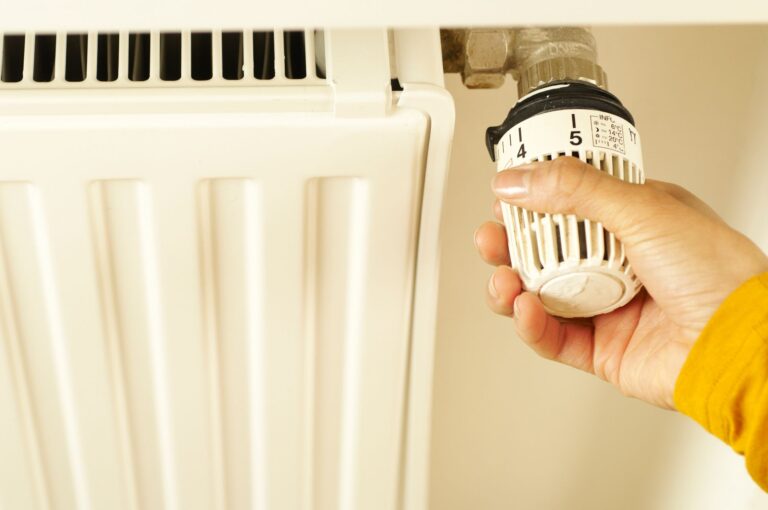

Picking a thermostat for a geothermal system can feel oddly technical for something that just hangs on a wall. You’re balancing compatibility with heat pumps, deciding whether programmable schedules actually pay off, and wondering if a simpler non-programmable unit will quietly do the job. This guide breaks down ten wall-mounted options that fit a range of setups, from full multi-stage gas systems to a basic garage or workshop. Whether you want scheduling flexibility or just a reliable, set-and-forget interface, one of these should slot in cleanly.
The Picks In Brief
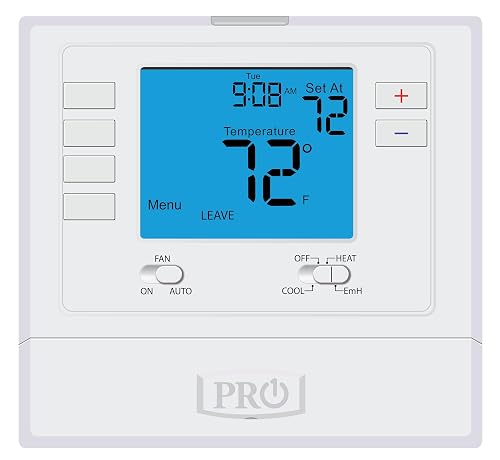
PRO1 T725 Heat Pump/Conventional Programmable Thermostat

PRO1 T771 Single Stage Non-Programmable Thermostat
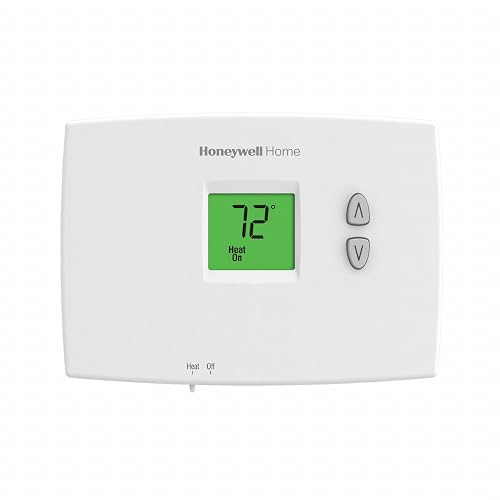
Honeywell TH1100DH1004 PRO 1000 Non-Programmable Thermostat
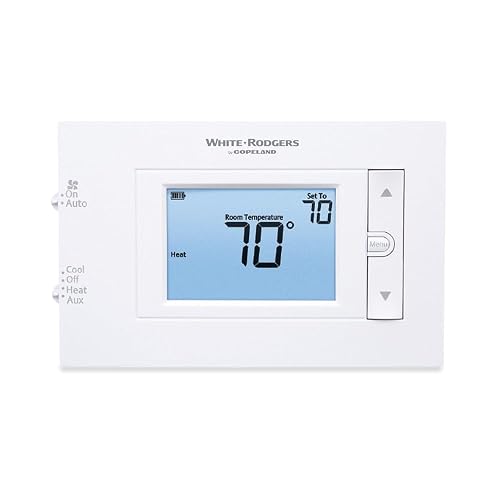
White-Rodgers 80 Series Heat Pump Thermostat 1F83H-21NP
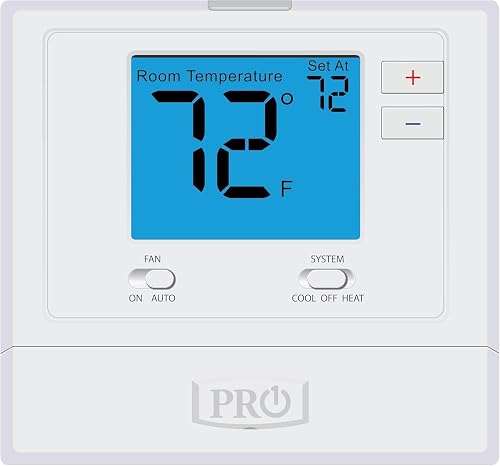
PRO1 T701 Single Stage Non-Programmable Thermostat

PRO1 T715 Multi-Stage Programmable Gas Thermostat
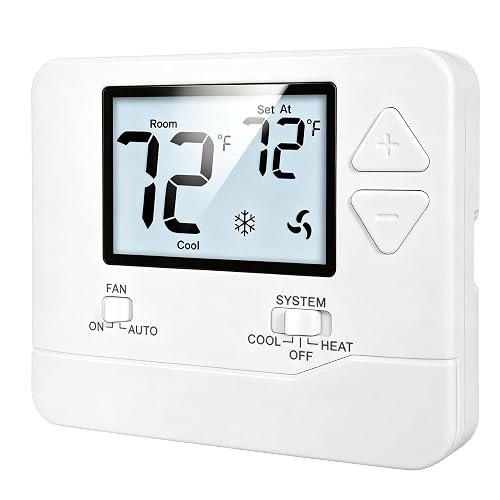
Heagstat Non-Programmable Thermostat 1 Heat/1 Cool
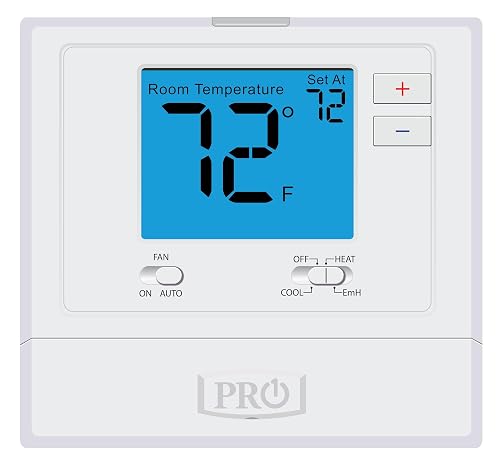
PRO1 T721 Non-Programmable Heat Pump Thermostat

White-Rodgers 1E78-144 Single Stage Thermostat

PRO1 T805 Single Stage Programmable Thermostat
Why These Options Stand Out
The PRO1 T725 sits at the top of this list because it handles the awkward middle ground most thermostats ignore: a home that runs a heat pump in winter and a conventional system the rest of the year. It supports 2 heat/1 cool heat pump configurations and 1 heat/1 cool conventional setups, so you won’t have to swap hardware if your equipment ever changes. A 4 sq. in. blue backlit screen reads clearly from across a hallway, and 7-day or 5/1/1 scheduling covers most household routines.
Programmable thermostats like this one tend to pay off most in homes with predictable comings and goings, where you can let the setback do the work overnight. If your week looks more like “home all day every day,” a simpler non-programmable unit may serve you just as well. Worth weighing before you commit to the extra menu options.
Positive Points
- Compatible with both heat pump and conventional systems, so it survives an HVAC swap without replacement.
- 7-day or 5/1/1 programming gives you weekday and weekend flexibility for real schedules.
- 4 sq. in. backlit display stays readable in dim hallways and at night.
- Builds on PRO1’s T700 platform, which tends to feel familiar if you are upgrading from an older PRO1 unit.
Worth Noting
- Programming setup takes patience the first week, especially if you have never built a schedule before.
- Not a learning thermostat, so it won’t adapt to your habits automatically over time.
Feature Snapshot
Best Suited To
Homeowners running a mixed heat pump and conventional system who want full weekly scheduling without overcomplicating the wall unit.
A Better Fit Elsewhere
Shoppers needing only a basic single-stage conventional setup with no scheduling will find the PRO1 T701 a simpler fit.
The PRO1 T771 is the kind of thermostat you buy when a regular home unit just won’t cut it. Its 25°F to 90°F setpoint range stretches well below what most living-area thermostats allow, opening up applications like detached garages, workshops, sheds, and basements where you need freeze protection or cooler-than-normal settings. A blue backlit display keeps the readout visible, and swing adjustment plus calibration let you fine-tune the reading against a separate thermometer.
Non-programmable means no schedules to build or forget, which actually suits these spaces. You set the temperature once and the unit does its job. If you wanted a thermostat you could leave alone for months, this is closer to that ideal than most options on this list.
What Pays Off
- Wide 25°F to 90°F setpoint range handles unheated garages and outbuildings that living-area thermostats can’t cover.
- Swing adjustment and calibration help match the wall reading to a separate thermometer, useful in chilly spaces.
- Non-programmable design keeps operation to a single set-and-forget dial-style workflow.
Trade Offs
- Lacks any scheduling, so it’s a poor fit for primary living spaces that benefit from setbacks.
- Intended for single-stage conventional systems, not multi-stage heat pumps.
Whose Shelf It Belongs On
Owners of detached garages, workshops, and sheds who need freeze-friendly setpoints without scheduling complexity.
Swap It Out When
Main-floor dwellers wanting weekly programming will find the PRO1 T725 a more capable option for everyday living areas.
Honeywell’s TH1100DH1004 leans hard into the “just works” philosophy. It’s a horizontal, non-programmable unit designed for heat-only systems, with dual power capability (batteries or hardwired) that gives you flexibility during install. The backlit display stays readable in dim utility rooms and basements, where many thermostats end up mounted.
This is the kind of replacement you grab when an old thermostat dies and you don’t want to rethink the whole system. For dedicated heat-only homes or additions, the simplicity actually helps. If you have central air and need cooling control too, you’ll need a different pick from this list.
Useful Highlights
- Dual-powered design (battery or hardwire) eases installation in older homes without a common wire.
- Backlit display helps in basements, utility rooms, and dim hallways.
- Precise comfort control reads in tight increments, useful for steady overnight temperatures.
- Adjustable temperature scale covers both standard and garage ranges for versatile placement.
Points To Keep In Mind
- Heat-only, so it won’t control a central cooling system.
- Non-programmable means no automatic setbacks for nighttime savings.
Right Fit For
Homeowners with a heat-only system who want a no-fuss replacement without learning new menus or schedules.
Reach For A Different Pick When
Households needing combined heat and cool control should consider the PRO1 T701 for a similar non-programmable feel with cooling support.
The 1F83H-21NP comes from White-Rodgers, a brand with a long HVAC track record, and that history shows up in the small details. Installation includes a built-in level, which sounds minor until you’re trying to mount a thermostat solo on a textured wall. The backlit display and straightforward button layout make daily adjustments painless, even if you’ve never programmed a thermostat in your life.
For heat pump homes, this is a sensible, no-drama replacement. It focuses on the basics rather than trying to be a smart hub, which some shoppers genuinely prefer. If you want Wi-Fi control or learning behavior, look elsewhere, but if you want a heat pump unit that just does the job, the 1F83H-21NP deserves a long look.
What Earns Its Place
- Built-in level on the base speeds up solo wall mounting.
- Backlit display is readable across a range of lighting conditions.
- Comes from a brand with deep HVAC roots, which tends to mean better long-term support.
Some Limits To Know
- Non-programmable only, so no automatic setbacks for sleep or work hours.
- No Wi-Fi connectivity, which limits remote control options.
Made For
Heat pump households replacing an aging thermostat and preferring physical buttons over touchscreens or apps.
Look Elsewhere When
Shoppers wanting 2H/1C heat pump plus conventional flexibility should consider the PRO1 T721 instead.
The PRO1 T701 takes the simplicity theme and adds a slightly larger 4 sq. in. display, which sounds subtle but makes a real difference for anyone who’s squinted at a wall thermostat from a doorway. It supports 1 heat/1 cool conventional systems, so it covers a wide range of standard gas, oil, or electric furnaces paired with central air. A glow-in-the-dark light button is a small but kind touch for late-night adjustments.
Conventional-system homes are the main audience here, and the T701 doesn’t try to be anything more than a clean, readable daily driver. If you don’t need schedules and just want clear numbers on the wall, this one respects your time.
Key Advantages
- Spacious 4 sq. in. blue backlit display with clear numbers visible from across the room.
- Glow-in-the-dark light button helps in dark hallways at night.
- Works with gas or electric conventional systems, covering most standard HVAC setups.
- Non-programmable design keeps operation simple for any household member.
Honest Caveats
- No programmable scheduling, so you’ll need to adjust manually for comfort changes.
- Single-stage only, which won’t suit multi-stage equipment.
Feature Snapshot
Perfect Match For
Conventional 1H/1C households that want an easy-to-read display and zero scheduling complexity.
Consider Something Else When
Multi-stage gas system owners should look at the PRO1 T715, which handles 2H/2C staging.
The PRO1 T715 is the multi-stage sibling in the T700 lineup, designed for 2 heat/2 cool gas systems where the furnace and air conditioner have more than one speed of operation. Multi-stage (where the equipment ramps up gradually rather than blasting at full capacity) tends to run quieter and more efficiently, but it requires a thermostat that knows how to call for those intermediate stages. The T715 does.
You also get 7-day, 5/1/1, or non-programmable modes, which is a useful escape hatch if you start with a schedule and decide it’s not for you. For homes with two-stage gas furnaces, this lands in that sweet spot of capable without going overboard.
A Favorable Mix
- Supports 2H/2C systems, ideal for two-stage gas furnaces and matching AC units.
- Three operating modes (7-day, 5/1/1, non-programmable) let you opt out of scheduling later.
- Glow-in-the-dark light button and 4 sq. in. backlit display aid nighttime use.
- Battery or hardwire power gives flexibility during installation.
Potential Drawbacks
- Overkill for single-stage homes, where the extra menus add no value.
- Programming depth can feel dense if you don’t regularly tweak schedules.
Feature Snapshot
Who Should Grab It
Two-stage gas furnace households that want weekly scheduling plus the option to run it as a simple manual unit later.
Skip It When
Single-stage homeowners will find the PRO1 T805 a better match for similar scheduling at a less complex equipment level.
Heagstat’s non-programmable unit covers 24VAC conventional single-stage 1H/1C systems, including gas, oil, and electric furnaces paired with a separate outdoor AC condenser. The white backlight is easy on the eyes in bedrooms and hallways, and the limited button count makes it approachable for guests or older family members who shouldn’t have to learn a menu system.
Compatibility is where you need to pay attention. The base handles 2 to 5 wires, and 6 to 8 wire configurations are not supported, so this is firmly a replacement for simpler older systems. For forced-air homes with the right wire count, it’s a serviceable everyday pick.
Everyday Advantages
- White backlight reads cleanly in bedrooms and dim hallways without harsh blue tint.
- Limited controls make it approachable for anyone who just wants set-and-forget operation.
- Works across gas, oil, and electric conventional furnaces with central AC.
Possible Compromises
- Wire count limit (2 to 5 only) rules out homes with more complex thermostat cabling.
- Not compatible with heat pump or multi-stage systems.
Right Fit For
Conventional 1H/1C households with standard 2 to 5 wire installations who want a backlit, no-schedule thermostat.
Another Choice May Suit
Shoppers with heat pump systems will find the PRO1 T721 better aligned with their equipment.
The PRO1 T721 quietly handles a real-world scenario: a home that may switch between heat pump and conventional configurations, or a transitional install where the system type isn’t fully settled. It supports 2H/1C heat pump or 1H/1C conventional wiring, so it stays useful even if your equipment changes. The 4 sq. in. blue backlit display carries the same T700 styling you’ve seen in earlier PRO1 picks, and the glow-in-the-dark light button helps in darker rooms.
AA battery or hardwire power keeps installation flexible. For households that want a non-programmable wall unit but need heat pump compatibility, this is a sensible middle-of-the-road choice that doesn’t lock you in.
What Stands Out
- Dual system support (2H/1C heat pump or 1H/1C conventional) for flexible installations.
- Glow-in-the-dark light button aids quick adjustments in low light.
- AA battery or hardwire power accommodates different wiring situations.
- Non-programmable operation removes the learning curve for any household member.
Small Caveats
- No scheduling means manual adjustments for sleep and daytime comfort changes.
- Not a fit for multi-stage 2H/2C equipment.
Made For
Households running a single-stage heat pump or planning a system type change who want a non-programmable wall unit.
Where A Sibling Pick Shines
Shoppers wanting 7-day scheduling with the same heat pump coverage should consider the PRO1 T725.
The White-Rodgers 1E78-144 is a long-standing replacement pick for older homes, in part because it accepts both 24-volt and millivolt systems (millivolt systems are low-voltage setups often found with older furnaces or wall heaters that don’t need a full 24V transformer). That dual compatibility opens it up to a wider range of installs where newer digital thermostats sometimes refuse to play nice. The easy-to-read backlit display is a small but real upgrade over the mechanical units it often replaces.
It works with single-stage heating, cooling, and heat pump (without auxiliary) systems. If you have electric baseboard heat, this is not your match, and that limitation is worth catching before you click purchase.
A Few Highlights
- Accepts 24V and millivolt systems, which broadens replacement scenarios.
- Backlit digital display replaces the squinting associated with mechanical thermostats.
- Compatible with single-stage conventional and basic heat pump setups.
Potential Sticking Points
- Not compatible with electric baseboard heat, so check your system type first.
- Heat pump support excludes auxiliary heat configurations.
Best Suited To
Homeowners replacing an old thermostat in a single-stage conventional or basic heat pump home, especially with millivolt equipment.
Not Your Match When
Anyone needing multi-stage support or programmable scheduling should step up to the PRO1 T715.
The PRO1 T805 is the upgraded-display sibling in this list, offering a 7 sq. in. blue backlit screen, noticeably larger than the 4 sq. in. displays found in most of the T700 series. If you’ve ever walked past a thermostat and wished the numbers were bigger, this one’s for you. Beyond the larger screen, you get 7-day, 5/1/1, or non-programmable modes, all in a single-stage conventional 1H/1C thermostat for everyday gas or electric systems.
It’s a thoughtful upgrade for homeowners who want scheduling but don’t need multi-stage controls. The larger display also makes it friendlier in homes where someone relies on reading the temperature from a distance.
Bright Spots
- Extra-large 7 sq. in. backlit display improves readability from across the room.
- Three operating modes (7-day, 5/1/1, non-programmable) keep scheduling optional.
- Glow-in-the-dark light button helps locate the control in dim rooms.
- Part of the T800 platform, which builds on the familiar PRO1 interface family.
Worth Bearing In Mind
- Single-stage conventional only, so it’s not for multi-stage or heat pump homes.
- Larger display means a slightly bigger wall footprint than compact 4 sq. in. units.
Feature Snapshot
Who Will Love This
Conventional 1H/1C homeowners who want a larger display and the option of weekly scheduling without stepping into multi-stage territory.
Where Another Pick Suits Better
Heat pump households wanting a similar easy-read experience will find the White-Rodgers 1F83H-21NP a closer match for their equipment.
Matching a Thermostat to Your Geothermal Setup
The first decision is system type. Geothermal systems typically run as heat pumps (using the stable temperature underground to heat and cool your home), so a heat pump compatible thermostat is the safe default. Look at your existing equipment label or paperwork and confirm whether you have 1H/1C or 2H/1C staging (the H and C numbers refer to how many heating and cooling stages your system can call for, with higher numbers indicating more gradual, efficient operation). A PRO1 T725 or T721 covers most single-stage heat pump homes, while multi-stage equipment calls for a unit like the PRO1 T715.
Programmable versus non-programmable matters more than people expect. Programmable thermostats shine when your week has a rhythm: a setback overnight, a warmer temperature during the day, a cooler setting while you’re at work. Non-programmable units are perfect for workshops, guest spaces, or homes where someone prefers to adjust the temperature by hand.
Wire count is the silent dealbreaker. Many conventional thermostats need a C-wire (a common wire that delivers continuous 24V power to the thermostat), and older homes sometimes lack one. The Honeywell TH1100DH1004 sidesteps this with dual power, and several PRO1 models accept AA battery power. Always check your existing wiring before ordering, since swapping wire count is rarely a five-minute job.
Smart Upgrades Worth Considering
Pitfalls Shoppers Hit
The most common mistake is choosing a thermostat based on looks alone. A beautiful touchscreen won’t help if it’s not compatible with your heat pump’s staging. Equally common: assuming every thermostat needs a C-wire. Battery-powered units like the Heagstat or several PRO1 models work fine without one, but only for the systems they support. Cross-check your equipment, wire count, and voltage before you commit.
Where The Extra Money Goes
Higher-tier models in this category add a few things that matter: larger displays, scheduling flexibility, multi-stage handling, and dual system compatibility. The PRO1 T805’s 7 sq. in. screen is a real upgrade for readability. The PRO1 T715’s 2H/2C support matters if your furnace and AC run in stages. For a single-stage home with no scheduling needs, the extra spend often goes unused, and a simpler unit is the honest match.
Frequently Asked Questions
Do I need a special thermostat for a geothermal system?
Geothermal systems run as heat pumps, so you need a heat pump compatible thermostat. A conventional-only unit won’t call for the reversing valve (the component that switches the system between heating and cooling modes) properly, which can leave you stuck in one mode.
What is a C-wire and do I need one?
A C-wire, or common wire, delivers continuous 24V power to the thermostat. Some thermostats need it; others run on AA batteries or hardwire differently. Check your existing wiring at the wall plate before ordering to avoid an install surprise.
Can a programmable thermostat actually save money?
For households with predictable routines, yes. Automatic setbacks during sleep and away hours reduce runtime without sacrificing comfort. For stay-at-home households with stable temperature preferences, the savings are smaller and a non-programmable unit may serve just as well.
What’s the difference between single-stage and multi-stage?
Single-stage equipment runs at full capacity or off. Multi-stage equipment ramps up gradually in intermediate steps, which tends to run quieter, hold temperature more steadily, and reduce cold spots. The thermostat has to know how to call for those intermediate stages.
Will any of these work with a millivolt system?
The White-Rodgers 1E78-144 explicitly supports 24-volt and millivolt systems. Millivolt systems (low-voltage setups often found with older wall heaters and some fireplaces) typically can’t power a digital thermostat the same way, so compatibility matters more than usual.
Closing Remarks
The right geothermal thermostat comes down to a short checklist: match your system type and stage count, confirm your wire situation, and decide whether scheduling fits your routine. From there, the picks above cover everything from garage-friendly non-programmables to multi-stage programmable wall units. Take a few minutes with your equipment label, and one of these will fit cleanly.