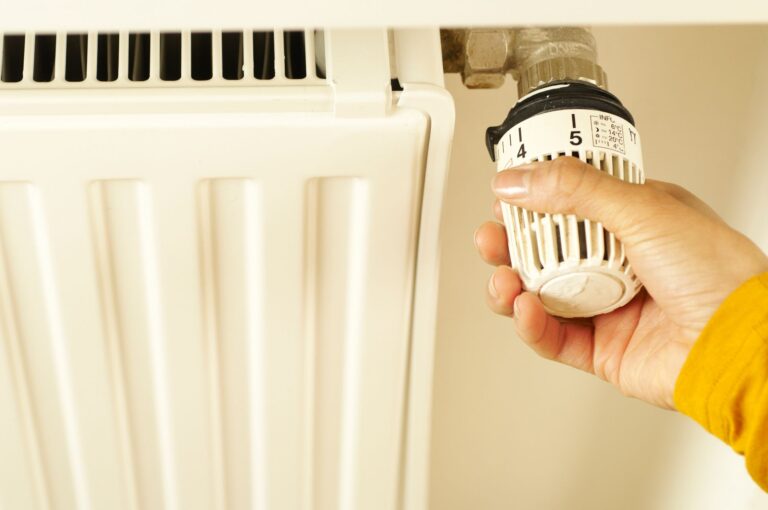

Keeping a greenhouse at a stable temperature is one of those jobs that feels simple until you try it by hand. Fans kick on too late, heaters overshoot, and seedlings pay the price. A purpose-built thermostat takes the guesswork out, and the nine options below cover everything from plug-in controllers to solar exhaust fans. Each one fits a different setup, whether you’re running a small cold frame, a backyard polytunnel, or a reptile room that doubles as plant nursery.
The Choices Worth Comparing
KETOTEK Digital Thermostat Timer Plug Outlet
DEWENWILS Smart WiFi Temperature Controller Outlet
HIADA Heating Cooling Digital Thermostat 120V 15A
Heagstat NonProgrammable Thermostat 1 Heat/1 Cool
ecoCalm 8″ Solar Exhaust Fan with Thermostat
DEWENWILS 15A Thermostat Plug -40~210°F
ecoCalm 6″ Solar Powered Fan with Thermostat
ecoCalm 4″ Solar Exhaust Fan with Thermostat
ecoCalm 8″ Solar Fan with Adjustable Thermostat
A Deeper Look At The Lineup
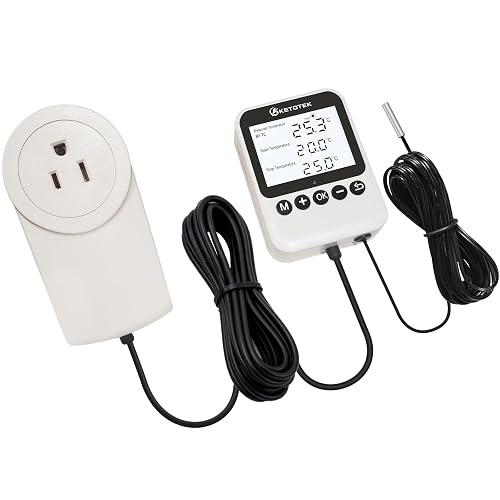
Plug-in thermostats earn their keep in small greenhouses because they skip the wiring step entirely, and the KETOTEK KT3500 leans into that convenience. It runs on 120V through a standard outlet, which means a beginner can set it up beside a heat mat or tube heater without calling an electrician.
What makes it a versatile pick is the three-mode design, covering constant temperature, day/night dual setpoints, and a 24-hour on/off timer for lights or fans. The 3-meter sensor probe (a thin cable that reads temperature away from the unit itself) reaches deep into propagation trays, where seedling heat matters more than ambient air. For most hobby growers, that’s enough flexibility to handle both spring germination and winter reptile holding.
Key Advantages
- Three operating modes cover heating, cooling, and timed lighting in one plug-in unit.
- The 3-meter external probe reads temperature where plants actually sit, not just at the wall outlet.
- Backlit LCD stays readable in dim grow tents and shaded corners.
- Setpoint adjustment suits both cool-loving greens and warmth-hungry tropicals.
Things To Consider
- Single-outlet design means you may need a power strip for multi-device setups.
- The probe is water-resistant, not waterproof, so condensation in ultra-humid rooms can shorten its working life.
Who It Suits Best
Beginner growers and hobbyists running small greenhouses, seed-starting racks, or reptile terrariums where plug-and-play convenience matters more than whole-house wiring.
Consider Something Else When
Tech-forward users who want app control and remote scheduling will find more value in the DEWENWILS Smart WiFi Temperature Controller Outlet.
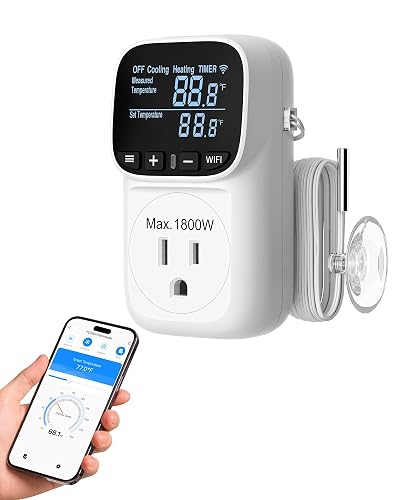
Where the KETOTEK above keeps things analog, this DEWENWILS unit moves temperature control onto a phone. It connects over WiFi, and the companion app handles scheduling, differential values, and real-time alerts from anywhere you have signal.
Six operating modes split between heating, cooling, and timer functions give you precise control over how equipment reacts to temperature swings. A differential value is the small buffer above or below your target that prevents the relay from chattering on and off, and being able to set that from your couch is genuinely useful. The 15A/1800W rating handles most greenhouse heaters and exhaust fans without breaking a sweat.
What Stands Out
- WiFi scheduling means you can tweak setpoints from work or vacation without driving home.
- Power-outage memory restores the previous configuration automatically, so storms don’t reset your settings.
- VA display remains crisp at awkward angles, which helps when the unit is mounted low or behind foliage.
Trade Offs
- Setup assumes stable WiFi at the greenhouse; in remote setups you may need a range extender.
- The wide -40 to 240°F range is overkill for most plant rooms, though harmless.
- App updates can occasionally change menu layouts, a common complaint among smart-plug users.
Feature Snapshot
Made For
Growers with stable home WiFi who want phone-based alerts and schedule automation, especially those running multiple climate devices from one app.
Reach For A Different Pick When
Off-grid and shed growers without WiFi should look at the ecoCalm 8″ Solar Exhaust Fan with Thermostat instead.
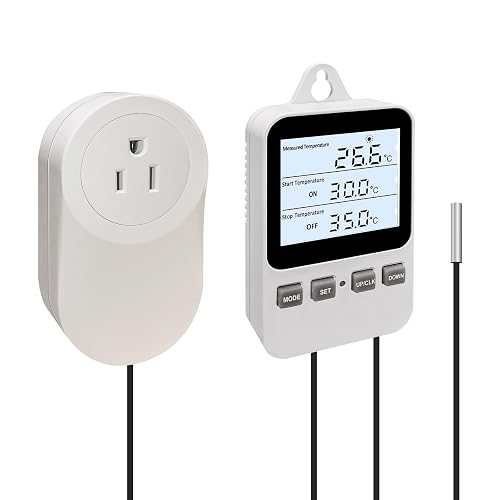
Greenhouses rarely need just heating. Summer afternoons push internal temps past 100°F, and seedlings fry without a fan or vent relay. The HIADA thermostat handles both directions from a single plug-in outlet, switching between heating and cooling modes based on what you connect.
At 15A on a 120V circuit, it carries the same load capacity as the smart DEWENWILS above, but trades the WiFi app for a simpler front-panel interface. For someone who walks into the greenhouse, glances at the display, and adjusts a button, that trade feels reasonable.
Where It Helps
- Dual heating and cooling modes adapt to seasonal swings without swapping equipment.
- Simple front-panel controls reduce the learning curve for new growers.
- Compatible with seedling mats, reptile terrariums, and incubation setups alike.
Worth Noting
- No app or wireless connectivity, so remote monitoring requires a separate sensor.
- Single-outlet design limits multi-device control without an external power strip.
- Display readability in direct sunlight is a commonly reported soft spot.
Key Product Details
Best Suited To
Growers in regions with strong seasonal contrast who need one device to manage summer exhaust and winter heating.
A Better Fit Elsewhere
Users wanting remote app control should consider the DEWENWILS Smart WiFi Temperature Controller Outlet.
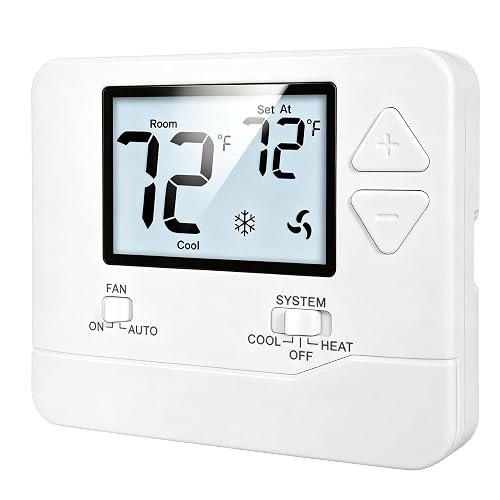
The Heagstat sits in a different category from the plug-in models above. It is a wall-mounted thermostat designed for conventional 24VAC single-stage HVAC systems, which means it controls home furnaces and air conditioners rather than greenhouse appliances.
That said, some greenhouse owners attach it to a hardwired heater and a ventilation relay in larger setups, and the white backlight makes the display easy on aging eyes. The compatibility list is narrow: it works with 2 to 5 wire configurations on forced-air systems and won’t touch heat pumps or multi-stage equipment.
Strong Points
- Clean white backlight improves visibility in low-light conditions.
- Simple non-programmable design suits users who prefer manual setpoint control.
- Compatible with standard 24VAC single-stage heating and cooling systems.
Room For Improvement
- Not designed for plug-in greenhouse equipment, so it requires hardwired HVAC infrastructure.
- Limited to 2 to 5 wire systems; 6 to 8 wire configurations are not supported.
- Lacks the WiFi and scheduling features common in modern smart thermostats.
Who Should Grab It
Homeowners with a conventional 1H/1C forced-air system who want a no-frills wall thermostat for a workshop or attached greenhouse room.
Look Elsewhere When
Backyard greenhouse growers running plug-in heaters and fans will find the KETOTEK Digital Thermostat Timer Plug Outlet a more practical match.
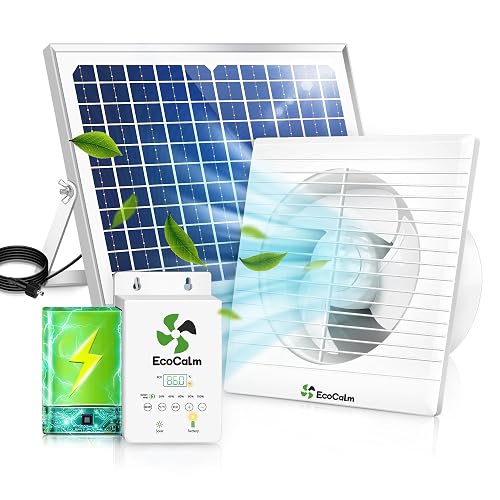
Off-grid greenhouse ventilation has always been a compromise, but the ecoCalm 8-inch solar exhaust fan takes a real swing at the problem. A 25W bifacial solar panel charges a built-in battery, and the fan keeps pulling air even after sunset.
The adjustable thermostat sits in the battery box, so you set a temperature threshold and the fan cycles itself on when conditions climb above it. The anti-backflow shutter keeps hot outside air from seeping in when the fan is idle, which matters more in summer than you might expect.
What Helps Most
- Bifacial solar panel charges from both sides, useful in partly shaded greenhouse roofs.
- Built-in battery keeps airflow running through cloudy periods and overnight.
- Adjustable thermostat lets you match ventilation to specific crops.
- Anti-backflow design prevents passive heat gain when the fan is off.
Honest Caveats
- Airflow drops noticeably during extended overcast stretches, depending on panel exposure.
- 8-inch size suits mid-size greenhouses but feels oversized for small cabinets.
Feature Rundown
Right Fit For
Remote greenhouse owners and shed growers without grid power who need reliable solar-driven ventilation through warm months.
Swap It Out When
Tight indoor grow tents with limited sunlight should consider the ecoCalm 4″ Solar Exhaust Fan with Thermostat for a smaller footprint.
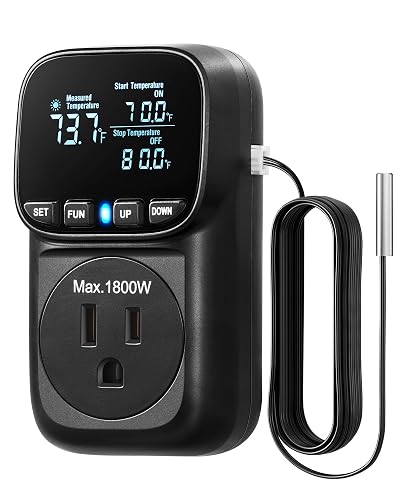
Where the DEWENWILS smart unit above focuses on connectivity, this sibling model strips back to a single-purpose plug thermostat. It runs the same 15A/1800W load capacity, but the controls live on a front-panel VA display rather than in an app.
The wide -40 to 210°F range covers everything from unheated winter sheds to propagation rooms running warm under grow lights. The VA display uses self-illuminating pixels that stay sharp from wider angles than standard LCDs, handy when the controller is mounted low and you read it standing up.
Useful Touches
- High 1800W capacity handles large greenhouse heaters without tripping.
- Wide temperature range suits both cold-season frost protection and tropical propagation.
- VA display stays readable from awkward viewing angles.
- Simple plug-in design requires no wiring knowledge.
Points To Keep In Mind
- No app or remote access means manual adjustments at the unit.
- Single outlet can bottleneck setups with multiple devices unless paired with a power strip.
Quick Technical Notes
Who Will Love This
Traditionalists who want a set-and-forget controller with no apps, accounts, or firmware updates, especially those running high-wattage heaters.
Not Your Match When
Smart-home enthusiasts will get more out of the DEWENWILS Smart WiFi Temperature Controller Outlet.
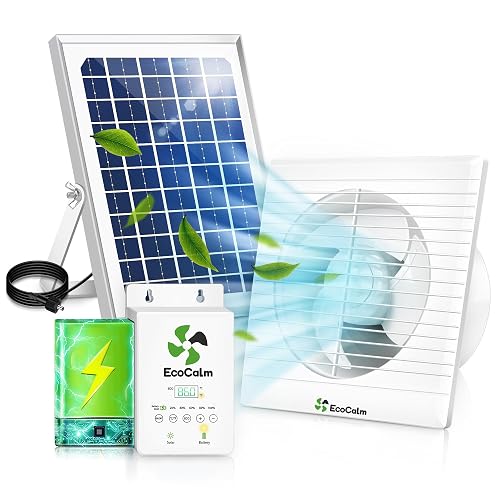
Step down from the 8-inch solar fan above, and you land on this 6-inch ecoCalm unit. The smaller blade moves less air, but it also fits greenhouse vents and shed windows where an 8-inch frame simply won’t go.
The double-sided solar panel and 4400mAh battery match the larger sibling’s spec sheet, and you can expect roughly 8 hours of runtime from a full charge in direct sun. Owners commonly find that the thermostat threshold is easy to dial in for crop-specific targets.
The Upside
- 6-inch frame fits smaller greenhouse vents and narrow shed openings.
- Double-sided solar panel improves charging in partially shaded locations.
- Built-in thermostat automates fan cycles based on rising temperature.
Some Limits To Know
- Lower airflow than the 8-inch ecoCalm models limits use to smaller volumes.
- Battery runtime varies with cloud cover and panel angle.
Built With In Mind
Small greenhouse owners with limited roof or wall space who still want solar-driven automatic ventilation.
Where A Sibling Pick Shines
Larger greenhouses needing stronger airflow should consider the ecoCalm 8″ Solar Exhaust Fan with Thermostat instead.
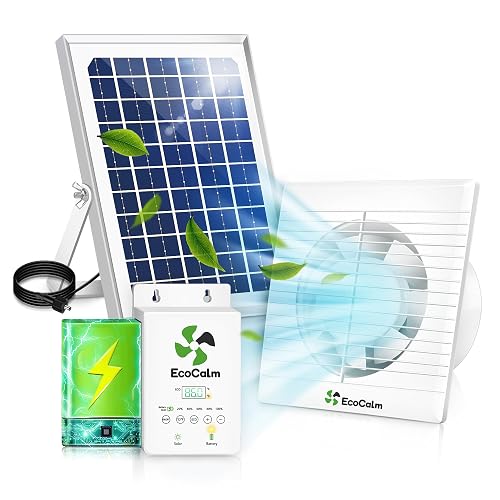
The smallest of the ecoCalm solar trio, this 4-inch fan is purpose-built for tight spaces. Think indoor grow cabinets, small propagation domes, or compact chicken coops where airflow matters but a 6 or 8-inch frame would overpower the room.
It runs on a 3000mAh battery, which trims weight compared to the larger 4400mAh siblings, and the thermostat control keeps the fan from running constantly. The trade-off is shorter runtime during cloudy days, a real consideration for off-grid users in northern climates.
Practical Pluses
- 4-inch footprint fits grow cabinets, mini greenhouses, and small coops.
- Solar charging with internal battery removes the need for outlets or extension cords.
- Adjustable thermostat tailors activation to specific temperature thresholds.
What To Weigh
- Smaller 3000mAh battery stores less runtime than the 6-inch and 8-inch ecoCalm units.
- Airflow is modest, limiting effectiveness in anything beyond a small enclosed space.
Whose Shelf It Belongs On
Compact greenhouse owners and indoor gardeners who need a small-footprint solar fan for cabinets or seedling domes.
Skip It When
Larger greenhouse builds needing meaningful airflow should step up to the ecoCalm 8″ Solar Fan with Adjustable Thermostat.
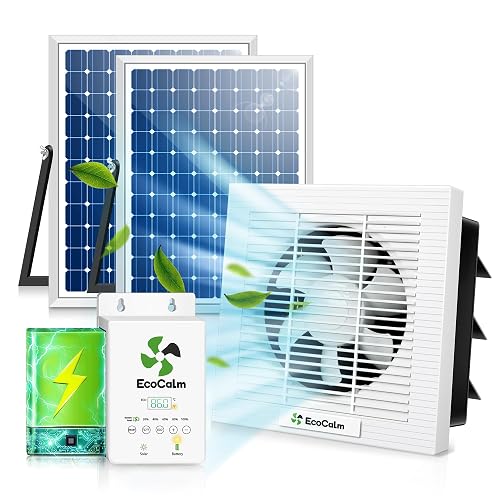
Rounding out the lineup is the second 8-inch ecoCalm solar fan, distinguished by its dual 15W bifacial panels. Two transparent rear panels boost the total harvest to roughly 22W, which translates into more consistent charging on partially overcast days.
The integrated thermostat sits in the battery box and lets you dial in the exact temperature at which the fan switches on. For a sun-drenched greenhouse, that control pays off because it prevents the fan from over-ventilating during mild weather.
Advantages To Know
- Dual bifacial panels generate up to 22W combined, improving charging in variable light.
- Adjustable thermostat lets you match fan activation to specific crop requirements.
- 8-inch airflow suits mid to large greenhouse structures.
Possible Compromises
- Dual-panel setup adds to the roof footprint, which may not suit every greenhouse angle.
- Higher price territory than the single-panel 8-inch ecoCalm above, depending on configuration.
Feature Overview
Perfect Match For
Greenhouse owners in full-sun locations who want maximum solar harvest and reliable off-grid ventilation through summer peaks.
Another Choice May Suit
Smaller structures with less roof space will get better results from the ecoCalm 4″ Solar Exhaust Fan with Thermostat.
What To Think Through Before Buying a Greenhouse Thermostat
A thermostat only performs as well as the sensor placement and the equipment it’s controlling, so the spec sheet matters less than the match between controller, heater, and greenhouse volume. Plug-in models like the KETOTEK and DEWENWILS units work for hobby greenhouses up to a few hundred square feet, where one outlet-driven heater or fan is doing the heavy lifting. Larger structures with hardwired ventilation or multi-zone setups often need wall thermostats or dedicated fan controllers instead.
Sensor placement is the silent variable. A probe that sits in direct sun will read ten degrees warmer than the air around your seedlings, which causes heaters to short-cycle and fans to over-fire. The external probes on the KETOTEK and similar plug-in units solve this by reaching into the plant zone, but you still need to shield them from radiant heat.
Power source shapes the install as much as the device. Solar fans like the ecoCalm trio need southern exposure and a panel angle that avoids shadow, while plug-in controllers assume you have a GFCI-protected outlet (a ground-fault outlet that cuts power fast if water is involved) near the equipment. Running an extension cord through a wet greenhouse floor is a common shortcut that warrants caution.
Smart Spending Across This Category
Pitfalls Shoppers Hit
The most common mistake is buying a thermostat rated below the load of the heater it’s controlling. A 1500W heater on a 10A controller will trip the relay within days, so always check the wattage draw of your equipment against the controller’s amp rating. The DEWENWILS 15A models and the HIADA unit handle 1800W, which covers most consumer heaters.
Another trap is ignoring the difference between heating-only and heating-and-cooling controllers. In a glass greenhouse, summer overheating kills plants faster than winter cold, and a single-mode controller can’t help. The HIADA model and the DEWENWILS smart unit both handle this in one box, which saves swapping equipment twice a year.
When Paying More Pays Off
Higher-tier models in this category earn their keep through wider temperature ranges, dual-mode operation, and app integration. The DEWENWILS smart unit costs more than the basic plug-in KETOTEK, but you gain remote alerts, power-outage memory, and scheduling. For someone managing a greenhouse while traveling, those features are worth the step up.
On the solar side, the dual-panel ecoCalm model harvests more energy than the single-panel version, and that matters in regions with frequent cloud cover. Upgrading makes sense if you depend on continuous nighttime airflow through summer.
Frequently Asked Questions
What is the difference between a heating and a cooling thermostat mode? Heating mode triggers connected equipment when temperatures drop below your setpoint, while cooling mode triggers when they rise above it. Controllers like the HIADA and DEWENWILS units handle both directions in a single box.
Do greenhouse thermostats work with reptile heat mats? Yes, most plug-in greenhouse thermostats are compatible with reptile heat mats, heat cables, and ceramic heat emitters. The KETOTEK controller’s 3-meter probe reaches directly into terrarium substrate, where temperature matters most.
How accurate are plug-in greenhouse thermostat sensors? Consumer-grade plug-in thermostats typically read within a few degrees of true temperature. Accuracy depends on probe placement, so shielding the sensor from direct sunlight and drafts gives you the most reliable readings.
Can a solar exhaust fan run at night? Models with internal batteries, like the ecoCalm 4-inch, 6-inch, and 8-inch units, continue running after sunset. Battery capacity and thermostat settings determine how long the fan cycles through the night.
Do I need a GFCI outlet for a greenhouse thermostat? Any electrical equipment used in a humid greenhouse environment should plug into a GFCI-protected outlet. This safety measure cuts power quickly if moisture contacts the circuit, which is a real consideration around misters and irrigation.
Closing Remarks
The right greenhouse thermostat comes down to matching your structure size, power source, and how much hands-on tweaking you want to do. Plug-in controllers suit small setups, solar fans handle off-grid ventilation, and wall-mounted units cover hardwired systems. Pick the one that fits your greenhouse rather than the one with the longest feature list, and your plants will reward you with steadier growth through every season.