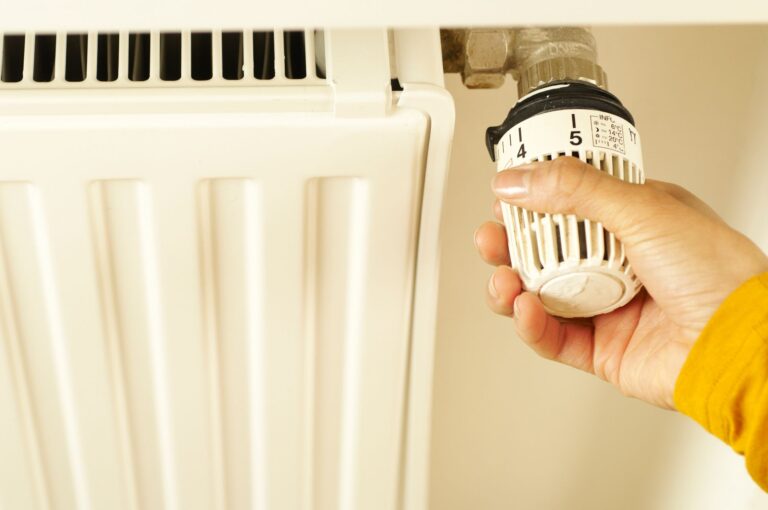

Picking a thermostat that talks to your HVAC system without fuss is one of those small upgrades you feel every day. The ten hardwired thermostats below cover common setups: single-stage furnaces, multi-stage gas systems, heat pumps, and a couple of niche controls for water heaters and attic fans. Each one mounts to your wall, draws power from your system’s wiring, and skips the hassle of changing batteries every few months.
You’ll see familiar brands alongside quieter names, with options for homeowners who want scheduling flexibility and others who just want a clean dial-style wall unit. The mix is intentional, so the right match depends less on a single “best” choice and more on what your home actually runs. Read on for the specs that matter, the trade-offs worth knowing, and a few picks that handle specialty jobs like water heater control or attic ventilation.
A Fast Comparison Of The Options
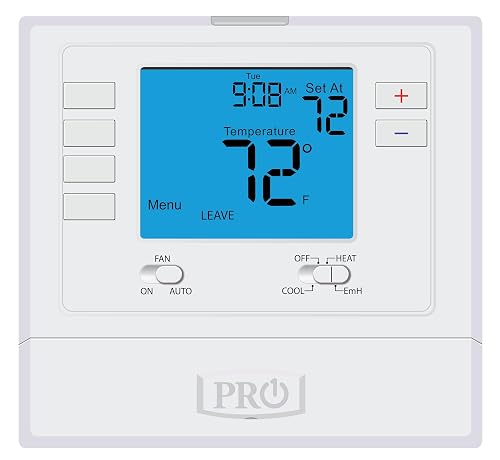
PRO1 T725 Heat Pump/Conventional Programmable Thermostat

PRO1 T771 Single Stage Non-Programmable Wall Thermostat
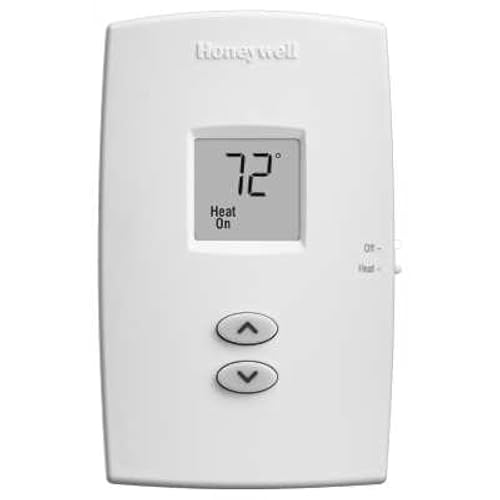
Honeywell TH1100DV1000 PRO 1000 Vertical Thermostat
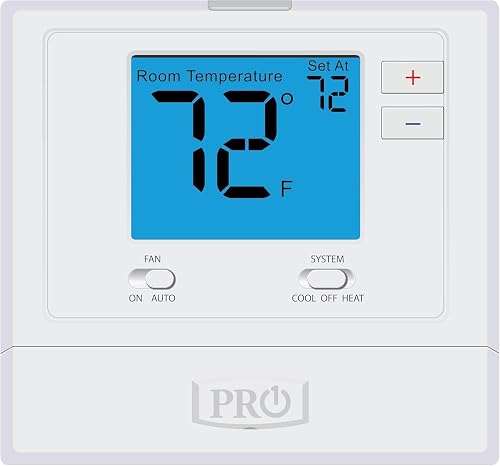
PRO1 T701 Single Stage Non-Programmable Wall Thermostat

PRO1 T715 Multi-Stage Programmable Gas Thermostat
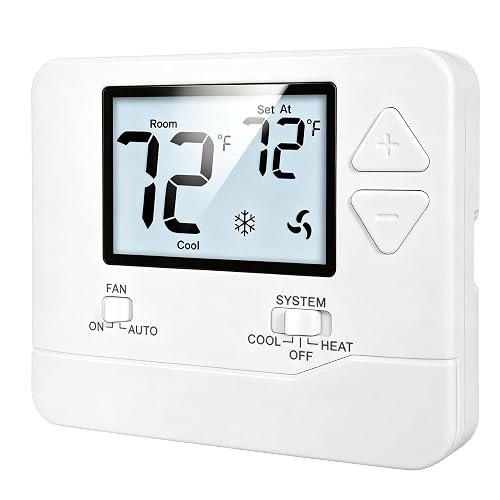
Heagstat Non-Programmable Thermostat 1 Heat/1 Cool
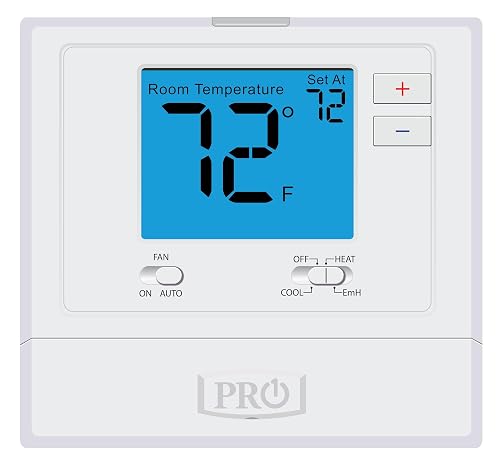
PRO1 T721 Non-Programmable Heat Pump/Conventional Thermostat

Zero KST203 Water Heater Thermostat

Ventamatic XXFIRESTAT Attic Ventilator Thermostat

PRO1 T805 Single Stage Programmable Wall Thermostat
What Each Pick Brings To The Table
Wall thermostats that handle a heat pump and a conventional system on the same wall plate are rare, which is why the T725 opens this list. It supports 2 heat/1 cool heat pump configurations plus 1 heat/1 cool conventional setups, so a home that switches between the two doesn’t need a new control. The 4-square-inch blue backlit screen keeps temperature and mode readable from across a room, and 7-day or 5/1/1 programming covers a working family’s weekday and weekend rhythm.
Unlike the T701 below, this one talks to heat pump reversing valves, so swapping in a heat pump later doesn’t mean a rewiring project. Power can come from the system or two AA backup batteries, and owners commonly report a smooth install on standard C-wire setups.
Positive Points
- Heat pump and conventional system compatibility in one wall unit
- 7-day and 5/1/1 scheduling for flexible weekday routines
- Blue backlit 4-sq-in display is readable at a glance
- Battery or hardwired power options for older homes without a C-wire
Trade Offs
- Programming takes longer than a simple non-programmable like the T701
- More setup menus than a heat-only Honeywell can confuse first-timers
Who It Suits Best
Homeowners running a 2H/1C heat pump who want weekday scheduling without paying for smart features.
Consider Something Else When
The PRO1 T715 is a stronger fit for 2H/2C gas systems that need finer staging control than this model offers.
Garages, sheds, and converted workshops don’t need a smart scheduler; they need reliable temperature control that can dip low without complaint. The T771 covers that brief with a setpoint range starting at 25°F, which is colder than most living-room thermostats allow. Swing adjustment and calibration features give a hands-on installer room to fine-tune cycling behavior, and the 4-sq-in backlit display is clear in a dimly lit garage bay.
Compared to the Honeywell TH1100DV1000 further down, this PRO1 unit handles a heat and a cool stage, where the Honeywell stays heat-only. That makes the T771 a smarter swap for unconditioned spaces with both a heater and a window AC.
Where It Delivers
- 25°F minimum setpoint suits spaces that get cold overnight
- Swing and calibration adjustments help dial in cycling on simple systems
- Backlit display readable in low garage light
Room For Improvement
- No scheduling means manual setpoint changes for day-to-night swings
- Single-stage only, so multi-speed fan equipment is out of reach
Made For
Owners outfitting a garage, shed, or workshop with a basic forced-air system who want setpoint range over scheduling.
Look Elsewhere When
The Heagstat 1 Heat/1 Cool is a closer match for cost-driven single-stage homes that don’t need the T771’s wide low-temperature range.
The Honeywell TH1100DV1000 takes a refreshingly plain approach: a vertical non-programmable wall thermostat built for heat-only systems. The form factor is taller and narrower than the PRO1 models above, which can matter when replacing an old Honeywell that’s mounted on a tight wall stud bay. The premier white finish blends into most utility rooms, and the simple slide-switch operation makes it friendly for renters or older family members who don’t want to navigate menus.
One thing worth flagging: this unit only handles heat, so it’s the wrong pick for homes with central AC on the same control. For pure heat-only setups, however, the build feels solid and the install stays clean on a two-wire system.
The Helpful Details
- Vertical layout fits narrow wall cavities where horizontal units look cramped
- Plain slide-switch controls reduce confusion for non-technical users
- Premier white finish suits utility rooms and rental properties
- Heat-only design keeps wiring simple on two-wire systems
Some Limits To Know
- No cooling support, so a separate control is needed if AC is added later
- No scheduling, which misses energy savings on predictable routines
Best Suited To
Homeowners with heat-only forced-air systems who want a no-nonsense Honeywell wall unit without programming menus.
Reach For A Different Pick When
The PRO1 T701 is a smarter choice if cooling is part of the system or if a backlit display is needed in a dim hallway.
For a standard 1 heat/1 cool conventional system, the T701 covers the basics with a few thoughtful touches. The 4-sq-in blue backlit display is comfortable to read, and a glow-in-the-dark light button means fumbling in a dark hallway isn’t a nightly event. Unlike the heat-only Honeywell above, this unit handles a cooling stage too, which makes it a more flexible drop-in for most U.S. homes with a furnace and central AC.
The T700 platform it sits on supports gas or electric conventional configurations, so the wiring is familiar to anyone who’s installed a basic thermostat before. Owners commonly report that the manual setpoint operation is the cleanest path for households that don’t want programming complexity.
Strengths Worth Knowing
- Glow-in-the-dark light button is genuinely useful in dark hallways
- Gas or electric conventional compatibility covers most U.S. homes
- 4-sq-in display is bigger than the typical 2.5-sq-in economy models
Honest Caveats
- No scheduling, so consistent daily routines miss out on auto setbacks
- Single-stage only, ruling out multi-stage HVAC equipment
- No heat pump support, unlike the T725 at the top of this list
The Right Fit
Households with a standard furnace and central AC who want a no-fuss wall control without smart features or scheduling.
A Better Fit Elsewhere
The PRO1 T805 suits a 1H/1C home that wants 7-day programming on the same straightforward T700-style platform.
Two-stage gas systems need a control that can actually call for first and second stage heat without short-cycling, and the T715 does that with 7-day, 5/1/1, or non-programmable operation. The T700 platform underneath is the same family as the T701 above, but the T715 adds a second heat and second cool stage for more nuanced comfort. The 4-sq-in backlit display and glow-in-the-dark button match what the simpler T701 offers, so the visual experience is consistent across the family.
Battery or hardwired power is supported, which keeps older homes without a C-wire in the running. In most homes with a two-stage variable-speed furnace, this thermostat is the sensible pick over single-stage alternatives.
Advantages To Know
- Two-stage heating and cooling for finer temperature control
- Three operating modes, 7-day, 5/1/1, or fully manual
- Battery or hardwired power options for older wiring setups
What To Weigh
- Programming learning curve is steeper than the T701’s manual setpoint
- Overkill for single-stage homes that don’t need staging
Who Will Love This
Owners of two-stage gas furnaces who want programmable scheduling without jumping to a full smart thermostat.
Swap It Out When
The PRO1 T725 is the better fit for homes running a heat pump rather than a multi-stage gas furnace.
The Heagstat 1 Heat/1 Cool thermostat is the sort of basic wall control that keeps first-time installers out of trouble. It’s rated for 24VAC conventional single-stage forced-air systems, including gas, oil, and electric furnaces paired with an independent outdoor AC condenser. The white backlight is a small but useful touch for nighttime hallway adjustments, and the wiring is sized for 2 to 5 wires, which covers most older homes.
One real-world note: this model is not compatible with heat pump systems, so it can’t be the swap-in pick for a heat pump retrofit. For a plain furnace and AC setup, however, the install is quick and the controls are clear.
Reasons It Performs
- Supports gas, oil, and electric forced-air furnaces
- White backlight helps with low-light operation
- 2 to 5 wire compatibility fits most older home wiring
Points To Keep In Mind
- No heat pump support limits future system upgrades
- No scheduling, so consistent routines need manual setpoint changes
- Connections with 6 to 8 wires aren’t suitable, ruling out some newer installs
Perfect Match For
Cost-conscious owners of conventional 1H/1C homes who want a no-frills wall thermostat that just works.
Where Another Pick Suits Better
The PRO1 T701 is a stronger fit if you want a glow-in-the-dark light button and a more familiar brand ecosystem for the same basic job.
The T721 sits in an interesting middle ground: it works with a 2 heat/1 cool heat pump or a 1 heat/1 cool conventional system, but skips the scheduling menus of the T725 above. For homeowners who want heat pump flexibility without the weekly programming project, that’s a reasonable trade. The same 4-sq-in blue backlit display and glow-in-the-dark light button appear here, so the T700 family visual feel carries through.
AA battery or hardwired power keeps the install options open. Compared to the T771, the T721’s heat pump compatibility is the standout, since the T771 stays on conventional systems only.
A Strong Showing
- Heat pump and conventional system flexibility in one unit
- Glow-in-the-dark light button for nighttime visibility
- Battery or hardwired power supports older wiring
Possible Compromises
- No scheduling limits energy savings on predictable routines
- More wiring complexity than a single-system T701 install
Whose Shelf It Belongs On
Homeowners with a heat pump who want the T700 family’s familiar interface without committing to a programmable schedule.
Not Your Match When
The PRO1 T725 is a better pick for heat pump owners who actually want 7-day or 5/1/1 scheduling flexibility.
The KST203 isn’t a wall thermostat in the living-room sense: it’s the upper thermostat element for an electric water heater with two heating elements. Rated for 120/480 VAC on dual-element tanks, it controls the top half of the tank where hot water actually leaves for the home. An adjustable range and a built-in safety switch to prevent overheating are the kind of details that matter when you’re working with 240V water heater circuits.
This is a replacement part, not a daily-use wall control. If your electric water heater is producing lukewarm water or short-cycling, a faulty upper thermostat is a common culprit, and the KST203 cross-references several OEM part numbers to make the swap smoother.
What Pays Off
- 120/480 VAC compatibility covers most residential water heater circuits
- Built-in safety switch helps prevent overheating damage
- Adjustable range supports common temperature settings
Practical Considerations
- Requires basic electrical work and breaker shutoff before install
- Only fits dual-element tanks, so single-element heaters need a different part
Built With In Mind
DIYers replacing a faulty upper thermostat on a residential dual-element electric water heater.
Skip It When
The Ventamatic XXFIRESTAT is a stronger fit if the project is a power attic ventilator, not a water heater repair.
The XXFIRESTAT is a different category of thermostat entirely. It controls power attic ventilators, with an adjustable bi-metallic switch that can be set with a simple screwdriver, and a Firestat safety feature that cuts power at 183°F to protect the appliance. The adjustable range runs from 50°F to 120°F, which covers the temperatures where attic ventilation actually does useful work. Up to three attic fans can be controlled on a single thermostat, as long as the combined draw stays under 10 amps.
For most living spaces, none of the other nine picks in this article is the right tool. For a homeowner whose summer cooling bills spike because of a 140°F attic, the XXFIRESTAT does a specific job that smart thermostats can’t.
Everyday Advantages
- 183°F Firestat cut-off protects attic wiring from extreme heat
- Simple screwdriver adjustment avoids programming menus
- Controls up to three fans on a single thermostat under 10 amps
- 50°F to 120°F range covers real-world attic conditions
Less Ideal Details
- Not a replacement for a living-area wall thermostat
- 10-amp limit means larger whole-house fans need a different control
The Right Fit
Homeowners with power attic ventilators who want a dedicated, safety-equipped thermostat for the attic space.
Not Your Match When
The PRO1 T701 is a better pick for typical indoor wall control, since this Ventamatic model isn’t designed for that role.
The T805 closes this list with the largest display in the roundup: a 7-sq-in blue backlit screen that’s noticeably easier on aging eyes than the standard 4-sq-in panel. The T800 platform supports 7-day, 5/1/1, or non-programmable modes, so a household can ramp up to scheduling and still have a manual fallback. Designed for 1H/1C conventional systems, it’s the natural upgrade path for someone replacing a basic T701 and wanting more screen real estate without going smart.
A glow-in-the-dark light button carries over from the T700 family. For households that actually use the schedule feature, the larger display makes entering wake, leave, return, and sleep temperatures less of a chore.
Real Benefits
- 7-sq-in display is the largest in this lineup
- Three operating modes, including full 7-day scheduling
- Glow-in-the-dark light button carries the T700 family feature forward
Small Caveats
- Single-stage only, so multi-stage homes need a different control
- Larger footprint may overlap adjacent wall fixtures in tight spots
Who Should Grab It
1H/1C homeowners who want 7-day scheduling on a big, easy-to-read display without smart-home features.
Where A Sibling Pick Shines
The PRO1 T715 is a stronger fit for two-stage gas systems that need more heating and cooling stages than the T805 can call.
What To Match Before You Mount
The first thing to confirm is your system type. Look at the wires coming out of the wall: a standard 1 heat/1 cool conventional system usually has 4 to 5 wires including a C-wire, while a heat pump often uses 5 to 7 wires with an orange reversing valve lead. The PRO1 T701, T721, T725, and T805 each target different combinations, so matching wire count to thermostat spec saves a return trip.
Power source matters just as much. Some models on this list accept AA battery power for older homes without a C-wire, which is a small but real convenience. The Honeywell TH1100DV1000 and PRO1 T701 both handle modest wiring, while the Ventamatic XXFIRESTAT and Zero KST203 are specialty replacements that don’t sit on your living room wall at all.
If scheduling is the point of the upgrade, focus on the T725, T715, or T805. If you’d rather not touch a programming menu, the T701, T771, T721, and Heagstat keep operation manual. The Honeywell unit is the one to pick when cooling isn’t part of the system at all.
Finally, think about the room. A dim hallway or bedroom benefits from a glow-in-the-dark light button and a backlit display, both of which the T701, T715, T721, and T805 offer. The T805’s 7-sq-in panel is a noticeable upgrade if anyone in the home has trouble reading smaller text at a distance.
Buying Considerations For hardwired thermostats
System compatibility
Match the thermostat’s listed stages and system type to the equipment on your wall. A 2H/1C heat pump needs a control that lists heat pump support, not just “conventional”, and a 1H/1C furnace pair can save money on a simpler non-programmable model.
Wiring and power
Confirm wire count at the existing wall plate. Battery-or-hardwired models buy flexibility on older homes without a C-wire, while dedicated common-wire units often need a wire pull or a power-stealing adapter in some setups.
Scheduling needs
Decide honestly whether a 7-day schedule will actually be used. Many homeowners set a programmable thermostat once and never re-enter it, which is a reasonable use case for a non-programmable T701-style control.
Display and usability
Display size, backlighting, and glow-in-the-dark buttons matter more than they sound. The PRO1 T800 family with a 7-sq-in screen is worth considering if anyone in the home struggles with small text or low-light adjustments.
Where Shoppers Go Wrong
The most common mistake is buying a thermostat for a system it can’t actually run. Heat pump and conventional systems look similar on the wall plate but use different internal switching, and a mismatched control either won’t power on or will mis-stage equipment. Always check the system’s stages before falling in love with a specific model.
The second trap is overlooking the C-wire situation. Many of the units on this list can run on AA batteries, but adding smart features later often pulls them out of battery-only operation. A quick look at the wiring before ordering saves a frustrating install day and possibly a wire run through the wall.
Where The Extra Money Goes
Higher-tier models in this category tend to add larger displays, multi-stage support, and programmable scheduling. The PRO1 T805 is a clear example: a 7-sq-in screen and 7-day scheduling over a manual T701. The PRO1 T715 layers on 2H/2C support for variable-speed gas systems that single-stage controls can’t properly call.
Whether the upgrade pays off depends on your equipment. A two-stage furnace benefits from a T715 in ways a single-stage furnace cannot, because the second stage can run when conditions warrant. A bigger display like the T805’s is a real quality-of-life gain in households that read the temperature from across a large room. For small apartments with simple 1H/1C systems, however, a T701 or Heagstat will do the same job at a lower tier.
Frequently Asked Questions
What does “hardwired thermostat” actually mean?
It means the thermostat receives continuous power through the HVAC wiring, usually via a common wire (C-wire), instead of running on batteries alone. The PRO1 T701 and Honeywell TH1100DV1000 are typical hardwired units mounted directly to the wall.
Can a hardwired thermostat work without a C-wire?
Some models on this list, including the PRO1 T701, T715, T721, and T725, accept AA battery power as a fallback. A true hardwired-only control without a battery option requires the C-wire to be present or installed.
How do I know if I need a heat pump thermostat?
Check whether your home has an outdoor unit that runs in both heating and cooling modes, which is a heat pump. If you only have a furnace and a separate AC condenser, a conventional thermostat like the T701 or T805 will work.
Are non-programmable thermostats still worth it?
For households that don’t want to set weekly schedules, non-programmable controls like the T701 and Heagstat are perfectly capable. The trade-off is missing out on automatic temperature setbacks during work or sleep hours.
What’s the difference between single-stage and multi-stage thermostats?
A single-stage thermostat calls for full heat or full cool with no middle setting, while a multi-stage model like the T715 can call for low or high heat depending on demand. Multi-stage systems run longer at lower output, which can feel more even and is gentler on the equipment.
Final Verdict
The right hardwired thermostat comes down to matching your system’s stages, your wiring, and how much scheduling you actually want to use. For most conventional 1H/1C homes, the PRO1 T701 or T805 hits the sweet spot of simplicity, while the T725 and T715 serve heat pump and multi-stage gas systems respectively. Specialty picks like the Honeywell TH1100DV1000, the Zero KST203, and the Ventamatic XXFIRESTAT cover the niches the wall thermostats don’t, from heat-only baseboards to electric water heaters and attic fans. Pick the one that matches the equipment on your wall, and the rest is just preference.